WHAT WE HEARD REPORT - Phase 2: Draft OCP Engagement
Attachment 1 to the OCP report, detailing public feedback and survey results regarding the draft goals and policy objectives.
Table of contents
- Table of contents
- Process
- OCP Engagement Touchpoints
- OVERALL OCP ENGAGEMENT OBJECTIVES
- AUDIENCE
- ENGAGEMENT APPROACH
- PUBLIC PARTICIPATION AND COMMITMENT
- WHAT WE DID: ENGAGEMENT TOUCHPOINT 6
- Engagement Touchpoint 6 Objectives
- How We Spread The Word
- PROJECT PAGE ON ENGAGE VIEW ROYAL
- TOWN’S OFFICIAL WEBSITE
- SOCIAL MEDIA
- TOWN-WIDE POSTCARD MAILER
- INSIDE VIEW ROYAL E-NEWSLETTER
- NEWSPAPER AD
- NEWS RELEASES
- WHAT WE HEARD: ENGAGEMENT TOUCHPOINT 6
- DRAFT OCP SURVEY
- OVERALL THEMES
- WHO PARTICIPATED
- SURVEY RESULTS
- Demographic Questions
- OCP REVIEW ADVISORY COMMITTEE & COUNCIL FEEDBACK
- MARCH 30, 2026, OFFICIAL COMMUNITY PLAN REVIEW ADVISORY COMMITTEE MEETING
- MARCH 31, 2026, SPECIAL COUNCIL MEETING
- APRIL 7, 2026, COUNCIL MEETING
- SONGHEES AND XʷSEPSӘM FEEDBACK
- SUMMARY OF FEEDBACK
- Next Steps
ABOUT THE VIEW ROYAL 2050 OFFICIAL COMMUNITY PLAN
The Official Community Plan (OCP) is a blueprint and will help define View Royal’s vision over the next 20 years. As a key municipal document, the OCP reflects community values and guides decisions on land use, housing, transportation, parks, environmental stewardship, economic development, and more.
The OCP is a living document, updated periodically to stay relevant as the community evolves and grows. View Royal’s last comprehensive update of the OCP was completed in 2011. While the current OCP has served our community well, there are opportunities to review what policies, objectives, goals, and guidelines within the Plan are working, what isn’t, and what we need to do to prepare for our future needs and wants.
Process
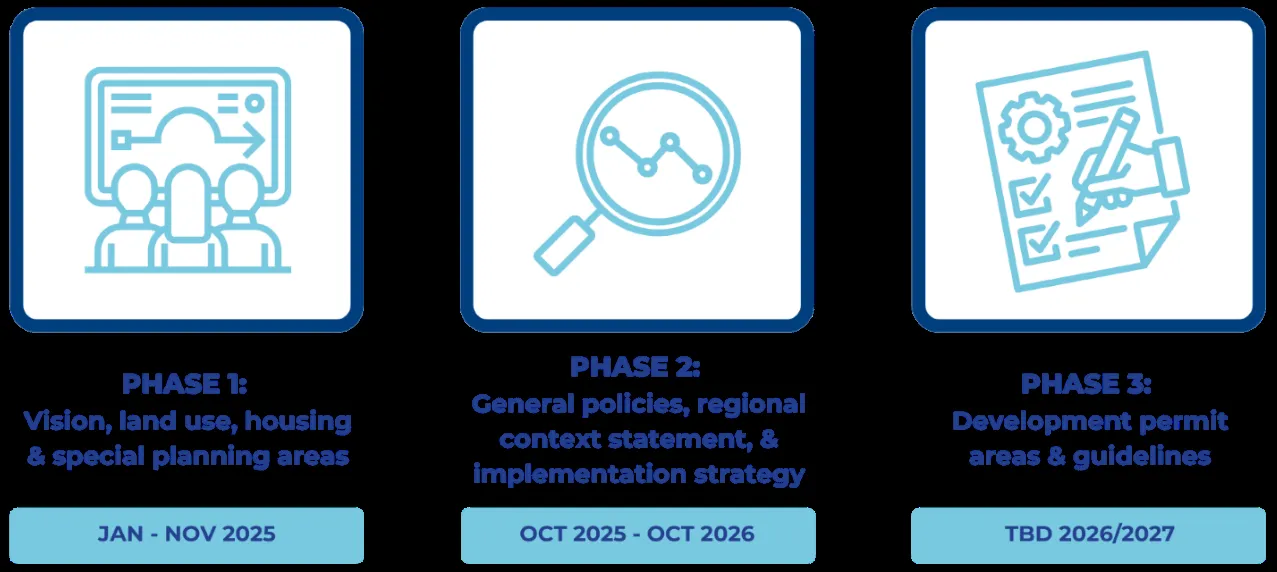
View Royal 2050 is a multi-year review and update process with three phases. The review and update of the OCP began in January of 2025 and is expected to conclude in 2027. In each of the three phases, there will be a focus on key topics and content that will be reviewed to update the OCP. Consultation with community members will be conducted through in-person events and online tools. This approach balances technical analysis with community feedback to shape a long-term vision and policies that reflect residents’ needs for the OCP.
We are now nearing the end of Phase 2; the first draft of the OCP was released for review and feedback on March 20. Work on a final draft is being completed to refine the draft document based on what we heard.
OCP Engagement Touchpoints
Through the View Royal 2050 process, the Town has completed six rounds of engagement.
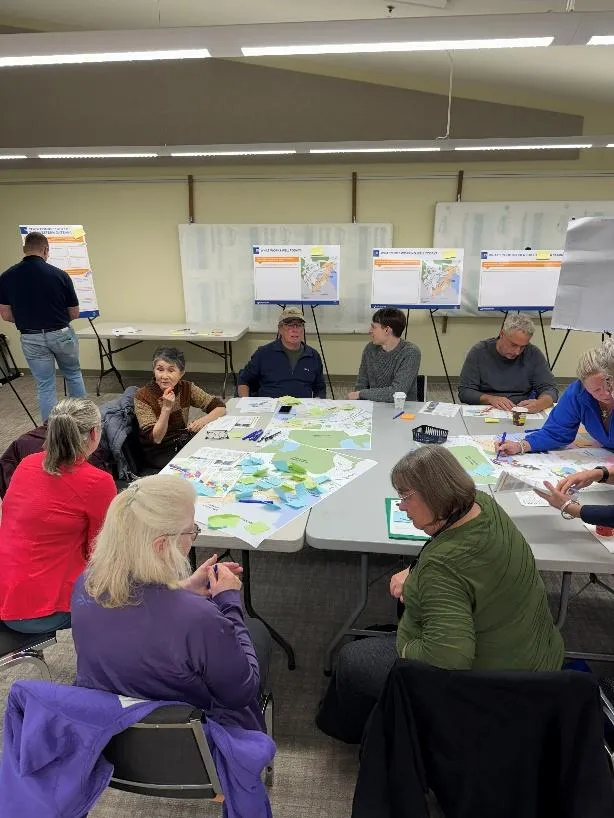
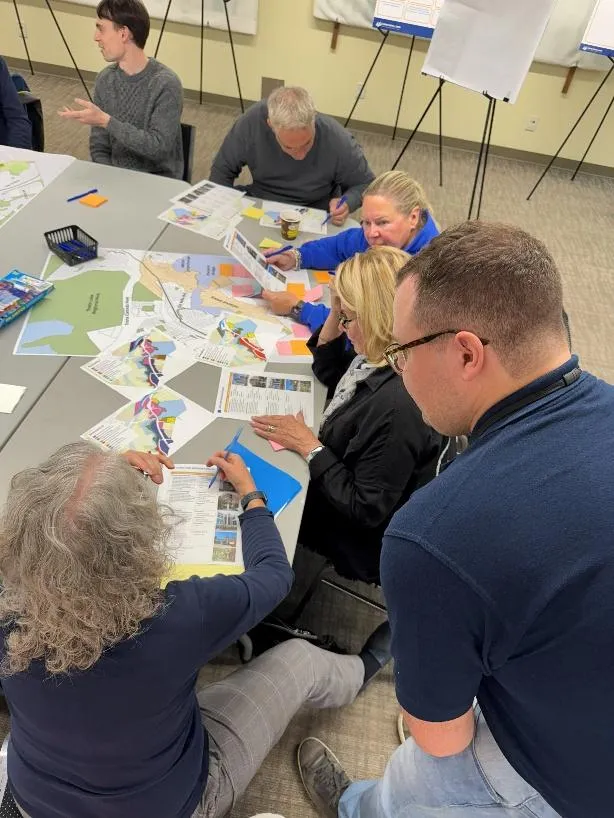
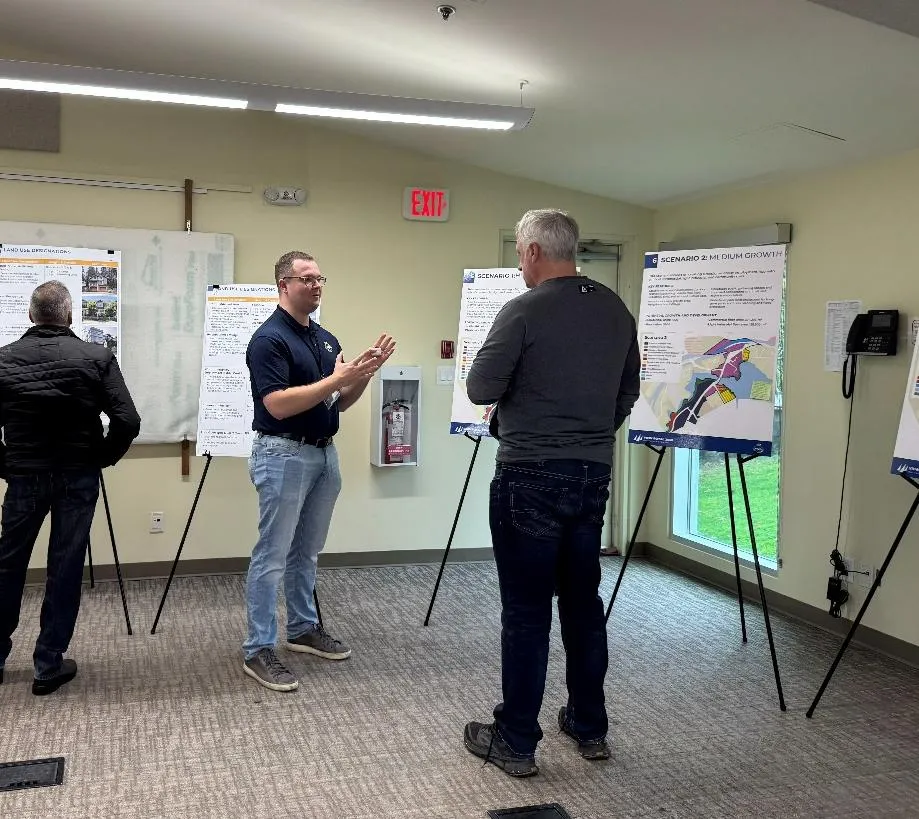
The first engagement touchpoint, Visioning and Guiding Principles, took place between January 24 to February 18, 2025, and the feedback collected is summarized in the Phase 1: Visioning and Guiding Principles Survey What We Heard report. The second round of engagement, Phase 1: How We Grow, took place from March 7 to April 4, 2025, with results captured in the Phase 1: How We Grow Engagement What We Heard report. The third touchpoint, Vision and Goals, occurred between July 18 to September 7, 2025. All feedback from this engagement touchpoint is captured in the Phase 1: Vision Survey Engagement What We Heard report. The fourth round of engagement, Western Gateway Community Corridor, took place between October 10 and November 7, 2025, with results captured in the Phase 1: Western Gateway Community Corridor Engagement What We Heard report. From November 8 to 30, 2025, the Town undertook a fifth round of engagement, which focused on a review of general policy. What we heard from this engagement touchpoint is summarized in the Phase 2: Policy Review Engagement What We Heard report.
The sixth and final engagement touchpoint for Phase 2 took place between March 20 and April 19, 2026. What we heard during this engagement is summarized in this report and was used by the project team to refine the final draft OCP.
The following section provides a summary of the Town’s Communications and Engagement Strategy for the OCP review and update.
OVERALL OCP ENGAGEMENT OBJECTIVES
The guiding objectives and principles of the OCP review and update include the following:
- Inclusive: offer multiple methods or platforms for engagement, including online and in-person;
- Educate: provide and share information to educate and inform the community to help them understand how their involvement shapes their future community;
- Engage: identify, engage, consult, and listen to a range of stakeholders;
- Establish: objectives, guidelines, and policies that are measurable and actionable;
- Demonstrate: active listening by staff and Council, by incorporating feedback;
- Transparency and accountability: open dialogue between stakeholders and decision makers;
- Address: challenges that pose risk to our community and opportunities that pose a reward;
- Communicate: clear, concise, communication which avoids the use of jargon to ensure all those involved understand and participate in the process; and
- Adaptability, learning, and improvement: openness to learn and improve with the understanding that stakeholder and community interests and needs and wants change.
AUDIENCE
- View Royal residents
- View Royal business owners
- View Royal community organizations
- View Royal staff
- View Royal Mayor and Council
The project team also encouraged people that may not live in View Royal but work and play in View Royal to participate in the process. This approach recognizes that View Royal is located between many neighbouring municipalities and serves as both a corridor and destination for those that live outside our municipal borders.
ENGAGEMENT APPROACH
The consultation process was designed in alignment with the International Association of Public Participation (IAP2) spectrum and core values. For more information on IAP2 visit: www.iap2.org
The engagement process for View Royal 2050 aims to engage at the “consult” level on the IAP2 spectrum of engagement. Council has previously endorsed the use of IAP2 principles, which will guide public engagement through the OCP review and update.
PUBLIC PARTICIPATION AND COMMITMENT
The project’s Communications and Engagement Strategy identifies the need to engage with the community across three levels of public participation, including “inform”, “consult”, and “involve”, which follows the IAP2 spectrum of public participation. The project team is committed to ensuring that participants in this process are informed and are heard, and that concerns raised, and feedback received will help inform the review and update process moving forward.
WHAT WE DID: ENGAGEMENT TOUCHPOINT 6
The sixth engagement touchpoint focused on presenting the draft OCP to the community and collecting feedback to be used to refine the draft document.
The Plan includes a land use chapter and nine supporting policy chapters, each with objectives and policies that guide how land is used, what amenities and services are provided, and how community needs are supported. Community members were invited to provide feedback on the vision, goals, and key policies through an online survey. A supporting summary document highlighted the major shifts in the draft document from the previous (2011) OCP.
Engagement Touchpoint 6 Objectives
The objectives of this engagement touchpoint included:
- providing information that is relevant and easy to understand, particularly about what an OCP is and how it will be used in the future;
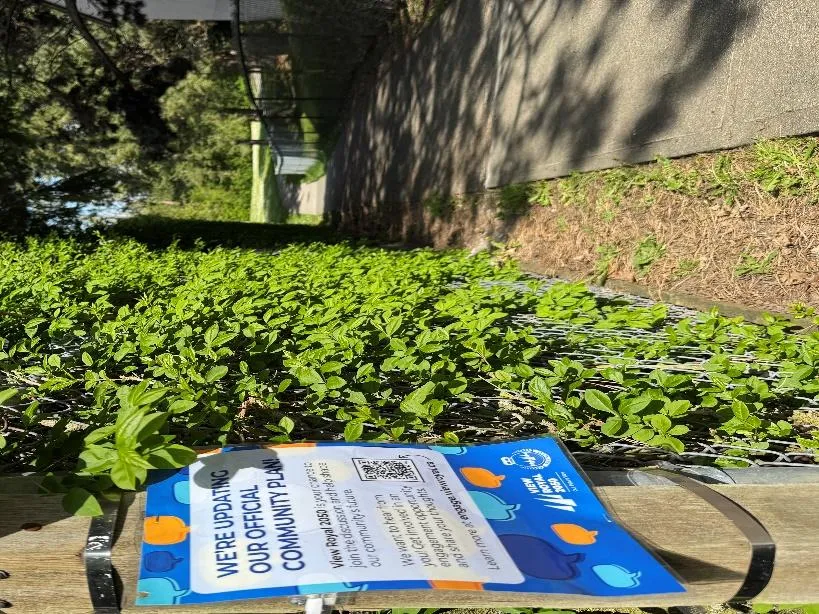
- raising awareness of the project and opportunities to provide input;
- sharing the draft OCP document, and gathering public feedback;
- encouraging participation using digital and print methods of communication; and
- demonstrating that the project team has listened and incorporated community input gathered during the engagement period.
How We Spread The Word
Multiple methods, both digital and print, were used to inform the community of the OCP update during this engagement touchpoint. A list of all methods is included below:
- View Royal 2050 webpage (engage.viewroyal.ca/view-royal-2050);
- Town’s official website (viewroyal.ca);
- Social media (Facebook, Instagram, Bluesky);
- Town-wide postcard mail-out;
- Project video;
- Inside View Royal e-newsletter;
- Engage View Royal subscriber campaigns;
- Project ‘business cards’;
- Newspaper ads; and
- Stakeholder e-mails.
The following section provides a summary of the outcomes from the tools used to promote this engagement touchpoint.
PROJECT PAGE ON ENGAGE VIEW ROYAL
The View Royal 2050 project webpage was updated on March 16, 2026, to announce the upcoming launch of the draft OCP engagement period and highlight opportunities to participate. On the same day, an email was sent to subscribers to raise awareness of the upcoming engagement and encourage participation.
On March 20, 2026, the engagement period officially launched, and the project webpage was updated with the draft OCP, summary report, and online survey. The webpage was updated again on April 15, 2026, to announce an extension to the survey deadline. A follow-up email sent to subscribers on April 17, 2026, also shared this important update.
Between March 16 and April 19, 2026, the webpage was viewed 1,035 times by 527 visitors. Over the same period, 15 people subscribed to follow the project page, bringing the total number of subscribers to 181.
Since the project launch on January 24, 2025, and through the close of the sixth round of engagement on April 19, the project webpage received 6,681 views from 3,452 visitors.
The webpage can be found at: engage.viewroyal.ca/view-royal-2050
TOWN’S OFFICIAL WEBSITE
During this engagement period, the OCP update was featured on the Town’s website homepage (viewroyal.ca). In addition, two “What’s New” notices were sent to subscribers to support ongoing promotion and awareness:
- March 20, 2026: Announced the focus of the sixth engagement touchpoint and promoted opportunities to provide input.
- April 17, 2026: Announced the Town was extending the engagement period to give more community members the opportunity to participate.
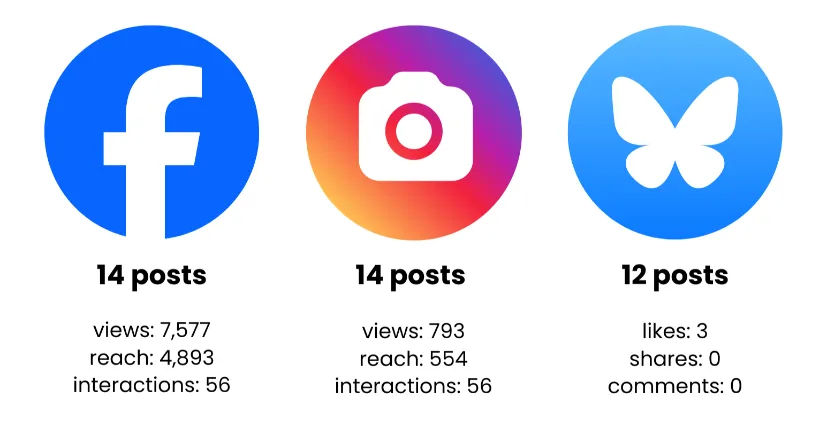
SOCIAL MEDIA
Between March 20 and April 19, 2026 content was shared on the Town’s social media accounts to promote the project and encourage public participation.
TOWN-WIDE POSTCARD MAILOUT
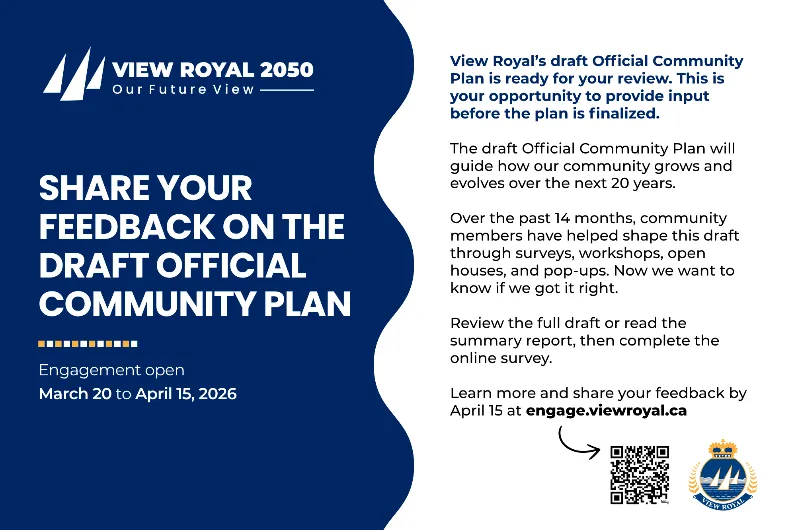
A postcard was mailed to all households in the Town of View Royal to coincide with the launch of the engagement period. The mailout introduced the draft Official Community Plan and emphasized the importance of community participation in shaping the Town’s future. It also highlighted key opportunities to get involved, including reviewing the draft plan online and completing the survey.
PROJECT VIDEO
A project video featuring the Town’s Mayor was released on March 20 to mark the launch of the final round of engagement. The video provided an overview of the draft OCP, outlined opportunities to provide feedback, and encouraged community members to participate.
The video was published on Facebook, Instagram, and YouTube and received 1,533 views combined.
INSIDE VIEW ROYAL E-NEWSLETTER
The March 2026 edition of Inside View Royal, the Town’s monthly e-newsletter, featured an article about the draft OCP engagement and highlighted opportunities to participate. An article was also featured in View Royal News, the Town’s official newsletter that is delivered to every household twice a year. The article helped raise awareness of the draft OCP and encouraged residents to participate in the engagement process.
NEWSPAPER AD
Print ads were placed in the April 1 and 8, 2026, editions of the Goldstream Gazette. The ads raised awareness for the OCP update and encouraged participation in the draft OCP survey.
NEWS RELEASES
On March 20, 2026, a news release about the draft OCP engagement period was distributed to local media highlighting the purpose of the engagement and opportunities to participate.
WHAT WE HEARD: ENGAGEMENT TOUCHPOINT 6
DRAFT OCP SURVEY
The draft OCP survey was available online from March 20 to April 19, 2026, with paper copies also offered at Town Hall. The survey invited participants to share feedback on the first draft of the new OCP. To make participation flexible and accessible, respondents could choose to answer the full survey or focus only on specific chapters within the OCP.
In total, 47 survey responses were received.
It is important to note that because participants had the option to choose which section they wanted to provide feedback on, and all questions were voluntary, some questions received more responses. All percentages are rounded to the nearest whole number.
OVERALL THEMES
Draft Vision Statement
Participants indicated that overall, they are supportive of the draft vision statement.
- Very Supportive (8, 31%); Supportive (14, 54%); Neutral (2, 8%); Unsupportive (2, 8%) Very Unsupportive (0, 0%); I am not sure (0, 0%)
Draft Goals
Overall, respondents felt supportive of the 12 draft goals:
- Mobility & Connectivity – Very Supportive (12, 48%); Supportive (9, 36%); Neutral (2, 8%); Unsupportive (2, 8%); Very Unsupportive (0, 0%); I am not sure (0, 0%)
- Diverse & Affordable Housing – Very Supportive (11, 44%); Supportive (10, 40%); Neutral (3, 12%); Unsupportive (1, 4%); Very Unsupportive (0, 0%); I am not sure (0, 0%)
- Growth Management & Community Character Preservation – Very Supportive (8, 32%); Supportive (13, 52%); Neutral (0, 0%); Unsupportive (3, 12%); Very Unsupportive (1, 4%); I am not sure (0, 0%)
- Natural Amenities – Very Supportive (15, 60%); Supportive (9, 36%); Neutral (0, 0%); Unsupportive (0, 0%); Very Unsupportive (1, 4%); I am not sure (0, 0%)
- Community Well-being – Very Supportive (11, 44%); Supportive (9, 36%); Neutral (2, 8%); Unsupportive (3, 12%); Very Unsupportive (0, 0%); I am not sure (0, 0%)
- Community Safety & Security – Very Supportive (13, 52%); Supportive (7, 28%); Neutral (2, 8%); Unsupportive (3, 12%); Very Unsupportive (0, 0%); I am not sure (0, 0%)
- Climate Action & Resilience – Very Supportive (10, 40%); Supportive (11, 44%); Neutral (2, 8%); Unsupportive (1, 4%); Very Unsupportive (1, 4%); I am not sure (0, 0%)
- Economic Development – Very Supportive (7, 29%); Supportive (14, 58%); Neutral (2, 8%); Unsupportive (0, 0%); Very Unsupportive (1, 4%); I am not sure (0, 0%)
- Reconciliation – Very Supportive (6, 25%); Supportive (7, 29%); Neutral (7, 29%); Unsupportive (2, 8%); Very Unsupportive (2, 8%); I am not sure (0, 0%)
- Community Input & Governance – Very Supportive (10, 42%); Supportive (13, 54%); Neutral (0, 0%); Unsupportive (1, 4%); Very Unsupportive (0, 0%); I am not sure (0, 0%)
- Regional Partnerships – Very Supportive (11, 44%); Supportive (8, 32%); Neutral (6, 24%); Unsupportive (0, 0%); Very Unsupportive (0, 0%); I am not sure (0, 0%)
- Sustainable Service Delivery & Asset Management – Very Supportive (12, 50%); Supportive (10, 42%); Neutral (2, 8%); Unsupportive (0, 0%); Very Unsupportive (0, 0%); I am not sure (0, 0%)
Draft Policy Objectives
Overall, respondents felt supportive of the different policy objectives.
- Land Use – Very Supportive (12, 40%); Supportive (13, 43%); Neutral (1, 3%); Unsupportive (3, 10%); Very Unsupportive (1, 3%); I am not sure (0, 0%); Other (0, 0%)
- Housing – Very Satisfied (6, 15%); Satisfied (24, 60%); Neutral (4, 10%); Unsatisfied (3, 8%); Very Unsatisfied (2, 5%); I am not sure (1, 3%); Other (0, 0%)
- Transportation and Mobility – Very Supportive (8, 27%); Supportive (14, 47%); Neutral (1, 3%); Unsupportive (4, 13%); Very Unsupportive (2, 7%); I am not sure (1, 3%); Other (0, 0%)
- Community Infrastructure and Services – Very Supportive (9, 32%); Supportive (17, 61%); Neutral (1, 4%); Unsupportive (1, 4%); Very Unsupportive (0, 0%); I am not sure (0, 0%); Other (0, 0%)
- Economic Development – Very Supportive (8, 36%); Supportive (11, 50%); Neutral (3, 14%); Unsupportive (0, 0%); Very Unsupportive (0, 0%); I am not sure (0, 0%); Other (0, 0%)
- Natural Environment – Very Supportive (8, 29%); Supportive (17, 61%); Neutral (1, 4%); Unsupportive (2, 7%); Very Unsupportive (0, 0%); I am not sure (0, 0%); Other (0, 0%)
- Climate Action and Sustainability – Very Supportive (11, 52%); Supportive (7, 33%); Neutral (1, 5%); Unsupportive (0, 0%); Very Unsupportive (2, 10%); I am not sure (0, 0%); Other (0, 0%)
- Parks, Trails, and Recreation – Very Supportive (18, 56%); Supportive (12, 38%); Neutral (1, 3%); Unsupportive (1, 3%) Very Unsupportive (0, 0%); I am not sure (0, 0%); Other (0, 0%)
- Community Well-being and Culture – Very Supportive (11, 48%); Supportive (9, 39%); Neutral (1, 4%); Unsupportive (2, 9%); Very Unsupportive (0, 0%); Other (0, 0%)
- Reconciliation – Very Supportive (4, 27%); Supportive (3, 20%); Neutral (4, 27%); Unsupportive (2, 13%); Very Unsupportive (2, 13%); I am not sure (0, 0%)
WHO PARTICIPATED
- 98% of respondents are residents of View Royal
- 25% of respondents live in the Harbour neighbourhood
- 77% of respondents live in a single detached house
- 89% of respondents own their home
- 14% of respondents are between the ages of 65 and 69 years old
- 17% of respondents are new to View Royal within the last five years.
- 50% of respondents indicated they found out about the Policy Review Survey engagement process by both the Town of View Royal website and social media.
- 31% of respondents indicated they found out about the survey by “other” means, indicating the postcard mailout.
- 35% of respondents indicated that this was their first time engaging on the View Royal 2050: Our Future View Official Community Plan Review and Update.
SURVEY RESULTS
The following section provides a summary of results for questions 1 to 85 in the draft Official Community Plan Survey, including the verbatim comments received.
Question 1: Please indicate which sections of the draft Official Community Plan you would like to review and provide comment on.
Findings:
- Housing Objectives and Policies: 40, 87%
- Parks, Trails, and Recreation: 32, 70%
- Transportation and Mobility: 30, 65%
- Land Use Objectives and Policies: 30, 65%
- Natural Environment: 28, 61%
- Community Infrastructure and Services: 28, 61%
- Vision and Goals: 26, 57%
- Community Well-being and Culture: 23, 50%
- Economic Development: 23, 50%
- Climate Action and Sustainability: 22, 48%
- Reconciliation: 15, 33%
Question 2: Please indicate your level of support for this draft vision statement.
Findings:
- Supportive: 14, 54%
- Very Supportive: 8, 31%
- Unsupportive: 2, 8%
- Neutral: 2, 8%
- I am not sure: 0, 0%
- Very Unsupportive: 0, 0%
Question 3: What changes, if any, would improve the draft vision statement? (Select all that apply)
Findings:
- Other: 1, 100%
- Include additional ideas or priorities: 0, 0%
- Add a time horizon (for example, referencing 2050): 0, 0%
- Make the statement shorter or simpler: 0, 0%
- Make the statement more descriptive: 0, 0%
Other:
- welcoming and inclusive feel redundant. To be inclusive is to be welcoming. It seems out of place to put the word "thriving" because view royal is the sum of the individual who live in it, not all of which will be "thriving" at all times. "Services" seems too broad and feels like it means nothing in this context.
Question 4: If you have suggestions, please describe what changes you would make to the draft vision statement. Please be as clear and concise as possible.
Findings: No responses.
Question 5: Please indicate your level of support for each draft goal.
Findings:
| Goal | Very Supportive | Supportive | Neutral | Unsupportive | Very Unsupportive | I am not sure |
|---|---|---|---|---|---|---|
| Economic Development | 29% | 58% | 8% | 0% | 4% | 0% |
| Growth Management & Community Character Preservation | 32% | 52% | 0% | 12% | 4% | 0% |
| Community Input & Governance | 42% | 54% | 0% | 4% | 0% | 0% |
| Climate Action & Resilience | 40% | 44% | 8% | 4% | 4% | 0% |
| Diverse & Affordable Housing | 44% | 40% | 12% | 4% | 0% | 0% |
| Sustainable Service Delivery & Asset Management | 50% | 42% | 8% | 0% | 0% | 0% |
| Mobility & Connectivity | 48% | 36% | 8% | 8% | 0% | 0% |
| Natural Amenities | 60% | 36% | 0% | 0% | 4% | 0% |
| Community Well-being | 44% | 36% | 8% | 12% | 0% | 0% |
| Regional Partnerships | 44% | 32% | 24% | 0% | 0% | 0% |
| Community Safety & Security | 52% | 28% | 8% | 12% | 0% | 0% |
| Reconciliation | 25% | 29% | 29% | 8% | 8% | 0% |
Question 6: If you indicated you were ‘unsupportive’ or ‘very unsupportive’ with any of the draft goals, what changes would improve the goal(s)? Please list the goal and indicate the change(s) you would like.
Findings:
- Do not overbuild as we do not have the infrastructure to cope. Also threatens our urban canopy. Put in place net zero run-off standards for all development to prevent flooding and to protect watersheds.
- Reconciliation should not be a priority in this draft community plan as it seems the voice of few will have more sway then the community members that pay taxes and contribute to the community
- These are hugely broad statements. For example, we already have a lot of natural amenities in View Royal which should be maintained however, we do not need to expand. We've already got lots for a small community. I'd give more feedback but 255 word max
- For Mobility, include prioritizing safety and active modes of travel. For natural amenities, in addition to current goal statement, include enhancing or expanding equitable access to natural environments.
- Mobility: doesn't suggest efficient / able to address congestion gridlock. well-being: doesn't mention heritage, gathering amenities. Safety: must feel safe day-to-day, not just in emergencies. Reconciliation: no. WHY LIMIT # CHARACTERS FOR THIS SECTION?!
- Goal: Nature-First city model. Change: Embed Natural Asset Management. Aim for 40% canopy and 100% net-zero by 2040. Mandate performance-based checklists for health and climate accountability.
- I think the township has too many apartments and condominiums with no plan for how this will affect the lives of the people in this area. The buildings going in are often ugly and far too dense. Human beings are not meant to live in ant colonies.
- The "Growth Management & Community Character Preservation" goal is not specific enough, what is meant by "thoughtful" - sounds like fluff.
- Goal 3 "complements View Royal’s existing character" This should be removed or changed. What parts of existing character are being complemented? building heights? existing single story dilapidated building on island highway? it's very vague and subjective
- Growth: remove the part about character. Community wellbeing: about more than space. Safety: More than emergencies, also crime and feeling of safety. Governance: need to include ALL residents with an equity lens.
Question 7: Overall, what is your level of support for the draft Land Use objectives?
Findings:
- Supportive: 13, 43%
- Very Supportive: 12, 40%
- Unsupportive: 3, 10%
- Neutral: 1, 3%
- Very Unsupportive: 1, 3%
- Other: 0, 0%
- I am not sure: 0, 0%
Question 8: Do you have any concerns or recommendations to improve the draft Land Use objectives?
Findings:
- Make sure the push for density does not override the need to preserve and protect our natural spaces and urban tree canopy. We need quality of life not quantity.
- Incentive to carpool with ability to use bus lane
- Update policies to encourage building forms that follow natural contours (e.g., 'staircase' designs). This minimizes disruptive rock blasting on lots with significant bluffs while allowing for modern density.
- There are already many more housing units build/building than there are people to buy/rent them. Why continue with higher buildings? More and more multi-use buildings and multi-family projects? View Royal will soon be a much less beautiful, peaceful, calm neighborhood. People on top of people is not an optimum development approach. Meanwhile, roads are narrowing, parking is minimized. Looks like the plan is to move the people in rural areas into the city? Otherwise, there are not enough people in/moving into View Royal and Greater Victoria in general. Far too much development.
- "Corridors" means all over town = congestion everywhere; FOCUS on the hubs with rapid bus! All this magnifies the constraints of its east/west "pinchpoint"! "continuing to improve connections"... How? have we started? Compact (lots of) housing must address adequate cars and parking. What is "functional interconnected" trail where to... Colwood...Atkins Road? Include specific text for urban forest protection. All this on rock where servicing infrastructure costs are strain on taxpayers.
- Fast review and response times are essential. Published expected timelines would help everyone.
- Balanced Density, meet Bill 44/47 precisely; resist overcapacity. Nature-Directed Stewardship: Restore ecological integrity. Metrics: Mandate 40% canopy and 10% impervious limit (Sponge City). View Royal serves as the South Island’s regional multimodal transit conduit, facilitating movement across the South Island. It is not a primary destination city and its growth must be balanced against its role as our home. Meet density mandates precisely, resist creating overcapacity that strains existing pipe infrastructure and the urban canopy.
- A walkable "downtown" would be beneficial to the social fabric and mental health of the community. A village-like centre like Fairfield or James Bay, where a person can walk to the bank, visit a cafe, shop for shoes, pop into the hardware store and bump into friends would be perfect.
- There are just too many people for the roads, water and infrastructure. You are destroying the ambiance of View Royal. It is turned into a mess of high density apartments with balconies that overlook roads and traffic. Ugly and not life affirming.
- Growth should not only be directed to corridors. Withing 5 blocks of a corridor should be promoted for growth. More development (multi-family) or sub-division of waterfront lots should be added, as only a very few private lots have access to a majority of the shoreline.
- like the idea of growth on corridors and around hubs and leaving other areas.
- Development height should be reduced from 6 stories to 4 stories in all incidences, to enable easier fire fighting capacity and improves aesthetics and tree coverage.
Question 9: Overall, what is your level of support for the draft Mobility Hub policies?
Findings:
- Mobility Hub Policy A: Very Supportive (12, 41%); Supportive (14, 48%); Neutral (2, 7%); Unsupportive (1, 3%); Very Unsupportive (0, 0%); I am not sure (0, 0%)
- Mobility Hub Policy B: Very Supportive (11, 38%); Supportive (13, 45%); Neutral (3, 10%); Unsupportive (1, 3%); Very Unsupportive (1, 3%); I am not sure (0, 0%)
- Mobility Hub Policy C: Very Supportive (11, 38%); Supportive (13, 45%); Neutral (2, 7%); Unsupportive (2, 7%); Very Unsupportive (1, 3%); I am not sure (0, 0%)
Question 10: Do you have any recommendations to improve the draft Mobility Hub policies? If you do, please clearly identify which policy you are referencing.
Findings:
- Implement a pedestrian shade mandate to make it safer and more comfortable for people to choose active transportation. Place water fountains and shaded seating to support seniors and those with mobility issues.
- Incentive to carpool with ability to use bus lane
- Policy C. Map 5 & 6 (Connectivity): Support the immediate rollout of sidewalks and AAA bike lanes as shown on the future networks. This turns infill housing into true transit-oriented development.
- How about instead of following provincial direction, we develop our own community plan with the community? The plans for growth are ridiculous. And of the small number of residents actual living in View Royal, you must be looking for some massive property tax increases.
- For policy C, include climate-ready design features. eg. transit shelters to provide shade and protection from extreme weather, drinking water fountains
- A: Remove "park and ride" Dangerous narrow Atkins Road. Byron is provincial, E&N is ICF...AND area has major regional infrastructure challenges... how possible to become a "hub" without high density (15 story, FSR 3.5+) B. Six stories is NOT high density. Limited to just "community destination"? C: "walkability" #1 is just about bikes! Mandate 3 lanes to ensure pedestrian safety separation; include safety night lighting along routes and trails. include amenities -- washrooms / water too. Build playgrounds and create recreational beaches.
- Just to ensure connections between routes are timely, integrated and easily accessible.
- Policy 5.3.1: Mandate Pedestrian Shade (40% canopy/architectural). Policy 5.3.4: Standardize inclusive washrooms and secure, weather-protected bike lockups within 400m.
- I support the general idea, but I see many examples of open green space with multiple seating areas where nobody ever sits. An adult exercise park in North View Royal would be nice.
- consider why it is necessary to create such high density in View Royal. You are changing a once lovely place to live into a mini Langford with ugly buildings that will be future slums.
- For Policy C: Impacts to traffic congestion need to be considered when deciding on adding more bike lanes. Preference is to NOT add more bike lanes.
- We really support the idea of having better cycling infrastructure. We are a family who cycle to work and for provisioning whenever we can. We would like to see better cycling trails that are separated from traffic and safe for all ages. We would like to see consultation with specialists in this area (noting communities that utilize best practice for cycling lanes/paths eg. Netherlands)
- "Mobility Hub policy C" is confusing. it's a policy, not really a physical hub like the other two. where exactly would the hospital hub be - I like the idea but the access is important as it's already a very busy area.
- Prefer the pedestrian mobility map, provides a clear separation of bikes and pedestrians.
Question 11: Overall, what is your level of support for the draft Redevelopment policy?
Findings:
- Supportive: 18, 64%
- Very Supportive: 6, 21%
- Unsupportive: 2, 7%
- Neutral: 1, 4%
- Very Unsupportive: 1, 4%
- Other: 0, 0%
- I am not sure: 0, 0%
Question 12: Do you have any recommendations to improve the draft Redevelopment policy?
Findings:
- Consideration of effect on surrounding properties in close proximity. Does it impact views, amount of light received or orphan their property ie a house with sudden large bldg or tall home beside it may impact their enjoyment of yard space, privacy, amount of light in the home interior and ultimately property value.
- Design buildings to have less of a footprint to allow for more green spaces. Design from the get go to plan around mature trees. Make sure developers do their fair share of providing for non-market and supportive housing and contribute to parks and community amenities for the privilege of being able to build in View Royal.
- I strongly advocate for Policy E to pre-zone high-potential sites. This provides the certainty needed to reach Provincial 2028 housing targets by eliminating the 6–12 month 'Development Permit' friction for small-scale infill. Focus pre-zoning on sites that transition from the Island Highway corridor to residential areas (e.g., Prince Robert Dr), allowing for 4-unit density that feels like a 'houseplex' rather than an apartment.
- I'd like to see less density and retain the quality of life in View Royal. As mentioned, there are already so many unoccupied condos and rentals. Who do you anticipate moving to View Royal with such massive development plans? Where are they coming from?
- What about improving 5.1.3, 5.1.4? Opposed to G... Council oversight for the public must be maintained. ADD essential check and balance: "Perform bi-annual traffic computer / AI simulation tools to assess viability of municipal roads level of service and queues to ensure redevelopment is not adversely affecting municipal / regional services, safety, transit mobility etc". Likewise, for adequate park space & school space... J: add "safe egress in/out of road traffic".
- Provide recorded, transparent pre-application and application comments and to be in support of instead of deterring applications. The implementation of extreme specific wording and definitions is not helpful. Overall design and substantial compliance should take precedence over minute details to deter.
- Conditional support provided that significant public benefit is clearly defined and that tree retention is strictly enforced rather than just suggested. DCC credits for internal multi-unit conversions. Audit Mandatory post-construction accountability and Net-Zero Runoff verification.
- I support higher density buildings in order to preserve natural space.
- Create less density. Have more open spaces around buildings. Make it more attractive. Do NOT put four or five or six story buildings in among single family homes. It is unfair to those in the single family homes.
- Waterfront lots that support more housing and housing types.
- 3 - keep growth at min while still meeting goals set out provincially and federally, worries about congestion. 6 - so many things in this one, support public parks and public community spots; do not support community housing.
- Height restrictions should be capped at 4 stories in all instances, better appearance, easier to address fire fighting, easier to landscape large trees.
Question 13: Do you have any concerns or recommendations for the proposed draft land uses within the Western Gateway Corridor?
Findings:
- No
- Oppose building or expanding into thetis lake
- Concerned that the development plans add far too much density. Businesses are going out of business across Canada due to increasings costs and increasing taxes. Slow down. Take a breath. Look at development projects as needed. Currently, there are loads of unoccupied rental and condos, and you want to add hundreds/thousands of units? Crowd everyone? Not cool.
- Add # stories/ FSR to each designation in the table? Grey employment district is not conducive to hotel or tourists. 1720 Wilfert development uses = unacceptable risk to highly sensitive ecosystem. Building height should be up to 10 storeys as bonus density if geology permits. Hart Road should have higher density land use. Include "rapid and frequent transit" asset
- View Royal, due to its' geographic location, currently operates as a 'drive-through for commuters' town. This needs to be better controlled. Take back the town and just allow through-traffic on the main hubs such as the highway. It is dangerous, encourages snake-around traffic and makes the local streets unusable during peak rush-hours.
- Oppose Massive Site Assembly. Require net gain in permeability for merged lots. Discourage Large-Footprint Consolidation to protect ecological connectivity.
- Try to make it not look like it does now with strip malls and car dealerships galore. Bring in nice places to eat for families and stores that support the neighborhood.
- Please ensure cycling lanes are made a priority.
- I like the density and evolution of View Royal here. If we want the things we need in our community [diversified tax base, employment, more housing] we need to put it somewhere where it makes the most sense. This feels ok to me and the strip is dull and dreary now, so redevelopment will improve it.
- A grocery store
Question 14: Overall, what is your level of support for the draft Western Gateway Corridor policies?
Findings:
- Western Gateway Corridor Policy A: Very Supportive (10, 38%); Supportive (13, 50%); Neutral (2, 8%); Unsupportive (1, 4%); Very Unsupportive (0, 0%); I am not sure (0, 0%)
- Western Gateway Corridor Policy B: Very Supportive (8, 32%); Supportive (12, 48%); Neutral (3, 12%); Unsupportive (1, 4%); Very Unsupportive (1, 4%); I am not sure (0, 0%)
- Western Gateway Corridor Policy C: Very Supportive (7, 28%); Supportive (11, 44%); Neutral (5, 20%); Unsupportive (2, 8%); Very Unsupportive (0, 0%); I am not sure (0, 0%)
Question 15: Do you have any recommendations to improve the proposed Western Gateway Corridor policies? If you do, please clearly identify which policy you are referencing.
Findings:
- 1720 Wilfert Rd should have been purchased for parkland. Development there could be detrimental to Millstream Creek. How often have we heard developers say they will do due diligence to protect the environment but they don't and only get a slap on the wrist. We need stringent enforcement and stiff fines for any damage done to the environment.
- Slow down. These plans are serving a provincial/federal mission - not a local one.
- Also consider food retail and food services in this area so that people living, working or visiting this area have nearby access to these types of amenities
- A. Need Colwood to collaborate on sidewalks and trails connections to Rec centre, Wilfert to Wale to attract development for both B. MUST address congestion...include rapid bus here! Town's credibility for Millstream and estuary protection and Park land is zero in the corridor. C. Is "stacked development" defined and considered elsewhere in the town's land use development?
- Policy 5.5.2: Protect uninterrupted soil microbiome corridors (25km+ nodes). Policy 5.5.5: Require Miyawaki pocket forests and double-rowed hedgerows for biodiversity and noise buffers. Rain gardens.
- Please try to make it attractive and related to the real needs of the community.
- Emphasis on thoughtful design and attracting businesses that are locally owned and not fast-food chains.
- I hope the vision for this area will be broadly communicated to the residents. also, the benefits of it here, versus other parts of the town.
Question 16: Overall, what is your level of support for the draft Hospital Transit-Oriented Area policies?
Findings:
- Hospital Transit-Oriented Area Policy A: Very Supportive (9, 33%); Supportive (14, 52%); Neutral (2, 7%); Unsupportive (1, 4%); Very Unsupportive (1, 4%); I am not sure (0, 0%)
- Hospital Transit-Oriented Area Policy B: Very Supportive (10, 40%); Supportive (13, 52%); Neutral (0, 0%); Unsupportive (1, 4%); Very Unsupportive (1, 4%); I am not sure (0, 0%)
- Hospital Transit-Oriented Area Policy C: Very Supportive (10, 40%); Supportive (10, 40%); Neutral (3, 12%); Unsupportive (1, 4%); Very Unsupportive (1, 4%); I am not sure (0, 0%)
Question 17: Do you have any concerns or recommendations to improve the draft Hospital Transit-Orient Area policies? If so, please clearly identify which policy you are referencing.
Findings:
- Policy B - I don't think "prioritizing" is a fair policy. Do not support underground parking for commercial in this area. Policy C - Family oriented housing stock - townhouses that include parking.
- Push BC Transit hard to get more frequent transit to this area.
- Too much development overall.
- Consider policies to support nearby access (walkable) access to healthy food retail (grocery stores, markets) and parks and greenspace, and that increases in density correspond with increases in parks and other amenities.
- B. Tourist hotel benefits not just hospital... local and regional economy, tourism throughout our town, wayfinding is important. Hotel with restaurant important for area. Walkable community amenities like daycare, meeting places, park space, library, meeting places. Providing urban shade, access to washrooms, water,
- Policy 5.4.2: Mandate Singapore LUSH standards (100% green replacement). Policy 5.4.4: Define urban shade as Municipal Health Asset; maximize canopy for heat protection.
- Leave it as green space.
- Emphasis on a nice aesthetic and high-quality design will be important. Also, if you built it, they will come... how will the increased population and use impact our already-strained infrastructure and natural space?
- I hope there will be sidewalk connections on Watkiss Way all the way to EagleCreek that that don't exist now. It's a big disconnect between the Burnside neighbourhood and EC Village
- Like policy c, but don't support community housing - can decrease safety of using the Goose
- Sidewalks on watkiss way
Question 18: Overall, what is your level of support for the draft Neighbourhood Village policies?
Findings:
- Neighbourhood Village Policy A: Very Supportive (8, 31%); Supportive (13, 50%); Neutral (3, 12%); Unsupportive (1, 4%); Very Unsupportive (1, 4%); I am not sure (0, 0%)
- Neighbourhood Village Policy B: Very Supportive (8, 32%); Supportive (12, 48%); Neutral (3, 12%); Unsupportive (1, 4%); Very Unsupportive (1, 4%); I am not sure (0, 0%)
- Neighbourhood Village Policy D: Very Supportive (12, 44%); Supportive (12, 44%); Neutral (1, 4%); Unsupportive (1, 4%); Very Unsupportive (1, 4%); I am not sure (0, 0%)
Question 19: Do you have any concerns or recommendations to improve the draft Neighbourhood Village policies? If so, please clearly identify which policy you are referencing.
Findings:
- Map is not detailed enough to show areas by street. The areas for the 2 villages are vastly different. Do I support this for Atkins - yes - a lot of older outdated housing type - cottages. Hospital District - much pf this has 20 year old houses (Stoneridge, Game road) area on end of Talcott or Vickery would really need better access to be meaningful.
- Overbuilding for a small, residential community. This is a developer's dream - not a resident's dream.
- It is great to see policy supporting strong and safe linkages
- a) Tourist accommodation... enable here if not directly in the VGH hub. Hotel can include restaurant close to VGH c) the ONLY access to Craigflower creek should be through View Royal Park. Safe linkages via regional trails must include a separate pedestrian lane and night lighting on the Galloping Goose Trail... for residents & visitors alike!
- Neighbourhood villages are great, however, again the dangerous and abundant traffic chaos comes into the mix. these neighbourhoods should be off the beaten track to make safe and inviting for everyone.
- Policy 5.7.1: Mandate 15-minute essentials (groceries, pharmacy, childcare). Policy 5.7.3: Require shade trees, seating, and water fountains at all village centers.
- Too much density.
- Concerned about the increased population and use impacting our already-strained infrastructure and natural space.
- infrastructure needs to keep up with growth
Question 20: Do you have any concerns or recommendations to improve the draft Land Use chapter?
Findings:
- I support this for Atkins but not for Hospital area. Also map doesn't reflect area for Handy Dart area correctly - it is not a park. I would also like to see connection between Atkins area and Hospital area improved.
- Slow it all down. Solicit REAL community input. If you actually speak to residents (not provincial bureaucrats), you'll understand how people enjoy living. This OCP is a developer's dream - not a dream of the people who reside here.
- Protect, preserve, natural environment along Millstream, Craigflower, Hospital creeks and their estuaries - Repeat the 2011 policy on dark sky, and include new window designs to reduce “bird stikes” - Don't limit Atkins hub to just 6 storeys... same as Hospital hub... for maximum use of rapid transit corridor - Portage Inlet properties are all vulnerable to sea level rise, not just Christie Point - emphasize urban forest strategy and NOT just for boulevard trees... forests too!
- Policy 5.1.2 (Amalgamation): The chapter must include a formal Amalgamation Policy to prevent Large-Footprint Consolidation of SSMUH lots. Use Bill 16 authority for street trees/sidewalks. Integrate Natural Asset Management Roadmap.
- Neighbourhood Village at Fort Victoria
- Pay attention to the needs of the homeowners who already are paying taxes. Do not destroy the community they originally bought into with high density housing that is not supported by infrastructure. Be aware of the misery of the work commute most people endure. Do no make it worse out of greed.
- Wide sidewalks , trees
Question 21: Overall, what is your level of support for the draft Housing objectives?
Findings:
- Satisfied: 24, 60%
- Very Satisfied: 6, 15%
- Neutral: 4, 10%
- Unsatisfied: 3, 8%
- Very Unsatisfied: 2, 5%
- I am not sure: 1, 3%
- Other: 0, 0%
Question 22: Do you have any concerns or recommendations to improve the draft Housing objectives?
Findings:
- Be realistic about what families need (townhouses / non-strata housing). Cars! To take kids to activities, to buy major purchases, to go to work. If you are a contractor you need a vehicle to go to work. You have tools. Many homes will share living spaces for multi-generational homes - more vehicles.
- Four areas that need to be addressed to improve the quality of life in View Royal: (1) Work with other levels of government to reduce sound and chemical pollution from highway traffic (i.e. install concrete barriers and grow plants up them) (2) Strengthen bylaws to reduce impact of noise pollution and vibrations from heat pumps and fans (i.e. require heat pumps face road vs side of properties, require installation of sound and vibration barriers) (3) Enact bylaws to address impact of light pollution in residential areas (4) Implement "Right to Sunlight" legislation to ensure that as communities densify new houses/buildings are not permitted to shade adjacent properties.
- Encourage low impact development to preserve natural and built assets. Use more rain gardens and bio-retention areas. Use density bonusing as an incentive to provide onsite natural play areas. Reuse existing structures first as a priority to help save mature trees. It is faster, cheaper and greener. Could use DCCs to convert existing homes into multi-unit housing rather than redeveloping the whole lot. Raise accessibility targets to 20%. Mandate MERV13 air filtration and cooling refuges at under 26º to protect folks from wildfire heat and smoke.
- Aging in place may not be the best use of land and housing within View Royal.
- Again - there are many places to live in View Royal now. I agree that redeveloping/adding a senior's home/facility would be lovely for the long term residents however, infill, high density, multi-family projects with retail is not what residents want - it's a provincial/federal/developer-friendly plan.
- Recommend including policy to support climate ready housing and retrofits to existing housing from both a mitigation and adaptation perspective, supporting safe indoor temperatures during extreme heat and safe indoor air quality when there is poor outdoor air quality due to wildfire smoke.
- add climate resiliency to address heat / cold extremes in new housing - remove promotion for Regional Housing Trust Fund... there are many important CRD funds... to limit just ONE in OCP shows disturbing bias. - housing in VR is also challenged by geology, topography, geography: steep slopes, rock, and constrained transportation network - we NEED DCCs, Amenity charges and a sidewalk "tax" to ensure EVERY new redevelopment contributes to essential infrastructure, and pays taxes. Affordable must not be a long term tax burden on taxpayers - do not advocate for UDI to lobby the Province regarding necessary taxes; do not waive essential DCCs for services that benefit everyone - Require every new complex to have 2 escape stairwells to protect our residents and firefighters
- Loosen up definitions so more robust and varied housing is able to be proposed. The planning dept is stuck on strict, exacting unnecessary and costly definitions to the letter. Overall substantial compliance should be the tone.
- The housing objectives focus on finding homes that match potential owners with specific income brackets. The objectives do not consider affordability for existing homeowners in a climate of rising costs (hydro, groceries, gasoline, etc) and inflation. The objectives should include policy for homeowners to rent a room or secondary suite on a temporary basis of less than 90-days to generate additional income. The BC Short Term Rental Accommodation legislation provides for exemptions which are not supported by View Royal. For Example the exemption for student accommodation to support a student to attend Royal Roads, BCIT, Camosun or UVic for periods of less than 90-days. Not all homeowners want to rent long term as per the BC Residential Tenancy Act. Aligning with the Province and allowing short term, temporary rentals would allow homeowners to generate temporary income and have flexibility to gain access to that part of the home on conclusion of the short term rental. It does not put long-term strain on municipal infrastructure (sewer, drinking water, landfill, traffic/roads) and supports good homeowners to remain in the municipality. Suggest View Royal consider this policy change and align with neighboring municipalities and the Province.
- Prioritize Density Without Demolition to incentivize internal conversions of existing homes. This preserves mature trees and permeable soil. Add a Climate Resiliency objective to ensure all new housing handles extreme heat and wildfire smoke.
- I fully support the objectives, however, the density close to Thetis Lake is inappropriate, putting too much stress on the lake and fauna in the area.
- do not change the way a neighborhood looks to stuff in four or six story apartment complexes. This is not fair and it destroys the feeling of a neighborhood.
- I am encouraged to see that included in the plan is the goal “to meet the needs of residents at different life stages”. In our existing community there are many seniors who will likely be thinking about downsizing from their single family homes in the next decade or two. We understand that housing for seniors to live in a community (similar to Amica) is lagging behind the need for it in a serious way. View Royal could be a leader in providing this kind of housing for independent senior living and perhaps for those who need the next level of care/support. This would be a benefit to existing community members as well as the surrounding area. The proximity to the hospital and a medical clinic makes such a building in this location even more attractive for seniors who are planning on downsizing.
- I do have concerns regarding the small scale multi unit housing. The proposed plan isn't very specific regarding the limitations for these units. I am concerned that three story housing will over shadow the existing homes.
- All reference in this Plan to "affordable" housing should be removed. View Royal has NEVER had affordable new housing and the market will never supply any. If we want housing for the poor and the low wage earners some level of government will have to fund, build and manage it. All other talk of affordable housing is just smoke and mirrors.
- Need for thoughtful design so that new builds fit in with the character of the neighborhood, and have dedicated parking.
- no mention of co-op housing, ensure existing is protected and seek to support more in the future
- Don't want community housing
- Each unit must provide a parking space to reduce street parking, six mile Rd street parking unsafe east of off ramp
Question 23: Overall, what is your level of support for the draft General Housing policy?
Findings:
- Supportive: 18, 49%
- Very Supportive: 8, 22%
- Neutral: 5, 14%
- Unsupportive: 3, 8%
- Very Unsupportive: 2, 5%
- I am not sure: 1, 3%
- Other: 0, 0%
Question 24: Do you have any concerns or recommendations to improve the draft General Hospital policy?
Findings:
- I don't support priority.
- Include coops.
- Also include opportunity for pet-friendly as a renter there are limited options
- View Royal has been and is a very accessible, lower-priced neighborhood with enough of everything. The desire to densify is not optimum for View Royal's taxpayers and residents.
- Prioritizing just this range of housing creates an imbalance where development will NOT pay for itself thru DCCs and ongoing taxes, thereby increasing the burden on taxpayers. Instead: "ensure a BALANCE of market and below market housing" "affordable" can be "barely standard", not quality building construction. "Advance the overall OCP objectives" Remove... it is "catch all" for loopholes
- The housing objectives do not consider housing affordability for existing homeowners in an economy of rising costs.
- Incentivize: Internal conversions (Density Without Demolition). Resilience: Add objective for handling extreme heat and wildfire smoke. Do not create long-term infrastructure liabilities or increase the Urban Heat Island effect for the neighbourhood.
- I think we need more homes that families can actually live in. Two bedroom condos aren't supportive for growing families and we don't have enough townhomes.
- In principle very supportive. Although I am in agreement with the need for supportive housing, the proper supports such as health/mental health, security, enforcement, etc. is imperative.
- Please be mindful of not wrecking what we already have to bring in "new and improved" housing. Allow established neighbourhoods to remain single family homes.
- Row houses, townhouses, and duplexes should be prioritized, where appropriate, over condominiums.
- Agree, if the developer wants their permit approved faster by supporting item 1 - 7 they should move to the front of the line. Housing that supports non-market housing for local workers/single parents or designating 10 - 20 percent of their units to a non-profit organization that's housed individual with developmental or physical disabilities should be prioritized.
- hopefully policy b includes priority review of garden/secondary suites
- Try to reduce the footprint of our natural habitat. Building high-density housing does not keep the forests.
Question 25: Overall, what is your level of support for the draft Housing Supply policies?
Findings:
- Housing Supply Policy A: Very Supportive (11, 30%); Supportive (18, 49%); Neutral (5, 14%); Unsupportive (1, 3%); Very Unsupportive (2, 5%); I am not sure (0, 0%)
- Housing Supply Policy E: Very Supportive (11, 30%); Supportive (20, 54%); Neutral (4, 11%); Unsupportive (0, 0%); Very Unsupportive (2, 5%); I am not sure (0, 0%)
- Housing Supply Policy G: Very Supportive (9, 24%); Supportive (15, 41%); Neutral (6, 16%); Unsupportive (3, 8%); Very Unsupportive (3, 8%); I am not sure (1, 3%)
Question 26: Do you have concerns or recommendations to improve the draft Housing Supply policies? If so, please clearly identify which policy you are referencing.
Findings:
- Policy G - What does this mean?
- I strongly advocate for Policy E to pre-zone high-potential sites. This provides the certainty needed to reach Provincial 2028 housing targets by eliminating the 6–12 month 'Development Permit' friction for small-scale infill. Focus pre-zoning on sites that transition from the Island Highway corridor to residential areas (e.g., Prince Robert Dr), allowing for 4-unit density that feels like a 'houseplex' rather than an apartment.
- Again - this plan is a developer's dream - not at all designed for the taxpaying residents of View Royal.
- A) do not consider / do... council must remain involved as community representatives on all matters g) form and character ensures GOAL of maintaining town's ambiance and character... for all housing, and helps to protect the trees WHY JUST A E G? Rest of the alphabet / policies missing. What about F... this appears to be a loop hole to re-write density, height, lot coverage beyond land use requirements any time. UDI wish list. Opposed.
- Policy G should be revised to consider rental options for homeowners who want to periodically rent an approved secondary suite or room in alignment with the Short Term Rental Accommodations Act including the five activities that are exempt from the legislation (found in Short Term Rental Accommodations Regulation section 4). The Town of View Royal is too restrictive on allowable rental which is impacting the ability for homeowners to retain residence.
- Tie expedited approvals to mandatory post-construction audits. Prevent Large-Footprint Consolidation. No duplex exemptions if it removes tree/permeability requirements.
- I agree with Policy G, but some parameters must be in place to consider neighbors. I don't think neighbors should be able to veto but an extension or garden suite could ruin the lives of neighbors is there is not sufficient space, screening, etc.
- Do not expedite development. What is the rush? Do not give developers exemptions. Consider the tax payers needs and wants.
- Policy G: I would like to see the word ‘expediting’ replace the word ‘exempting’.
- It's important to keep form and character development requirements. Drastic changes in neighbourhoods can force families out of their homes when the dynamic of the neighbourhood changes.
- With all due respect to staff, it is Council's responsibility to approve development approval and permitting approval. It is with council that the residents of this Town have the opportunity to comment and request consideration for their needs. Such decisions should not be delegated to staff.
- i support the delegation to staff of simple applications
- Not in favour of increasing multi-level housing. More people equate increased traffic.
Question 27: Overall, what is your level of support for the draft Family Housing policy?
Findings:
- Supportive: 19, 50%
- Very Supportive: 7, 18%
- Unsupportive: 4, 11%
- Neutral: 4, 11%
- Very Unsupportive: 3, 8%
- I am not sure: 1, 3%
- Other: 0, 0%
Question 28: Do you have any concerns or recommendations to improve the draft Family Housing policy? If so, please clearly identify which policy you are referencing.
Findings:
- Not anywhere I want my family to live. Townhomes (freehold) - there are millions of them in other parts of Canada - success fully. Duplexes - side by side Families need an outdoor space (private) - Doesn't have to be large.
- Need way more 3 bedroom homes for families.
- Lots of affordable housing are already geared towards families and it's hard as a single occupant to find these opportunities
- There's a reason some people choose to live where they do. Often to a place where there are shared values, lifestyles. These 'rules' ignore human nature.
- Support unit mix but mandate 80 sq. ft. balconies and on-site natural sponge play spaces over plastic equipment.
- 3 bedroom+ homes need higher priority. We have a great site just down from the firehall that could support 20+ townhomes.
- The market should decide. Ex. If 3-bedroom appts. are selling out first, obviously more are required.
- I do not want to see huge apartment complexes. Three and two bedroom units are fine.
- I would like to see a limit of 6 stories with lower limits in some areas. I don't want to live in a View Royal with apartment towers.
- Ensure adequate parking provided , street parking is unsafe and unsightly
Question 29: Overall, what is your level of support for the draft Accessibility in Housing policy?
Findings:
- Supportive: 20, 54%
- Very Supportive: 9, 24%
- Neutral: 6, 16%
- Unsupportive: 2, 5%
- Other: 0, 0%
- I am not sure: 0, 0%
- Very Unsupportive: 0, 0%
Question 30: Do you have any concerns or recommendations to improve the draft Accessibility Housing policy?
Findings:
- Increase to 20% of units.
- 10% is far higher than the actual population of those requiring accessible/adaptable space.
- Suggest this be amended to "achieve 20% of units to building code Policy A: "stairwells" to be fully accessible, there must be two stairwells ... one for residents... one for firefighters
- Raise target to 20%. Mandate MERV-13 air filtration in all accessible units for wildfire smoke protection.
- Overall, affordable and accessible housing is undeniably very necessary. I strongly believe that these housing supplies should be mixed in with other housing so as to not create ghettos. This is beneficial to to the residents of the subsidized/accessible housing by not stigmatizing a particular neighborhood, and it benefits those living in "mainstream" housing by having a diverse, compassionate and inclusive community.
- "Aim to achieve" is not a strong commitment - state A minimum of 10% of units..........
- Wide sidewalks to be included, pull through front entrance for accessibility
Question 31: Do you have any other concerns or recommendations to improve the draft Housing chapter?
Findings:
- Senior friendly housing, multi-generational housing. Options are needed.
- I'd literally suggest starting this plan over. Talk to residents - go door-to-door. This is a bureaucratic plan filled with idealism du jour (not realism).
- Coordination and partnerships 6.3.6...as long as the delivery, provision and funding does not burden the municipality and its taxpayers with required infrastructure (DCCs, ACCs,) , that the residents pay their share of municipal services, and VR also supports CRD trust funds for parks and arts ETC which these residents expect REMOVE the OCP lifetime to 2050 and the hypothetical total of 4180 units. To have any practical use, limit scope to 2040! Beyond that is life on Mars.
- Align with the Province on the use of short term rentals to improve affordability for existing homeowners.
- Mandate Cooling Refuges (under 26°C) per Coroner's Report. Ban high-VOC and PVC materials in affordable housing.
- I would be very concerned if we were to take an approach to housing development that mirrored Langford. In my view it has created ugly housing communities, that will not meet many families needs long term. The buildings have no aesthetic appeal and I would fear that in a decade or two they will become more like slums than healthy communities.
- Start up a housing society to manage housing, especially affordable housing, in View Royal
Question 32: Overall, what is your level of support for the draft Transportation and Mobility objectives?
Findings:
- Supportive: 14, 47%
- Very Supportive: 8, 27%
- Unsupportive: 4, 13%
- Very Unsupportive: 2, 7%
- I am not sure: 1, 3%
- Neutral: 1, 3%
- Other: 0, 0%
Question 33: Do you have any concerns or recommendations to improve the draft Transportation and Mobility objectives?
Findings:
- Make it easier to go from EN Trail to Goose Trail without going all the way to Atkins Hub i.e. over the highway from near RV park to Talcott or Erskine. Connect the community. It is very segmented for such a small community
- Don't take away any vehicle lanes for bike lanes. Every month more cars hit the road than bikes. This war on cars won't work and must stop. It doesn't help climate change when more vehicles are idling for longer periods of time in more areas than a few years ago. Really, the whole ATP is causing everything to move backwards, not forward.
- I feel like we have a ton of bike lanes and dedicated bus lanes already, so unsure of value of more, plus active transit ignores seniors or persons with disabilities.
- Shade is critical for the health, safety and comfort of pedestrians. With increased heat we need increased number of water fountains as well as seating under trees.
- Incentive to carpool with access to bus lane
- Transportation and Mobility within View Royal is highly impacted by the surrounding region. There should be a greater emphasis on the impacts of this regional traffic.
- Have any of you been to Munich? They divvy up sidewalks for bikes and pedestrians. We currently have squeezed our streets to the point of ridiculousness. Count the number of pedestrians on a sidewalk and cyclists on the road on the Old Island Hwy between Helmcken and Admirals. Now count the number of people in cars. Common sense.
- Additional emphasis on prioritizing active and public transportation from an equity, health and climate perspective
- Strong bias for "active transportation" with disregard for essential and continuing need of residents for safe, efficient, effective road vehicle network Fails to recognize VR is the constrained pinchpoint between east /west Reduce GHGs through electric vehicles Regional destinations includes shopping centres Prioritizing mobility needs for VR residents is also adding 4 more traffic lights to the 14 that already exist on our 10 km of roads? Must ensure pedestrian / cycling separation on all trails, and roadways
- Objective: Thermal Comfort and Climate Safety. Mandate: Pedestrian Shade (40% canopy/architectural) on all primary active transportation routes.
- I absolute support increased and improved public transit, and public trails, etc., while keeping in mind that not everyone can take public transit, due to childcare, type of work, mobility issues, health etc.
- Key to transportation is ensuring a regional, seamless approach particularly with active transportation (AT). Greater Victoria’s AT system is SO fragmented - each municipality designs AT differently which leads to extremely unsafe and confusing system for vehicles, pedestrians, cyclists etc.
- No protected bike lanes
- Very supportive of increase sidewalks and cycle lanes in View royal wherever possible.
- No more bike lanes please.
- Widen all shared trails , make a pedestrian only trail on e&n School bus subsidy reduce parents driving to school, start school later , 8 :45
- The report misses two impacts to the residents of View Royal. First, while it's admirable to want residents to walk, cycle, and use transit, it's not the reality. The report shows that the majority of residents are employed and, even though many are working in a hybrid environment with some days at home, those residents need to get to work. A low percentage may be able to cycle or take transit. However, the majority are using their private vehicles and so are residents of the communities that drive through View Royal to get to work. Making private vehicle use a low priority is tone deaf to current plight we face trying to get to work. Without hybrid work the "Colwood crawl" would be a parking lot since the volume, even with some working at home, is equivalent to or worse than pre-Covid. It's reasonable to have a goal of encouraging more residents to cycle or take transit but how can the report simply ignore the majority of commuters? If this is the ultimate direction and traffic congestion inevitably worsens, it's reasonable to assume residents will choose other communities with better transportation corridors. It's evident to residents that with each new condo/apartment building being added, traffic volume will rapidly increase but it feels like there is a tendency to pretend those new residents will all decide to bike or take the bus. Not a logical assumption. The second missed impact is only applicable to the residents in the Chilco neighbourhood but still important. Chilco Road is the only road into and out of the neighbourhood. As population density increases, it becomes a potential hazard if a focused evacuation occurs like the fires that have happened on Mill Hill. As an example, on the morning of March 11th, many residents were attempting to leave the neighbourhood between 8:00 and 9:00 am in their vehicles. For those coming from the top of Chilco Road, it took 30-40 minutes to get onto Six Mile Road. Maybe not a concern for this report but something that the town should understand.
- Transportation isn't just about how you design infrastructure, its also about how you build homes, workplaces, and other destinations. We need to densify near transit and easy access to the highway, and we also need complete communities where you don't need to drive to access daily needs.
Question 34: Overall, what is your level of support for the draft General Transportation and Mobility policy?
Findings:
- Supportive: 12, 40%
- Very Supportive: 9, 30%
- Neutral: 3, 10%
- I am not sure: 2, 7%
- Very Unsupportive: 2, 7%
- Unsupportive: 2, 7%
- Other: 0, 0%
Question 35: Do you have any concerns or recommendations to improve the draft General Transportation and Mobility policy?
Findings:
- The cost of building for the minority of cases. Not recognizing or prioritizing real life. Squeezing things in - is never a good or safe solution for anyone. All Westshore passes though View Royal Need an additional route for an emergency than Highway 1.
- Most of View Royal traffic are from people who don't live in View Royal. We are adults middle area to pass through. We need to move these vehicles along instead of holding them up in bumper to bumper further damaging the environment and our health with the ridiculous idling. 4 mile hill is a prime example. Get rid of the bike lanes nobody uses, because the goose is faster and flat, get rid of the center lane plant things that nobody cares about. Make 4 mile hill 3 lanes. Open 2 lanes going towards downtown in the morning and reverse it for afternoon rush. Move these vehicles along.
- Sounds great but details missing
- More separated bike lanes would be appreciated.
- With the regional traffic that passes through View Royal each day it seems like it may be problematic to ignore that private vehicles still make up a major portion of traffic on roadways. Planning alternatives is important, but not without considering the impacts of the short term and other municipalities projects.
- We already have enough sidewalks, crosswalks, cycling lanes/trails. Unfortunately, the roads have been already squeezed so much, that bus stops now cause traffic back-ups. More of the same is simply unnecessary.
- Consider highlighting importance of prioritizing active and public transportation from an equity, health and climate perspective
- Modal Hierarchy... change to... #1 economic / safety backbone: commercial, delivery, service, fire, police, ambulance, #2 transit #3 foundation #4 cycling #5 efficient shared (but they wont come to VR) #6 private
- Nature-Based Infrastructure for roads (permeable surfaces/bioswales). Use Bill 16 authority for wider shaded sidewalks/cooling parklets at building permit stage.
- I’m fine with private vehicles being low priority, so long as the principle of safety and/or compatibility with the other priorities are maintained. E.g. potholes, narrow lanes & other hazardous road conditions can negatively affect other areas of mobility.
- I've very supportive of private vehicles being lowest priority for many reasons - environmental impact, individuals general health, noise pollution etc etc. Every other form of transportation should be the priority. Please don't forget to include bike/scooter parking along those corridors. I'd also just like to see some goals towards mitigating traffic noise for residents living near and along the mobility corridors, especially as our population grows - just because we shift towards less auto based travel doesn't mean the number of cars on the road will decrease with the rate that populations are growing in View royal and especially surrounding communities that will travel through View royal (like langford). Quality of life and property value significant reduces when the noise of traffic increases especially where large commercial vehicles or buses are being prioritized.
- No more bike lanes please. New developments should include dedicated parking.
- I find it odd that emergency access is lumped in with pedestrians. Requirements for these are very different.
Question 36: Overall, what is your level of support for the draft Parking and Transportation Demand Management policy?
Findings:
- Supportive: 11, 38%
- Neutral: 6, 21%
- Very Supportive: 5, 17%
- Unsupportive: 4, 14%
- Very Unsupportive: 3, 10%
- Other: 0, 0%
- I am not sure: 0, 0%
Question 37: Do you have any concerns or recommendations to improve the draft Parking and Transportation Demand Management policy?
Findings:
- Not real life in Canada. Skip the Dishes, Amazon all need parking somewhere, as do contractors doing repairs. All you do is cause contention between neighbors i.e. bicycle lane on Erskine has just pushed parking to Talcott Road.
- Why would you take away parking when every month more cars hit the road. Common sense.
- Already hard to park. It's hard to support local business when finding parking is job in and of itself. On the other hand, sidewalks on Atkins are a god-send
- Make sure there is sufficient parking for people with mobility issues or for home care providers who need to make house calls.
- Concerned that allowing development without enough prescribed parking spots for residents will lead to overflow of cars parking in other neighbourhoods. Reality is that the transportation infrastructure has not progressed to the point where it is more convenient than private vehicles for getting to many areas of the region.
- Again. Ridiculous. Removing street parking causes all kinds of human problems. Stop taking away roads/lanes and parking please.
- In preparation for 4000+ units, and 22,000 residents by 2050 we must continually ensure there is the required # of parking, knowing the town can never provide all the required services without impacting parking, mobility, services, etc
- Tie parking reduction to dedicated on-site Sponge City infrastructure or deep-soil tree cells. No building footprint expansion in freed space.
- There is a problem with parking. It is unrealistic to think it is not needed. Parking is not being provided in new development, hence, the roadsides are crowded with tenant parking.
- New homes and apartments/condos should have parking areas assigned for at least one vehicle each. When this is not enforced everyone else bears the burden and the developers get off with more profits.
- Many View Royal residents will continue to use personal vehicles to go to/from school, work, and shops. Parking needs to be available so that local shops can be visited.
- Ensure all strata and rentals have adequate visitor parking , 10% of number of units , ie Units 50 units should have 5 visitor parking spots
Question 38: Do you have any other concerns or recommendations to improve the draft Transportation and Mobility chapter?
Findings:
- Use common sense and don't screw up the infrastructure like the other municipalities have.
- It needs to be redone completely.
- Policy to support climate-ready/resilient features to ensure active and public modes of travel remain viable. Eg. Shade features (natural and built), Transit shelters (to protect from heat and other extreme weather), drinking water fountains along routes, benches with shading. Additional emphasis on safe, protected cycling routes
- Strengthen support for Regional Transportation services with respect to rapid transit and E&N corridor... these will relieve the congestion on our internal corridors - ADD check and balance: "Perform bi-annual traffic computer / AI simulation tools to assess viability of municipal roads level of service and queues to ensure proposed / planned redevelopment does not adversely affecting municipal / regional services, safety, transit mobility etc". 7.3.5. G Ministry, transit "and CRD Transportation Service" for regional / commuter travel ADD Regular transit services on all routes (min 30 minutes) to 6 Mile /Thetis Lake, #46 (Admirals walk to/from rec centre), etc MAP 3 is confusing.... explain what proposed freq services along Watkiss, Island Highway and Admirals? Where is proposed rapid transit network?
- Need 100% EV-ready for multi-unit parking. Mandate secure, weather-protected e-bike storage with charging in all new developments.
- The neighborhood in North View Royal is cut off by the highway. In order to get to the other side of View Royal we need to go 5 km. out of our way. If there was a way to get onto Craigflower without getting onto the highway and having to pass View Royal School, thousands of litres of gas could be saved.
- Widen galloping goose , and all sidewalks , add sidewalks
- Admirals and Craigflower is a major issue. Traffic flows through here for the entire region, and due to view royal discouraging traffic, now everything though here gets held up in afternoons.
Question 39: Overall, what is your level of support for the draft Community Infrastructure and Services objectives?
Findings:
- Supportive: 17, 61%
- Very Supportive: 9, 32%
- Unsupportive: 1, 4%
- Neutral: 1, 4%
- Other: 0, 0%
- I am not sure: 0, 0%
- Very Unsupportive: 0, 0%
Question 40: Do you have any concerns or recommendations to improve the draft Community Infrastructure and Services objectives?
Findings:
- Find a way (other than individual stickers) for units with legal suites to pay for extra garbage pick-ups. Rotate leaf collection days by route - same street is always first before leaves fall Allow for more leaf bags or more collections.
- Get the traffic moving
- The public libraries would benefit from a modern upgrading
- Finalize the commitment to upgrade municipal drainage by piping existing open-ditch culverts (like the Heddle Ave system). This provides the reliable gravity outfalls essential for multi-unit basement foundations. Infrastructure planning should prioritize completing 'missing links' in the piped storm network to support the Town’s goal of compact, low-impact infill.
- Again, read the room. Talk to residents. Do we want more infrastructure? No. Do we need more? No. Should we maintain what we have? Yes. Stop spending our tax dollars on things we don't need or want.
- include natural asset inventory and management into service plans * Assess and adapt to climate change impacts when designing, etc... do more than consider....
- Asset Management: Recognize trees/soil/wetlands as core infrastructure. Mandate: Sponge City objective (10% impervious limit) to reduce gray-infrastructure liability.
Question 41: Overall, what is your level of support for the draft Infrastructure Standards policy?
Findings:
- Supportive: 16, 57%
- Very Supportive: 10, 36%
- Neutral: 2, 7%
- Other: 0, 0%
- I am not sure: 0, 0%
- Very Unsupportive: 0, 0%
- Unsupportive: 0, 0%
Question 42: Do you have any concerns or recommendations to improve the draft Infrastructure Standards policy?
Findings:
- No more bike lanes
- Plan for severe weather events.
- Plan for maintenance. End of story.
- include storm water settlement ponds (Riverside/Craigflower and others) in proactive monitoring and maintenance * anticipate impact of "atmospheric rivers" and severe droughts on town's infrastructure. * Collaborate with CRD and province to plan & mitigate public and infrastructure safety risk of earthen dams, especially those vulnerable to seismic loading.
- Include ecological replacement costs in life cycle. Climate Stress-Test infrastructure against 2050 projections. Prioritize Nature-Based Solutions.
- no
- What about roads and water with increased housing?
Question 43: Overall, how satisfied are you with the draft Infrastructure for a Healthy Environment policy?
Findings:
- Supportive: 14, 52%
- Very Supportive: 8, 30%
- Neutral: 3, 11%
- Unsupportive: 2, 7%
- Other: 0, 0%
- I am not sure: 0, 0%
- Very Unsupportive: 0, 0%
Question 44: Do you have any concerns or recommendations to improve the draft Infrastructure for a Healthy Environment policy?
Findings:
- Inventory our natural assets asap before paradise is paved over.
- It's overkill for such a small community.
- A. Consider... consider... AMEND TO When reviewing infrastructure renewal priorities, priority will be given to infrastructure & services upgrades... B Establish a natural asset inventory... "remove continue to explore opportunities to..."
- Establish a Net-Zero Runoff standard. Prioritize soil microbiome and deep-soil tree cells. Stormwater as urban forest resource, not waste.
- Over crowding and creating traffic snarls twice a day creates more global warming. Provide better busses and less density. Stop trying to stuff more people into View Royal.
- Policy A should have more of a multisolving approach. For example, priority for sewer replacement should be on roads where we are looking to improve cycling or pedestrians infrastructure. It not just about supporting climate change adaptation
Question 45: Do you have any other concerns or recommendations to improve the draft Community Infrastructure and Services chapter?
Findings:
- Use common sense
- Ideally, you actually speak to the residents of View Royal. Door-to-door. You'll then hear what people actually do want. You've created such a grand, word-heavy document, that no one is paying attention, therefore you go ahead fulfilling the provincial/federal directives. Perhaps that's the plan?
- Work with government authorities to mitigate, in a timely fashion, the high risks to life, property, municipal, provincial and provincial infrastructure (not limited to 6 Mile Road) from an aging regional dam which is 5 km away from a significant seismic fault line.
- Use BC Bills 46 and 16 (2024) for Green Infrastructure expansion. Efficiency Audits: Annual private stormwater system checks to prevent neighborhood flooding.
Question 46: Overall, what is your level of support for the draft Economic Development objectives?
Findings:
- Supportive: 11, 50%
- Very Supportive: 8, 36%
- Neutral: 3, 14%
- Other: 0, 0%
- I am not sure: 0, 0%
- Very Unsupportive: 0, 0%
- Unsupportive: 0, 0%
Question 47: Do you have any concerns or recommendations to improve the draft Economic Development objectives?
Findings:
- Short-term accommodation specific to support VIHA learning, internship and practical learning component. Allow individual to have license if they live at Fort Victoria (just not where customers come to home) Farm market Food trucks Doctor, life labs
- Revive advisory committees eg Sustainable Development, Parks and Environment, Prohibit large land assemblies that can potentially destroy existing urban forests. Build low carbon, buy clean.
- Stay with what we are currently doing.
- Encourage development that helps VR become a regional destination... * Adapt our transportation and parks / trails master plans to improving / providing tourism amenities in the town * Promote / improve all aspects of View Royal's tourist services and attractions: recreation, heritage, arts & culture, dining and shopping etc. (we are diverse.... please don't just limit us 9.2.6 to just recreation)
- View Royal serves as the South Island’s regional multimodal transit conduit. It is not a primary destination city and its growth must be balanced against its role as our home. Refocus objectives to support Local Resilience and Essential Services that serve residents. Prioritize the Green Economy (retrofits/nature-based trades).
- Support all of those things, but a "village", four-corners downtown is missing. It would make us a real town.
- Need more sit down restaurants. Not just fast food.
- Communicate the potential the Western Gateway holds for economic investment and the benefit of a more diverse tax base.
- Feel that View Royal is a quaint place and wouldn't want it to be developed overly.
- Medical clinic , grocery store lab services day care
Question 48: Overall, what is your level of support for each of the draft Strengthening the Local Economy policies?
Findings:
- Strengthening the Local Economy Policy D: Very Supportive (9, 45%); Supportive (10, 50%); Neutral (0, 0%); Unsupportive (0, 0%); Very Unsupportive (0, 0%); I am not sure (1, 5%)
- Strengthening the Local Economy Policy J: Very Supportive (5, 25%); Supportive (10, 50%); Neutral (2, 10%); Unsupportive (2, 10%); Very Unsupportive (1, 5%); I am not sure (0, 0%)
- Strengthening the Local Economy Policy N: Very Supportive (3, 15%); Supportive (8, 40%); Neutral (3, 15%); Unsupportive (3, 15%); Very Unsupportive (5, 25%); I am not sure (1, 5%)
Question 49: Do you have any concerns or recommendations to improve the draft Strengthening the Local Economy policies? If so, please clearly identify which policy you are referencing.
Findings:
- Would be nice if View Royal, as part of Policy D, looked into what Colwood did for establishing a family doctor practice for View Royal residents.
- Policy D - there's already all the services needed at Eagle Creek (and Admirals Walk). Why add more of the same? Makes no sense. Policy N - Give View Royal residents permits for STVR's. That's all that's needed. We do not need/want hotels and especially with limited/no parking. Again - stop making the developers salivate. This is not serving View Royal residents.
- J: TOO LONG! N: love it
- Shift: Support Home-Based/Circular Economy over visitor attraction. Policy 9.3.1-J: Prioritize food security. Low carbon trades. Cap commercial footprints at 10% imperviousness.
- If we want to support future tourism, a walkable downtown and PARKING is imperative.
- i like this direction
- Wouldn't want hotels in View Royal.
- Some hotels to support tourism, but don't change the community-first vibe. Want to generate tax $$ but also recognize we are a small region surrounded by many larger regions with space. For accommodation consider unique hotels not just 'chain'. Support Canadian first if viable and desirable.
Question 50: Do you have any concerns or recommendations to improve the draft Economic Development chapter?
Findings:
- Prioritize supporting local business wherever possible within the View Royal community.
- It is such an overblown plan for such a small community. Please walk the neighborhood and talk to the residents for a reality check.
- promote VR as the "other end" of the GGT/ E&N cycling LOOP, (as in C) as well as the other end to the 18km Victoria Waterways Paddling loop (portaging to/from Inlet to Esq Harbour) * Establish wayfinding park maps, signposting to nearby amenities, creating the town's tourist map (paper and on-line) ... with professional assistance of Destination Greater Victoria (E) * Promote how close VR is to UPTOWN hub to downtown, ferries and airport via the rapid transit line * BIGGEST problem for businesses... CONGESTION * Do not compromise business efficiency and customer service along Admirals by extending the E&N bi-directional cycling to Island Highway.... accidents, congestion, and conflicts will drive businesses elsewhere.
- Need a Buy Clean municipal policy. Link tax exemptions and fast-tracking to canopy/permeability performance targets.
- Access on and off island highway should be at lights
Question 51: Overall, what is your level of support for the draft Natural Environment objectives?
Findings:
- Supportive: 17, 61%
- Very Supportive: 8, 29%
- Unsupportive: 2, 7%
- Neutral: 1, 4%
- Other: 0, 0%
- I am not sure: 0, 0%
- Very Unsupportive: 0, 0%
Question 52: Do you have any concerns or recommendations to improve the draft Natural Environment objectives?
Findings:
- Enforcement is always a challenge. Get a Natural Asset Inventory embedded into the OCP. Educate the public on the importance of permeable surfaces to help prevent flooding.
- Climate change has two stories - one that we are living in rhythm with nature and are consistent with historical weather changes and one that catastrophizes nature. I agree with protecting trees. I agree with banning pesticides. I totally disagree with sticking your nose into people's gardens and suggesting what they can and cannot enjoy in their own yards. Again - if you speak to people in the neighborhood, and they understood what it is you are proposing/planning, you would hear a definite NO to most of your proposed plans. You're absolutely going too far and clearly are being dictated to by higher levels of government. When was the last wildfire in View Royal? When was the last tsunami we experienced? Why promote such fear-based beliefs and policies? Makes no sense.
- Include policy that support enhancing equitable nearby access to natural environments for the many health benefits.
- *reduce risks to public safety from natural / MAN MADE hazards such as flooding, landslides... as result of earthquakes Thetis. ADD Tsunamis too. Protect, maintain, and enhance the town's urban forest.... routine watering and pruning * What FN specific knowledge can be incorporated into environmental planning? Prescribed burns of invasive species?
- Requirement and associated large costs to applicants for multiple and expensive professional reports for trivial requirements. Avoid unnecessary comments about standard development items with an aim appearing to be to stop and/or slow development.
- Resilience: Climate-Adaptive canopy targets for 2050. Sponge City: 10% impervious limit to protect hydrological cycles and microbiome.
- All very important, HOWEVER, particularly in North View Royal, there is some confusion. The Fire Smart Program is supporting safety with public education, wood/branch collections, etc - Fantastic!! On the other hand, View Royal is offering trees to residents to create a canopy; great in theory, but all the pictures show coniferous trees. View Royal should be working with Fire Smart to make sure only suitable trees are being planted in high fire-risk areas.
- Plant more trees
- I would like to see MORE of an emphasis of protecting existing natural landscapes, urban forests and canopies over building a new one. I still free both are important but protection should be the priority
- We should put protecting the environment first and not "balance" it with growth.
- i support the involvement of Songhees and Xʷsepsəm Nations
- We need our forests and protection.
Question 53: Overall, what is your level of support for the draft Environmental Protection and Restoration policies?
Findings:
- Environmental Protection and Restoration Policy B: Very Supportive (12, 44%); Supportive (11, 41%); Neutral (3, 11%); Unsupportive (0, 0%); Very Unsupportive (1, 4%); I am not sure (0, 0%)
- Environmental Protection and Restoration Policy D: Very Supportive (11, 44%); Supportive (11, 44%); Neutral (1, 4%); Unsupportive (0, 0%); Very Unsupportive (1, 4%); I am not sure (1, 4%)
- Environmental Protection and Restoration Policy L: Very Supportive (10, 40%); Supportive (12, 48%); Neutral (2, 8%); Unsupportive (0, 0%); Very Unsupportive (0, 0%); I am not sure (1, 4%)
Question 54: Do you have concerns or recommendations to improve the draft Environmental Protection and Restoration policies? If so, please clearly identify which policy you are referencing.
Findings:
- Again, need enforcement. Hire a bylaw officer.
- Most of this is overreach and over-governance.
- B: Section 219 meaningless paper tigers unless 3rd party acts to monitor and enforce. Too many "blind eyes" unenforceable from previous examples OPPOSED if suggesting that town do this instead of acquiring parkland for public use. D: means what? non-municipal services??? L: ADD animal rodent glue traps
- Unsure of Policy D such as whos' land - private landowner? And at whos' cost - private landowner?
- Policy 10.3.2-B: Mandate unfragmented land acquisition to protect biodiversity. Policy 10.3.2-L: Ban cosmetic pesticides/high-VOC materials. Policy 10.3.2-D: Integrate NAM Roadmap.
- When speaking about protection I would love to see something specific to tackling invasive species and educating the community about their responsibility to tackle invasive species in their backyard.
- Policy D will be too little too late unless we have a thorough natural assets inventory immediately.
- Greater advocacy for proection of Craigflower Creek watershed is appreciated
- Restore, balance and protect natural areas.
Question 55: Overall, what is your level of support for the draft Urban Forest policies?
Findings:
- Urban Forest Policy D: Very Supportive (13, 48%); Supportive (12, 44%); Neutral (0, 0%); Unsupportive (1, 4%); Very Unsupportive (1, 4%); I am not sure (0, 0%)
- Urban Forest Policy G: Very Supportive (13, 50%); Supportive (11, 42%); Neutral (0, 0%); Unsupportive (2, 8%); Very Unsupportive (0, 0%); I am not sure (0, 0%)
Question 56: Do you have any concerns or recommendations to improve the draft Urban Forest policies? If so, please clearly identify which policy you are referencing.
Findings:
- Need a 40% target for canopy coverage in order to thrive and survive.
- Urban Forest Policy G. Consideration should be given to the type of tree used for boulevard trees. It should not be a species that may cause environmental harm.
- We already have high expenses in terms of plants, trees, maintenance. Let's maintain what we have and not add more to the cost for the residents.
- For G, as well along key active transportation routes. Also, consider prioritization in heat vulnerable areas CRD heat map
- D Continue to build, enhance, MAINTAIN and increase.... Maintain such as watering and pruning G Given bus stops distances should be 400-800 m apart, this will enable most of our roads will have boulevard trees which will be routinely watered and pruned.
- Policy D is deceptive. If it is VRs' goal, then why are private landowners being unfairly penalized for providing this tree canopy cover? The largest part of urban forest within VR is privately held. Perhaps provide help with management other than just applying limitations and rules along with further costs.
- Policy 10.3.5-D: 40% canopy target by 2050. Policy 10.3.5-G: Mandate Deep-Soil Cells/Structural Soil for boulevard trees to ensure maturity and shade.
- I'm supportive of Policy D but I would love to see more of a focus on prevention of the existing canopy being depleted rather than putting as much effort into planting tiny trees that will take ages to grow and most of which will likely to make it especially if given to community members without educating individuals on how to plant and take care of a tree. Also supportive of policy G but would like to see the town consult with a specialist on the best trees to plant. Some of the existing trees (ie. planted right under power lines and then massacred through pruning as frankly hideous to look at and slowly dying now).
- Given that science says at least a 40% cover is necessary for any decent cooling in a heat dome or severe heat, we should aim at that for a goal and fight as hard as possible to prevent any more tree felling by developers. Talk of tree planting is nice but will do little for global overheating protection in the next 20 years. We need an "all battle stations" fight to keep all the trees we have now. No rezoning for development without a plan to protect all mature trees on the sight with penalties for breech at least $100,000 for each tree illegally removed or immediate reversal of rezoning for illegal removal.
Question 57: Overall, what is your level of support for the draft Natural Hazards Risk Mitigation and Emergency Response Practices policies?
Findings:
- Natural Hazards Policy A: Very Supportive (13, 48%); Supportive (10, 37%); Neutral (2, 7%); Unsupportive (0, 0%); Very Unsupportive (2, 7%); I am not sure (0, 0%)
- Natural Hazards Policy M: Very Supportive (11, 42%); Supportive (10, 38%); Neutral (5, 19%); Unsupportive (0, 0%); Very Unsupportive (0, 0%); I am not sure (0, 0%)
Question 58: Do you have any concerns or recommendations to improve the draft Natural Hazards Risk Mitigation and Emergency Response Practices policies? If so, please clearly identify which policy you are referencing.
Findings:
- Need to prioritize and accelerate the designation of these lands susceptible to hazards. Need regular monitoring.
- Update policies to encourage building forms that follow natural contours (e.g., 'staircase' designs). This minimizes disruptive rock blasting on lots with significant bluffs while allowing for modern density. Allow for height flexibility on sloped lots so that foundations can be 'pinned' to bedrock, reducing site disturbance and improving seismic resilience.
- Policy A - we are fine. We have good enough disaster plans. Stop creating more work for yourselves and more costs for residents. Policy M - isn't it common sense to maintain and monitor infrastructure for any kind of damage/wear-and-tear? Isn't that already covered in another part of the plan?
- Policy M, consider including other assets within community which are of value beyond buildings, roads, bridges.
- M: Identify and map... assets and infrastructure susceptible to natural hazards ... will this be roads and bridges that don't belong to VR? Will it include regional and provincial assets if the negative effects have high risk to life and property in VR? We have 3 dams at Thetis Lake to consider for earthquake / flooding scenarios. Is this policy B?
- Natural Hazard is the new catch-word for existing natural state of the land which exited prior to the city moving in. Just because the land is left natural, does not make it a hazard. Appropriate phrasing would be appreciated.
- Policy 10.3.7-A: Add Urban Heat Islands to hazards. Use Coroner's Report for risk mapping. Policy 10.3.7-M: Map canopy/wetlands as primary hazard defenses.
Question 59: Do you have any concerns or recommendations to improve the draft Natural Environment chapter?
Findings:
- Stop the overreach. Allow people the joy of planting what they like in their gardens. It enhances the neighborhood and adds beauty (at the taxpayer's expense as desired - not as dictated.)
- B, C, D, : Fire smart Concern that this will be used to reduce / remove trees, defeating the Urban Forest strategy. Add words... valued trees and forests will be carefully managed / protected and new construction STAY AWAY from forests in the first place.
- If VR has a Natural Environment goal, then please allocate funds to help landowners who hold the resources VR is so proudly boasting about. How can VR claim on one hand, we have high urban forest canopy etc and on the other impose strict limitations and requirements for a private landowner to hold that very urban forest canopy?
- Mandate: Net-Zero Runoff for all builds. Bird-Friendly design and Dark Skies lighting. Performance Bonds for tree retention survival.
- Would like to see policy addressing dogs and impacts to sensitive ecosystems.
Question 60: Overall, what is your level of support for the draft Climate Action and Sustainability objectives?
Findings:
- Very Supportive: 11, 52%
- Supportive: 7, 33%
- Very Unsupportive: 2, 10%
- Neutral: 1, 5%
- Other: 0, 0%
- I am not sure: 0, 0%
- Unsupportive: 0, 0%
Question 61: Do you have any concerns or recommendations to improve the draft Climate Action and Sustainability objectives?
Findings:
- Need to aggressively accelerate timelines to net zero GHG emission by 2040. We are in a climate emergency. Don't cheat by using carbon credits. Implement LUSH, Landscaping for Urban Spaces and Highrises. Requires 100% greenery replacement for any ground level nature lost.
- Yes. There are many many scientists, papers (published) and proof that we are not in a climate crisis, and are in a natural flow of climate change. If you're going to do anything to aid climate-related issues, how about leaning into the chemicals being dropped on us from planes almost every day? Barium, strontium, aluminum - these have been identified and are all harmful to the water, soil, plants, trees and of course, humans. Do any of you realize that 'climate action' has become a massive business? Do any of you realize that you couldn't actually make windmills or solar panels without creating a TON of carbon (not to mention that these are proven to be impossible to deal with effectively when their life cycle has come to an end)? These are policies driven by moneyed corporate interests. Look up how much money is now allocated to 'climate crisis' and 'climate action'. What's even more amusing is that you want a 30% tree canopy in View Royal which of course does address carbon. And did you know that Canada is already well beyond carbon-neutral if you factor in our forests consumption of carbon? Stop eating what you're being fed and please do your own research.
- Great to see community health and well-being in the objectives! Consider also including strengthening community resilience
- amend and strengthen! Support and maintain efforts to achieve.... Integrate climate adaption / adaption principles into ... Prepare for.... such as flooding, sea level rise, and wildfires Encourage zero carbon developments ....
- Change Target to Net-Zero by 2040 (align with Saanich). Prohibit Carbon offsets. Formalize Natural Asset Management as primary heat/flood adaptation.
- too vague at this level
Question 62: Overall, what is your level of support for the draft Reduction of Greenhouse Gas Emissions policies?
Findings:
- Reduction of Greenhouse Gas Emissions Policy A: Very Supportive (9, 41%); Supportive (8, 36%); Neutral (1, 5%); Unsupportive (2, 9%); Very Unsupportive (2, 9%)
- Reduction of Greenhouse Gas Emissions Policy D: Very Supportive (11, 52%); Supportive (7, 33%); Neutral (0, 0%); Unsupportive (1, 5%); Very Unsupportive (2, 10%)
Question 63: Do you have concerns or recommendations to improve the draft Reduction of Greenhouse Gas Emissions policies? If so, please clarify identify which policy is referenced.
Findings:
- Not in support of building to energy step code. I should be able to build whatever I want. Maybe I can get a bonus or incentive if it meets step-code requirements.
- I just feel these will massively increase costs to the taxpayer without achieving anything. It fine to replace GHG emitting equipment with less (as none is truly zero if you just move the tailpipe) GHG emitting equipment when end of life providing its cost effective and your not trading one environmental issue with another, such as scrapping perfectly good equipment because nobody makes a battery for it any longer or a replacement battery is uneconomical. My Tesla insurance cost increase exceeded my gas savings. But I don't drive much.
- Policy A, accelerate timeline to 2040.
- See above comments.
- A: Exceed the provincial targets .. if the town's targets are stronger... use D Create a Corporate.... don't just explore...
- Policy 11.3.2-A: 50% reduction by 2030. Policy 11.3.2-D: Mandate Net-Zero Ready for all new builds. Require carbon audits for large projects.
- Policy A: this is fine except we need much more specific plans about how to do this. e.g. Fossil fuel heating of buildings is by far the greatest source of our emissions and we have to plan, in detail, how we are going to change this. Policy D: Town should long since have done all this Let's get a detailed list with timeline of how we are going to eliminate the gas furnaces and gas and diesel vehicles and the gas and diesel Park's equipment. We need to be a stunning example of a Town corporation of NO fossil fuels.
- i hope Policy D - Corporate Energy and Emissions Strategy- is something tangible and realistic not an expensive exercise to create a plan that unachievable.
Question 64: Overall, what is your level of support for the draft Climate Adaptation policies?
Findings:
- Climate Adaptation Policy D: Very Supportive (12, 57%); Supportive (7, 33%); Neutral (1, 5%); Unsupportive (0, 0%); Very Unsupportive (1, 5%)
- Climate Adaptation Policy G: Very Supportive (10, 50%); Supportive (7, 35%); Neutral (1, 5%); Unsupportive (1, 5%); Very Unsupportive (1, 5%)
Question 65: Do you have any concerns or recommendations to improve the draft Climate Action policies? If so, please clearly identify what policy is being referenced.
Findings:
- Including 2 road systems that allow steady evacuation.
- Policy G - recognize that trees, soil and wetlands are natural assets and core infrastructure.
- See above comments. Plus...why would Obama have recently purchased oceanfront property if he was concerned about this? It's because he (and many other investors) know better.
- G: Develop a comprehensive sea level rise adaption plan... time to consider was back in 2001. Remember the Doomsday Glacier, and pending collapse of the Atlantic gulf stream...
- Adopt Sea Level Rise plan using living shorelines. Heat Refuge protocols; 10-minute shaded walk to cooling centers.
- Worry about Thetis Park and the many dead and dying trees along Highland Road. I know the CRD is in charge of this but the houses that would suffer from a fire are in View Royal. Need to also monitor those who camp in the park and start fires.
- Both policies are fine but they need to be much the secondary priority to reducing emissions throughout the Town. Focusing on adaptation can become an avoidance of the mitigation necessary
Question 66: Do you have any other concerns or recommendations to improve the draft Climate Action chapter?
Findings:
- Mandate buildings over 30,000 sq ft to report on GHG emissions and be advised by an energy advisor on how to reduce energy usage. Use low carbon building materials. Incentivize retrofits to be zero carbon for health benefits and to reduce energy bills.
- Policy G, unless critical infrastructure is at risk I don't think funding should be spent on this
- Prioritize 'low-impact excavation' policies. By allowing buildings to step up with the grade, the Town reduces the carbon footprint associated with heavy rock removal and hauling. Encourage the use of permeable pavers for rear-access driveways in townhouse developments to meet storm water management and 60% impermeable surface targets.
- See above. Main comment here is to actually look and review ALL sides of the climate crisis/non-crisis and then make proposals.
- NEW add the town's graph showing the types of GHG reduction targets by 20XX B.... Collaborate with CRD and our inter-municipal climate action folks 11.3.3B....low carbon heating AND COOLING (heat pumps) in new buildings 11.3.3. E Encourage policies and programs towards decarbonization...
- Sponge City mandate (10% impervious limit). LUSH policy (100% greenery replacement via vertical/roof assets).
- I cannot emphasize strongly enough that the Town should immediately strike a committee, perhaps from the community, to devise a plan to get all building owners in the Town off of gas and oil heat and onto electricity.(aka heat pumps). Our grandchildren will otherwise curse us for not getting on with this necessary transition.
Question 67: Overall, what is your level of support for the draft Parks, Trails, and Recreation objectives?
Findings:
- Very Supportive: 18, 56%
- Supportive: 12, 38%
- Unsupportive: 1, 3%
- Neutral: 1, 3%
- Other: 0, 0%
- I am not sure: 0, 0%
- Very Unsupportive: 0, 0%
Question 68: Do you have any concerns or recommendations to improve the draft objectives?
Findings:
- Tired of partnerships. We need places for community activities in View Royal. This is the most boring community. No activities other than Canada Day that build community strength. Area for family picnics, farmers markets, some invented celebrations i.e. View Royal Days. A festival something to promote regular community engagement.
- Currently there are "protected areas" (marked with signs) in parks, yet little to no protection is done. Make protection a bigger influence and ACTUALLY do it.
- Plant fast growing Miyawaki pocket forests to increase the urban tree canopy.
- View Royal has many parks, trails and water access points. In tandem with Thetis Lake (very accessible), there is likely no need to continue to spend money on these areas with the exception of maintenance. No further work to be done. Of course, if you strip the community of its character and fill it with 6-10 story buildings, you might need to require developers provide accessible park-like space within their developments. Not that you've done this so far. All the new developments are concrete boxes with zero park space on the land.
- Great to see the connection to health featured strongly in the objectives. Consider including equitable access in the objective. (it seems to be included in the policies)
- Better parking and garbage disposal bins provided to stop the waste dumping by casual day users of parks.
- Linear Forests. Safety: Mandate 40% park canopy for thermal comfort during heat events.
- Support green space, but instead of just benches, create areas that encourage people to use it: bocce, for example, and public gardening plots. Also, instead of taking down fruit trees, plant more and have signage and education sessions providing instruction on proper harvesting techniques.
- I didn't see anything in the OCP draft regarding over night camping limitations or if there would be parks that allow over night camping.
- There is no reference to safety in the draft objectives. There is also no mention of sharing space between different types of parks and trails users.
Question 69: Overall, what is your level of support for the draft Parkland Acquisition policies?
Findings:
- Parkland Acquisition Policy B: Very Supportive (15, 48%); Supportive (12, 39%); Neutral (2, 6%); Unsupportive (1, 3%); Very Unsupportive (1, 3%); I am not sure (0, 0%)
- Parkland Acquisition Policy C: Very Supportive (15, 48%); Supportive (11, 35%); Neutral (4, 13%); Unsupportive (0, 0%); Very Unsupportive (1, 3%); I am not sure (0, 0%)
Question 70: Do you have any concerns or recommendations to improve the proposed draft Parkland Acquisition policies? If so, please clearly identify which policy is referenced.
Findings:
- be specific on how water access is going to work, and dedicate resources to make useful access.
- Make sure there are corridors for biodiversity so pollinators can circulate.
- View Royal has lots of park areas, trails and water accesses that are suitable for all ages. Stop spending more money on more 'things'. Our community is lovely and for the few that actually do take advantage of what's here, there's enough. Perhaps ensuring every multi-family development puts park space into their development plan would be nice.
- B: Parkland is also about acquiring and protecting areas and not necessarily public use ( protection of migratory bird nesting, wildlife corridors, fish habitat and no boating etc. Do NOT limit acquisition to dedication... set a park acquisition DCC like all other essential infrastructure C: problematic... yes public water access on Hart Road, no to boat launches in migratory bird areas like Millstream Creek
- agree fully
- Policy 12.3.2-B: Include at building permit stage Prioritize Garry Oak and mature stand protection. Policy 12.3.2-C: Pocket parks as Bio-Retention Cells. Ecological setbacks over hard waterfront infrastructure.
- It would be great if there were more areas to put a kayak into the water. Places like along Six Mile Road.
Question 71: Do you have any concerns or recommendations to improve the draft Parks, Trails, and Recreation chapter?
Findings:
- Designate sites adjacent to Newstead Park as 'Premium Infill Zones.' Policy should protect scenic view corridors toward Portage Inlet and the Olympic Mountains, as these 'borrowed landscapes' increase the long-term value of the neighborhood. Support the immediate rollout of sidewalks and AAA bike lanes as shown on the future networks. This turns infill housing into true transit-oriented development.
- See above.
- Make the connection to climate benefits!
- ADD providing more dog off leash space through out town. Chilco / Six mile, along Watkiss Way, near Eagle Creek, ADD policy to routinely update parks maps (3 years), and READABLE digital material ADD Provide wayfinding and historical interpretation signage in parks / trails for tourism ADD increase Parkland acquisition DCC to ensure 12.3.1 E.... 10 acres per 1000 people EXCLUDING regional parks etc. 12.3.3 C....Concerned that View Royal Park can be primary park for next 20 years... other parks need to upgraded meet the growing needs 12.3.3 F Historical and cultural significance includes both TOWN and First Nations history 12.3.5 View Royal cost shares in the sidewalk to Westshore Parks... do NOT wait for Colwood alone
- agree fully
- Dark Sky lighting. No-Net-Loss parkland policy; replacement with equal or greater ecological/canopy value.
- Needs to include address increasing conflicts with dogs and park users
Question 72: Overall, how satisfied are you with the draft Community Well-being and Culture objectives?
Findings:
- Very Supportive: 11, 48%
- Supportive: 9, 39%
- Unsupportive: 2, 9%
- Neutral: 1, 4%
- Other: 0, 0%
- Very Unsupportive: 0, 0%
Question 73: Do you have any concerns or recommendations to improve the draft Community Well-being and Cultural Policies objectives?
Findings:
- See #68
- Need the Town to step up and support more community events. Nice words but would like to see more action. Would especially like to see First Nations profile raised in our community through education, perhaps starting in the schools.
- I think this is achieved outside of the town and does not need municipal funding to go towards this
- My only comment is to be aware of overreach of bureaucrats. Many of these things are for the people to do on their own versus government involvement. For example, if there's a business opportunity for a child care business, it will come. You shouldn't be subsidizing or creating this. It's for the people, by the people.
- Prioritize Thermal Safety. Incorporate Shade Equity. Formally recognize Urban Shade as a Health Asset. Mandate 40% canopy in high-density areas to reduce heat-related illness.
- “Promote community safety, health, and well-being through partnerships and community support.” I believe that one of the best ways to do this is to set a goal to have every community member have access to a family doctor. I believe this is one of the most important things View Royal could do to support well-being and health for the community members in View Royal. Let VR partner with the existing doctors to promote support for new doctors to come into the community. Partner with the hospital. We are well poised to be a center for health with VGH as the hub. What a draw that would be for seniors, community members and the area beyond. It seems like an asset that the community should capitalize on and spend the resources needed to develop.
- How does the Town plan to do this "Strengthen community connections and a shared sense of belonging"
- There should also be something about empowering voices of marginalized community members.
Question 74: Overall, how satisfied are you with the draft policy?
Findings:
- Very Supportive: 13, 59%
- Supportive: 8, 36%
- Very Unsupportive: 1, 5%
- Other: 0, 0%
- I am not sure: 0, 0%
- Unsupportive: 0, 0%
- Neutral: 0, 0%
Question 75: Do you have any concerns or recommendations to improve the draft policy?
Findings:
- Life labs near Atkins area A normal doctors clinic or nurse practitioner. Not spas or botox. Consider Colwood model Osteopath, support senior health needs or those of disabled individuals.
- We need to consider what Colwood did. We have 2 tier health care now. Those with a family doctor and those without. Changes to UPCC mean even that is less of an option now.
- Should we explore the Colwood model and have doctors hired as staff?
- Enhance View Royal's historical significance (page 148). First saw mill and grist mill south of malahat (Millstream... then Craigflower Manor. Various lime kilns, and farming, Todd's Fish cannery in harbour. Supplied water to navy etc etc. via Millstream, then Thetis Lake (Esq Water Works). Town is an equitable participant in Arts... and Strong supporter of Western arts centre. NEW Town's Art policy for funding art in town (Helmcken Trestle) etc 12.3.4 D Maintain and enhance the delivery of fire protection services, including mutual aid support with neighbouring municipalities
- Integrate Environmental Health. Ensure clinics are in Climate-Resilient buildings with MERV-13 air filtration. Prioritize pedestrian-shaded access routes to all healthcare facilities.
- There is land by the hospital that is for sale. It should be purchased by View Royal or Island Health to accommodate medical buildings, in addition to what expansion is already planned at VGH.
- I would prefer this goal to say "Increase the number of..." instead of "explore opportunities too" -> this is flakey and sounds like we won't get any additional medical centres.
- Health care is the response of failed community conditions that keep people well. Focus first on building the health of the community before funding medical clinics.
Question 76: Overall, how satisfied are you with the proposed draft policy?
Findings:
- Very Supportive: 11, 48%
- Supportive: 7, 30%
- Neutral: 3, 13%
- Very Unsupportive: 2, 9%
- Other: 0, 0%
- I am not sure: 0, 0%
- Unsupportive: 0, 0%
Question 77: Do you have any concerns or recommendations to improve the proposed draft policy?
Findings:
- So needed Many family visits and other than 6 Mile + 4 Mile nowhere for dinner. Let's get with the times.
- Be creative with Little Rd as a hub for a farmer's market and an education centre.
- While this sounds lovely, remember how big View Royal actually is. With two large grocers in the vicinity, they already had to close two small, locally owned and operated food stores. There's only so much business, and unless the Town of View Royal actually builds all of these massive apartment buildings (which is again, not necessary as there are lots of empty apartments and more coming), these small merchants won't survive.
- For A. Include safe. Ensure all members of the community have access to safe, affordable, healthy ....
- 13.3.7A How do we, is it our responsibility to ENSURE all members of the community have access to .... 13.3.7E support gathering and harvesting traditional foods ... fishing . shellfish in Craigflower / Millstream and Portage inlet? What harvesting areas are envisioned?
- Protect agricultural assets (Pollack Farm/Welland Orchard). Support Victory Gardens on school/municipal lands. Ensure food retail is within a 15-minute shaded walk of residential nodes.
- Create public garden plots.
- Small scale is not sustainable. For farmers markets, only hobby farmers will be able to participate. View Royal is not a hub, and they need to recognize that there are other initiatives outside of the boarders doing this well. If you want to focus on food security, support CR Fair, Goldstream Food Bank, Mustard Seed, and the CRD regional foodlands access service. Mobile food venders, bakeries, and restaurants play no role in food security, so while they may be beneficial for other outcomes, they don't belong in this policy.
Question 78: Do you have any concerns or recommendations to improve the draft Community Well-being and Cultural chapter?
Findings:
- See above.
- NEW: Collaborate with local farmers to grow foods on municipally own ALR lands towards regional food security
- Prioritize cooling infrastructure in high-need neighborhoods.
- Talk to the existing doctors and health services to see how we can build together for the benefit of our View Royal. We hear again and again that access to health services and doctors is a primary concern of citizens.
- Art is so important and brings communities today - I've love to see something specific to increasing community connection for adults AND families related to art.
- Recognize the small role that view royal plays, and support regional initiatives rather than taking a view royal centric approach.
Question 79: Overall, how satisfied are you with the draft Reconciliation objectives?
Findings:
- Neutral: 4, 27%
- Very Supportive: 4, 27%
- Supportive: 3, 20%
- Very Unsupportive: 2, 13%
- Unsupportive: 2, 13%
- I am not sure: 0, 0%
Question 80: Do you have any concerns or recommendations to improve the draft Reconciliation objectives?
Findings:
- The objectives are great but I don't see any actionable items. Review the 94 recommendations from the Truth and Reconciliation report and see which ones the Town will actually commit to.
- Reconciliation is addressed in other ways (i.e., provincially) and the voice of a few should not dictate municipal plans. In addition, majority of community members pay taxes and I don't think this component should come from taxes. Apply for grant to support this work.
- Like Premier Eby, I think DRIPA has caused far too much confusion. Gently working together with First Nations to ensure deeper connections, understanding and partnerships is fantastic.
- Great uncertainty how reconciliation is integrated in community planning and decision making
- I think more can be done to help VR residents understand the relationship with local Nations. it's important that this isn't just a Town to Nation relationship, but also that residents are brought along in meaningful ways
Question 81: Overall, what is your level of support for the draft policy?
Findings:
- Very Unsupportive: 3, 23%
- Supportive: 3, 23%
- Very Supportive: 3, 23%
- Unsupportive: 2, 15%
- Neutral: 2, 15%
- I am not sure: 0, 0%
Question 82: Do you have any concerns or recommendations to improve the draft policy?
Findings:
- We really need to pounce on misinformation and make sure we counter it with factual information. Do not let DRIPA become a wedge issue. We need to speak up in support of it and respect their right to self-determination.
- Municipal plans should not have to correlate or abide to framework provided by UNDRIP when not all community members resonate with this
- Yes. Eby put DRIPPA on hold for good reason. There is currently too little information and understanding about land claims. This is an important part of collaboration - deep respect and understanding and cooperation is necessary and important.
- The detailed implications of time, resources, land management, resource planning, costs to taxpayers... Better to have said.... Investigate how to align municipal policies (parks, land use, economic businesses impacts, etc). How to support without details?!
- Nice in concept, but legal landscaping changing.
Question 83: Overall, what is your level of support for the draft policy?
Findings:
- Supportive: 4, 33%
- Very Supportive: 4, 33%
- Very Unsupportive: 2, 17%
- Unsupportive: 1, 8%
- Neutral: 1, 8%
- I am not sure: 0, 0%
Question 84: Do you have any concerns or recommendations to improve the draft policy?
Findings:
- Need to build trust and meaningful relationships. Would encourage council and staff to take the course, Building Local Relationships which is put on by the Indigenous Perspectives Society.
- There is other funding that could be sought after to support this work either provincially or federally
- Cannot support policy without understanding social, resource and tax implications. Just Thetis Cove? or is this Housing without DCCs or taxation everywhere? Economic projects without business licences?
Question 85: Do you have any other concerns or recommendations to improve the draft Reconciliation chapter?
Findings:
- 14.3.6 are namings going to be along side of current names or stand-alone? What does it mean 'current presence'? 14.3.4 like integrate with western science 14.3.5 do economic initiatives give advantage over resident initiatives? 14.3.3 unless there is explanation of what this means...how can support happen?
Demographic Questions
Question 86: What is your relationship with the Town of View Royal?
Findings:
- Resident of View Royal: 44, 98%
- Shop in View Royal: 17, 38%
- Access recreation or other activities in View Royal: 15, 33%
- Work in View Royal: 8, 18%
- Business owner in View Royal: 4, 9%
- None of the Above: 1, 2%
- Student at a school in View Royal: 0, 0%
Question 87: What neighbourhood do you live in?
Findings:
- Harbour: 11, 25%
- Helmcken: 9, 20%
- Atkins: 7, 16%
- Thetis: 4, 9%
- Craigflower: 4, 9%
- Burnside: 4, 9%
- Wilfert: 3, 7%
- Hospital: 2, 5%
Question 88: What type of housing do you live in?
Findings:
- Single detached house: 34, 77%
- Townhouse/Rowhouse: 5, 11%
- Apartment/Condo (fewer than 5 storeys): 3, 7%
- Other: 1, 2%
- Apartment/Condo (more than 5 storeys): 1, 2%
- Housing co-op: 0, 0%
- Secondary suite in a house: 0, 0%
- Duplex: 0, 0%
Other:
- Prefer not to say
Question 89: Does your household own or rent your home?
Findings:
- Own: 40, 89%
- Rent: 4, 9%
- Other: 1, 2%
Question 90: Please indicate your age cohort:
Findings:
- 70 to 74 years: 6, 14%
- 30 to 34 years: 5, 11%
- 50 to 54 years: 5, 11%
- 55 to 59 years: 5, 11%
- 60 to 64 years: 4, 9%
- 35 to 39 years: 3, 7%
- 40 to 44 years: 3, 7%
- 45 to 49 years: 3, 7%
- 75 to 79 years: 3, 7%
- 80 to 84 years: 3, 7%
- 25 to 29 years: 2, 5%
- 85 to 89 years: 2, 5%
- 14 years and younger: 0, 0%
- 15 to 19 years: 0, 0%
- 20 to 24 years: 0, 0%
- 90 to 94 years: 0, 0%
- 95 to 99 years: 0, 0%
- 100 years or older: 0, 0%
Other:
- Prefer not to say
Question 91: Please indicate if you self-identify with any of the groups below.
Findings:
- None of the above: 13, 32%
- I am new to View Royal (move to View Royal in...): 7, 17%
- I or someone in my household was born...: 6, 15%
- I or someone in my household has a disability: 6, 15%
- I am a caregiver for children (includes parents,...): 5, 12%
- I am a caregiver for an aging parent or family...: 4, 10%
- I identify as a visible minority or marginalized...: 4, 10%
- Other: 3, 7%
- I identify as belonging to an equity-deserving…: 3, 7%
- English is not my first language: 1, 2%
- I am new to Canada (moved to Canada within…): 1, 2%
- I am Indigenous, First Nations, Métis or Inuk…: 1, 2%
- I identify as 2LSGBTQ+: 0, 0%
- I identify as a multi/bi-racial person: 0, 0%
Other:
- Middle aged white male, so my opinion means nothing because my people are considered the problem.
- Prefer not to say
- Prefer not to answer
Question 92: How did you find about this public engagement process?
Findings:
- Town of View Royal website (viewroyal.ca): 21, 50%
- Other: 13, 31%
- Social Media (Facebook, Instagram, Bluesky): 10, 24%
- Local newspaper: 7, 17%
- Word of mouth from a friend, family member, or…: 4, 10%
- Staff: 4, 10%
- Poster in the community: 2, 5%
- Council: 2, 5%
- Through my child's school: 0, 0%
Other:
- RSS Feed
- Information circular in the mail
- Postcard in mailbox
- Flyer in mail
- Town Newsletter
- Postcard in the mail or delivered with dates of plan available and engagement process
- Flyer in my mailbox
- Informational mail/handout delivered to mailbox
- The card you mailed me.
- Notice in mailbox
- Postcard in mail
Question 93: Have you participated in any previous engagement activities for View Royal 2050?
Findings:
- This is my first time participating in View Royal 2050: 13, 35%
- Western Gateway Community Corridor Survey…: 13, 35%
- Community Growth Survey (March 7 to April 4): 11, 30%
- Vision and Guiding Principles Survey (January 24 to…): 10, 27%
- Vision Survey (July 18 to September 7): 8, 22%
- Policy Review Survey (November 8 to November 30): 6, 16%
- One or more in-person Open House (March 8 or…): 6, 16%
- Interacted with staff during a pop-up / out in the…: 4, 11%
- Attended an OCP Advisory Committee Meeting: 3, 8%
- Western Gateway Community Workshop (October 18): 3, 8%
- One or more virtual Land Use and Housing Workshop…: 3, 8%
- Wrote a letter to staff or Council: 2, 5%
- Policy Review Open House (November 8 or 13): 2, 5%
- Asked a question on the project website: 1, 3%
- Western Gateway Community Corridor Open House…: 1, 3%
- In-person Land Use and Housing Workshop (March 8): 1, 3%
- Business Mixer Workshop (March 6): 0, 0%
OCP REVIEW ADVISORY COMMITTEE & COUNCIL FEEDBACK
MARCH 30, 2026, OFFICIAL COMMUNITY PLAN REVIEW ADVISORY COMMITTEE MEETING
Staff presented the first draft of the OCP to the OCP Advisory Committee, providing an overview of the project process to date and highlighting the major changes since the current OCP was adopted in 2011.The Committee provided feedback on what they liked, asked clarifying questions, and discussed potential changes. The feedback included:
- Unsure of the vision for the Western Gateway Corridor and what it could look like (e.g., a hotel, conference centre, arts centre, light industrial uses);
- Provide graphics to illustrate the vision of the Western Gateway Corridor (i.e., employment and light-industrial uses, and transportation hub and village)
- Expressed disappointment that there are few changes to other areas of the community outside of the Transit-Oriented Area, neighbourhood villages and the Western Gateway Community Corridor;
- Want to see the OCP goals more measurable;
- Expand the town’s existing health industry and create a regional health hub by attracting health and medical professionals to the community; and
- Permit mixed-use developments along arterial roads, including the Island Highway.
The Committee recommended the following motion be considered by Council for incorporation into the final draft OCP:
THAT the Committee recommend to Council that illustrations and/or graphics be added to the Western Gateway Employment District Corridor land use designation in the draft Official Community Plan to clearly illustrate the vision of this corridor as an employment, entertainment and transportation and mobility hub.
MARCH 31, 2026, SPECIAL COUNCIL MEETING
Staff presented the first draft of the OCP to Council, providing an overview of the process to date and highlighting the key changes proposed since the current OCP was adopted in 2011. Council discussed how to consider public and Council input in the OCP, as well as provincial legislative requirements, such as housing needs report requirements and data, key housing issues and targets, the transit-oriented area, and small-scale multi-unit housing.
Council considered the OCP Review Advisory Committee recommendation, and passed the following motions during the meeting, as amendments to the first draft OCP. The following motions have been included in the final draft OCP.
Council Motions:
MOVED BY: Mayor Tobias SECONDED BY: Councillor Lemon
C-44-26 THAT staff develop a visual representation of the proposed Western Gateway Community Corridor, illustrating its intended character, design, and land use, in order to support public understanding and engagement in the Official Community Plan process. CARRIED
MOVED BY: Mayor Tobias SECONDED BY: Councillor Mattson
C-45-26 THAT clear targets for the full range of affordable housing be established and included within the Official Community Plan and associated bylaws and policies;
AND THAT a ratio for housing (non-market versus full market) be set and adjusted using best available data. CARRIED
MOVED BY: Councillor Rogers SECONDED BY: Mayor Tobias
C-46-26 THAT a policy be established to protect existing below-market housing units by requiring a minimum one-for-one replacement of all below-market units lost through redevelopment;
AND THAT this policy be incorporated into the Official Community Plan and related bylaws, ensuring that redevelopment proposals maintain or replace below-market housing as a condition of approval;
AND FURTHER THAT increased residential density be allowed in the redevelopment of existing co-operative housing sites. CARRIED Councillor MacKenzie opposed
MOVED BY: Councillor Brown SECONDED BY: Councillor Mattson
C-47-26 THAT the goal titled “Community Safety & Security” in the Official Community Plan be amended to include that Crime Prevention Through Environmental Design (CPTED) principles be considered in the review of all applications for new commercial and residential development. CARRIED
MOVED BY: Councillor Lemon SECONDED BY: Councillor Mattson
C-48-26 THAT the Town position the Victoria General Hospital precinct, including the Transit-Oriented Area, as a regional health centre with facilities that provide comprehensive care across all stages of life. CARRIED
MOVED BY: Councillor Lemon SECONDED BY: Councillor Mattson
C-49-26 THAT the Western Gateway Community Corridor section of the Official Community Plan be enhanced to include an entertainment and cultural precinct, specifically in the Atkins hub. CARRIED
MOVED BY: Councillor Lemon SECONDED BY: Councillor Mattson
C-50-26 THAT the Town actively seek and encourage ways to ensure a supply of general practitioners and nurse practitioners for View Royal residents. CARRIED
MOVED BY: Mayor Tobias SECONDED BY: Councillor Rogers
C-51-26 THAT the introductory and guiding language of the Official Community Plan emphasize its role as a covenant with the public, reflecting the community’s collective investment and expectations for growth and development;
AND THAT the Official Community Plan include clear direction that it is to be interpreted and applied with care by Council, staff, developers, and the public;
AND FURTHER THAT any proposed amendments to the Official Community Plan demonstrate clear public benefit, particularly where such amendments represent a significant departure from the existing plan. CARRIED
MOVED BY: Mayor Tobias SECONDED BY: Councillor Mattson
C-52-26 THAT the Official Community Plan include clear annotations and proper footnotes for all data sources. CARRIED Councillor MacKenzie opposed
MOVED BY: Councillor Rogers SECONDED BY: Councillor Mattson
C-53-26 THAT a section titled “The History of View Royal” be added to the Official Community Plan. CARRIED
MOVED BY: Councillor Rogers SECONDED BY: Councillor Lemon
C-54-26 THAT the E&N Rail Corridor continue to be recognized as a transportation corridor in the Official Community Plan;
AND THAT the E&N Rail Corridor remain as a strategic priority. CARRIED
MOVED BY: Councillor Rogers SECONDED BY: Councillor Mattson
C-55-26 THAT the map titled “View Royal’s Corridors” in the Official Community Plan be amended to include Watkiss Way as a corridor. CARRIED
MOVED BY: Councillor Rogers SECONDED BY: Mayor Tobias
C-56-26 THAT the goal titled “Community Input and Governance” in the Official Community Plan be amended to read: “Ensure View Royal community members are meaningfully informed and involved in the advancement of community goals and priorities.” CARRIED
MOVED BY: Councillor Rogers SECONDED BY: Councillor Mattson
THAT the Official Community Plan include a policy for the creation and maintenance of advisory committees for Transportation, Parks and Recreation, Planning and Development, and Sustainability Climate Action.
MOVED BY: Councillor Lemon SECONDED BY: Councillor MacKenzie
THAT the above motion be amended to remove specific titles of committees. CARRIED Councillor Rogers opposed
C-57-26 THAT the Official Community Plan include a policy for the creation and maintenance of standing committees. CARRIED
MOVED BY: Councillor Rogers SECONDED BY: Councillor Mattson
C-58-26 THAT the bullet “Land Use Objectives and Policies” in the Official Community Plan be amended to read: “Manage development to protect, preserve, and enhance the natural environment, parks, trails, shoreline, and waterbodies.” CARRIED
MOVED BY: Councillor Mattson SECONDED BY: Councillor Lemon
C-59-26 THAT the Official Community Plan exclude policies to reduce off-street parking requirements, except where such reductions are required by provincial legislation. CARRIED
MOVED BY: Councillor Mattson SECONDED BY: Councillor MacKenzie
C-60-26 THAT policies to pre-zone sites for multi-unit housing development be excluded from the Official Community Plan, except for sites already pre-zoned as Transit-Oriented Areas and/or Small Scale Multi-Unit Housing by provincial legislation. CARRIED Councillor Rogers opposed
MOVED BY: Councillor Mattson SECONDED BY: Councillor Lemon
C-61-26 THAT the current form and character development permit area requirements be retained for residential developments of two units or less, including duplexes and garden suites. CARRIED Mayor Tobias opposed
MOVED BY: Councillor MacKenzie SECONDED BY: Councillor Rogers
C-62-26 THAT background information be provided on the provincial housing legislation, including but not limited to Bill 44 (Housing Statutes Amendment Act), in the Official Community Plan, which limits Council’s decision-making authority. CARRIED
MOVED BY: Councillor Rogers SECONDED BY: Mayor Tobias
C-63-26 THAT the Official Community Plan be amended to consistently address the Atkins area as the Atkins Neighbourhood Village. CARRIED
MOVED BY: Councillor Rogers SECONDED BY: Councillor Brown
C-64-26 THAT the Neighbourhood Village designation land uses be amended to include “Community Care Facility” in the Official Community Plan. CARRIED
MOVED BY: Councillor Brown SECONDED BY: Councillor Lemon
C-65-26 THAT the bullet under “Objectives” in “Community Infrastructure and Services” in the Official Community Plan be amended to read: “Guide infrastructure investments using asset management programs that maximize the value and lifespan of public and natural assets.” CARRIED
APRIL 7, 2026, COUNCIL MEETING
Following the Special Council Meeting, Council met again on April 7, 2026, to continue its review of the first draft OCP and provide additional direction and revisions to the draft plan. The following motions were passed by Council for incorporation into the final draft.
Council Motions:
MOVED BY: Councillor Rogers SECONDED BY: Councillor Brown
C-68-26 THAT staff review the Official Community Plan and identify instances of noncommittal language such as “consider”, “considers,” “considering,” and “consideration,” and where appropriate, revise such language to more proactive terms such as “advocate,” “collaborate,” “investigate,” or similar, in order to strengthen the Plan’s clarity, intent, and commitment to action. CARRIED
MOVED BY: Councillor Mattson SECONDED BY: Councillor Brown
C-69-26 THAT the action item to review and update zones of lots fronting Island Highway in the Zoning Bylaw to accommodate higher residential densities be excluded from the Official Community Plan. CARRIED
MOVED BY: Councillor Rogers SECONDED BY: Councillor Mattson
C-70-26 THAT the Official Community Plan encourage commuter traffic to utilize regional rapid transit corridors, including routes such as Island Highway and Trans-Canada Highway, to improve overall transportation efficiency and help ensure local roads remain available for emergency vehicles, service deliveries, school buses, and transit operations within the community. CARRIED
MOVED BY: Councillor Rogers SECONDED BY: Councillor MacKenzie
C-71-26 THAT the goal titled “Growth Management & Community Character Preservation” in “View Royal 2050” in the Official Community Plan be amended to read: “New development must ensure these natural amenities can be appreciated by existing and new residents alike.” CARRIED
MOVED BY: Councillor Rogers SECONDED BY: Mayor Tobias
C-72-26 THAT the action items listed under “Context” in the section “Reconciliation” be relocated to the section titled “Action Plan” to ensure all action items in the Official Community Plan are located in the same section. CARRIED Councillor MacKenzie opposed
MOVED BY: Councillor Rogers SECONDED BY: Councillor Brown
C-73-26 THAT the paragraph titled “Housing Trends” in “Regional Trends” in the Official Community Plan be amended to include updated information on the current number of housing units constructed. CARRIED
MOVED BY: Councillor Rogers SECONDED BY: Mayor Tobias
C-74-26 THAT the pie chart titled “Percentage of Population per Dwelling Type (2021)” in the Official Community Plan be amended to include labels with both category names and percentages to improve accessibility in visual data. CARRIED
MOVED BY: Councillor Rogers SECONDED BY: Mayor Tobias
C-75-26 THAT an additional column be added to the tables titled “Local Oriented Retail/Service Demand Projections – Lower Scenario” and “Local Oriented Retail/Service Demand Projections – Higher Scenario” in the Official Community Plan to provide baseline data for the 2019 – 2025 period. CARRIED
MOVED BY: Councillor Rogers SECONDED BY: Councillor Lemon
C-76-26 THAT the following be added to the section titled “Land Use” in the Official Community Plan: “Land use and density are constrained by the region’s ‘pinch point’ geography and limited transportation commuter infrastructure.” CARRIED
MOVED BY: Councillor Rogers SECONDED BY: Mayor Tobias
C-77-26 THAT the policy under “Redevelopment Policies” in the section titled “Land Use” in the Official Community Plan be amended to read: “Where heritage, archeological or cultural assets that may be significant to the Town, Songhees and Xʷsepsәm Nations…”. CARRIED
MOVED BY: Councillor Mattson SECONDED BY: Councillor Lemon
C-78-26 THAT input provided by Councillors during the review of the Official Community Plan focus on high-level, general comments and avoid detailing wording changes that do not materially affect the intent or clarity of the document. CARRIED Councillor Rogers opposed
MOVED BY: Councillor Rogers SECONDED BY: Councillor Mattson
C-79-26 THAT the policy under the section titled “Housing Supply” regarding the delegation of authority to expedite development approval and permitting from Council to staff be removed from the Official Community Plan. CARRIED
MOVED BY: Councillor Rogers SECONDED BY: Councillor Mattson
C-80-26 THAT the policy under the section titled “Housing Supply” regarding promoting ground-oriented residential development through expanding zoning permissions be removed from the Official Community Plan. CARRIED
MOVED BY: Councillor Rogers SECONDED BY: Councillor Mattson
C-81-26 THAT the policy under the section titled “Affordable and Rental Housing” regarding advocating to review taxation-related barriers and support development of market rental units be removed from the Official Community Plan. CARRIED
MOVED BY: Councillor Mattson SECONDED BY: Councillor Rogers
C-82-26 THAT the policy under the section titled “Affordable and Rental Housing” regarding the provision of incentives for non-market housing through municipal tools removed from the Official Community Plan. CARRIED
MOVED BY: Councillor Rogers SECONDED BY: Councillor Mattson
C-83-26 THAT staff explore and pursue collaboration with Destination Greater Victoria to support and enhance tourism initiatives. CARRIED
MOVED BY: Councillor Rogers SECONDED BY: Mayor Tobias
C-84-26 THAT the policy under the section titled “Park Improvements” in the Official Community Plan regarding emphasizing aspects of historical and cultural significance in parks be amended to read: “Emphasize aspects of historical and cultural significance in View Royal parks, as well as through collaboration with the Songhees and Xʷsepsәm Nations. CARRIED
MOVED BY: Councillor Rogers SECONDED BY: Councillor Brown
C-85-26 THAT a policy be added in the Official Community Plan regarding the collaboration with CFB Esquimalt to develop and implement signage promoting safe boating practices in Esquimalt Harbour. CARRIED
MOVED BY: Councillor Rogers SECONDED BY: Councillor Lemon
C-86-26 THAT the Official Community Plan include a policy to continue to advocate for the development of a West Shore Arts and Recreation facility to serve the western communities. CARRIED
MOVED BY: Councillor Rogers SECONDED BY: Councillor Mattson
C-87-26 THAT the table illustrating the Town’s commitment to reducing greenhouse gas emissions by 2050 from the View Royal Community Climate Action Strategy be included in the section on “Climate Action and Sustainability” in the Official Community Plan. CARRIED
MOVED BY: Councillor Rogers SECONDED BY: Mayor Tobias
C-88-26 THAT the Official Community Plan include a definition for bike facilities in the glossary. CARRIED
SONGHEES AND XʷSEPSӘM FEEDBACK
Staff provided a copy of the first draft OCP to representatives of the Songhees and Xʷsepsәm Nations, for review and feedback. The representatives acting on behalf of the Nation’s Chief, Council, and band members provided suggestions to advance reconciliation and government-to-government relations, and improve alignment between with the Nations’ strategic planning.
Feedback from the Nations has been incorporated into the final draft OCP.
SUMMARY OF FEEDBACK
The feedback from the Nations is summarized as follows:
- The OCP contains soft goals and objectives, and uses language such as “consider”, “explore”, and “encourage”.
- The OCP seems generally consistent with the language found in other OCPs; however, are there any big bold moves that have been identified for the community?
- The approach to reconciliation is encouraging; however, the language is soft and should be more meaningful and direct, to shift toward reconciliation in action. How can the goals and actions become measurable?
- The OCP should recognize and support Lekwungen-led land use and economic development through policies and actions.
- The arrangement and organization of the OCP should be reconsidered to make reconciliation more prominent in the document.
- Additional supporting policies should be added that advance environmental stewardship, land use and planning, servicing, and transportation.
- Opportunities for collaboration and the involvement of the Nations in decision-making is appreciated. The Town’s OCP must continue to respect the Nations' autonomy and decision-making. The Nations are both stretched to capacity with referrals and requests from local governments, and therefore, the OCP should be clear and meaningful with how the Town wishes to collaborate in the future.
- The OCP includes specific targets for goals and objectives, which is encouraging.
Next Steps
The project team is in the process of preparing the final draft Official Community Plan, based on feedback received from the draft OCP Survey, the Official Community Plan Review Advisory Committee, Council, and Songhees and Xʷsepsəm Nations. Once complete, Council will review the final draft Official Community Plan, prior to considering the bylaw for first reading.
The project team anticipates that the Official Community Plan could be adopted in the fall of 2026. Following the adoption of the bylaw, the project team will begin its review and update of the Development Permit Areas, which make up the remainder of the Official Community Plan.