COUNCIL REPORT: FIRE DEPARTMENT RESPONSE TO MEDICAL EMERGENCIES
Burnaby Fire Chief report detailing increased paramedic wait times following changes to BC Emergency Health Services dispatching.
TO: CITY MANAGER DATE: 2014 February 24 FROM: FIRE CHIEF SUBJECT: FIRE DEPARTMENT RESPONSE TO MEDICAL EMERGENCIES PURPOSE: To inform Council of the results of a review conducted by Burnaby Fire Department on the impact of changes to the Resource Allocation Plan (RAP) on emergency pre-hospital care services and to present a possible course of action for Council consideration.
RECOMMENDATION:
- THAT Council endorse the action plan outlined in Section 3 of this report.
- THAT The Board Chair of BCEHS be invited to a meeting with Council.
- THAT A copy of this report be sent to: a) Board Chairperson of BC Emergency Health Services (BCEHS), PO Box 9600, Stn Prov Govt, Victoria, BC V8W 9P1, b) President of Greater Vancouver Fire Chiefs Association c/o North Vancouver City Fire and Rescue, 165 East 13th Street, North Vancouver, BC V7L 2L3. c) Chairperson of Ambulance Paramedics of BC – CUPE Local 873 d) President, Burnaby Firefighters Association, Local 323 e) UBCM municipalities.
1.0 BACKGROUND
In October 2013 the BC Emergency Health Services totally without any consultation with impacted agencies and the public, amended the Resource Allocation Plan (RAP) used by the BC Ambulance Service (BCAS). These amendments mandated a reduction in response level for the BCAS from "Code 3" to "Code 2" for seventy four event types. The changes are listed in Attachment A for reference. To date, the RAP changes apply to ambulance responses only and those affecting the first responders (Fire services) have not been implemented. As a result of these reduced response levels, the Fire Chief's Association of BC (FCABC), the Greater Vancouver Fire Chief’s Association (GVFCA) and staff have expressed concerns of the negative service impact to the general public and the local Fire Department’s resources.
In early 2014, staff received a copy of the letter (Attachment B) prepared by BCEHS providing the rationale for the RAP changes and offering an opportunity to municipalities to discuss further RAP changes. The purpose of this report is to provide an update to Council on the result of a review of Burnaby Fire Department’s experience in responding to medical emergencies since the implementation of the revised RAP and to recommend a course of action for Council consideration.
2.0 STAFF REVIEW
In order to assess the impact of the RAP changes on pre-hospital medical emergency service levels, staff have conducted a review of the response data for the 3 1/2 month periods before and after the RAP changes occurred on 2014 October 29. Results of the review are summarized in Table 1 below.
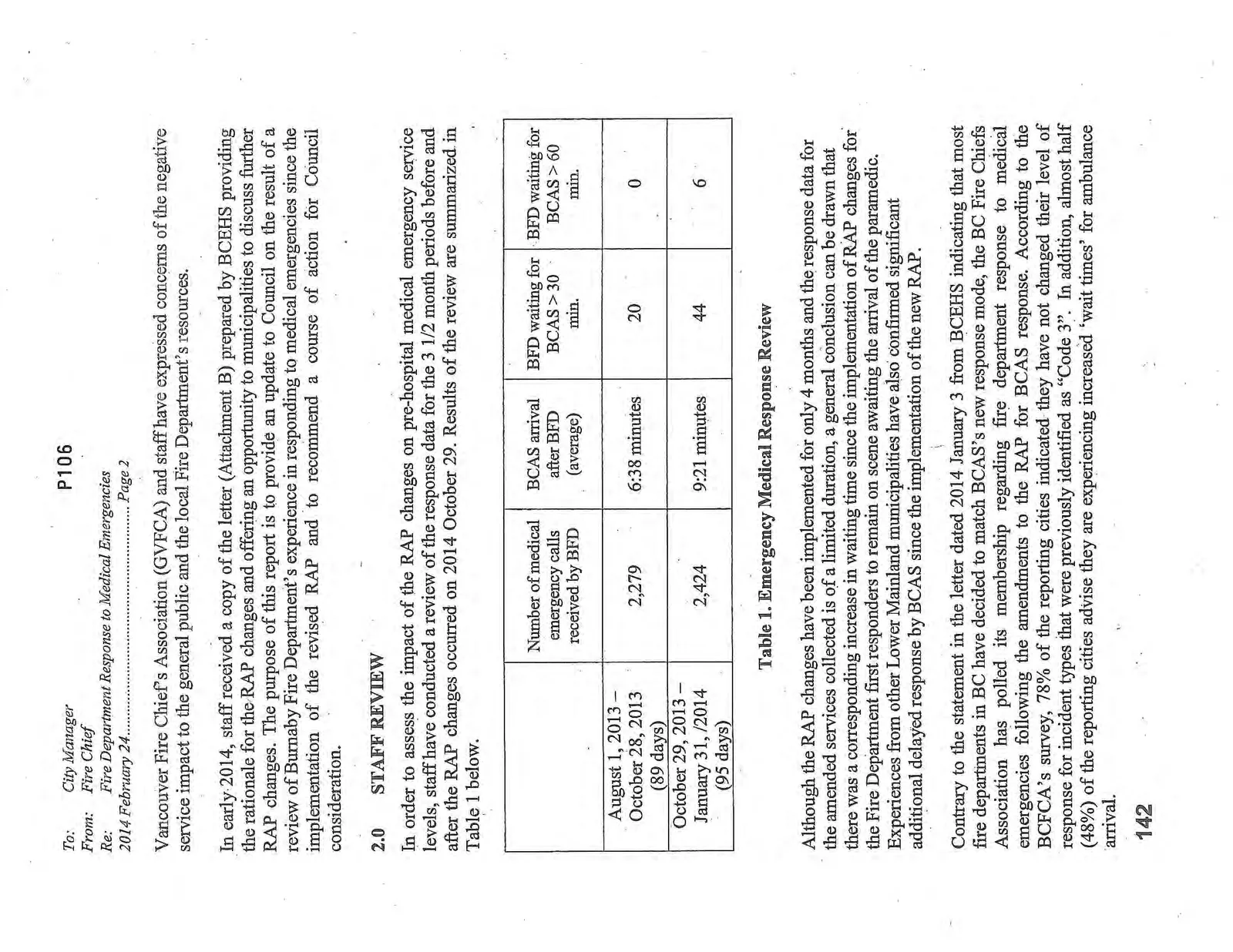
Table 1. Emergency Medical Response Review
| Number of medical emergency calls received by BFD | BCAS arrival after BFD (average) | BFD waiting for BCAS > 30 min. | BFD waiting for BCAS > 60 min. | |
|---|---|---|---|---|
| August 1, 2013 – October 28, 2013 (89 days) | 2,279 | 6:38 minutes | 20 | 0 |
| October 29, 2013 – January 31, /2014 (95 days) | 2,424 | 9:21 minutes | 44 | 6 |
Although the RAP changes have been implemented for only 4 months and the response data for the amended services collected is of a limited duration, a general conclusion can be drawn that there was a corresponding increase in waiting time since the implementation of RAP changes for the Fire Department first responders to remain on scene awaiting the arrival of the paramedic. Experiences from other Lower Mainland municipalities have also confirmed significant additional delayed response by BCAS since the implementation of the new RAP.
Contrary to the statement in the letter dated 2014 January 3 from BCEHS indicating that most fire departments in BC have decided to match BCAS’s new response mode, the BC Fire Chiefs Association has polled its membership regarding fire department response to medical emergencies following the amendments to the RAP for BCAS response. According to the BCFCA’s survey, 78% of the reporting cities indicated they have not changed their level of response for incident types that were previously identified as "Code 3". In addition, almost half (48%) of the reporting cities advise they are experiencing increased ‘wait times’ for ambulance arrival.
3.0 RECOMMENDED COURSE OF ACTION
According to information released by BCEHA, the RAP changes will reduce motor vehicle incidents caused by code 3 response and therefore will improve public safety. However, it should be noted that based on data from Burnaby Fire Department, there is no evidence to support that code 3 emergency response to medical incidents has resulted in more motor vehicle incidents. For the past two years, BFD encountered only three minor low speed (less than 5 kph) fire vehicle incidents that involved minor scraping to a lamp standard and two parked vehicles in a narrow corridor.
As shown in Table 1, it is evident that the waiting time for BCAS service in Burnaby has increased since the implementation of new RAP. Although the full impact of the new RAP on patient care and recovery is not known at this time, it has an immediate negative effect on pre-hospital care services and the fact that public can no longer rely on timely emergency medical service from BCAS as was before the RAP changes.
The BC Health Emergency Act allows emergency medical assistants to provide medical care to patients based on six levels of certification. Most Fire Departments including Burnaby train their personnel as Emergency Medical Assistant – First Responder (EMA-FR), which is the first of the six levels. As such, they are limited to basic medical protocols including assessment of level of consciousness, pulse and respiration; rapid body survey to check for life threatening injuries; secondary assessment consisting of vital signs, physical examination and medical history; cardiopulmonary resuscitation; wound and fracture management; and maintenance of the patient’s airway and ventilation where necessary.
A few Fire Departments have trained or are in the process of training their personnel as Emergency Medical Responders (EMR) which is the second level of certification which allows the provision of additional services such as lifting/loading, extrication/evacuation and patient transportation; cervical collar application; blood pressure assessment; oxygen administration; and use of automatic external defibrillators (AEDs). Burnaby Fire personnel are trained in the use of AEDs when dealing with cardiac emergencies and the removal of victims trapped in car accidents by using auto extrication equipment. Although the EMR certification would allow Burnaby firefighters to provide a higher level of emergency pre-hospital care service, it would download some of the BCAS’ responsibilities to the Burnaby Fire Department and add approximately $210,000 to the City budget for training half of the department personnel and an additional $50,000 per year to maintain the EMR training.
With the reduced level of ambulance service and the post implementation impact, it is recommended that the City take the following positions and actions:
a) Council reaffirms its position that timely and efficient pre-hospital care services provided by BCAS are integral to the province’s overall emergency health service. b) Council acknowledge that staff intend to retain the existing BFD emergency medical response protocol and not downgrade the response mode to match the new RAP. c) BCEHS be requested to undertake a full review of post implementation of the new RAP with respect to emergency pre-hospital care, patient waiting time and concerns, and event types, and make necessary adjustment to correct service deficiencies. d) BCEHS be requested to conduct meaningful consultation with municipal councils, BCFCA, GVFCA and first responders on emergency pre-hospital service level prior to considering further changes to RAP. e) The Chairperson of BCEHS be invited to meet with Council to discuss the new RAP, service levels and future change management process.
4.0 CONCLUSION
Firsthand experience of BFD personnel has shown that the new RAP has resulted in delayed ambulance response to medical incidents in Burnaby. For the first 3 ½ months period since the new RAP implementation, Fire Department first responders have experienced an average wait of 9:21 minutes for BCAS to arrive and the number of incidents where department personnel waited for longer than 30 minutes has more than doubled, including six incidents where the wait was greater than one hour.
While BCEHS has reduced its service to the public by reducing the number of calls that medically require a code 3 response, the City remains committed to responding to emergency medical calls from its citizens in a timely manner. More than 70 types of medical incidents have been downgraded from code 3 to 2 under the new RAP, staff are of the opinion that the changes made on the basis of clinical and statistical data have ignored the important needs of immediate scene assessment and stabilization as well as patient conditions and status updates at the scene if the event is escalated to more serious than reported or as classified by the call taker. Furthermore, the delayed ambulance response also requires the BFD’s resources to stay at the scene longer and potentially could impact the BFD’s ability to respond to other emergencies in a timely manner.
To address the impact of the new RAP, it is recommended that the proposed course of action as outlined in Section 3.0 of this report be endorsed by Council.
Doug McDonald FIRE CHIEF
Copied: Deputy City Manager (Lambert Chu)
Attachment (2)
Document Images
(4)