Appendix
14 & 14A HELMCKEN ROAD, AND 6 CAMDEN ROAD- LANDSCAPE NOTES
April 15, 2025Page 2591 section
Attachment 7: Technical specifications for landscaping installation, including standards for planting, irrigation, mulching, and site maintenance.
Standards: BCLNA/BCSLA standard (2020)Topsoil pH range: 5.5-7.5Mulch depth: 55 mm layer
14 & 14A HELMCKEN ROAD, AND 6 CAMDEN ROAD- LANDSCAPE NOTES
OVERALL NOTES
- Plantings, landscape installation, and irrigations should all be installed in accordance with the BCLNA/BCSLA standard (2020)
- Any plant substitutions shall be made in consultation with the landscape architect.
- The Landscape and Irrigation Contractor shall determine the location of all underground services prior to the commencement of landscape work and shall be responsible for the repair of all damage caused by landscape work to the Owner’s satisfaction.
- All topsoil and plants shall conform to BCNTA / BCSLA specifications.
- BCLNA/BCSLA standard (2020) is the guiding resource for all notes on this page
MATERIALS
CAST-IN-PLACE CONCRETE
- Cast-in-place concrete may have a finish of trowel finish, broom finish, exposed aggregate, or parging. To be finished as specified on landscape plans.
- Concrete should be reinforced with rebar.
PERMEABLE PAVERS
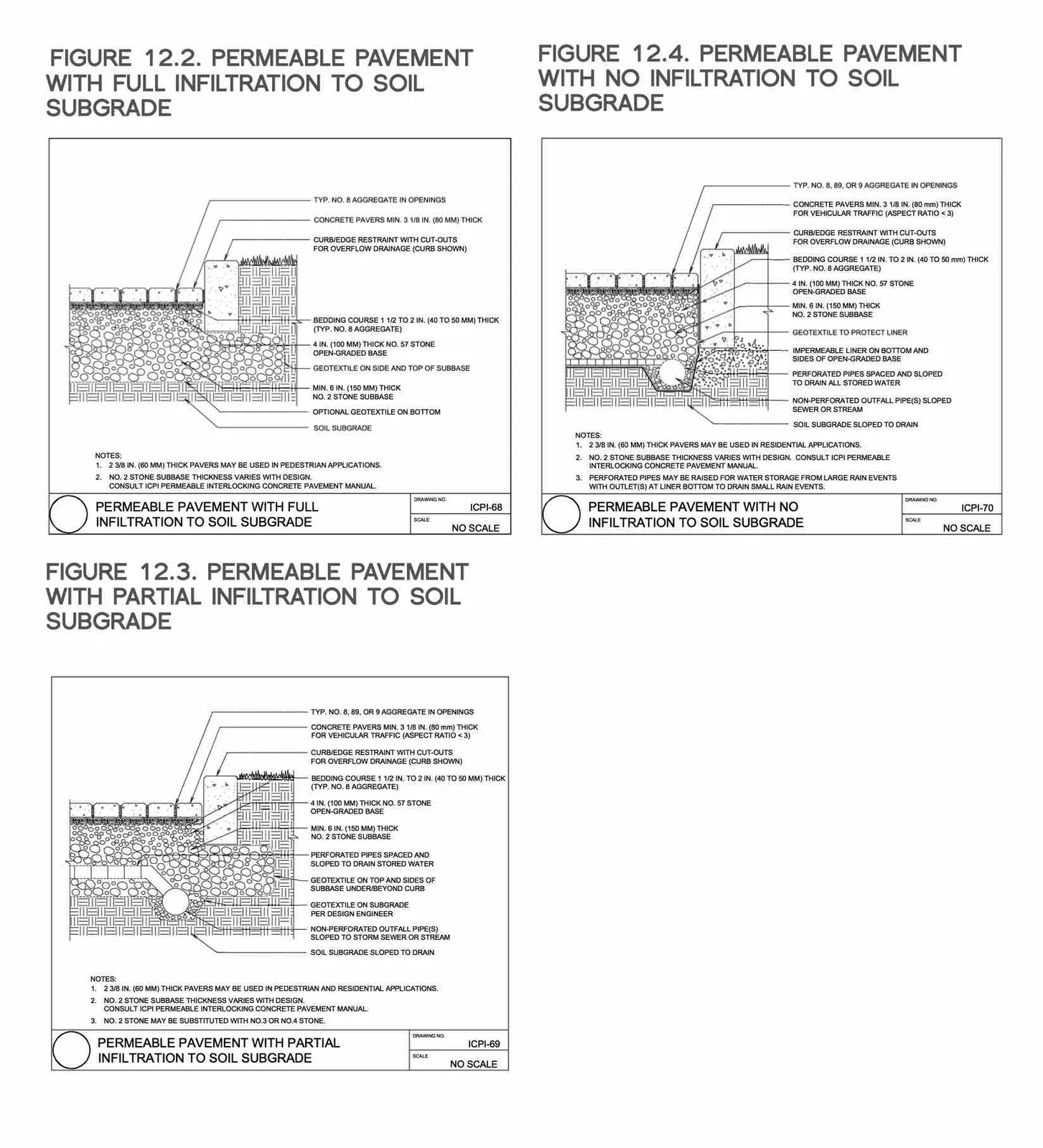
Permeable pavers should be installed according to figures 12.2, 12.3, or 12.4.
PERMEABLE PAVER DETAILS
PLANTING DETAILS

STOCKPILES
- Site materials should be stockpiled separately from the growing medium to avoid contaminating the growing medium.
- Ideally, the growing medium is delivered on the day of installation.
- Soils, fill, sand, gravel, or any construction materials should not be stockpiled within the t critical protection zones.
- Soil or subsoil should not be stockpiled in low areas to avoid erosion or water pooling.
TOPSOIL
- On-site topsoil should be used if it meets the standards for a growing medium.
- Topsoil should have a pH range of pH 5.5-7.5 and contain not less than 2 % Organic Matter [OM] by weight and a salt conductivity of less than 2.5 dS/m.
- Both imported and on-site topsoil should be tested and amended before landscape work commences on-site by the contractor or soil supplier. Modification costs should be included in the overall budget.
- Topsoil depths shall be as follows: Trees 2m x 2m x 2m soil per tree; shrubs 600 mm depth; ground covers 150 mm depth
MULCH
- All planted beds shall be covered with a 55 mm layer of high organic low-wood content mulch.
- Mulch should be a minimum of 10cm (4in.) from the crown of any plant. It is never to be mounded up around the stem of the plant.
- Mulch depths should be at most 10cm (4in.) around larger plants and 5cm (2in.) for smaller plants such as groundcovers.
- Trees installed in lawns should have a mulch ring of 1m diameter that will be maintained for a minimum of 8 years.
- Mulch is to be of a type suitable for the material planted.
TREE PLANTING DETAILS
GRAVEL DETAILS
PLANTING
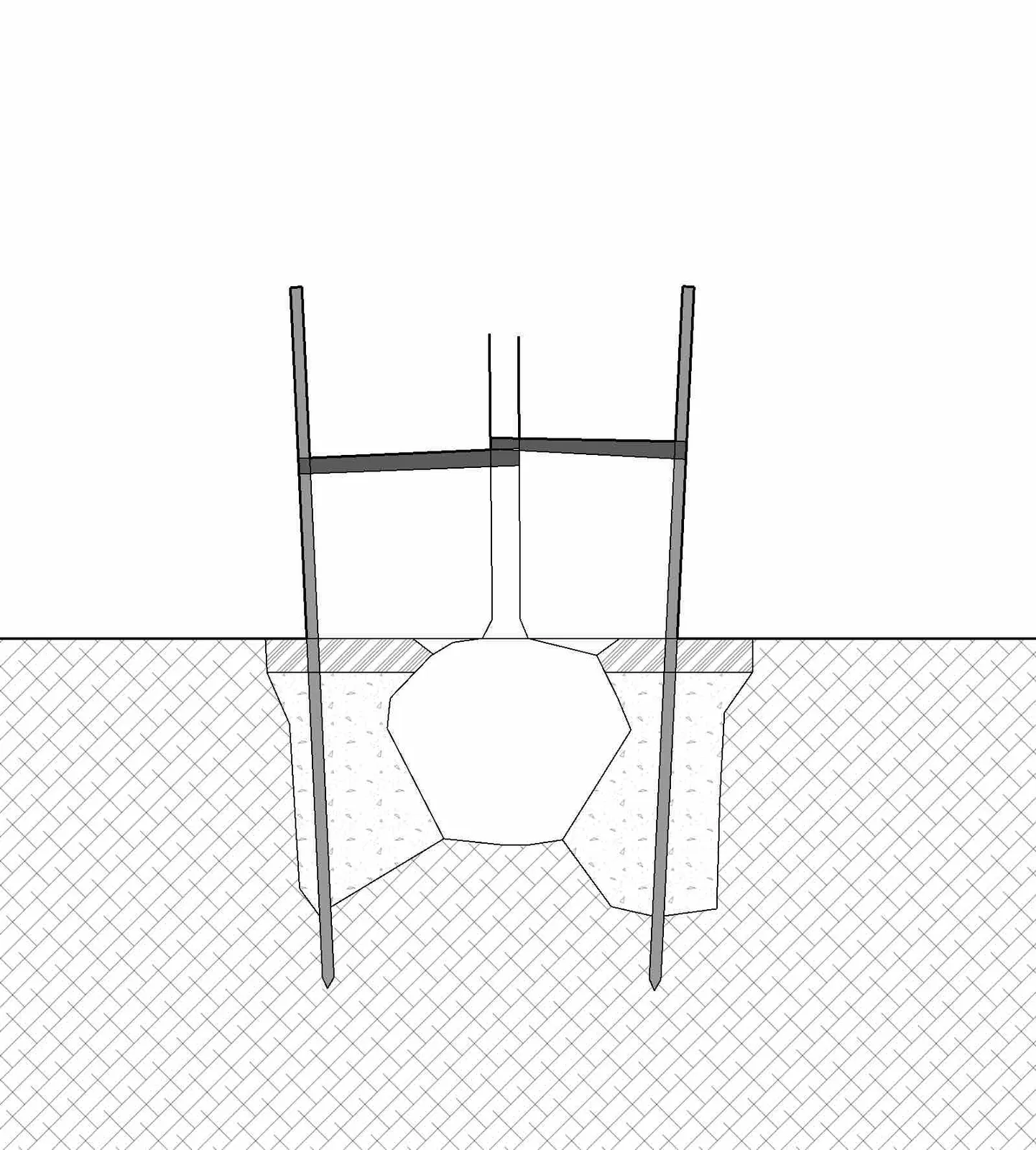
- All trees shall be secured with two 75 mm diameter x 1.8 m long round poles set 1m into the ground.
- Plants determined to be dead or dying at the end of one year from the installation date shall be replaced by the Contractor at the Contractor’s expense.
- Growing media settlement should be corrected prior to mulching.
- Immediately after planting, trees shall be stabilized, ensuring that the tree’s crown has free movement, but wind, snow loading, or human force will not disturb the buttress root system or cause the rootball to shift in the ground.
- Trees may not need stabilization if the subsoil and growing medium are stable and can hold the rootball in place, and the rootball is solid and contained and shaped where it can resist shifting.
- Planting debris and materials shall be removed promptly from the site.
- Plants must be watered immediately after planting to the depth of their root systems.
- The contractor is responsible for scheduling the delivery of plants to the site in conformance with the contract documents.
- Plants should spend a minimal amount of time in the storage on site.
SEED
- All grass areas shall be seed.
- The finished grade should be smooth, firm against footprints, loose textured, and free of all stones, roots, and branches.
- Areas with heavy compaction should have their surfaces loosened employing thorough scarification, discing, or harrowing to a minimum of 150mm (6in.) depth.
- Slope soil away from house and level soil by dragging a 2x6” board over area, rake the soil even, then roll over the soil three times in opposite directions until soil is firm.
- Add a light dressing of peat moss, just as a measure to retain moisture.
- A mix of 3 grass species is better than one species. The following grasses are known for their hardiness and have been tested for turf quality and resistance to many diseases and insects. A good basic mix would be 30% Kentucky blue, 30% perennial rye and 40% tall fescue. These do well in cool-season climates such as ours.
- Seed should be applied at a rate of one pound per 200 square feet and spread in opposite directions.
- After application seed should be lightly and gently raked.
- After seeding the newly seeded area must be watered evenly, and kept moist until lawn is established.
IRRIGATION
- All planting beds shall be irrigated with an automatic underground system with automatic rain shut-off.
- Irrigation sleeving is to be 150mm in diameter. Schedule 40 or SDR 28.
- Must be installed 12” below finished grade for all lateral lines and 18” below finished grade for irrigation main lines.
- All irrigation materials and installation methods shall conform to IIABC standards.
- Irrigation within municipal rights of way shall conform to the City of View Royal requirements.
- Backflow preventer requirements for irrigation lines shall conform to View Royal municipality requirements.
- The Irrigation Contractor shall test the irrigation system and ensure that it is fully operational prior to acceptance by the owner.
WATERING
- Plants shall be monitored for moisture at delivery and watered as necessary until planting with on-site irrigation during storage.
- Plants and soil moisture should be monitored during the first and second growing seasons for a sufficient irrigation schedule and to ensure that the plants are healthy with the irrigation setup. If the plants are wilting or showing stress due to water, there shall be an increase in watering frequency.
- Watering should reach the depth of the root zone.
- Irrigation schedules may be skipped if rainfall has penetrated the full depth of the root zone.
- Soil moisture should be maintained at 50 to 100 percent field capacity.
LANDSCAPE LIGHTING
- Landscape lighting must adhere to the Canadian Electrical Code, British Columbia electrical and building codes, and Municipal by-laws regarding electrical, lighting, and light pollution.
PROJECT TITLE PROPOSED LANDSCAPE CONCEPT for HFT VENTURES 14 & 14 A HELMCKEN, AND 6 CAMDEN ROAD, VIEW ROYAL BC
PAGE TITLE LANDSCAPE NOTES, PAGE FIVE of FIVE
DATE SEPTEMBER 9, 2024 Revised OCTOBER 28, 2024 Revised NOVEMBER 20, 2024
Page 259
Document Images
(1)
Extracted from: 2025 04 15 Council Agenda - Agenda - Pdf