Presentation
Staff Presentation: Remedial Action - 12 Vickery Road
April 15, 2025Pages 555–5746 sections
Staff presentation slides outlining building code violations and recommended remedial actions for a residential property at 12 Vickery Road.
12 Vickery RoadJohn Becker (Owner)BC Building Code (BCBC) violationsBuilding Bylaw No. 1111, 2023Community Charter sections 72-8060-day deadline for building permit application180-day deadline for occupancy permit
Purpose
- To inform Council of a residential property located at 12 Vickery Road with non-permitted construction in contravention of the BC Building Code and the Town of View Royals Building Bylaw
- Request that Council impose the remedial action requirements in relation to sections 72 through 80 and sections 17 and 258 of the Community Charter.
Page 555–574
Background
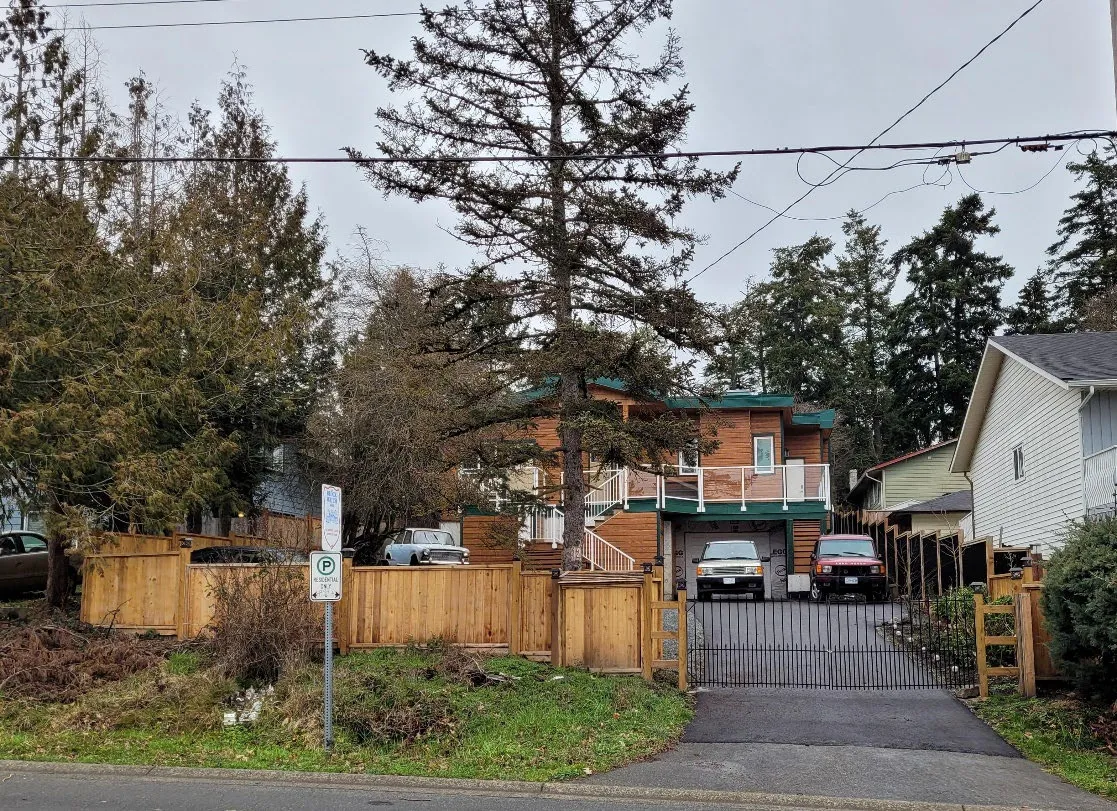
- The subject property is a two-story single-family dwelling.
- November 19, 2024, Council passed a motion to file a Community Charter section 57 notice on property title.
- The notice was filed with the Land Title & Survey Authority of BC on November 26, 2024.
- The Town received confirmation that the section 57 notice was registered against title.
Page 555–574
Analysis
- Numerous violations of the BC Building Code (BCBC) and the Town of View Royals Building Bylaw No. 1111, 2023.
- Structural deficiencies identified during multiple failed inspections, including framing, sheathing, and rainscreen.
- Owner has repeatedly failed to address deficiencies noted by the Engineer of Record and third-party reviews.
- Stop Work Order (SWO) removed, “Unsafe to Occupy” notice ignored, and unauthorized construction continued by the owner.
- Unsafe building conditions pose a potential hazard to occupants and the public.
- Owner’s unwillingness to resolve deficiencies despite multiple opportunities and reminders by Engineer of Record and staff.
- The Town is obligated to enforce compliance with Town bylaws and uphold public safety and building standards in accordance with the BCBC.
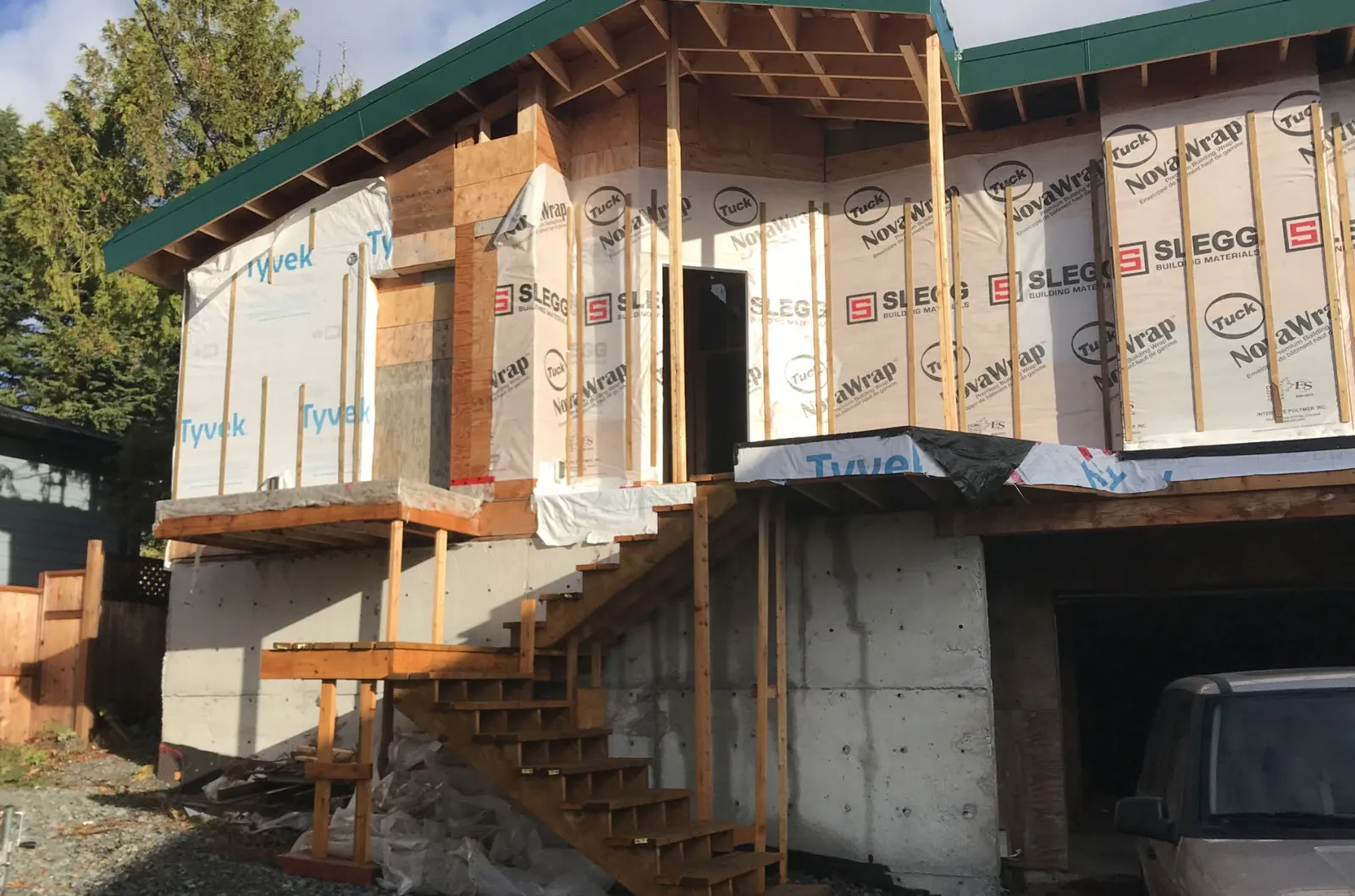
- DuPont requires that Tyvek® HomeWrap®, Tyvek® StuccoWrap®, Tyvek® DrainWrap™ and Tyvek® ThermaWrap™ LE be covered within 4 months (120 days) of installation.
- Tyvek® CommercialWrap® and Tyvek® CommercialWrap® D must be covered within 9 months (270 days) of installation.
- IPG® recommends that NovaWrap™ GP building wrap should be covered with cladding and the wall cavity closed within 120 days of installation.
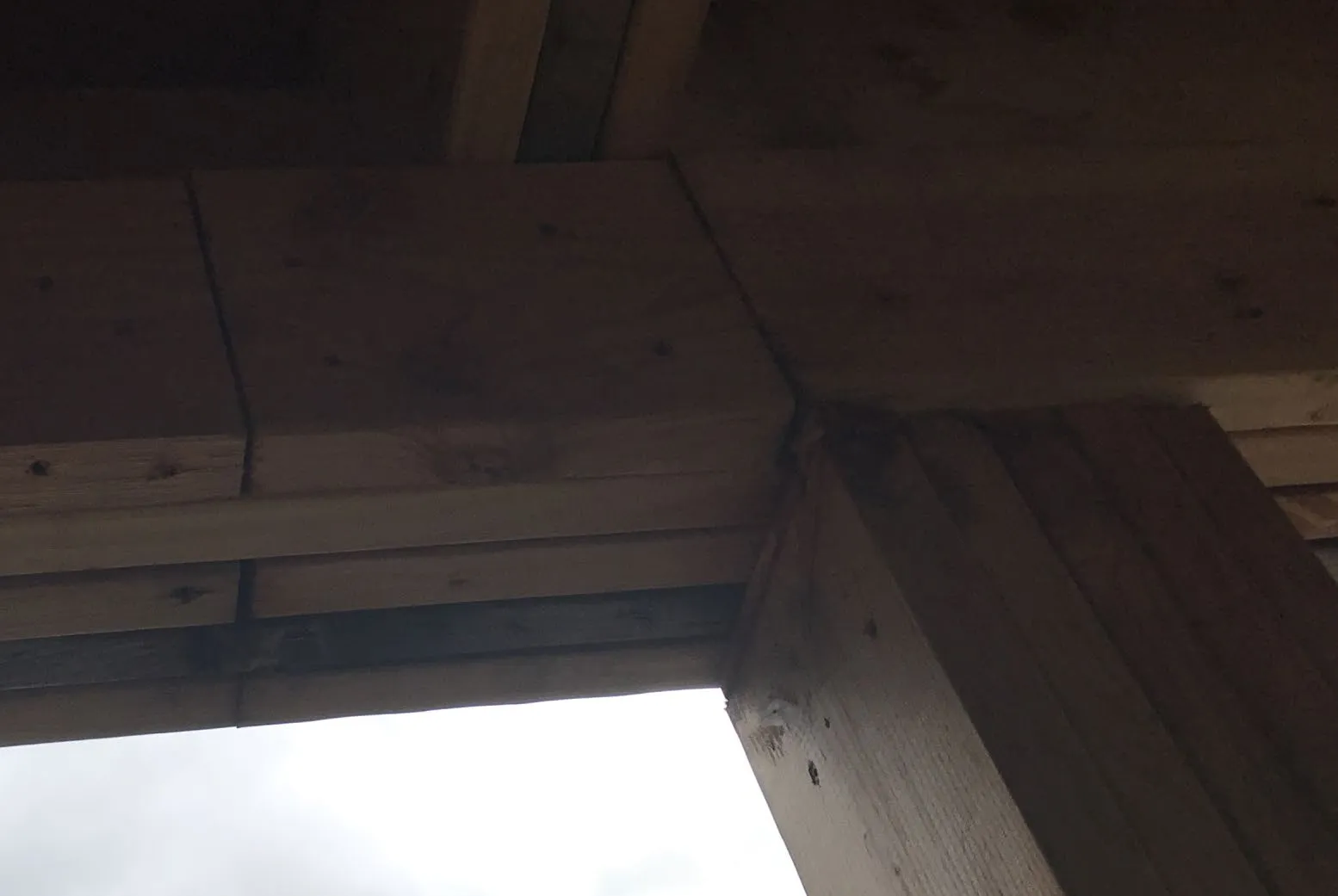
BC Building Code: 9.23.11.3 Top Plates
- Except as permitted in Sentences (2) to (4), at least 2 top plates shall be provided in loadbearing walls.
- A single top plate is permitted to be used in a section of a loadbearing wall containing a lintel provided the top plate forms a tie across the lintel.
- A single top plate is permitted to be used in loadbearing walls where the concentrated loads from ceilings, floors and roofs are not more than 50 mm to one side of the supporting studs and in all non-loadbearing walls.
9.23.11.4 Joints in Top Plates
- Joints in the top plates of loadbearing walls shall be staggered not less than one stud spacing.
Engineered Plans: ROUGH CARPENTRY
- Provide double top plates on all load bearing walls. Lap splice top plates with a minimum of 12-3" nails and 24" overlap.
BC Building Code: 9.23.2.3 Protection from Dampness
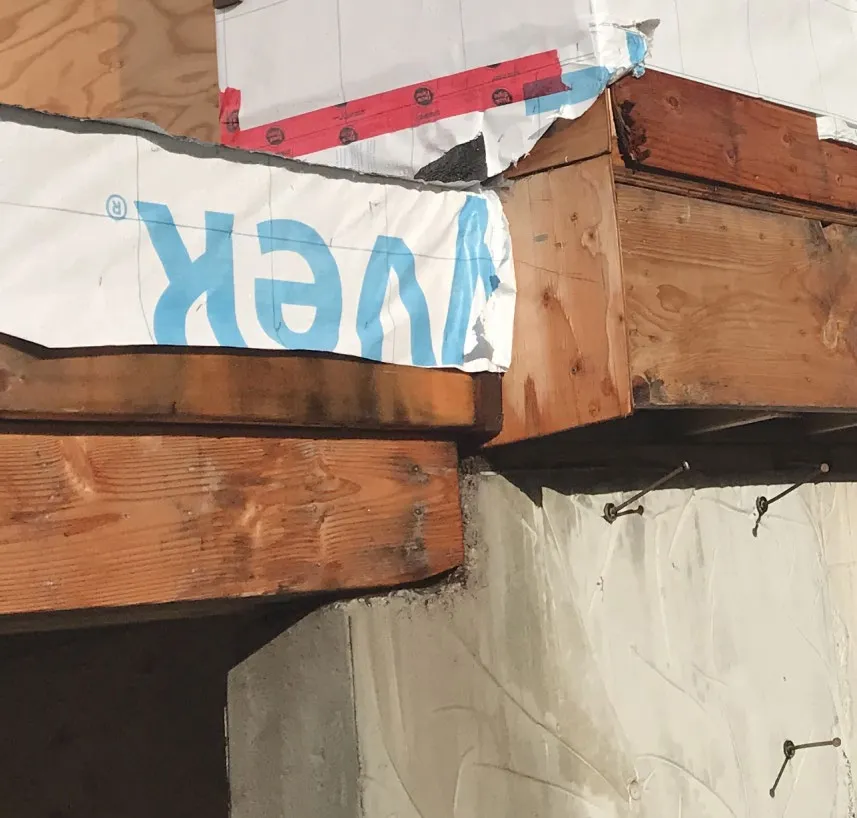
- Except as permitted in Sentence (2), wood framing members that are not pressure-treated with a wood preservative and that are supported on concrete in contact with the ground or fill shall be separated from the concrete by not less than 0.05 mm polyethylene film or Type S roll roofing.
- Dampproofing material referred to in Sentence (1) is not required where the wood member is at least 150 mm above the ground.
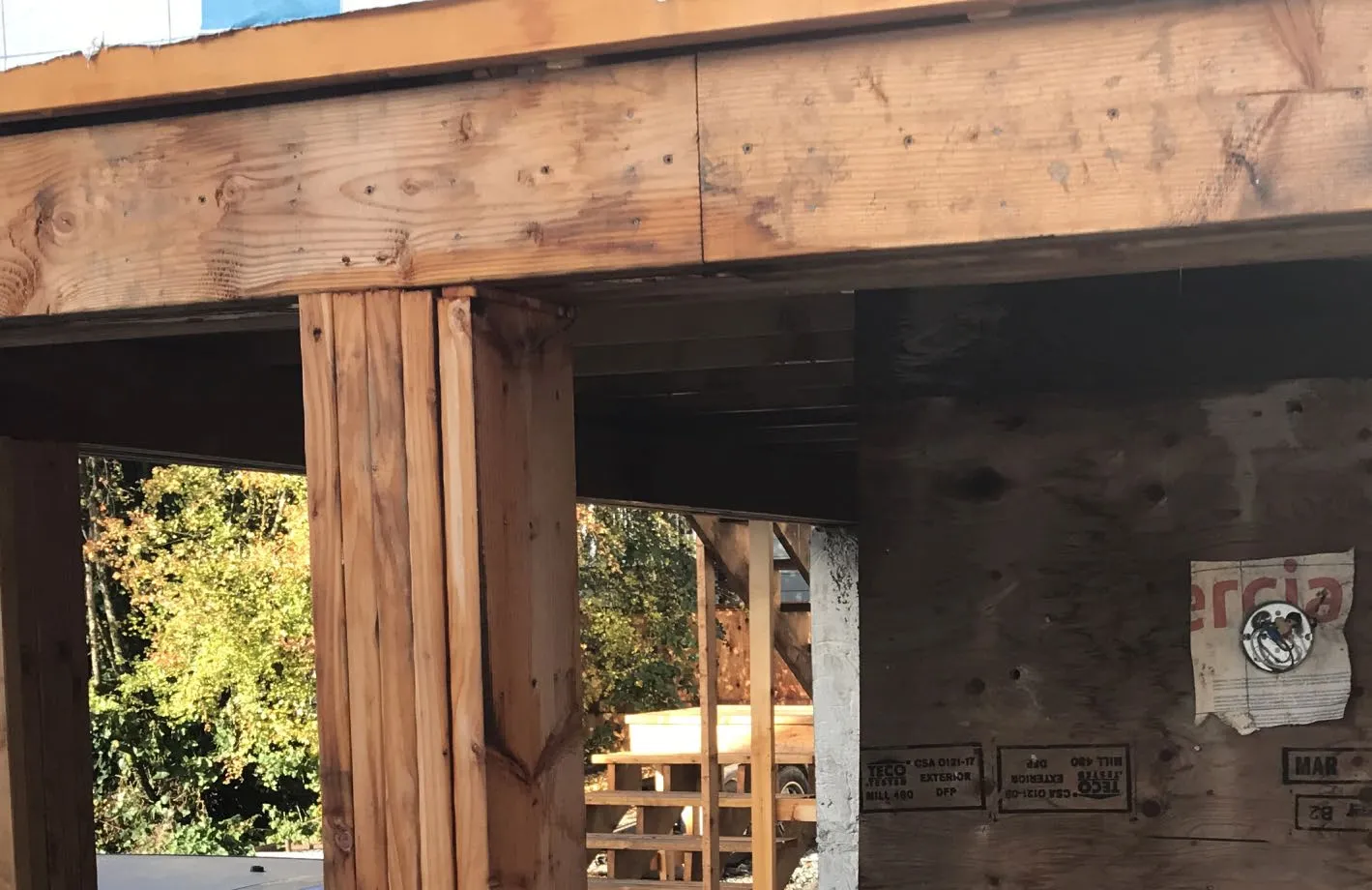
BC Building Code: 9.23.8.3 Built-up Wood Beams
- Except as permitted in Sentence (3), where individual members of a built-up beam are butted together to form a joint, the joint shall occur over a support.
- Where a beam is continuous over more than one span, individual members are permitted to be butted together to form a joint at or within 150 mm of the end quarter points of the clear spans, provided the quarter points are not those closest to the ends of the beam.
- Members joined at quarter points shall be continuous over adjacent supports.
- Joints in individual members of a beam that are located at or near the end quarter points shall not occur in adjacent members at the same quarter point and shall not reduce the effective beam width by more than half.
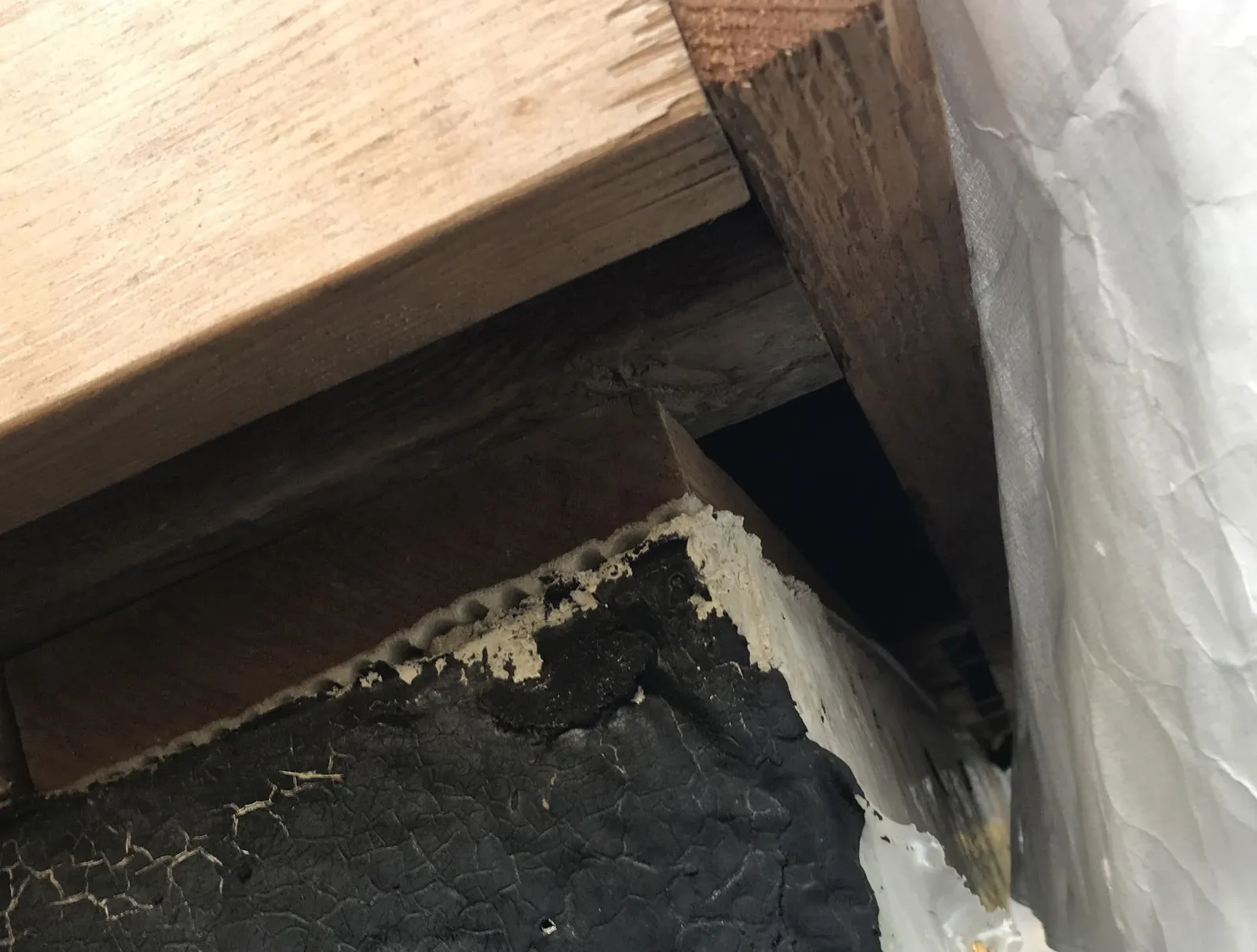
BC Building Code: 9.17.4 Wood Columns
9.17.4.2 Materials
- Wood columns shall be either solid, glued-laminated or built-up.
- Built-up columns shall consist of not less than 38 mm thick full-length members a) bolted together with not less than 9.52 mm diam bolts spaced not more than 450 mm o.c., or b) nailed together with not less than 76 mm nails spaced not more than 300 mm o.c.
- Glued-laminated columns shall conform to Section 4.3.
BC Building Code: 9.23.9.8 Support of Walls
- Loadbearing and non-loadbearing walls constructed with required braced wall panels shall be continuously supported by floor joists, blocking or rim joists to allow for the required fastening (see Table 9.23.3.4.).
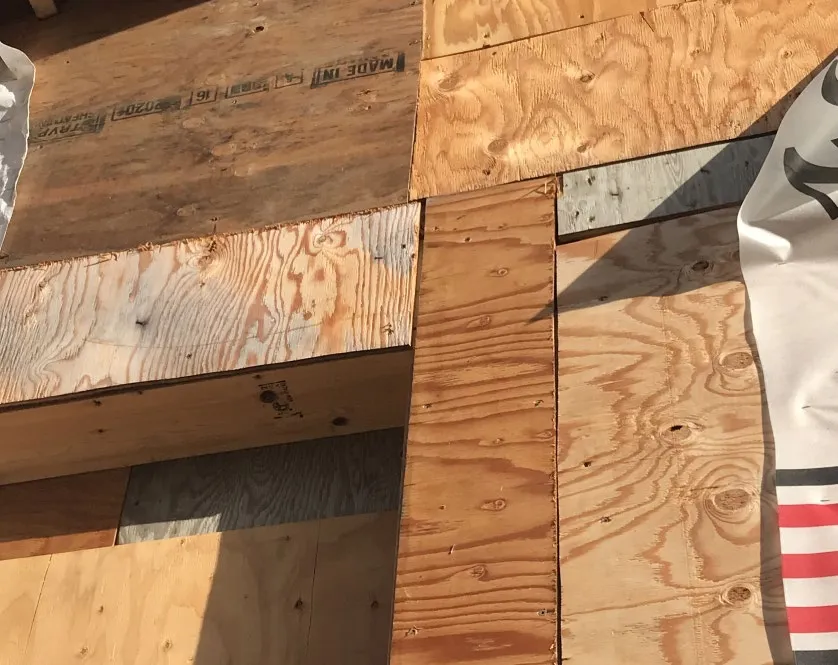
Engineered Plans: SHEARWALLS
- Plywood panel dimensions not to be less than 2400 mm x 1200 mm (8 ft x 4 ft), except near boundaries, openings and changes in framing where up to two short or narrow panels, with panel dimensions not less than 300 mm may be used.
- Perimeter fasteners shall not be spaced less than 50 mm and not more than 150 mm on center.
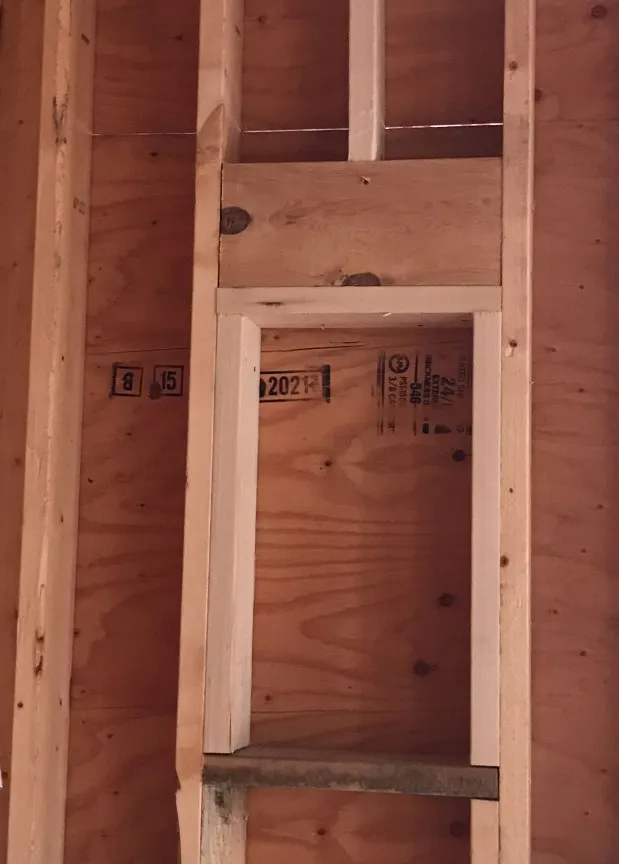
BC Building Code: 9.23.10.6 Studs at Sides of Openings
- Except as provided in Sentence (3), where the lintel spanning the opening is not more than 3 m long, studs shall be doubled on each side of the opening so that a) the inner studs on each side extend from the bottom of the supported lintel to the top of the bottom wall plate, and b) the outer stud on each side extends from the bottom of the top wall plate to the bottom wall plate.
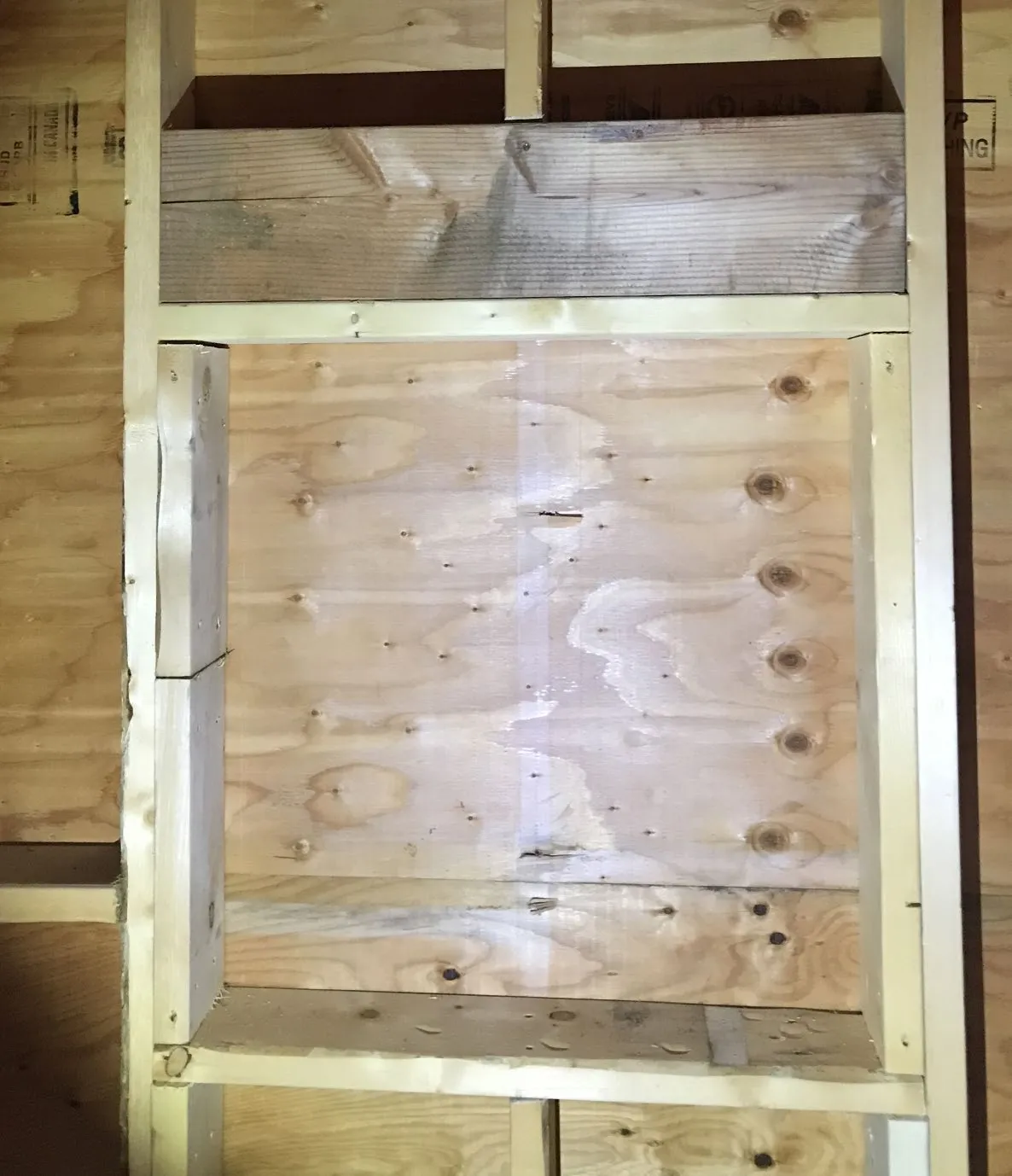
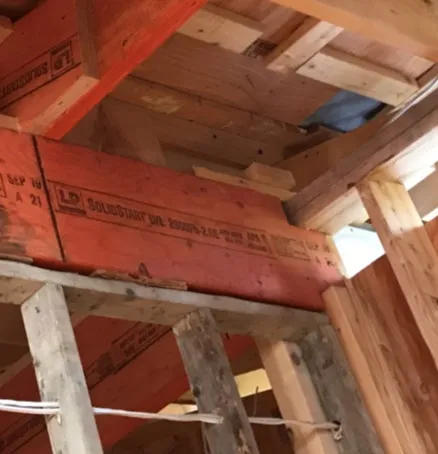
BC Building Code: 9.23.5.2 Notching of Framing Members
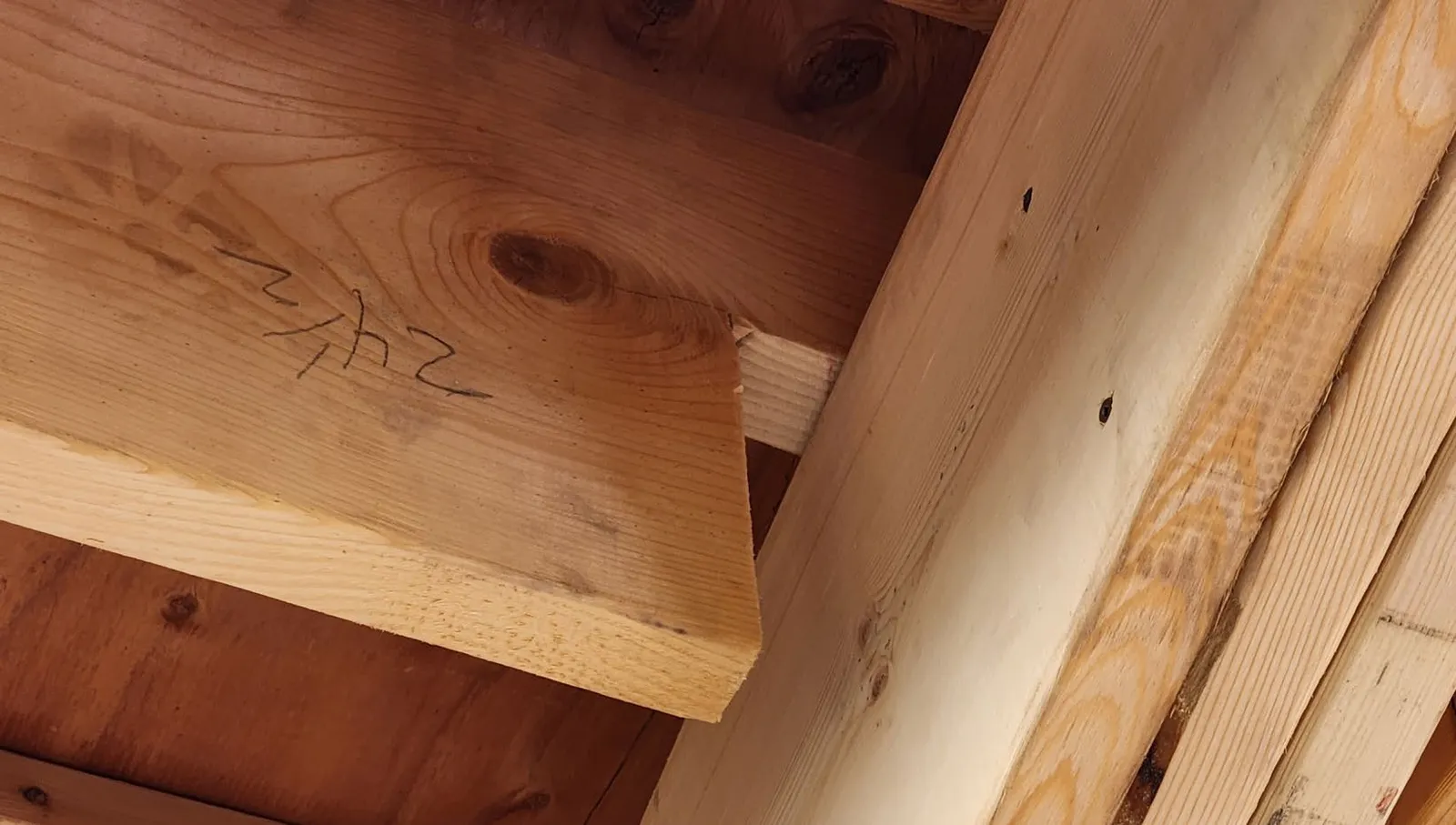
- Floor, roof and ceiling framing members are permitted to be notched provided the notch is located on the top of the member within half the joist depth from the edge of bearing and is not deeper than one-third the joist depth, unless the depth of the member is increased by the size of the notch.
Engineered Plans: TIMBER NOTES
- No notching of beams or joists unless specifically detailed or noted.
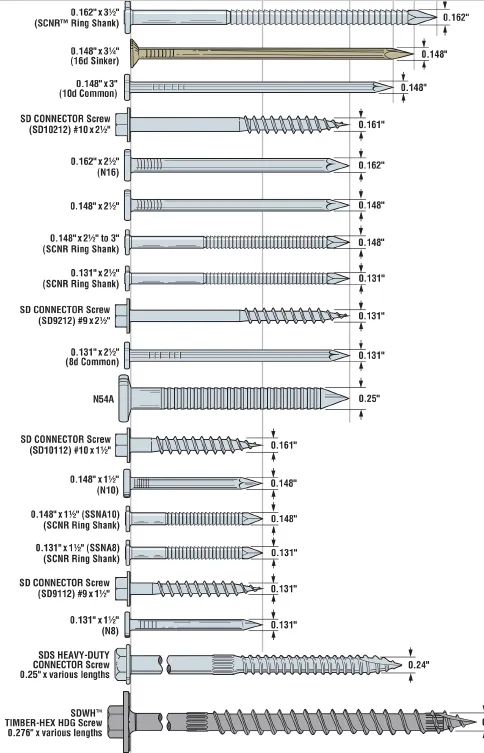
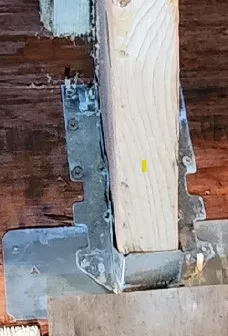
Engineered Plans: SIMPSON HARDWARE
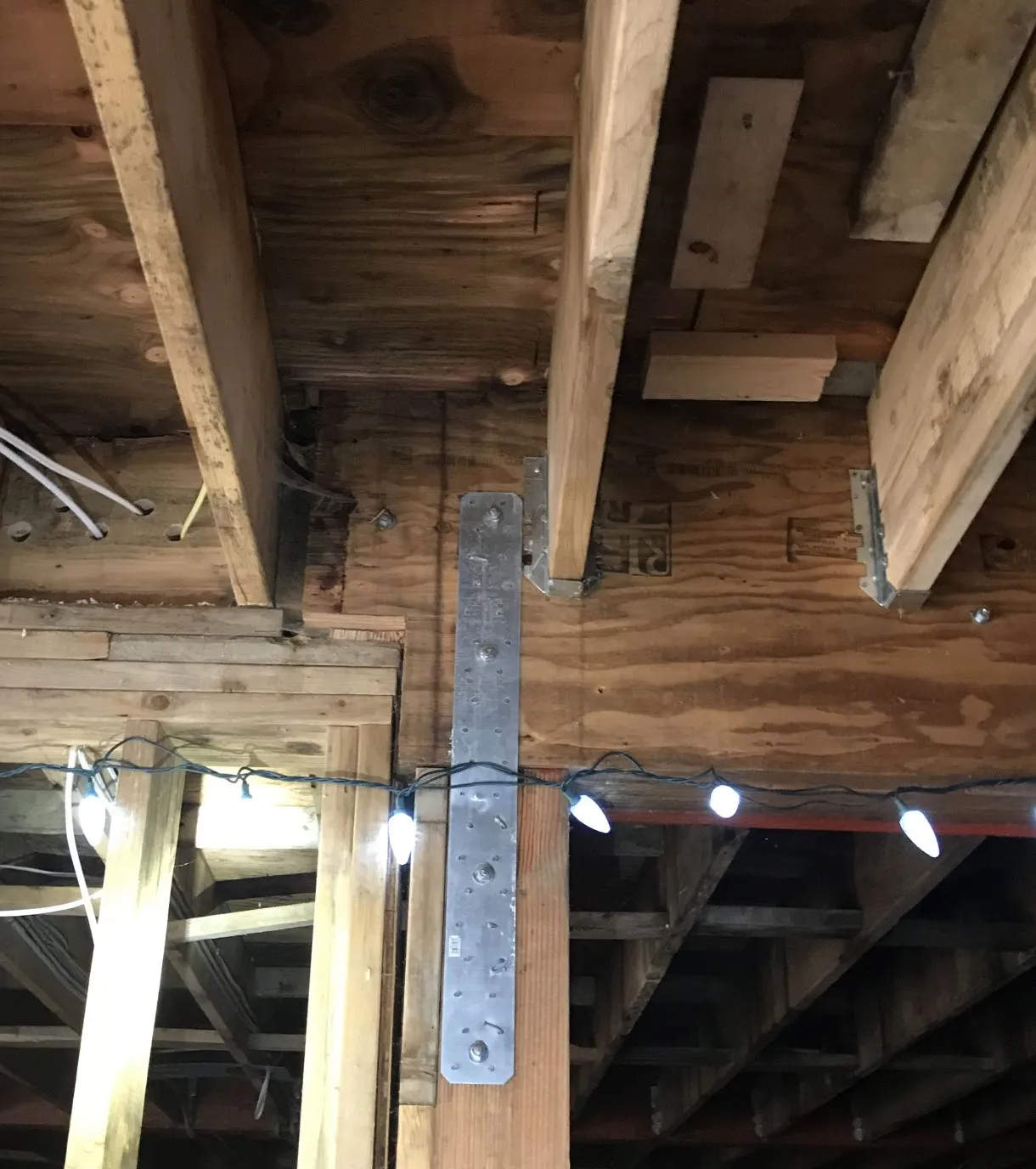
- Follow all installation instructions provided by manufacturer, this includes: a. using the correct fastener type, b. using the correct fastener quantity, c. filling all fastener holes,
Page 555–574
Council Motion
THAT the remedial action process as outlined in sections 72 through 80 as well as sections 17 and 258 of the Community Charter, SBC 2003, c. 26 (“Community Charter”) be initiated and that such remedial action process include the following declarations and resolutions:
- The building (“Building”) on the property with a civic address of 12 Vickery Road, Victoria, BC and a legal description of LOT B SECTION 91 ESQUIMALT DISTRICT PLAN 18407 EXCEPT PART IN PLAN 3768 RW, PID: 003-762-491 (the “Property”) is in or creates an unsafe condition in that the building fails to comply with sections 5.1, 5.2, 5.5, 7.5, 8.2, 8.12, 8.15, 11.18, 14.8, 14.10(d)(ii), 24.3, 24.4 and 25.2 of the Town of View Royal’s Building Bylaw No. 1111, 2023 (“Building Bylaw”) and the British Columbia Building Code (“BCBC”);
- The owner, John Becker, has 60 days following receipt of Council’s motion to submit a complete new building permit application for the Building with the required documents listed within the attached building permit application and plumbing permit application (collectively, the “Building Permit Application”);
- If the Town of View Royal (“Town” or “TOVR”) receives a complete Building Permit Application for the Building within 60 days following receipt of Council’s motion, the owner has 180 days from the date of receipt of building permit issuance to: correct all deficiencies listed by the Engineer of Record; provide Town staff with the approved field reports of the Engineer of Record and Schedule C-B letter of assurance; and arrange for and pass Town inspections; and
- Town staff must report back to Council about issuance of an occupancy permit following the 180-day deadline imposed on the owner to bring their structure into compliance with the BC Building Code and the Town’s Building Bylaw.
Page 555–574
Building Permit Application Flow Chart
| Step | Single Family Dwelling (Part 9) | Single Family Dwelling (Part 9) with an Engineer |
|---|---|---|
| 1. Pre-Application Stage | Check if permit is required, review zoning, consult with municipality, gather required documents. | Same as Part 9 but also consult with a structural Engineer. |
| 2. Application Submission | Submit all required documents listed on the application form i.e. site plans, architectural drawings etc. Pay fees. | Submit all required documents listed on the application form i.e. site plans, architectural drawings etc. as well as Engineer-stamped drawings and letters of assurance (Schedule B). |
| 3. Plan Review & Compliance | Application reviewed by Building Department for BC Building Code, Building Bylaw compliance. | Additional review of Engineered-stamped drawings and letters of assurance. |
| 4. Permit Issuance | Permit issued if all requirements met. | Permit issued if all requirements met. |
| 5. Construction & Inspections | Inspections required at key stages (foundation and footing forms, under slab, plumbing rough in, framing, insulation, vapour barrier, final occupancy). | Engineer to provide site reviews and letters of assurance alongside municipal inspections. |
| 6. Final Approval & Occupancy | Final municipal inspection, Occupancy Permit issued once all relevant documentation reviewed and accepted. | Final municipal inspection, Occupancy Permit issued once all relevant documentation reviewed and accepted. Engineer’s sign-off (Schedule C-B) required for occupancy. |
| 7. Permit Closure | Permit closed upon final approval. | Permit closed after municipal and Engineering approvals. |
Page 555–574
Conclusion
- View Royal Building Bylaw No. 1111, 2023 provided notice to all existing permits that they will have 1 year to finish, otherwise require new permit.
- Part 6: Permit Conditions in Building Bylaw No. 1111, 2023 states it’s the full responsibility of the owner to carry out and verify all work under the issued permit complies with the BCBC, Building Bylaw and all applicable codes, standards and enactments.
- BC Building Code 2.2.7.1 Application requires Engineer for Part 9 buildings not within scope of Part 9 Division B.
- BC Building Code 2.2.7.2 states owner's responsibilities to provide Authority Having Jurisdiction (AHJ) letters of assurance (Schedule C-B) before receiving permission to occupy a building.
- Community Charter permits Council to put a section 57 Notice on Title for contravention of (A) municipal Bylaw, (B) provincial building regulation. The Town is not insulated from liability of a Community Charter section 57 notice. The Town should seek to enforce compliance with the BCBC and Building Bylaw.
- Community Charter section 73 Hazardous conditions permits Council to impose remedial action in relation to (a) a building or other structure, an erection of any kind, or similar matter or thing that contravenes the Provincial building regulations (BC Building Code) or a bylaw (Building Bylaw No. 1111, 2023).
Page 555–574

Related Documents
(1)Extracted from: 2025 04 15 Council Agenda - Agenda - Pdf