Speculation Tax Impacts on West Kelowna Report
A comprehensive report from the City of West Kelowna analyzing the economic risks and potential losses associated with the provincial Speculation Tax.
SPECULATION TAX IMPACTS ON WEST KELOWNA

INTRODUCTION
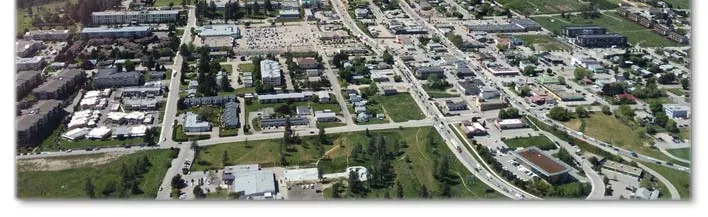
West Kelowna Council respectfully requests that the Province of British Columbia exclude West Kelowna from the proposed Speculation Tax which will seriously impact municipal revenues and derail the city’s objectives to upgrade to an urban standard. West Kelowna requests exclusion from the tax for the following reasons:
- Significant concerns and objections voiced by West Kelowna property owners, business people and developers since the announcement of the tax.
- Questions as to why West Kelowna is included and not other, similar communities.
- The creation of an unfair and competitive advantage for neighbouring communities not subject to this tax.
- The risks to affordable and rental housing in West Kelowna.
- The clear threat to the City of West Kelowna’s economic landscape and its ability to fund community infrastructure.
- The tax will likely not produce the intended results.
BACKGROUND
| Section | Page |
|---|---|
| Council Resolution | Page 5 |
| Executive Summary | Page 6 |
| Public Opinion | Page 8 |
| Why West Kelowna? | Page 9 |
| Uneven Playing Field | Page 10 |
| Risks to Affordable and Rental Housing | Page 11 |
| Economic Threats | Page 13 |
| Tax’s Intention Won’t Be Realized | Page 19 |
| Further Considerations | Page 20 |
COUNCIL RESOLUTION
West Kelowna Council Meeting March 13, 2018
Provincial Government New Speculation Tax (Non-Resident Owner Tax)
It was moved and seconded:
THAT Council direct the Mayor and the CAO to meet with the Premier of the Province of BC and MLA Weaver as soon as possible (within the next two weeks) requesting that the announced speculation tax not include the City of West Kelowna; and
THAT this decision be made immediately; and,
THAT if the Province maintains the tax as announced, Council direct the Mayor to request that the Province provide an economic impact report before the tax is implemented; and
THAT the Mayor be authorized to write a letter on behalf of the City of West Kelowna to the Minister of Finance expressing our concerns over this tax and that this report including letter submissions be submitted with the letter.
CARRIED UNANIMOUSLY

West Kelowna Mayor and Council: (from left) Coun. Bryden Winsby, Coun. Rusty Ensign, Coun. Duane Ophus, Mayor Doug Findlater, Coun. Rick de Jong, Coun. Carol Zanon, Coun. Rosalind Neis.
EXECUTIVE SUMMARY
The City of West Kelowna (incorporated in December 2007) has tackled many significant challenges within its first 10 years, not the least of which was the onset of major global recession during the new municipality’s initial, critical period of transition from a rural to an urban government from 2008 through 2010.
Before incorporation, the community had a hodge-podge governance—land use regulation and some services were provided by the Regional District of Central Okanagan; the Ministry of Transportation and Infrastructure administered the community’s roads/drainage infrastructure and provided subdivision approvals; two irrigation districts, built by community farmers, provided water to thousands of residents. With no dedicated, holistic oversight, the community’s infrastructure fell into serious disrepair and was not meeting the needs of this growing area. The City of West Kelowna inherited considerable infrastructure deficit with no financial reserves or replacement plans in place—a Regional District cannot collect DCCs.
While the City of West Kelowna is currently one of the fastest growing communities in BC, this growth remains fragile and very sensitive to market influences. West Kelowna has recorded 5.7% population growth since the 2011 Census.
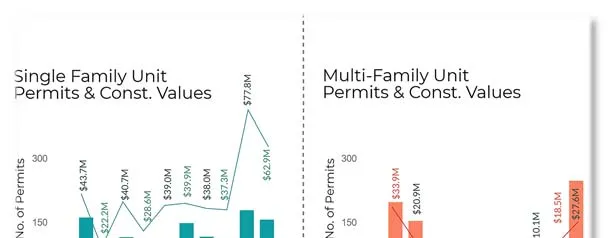
Based on past building and development stats, the City of West Kelowna is concerned that a misbalancing of market conditions will be counter-productive to the creation of the affordable types of housing that the municipality wants and needs. The city is only just now, seeing a renewed interest in the construction of multi-family developments including purpose-built rental units. Negative market conditions, such as those that could be created by the Speculation Tax, could set back affordable, multi-family development in West Kelowna.
Affordable multi-family housing in the City of West Kelowna is highly sensitive to market conditions. After projects already in queue were completed in 2009, it took the market more than seven years to recover to levels seen prior to the 2008 global economic downturn.
In addition to the loss of affordable housing, would be the impacts on city and provincial revenues. Over 1,650 businesses operate in the City of West Kelowna in industries such as agriculture, construction, light industry, lumber manufacturing, retail, services, tourism and wineries. Such enterprises rely heavily on population growth for their customer base and skilled labour inventory. These businesses collect provincial gas, payroll and sales taxes and are supported by West Kelowna’s 32,655 (2016 Census) residents, who live in nearly 12,500 private dwellings. If growth is encouraged, an additional 200 to 600 residents will continue to move to West Kelowna each year to find jobs and buy goods and services in support of local businesses. In sharp contrast, the last market downturn reversed the City of West Kelowna population by 330 people over two years.
And since West Kelowna does not have the direct, large, provincially subsidized economic generators that Kelowna enjoys, which employ thousands of people and generate population growth, such as Kelowna General Hospital, UBC Okanagan, and Okanagan College, market conditions that support growth, rather than hinder it, are more vital.
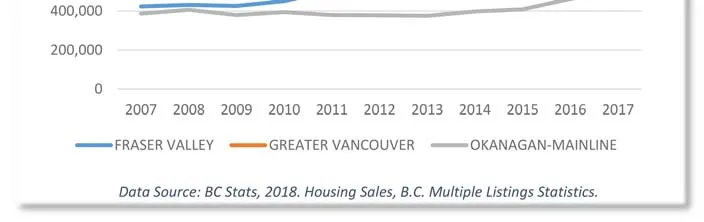
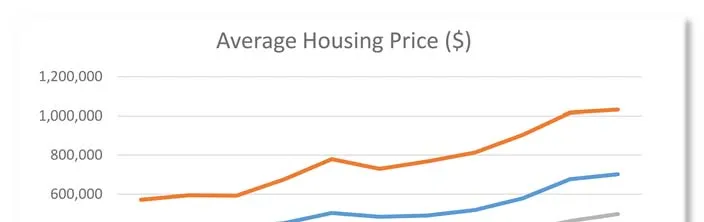
Furthermore, the City of West Kelowna does not believe a fair comparison can be made among housing market conditions seen here and those in the Fraser Valley and Greater Vancouver regions, where the proposed tax is also being considered. Between 2007 and 2017 housing sale prices in the Okanagan Mainline Region rose from $387,523 to $497,600. The net increase in housing price is 28.4%, compared to the Fraser Valley, which saw a 65.6% jump, from $423,761 to $701,842, and Greater Vancouver, where prices soared 80.7%, from $570,795 to $1,031,546.
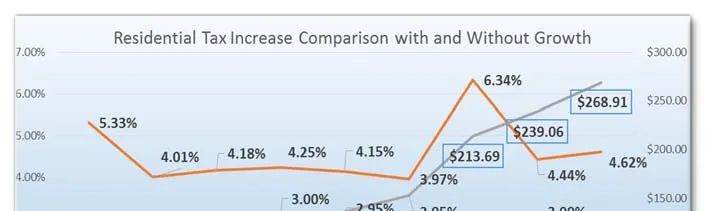
Finally, as a young municipality, attempting to replace rural amenities with more expensive urban services, the means of funding new infrastructure is of great concern. Like the Province of BC, the City of West Kelowna is forever aiming to achieve a delicate balance between the burden of taxation, the need to borrow and the requirement to build reserves to meet ongoing infrastructure needs. Transit, waste management, parks and water and waste water treatment are worthwhile, but the networks of infrastructure are expensive to maintain, operate, upgrade and replace.
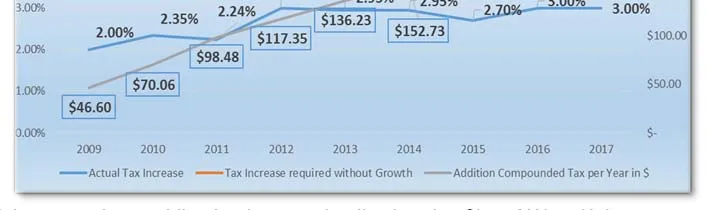
Growth has enabled the affordable provision of these services, while simultaneously allowing the City of West Kelowna to accomplish some of its infrastructure improvement goals, maintain affordable tax increases and borrow less than what otherwise may have been required. If a Speculation Tax is implemented and growth is impacted, this delicate exercise will be put off balance.
In conclusion, the City of West Kelowna believes:
- That its economy is more in line and as equally fragile as those of the similarly sized municipalities of Vernon and Penticton; and,
- That the implementation of a Speculation Tax may actually hurt efforts to bring affordable housing to West Kelowna; and,
- That the resulting market conditions will reduce growth in the municipality, thereby hurting business, stemming the flow of goods and services and reducing municipal and provincial revenues.
PUBLIC OPINION
With the announcement of the proposed Speculation Tax, the City of West Kelowna issued a call for comments from the public on March 1, 2018. By March 13, the City had received 239 letters with the vast majority of commenters opposed to the tax.
Of 239 letters received, only 19 commenters supported the tax. Comments were received from:
- West Kelowna residents
- Out-of-province residents who own West Kelowna property
- Realtors
- Developers
- Property Managers
- Renters
- Out-of-province owners who are planning to retire in West Kelowna
- West Kelowna residents with two properties
- Overseas workers whose properties are mostly vacant
SUMMARY OF COMMENTS EXPRESSING DISAPPROVAL OF THE NEW TAX
- Delay in purchases/projects due to uncertainty of tax
- Targeting Canadians living in other provinces, who do contribute to local economy
- Agree with penalizing foreign buyers but not to do so to Canadians
- Unfair to many long-time property owners from out of province
- Will result in a destabilization of real estate market
- Will diminish economic growth in region and deplete house values substantially
- Business owner who lost contract to out of province owner due to tax
- Not a true speculation tax – tax should be on those who buy and sell properties for profit
- Will not accomplish affordable housing
- Vacationers regularly support local economy
- Lack of consultation
- Will cause unfair competition in relation to other BC municipalities
- Lacks vision
- Discourages people from making prudent and needed near-retirement financial decisions
- Needs more discussion to make sure there are no unintended consequences
- Undermines trust in BC as a place to invest
- Seemingly arbitrary application to some municipalities
- Rates are very high
- Will drive up rental prices
SUMMARY OF COMMENTS EXPRESSING APPROVAL OF THE NEW TAX
- Don’t mind tax on foreign homeowners, this is needed
- Love seeing people pushed out of the market; houses should not sit empty
- Needs to be done to send a message
- Homes are for living in, not vehicles for investment
- Second home buyers have inflated housing market in West Kelowna and should pay more
Please note, this is a synopsis of submitted correspondence. The City has also received significant input via its social media channels; for example, the City’s post on Twitter seeking comments on the proposed Speculation Tax generated the most comments it has ever received.
WHY WEST KELOWNA?
If the Province simply looks at the average assessed value of property within the City of West Kelowna, the numbers appear artificially high. That’s because West Kelowna has a large number of waterfront properties and they skew the average house price in the City. The typical house price is in fact quite different and is achieved when taking waterfront properties out of the picture. When including waterfront homes, the average property value is $634,422. If multi-million dollar properties, many that are non-owner occupied and subject to the Speculation Tax, are excluded, the typical home value in the City of West Kelowna then averages out to only $515,711.
Given the community’s attraction as a vacation destination, many of the City of West Kelowna’s non-resident property owners purchased these properties many years or even several generations ago. Such owners are not speculators and contribute to the economy faithfully each year as they return on their vacations. Vacation home owners also pay annual property taxes in West Kelowna.
Other owners are planning for retirement and purchasing their future homes with careful consideration.
As shown in the adjacent tables, the majority of properties impacted by the tax in West Kelowna are not foreign-owned nor are they out-of-province purchased. In reality, the vast majority of non-resident property owners are BC residents; and therefore, this tax is in fact negatively impacting British Columbians.
City of West Kelowna 2017 Residential Property Breakdown
| Class | Parcels | Value | Average per Parcel |
|---|---|---|---|
| Bare Land | 468 | 264,367,600 | 564,888 |
| HOG Applied (Owner resident) | 9,640 | 5,726,743,401 | 594,061 |
| Not Eligible for HOG (Owner resident) property valued over $1.6 m | 103 | 252,572,000 | 2,452,155 |
| Non eligible for HOG (Owner not resident on property) | |||
| Owners in BC | 1,935 | 1,293,047,500 | 668,242 |
| Owners from another Province | 576 | 499,623,101 | 867,401 |
| Owners out of Country | 30 | 21,249,800 | 708,327 |
| Total | 12,284 | $ 7,793,235,802 | $ 634,422 |
Non eligible for HOG (Owner not resident on property) BREAKDOWN BY VALUE
| Class | Parcels | Value | Average per Parcel |
|---|---|---|---|
| Under $1 million | 87.92% | 2,234 | 1,152,098,100 |
| Over $1 million | 12.08% | 307 | 661,822,301 |
| Total | 100% | 2,541 | $ 1,813,920,401 |
Under $1 million Breakdown
- Owners in BC: 69.11% (1,756 parcels)
- Owners from another Province: 17.75% (451 parcels)
- Owners out of Country: 1.06% (27 parcels)
Over $1 million Breakdown
- Owners in BC: 7.04% (179 parcels)
- Owners from another Province: 4.92% (125 parcels)
- Owners out of Country: 0.12% (3 parcels)
Total Table: 100% | 2,541 | $ 1,813,920,402 | $ 713,861
WHAT IS THE SPECULATION TAX RISK?
The intended target of the tax, foreign and out of province owners, is not reached by implementing the Speculation Tax in West Kelowna.
UNEVEN PLAYING FIELD
Since the tax applies only to Kelowna and West Kelowna in the Okanagan, the two cities will be put at an economic disadvantage as compared to other communities in the region that are not subjected to the tax.
Non-market growth will decrease significantly as developers avoid areas where the tax is applied. Job opportunities will be impacted.
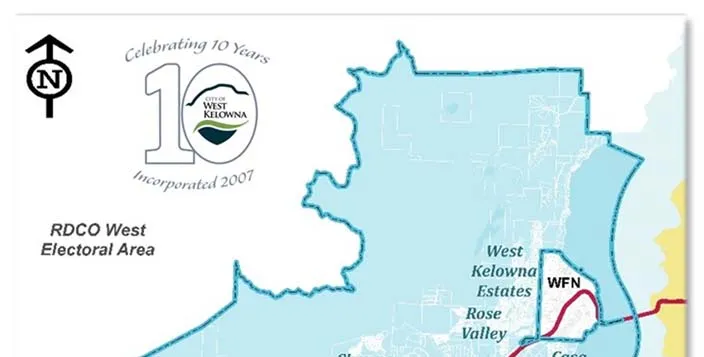
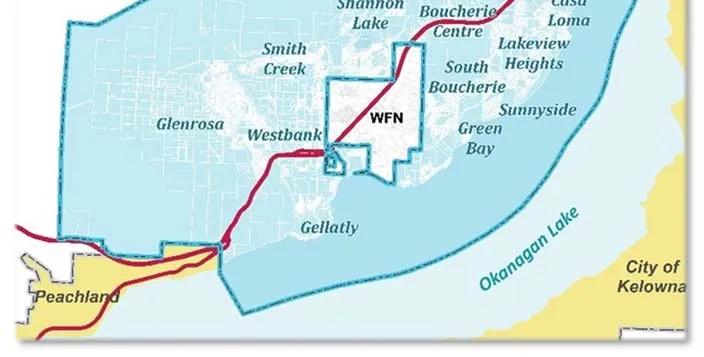
The City of West Kelowna is further impacted because the tax does not apply to properties within the Westbank First Nation (WFN). The WFN is a self-governing First Nation with many shared boundaries with West Kelowna (see map). Most commercial and residential growth on the west side of Okanagan Lake, in the past 10 years, has happened in WFN, where often developers found building expenses and related costs to be lower.
Similar Communities Not Targeted
West Kelowna and Kelowna are seemingly, arbitrarily singled-out with this tax since other communities are not targeted. For instance, Lake Country, adjacent to Kelowna, had the highest average home value in 2017 in the Okanagan at $727,000. Peachland, adjacent to West Kelowna, had an average home value of $612,000. Summerland, Penticton and Coldstream had averages over $500,000.
Steady Growth
The tax implies West Kelowna is unaffordable. If that were true, growth would be stagnant in comparison to other areas when in fact, West Kelowna’s growth has been steady for 10 years, at rates similar to the ones in other Okanagan communities, including those not facing the prospect of the Speculation Tax.
Okanagan Valley Population of Major Cities (2008-2017) (Chart shows steady growth for Kelowna, Vernon, West Kelowna, Penticton, and Lake Country)
WHAT IS THE SPECULATION TAX RISK?
West Kelowna’s population and economic growth will decrease while neighbouring communities will experience continued and possibly accelerated growth as a direct result of not being targeted by the tax.
RISKS TO AFFORDABLE AND RENTAL HOUSING
In 2016, eight years after the 2008 economic downturn, City of West Kelowna finally began seeing significant increased development activity, particularly in multi-family and purpose-built rental projects.
In 2017 the City saw further strong growth, administering building permits with a record construction value of more than $131 million. Of the 490 dwellings units that were approved, 247 were multi-family units.
If the Speculation Tax is implemented, it will negatively affect sensitive market conditions in West Kelowna, reversing the existing fragile trend towards the creation of affordable multi-family and purpose-built rental housing.
THE TAX WILL HURT INROADS TO AFFORDABLE HOUSING IN WEST KELOWNA
In recognition of community growth and affordability concerns, West Kelowna has undertaken a variety of recent housing initiatives which could be hurt by the Speculation Tax. These initiatives include:
- Adopting zoning regulations to permit secondary suites and carriage houses
- Enabling smaller parcel sizes in residential zones to facilitate infill subdivisions
- Implementing developer incentives to target increased density within the urbanized Westbank Centre closer to existing amenities and services
- Collaborating with government organizations such as BC Housing to identify land and resources available for transitional and supportive housing
- Streamlining the development application process to ensure new housing options are processed efficiently so dwellings are delivered to market in a timely manner.
The local development industry has recognized the need for additional rental projects in West Kelowna; approximately 500 such units are in various stages of development or planning.
If the Speculation Tax is implemented, and affordable, multi-family development applications cease, recent efforts to encourage such development in West Kelowna will suffer years of set backs or will potentially be replaced with lower risk, lower density developments.
THE TAX MAY NOT ACHIEVE RENTAL MARKET GOALS
As stated in the 2018 Provincial Budget, one of the key intentions of the tax is to encourage homeowners to add vacant properties to the local rental housing stock.
Based on 2017 property tax data, the City of West Kelowna has 12,284 private dwellings, plus about 2,000 unregistered secondary suites units.
Approximately 2,541 of the legal housing units are non-owner occupied or unoccupied. Of the 2,541 residential units, the majority, 1,935 (76%) are owned by BC residents and may be affected as the proposed non refundable income tax depends on the income of the owner and they may not have enough income to be able to claim the full amount.
Only 576 residential units are owned by Canadians living outside of BC and another 30 units by people living outside Canada.
Based on this information, implementing the tax in West Kelowna may not achieve the level of income the Province of BC intends.
Since the tax may be penalizing existing out of town homeowners in West Kelowna who are renting their homes, and not make owning the rental home worth their while, they may divest themselves of the properties thereby further reducing the available rental inventory. The tax may not achieve the Province’s intended rental outcomes.
RENTAL MARKET CONDITIONS
Government intervention may not be required in the West Kelowna market if the objective is to achieve more rental and affordable housing, based on CMHC market analysis.
The development industry is responding to the market need, according to the Rental Market Report of CMHC. The report identifies a 0.2% vacancy rate in the Central Okanagan. CMHC says once in-stream rental units are built, the vacancy rate should climb to 2.5 per cent.
Furthermore, the stats are based on vacancies of purpose built rental accommodation, and do not include single family house rentals or secondary suites, which the City of West Kelowna has been encouraging through various policy amendments and updates over the past few years.
It should be noted that CMHC stats apply to the Central Okanagan as a whole, not just the cities of Kelowna and West Kelowna.
In West Kelowna, where the market is more sensitive to change, the speculation tax may in fact stall efforts to create affordable and rental housing and the city should be excluded from the implementation of the tax.
WHAT IS THE SPECULATION TAX RISK?
Concerning affordable housing, developers with projects in-stream or new projects may cancel their projects and choose to move to areas that are not impacted by the tax, having a damaging effect on affordable multi-family and rental development in the City of West Kelowna.
Concerning rental housing, the tax may create a double edged sword. It may scare potential rental home owners out of the market, reducing inventory and it may not achieve the increased affordable housing opportunities or the level of income the Province of BC intends.
ECONOMIC THREATS
West Kelowna experienced property devaluations in 2008-2009 that have only since recovered in the last two years. This recovery and transition from a buyer's to seller's market has also resulted in a more favourable shift from predominately single-family housing to a greater mix in housing types. Multi-family housing out-paced single-family starts in 2017 for the first time in 10 years. So far, this transition has resulted in the positive development of one 240 unit purpose-built rental apartment complex.
DEVELOPMENTS AT RISK
The city has three additional purpose built rental projects at the Development Permit stage as well as several other market townhomes and apartments. These larger, higher financial risk developments like townhouses and apartment buildings tend to cease in West Kelowna when uncertainty or volatility enter the market based on stats from 2010 to 2015.
WHAT IS THE SPECULATION TAX RISK?
The proposed tax may actually stop development of much-needed purpose-built rental dwellings in the community.
LIMITED RESERVES; RELIANCE ON DCCS
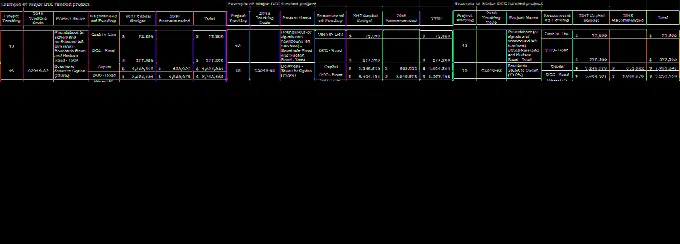
Only 10 years old, West Kelowna has not had time to build its reserves to a healthy level, yet infrastructure demands are mounting. The City relies on Development Cost Charges (DCCs) to meet infrastructure needs. An integral $8.7 million multimodal transportation upgrade to be built this year is funded in large part (63%) by DCCs (see chart).
WESTBANK CENTRE REVITALIZATION
Council placed a focus on improving the City’s downtown core, Westbank Centre, offering a development incentive through the reduction of Development Cost Charges. An apartment project benefited from the reduction; additional projects have been proposed. The City’s investment in revitalizing its downtown is finally beginning to pay off; however, market uncertainty created by the speculation tax will undermine these efforts.
WHAT ARE THE SPECULATION TAX RISKS?
Proposed projects in Westbank Centre may be cancelled due to the tax and Westbank Centre revitalization will be stalled.
If projects are cancelled, and non market growth does not occur, the City of West Kelowna’s ability to increase services to a urban level will not materialize. Our reserves cannot increase at the required level and required DCC revenues will not be realized. Key infrastructure improvements that are required due to past growth, and waiting to collect the required funds cannot proceed. For example, City Hall operates out of a temporarily converted community hall, which was to be turned back to the community after ten years. It is hoped, based on projected growth levels, that in 2027 the community will be able to afford to construct a City Hall and return the community centre to affordable recreational uses for residents.
ECONOMIC THREATS CONTINUED
LAND USE IMPLICATIONS
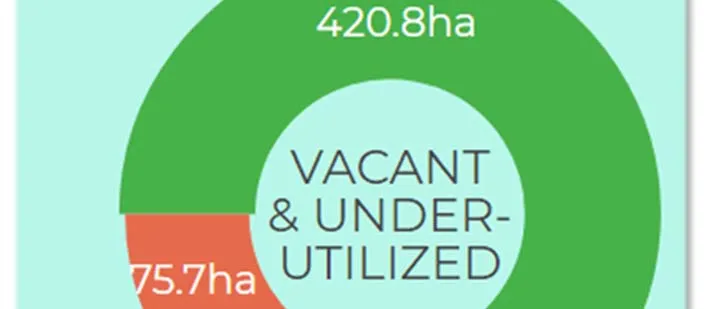
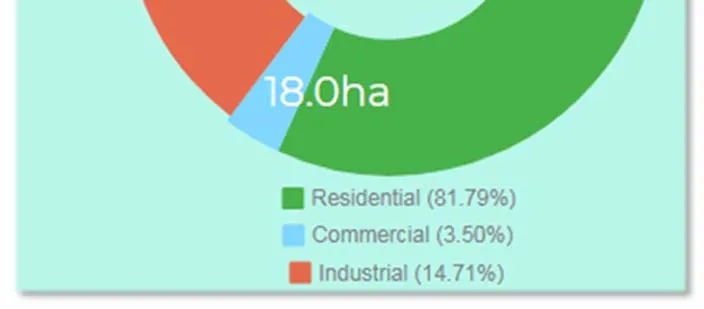
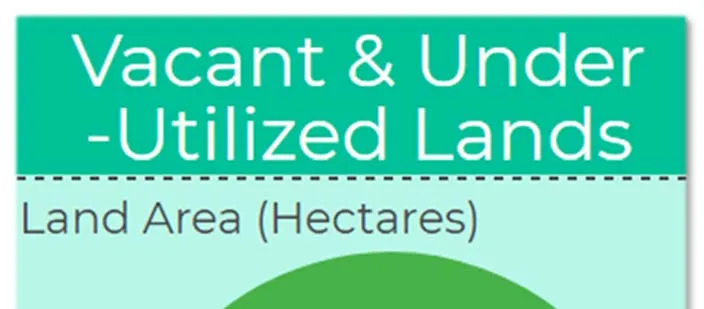
More than 515 hectares of vacant and underutilized lands exist in West Kelowna. The vast majority of these lands are residential.
Using the average annual growth rate from the past decade (1.92%), City of West Kelowna’s population will exceed 62,000 by 2050, or nearly double the 2016 census population of 32,655. Under current conditions (number of parcels, lot sizes, zoning, etc.), vacant lands in West Kelowna can accommodate about 845 new single family units and 876 multi-family units. With the current growth rate, these roughly 1700 new units will be able to house West Kelowna’s growing population for the next five to six years.
Lands slated for residential use that have the potential to be rezoned, subdivided into single family lots, or redeveloped into multi-family units through infill are anticipated to house the growing population for another 15 to 20 years.
Between 2030 and 2050, accommodations will be required for an additional 15,000 new West Kelowna residents. Therefore, it is crucial to stimulate multi-family development now and ensure that the City’s of West Kelowna’s growing population can effectively be accommodated without expanding into greenfield lands for development.
Aside from containing future sprawl, additional multi-family unit development over the next 10 to 20 years ensures will decrease the environmental footprint of growth and development and enable a more compact and efficient provision of government services.
WHAT ARE THE SPECULATION TAX RISKS?
A major concern with the speculation tax is that it will be challenging to raise the capital necessary to fund large multi family projects if out-of-town investors are dis-incentivized.
URBAN DEVELOPMENT IMPACTS
Since the creation of West Kelowna’s Official Community Plan in 2010 and the Westbank Centre Revitalization Plan in 2011, garnering interest from the development community to invest in multi-family has been challenging. A robust economy, has finally created a climate for more high-density, multi-family and mixed-use developments in Westbank Centre in line with the City’s goals.
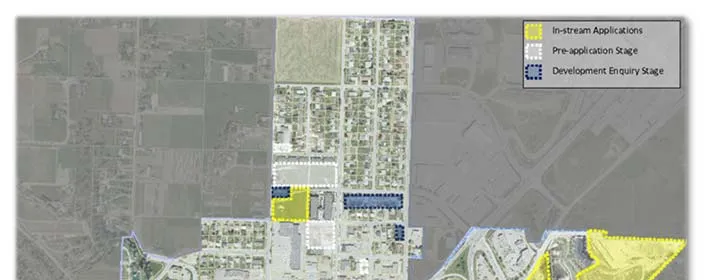
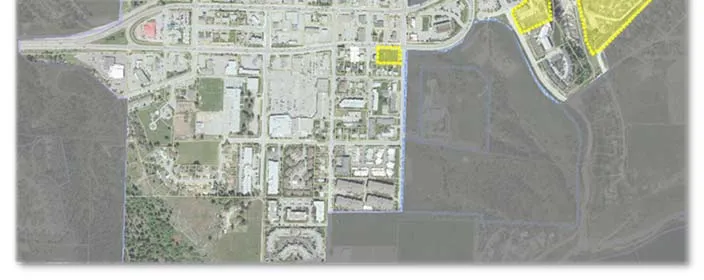
Westbank Centre is at a pivotal point in time where opportunity exists to construct upwards of 400 multi-family residential units in the downtown, in addition to the 479 units planned under current development permits (See map below). Integrating these developments with the surrounding commercial environment to achieve the mixed-use vision in the Westbank Centre Revitalization Plan will also be required to reverse the economic downturn created by the construction of the Highway 97 couplet that bisects the City’s downtown core.
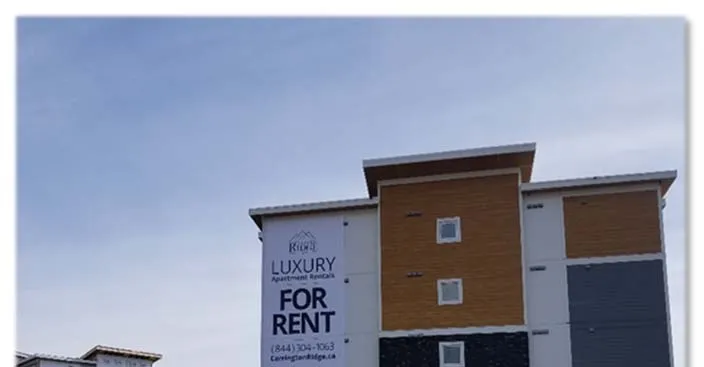
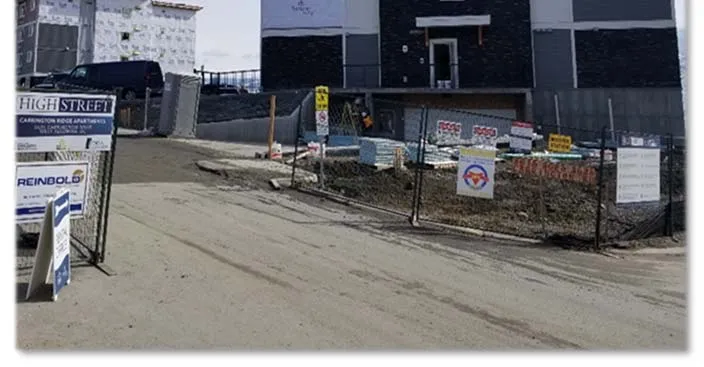
Above: Carrington Ridge – A 240 multi-family residential development in the Westbank Centre neighbourhood with purpose-built rentals. Below: Westbank Centre area map.
WHAT ARE THE SPECULATION TAX RISKS?
The speculation tax is expected to create financial roadblocks for higher risk, mixed use and multi-family projects in Westbank Centre, the City of West Kelowna’s urban core. The outcome would be a housing supply that fails to meet the City’s projected population needs and does not address the need for affordable housing or rental opportunities.
More pressure could be placed on the City to accept single family subdivision applications. Single family residential subdivisions pose lower financial risks for developers but create urban sprawl, and inefficient service provision for local governments compared to more compact forms of urban development.
WATER AND SEWER INFRASTRUCTURE
The Community Charter requires that municipalities within British Columbia must complete FIVE year operating and capital budgets. West Kelowna Council recognized early after incorporation, that it was in a challenging position as a new city with little start up reserves and a material amount of work required. With this challenge Council maintains TEN year operating and capital budgets.
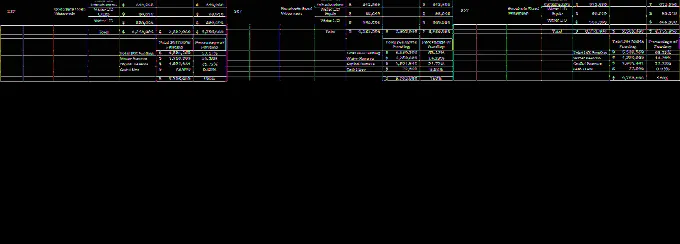
Summaries of the City of West Kelowna’s General, Sewer and Water Fund Capital Projects follow. These projects are to be funded from current and future reserves.
WHAT IS THE SPECULATION TAX RISK?
These projects are currently affordable based on the projected non-market growth; if this growth does not occur because of the speculation tax’s impact on the market, our budget will have to be reduced to reflect the lower available funds.
City of West Kelowna 2018 - 2027 Financial Plan (Abbreviated General Fund Capital Expenditures Schedule "B")
(Forecasts for General Government, Protective Services, Transportation Services, etc. from 2018 to 2027)
- TOTAL CAPITAL EXPENDITURES (2018 Forecast): $ 18,217,042
- TOTAL CAPITAL EXPENDITURES (2027 Forecast): $ 41,438,652
City of West Kelowna 2018 - 2027 Financial Plan (Sewer Fund Capital Expenditures)
(Forecasts for Mains, Lift Stations, etc. from 2018 to 2027)
- TOTAL CAPITAL (2018 Forecast): $ 550,000
- TOTAL CAPITAL (2027 Forecast): $ 84,000
City of West Kelowna 2018 - 2027 Financial Plan (Water Fund Capital Expenditures)
(Forecasts for Water Mains, SCADA, Reservoirs, Treatment Plants, etc.)
- TOTAL CAPITAL (2018 Forecast): $ 1,459,075
- TOTAL CAPITAL (2027 Forecast): $ 535,073
The following graph depicts the anticipated percentage of tax-funded transfers to reserves. Reserves are based on current projections and will be able to fund the projects in the ten-year capital plan.
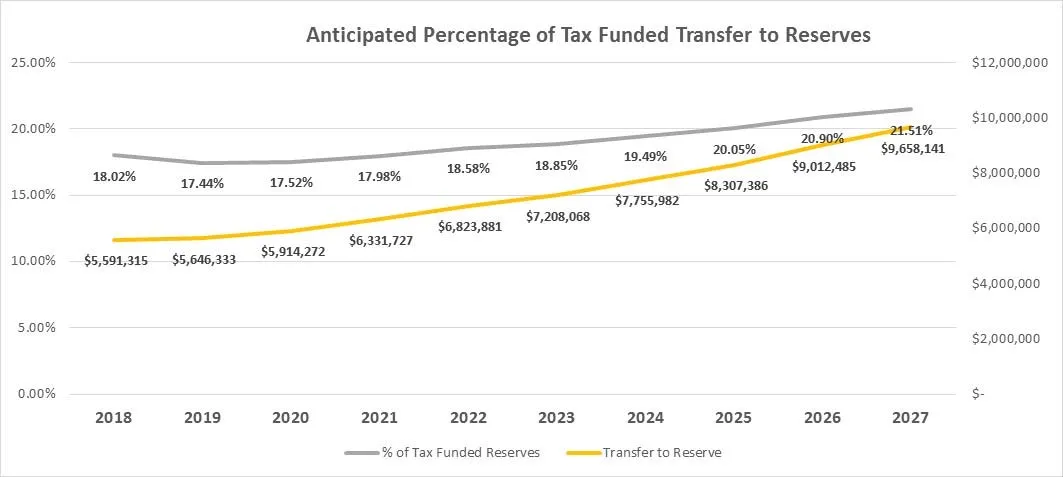
A total of 344 capital projects are funded over a ten year period, through reserves and DCCs.
PROJECT CANCELLATION IMPACTS
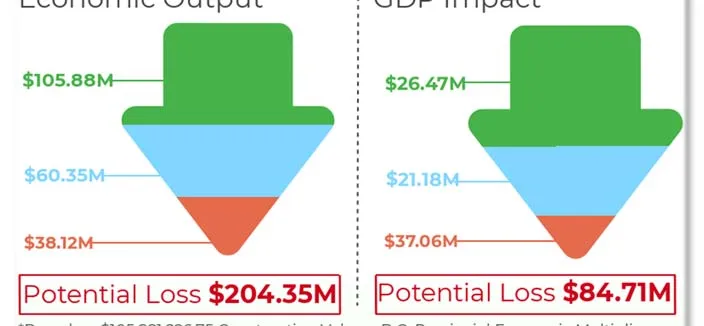
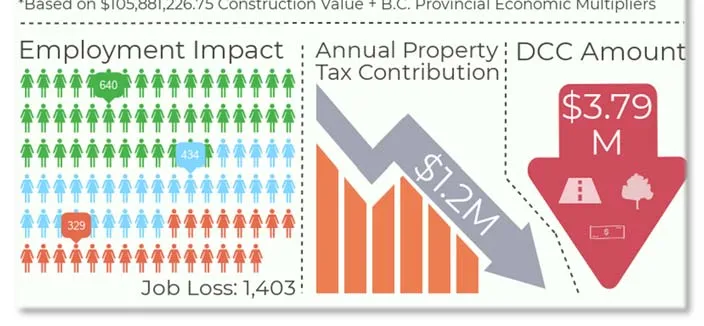
Let’s illustrate the Economic Impact of just one large project being cancelled in the City of West Kelowna as a result of changes created by the implementation of the Speculation Tax.
Economic Impacts have been estimated using the BC Statistic’s Economic Multipliers (Input-Output Model).
BC’s Provincial Economic Multipliers and How to Use Them – March 2008 states, “...economic impacts are not the only reason for undertaking projects or developing specific policies, those impacts are often important considerations and their estimation should play some part of any review of those projects or policies.”
As such, the City uses these multipliers from time to time to consider the economic impacts to the local economy when considering a project or opportunity.
Definitions:
Direct Impact: Economic activity directly associated with a given project/activity (i.e. money spent by the developer).
Indirect Impact: Economic activity generated within the supply chain to support the activity (i.e. Suppliers of good and services, sub-contractors, etc.).
Induced Impact: As a result of direct and indirect economic activities, subsequent economic activities generated by households within the economy (i.e. Grocery Store, Salons, retail, etc.).
TAX INTENTION WON’T BE REALIZED
OPPOSITE EFFECT POSSIBLE
Limiting speculation, and thereby increasing the availability of affordable housing is the indicated goal of the proposal, but in West Kelowna the tax may have the opposite affect. For instance,
- The tax may result in a sell off, which may result in less rental units and higher rents.
- Some owners who must pay the tax may try to pass the tax expense on to their tenant.
- Home owners may have to sell at a loss to avoid the annual Speculation Tax.
- The new tax will affect true speculators relatively little. If purchasers intend to flip the property in a short period, it would be to make a quick profit. As they would only be responsible for the new tax within that short period, the tax would probably be included in the sale price, and do little to deter speculators.
- Long-term, non-resident owners who are not speculating on the housing market, simply own the home, and would have to pay that same tax year after year. This category of purchaser will occur for various reasons, including those purchasing future retirement homes. It’s common for Canadians and some foreign buyers to purchase a second home with the intention of moving to West Kelowna once they retire. Until they retire, the residence may be used to rent to students or used as short-term rental until the residence is needed. This new tax may increase the rental cost, as the owner would try to recoup some of the new tax.
ABILITY TO PAY TAX IMPACTED
An online survey, conducted by Marketing Research and Intelligence Association for the Bank of Montreal, polled 1,002 Canadians 18 years of age and older and found that:
- Canadians on average have $41,694 in emergency savings, up from an average of $35,237 in 2014.
- 24 per cent of respondents had hardly anything set aside and 56 per cent reported having less than $10,000 in available emergency funds; Christine Canning, head of everyday banking at BMO, describes the ideal emergency savings fund as one that can replace three to six months of income.
- By region, those in Atlantic Canada had the lowest average amount of emergency funds set aside at $20,152, with only eight per cent having more than $50,000 available and 27 per cent with between $10,000 and $49,900.
- B.C. residents had the most set aside, an average $70,364, with 21 per cent having $50,000 or more and 14 per cent between $10,000 and $49,900.
- Elsewhere, the average amount set aside totaled $24,671 in Quebec, $41,088 in Ontario, $67,605 in Manitoba and Saskatchewan and $40,341 in Alberta.
The proposed Speculation Tax on residential property in BC will be 0.5% of assessed value, starting in 2018. This tax will increase to 2.0% of assessed value in 2019.
Besides other measures, the 2018 BC Budget introduces a non-refundable income tax credit to offset the new property tax to provide relief to persons who may not otherwise qualify for an up-front exemption, but otherwise pay income taxes in B.C.
The table to the right provides a break down of the income levels that would be required to recover the Speculation Tax at the proposed rate of 2%, beginning in 2019.
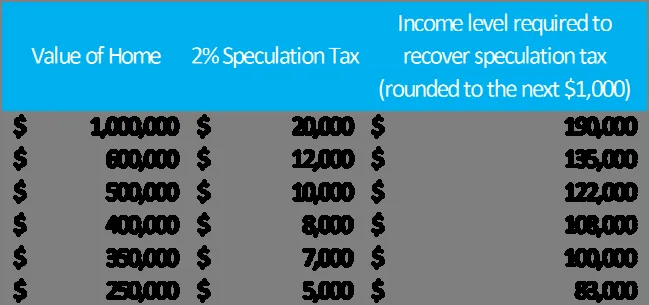
| Value of Home | 2% Speculation Tax | Income level required to recover speculation tax (rounded to the next $1,000) |
|---|---|---|
| $ 1,000,000 | $ 20,000 | $ 190,000 |
| $ 600,000 | $ 12,000 | $ 135,000 |
| $ 500,000 | $ 10,000 | $ 122,000 |
| $ 400,000 | $ 8,000 | $ 108,000 |
| $ 350,000 | $ 7,000 | $ 100,000 |
| $ 250,000 | $ 5,000 | $ 83,000 |
FURTHER CONSIDERATIONS
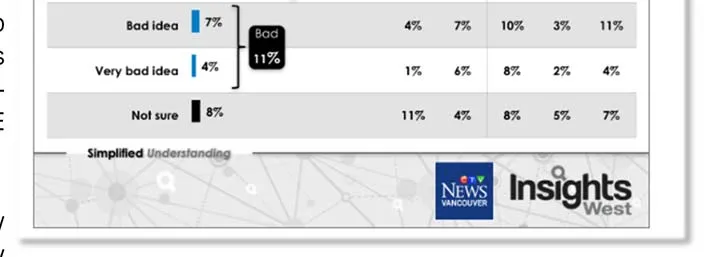
A CTV News Insights West survey is being touted as a good gauge on the sentiment of the public related to the Speculation Tax.
The question does not accurately reflect the true nature of the proposed tax. Rather than specifying all people, including BC residents who will be negatively impacted by the tax, the question focusses opinion around those who do not pay tax in BC, which skews the results. As shown in this document, the majority of non-resident homeowners in West Kelowna ARE BC TAXPAYERS.
Insights West staff indicated that the survey was scientifically accurate and polled mostly Lower Mainland residents.
With no uniform polling conducted across the province, and specifically no proper sampling of the Okanagan, Insights West admitted that the numbers could not be used for the Okanagan area.
In addition, the question does not mention that the tax is charged annually; and the question seems to indicate that the tax is applied to non-residents rather than speculators.
IF IMPLEMENTED, MONITORING NEEDED
If the Province of BC chooses to deny or disregard West Kelowna’s request to be excluded from the proposed Speculation Tax, West Kelowna Council strongly recommends the Province undertake close monitoring of the economic impacts from the tax on affected communities.
NOTES
(Pages 21-23 contain blank ruled lines for notes)
MAYOR DOUG FINDLATER City of West Kelowna 2760 Cameron Road West Kelowna, BC V1Z 2T6 Phone: 778-797-2210 doug.findlater@westkelownacity.ca www.westkelownacity.ca