Appendix
Workplace Bullying & Harassment Investigative Interview
December 10, 2013Pages 66–672 sections
Best practices and standard questionnaire for management to use when investigating complaints.
Interview guide for Complainant and Respondent
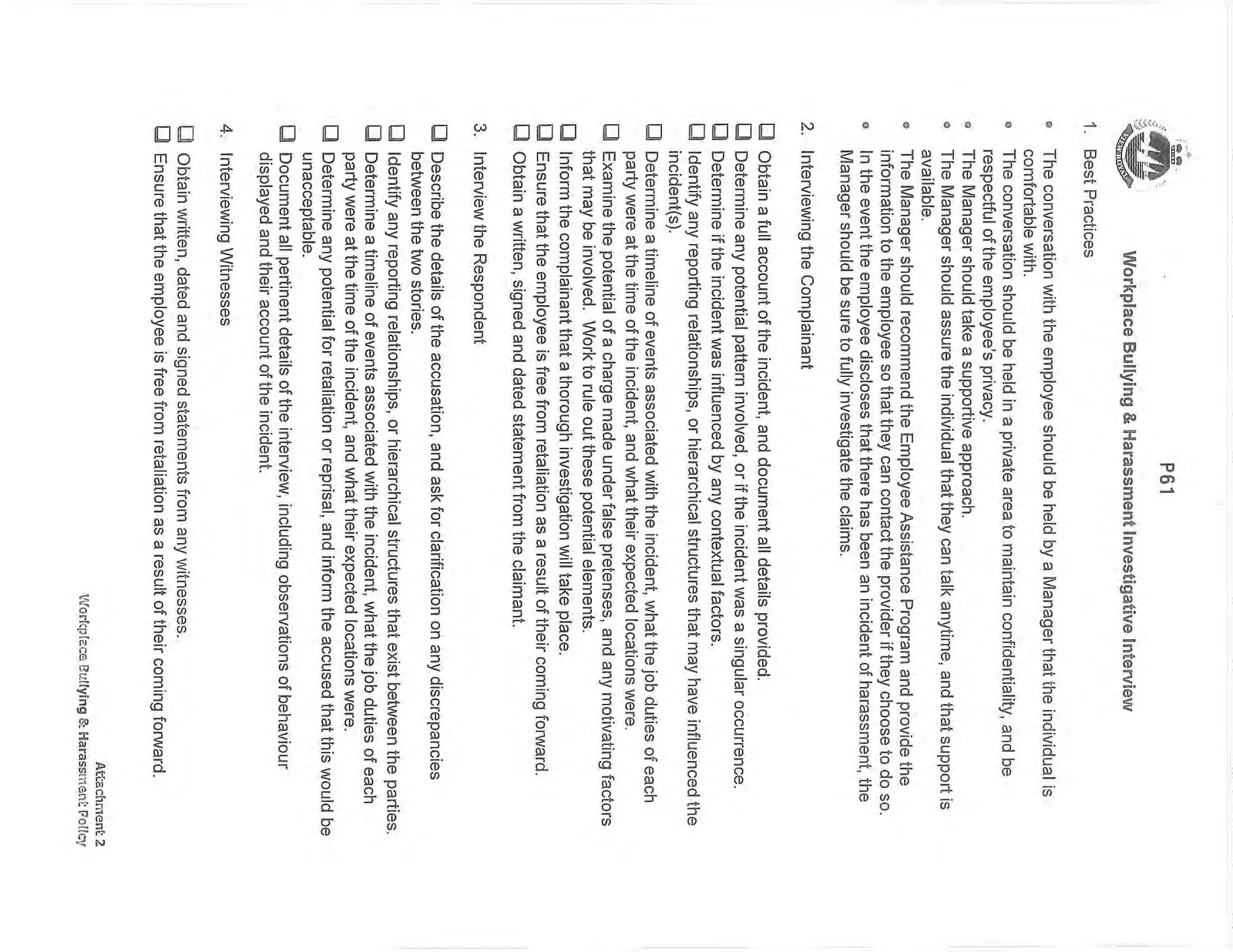
Workplace Bullying & Harassment Investigative Interview
1. Best Practices
- The conversation with the employee should be held by a Manager that the individual is comfortable with.
- The conversation should be held in a private area to maintain confidentiality, and be respectful of the employee's privacy.
- The Manager should take a supportive approach.
- The Manager should assure the individual that they can talk anytime, and that support is available.
- The Manager should recommend the Employee Assistance Program and provide the information to the employee so that they can contact the provider if they choose to do so.
- In the event the employee discloses that there has been an incident of harassment, the Manager should be sure to fully investigate the claims.
2. Interviewing the Complainant
- Obtain a full account of the incident, and document all details provided.
- Determine any potential pattern involved, or if the incident was a singular occurrence.
- Determine if the incident was influenced by any contextual factors.
- Identify any reporting relationships, or hierarchical structures that may have influenced the incident(s).
- Determine a timeline of events associated with the incident, what the job duties of each party were at the time of the incident, and what their expected locations were.
- Examine the potential of a charge made under false pretenses, and any motivating factors that may be involved. Work to rule out these potential elements.
- Inform the complainant that a thorough investigation will take place.
- Ensure that the employee is free from retaliation as a result of their coming forward.
- Obtain a written, signed and dated statement from the claimant.
3. Interview the Respondent
- Describe the details of the accusation, and ask for clarification on any discrepancies between the two stories.
- Identify any reporting relationships, or hierarchical structures that exist between the parties.
- Determine a timeline of events associated with the incident, what the job duties of each party were at the time of the incident, and what their expected locations were.
- Determine any potential for retaliation or reprisal, and inform the accused that this would be unacceptable.
- Document all pertinent details of the interview, including observations of behaviour displayed and their account of the incident.
4. Interviewing Witnesses
- Obtain written, dated and signed statements from any witnesses.
- Ensure that the employee is free from retaliation as a result of their coming forward.
Page 66–67
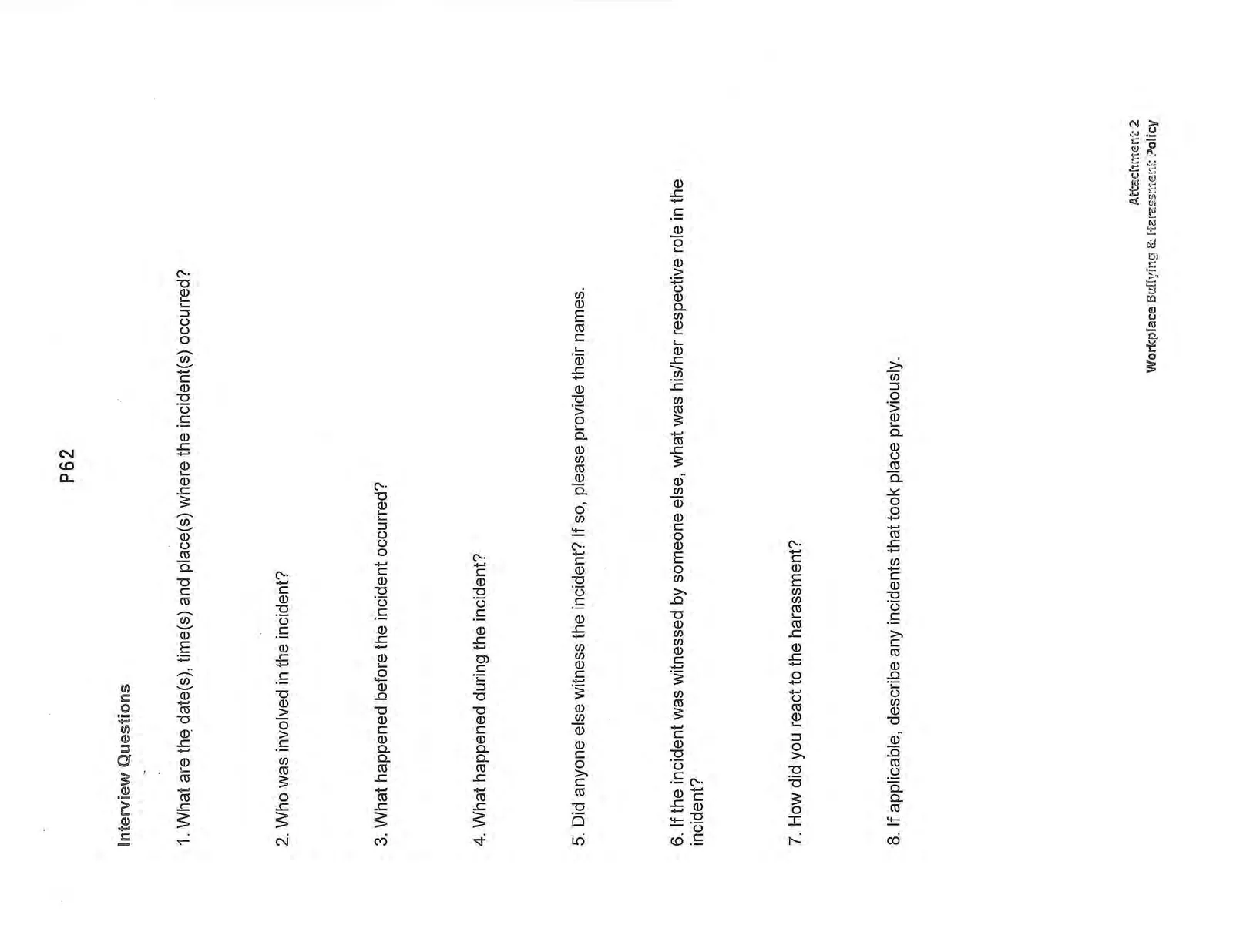
Interview Questions
- What are the date(s), time(s) and place(s) where the incident(s) occurred?
- Who was involved in the incident?
- What happened before the incident occurred?
- What happened during the incident?
- Did anyone else witness the incident? If so, please provide their names.
- If the incident was witnessed by someone else, what was his/her respective role in the incident?
- How did you react to the harassment?
- If applicable, describe any incidents that took place previously.
Page 66–67
Document Images
(2)
Extracted from: 2013 12 10 Committee of the Whole Agenda