Regional Sustainability Strategy Report
Staff report analyzing the draft Regional Sustainability Strategy and identifying potential areas of concern for View Royal.
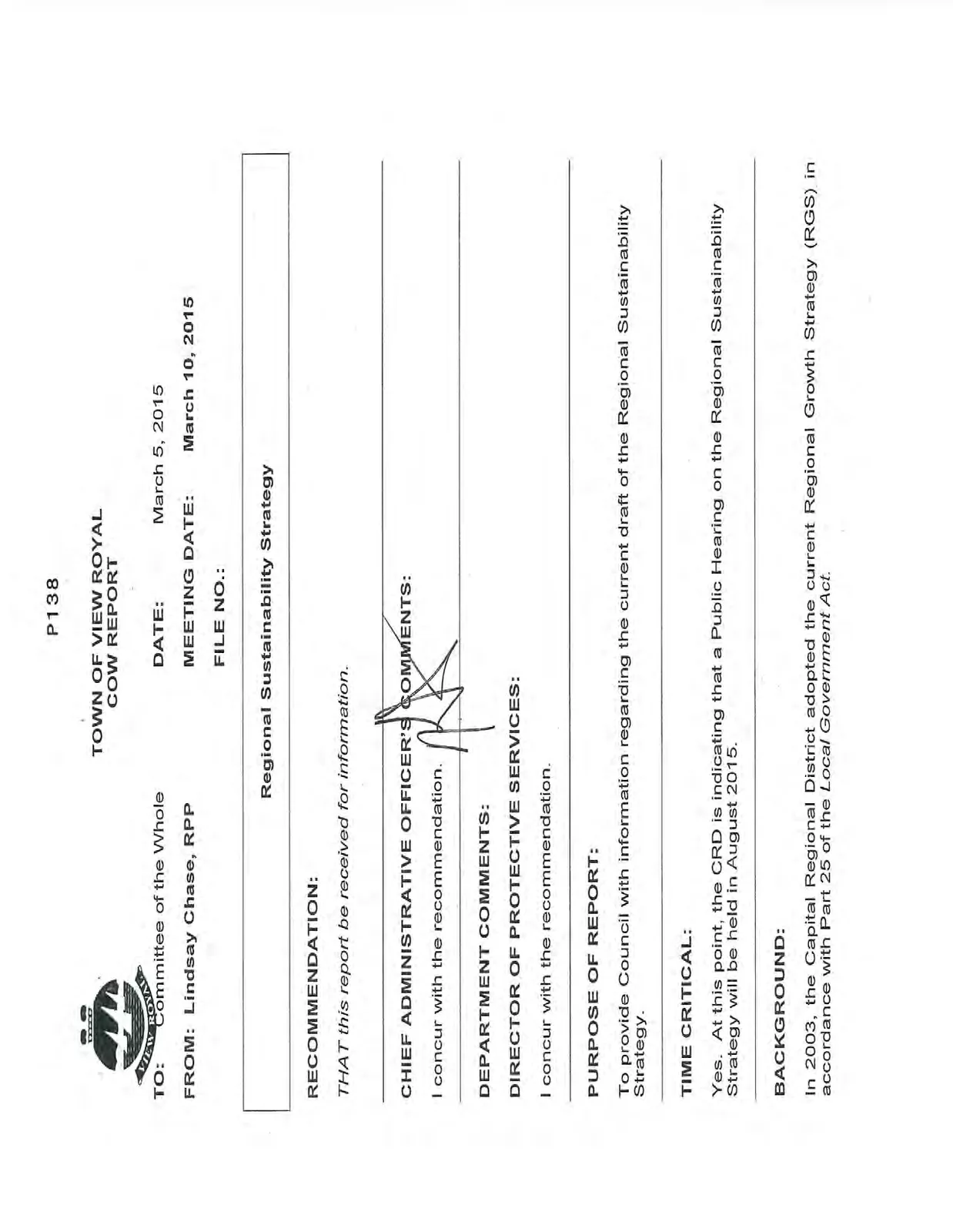
TOWN OF VIEW ROYAL COW REPORT
TO: Committee of the Whole DATE: March 5, 2015 FROM: Lindsay Chase, RPP MEETING DATE: March 10, 2015 FILE NO.:
Regional Sustainability Strategy
RECOMMENDATION:
THAT this report be received for information.
CHIEF ADMINISTRATIVE OFFICER'S COMMENTS:
I concur with the recommendation.
DEPARTMENT COMMENTS:
DIRECTOR OF PROTECTIVE SERVICES:
I concur with the recommendation.
PURPOSE OF REPORT:
To provide Council with information regarding the current draft of the Regional Sustainability Strategy.
TIME CRITICAL:
Yes. At this point, the CRD is indicating that a Public Hearing on the Regional Sustainability Strategy will be held in August 2015.
BACKGROUND:
In 2003, the Capital Regional District adopted the current Regional Growth Strategy (RGS) in accordance with Part 25 of the Local Government Act.
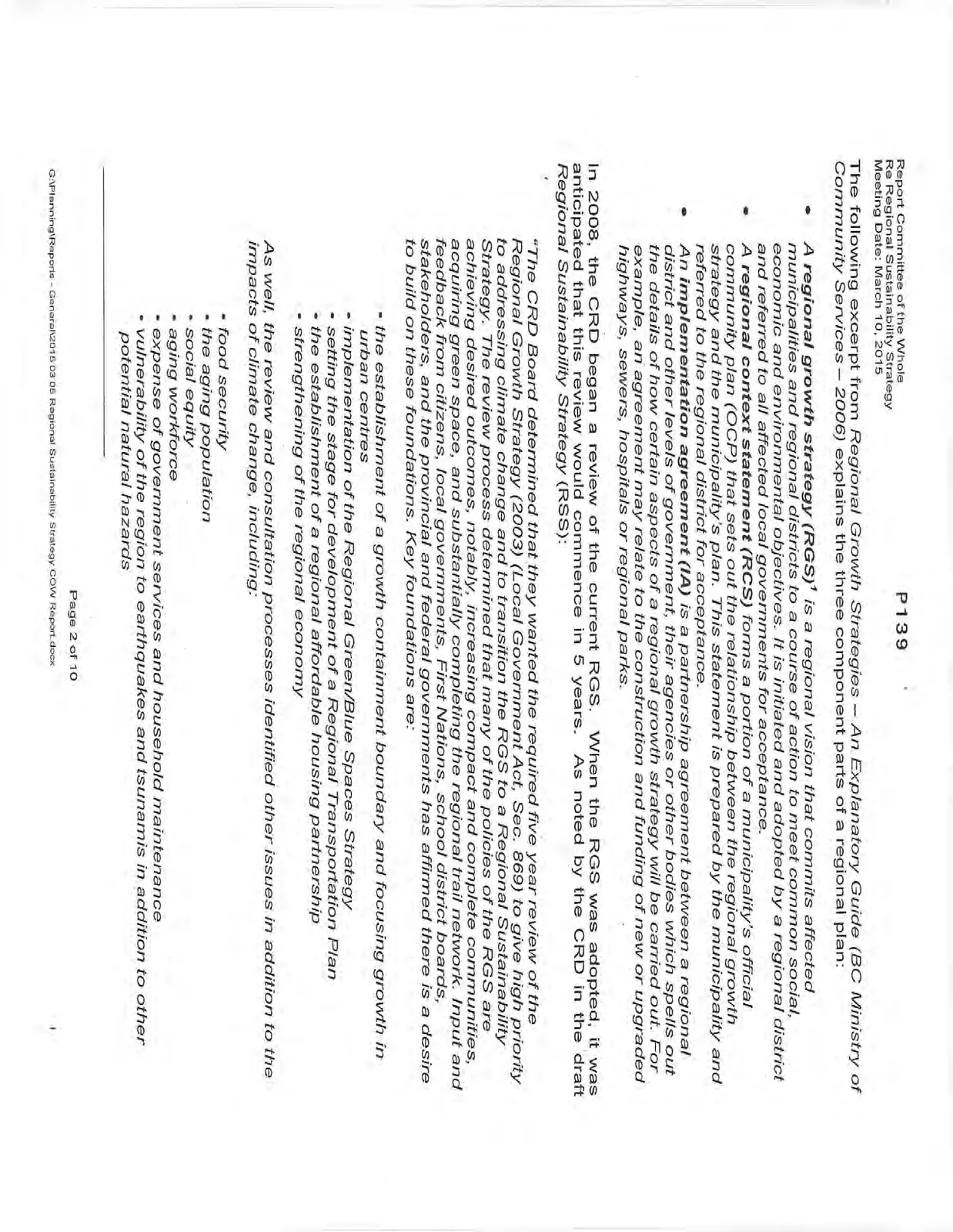
The following excerpt from Regional Growth Strategies – An Explanatory Guide (BC Ministry of Community Services – 2006) explains the three component parts of a regional plan:
- A regional growth strategy (RGS)¹ is a regional vision that commits affected municipalities and regional districts to a course of action to meet common social, economic and environmental objectives. It is initiated and adopted by a regional district and referred to all affected local governments for acceptance.
- A regional context statement (RCS) forms a portion of a municipality's official community plan (OCP) that sets out the relationship between the regional growth strategy and the municipality's plan. This statement is prepared by the municipality and referred to the regional district for acceptance.
- An implementation agreement (IA) is a partnership agreement between a regional district and other levels of government, their agencies or other bodies which spells out the details of how certain aspects of a regional growth strategy will be carried out. For example, an agreement may relate to the construction and funding of new or upgraded highways, sewers, hospitals or regional parks.
In 2008, the CRD began a review of the current RGS. When the RGS was adopted, it was anticipated that this review would commence in 5 years. As noted by the CRD in the draft Regional Sustainability Strategy (RSS):
"The CRD Board determined that they wanted the required five year review of the Regional Growth Strategy (2003) (Local Government Act, Sec. 869) to give high priority to addressing climate change and to transition the RGS to a Regional Sustainability Strategy. The review process determined that many of the policies of the RGS are achieving desired outcomes, notably, increasing compact and complete communities, acquiring green space, and substantially completing the regional trail network. Input and feedback from citizens, local governments, First Nations, school district boards, stakeholders, and the provincial and federal governments has affirmed there is a desire to build on these foundations. Key foundations are:
- the establishment of a growth containment boundary and focusing growth in urban centres
- implementation of the Regional Green/Blue Spaces Strategy
- setting the stage for development of a Regional Transportation Plan
- the establishment of a regional affordable housing partnership
- strengthening of the regional economy
As well, the review and consultation processes identified other issues in addition to the impacts of climate change, including:
- food security
- the aging population
- social equity
- aging workforce
- expense of government services and household maintenance
- vulnerability of the region to earthquakes and tsunamis in addition to other potential natural hazards
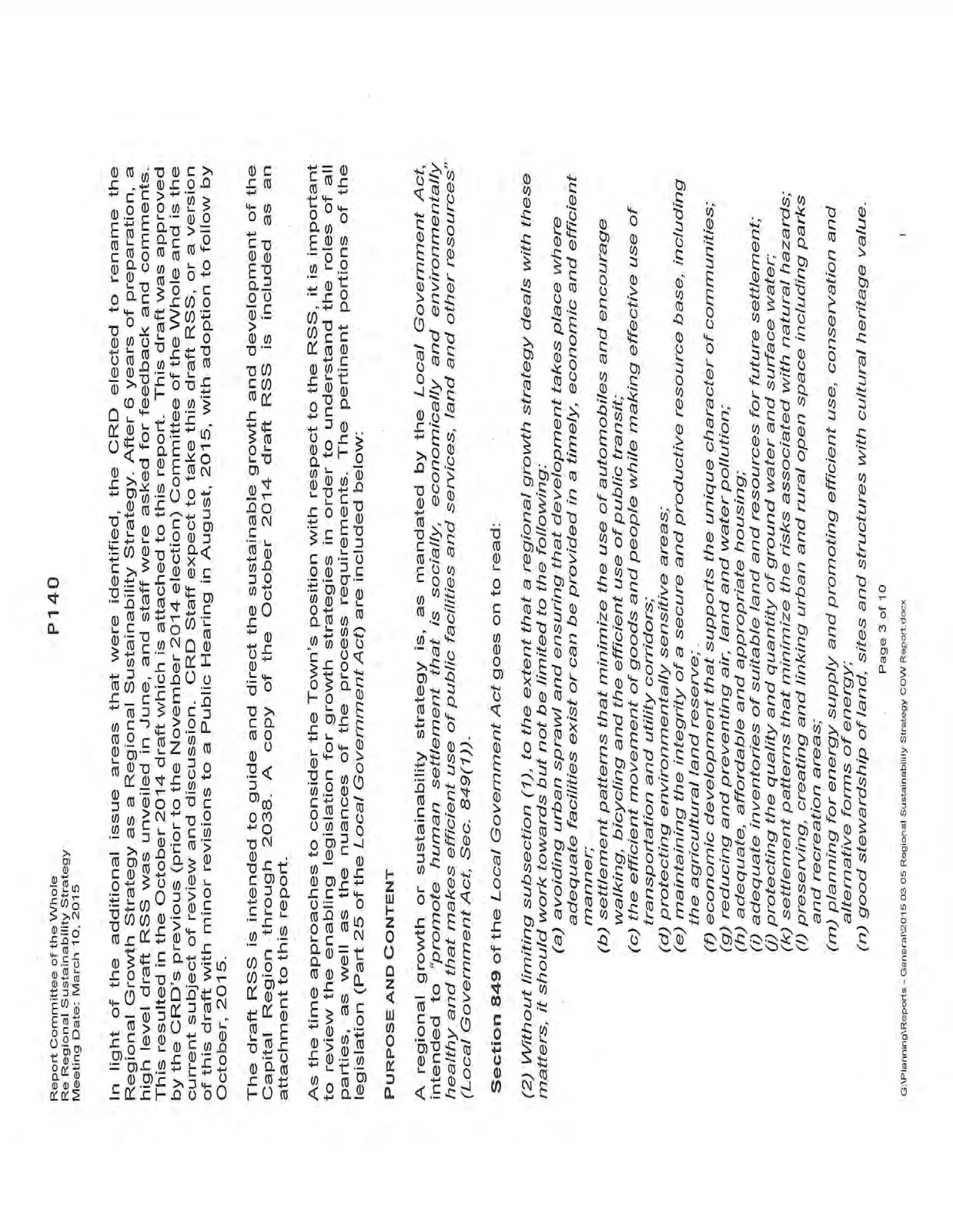
In light of the additional issue areas that were identified, the CRD elected to rename the Regional Growth Strategy as a Regional Sustainability Strategy. After 6 years of preparation, a high level draft RSS was unveiled in June, and staff were asked for feedback and comments. This resulted in the October 2014 draft which is attached to this report. This draft was approved by the CRD's previous (prior to the November 2014 election) Committee of the Whole and is the current subject of review and discussion. CRD Staff expect to take this draft RSS, or a version of this draft with minor revisions to a Public Hearing in August, 2015, with adoption to follow by October, 2015.
The draft RSS is intended to guide and direct the sustainable growth and development of the Capital Region through 2038. A copy of the October 2014 draft RSS is included as an attachment to this report.
As the time approaches to consider the Town's position with respect to the RSS, it is important to review the enabling legislation for growth strategies in order to understand the roles of all parties, as well as the nuances of the process requirements. The pertinent portions of the legislation (Part 25 of the Local Government Act) are included below:
PURPOSE AND CONTENT
A regional growth or sustainability strategy is, as mandated by the Local Government Act, intended to "promote human settlement that is socially, economically and environmentally healthy and that makes efficient use of public facilities and services, land and other resources" (Local Government Act, Sec. 849(1)).
Section 849 of the Local Government Act goes on to read:
(2) Without limiting subsection (1), to the extent that a regional growth strategy deals with these matters, it should work towards but not be limited to the following: (a) avoiding urban sprawl and ensuring that development takes place where adequate facilities exist or can be provided in a timely, economic and efficient manner; (b) settlement patterns that minimize the use of automobiles and encourage walking, bicycling and the efficient use of public transit; (c) the efficient movement of goods and people while making effective use of transportation and utility corridors; (d) protecting environmentally sensitive areas; (e) maintaining the integrity of a secure and productive resource base, including the agricultural land reserve; (f) economic development that supports the unique character of communities; (g) reducing and preventing air, land and water pollution; (h) adequate, affordable and appropriate housing; (i) adequate inventories of suitable land and resources for future settlement; (j) protecting the quality and quantity of ground water and surface water; (k) settlement patterns that minimize the risks associated with natural hazards; (l) preserving, creating and linking urban and rural open space including parks and recreation areas; (m) planning for energy supply and promoting efficient use, conservation and alternative forms of energy; (n) good stewardship of land, sites and structures with cultural heritage value.
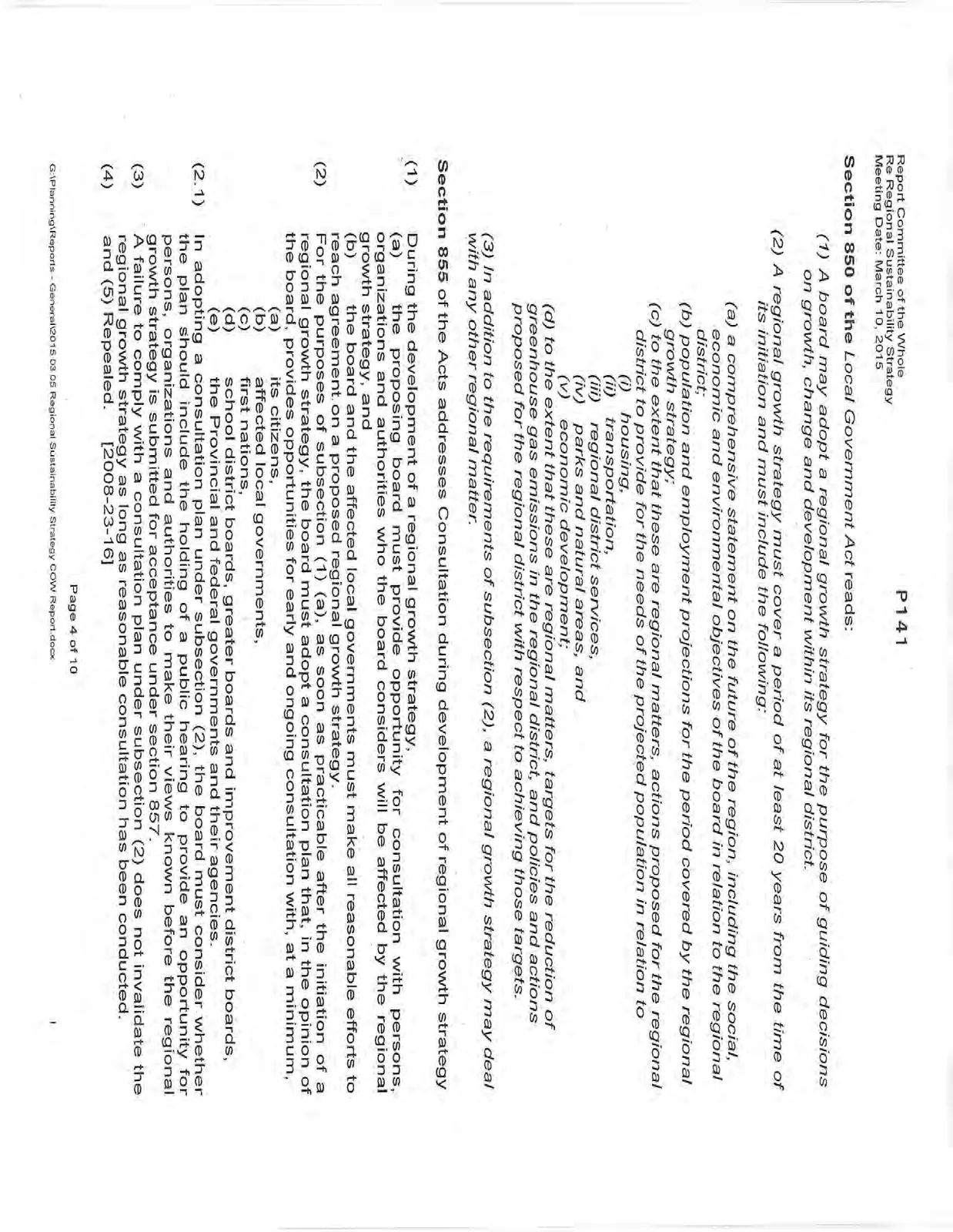
Section 850 of the Local Government Act reads:
(1) A board may adopt a regional growth strategy for the purpose of guiding decisions on growth, change and development within its regional district. (2) A regional growth strategy must cover a period of at least 20 years from the time of its initiation and must include the following: (a) a comprehensive statement on the future of the region, including the social, economic and environmental objectives of the board in relation to the regional district; (b) population and employment projections for the period covered by the regional growth strategy; (c) to the extent that these are regional matters, actions proposed for the regional district to provide for the needs of the projected population in relation to (i) housing, (ii) transportation, (iii) regional district services, (iv) parks and natural areas, and (v) economic development; (d) to the extent that these are regional matters, targets for the reduction of greenhouse gas emissions in the regional district, and policies and actions proposed for the regional district with respect to achieving those targets. (3) In addition to the requirements of subsection (2), a regional growth strategy may deal with any other regional matter.
Section 855 of the Acts addresses Consultation during development of regional growth strategy
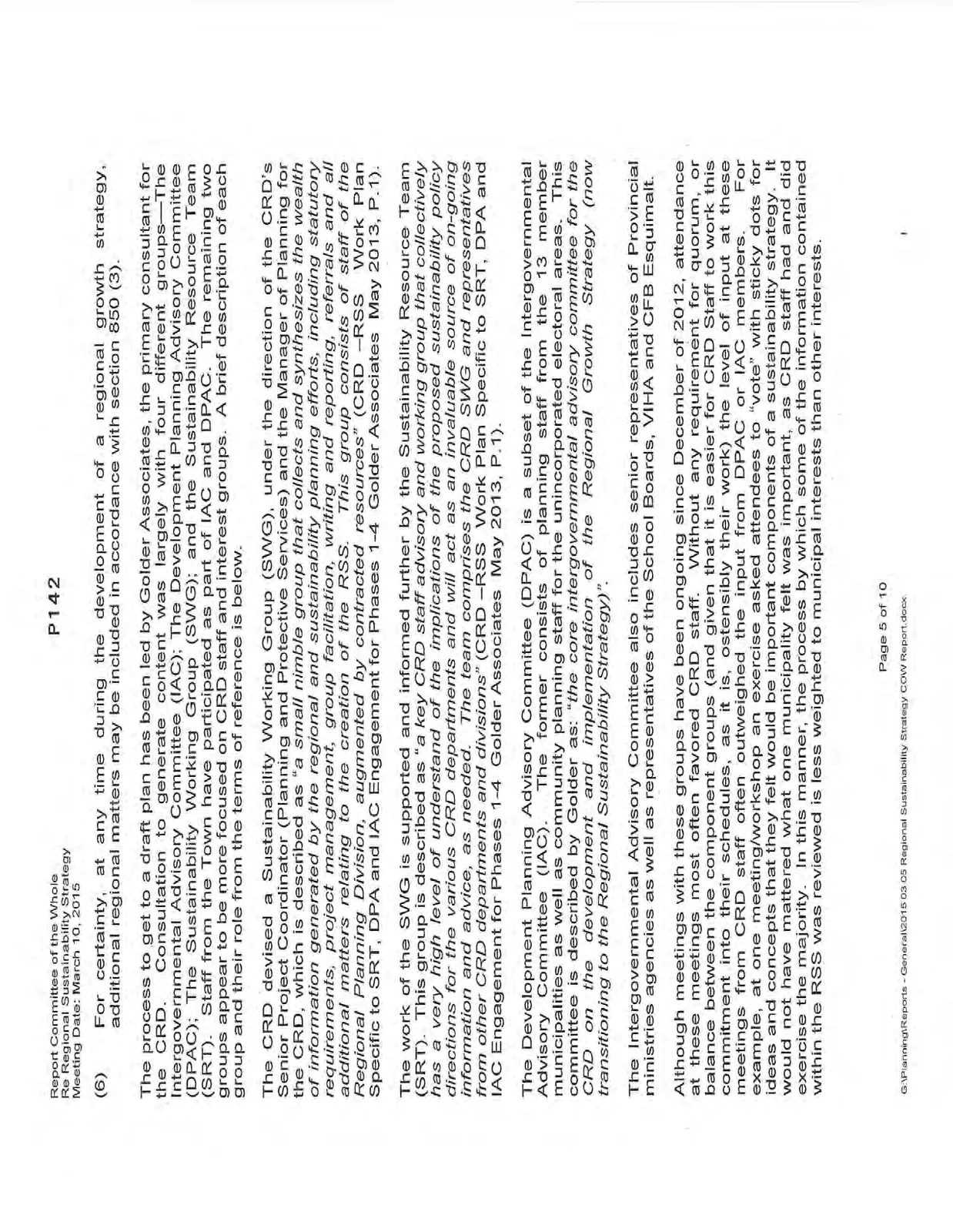
(1) During the development of a regional growth strategy, (a) the proposing board must provide opportunity for consultation with persons, organizations and authorities who the board considers will be affected by the regional growth strategy, and (b) the board and the affected local governments must make all reasonable efforts to reach agreement on a proposed regional growth strategy. (2) For the purposes of subsection (1) (a), as soon as practicable after the initiation of a regional growth strategy, the board must adopt a consultation plan that, in the opinion of the board, provides opportunities for early and ongoing consultation with, at a minimum, (a) its citizens, (b) affected local governments, (c) first nations, (d) school district boards, greater boards and improvement district boards, (e) the Provincial and federal governments and their agencies. (2.1) In adopting a consultation plan under subsection (2), the board must consider whether the plan should include the holding of a public hearing to provide an opportunity for persons, organizations and authorities to make their views known before the regional growth strategy is submitted for acceptance under section 857. (3) A failure to comply with a consultation plan under subsection (2) does not invalidate the regional growth strategy as long as reasonable consultation has been conducted. (4) and (5) Repealed. [2008-23-16] (6) For certainty, at any time during the development of a regional growth strategy, additional regional matters may be included in accordance with section 850 (3).
The process to get to a draft plan has been led by Golder Associates, the primary consultant for the CRD. Consultation to generate content was largely with four different groups—The Intergovernmental Advisory Committee (IAC); The Development Planning Advisory Committee (DPAC); The Sustainability Working Group (SWG); and the Sustainability Resource Team (SRT). Staff from the Town have participated as part of IAC and DPAC. The remaining two groups appear to be more focused on CRD staff and interest groups. A brief description of each group and their role from the terms of reference is below.
The CRD devised a Sustainability Working Group (SWG), under the direction of the CRD's Senior Project Coordinator (Planning and Protective Services) and the Manager of Planning for the CRD, which is described as "a small nimble group that collects and synthesizes the wealth of information generated by the regional and sustainability planning efforts, including statutory requirements, project management, group facilitation, writing and reporting, referrals and all additional matters relating to the creation of the RSS. This group consists of staff of the Regional Planning Division, augmented by contracted resources" (CRD –RSS Work Plan Specific to SRT, DPA and IAC Engagement for Phases 1-4 Golder Associates May 2013, P.1).
The work of the SWG is supported and informed further by the Sustainability Resource Team (SRT). This group is described as "a key CRD staff advisory and working group that collectively has a very high level of understand of the implications of the proposed sustainability policy directions for the various CRD departments and will act as an invaluable source of on-going information and advice, as needed. The team comprises the CRD SWG and representatives from other CRD departments and divisions" (CRD –RSS Work Plan Specific to SRT, DPA and IAC Engagement for Phases 1-4 Golder Associates May 2013, P.1).
The Development Planning Advisory Committee (DPAC) is a subset of the Intergovernmental Advisory Committee (IAC). The former consists of planning staff from the 13 member municipalities as well as community planning staff for the unincorporated electoral areas. This committee is described by Golder as: "the core intergovernmental advisory committee for the CRD on the development and implementation of the Regional Growth Strategy (now transitioning to the Regional Sustainability Strategy)".
The Intergovernmental Advisory Committee also includes senior representatives of Provincial ministries agencies as well as representatives of the School Boards, VIHA and CFB Esquimalt.
Although meetings with these groups have been ongoing since December of 2012, attendance at these meetings most often favored CRD staff. Without any requirement for quorum, or balance between the component groups (and given that it is easier for CRD Staff to work this commitment into their schedules, as it is, ostensibly their work) the level of input at these meetings from CRD staff often outweighed the input from DPAC or IAC members. For example, at one meeting/workshop an exercise asked attendees to "vote" with sticky dots for ideas and concepts that they felt would be important components of a sustainability strategy. It would not have mattered what one municipality felt was important, as CRD staff had and did exercise the majority. In this manner, the process by which some of the information contained within the RSS was reviewed is less weighted to municipal interests than other interests.
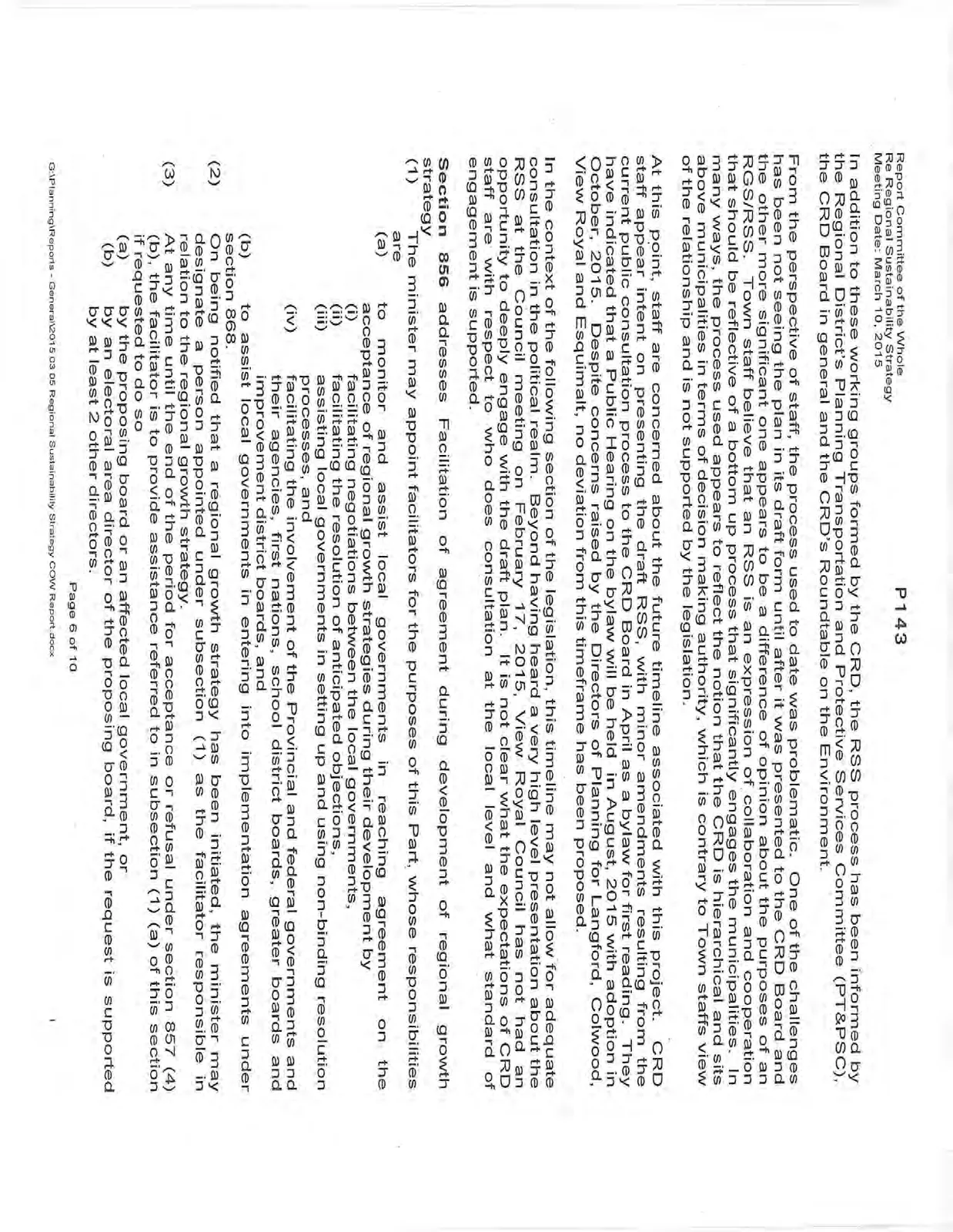
In addition to these working groups formed by the CRD, the RSS process has been informed by the Regional District's Planning Transportation and Protective Services Committee (PT&PSC), the CRD Board in general and the CRD's Roundtable on the Environment.
From the perspective of staff, the process used to date was problematic. One of the challenges has been not seeing the plan in its draft form until after it was presented to the CRD Board and the other more significant one appears to be a difference of opinion about the purposes of an RGS/RSS. Town staff believe that an RSS is an expression of collaboration and cooperation that should be reflective of a bottom up process that significantly engages the municipalities. In many ways, the process used appears to reflect the notion that the CRD is hierarchical and sits above municipalities in terms of decision making authority, which is contrary to Town staffs view of the relationship and is not supported by the legislation.
At this point, staff are concerned about the future timeline associated with this project. CRD staff appear intent on presenting the draft RSS, with minor amendments resulting from the current public consultation process to the CRD Board in April as a bylaw for first reading. They have indicated that a Public Hearing on the bylaw will be held in August, 2015 with adoption in October, 2015. Despite concerns raised by the Directors of Planning for Langford, Colwood, View Royal and Esquimalt, no deviation from this timeframe has been proposed.
In the context of the following section of the legislation, this timeline may not allow for adequate consultation in the political realm. Beyond having heard a very high level presentation about the RSS at the Council meeting on February 17, 2015, View Royal Council has not had an opportunity to deeply engage with the draft plan. It is not clear what the expectations of CRD staff are with respect to who does consultation at the local level and what standard of engagement is supported.
Section 856 addresses Facilitation of agreement during development of regional growth strategy
(1) The minister may appoint facilitators for the purposes of this Part, whose responsibilities are (a) to monitor and assist local governments in reaching agreement on the acceptance of regional growth strategies during their development by (i) facilitating negotiations between the local governments, (ii) facilitating the resolution of anticipated objections, (iii) assisting local governments in setting up and using non-binding resolution processes, and (iv) facilitating the involvement of the Provincial and federal governments and their agencies, first nations, school district boards, greater boards and improvement district boards, and (b) to assist local governments in entering into implementation agreements under section 868. (2) On being notified that a regional growth strategy has been initiated, the minister may designate a person appointed under subsection (1) as the facilitator responsible in relation to the regional growth strategy. (3) At any time until the end of the period for acceptance or refusal under section 857 (4) (b), the facilitator is to provide assistance referred to in subsection (1) (a) of this section if requested to do so (a) by the proposing board or an affected local government, or (b) by an electoral area director of the proposing board, if the request is supported by at least 2 other directors. (4) Once a facilitator becomes involved under subsection (3), the proposing board and affected local governments must provide information as requested by the facilitator and must otherwise cooperate with the facilitator in fulfilling his or her responsibilities.
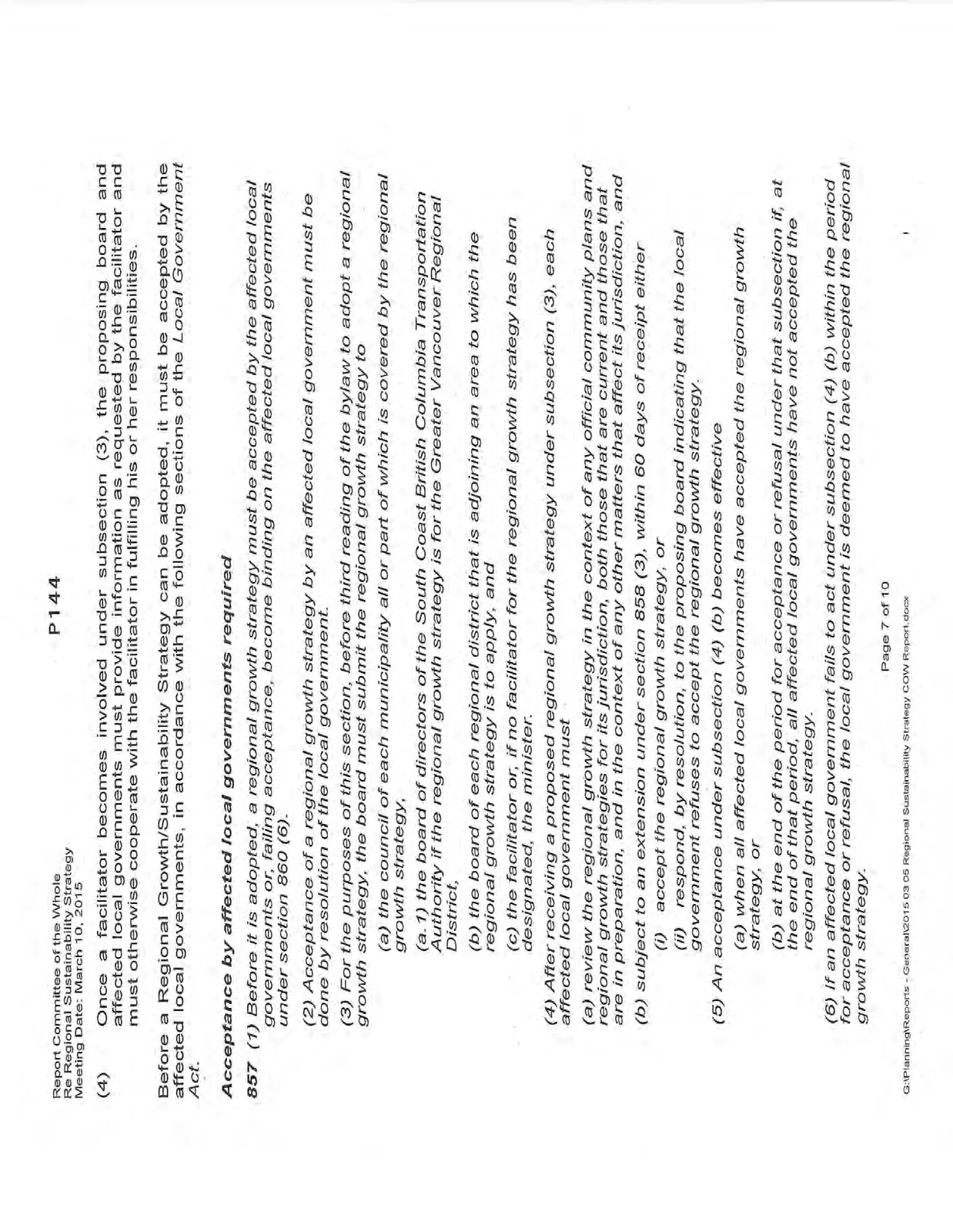
Before a Regional Growth/Sustainability Strategy can be adopted, it must be accepted by the affected local governments, in accordance with the following sections of the Local Government Act.
Acceptance by affected local governments required
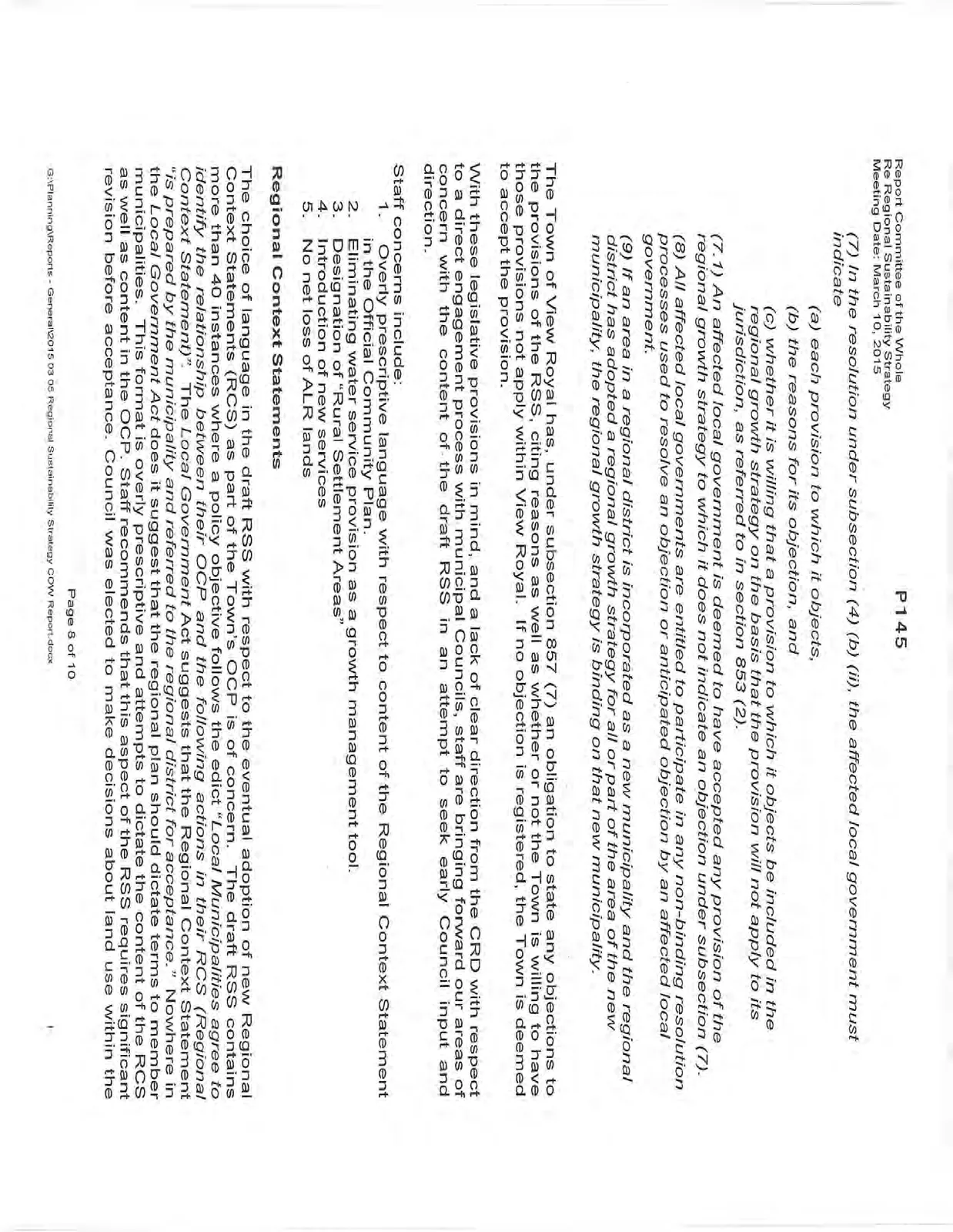
857 (1) Before it is adopted, a regional growth strategy must be accepted by the affected local governments or, failing acceptance, become binding on the affected local governments under section 860 (6). (2) Acceptance of a regional growth strategy by an affected local government must be done by resolution of the local government. (3) For the purposes of this section, before third reading of the bylaw to adopt a regional growth strategy, the board must submit the regional growth strategy to (a) the council of each municipality all or part of which is covered by the regional growth strategy, (a.1) the board of directors of the South Coast British Columbia Transportation Authority if the regional growth strategy is for the Greater Vancouver Regional District, (b) the board of each regional district that is adjoining an area to which the regional growth strategy is to apply, and (c) the facilitator or, if no facilitator for the regional growth strategy has been designated, the minister. (4) After receiving a proposed regional growth strategy under subsection (3), each affected local government must (a) review the regional growth strategy in the context of any official community plans and regional growth strategies for its jurisdiction, both those that are current and those that are in preparation, and in the context of any other matters that affect its jurisdiction, and (b) subject to an extension under section 858 (3), within 60 days of receipt either (i) accept the regional growth strategy, or (ii) respond, by resolution, to the proposing board indicating that the local government refuses to accept the regional growth strategy. (5) An acceptance under subsection (4) (b) becomes effective (a) when all affected local governments have accepted the regional growth strategy, or (b) at the end of the period for acceptance or refusal under that subsection if, at the end of that period, all affected local governments have not accepted the regional growth strategy. (6) If an affected local government fails to act under subsection (4) (b) within the period for acceptance or refusal, the local government is deemed to have accepted the regional growth strategy. (7) In the resolution under subsection (4) (b) (ii), the affected local government must indicate (a) each provision to which it objects, (b) the reasons for its objection, and (c) whether it is willing that a provision to which it objects be included in the regional growth strategy on the basis that the provision will not apply to its jurisdiction, as referred to in section 853 (2). (7.1) An affected local government is deemed to have accepted any provision of the regional growth strategy to which it does not indicate an objection under subsection (7). (8) All affected local governments are entitled to participate in any non-binding resolution processes used to resolve an objection or anticipated objection by an affected local government. (9) If an area in a regional district is incorporated as a new municipality and the regional district has adopted a regional growth strategy for all or part of the area of the new municipality, the regional growth strategy is binding on that new municipality.
The Town of View Royal has, under subsection 857 (7) an obligation to state any objections to the provisions of the RSS, citing reasons as well as whether or not the Town is willing to have those provisions not apply within View Royal. If no objection is registered, the Town is deemed to accept the provision.
With these legislative provisions in mind, and a lack of clear direction from the CRD with respect to a direct engagement process with municipal Councils, staff are bringing forward our areas of concern with the content of the draft RSS in an attempt to seek early Council input and direction.
Staff concerns include:
- Overly prescriptive language with respect to content of the Regional Context Statement in the Official Community Plan.
- Eliminating water service provision as a growth management tool.
- Designation of "Rural Settlement Areas"
- Introduction of new services
- No net loss of ALR lands
Regional Context Statements
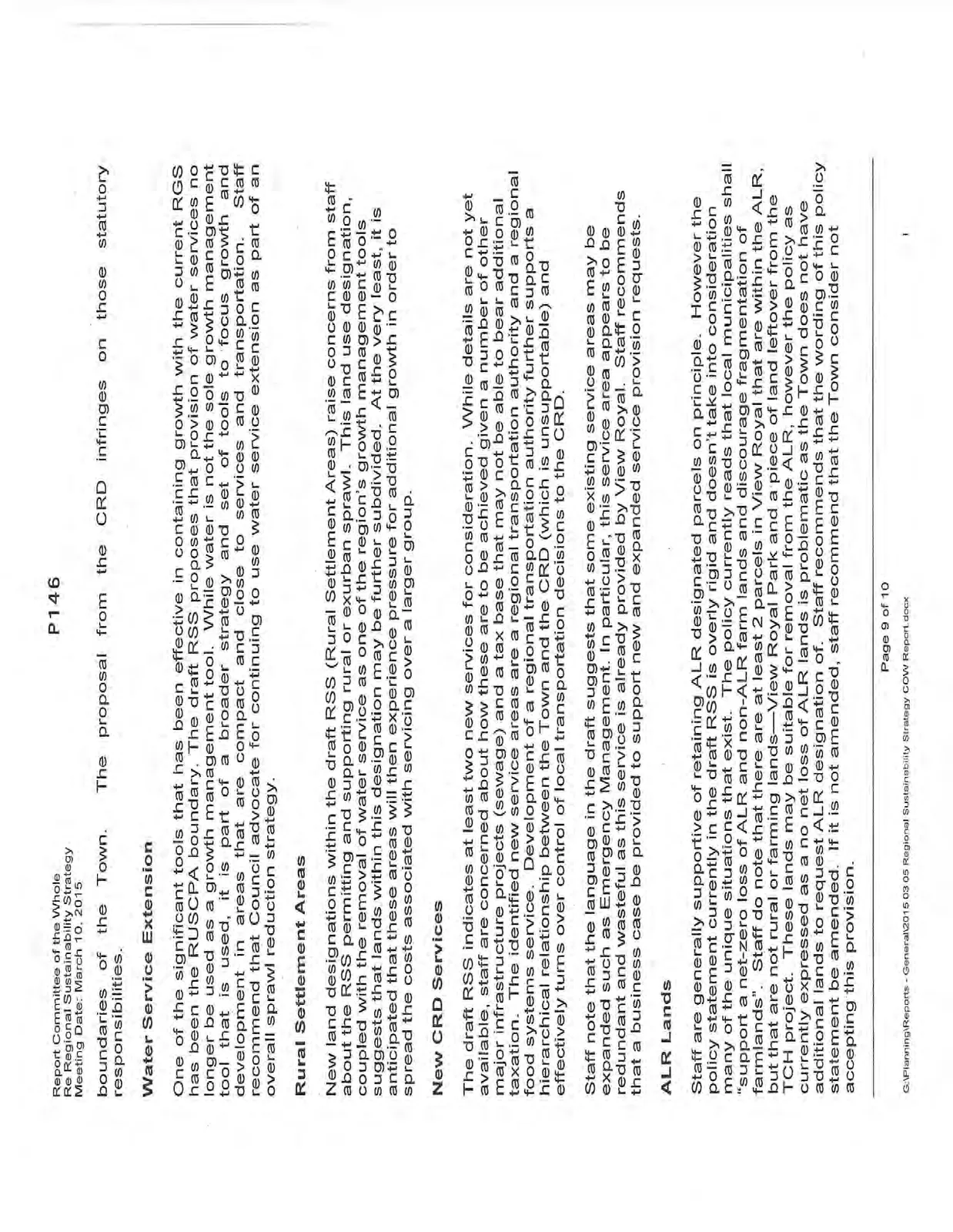
The choice of language in the draft RSS with respect to the eventual adoption of new Regional Context Statements (RCS) as part of the Town's OCP is of concern. The draft RSS contains more than 40 instances where a policy objective follows the edict "Local Municipalities agree to identify the relationship between their OCP and the following actions in their RCS (Regional Context Statement)". The Local Government Act suggests that the Regional Context Statement "is prepared by the municipality and referred to the regional district for acceptance." Nowhere in the Local Government Act does it suggest that the regional plan should dictate terms to member municipalities. This format is overly prescriptive and attempts to dictate the content of the RCS as well as content in the OCP. Staff recommends that this aspect of the RSS requires significant revision before acceptance. Council was elected to make decisions about land use within the boundaries of the Town. The proposal from the CRD infringes on those statutory responsibilities.
Water Service Extension
One of the significant tools that has been effective in containing growth with the current RGS has been the RUSCPA boundary. The draft RSS proposes that provision of water services no longer be used as a growth management tool. While water is not the sole growth management tool that is used, it is part of a broader strategy and set of tools to focus growth and development in areas that are compact and close to services and transportation. Staff recommend that Council advocate for continuing to use water service extension as part of an overall sprawl reduction strategy.
Rural Settlement Areas
New land designations within the draft RSS (Rural Settlement Areas) raise concerns from staff about the RSS permitting and supporting rural or exurban sprawl. This land use designation, coupled with the removal of water service as one of the region's growth management tools suggests that lands within this designation may be further subdivided. At the very least, it is anticipated that these areas will then experience pressure for additional growth in order to spread the costs associated with servicing over a larger group.
New CRD Services
The draft RSS indicates at least two new services for consideration. While details are not yet available, staff are concerned about how these are to be achieved given a number of other major infrastructure projects (sewage) and a tax base that may not be able to bear additional taxation. The identified new service areas are a regional transportation authority and a regional food systems service. Development of a regional transportation authority further supports a hierarchical relationship between the Town and the CRD (which is unsupportable) and effectively turns over control of local transportation decisions to the CRD.
Staff note that the language in the draft suggests that some existing service areas may be expanded such as Emergency Management. In particular, this service area appears to be redundant and wasteful as this service is already provided by View Royal. Staff recommends that a business case be provided to support new and expanded service provision requests.
ALR Lands
Staff are generally supportive of retaining ALR designated parcels on principle. However the policy statement currently in the draft RSS is overly rigid and doesn't take into consideration many of the unique situations that exist. The policy currently reads that local municipalities shall "support a net-zero loss of ALR and non-ALR farm lands and discourage fragmentation of farmlands". Staff do note that there are at least 2 parcels in View Royal that are within the ALR, but that are not rural or farming lands—View Royal Park and a piece of land leftover from the TCH project. These lands may be suitable for removal from the ALR, however the policy as currently expressed as a no net loss of ALR lands is problematic as the Town does not have additional lands to request ALR designation of. Staff recommends that the wording of this policy statement be amended. If it is not amended, staff recommend that the Town consider not accepting this provision.
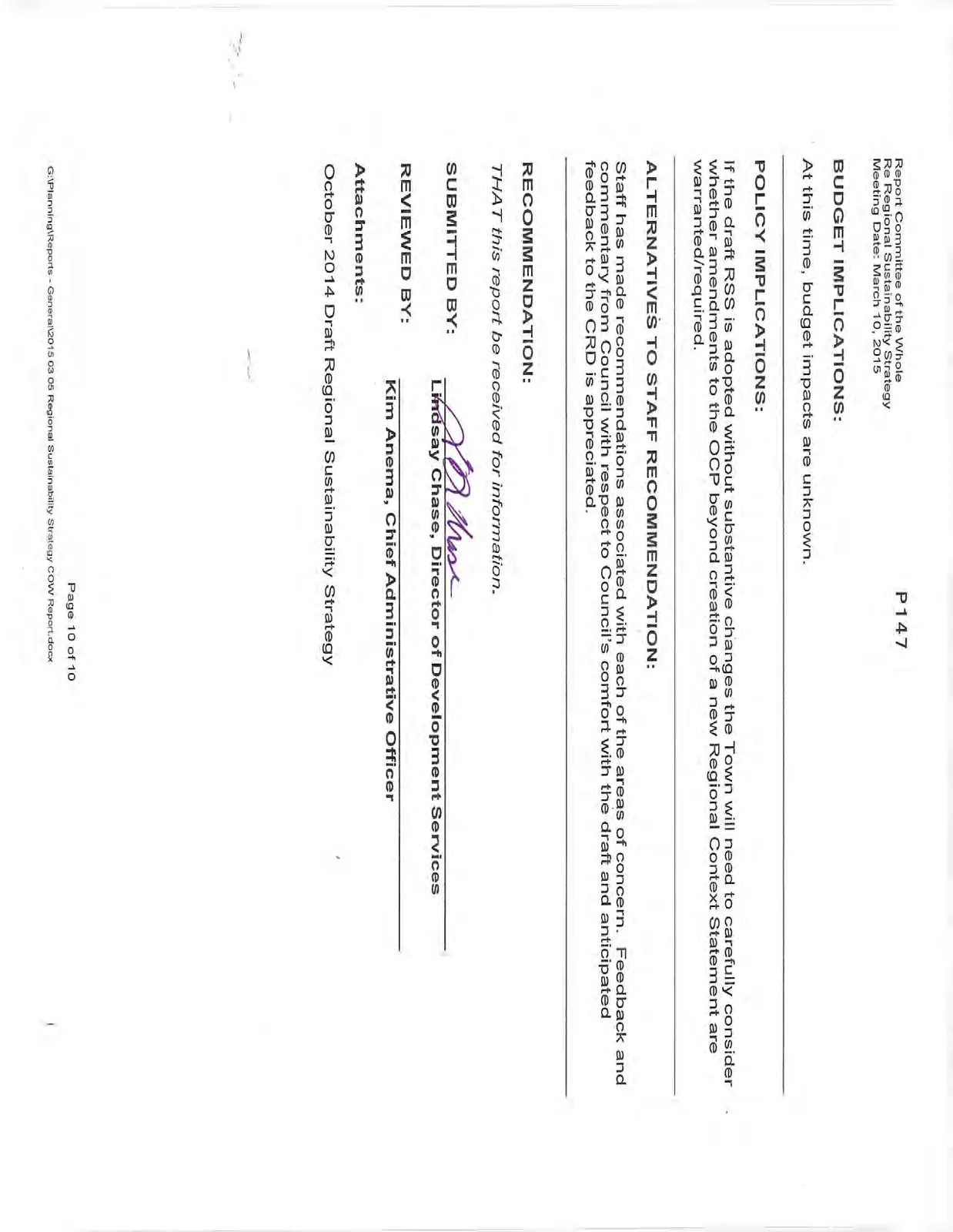
BUDGET IMPLICATIONS:
At this time, budget impacts are unknown.
POLICY IMPLICATIONS:
If the draft RSS is adopted without substantive changes the Town will need to carefully consider whether amendments to the OCP beyond creation of a new Regional Context Statement are warranted/required.
ALTERNATIVES TO STAFF RECOMMENDATION:
Staff has made recommendations associated with each of the areas of concern. Feedback and commentary from Council with respect to Council's comfort with the draft and anticipated feedback to the CRD is appreciated.
RECOMMENDATION:
THAT this report be received for information.
SUBMITTED BY: Lindsay Chase, Director of Development Services
REVIEWED BY: Kim Anema, Chief Administrative Officer
Attachments: October 2014 Draft Regional Sustainability Strategy
Document Images
(10)