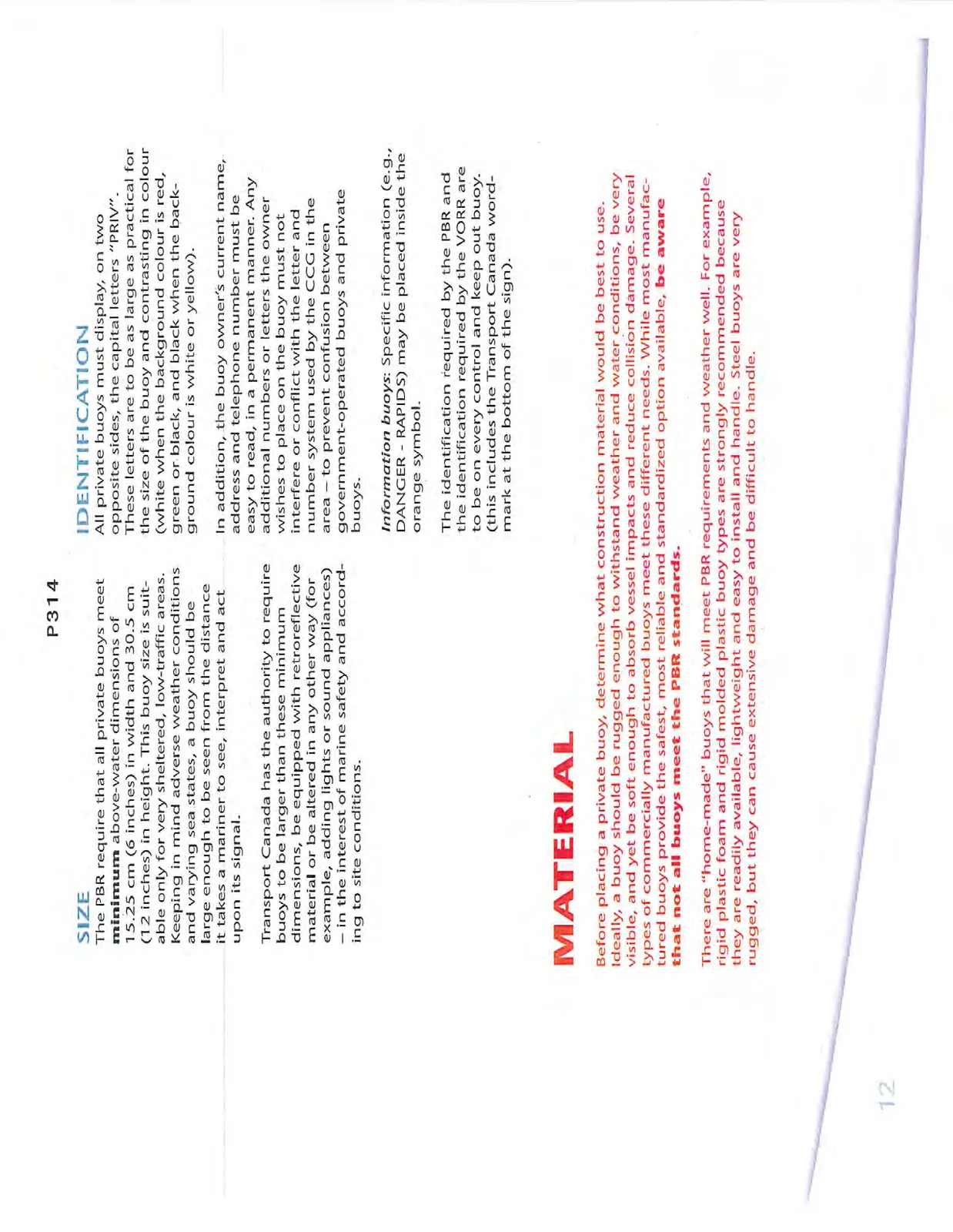
An Owner’s Guide to Private Buoys
Transport Canada publication providing detailed regulations and guidelines for private aid-to-navigation buoys in Canada.
An Owner’s Guide to Private Buoys
Navigable Waters Protection Program Marine Safety Transport Canada Tower C, Place de Ville 330 Sparks Street Ottawa, ON K1A 0N8 E-mail: oep@tc.gc.ca
© Her Majesty the Queen in Right of Canada, represented by the Minister of Transport, 2008.
TP 14799E (04/2008) TC-1002721
TABLE OF CONTENTS
- INTRODUCTION ......................................................................................................... 4
- PRIVATE BUOY REGULATIONS................................................................................. 5
- NAVIGABLE WATERS PROTECTION ACT ............................................................... 7
- VESSEL OPERATION RESTRICTION REGULATIONS ............................................ 8
- CANADIAN COAST GUARD - THE CANADIAN AIDS TO NAVIGATION SYSTEM................................................................................................. 10
- BUOY SELECTION .................................................................................................... 11
- RESPONSIBILITIES OF PRIVATE BUOY OWNERS ............................................... 14
- PRIVATE BUOYS (EXAMPLES)................................................................................. 16
- ADDITIONAL INFORMATION ................................................................................... 26
A GUIDE TO PRIVATE BUOYS IN CANADA
INTRODUCTION
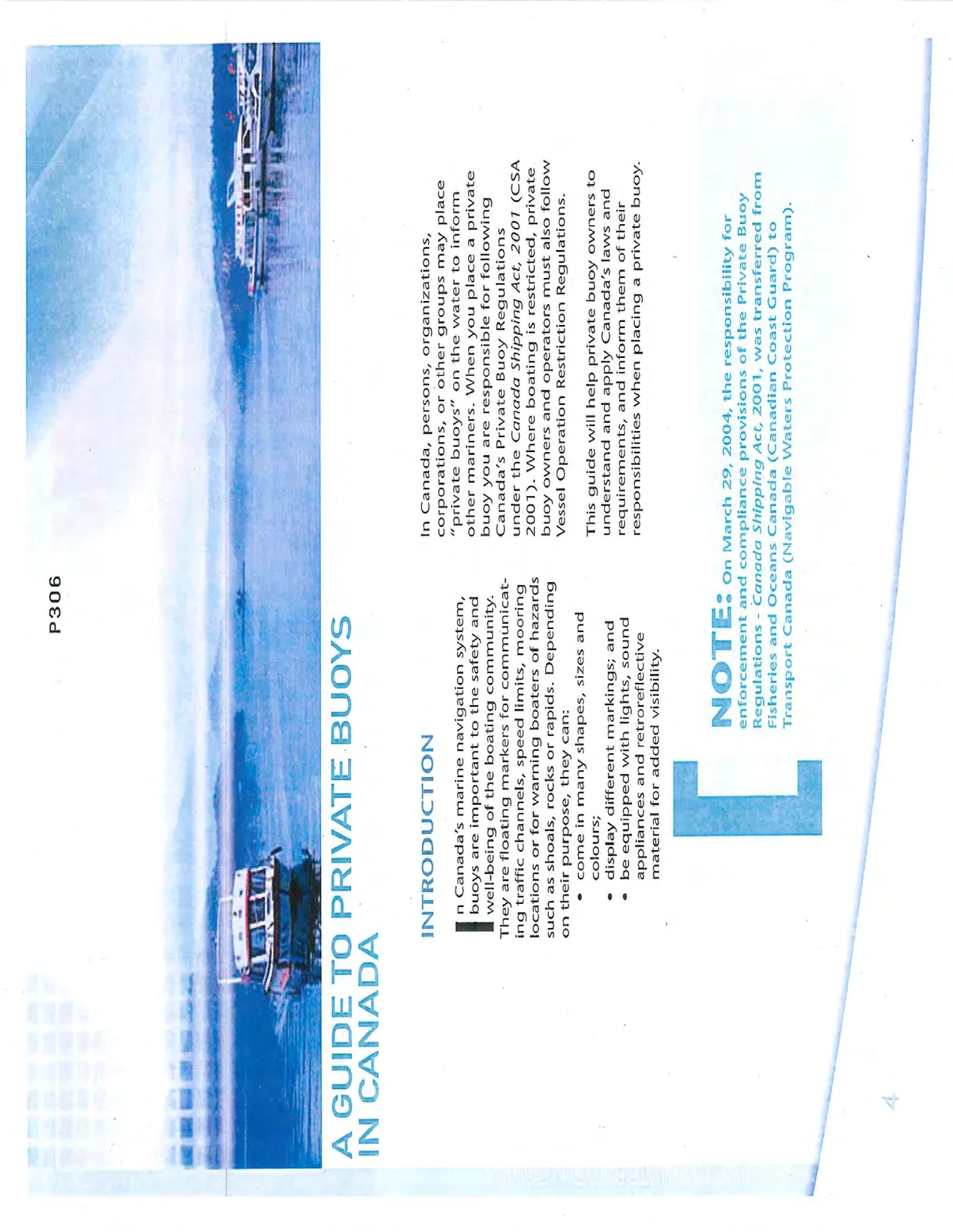
In Canada’s marine navigation system, buoys are important to the safety and well-being of the boating community. They are floating markers for communicating traffic channels, speed limits, mooring locations or for warning boaters of hazards such as shoals, rocks or rapids. Depending on their purpose, they can:
- come in many shapes, sizes and colours;
- display different markings; and
- be equipped with lights, sound appliances and retroreflective material for added visibility.
In Canada, persons, organizations, corporations, or other groups may place “private buoys” on the water to inform other mariners. When you place a private buoy you are responsible for following Canada’s Private Buoy Regulations under the Canada Shipping Act, 2001 (CSA 2001). Where boating is restricted, private buoy owners and operators must also follow Vessel Operation Restriction Regulations.
This guide will help private buoy owners to understand and apply Canada’s laws and requirements, and inform them of their responsibilities when placing a private buoy.
NOTE: On March 29, 2004, the responsibility for enforcement and compliance provisions of the Private Buoy Regulations - Canada Shipping Act, 2001, was transferred from Fisheries and Oceans Canada (Canadian Coast Guard) to Transport Canada (Navigable Waters Protection Program).
PRIVATE BUOY REGULATIONS
Canada Shipping Act, 2001
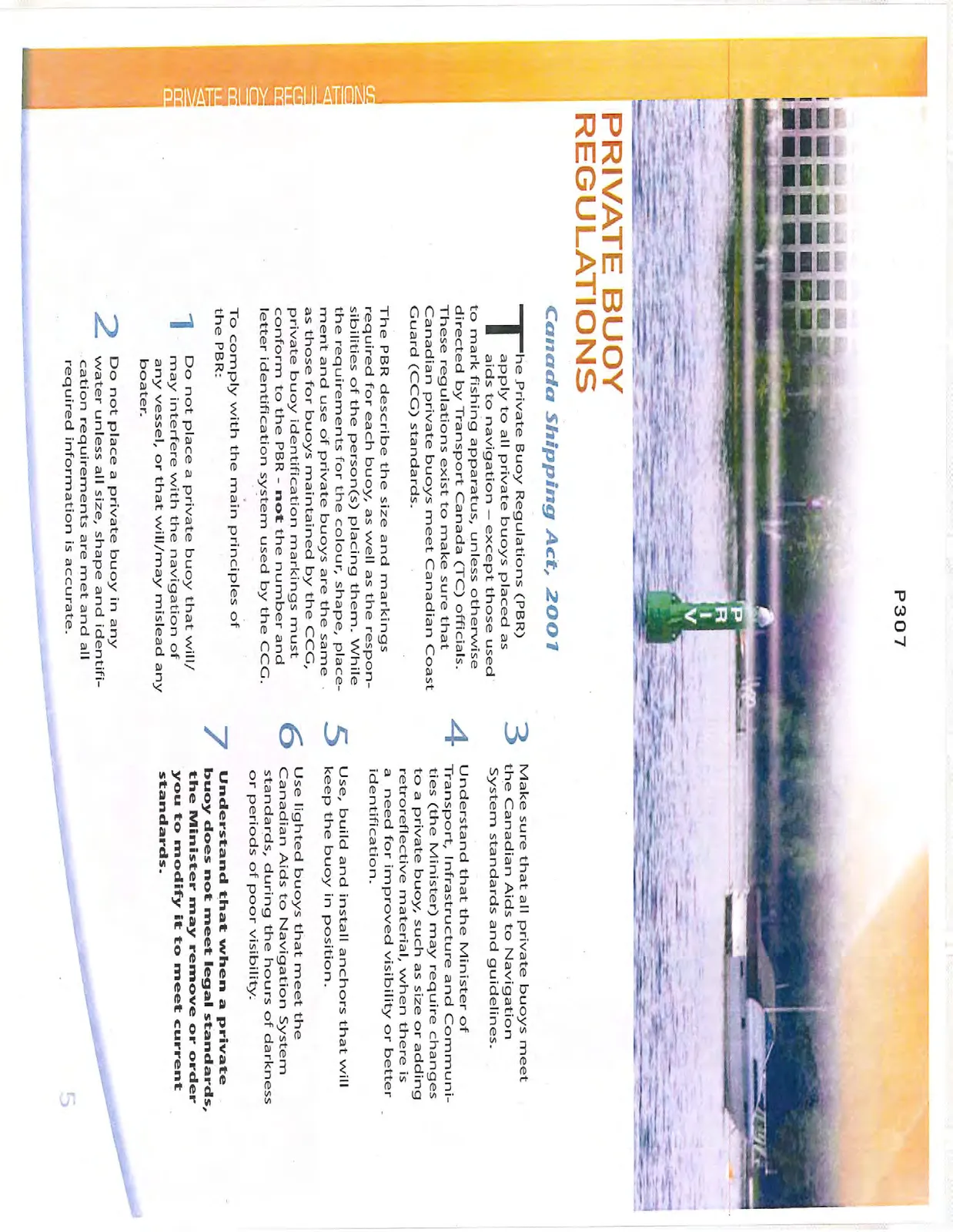
The Private Buoy Regulations (PBR) apply to all private buoys placed as aids to navigation — except those used to mark fishing apparatus, unless otherwise directed by Transport Canada (TC) officials. These regulations exist to make sure that Canadian private buoys meet Canadian Coast Guard (CCG) standards.
The PBR describe the size and markings required for each buoy, as well as the responsibilities of the person(s) placing them. While the requirements for the colour, shape, placement and use of private buoys are the same as those for buoys maintained by the CCG, private buoy identification markings must conform to the PBR - not the number and letter identification system used by the CCG.
To comply with the main principles of the PBR:
- Do not place a private buoy that will/may interfere with the navigation of any vessel, or that will/may mislead any boater.
- Do not place a private buoy in any water unless all size, shape and identification requirements are met and all required information is accurate.
- Make sure that all private buoys meet the Canadian Aids to Navigation System standards and guidelines.
- Understand that the Minister of Transport, Infrastructure and Communities (the Minister) may require changes to a private buoy, such as size or adding retroreflective material, when there is a need for improved visibility or better identification.
- Use, build and install anchors that will keep the buoy in position.
- Use lighted buoys that meet the Canadian Aids to Navigation System standards, during the hours of darkness or periods of poor visibility.
- Understand that when a private buoy does not meet legal standards, the Minister may remove or order you to modify it to meet current standards.
To view the full text of the PBR, please visit: www.tc.gc.ca/acts-regulations/GENERAL/C/csa/regulations/050/csa053/csa53.html
Why it is important to comply with the regulations
You can be fined for not meeting legal guidelines and standards. In the event of an accident, private buoy owners may also be found liable for any damages resulting from negligent operation and/or maintenance of the private buoy.
NOTE: Section 439 of the Criminal Code of Canada states:
(1) “Everyone who makes fast a vessel or boat to a signal, buoy or other seamark that is used for purposes of navigation is guilty of an offence punishable on summary conviction.
(2) Everyone who willfully alters, removes or conceals a signal, buoy or other seamark that is used for purposes of navigation is guilty of an indictable offence and liable for imprisonment for a term not exceeding ten years.” Please visit: http://laws.justice.gc.ca/en/frame/cs/C-46
For general information about the PBR, please contact your local Navigable Waters Protection Program office, listed at: www.tc.gc.ca/marinesafety/oep/nwpp/offices.htm
NAVIGABLE WATERS PROTECTION ACT
The Navigable Waters Protection Act (NWPA) protects the public right of navigation in all Canadian waters. It states, “No work shall be built or placed in, on, over, under, through or across any navigable water unless it is approved by the Minister.”
The Navigable Waters Protection Program (NWPP) may require work owners to install private buoys or other aids to navigation to mark wharves, marinas, aquaculture areas, water intakes and outfalls, dams, and bridges, etc. According to the NWPA, these buoys must be reviewed and approved along with the work, and must be installed and maintained according to legal standards, or as directed by the Minister.
Mooring Buoys
Transport Canada considers mooring buoys as “works” under the NWPA, since they usually secure vessels in fixed locations (such as docks, piers or wharves), and do not aid or direct mariners.
This means that the placement of a mooring buoy is subject to review and approval under the NWPA, unless otherwise excluded by TC policies and standards. To learn more, please contact your local NWPP office.
VESSEL OPERATION RESTRICTION REGULATIONS
Regulations under CSA 2001 also govern the marking of any private buoy used to restrict navigation (for example, speed limits, keep-out areas). Under the Vessel Operation Restriction Regulations (VORR), requests for restrictions:
- are originated by local authorities; and then
- are sent to Transport Canada’s Office of Boating Safety for final review and publication in the regulations.
Quebec, Alberta and Ontario each have a designated provincial authority. In those provinces, the Provincial authority reviews the applications before they are submitted to Transport Canada.
NOTE: Under the CSA 2001, the VORR prohibit the placing of signs or symbols on control buoys and keep-out buoys unless they are otherwise authorized under the Act or another Act of Parliament, such as the NWPA.
To comply with the main principles of the VORR:
- Do not place a sign that restricts the operation of any vessel in Canadian waters without the authorization of the Minister. Signs must comply with VORR requirements.
- Do not change, hide, damage or destroy any authorized sign or use a sign for mooring purposes.
- Respect restrictions conveyed in an authorized sign when boating.
- Do not hold a sporting, recreational, or public event in waters specified in Schedule 8 of the VORR, unless authorized by a permit issued by the Minister.
- Do not hold a sporting, recreational, or public event in any waters in a manner or at a place that would unnecessarily obstruct navigation.
Under the VORR, an enforcement officer may direct or prohibit the movement of vessels to ensure compliance with the requirements for safe vessel operation.
NOTE: Any person who does not comply with these regulations may be charged with an offense. In provinces where the provisions of the Contraventions Act apply, offenders will normally be ticketed. A schedule of fines is shown in the Contraventions Regulations at: http://laws.justice.gc.ca/en/C-38.7/
CANADIAN COAST GUARD – THE CANADIAN AIDS TO NAVIGATION SYSTEM
Following the basic rules of the Canadian Aids to Navigation System (TP 968) will lead to a better navigation system for all boaters and waterway users. These guidelines provide in-depth information on standard uses, colours, shapes and the identification of private buoys and other aids to navigation within Canada. You can buy Canadian Aids to Navigation System (TP 968) from any authorized government distributor, or by contacting:
Canadian Government Publishing PWGSC Ottawa ON K1A 0S9 Tel: 819-956-4800 Fax: 819-994-1498
If you place private buoys in charted waters, contact the nearest Canadian Coast Guard office and provide information on their characteristics and positions, so that it can be published in marine notices (i.e., Notices to Mariner, Notices to Shipping) and charted by the Canadian Hydrographic Service.
For more information on aids to navigation in Canada, you may consult the following web site: www.ccg-gcc.gc.ca/eng/ccg/atn_home
BUOY SELECTION
TYPE
When selecting buoys for navigation or mooring, do your best to keep the system simple by using as few buoys and buoy types as possible. Some boaters have little knowledge of the purposes and meanings of buoys and marine aids to navigation.
By limiting the number of different types, shapes and sizes of buoys, and by selecting the more common types (such as lateral), the system is:
- easier to understand;
- more effective; and
- easier to maintain.
In small craft/low traffic areas, there is usually no need to use any private buoy other than the port (green), starboard (red) and cautionary (yellow) buoys for navigational purposes. Other popular types that may be used include hazard, swimming or information buoys, and those buoys prescribed under the VORR (for example, control, keep-out).
In uncharted waters or in lakes where identification of “upstream direction” may be a problem, it may be best to use cardinal buoys. Consult Transport Canada officials to determine the best option for your particular situation.
Buoy classifications
Lateral buoys indicate the side on which they may be safely passed. There are six types of lateral buoys: port hand, starboard hand, port bifurcation, starboard bifurcation, fairway, and isolated danger.
Cardinal buoys indicate the location of the safest or deepest water by reference to the cardinal points of the compass. There are four cardinal buoys: North, East, South and West.
Special buoys convey a variety of information to the mariner, which while important, is not primarily intended to help in navigation.
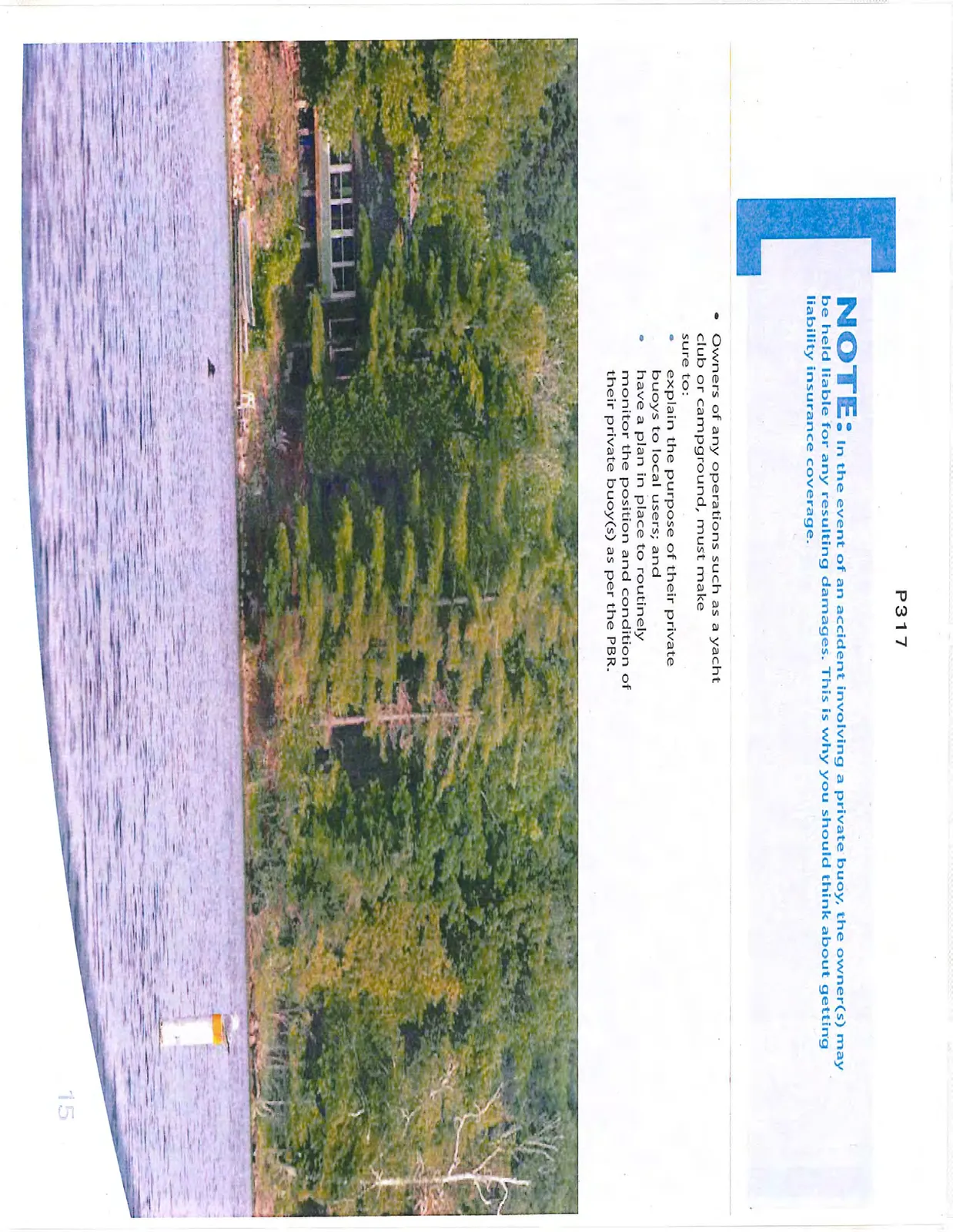
Any of these buoys can be privately owned. Examples of commonly used private buoys are shown in Figures 1 through 9, starting on page 17.
SIZE
The PBR require that all private buoys meet minimum above-water dimensions of 15.25 cm (6 inches) in width and 30.5 cm (12 inches) in height. This buoy size is suitable only for very sheltered, low-traffic areas. Keeping in mind adverse weather conditions and varying sea states, a buoy should be large enough to be seen from the distance it takes a mariner to see, interpret and act upon its signal.
Transport Canada has the authority to require buoys to be larger than these minimum dimensions, be equipped with retroreflective material or be altered in any other way (for example, adding lights or sound appliances) — in the interest of marine safety and according to site conditions.
IDENTIFICATION
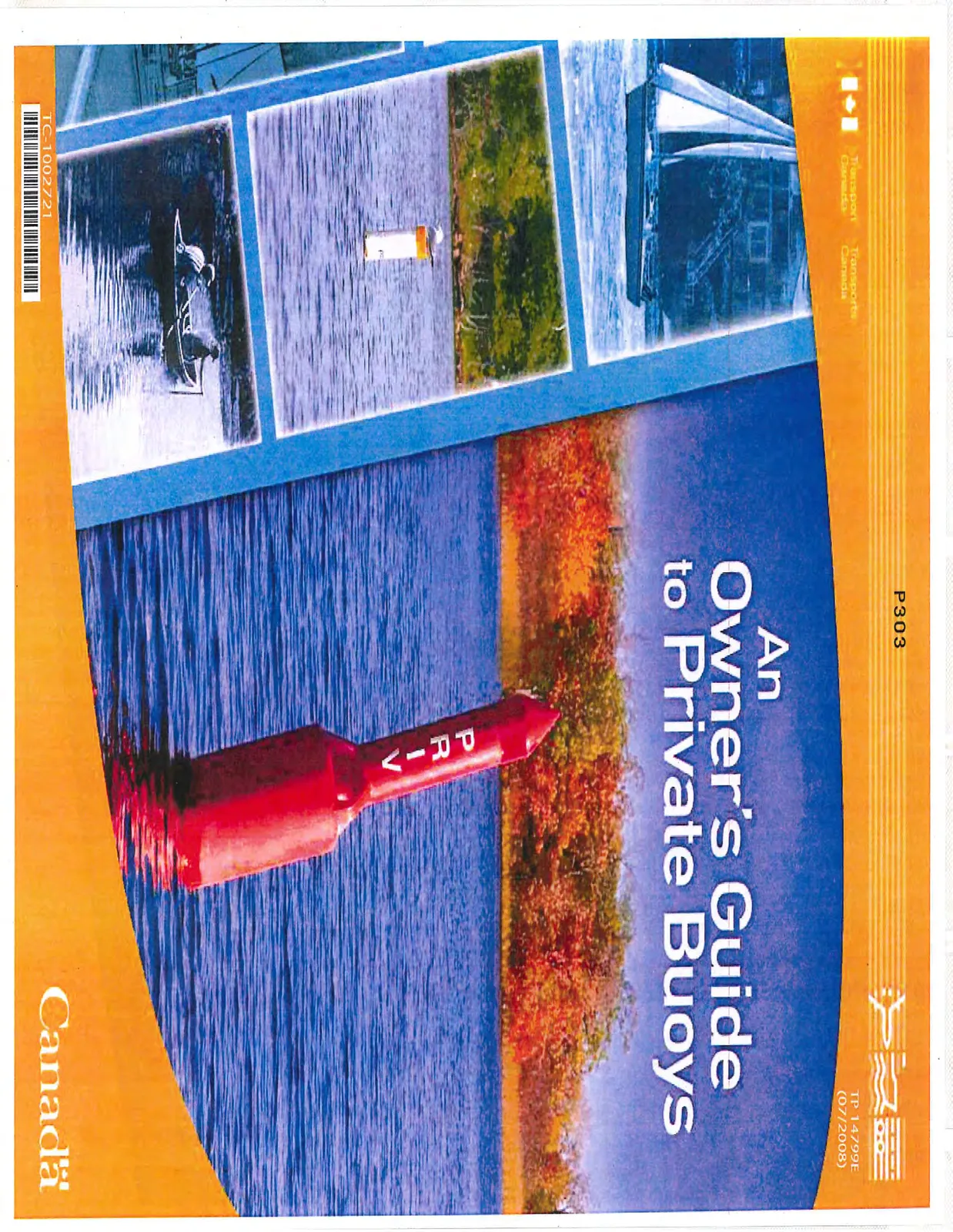
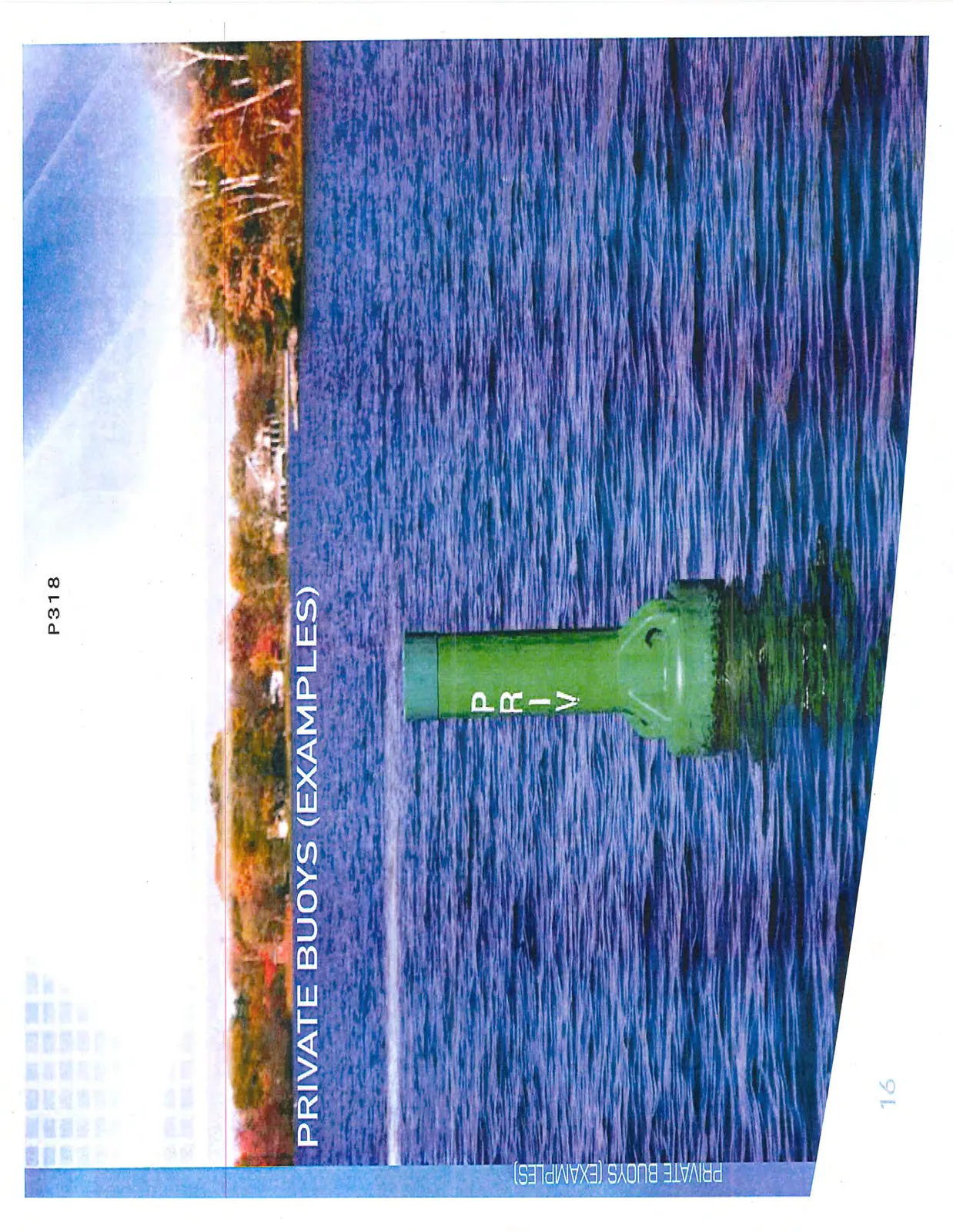
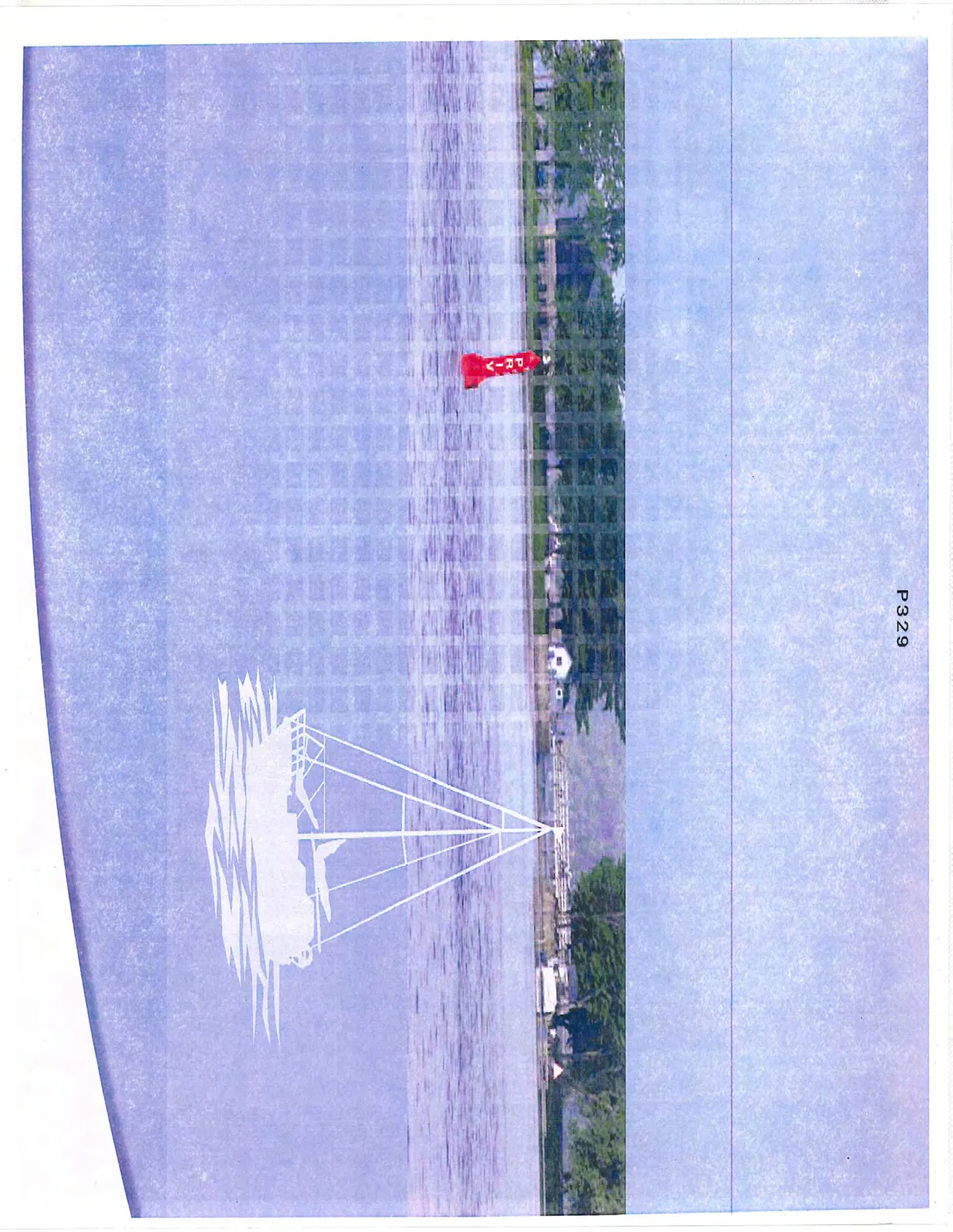
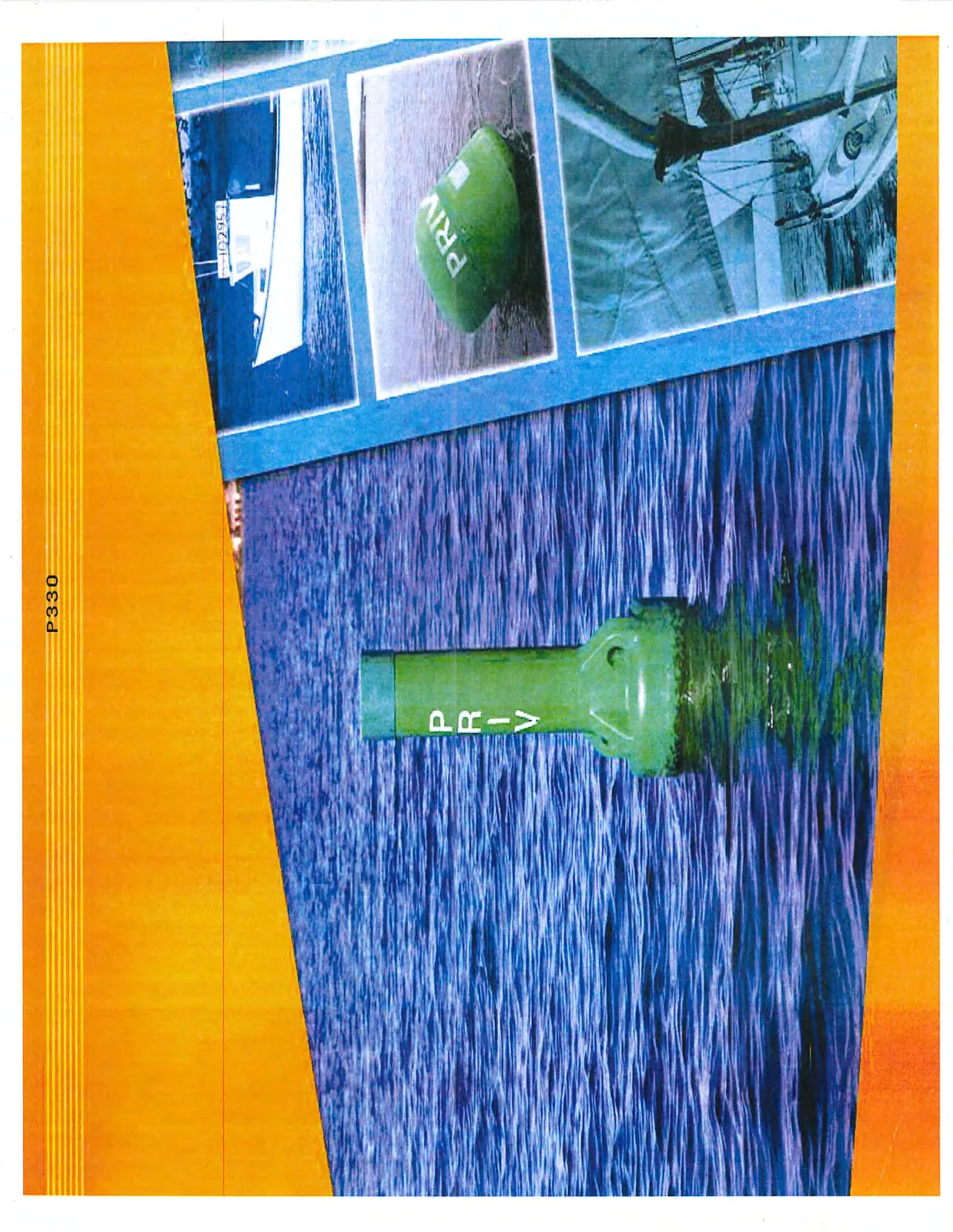
All private buoys must display, on two opposite sides, the capital letters “PRIV”. These letters are to be as large as practical for the size of the buoy and contrasting in colour (white when the background colour is red, green or black, and black when the background colour is white or yellow).
In addition, the buoy owner’s current name, address and telephone number must be easy to read, in a permanent manner. Any additional numbers or letters the owner wishes to place on the buoy must not interfere or conflict with the letter and number system used by the CCG in the area — to prevent confusion between government-operated buoys and private buoys.
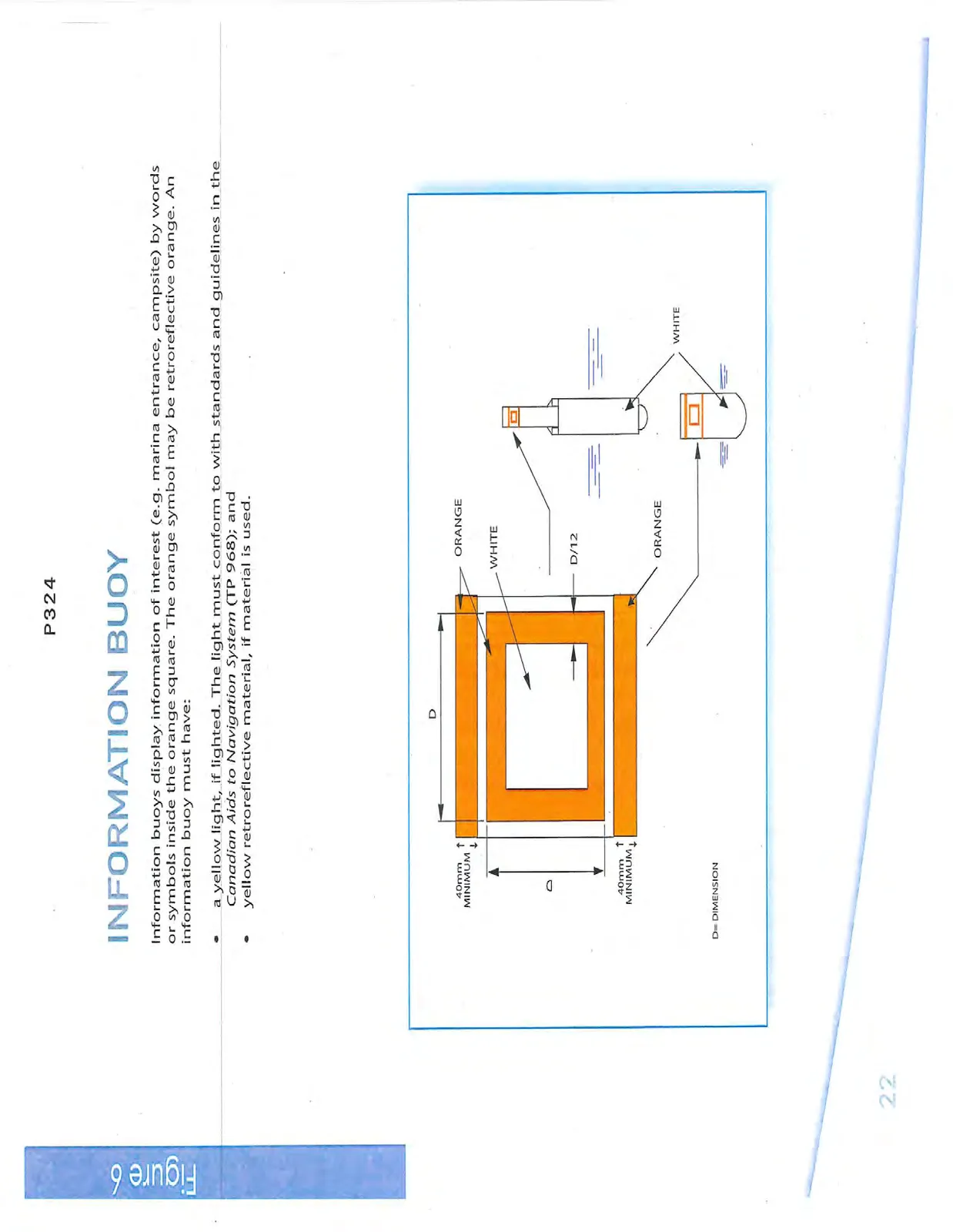
Information buoys: Specific information (e.g., DANGER - RAPIDS) may be placed inside the orange symbol.
The identification required by the PBR and the identification required by the VORR are to be on every control and keep out buoy. (this includes the Transport Canada wordmark at the bottom of the sign).
MATERIAL
Before placing a private buoy, determine what construction material would be best to use. Ideally, a buoy should be rugged enough to withstand weather and water conditions, be very visible, and yet be soft enough to absorb vessel impacts and reduce collision damage. Several types of commercially manufactured buoys meet these different needs. While most manufactured buoys provide the safest, most reliable and standardized option available, be aware that not all buoys meet the PBR standards.
There are “home-made” buoys that will meet PBR requirements and weather well. For example, rigid plastic foam and rigid molded plastic buoy types are strongly recommended because they are readily available, lightweight and easy to install and handle. Steel buoys are very rugged, but they can cause extensive damage and be difficult to handle.
NOTE: Do not use steel drums, barrels, propane cylinders, bleach bottles and jugs as buoys. Most of these do not conform to the PBR or CCG standards.
LIGHTS
At night, the colour and flash characteristics of a buoy light tell boaters why it is there. Under the PBR, all private buoys equipped with lights must continuously display that light during the hours of darkness and during periods of poor visibility. You will find a complete listing of light colors and flash characteristics in Canadian Aids to Navigation System (TP 968).
RETROREFLECTIVE MATERIAL
If your private buoy is too small for a light or you are not required to place a lighted buoy, an unlighted buoy equipped with retroreflective material is a good and affordable idea. On a lighted private buoy, retroreflective material provides extra safety because it makes your buoy easier to see and interpret at night or if the light fails.
Colour
For all buoys other than “special buoys”, retroreflective material must be the same colour as that of a light for that buoy. For example:
- green - port
- red - starboard
- yellow - special buoys, including swimming and diving buoys
- orange - hazard, information, control and keep-out buoys.
Transport Canada may require you to add retroreflective material where there is a need for increased visibility or better identification of your buoy.
Applications
Most retroreflective material on buoys or signs displays numbers, letters, backgrounds or horizontal bands. Where a horizontal band is used, it should be no less than 10 cm (4 inches) wide and should be placed around the buoy’s circumference.
Degradation of Materials
Reflective properties of retroreflective material may be reduced by:
- bird droppings, even after thorough cleaning; and
- exposure to the sun.
Since you may not notice less reflection during daytime, check your buoy’s level of performance with a light after dark. Any material that appears to be damaged should be replaced.
RESPONSIBILITIES OF PRIVATE BUOY OWNERS
As an owner of a private buoy, YOU are responsible to make sure that:
- It meets all legal requirements, standards and guidelines of the PBR, the Canadian Aids to Navigation System (TP 968) and Transport Canada directives.
- It is built and maintained so that it remains in position.
- Anchors are used, built and installed in a way that will keep the buoy in position.
- You have a monitoring and repair schedule for checking that the buoy continues to meet all legal requirements, stays in position and remains in good working order.
- You use recommended retroreflective material (as a minimum).
- Any lights comply with the Canadian Aids to Navigation System (TP 968).
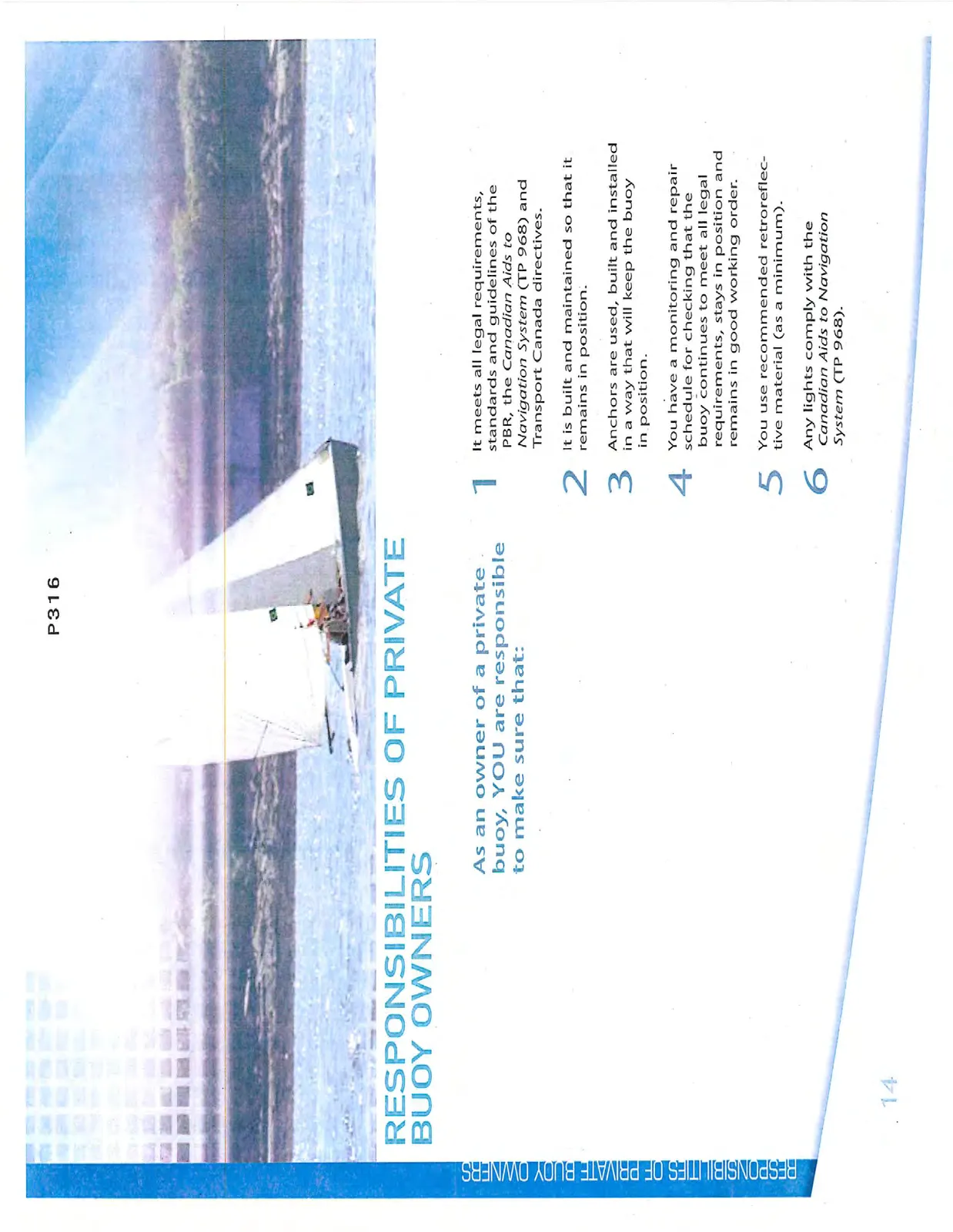
NOTE: In the event of an accident involving a private buoy, the owner(s) may be held liable for any resulting damages. This is why you should think about getting liability insurance coverage.
- Owners of any operations such as a yacht club or campground, must make sure to:
- explain the purpose of their private buoys to local users; and
- have a plan in place to routinely monitor the position and condition of their private buoy(s) as per the PBR.
PRIVATE BUOYS (EXAMPLES)
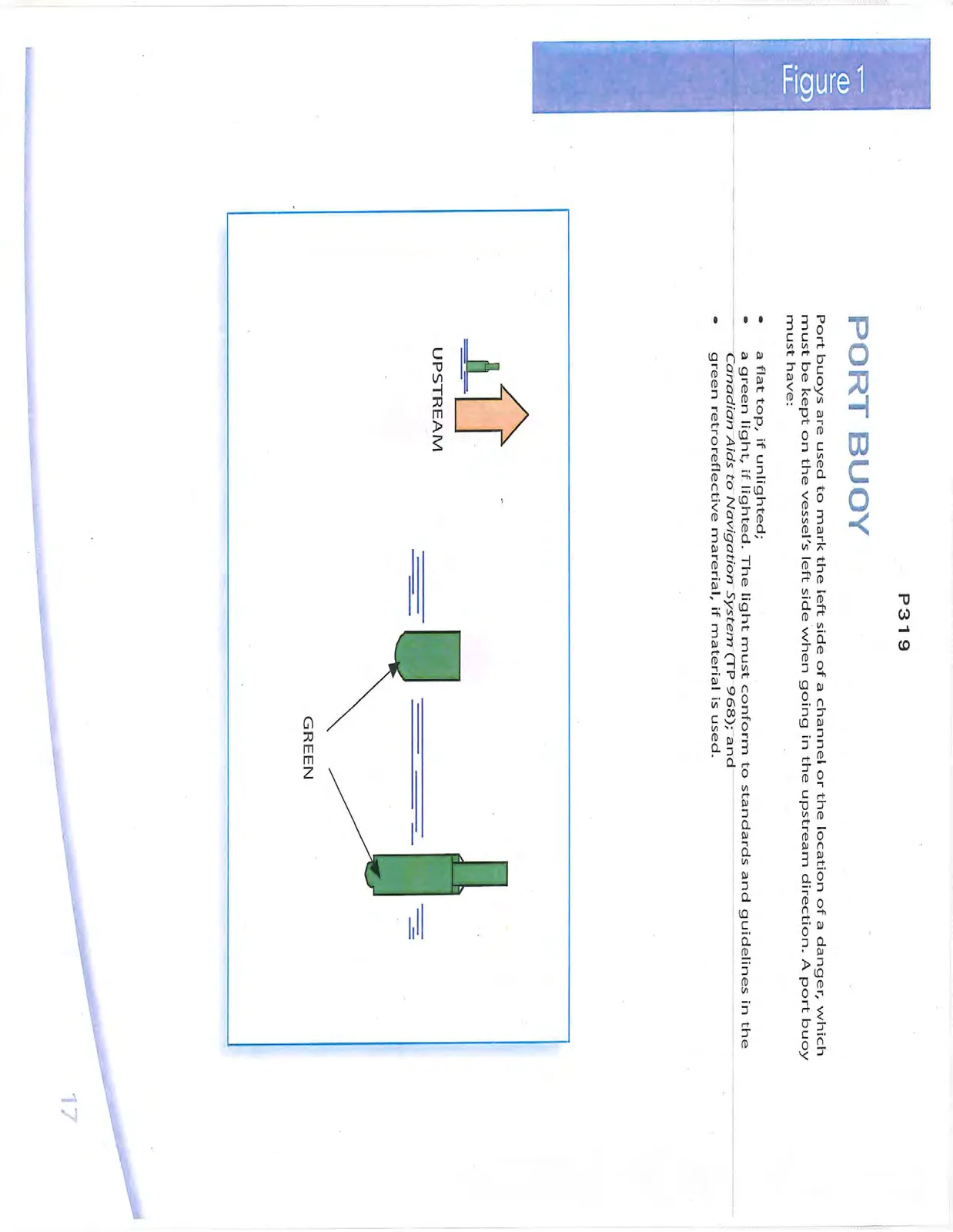
PORT BUOY
Figure 1
Port buoys are used to mark the left side of a channel or the location of a danger, which must be kept on the vessel’s left side when going in the upstream direction. A port buoy must have:
- a flat top, if unlighted;
- a green light, if lighted. The light must conform to standards and guidelines in the Canadian Aids to Navigation System (TP 968); and
- green retroreflective material, if material is used.
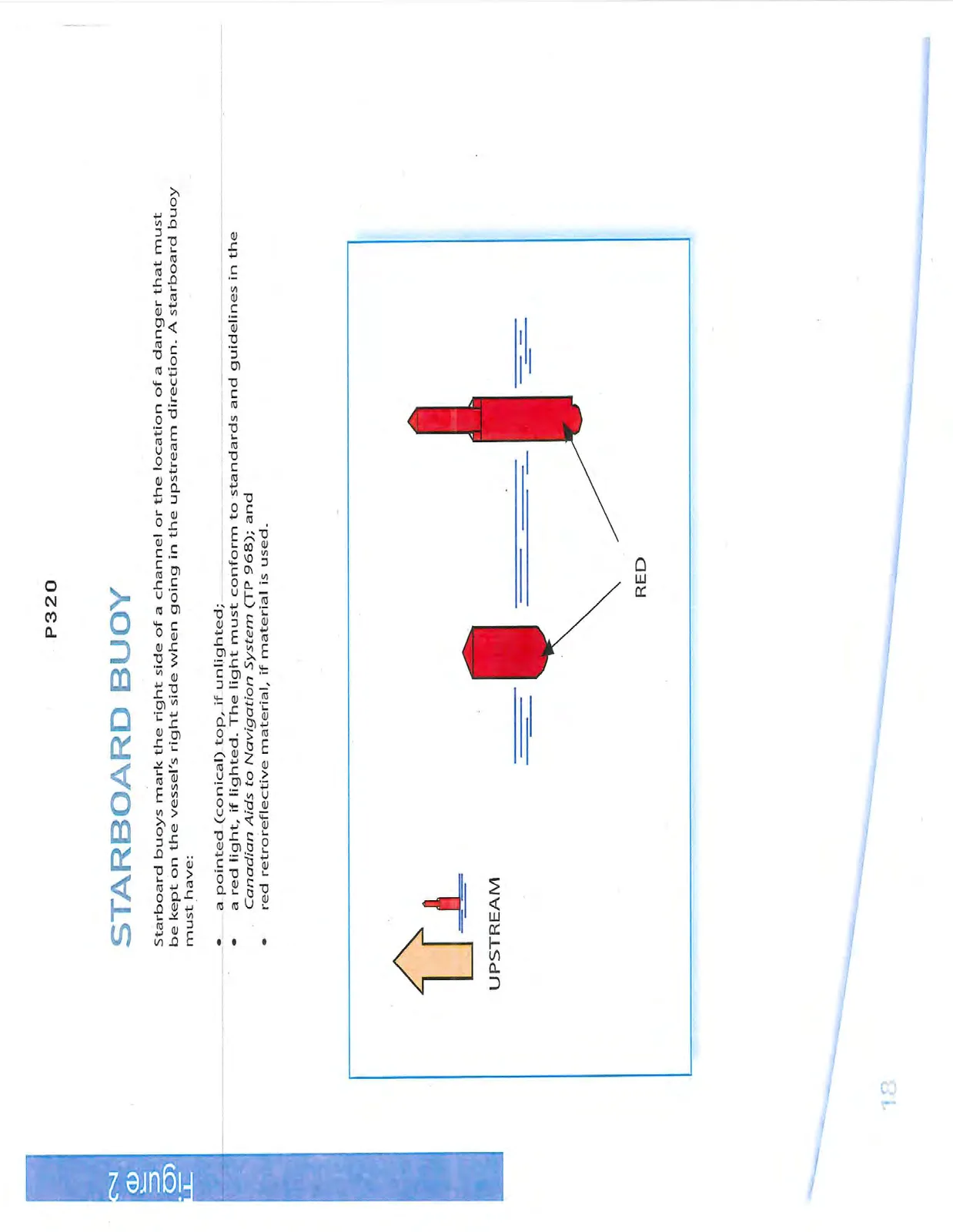
STARBOARD BUOY
Figure 2
Starboard buoys mark the right side of a channel or the location of a danger that must be kept on the vessel’s right side when going in the upstream direction. A starboard buoy must have:
- a pointed (conical) top, if unlighted;
- a red light, if lighted. The light must conform to standards and guidelines in the Canadian Aids to Navigation System (TP 968); and
- red retroreflective material, if material is used.
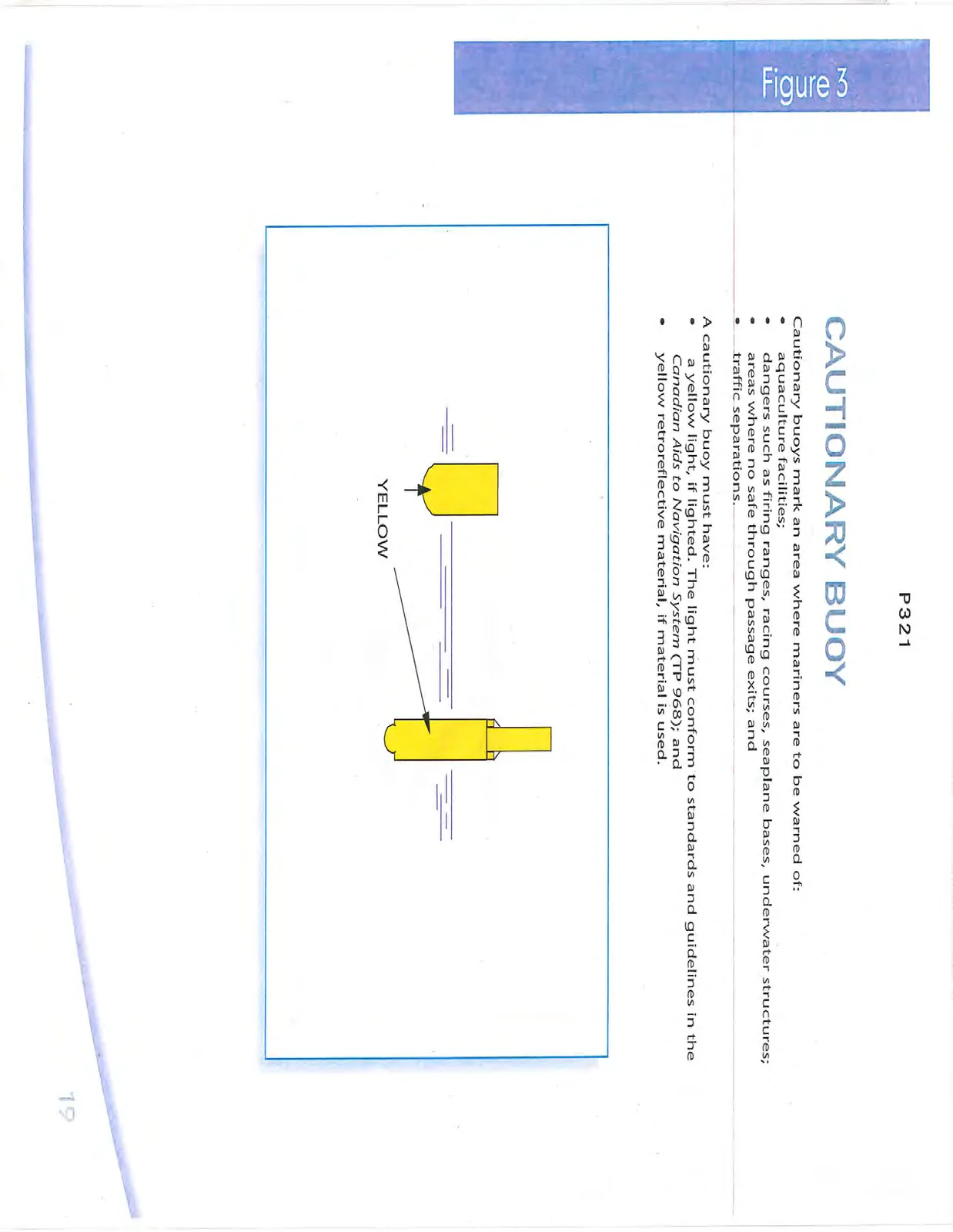
CAUTIONARY BUOY
Figure 3
Cautionary buoys mark an area where mariners are to be warned of:
- aquaculture facilities;
- dangers such as firing ranges, racing courses, seaplane bases, underwater structures;
- areas where no safe through passage exits; and
- traffic separations.
A cautionary buoy must have:
- a yellow light, if lighted. The light must conform to standards and guidelines in the Canadian Aids to Navigation System (TP 968); and
- yellow retroreflective material, if material is used.
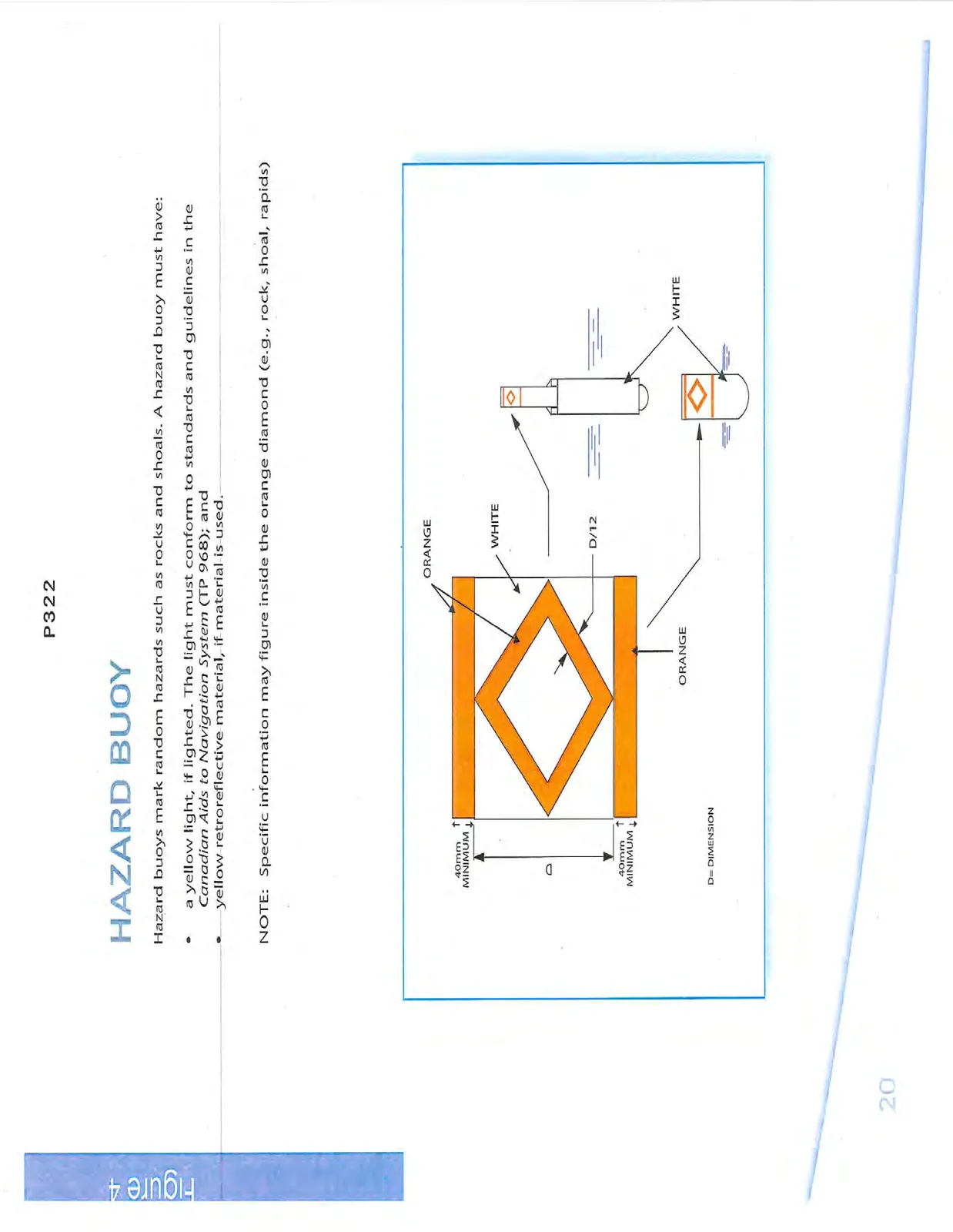
HAZARD BUOY
Figure 4
Hazard buoys mark random hazards such as rocks and shoals. A hazard buoy must have:
- a yellow light, if lighted. The light must conform to standards and guidelines in the Canadian Aids to Navigation System (TP 968); and
- yellow retroreflective material, if material is used.
NOTE: Specific information may figure inside the orange diamond (e.g., rock, shoal, rapids)
SWIMMING BUOY
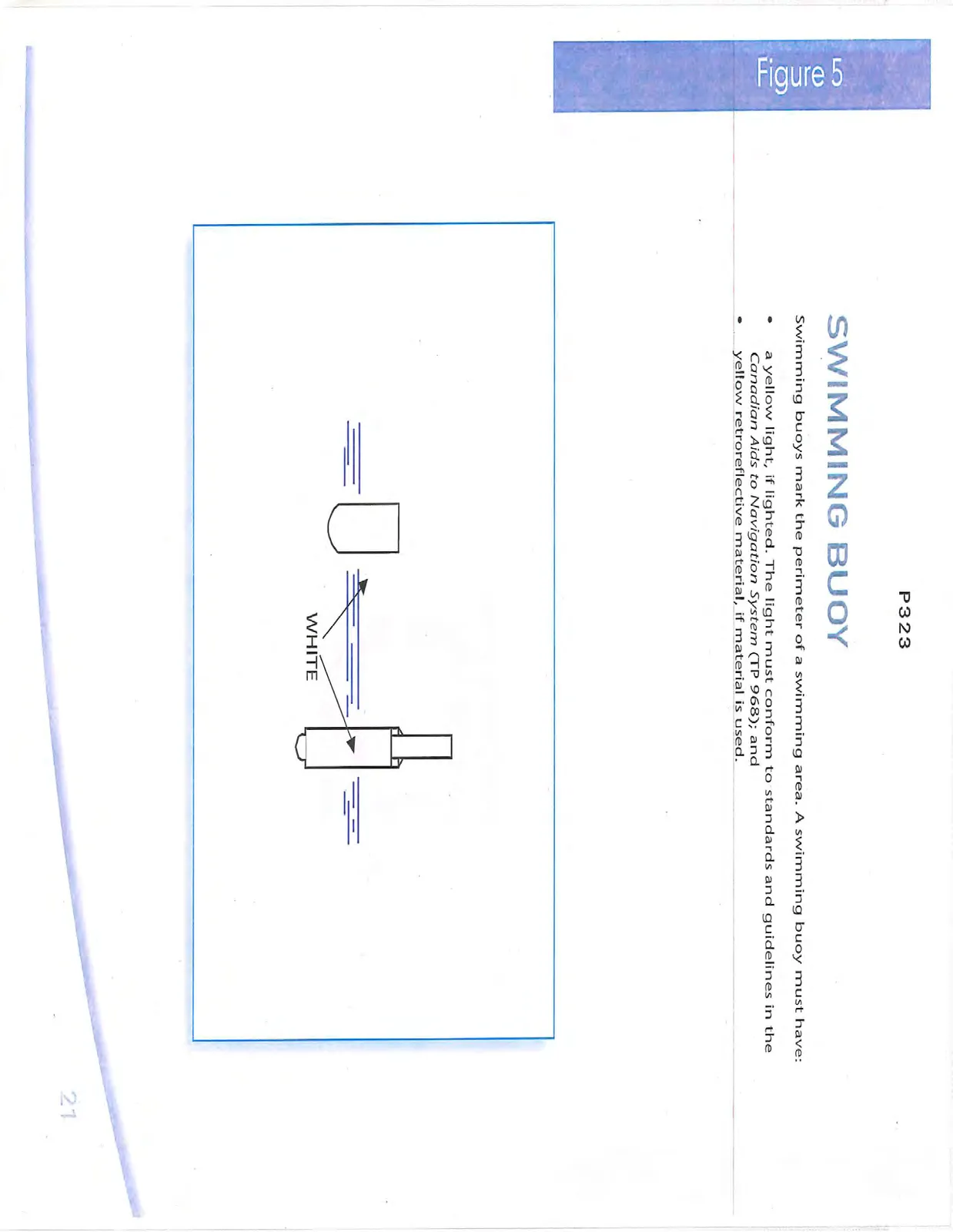
Figure 5
Swimming buoys mark the perimeter of a swimming area. A swimming buoy must have:
- a yellow light, if lighted. The light must conform to standards and guidelines in the Canadian Aids to Navigation System (TP 968); and
- yellow retroreflective material, if material is used.
INFORMATION BUOY
Figure 6
Information buoys display information of interest (e.g. marina entrance, campsite) by words or symbols inside the orange square. The orange symbol may be retroreflective orange. An information buoy must have:
- a yellow light, if lighted. The light must conform to standards and guidelines in the Canadian Aids to Navigation System (TP 968); and
- yellow retroreflective material, if material is used.
MOORING BUOYS
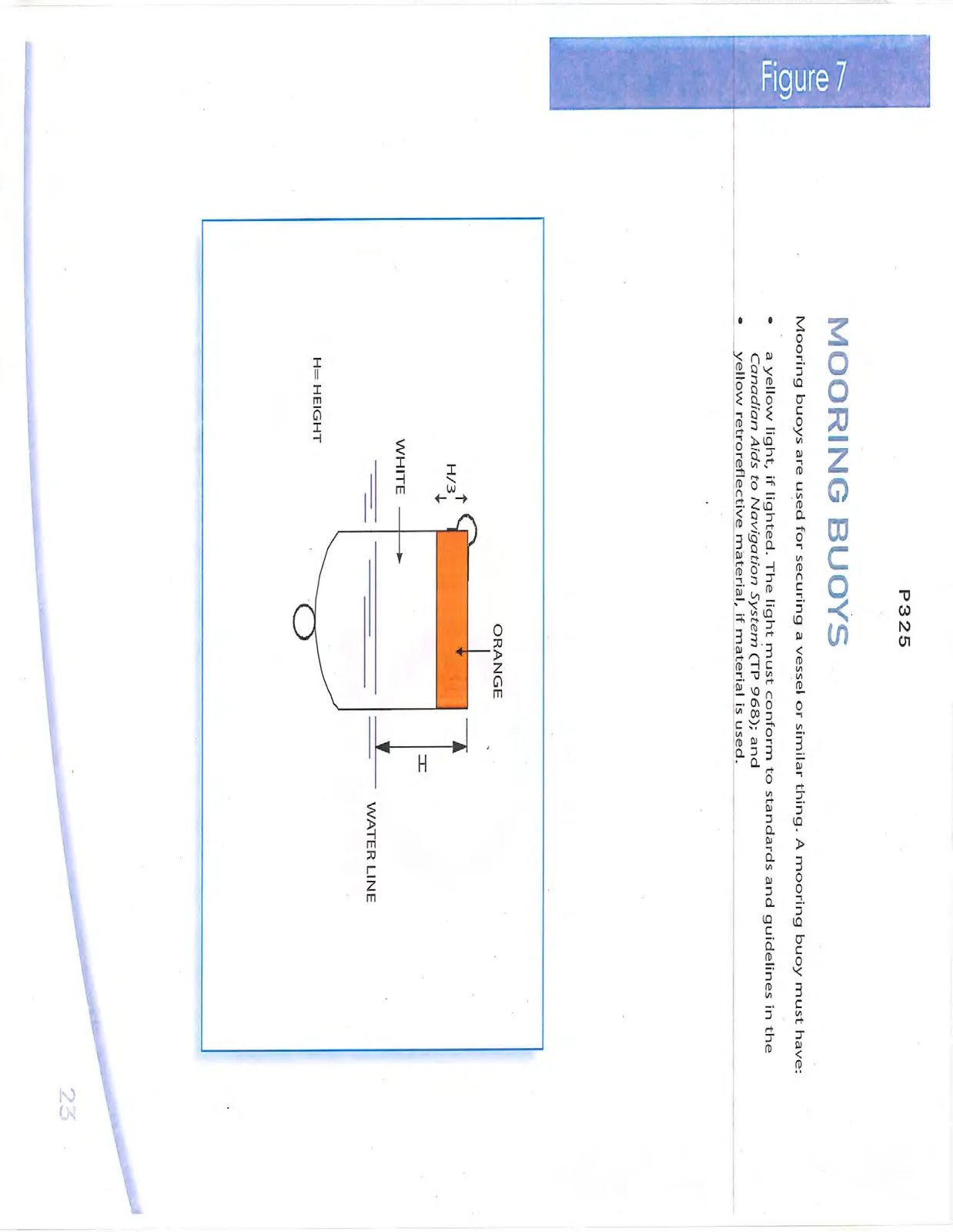
Figure 7
Mooring buoys are used for securing a vessel or similar thing. A mooring buoy must have:
- a yellow light, if lighted. The light must conform to standards and guidelines in the Canadian Aids to Navigation System (TP 968); and
- yellow retroreflective material, if material is used.
CONTROL BUOY
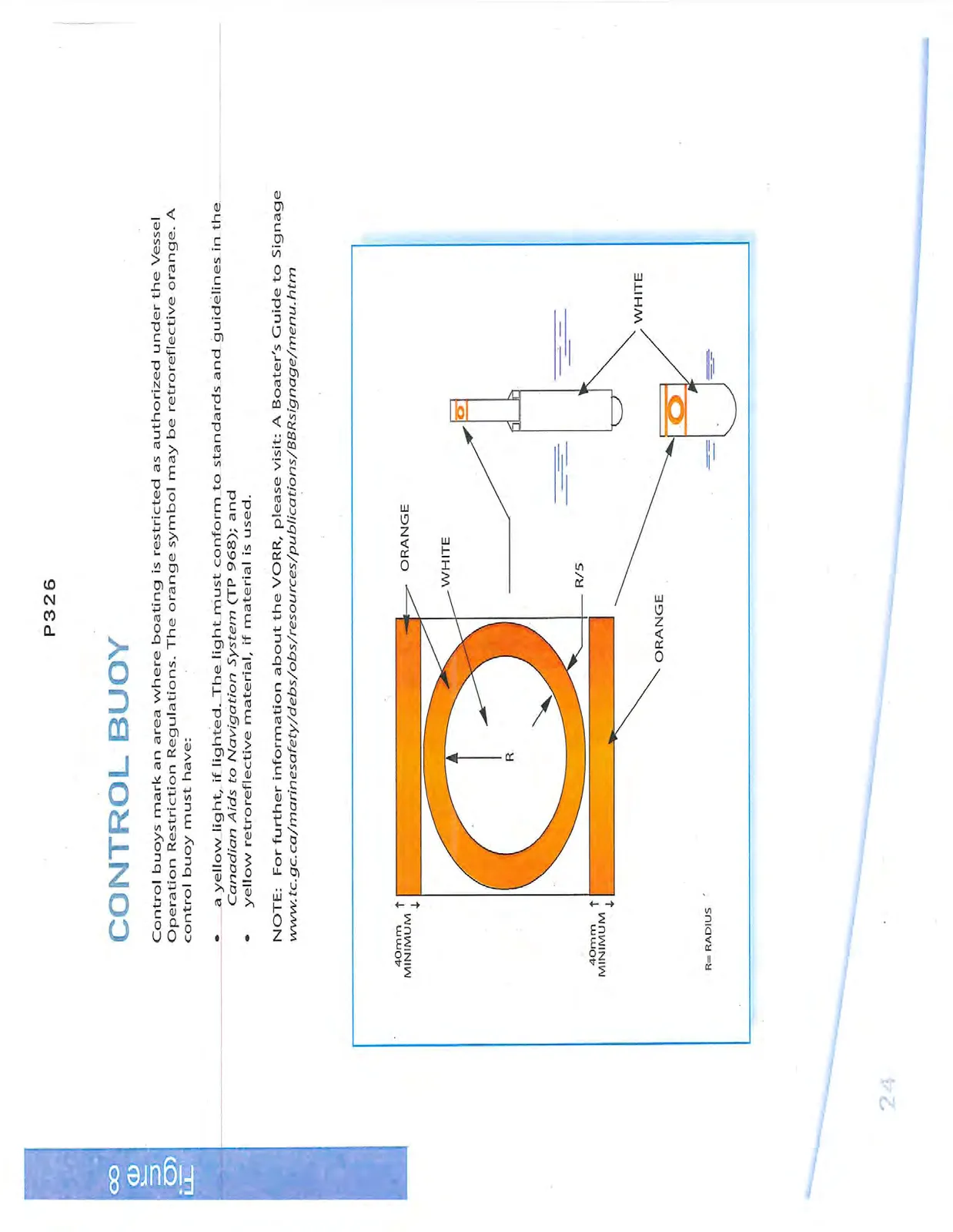
Figure 8
Control buoys mark an area where boating is restricted as authorized under the Vessel Operation Restriction Regulations. The orange symbol may be retroreflective orange. A control buoy must have:
- a yellow light, if lighted. The light must conform to standards and guidelines in the Canadian Aids to Navigation System (TP 968); and
- yellow retroreflective material, if material is used.
NOTE: For further information about the VORR, please visit: A Boater’s Guide to Signage www.tc.gc.ca/marinesafety/debs/obs/resources/publications/BBRsignage/menu.htm
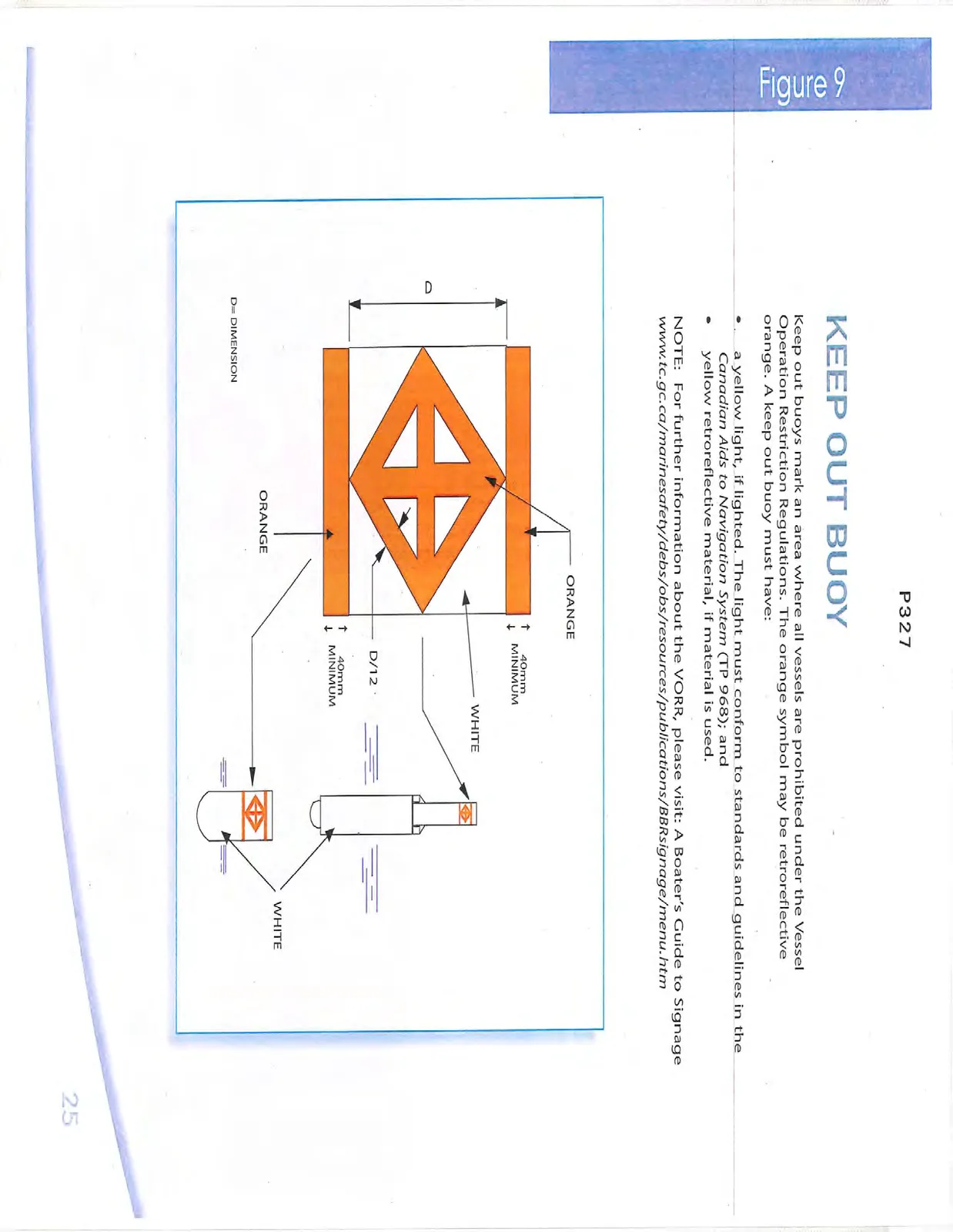
KEEP OUT BUOY
Figure 9
Keep out buoys mark an area where all vessels are prohibited under the Vessel Operation Restriction Regulations. The orange symbol may be retroreflective orange. A keep out buoy must have:
- a yellow light, if lighted. The light must conform to standards and guidelines in the Canadian Aids to Navigation System (TP 968); and
- yellow retroreflective material, if material is used.
NOTE: For further information about the VORR, please visit: A Boater’s Guide to Signage www.tc.gc.ca/marinesafety/debs/obs/resources/publications/BBRsignage/menu.htm
ADDITIONAL INFORMATION
Transport Canada’s NWPP staff, in cooperation with the CCG Maritimes Services Branch, can provide advice to anyone looking to place a private buoy or design a navigation system for a waterway.
For more information on private buoys, contact your regional NWPP Office at www.tc.gc.ca/marinesafety/oep/nwpp/offices.htm
Navigable Waters Protection Program Transport Canada Marine Safety Tower C, Place de Ville 330 Sparks Street Ottawa, ON K1A 0N8 E-mail: oep@tc.gc.ca
For more information on recreational boating in Canada and the Vessel Operation Restriction Regulations, contact your regional OBS office at www.tc.gc.ca/BoatingSafety/Contact-Us/contact.htm
Office of Boating Safety Transport Canada Marine Safety Tower C, Place de Ville 330 Sparks Street Ottawa, ON K1A 0N5 Email: obs-bsn@tc.gc.ca Info line: 1-800-267-6687 Fax: 613-991-4818 Calls from USA only: 613-998-0606
For more information on aids to navigation in Canada, contact your regional CCG office at www.ccg-gcc.gc.ca/eng/Ccg/atn_Home
Canadian Coast Guard – Aids to Navigation Manager, Aids to Navigation 200 Kent Street, Station 5N157 Ottawa, ON K1A 0E6 Email: atn-aln@dfo-mpo.gc.ca Fax: 613-998-8428
Document Images
(1)