Appendix
Environmental Screening Report - Supplemental Pages
January 13, 2015Pages 160–1632 sections
Continuation of the screening report for the 333A Stewart dock project (pages 12-15).
Guidelines for avoiding bivalve shellfish beds during dock construction
Esquimalt Harbour – Small Project Environmental Screening Report
| Activity | Description | Mitigation Measures |
|---|---|---|
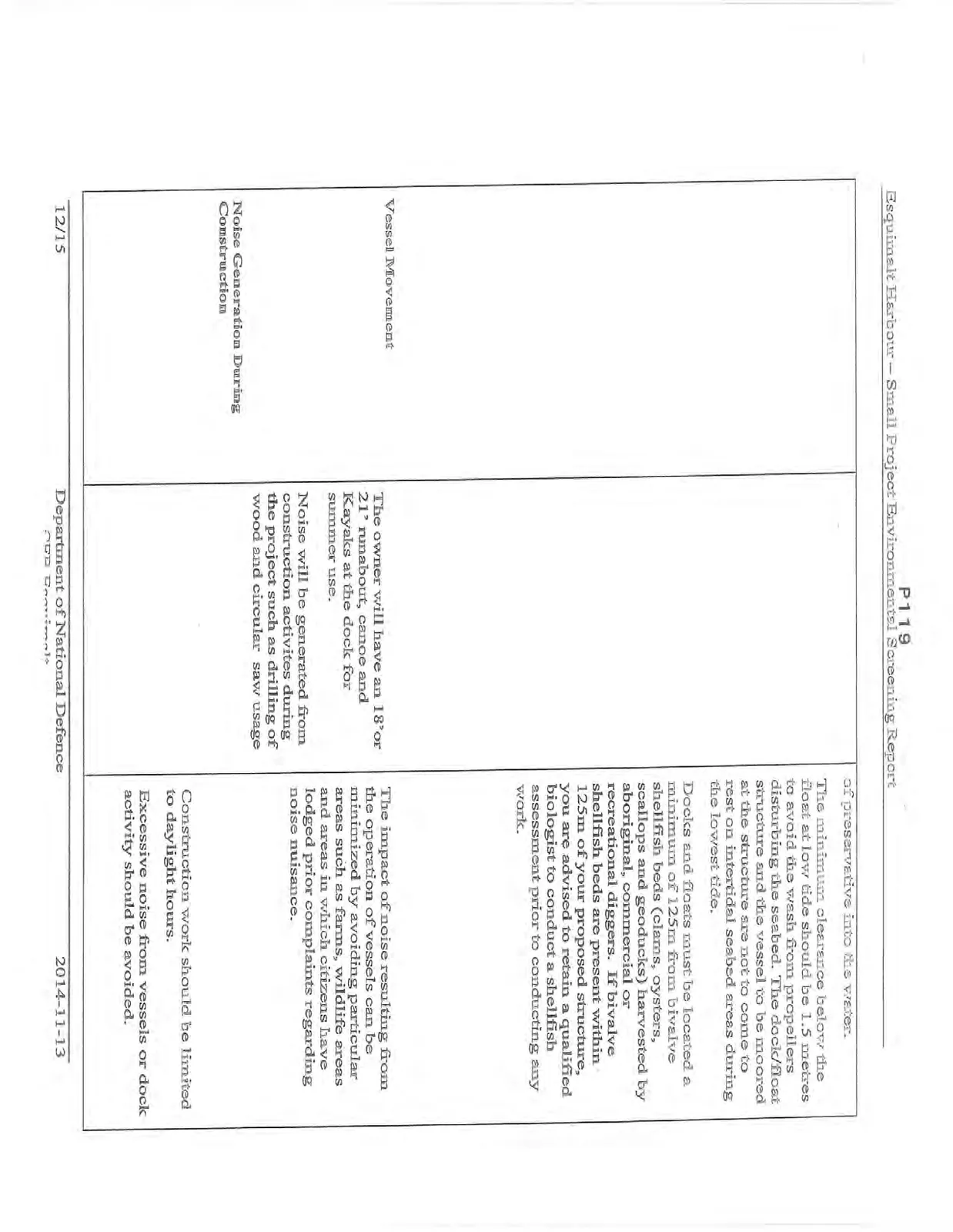
| ...of preservative into the water. | ||
| The minimum clearance below the float at low tide should be 1.5 metres to avoid the wash from propellers disturbing the seabed. The dock/float structure and the vessel to be moored at the structure are not to come to rest on intertidal seabed areas during the lowest tide. | ||
| Docks and floats must be located a minimum of 125m from bivalve shellfish beds (clams, oysters, scallops and geoducks) harvested by aboriginal, commercial or recreational diggers. If bivalve shellfish beds are present within 125m of your proposed structure, you are advised to retain a qualified biologist to conduct a shellfish assessment prior to conducting any work. | ||
| Vessel Movement | The owner will have an 18' or 21' runabout, canoe and Kayaks at the dock for summer use. | The impact of noise resulting from the operation of vessels can be minimized by avoiding particular areas such as farms, wildlife areas and areas in which citizens have lodged prior complaints regarding noise nuisance. |
| Noise Generation During Construction | Noise will be generated from construction activities during the project such as drilling of wood and circular saw usage. | Construction work should be limited to daylight hours. Excessive noise from vessels or dock activity should be avoided. |
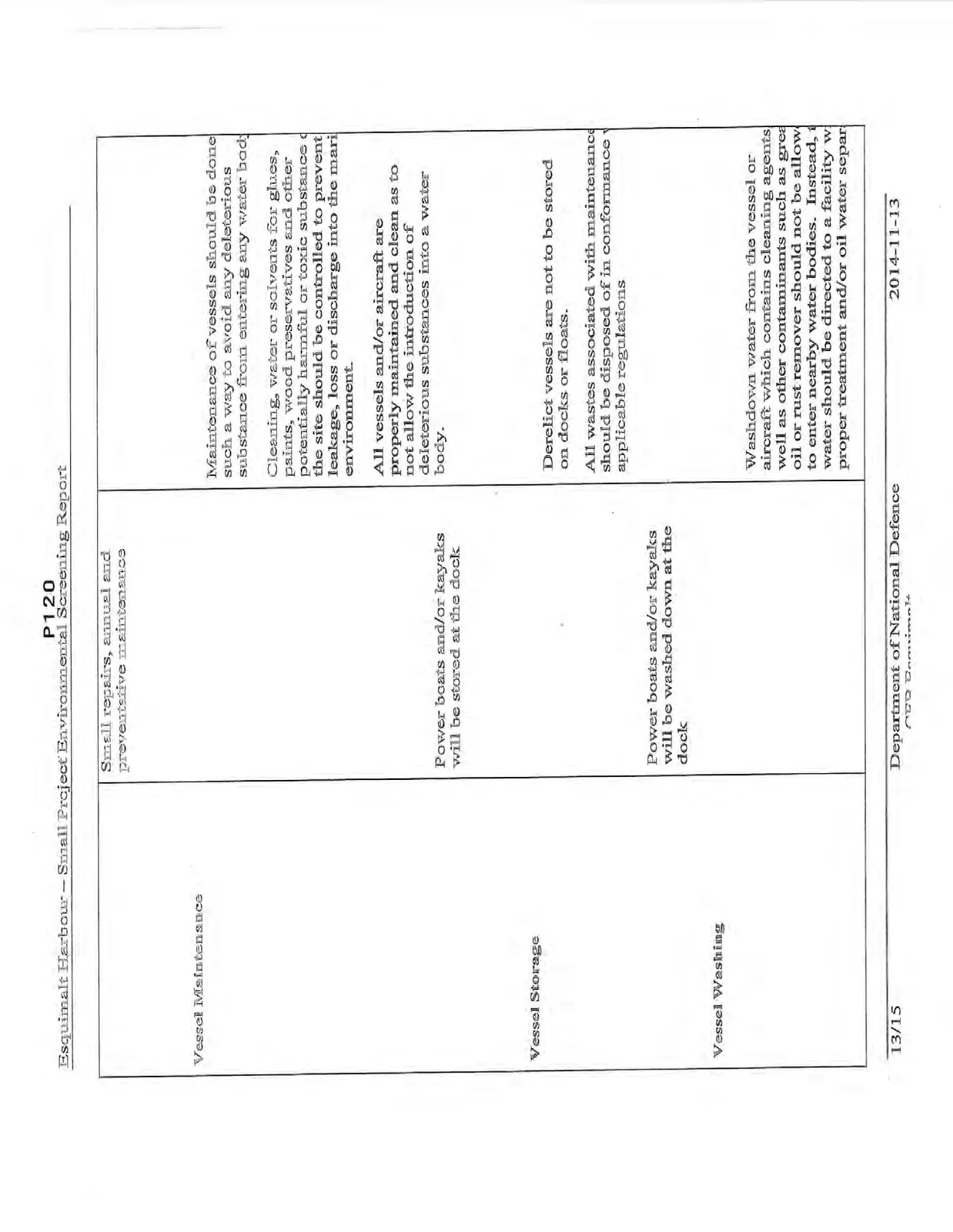
| Vessel Maintenance | Small repairs, annual and preventative maintenance. | Maintenance of vessels should be done such a way to avoid any deleterious substance from entering any water body. Cleaning, water or solvents for glues, paints, wood preservatives and other potentially harmful or toxic substance at the site should be controlled to prevent leakage, loss or discharge into the marine environment. All vessels and/or aircraft are properly maintained and clean as to not allow the introduction of deleterious substances into a water body. |
| Vessel Storage | Power boats and/or kayaks will be stored at the dock. | Derelict vessels are not to be stored on docks or floats. All wastes associated with maintenance should be disposed of in conformance with applicable regulations. |
| Vessel Washing | Power boats and/or kayaks will be washed down at the dock. | Washdown water from the vessel or aircraft which contains cleaning agents as well as other contaminants such as grease, oil or rust remover should not be allowed to enter nearby water bodies. Instead, water should be directed to a facility with proper treatment and/or oil water separator. |
Page 160–163
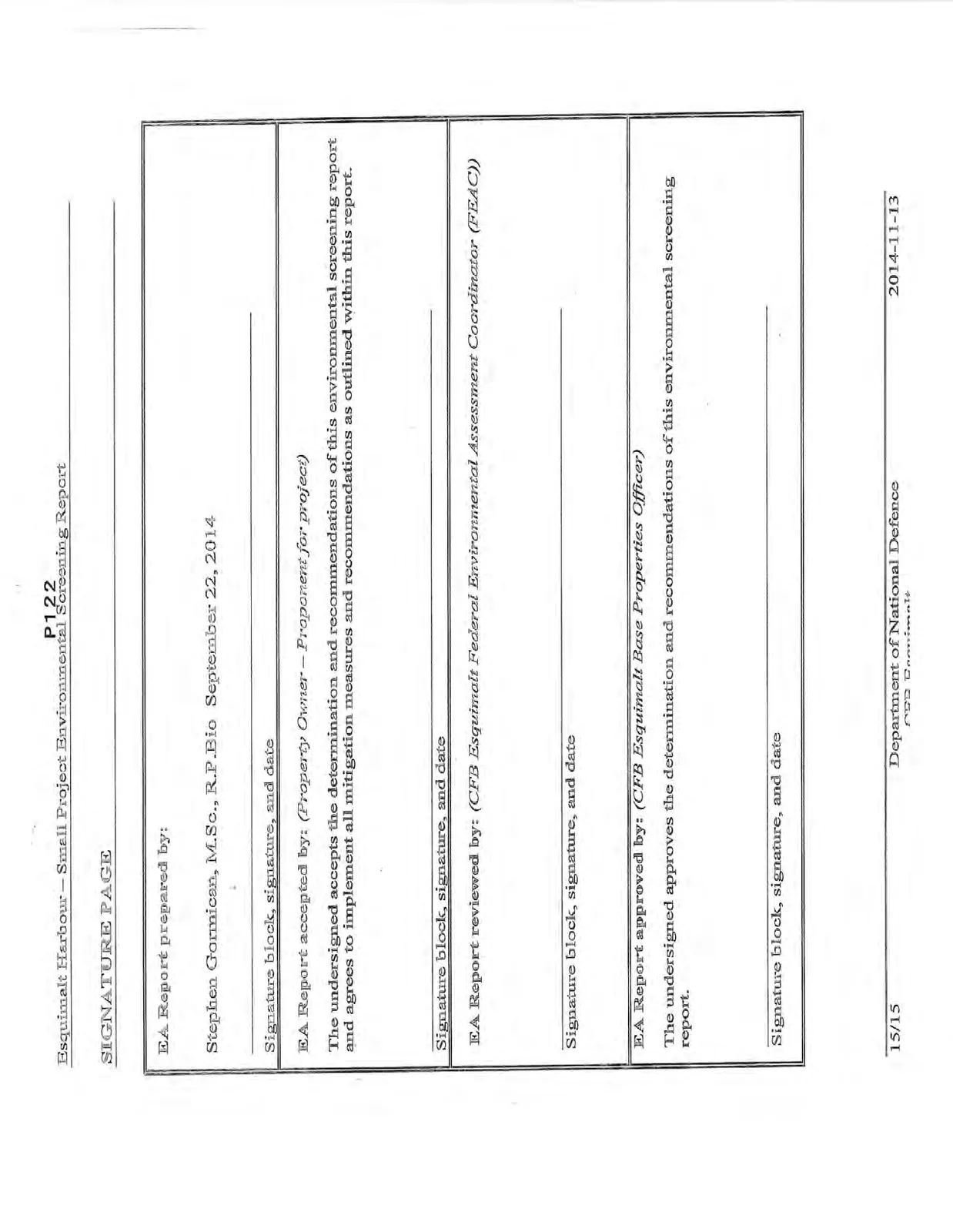
SIGNATURE PAGE
EA Report prepared by:
Stephen Gormican, M.Sc., R.P.Bio September 22, 2014
EA Report accepted by: (Property Owner – Proponent for project)
The undersigned accepts the determination and recommendations of this environmental screening report and agrees to implement all mitigation measures and recommendations as outlined within this report.
EA Report reviewed by: (CFB Esquimalt Federal Environmental Assessment Coordinator (FEAC))
EA Report approved by: (CFB Esquimalt Base Properties Officer)
The undersigned approves the determination and recommendations of this environmental screening report.
Page 160–163
Document Images
(4)
Extracted from: 2015 01 13 Committee of the Whole Agenda