Correspondence from Cathie Blanchard re: Step Code Acceleration to zero carbon emissions
A public submission from Cathie Blanchard advocating for the acceleration of the Zero Carbon Step Code for new building constructions in the region.
March 14, 2023
Dear Mayor and Council
I see you are being presented with an over-arching review and update to the building bylaw today. I realize it is only designed for you to receive it, but would this not be the perfect time to direct staff to incorporate the upcoming Provincial May 2023 Zero Carbon Step Code (ZCSC) provision, considering staff does not intend to have the draft bylaw completed for your approval until Sept, 2023? I did see staff intend to provide a report to the council on the ZCSC.
Victoria, during their July 2022 COW meeting, in preparation for the expected Dec 2022 announcement of approval by the Province of what was then called, the Carbon Pollution Standard (similar to the now approved ZCSC), received a report by staff on the changes to their building bylaw. Victoria is presently reviewing that building bylaw again to incorporate the nuances of the ZCSC before presenting it to council with the timeline in Tables 2 and 3 below. Industry has already been thoroughly consulted by Victoria and is aware of anticipated changes according to the tables’ timelines.
The longer we delay adoption of the ZCSC, the more carbon we emit for the next 20 years with each non-compliant building erected. It is in the consumers’ best interest to move forward with improvements to construction practices for comfort, health and safety. At some point, people will use the timeline of adoption for their decision making on purchasing an older home, much the same as we presently avoid “the leaky condo” era.
The goal: Step Code Acceleration to zero carbon emissions
Prepare the necessary Building and Plumbing Regulation Bylaw amendments to adopt the ZERO CARBON STEP CODE (ZCSC) approach to the BC Energy Step Code to be ready to implement as outlined in Table 2 and Table 3. Much the same as we moved to step code 3 for Part 9 and step code 2 for Part 3 before the building bylaw was set in stone, can an interim requirement be made now to adopt the Table 2 and 3 timelines below with which we are not yet in alignment?
For a building’s construction, the net zero definition provided is:
“when the amount of carbon emissions associated with a building’s product and construction stages up to practical completion is zero or negative, through the use of carbon offsets or the net export of on-site renewable energy.”
For a building’s operational energy, it is:
“when the amount of carbon emissions associated with the building’s operational energy on an annual basis is zero or negative”.¹
Net Zero Homes use only about a quarter of the energy of conventional homes on space heating. Why? Well, Net Zero Homes have a superior building envelope.² This sets the home up for success well into the future.
How Victoria got here:
In 2022, industry engagement, as a collaboration between Victoria, Saanich and Central Saanich, with support from the Capital Regional District (CRD) resulted in industry participants expressing support for focusing regulation on limiting greenhouse gas emissions (GHG) from new construction provided they receive sufficient notice.
While the highest steps of the Step Code reduce overall energy use in buildings, they do not result in sufficiently lowering building emissions over the building’s lifetime. Application of the ZCSC regulate emissions directly to reach GHG emission targets.
Through building design:
See 4.2 below:
- Low density residential buildings such as single-family dwellings, duplexes and townhouses will be required to achieve Step 3 and a low carbon standard by July 1, 2023, and Step 3 and a zero-carbon ready standard by January 1, 2025.
4.2 Proposed Adoption Pathway for Part 9 Residential Buildings
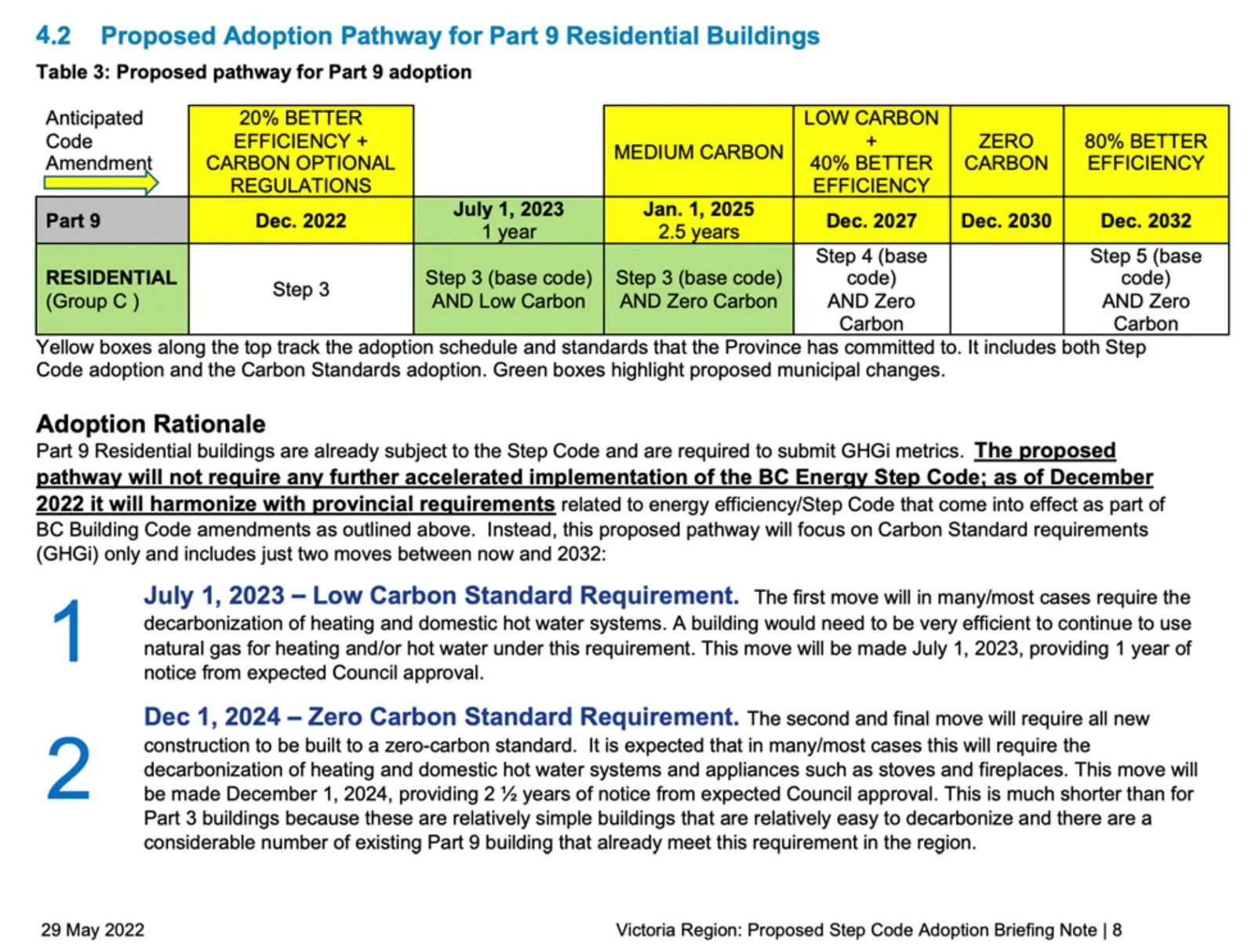
Table 3: Proposed pathway for Part 9 adoption
| Anticipated Code Amendment | 20% BETTER EFFICIENCY + CARBON OPTIONAL REGULATIONS | MEDIUM CARBON | LOW CARBON + 40% BETTER EFFICIENCY | ZERO CARBON | 80% BETTER EFFICIENCY | |
|---|---|---|---|---|---|---|
| Part 9 | Dec. 2022 | July 1, 2023 1 year | Jan. 1, 2025 2.5 years | Dec. 2027 | Dec. 2030 | Dec. 2032 |
| RESIDENTIAL (Group C) | Step 3 | Step 3 (base code) AND Low Carbon | Step 3 (base code) AND Zero Carbon | Step 4 (base code) AND Zero Carbon | Step 5 (base code) AND Zero Carbon |
Yellow boxes along the top track the adoption schedule and standards that the Province has committed to. It includes both Step Code adoption and the Carbon Standards adoption. Green boxes highlight proposed municipal changes.
Adoption Rationale
Part 9 Residential buildings are already subject to the Step Code and are required to submit GHGi metrics. The proposed pathway will not require any further accelerated implementation of the BC Energy Step Code; as of December 2022 it will harmonize with provincial requirements related to energy efficiency/Step Code that come into effect as part of BC Building Code amendments as outlined above. Instead, this proposed pathway will focus on Carbon Standard requirements (GHGi) only and includes just two moves between now and 2032:
- July 1, 2023 – Low Carbon Standard Requirement. The first move will in many/most cases require the decarbonization of heating and domestic hot water systems. A building would need to be very efficient to continue to use natural gas for heating and/or hot water under this requirement. This move will be made July 1, 2023, providing 1 year of notice from expected Council approval.
- Dec 1, 2024 – Zero Carbon Standard Requirement. The second and final move will require all new construction to be built to a zero-carbon standard. It is expected that in many/most cases this will require the decarbonization of heating and domestic hot water systems and appliances such as stoves and fireplaces. This move will be made December 1, 2024, providing 2 ½ years of notice from expected Council approval. This is much shorter than for Part 3 buildings because these are relatively simple buildings that are relatively easy to decarbonize and there are a considerable number of existing Part 9 building that already meet this requirement in the region.
See 5.2 below:
- Residential buildings between four and six storeys will be required to achieve Step 3 and a low carbon standard by July 1, 2024, and Step 3 and a zero-carbon ready standard by July 1, 2025.
- Residential buildings over six storeys and commercial buildings will be required to achieve Step 2 and a low carbon standard by July 1, 2024, and Step 2 and a zero-carbon ready standard by July 1, 2025.
5.2 Proposed Adoption Pathway for Part 3 Buildings
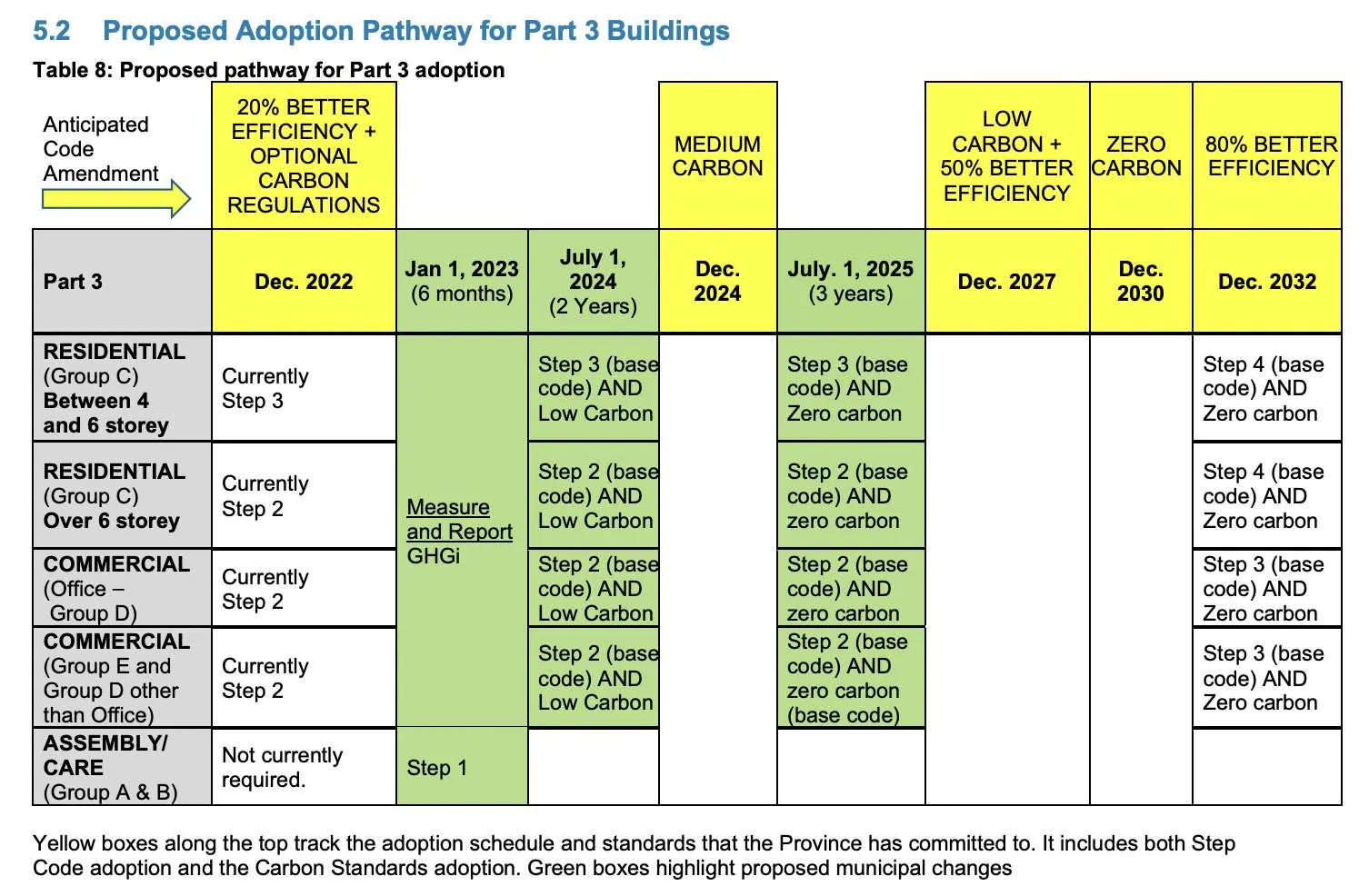
Table 8: Proposed pathway for Part 3 adoption
| Anticipated Code Amendment | 20% BETTER EFFICIENCY + OPTIONAL CARBON REGULATIONS | MEDIUM CARBON | LOW CARBON + 50% BETTER EFFICIENCY | ZERO CARBON | 80% BETTER EFFICIENCY | |||
|---|---|---|---|---|---|---|---|---|
| Part 3 | Dec. 2022 | Jan 1, 2023 (6 months) | July 1, 2024 (2 Years) | Dec. 2024 | July. 1, 2025 (3 years) | Dec. 2027 | Dec. 2030 | Dec. 2032 |
| RESIDENTIAL (Group C) Between 4 and 6 storey | Currently Step 3 | Measure and Report GHGi | Step 3 (base code) AND Low Carbon | Step 3 (base code) AND Zero carbon | Step 4 (base code) AND Zero carbon | |||
| RESIDENTIAL (Group C) Over 6 storey | Currently Step 2 | Measure and Report GHGi | Step 2 (base code) AND Low Carbon | Step 2 (base code) AND zero carbon | Step 4 (base code) AND Zero carbon | |||
| COMMERCIAL (Office – Group D) | Currently Step 2 | Measure and Report GHGi | Step 2 (base code) AND Low Carbon | Step 2 (base code) AND zero carbon | Step 3 (base code) AND Zero carbon | |||
| COMMERCIAL (Group E and Group D other than Office) | Currently Step 2 | Measure and Report GHGi | Step 2 (base code) AND Low Carbon | Step 2 (base code) AND zero carbon (base code) | Step 3 (base code) AND Zero carbon | |||
| ASSEMBLY/ CARE (Group A & B) | Not currently required. | Step 1 |
Yellow boxes along the top track the adoption schedule and standards that the Province has committed to. It includes both Step Code adoption and the Carbon Standards adoption. Green boxes highlight proposed municipal changes.
Worldwide, we are seeing the disastrous consequences of our GHG emissions with an unpredictable jet stream pattern year round, heat domes, numerous atmospheric rivers, sea level rise, arctic melting, loss of wildlife habitat, failed crops, Right here in View Royal we have watched the trees suffer from drought conditions not normal to the South Island, a heat dome in 2021, and close to home, flooding in the lower mainland, rationing water up island, supply chain disruption, to say nothing of the prices of groceries.
Sincerely, Cathie Blanchard 101-290 Island Hwy
Resources:
- https://www.architecture.com/knowledge-and-resources/knowledge-landing-page/what-net-zero-carbon-buildings-means-for-practices-and-developers#:~:text=A%20net%20zero%20carbon%20building,any%20remaining%20carbon%20balance%20offset.%E2%80%9D
- https://blog.chba.ca/2022/05/20/the-science-behind-a-net-zero-home/ https://drive.google.com/file/d/1Q7NJNJU8UvY1Cg5AZguXM0Pw_8iBc6sP/view