Shoreline Access Sites Ecological Analysis and Recommendations
Technical analysis and restoration recommendations for shoreline access points at Thomas Park Drive, Polly Place, and Stillwater, including native plant lists and design guidelines.
• https://healthynaturalist.wordpress.com/2014/11/17/midwood-green-space/ link with 2014 article and image that indicates water access was fenced off at that time and that some efforts were being made to mitigate the goose problem.
Recommended Plant List (all native species) Trees Suitable for Foreshore
| Common Name | Botanical Name | Notes |
|---|---|---|
| Douglas Fir | Pseudotsuga menziesii | 12m+ tall x 3.7m+ spread, evergreen conifer |
| Garry Oak | Quercus garryana | To 20m+ tall, slow growing, deciduous |
| Trembling Aspen | Populus tremuloides | To 25m tall, intolerant of shade, deciduous |
| Pacific Crabapple | Malus fusca | Small tree/large shrub 2-12m tall, saltwater/sea spray tolerant, deciduous |
Shrubs, Ferns & Perennials Suitable for Foreshore & Shoreline
| Common Name | Botanical Name | Notes |
|---|---|---|
| California Aster | Symphyotrichum chilense | 0.4-1m tall, saltwater/sea spray tolerant, sun to part shade, evergreen perennial |
| Common Silverweed | Potentilla anserina | Low and trailing, saltwater/sea spray tolerant, prefers full sun, evergreen perennial |
| Licorice Fern | Polypodium glycyrrhiza | 15-30cm tall, part to full shade, evergreen |
| Low Oregon Grape | Mahonia nervosa | To 60cm tall, broadleaf evergreen, sun or shade, leaves resemble holly (prickly). Also considered a small shrub. |
| Oceanspray | Holodiscus discolor | 1.2-1.5m tall, deciduous, sun to part shade |
| Red-flowering Currant | Ribes sanguineum | 1-3m tall, deciduous, sun to light shade |
| Red-osier Dogwood | Cornus stolonifera | 1.8-3.6m tall, deciduous, part shade |
| Scouler’s Willow | Salix scouleriana | 2-12m tall, deciduous, sun or shade. Has typical ‘pussy willow’ flowers |
| Snowberry | Symphoricarpos albus | 0.5-2m tall, saltwater/sea spray tolerant, light shade deciduous |
| Sword Fern | Polystichum munitum | To 1.5m tall, saltwater/sea spray tolerant, sun to part shade, evergreen |
| Sweetgale | Myrica gale | 1-2m tall, saltwater/sea spray tolerant, sun to part shade, deciduous |
| Nootka Rose | Rosa nutkana | 0.5-3m tall, saltwater/sea spray tolerant, full sun to part shade, aggressive spreader, thorny, deciduous. |
| Tall Oregon Grape | Mahonia aquifolium | To 1.8m tall, broadleaf evergreen, full sun or dappled shade, leaves prickly (resemble holly) |
| Yarrow | Achillea millefolium | 1m tall, saltwater/sea spray tolerant sun or shade but prefers sun, semi-evergreen perennial |
Plants Suitable for Planting below HWM & in Salt Marsh
| Common Name | Botanical Name | Notes |
|---|---|---|
| Coast Silverweed | Potentilla egidii | Saltwater/sea spray tolerant |
| Lyngbye’s Sedge | Carex lyngbyei | Saltwater/sea spray tolerant |
| Olney’s Bulrush | Schoenoplectus americanus | Saltwater/sea spray tolerant |
| Perennial Saltwort aka American Glasswort | Sarcocornia pacifica | Saltwater/sea spray tolerant |
| Seashore Saltgrass | Distichlis spicata ssp. | Saltwater/sea spray tolerant |
| Seaside Arrowgrass | Triglochin maritima | Saltwater/sea spray tolerant |
| Seaside Plantain | Plantago maritima | Saltwater/sea spray tolerant |
| Silver Burweed | Ambrosia chamissonis | Saltwater/sea spray tolerant |
Site Photos
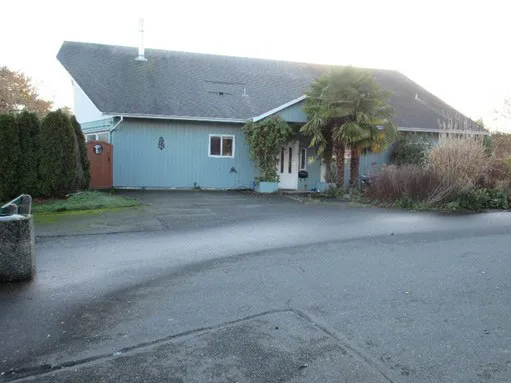
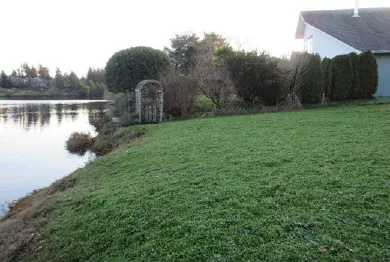
Thomas Park Drive Viewpoint
General
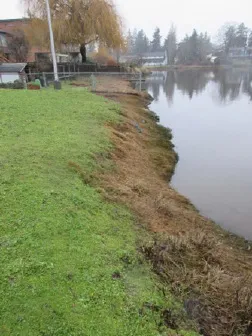
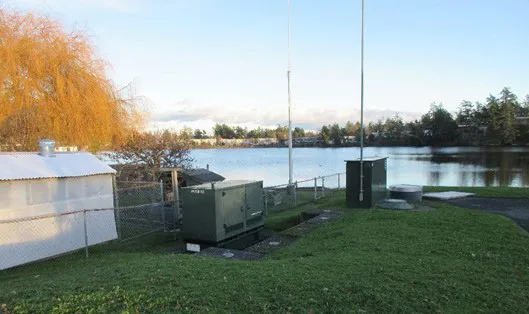
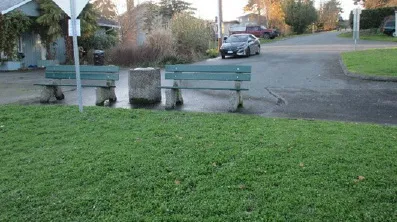
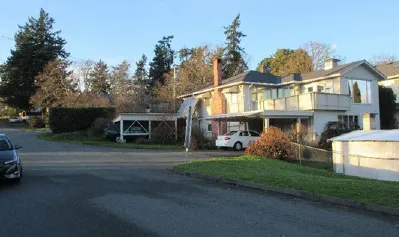
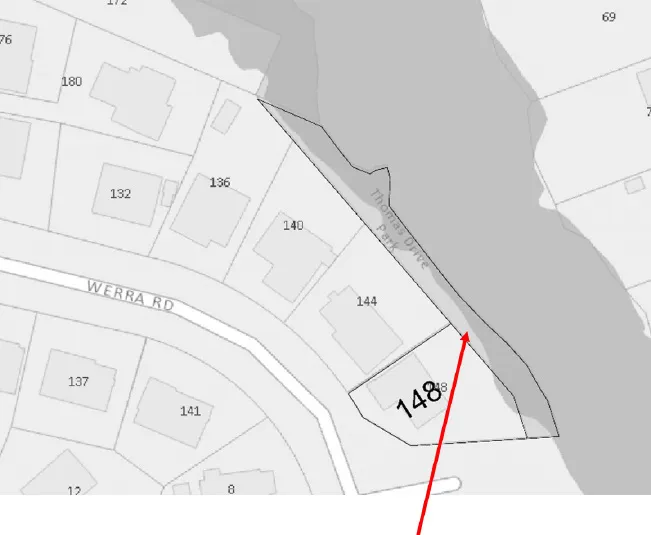
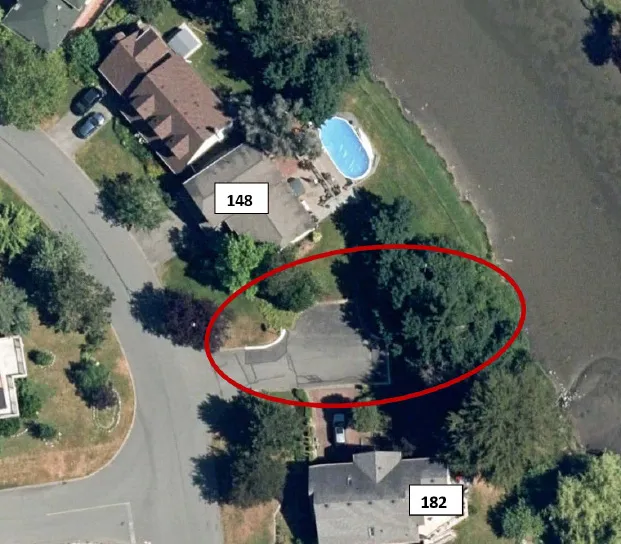
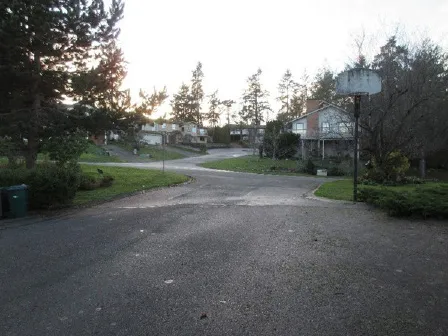
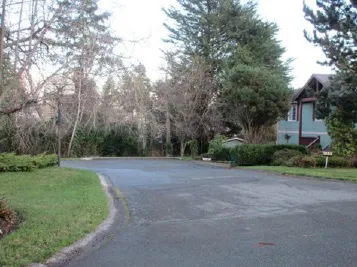
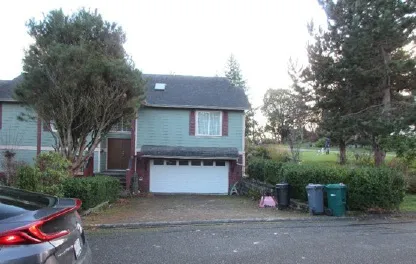
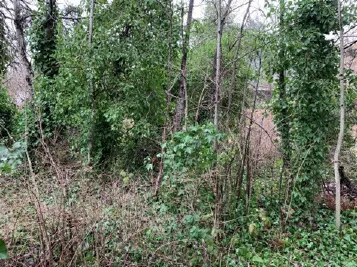
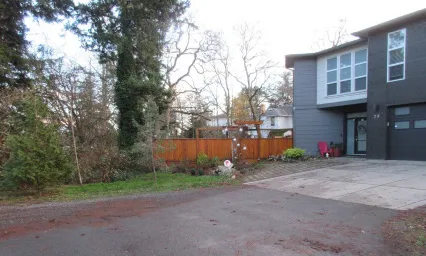
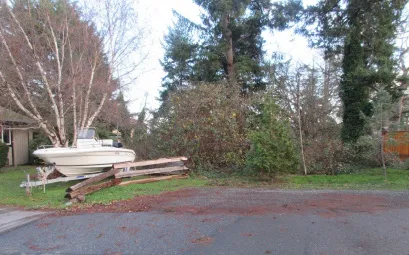
Thomas Drive Shoreline Access is a non-signed water access near the south end of what was once referred to as Thomas Drive Park but is currently unused and with unknown status. This TOVR owned shoreline access is relatively flat, however, the shoreline is neither visible or accessible due to unmanaged foreshore vegetation which includes native (at least one Garry oak, trembling aspen, Douglas fir, and red alder with understory of snowberry & rose), non-native(iris) and invasive plant species especially English ivy. A page wire fence on the property line between the site and 148 Werra Road extends into the foreshore and prevents pedestrian access along the shoreline. As explained below, shoreline access is undesirable, and the site is therefore referred to as a Viewpoint in this report.
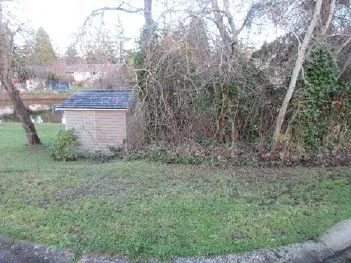
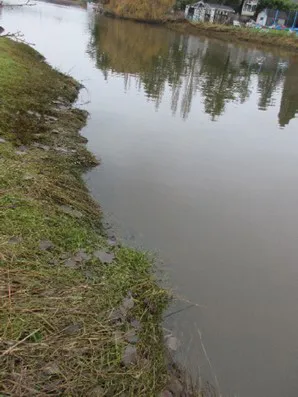
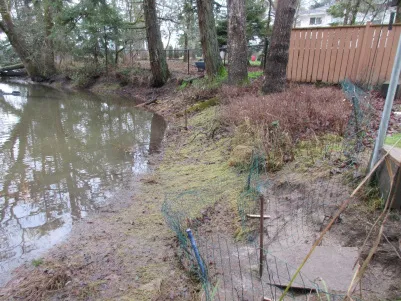
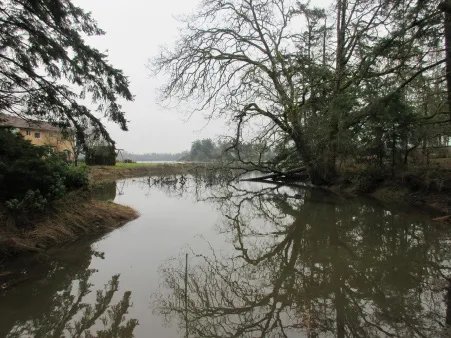
The site is situated on a sheltered cove west of Portage Inlet, an estuary and one of the most important bird habitats in the CRD. Tides in this area can appear extreme because Portage Inlet is very shallow (generally +/- 2m) and the cove shallower. According to the south neighbour (182 Werra Rd), recent (2022) tides have been as high as his shed (+/- 6m above where it was at the time of our site visit). See photo below.
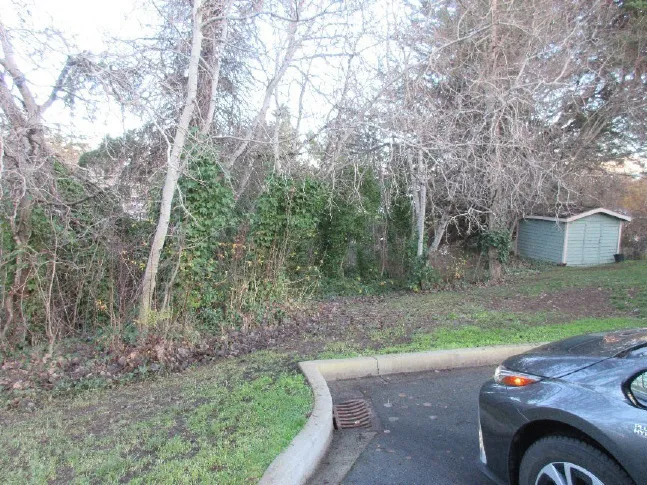
There is a healthy salt marsh in the intertidal area.
The Overall Ecological Rating of this site is HIGH (CRD); when the tide retreats the area is predominantly mudflats. Mudflats are easily damaged essential habitats for marine life and migratory which depend upon the nutrient dense bio film that only forms on the undisturbed surface of the mudflats (paddles in shallow water are very destructive). Because this arm of Portage Inlet is very narrow it provides some less disturbed and especially beneficial ecology for birds. Though all of Portage Inlet is part of the Greater Victoria Migratory Bird Sanctuary, these particular “hidden” spots have extra high value and are worthy of protection.
Water from the cove adjacent the Thomas Park Drive Shore Access was tested by the CRD in 2013 for quality and sediments. No major concerns were noted.
Except for the parking lot there are no amenities on this site.
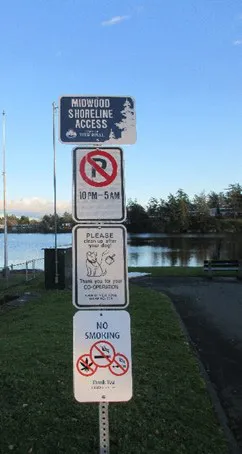
Note: Portage Inlet is part of the Victoria Harbour Migratory Bird Sanctuary), and subject to Migratory Bird Sanctuary Regulations - C.R.C., c. 1036 (Section 5): 5 (1) No person who owns a dog or cat shall permit the dog or cat to run at large in a migratory bird sanctuary. There is currently no signage reflecting this regulation.
Of interest: https://healthynaturalist.wordpress.com/2014/11/17/thomas-park/. This links to a 2014 article indicating Thomas Park is a 235m long waterfront park with a rough trail along a roadway easement through poplar trees and shrubs to Portage Inlet, and between Thomas Park Drive & White Pine Road Green Space. While connecting the Thomas Park Drive Shoreline Access to Thomas Drive Park is beyond the scope of this project, it may be worth future exploration. Note: there was no visible path at the time of writing this report*.
Challenges
- Intrusion on the mudflats is to be avoided for reasons described above. This includes canoe/kayak launching and all human and dog activity below the HWM.
- Vegetation must be removed to create views and access to the shoreline. While there is an abundance of invasive shrub species, some native shrub species may also require removal. Long term shore access landscape management to be low maintenance.
- Tides are getting higher and creating increased flooding (anecdote from neighbour).
- Thick vegetation makes access to the shoreline difficult (easiest access is by trespassing on neighbouring property). Permission from DFP is recommended for any work immediately adjacent the shoreline, to ensure that no Death of Fish or Harmful Alteration, Disruption or Destruction of fish habitat (HADD) occurs from the proposed work. https://www.dfo-mpo.gc.ca/pnw-ppe/reviews-revues/request-review-demande-d-examen-004-eng.html
- There is high potential for archaeological sites near the shoreline in this location.
Thomas Park Drive Shoreline Access Opportunities & Recommendations
- Creating a view and access to the shoreline above the HWM using ‘Green Shores’ principles and guidelines is recommended. https://stewardshipcentrebc.ca/green-shores-home/ This will include removal of invasive species plants (strategy and monitoring required), limbing or removal of hazard trees, judicious pruning to create view corridors to the shore from the parking lot, Werra Road and above HWM viewing area/platform, new planting, and potential log placement. The proposed viewing area/platform to be marked out on site and location approved by TOVR before any work, including pruning, begins. Size will be dependent on site conditions.
- Newly created expansive gaps are to be replanted with native species selected from the recommended plant list starting on page 34 of this report, and in locations approved on site by vegetation RPBio (e.g. Lehna Malmkvist, Swell Environmental). Planting additional aspen saplings and/or Garry oaks is specifically recommended.
- Not all gaps need to be re-planted. It is recommended that areas suitable for topping with organic compost and left for native species to fill in be determined in the field, at time of clearing, by vegetation/restoration RPBio.
- All new vegetation above the HWM to be planted in fall at start of rainy season. After planting mulch immediately with 100mm depth organic mulch, such as composted leaf mulch, to help retain moisture and mitigate invasive species spread. There is no irrigation on this site. Newly planted areas to be maintained for minimum 2-year establishment period.
- Do not plant where viewing area or pathway will be constructed.
- Use vegetation to maintain privacy for the immediate neighbours as practicable.
- The available parking and easy terrain make this an ideal site for a universally accessible viewing area/platform. It is recommended the designated area/platform be constructed using CRD path mix or 100% recycled plastic decking such as Perma-Deck Innovation by Wishbone Site Furnishings. All work to be above the HWM (high tide) of 2022 or the present natural boundary, whichever has the higher elevation. The viewing area should include, at a minimum, a 1.5-1.8m bench with back and arms, space for wheelchair circulation and viewing, an accessible pathway to the parking lot, and protection for adjacent vegetation. Handrails are not expected to be necessary. Interpretive signage is recommended.
- Accessible path to be minimum 1.2m wide and constructed of CRD ‘pathway mix’, or recycled plastic decking (e.g. boardwalk).
- To deter access, do not provide a path beyond the viewing area to the shoreline.
- To help protect the vegetated foreshore from trespass, erect a +/- 1m ht. park-style cedar rail fence along the pathway between the parking lot and viewing area/platform, and along the east edge of the parking lot. Provide interpretive signage that explains the value of the vegetation and, perhaps, history of the site, as well as ‘no-dog’ signage.
- Determine where archaeological sites are, if any, on the Thomas Park Drive Viewpoint shoreline, and acknowledge them in accordance with the wishes of the local First Nations.
Recommended Plant List (all native species)
Trees Suitable for Replacing Invasive Species in Foreshore
| Common Name | Botanical Name | Notes |
|---|---|---|
| Douglas Fir | Pseudotsuga menziesii | 12m+ tall x 3.7m+ spread, evergreen conifer |
| Garry Oak | Quercus garryana | To 20m+ tall, slow growing, deciduous |
| Trembling Aspen | Populus tremuloides | To 25m tall, intolerant of shade, deciduous |
| Pacific Crabapple | Malus fusca | Small tree/large shrub 2-12m tall, saltwater/sea spray tolerant, deciduous |
Shrubs, Ferns & Perennials Suitable for Replacing Invasive Species in Foreshore & at Shoreline
| Common Name | Botanical Name | Notes |
|---|---|---|
| California Aster | Symphyotrichum chilense | 0.4-1m tall, saltwater/sea spray tolerant, sun to part shade, evergreen perennial |
| Common Silverweed | Potentilla anserina | Low and trailing, saltwater/sea spray tolerant, prefers full sun, evergreen perennial |
| Licorice Fern | Polypodium glycyrrhiza | 15-30cm tall, part to full shade, evergreen |
| Low Oregon Grape | Mahonia nervosa | To 60cm tall, broadleaf evergreen, sun or shade, leaves resemble holly (prickly). Also considered a small shrub. |
| Oceanspray | Holodiscus discolor | 1.2-1.5m tall, deciduous, sun to part shade |
| Red-flowering Currant | Ribes sanguineum | 1-3m tall, deciduous, sun to light shade |
| Red-osier Dogwood | Cornus stolonifera | 1.8-3.6m tall, deciduous, part shade |
| Scouler’s Willow | Salix scouleriana | 2-12m tall, deciduous, sun or shade. Has typical ‘pussy willow’ flowers |
| Snowberry | Symphoricarpos albus | 0.5-2m tall, saltwater/sea spray tolerant, light shade deciduous |
| Sword Fern | Polystichum munitum | To 1.5m tall, saltwater/sea spray tolerant, sun to part shade, evergreen |
| Sweetgale | Myrica gale | 1-2m tall, saltwater/sea spray tolerant, sun to part shade, deciduous |
| Nootka Rose | Rosa nutkana | 0.5-3m tall, saltwater/sea spray tolerant, full sun to part shade, aggressive spreader, thorny, deciduous. |
| Tall Oregon Grape | Mahonia aquifolium | To 1.8m tall, broadleaf evergreen, full sun or dappled shade, leaves prickly (resemble holly) |
| Yarrow | Achillea millefolium | 1m tall, saltwater/sea spray tolerant sun or shade but prefers sun, semi-evergreen perennial |
Plants Suitable for Planting in Salt Marsh
| Common Name | Botanical Name | Notes |
|---|---|---|
| Coast Silverweed | Potentilla egidii | Saltwater/sea spray tolerant |
| Lyngbye’s Sedge | Carex lyngbye | Saltwater/sea spray tolerant |
| Olney’s Bulrush | Schoenoplectus americanus | Saltwater/sea spray tolerant |
| Perennial Saltwort aka American Glasswort | Sarcocornia pacifica | Saltwater/sea spray tolerant |
| Seashore Saltgrass | Distichlis spicata ssp. spicata | Saltwater/sea spray tolerant |
| Seaside Arrowgrass | Triglochin maritima | Saltwater/sea spray tolerant |
| Seaside Plantain | Plantago maritima | Saltwater/sea spray tolerant |
| Silver Burweed | Ambrosia chamissonis | Saltwater/sea spray tolerant |
Site Photos
Polly Place Shoreline Access
General
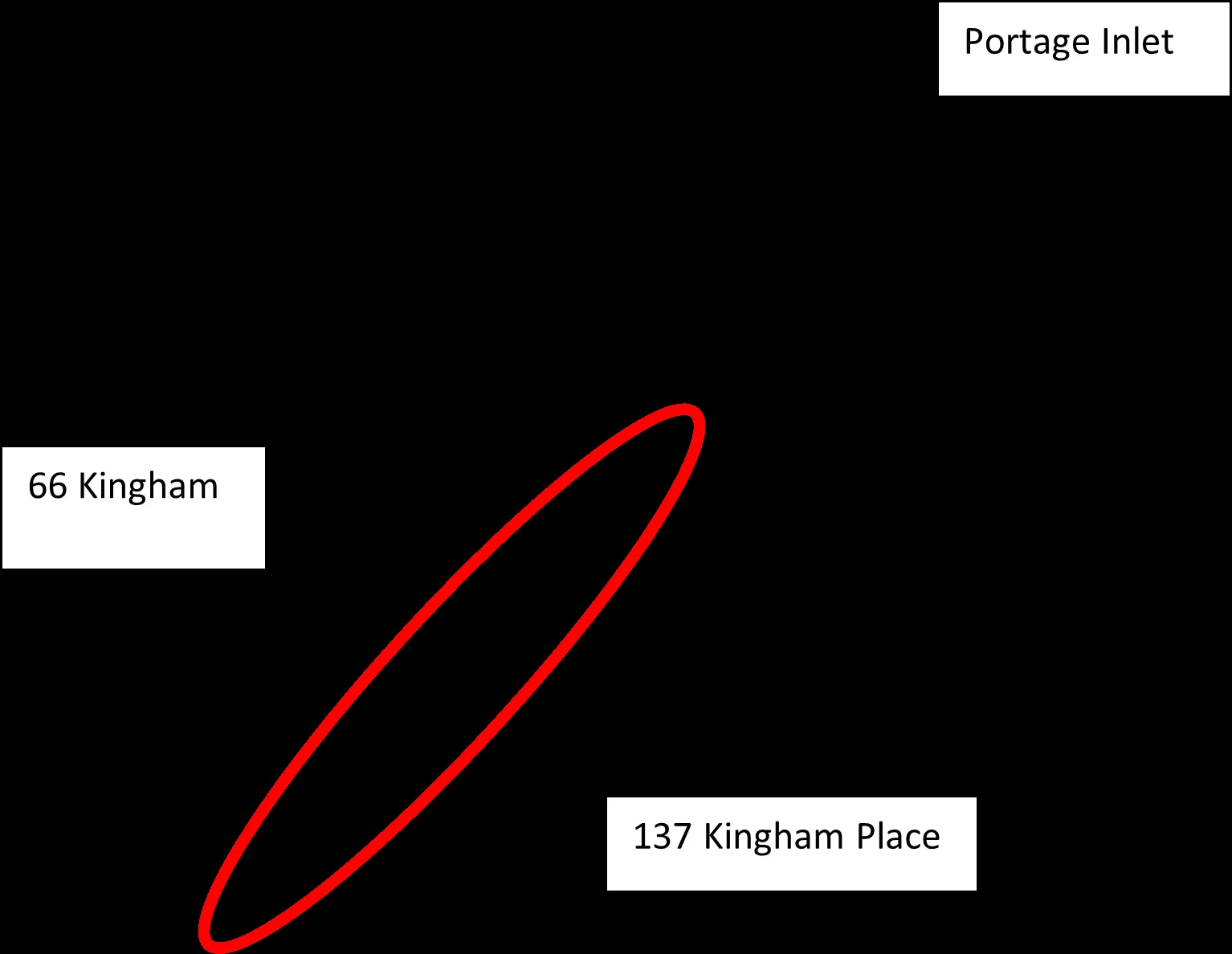
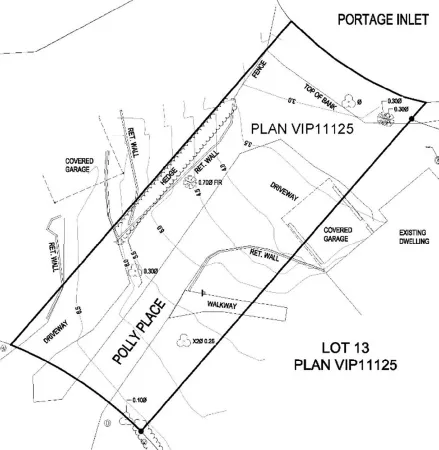
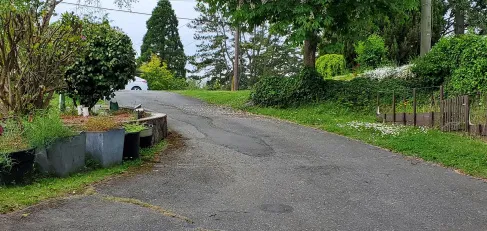
Polly Place Shoreline Access is a rectangular parcel of land situated between 66 and 137 Kingham Place on Portage Inlet; it is approximately 627m2. Lack of signage creates the impression that Polly Place is a private driveway to 137 Kingham Place. However, the driveway, a portion of the garage and front garden, the entry walk, vegetable beds and a hedge (all associated with 137 Kingham Place), and the driveway for 66 Kingham Place, are located on TOVR lands. A pedestrian gate in the 66 Kingham Place fence provides access to TOVR lands at the south side of the bank vegetation.
The site slopes from Kingham Place to Portage Inlet, a fall of approximately 3.5m from road to top of bank. Vegetation along the bank is primarily Douglas Fir and Garry oak (there are many oak seedlings) with a native species understory including snowberry, Nootka rose, Oregon grape, willow, crabapple, and fern. The native vegetation provides habitat for birds and small wildlife, and creates shade along the water’s edge. There is a healthy salt marsh at the water’s edge.
An abundance of invasive English ivy and lesser amounts of invasive Daphne and St. John’s Wort are growing upland of the bank edge vegetation, and along the west perimeter of the parcel. A mature non-native and, fortunately, not-suckering weeping willow near the south property line of 66 Kingham Place creates a significant feature at the north-west corner of the site and provides privacy between the adjacent residences.
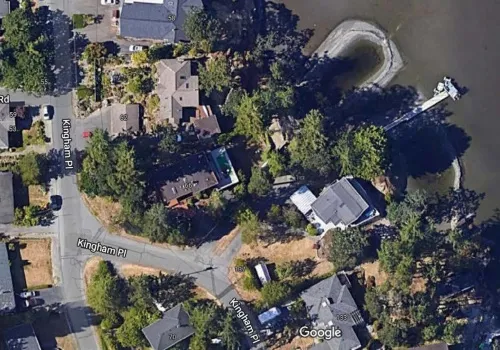
There are no amenities or accessible paths on this site, the non-native willow combined with fairly dense shoreline vegetation prevents the inlet from being seen from Kingham Place (no visual draw), standing room for viewing at the shoreline is limited (+/- 2.5m2), water access is unsafe (steep unstable slope of rock & vegetation), and Kingham Place parking is limited and often unavailable. Despite this, neighbours say people occasionally find there way to the end of Polly Place to enjoy the view, sometimes parking at Centennial Park.
Noteworthy: Not within the project site but of interest are man-made saltwater swimming pools adjacent both 66 and 137 Kingham Place. Dave Podmoroff, Parks Supervisor at TOVR, shared with Engineering that ‘back in the day’ someone with an excavator helped a few homeowners create self-flushing pools in the area. Berms were created to contain the water at high tide; when the tide lowered the pools remained full and warmed by the heat of the sun. The pools could be emptied using a valve system on the lower end, and were refilled with fresh saltwater when the tide came back in. Such excavation would not be allowed today.
Challenges
The extent of long-term encroachment on TOVR lands is the greatest challenge to developing &/or ecologically restoring Polly Place shoreline access. The property at 66 Kingham Place was developed in 1958, 30 years before the Town of View Royal was incorporated, and has been carefully maintained by the original owners since then. The property at 137 Kingham Place was developed in 1957 and sold in 1972, 1998 and again in 2013. To significantly change the use of the TOVR parcel at this time would create hardship for the neighbours by impeding vehicular and pedestrian access to, and diminishing privacy for, these long-established properties.
Other challenges include creating a public viewing area while preventing beach and shoreline access (and inversely protecting the beach and shoreline), maintaining privacy for the adjacent properties, and managing the significant area of invasive plant species, all within a modest budget.
Polly Place Shore Access Opportunities & Recommendations
In May 2022, Ivan Leung of TOVR Engineering, and the owners of 66 and 137 Kingham Place, engaged in discussions around needs and values related to developing Polly Place as a public shoreline access. All parties recognized that significant development of the site would have a negative impact on the adjacent properties. Their agreed upon recommendations are included (and identified in italics) in this report.
- The lack of public identity makes this site invisible, and few local residents know of it. While it is important to maintain privacy for the neighbours, and to manage the volume of pedestrians at the shore, it is equally important to recognize that shore access is an amenity not readily available to everyone and should be provided where possible on publicly owned land. Given this land is already identified as a shore access and appears to have no other public purpose, it is recommended that an appropriately scaled shore access be provided.
- Recommendations for an appropriately scaled shore access:
- Include a demarcated public pedestrian access from Kingham Place to the top of bank. A 1m wide concrete unit-paver walkway on the west side of the 137 Kingham Place driveway, or within the driveway where necessary due to tree roots, is recommended. Note the slope will follow the land and may not meet universal accessibility standards.
- Include a seating area at the top of the bank, no larger than necessary to accommodate a bench and standing room for 2-4 people. The seating area must harmonize with, and have no negative impact on, the natural surroundings.
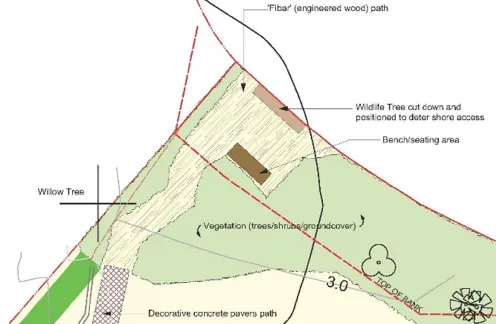
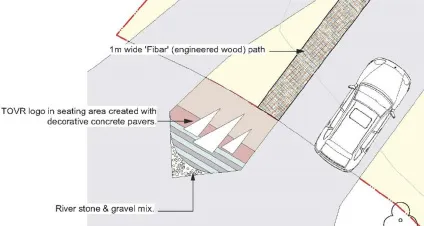
Cut down dead wildlife tree (approx. 2.4m ht.) at proposed seating area and place it horizontally at top of the bank to deter shore access; in this way the nature tree will continue to have habitat value. Fortify the access barrier (shoreline deterrent) by adding to existing low boulders along top and slope of bank, and allow existing native species shrubs to fill in the gaps over time. Similarly block access to the beach stair at 66 Kingham Place. If necessary, carefully transplant shrubs from adjacent vegetation to create privacy for (there is no water for establishment and results may be poor). Prohibit water access. Plant only native species. Use vegetation to mitigate trespass to neighboring rear gardens and maintain privacy.
Parking along Kingham Place near Polly Place creates a sightline safety issue. Because of this, combined with limited pedestrian access, minimal viewing space at the shoreline and privacy concerns, it is recommended that no wayfinding signage or additional parking on Kingham Place be provided. The shoreline access will be identifiable by locals through visual cues (walkway, threshold, view to shore) but use by the broader public will not be encouraged. Create no additional street parking; parking and sightline safety is already an issue. Provide no wayfinding signage on the street.
- The existing willow creates a ‘gateway’ to the water viewing area and provides a modicum of privacy for the adjacent neighbours; unfortunately, it also contributes to the potential for the viewing area to become a hang out. To address both safety and privacy concerns, it is recommended the willow be judiciously pruned to create a water view from Kingham Place while maintaining as much vegetative screening as possible between the path/viewing area and rear gardens of 66 and 137 Kingham Place. Pruning should allow visitors to access the seating area without having to touch branches. New planting will be required to create an effective privacy buffer for adjacent private properties. All plants to be native species shrubs selected from the plant list starting at page 49 of this report, and placed in locations approved by the vegetation RPBio (e.g. Lehna Malmkvist, Swell Environmental). Preserve as much (non-native) willow canopy as possible for privacy. Simultaneously consider CPTED principles and avoid creating a secluded space where people can hang out.
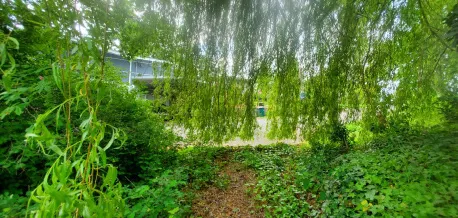
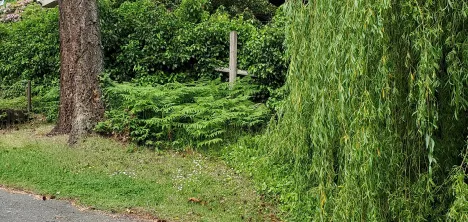
- All new vegetation to be planted in fall at the start of the rainy season. After planting mulch immediately with 100mm depth organic mulch, such as composted leaf mulch, to help retain moisture and mitigate invasive plant species spread. There is no irrigation on this site. Newly planted areas are to be maintained for minimum 2-year establishment period.
- Do not plant where viewing area or pathway will be constructed.
- Use vegetation to maintain privacy for the immediate neighbours as practicable.
- Not all gaps need to be planted. It is recommended that gaps which do not need to be planted to create privacy, be topped with organic compost and left for native species to fill in over time.
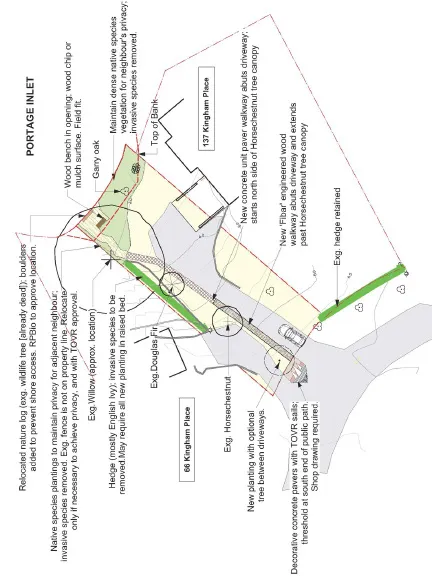

It is recommended that the strategy to discourage beach access include interpretive signage explaining why access is not allowed. Locate signage near the seating area.
The vegetation at the top of the bank is a healthy albeit somewhat thin stand of native species plants (see images page 46); minimal invasive species plants were visible at the time of review. The large number of Garry oak seedlings observed along the south side of the vegetative area is especially significant. It is recommended that this area be properly managed to support continued growth of native species, especially Garry oaks, without competition from invasive species. The invasive species are to be fully removed in accordance with a prepared removal strategy; removal will require action over a period of years and must be monitored by an RPBio. or Qualified Professional (QP) with appropriate experience. TOVR is committed to removing invasive species throughout the municipality and is an active member of CRISP (Capital Region Invasive Species Partnership.
- Vegetation gaps created because of plant removal should be topped with organic compost and left for native species to fill in if the gaps do not create or exacerbate privacy concerns. Gaps that create or worsen privacy concerns are to be planted; native species plants for privacy will be the only new plantings in this area.
- All new vegetation to be planted in fall at the start of the rainy season. After planting mulch immediately with 100mm depth organic mulch, such as composted leaf mulch, to help retain moisture and mitigate invasive plant species spread. There is no irrigation on this site. Newly planted areas to be maintained for min. 2-year establishment period.
- All new plants to be native species shrubs selected from the plant list starting on page 49.
Land between the willow tree and Kingham Place is not as ecologically sensitive as the upper bank, however, invasive plant species in this area are likely to find their way into the top of bank vegetation if not properly managed.
- It is recommended that English ivy and Daphne be fully removed from land under the willow and west of the new path, and that St. John’s Wort be managed to prevent spread beyond its current space (consider removal if manpower is available). St. John’s Wort is an invasive plant but not as problematic as many others. Additional invasive plant species identified during sitework are to be removed and/or managed, according to the removal strategy referenced in the bullet at the top of this page.
- Vegetation gaps created through plant removal should be topped with organic compost and left for native species to fill in unless removal results in a substantially empty bed, in which case appropriate native and/or adaptive plant species are to be planted. The need for planting in this situation is to be confirmed by TOVR.
- There is no irrigation on this site, therefore, all new vegetation is to be planted in the fall at the start of the rainy season; even so success may be limited. Newly planted areas are to be maintained for minimum 2-year establishment period.
- All new plants to be native or adaptive species shrubs selected from the plant lists starting on page 49.
It is recommended that through outreach programs and/or CRISP, residents at 66 and 137 Kingham be provided education around and support for removal of invasive species on their properties and on the TOVR property they use. The education could potentially be expanded to include all residents along Kingham Place.
In addition to invasive plant species removal and management, hazardous trees and limbs are to be removed from trees where the public is welcome, and from within the stand of native species vegetation at the top of the bank.
Shrubs & Ferns Suitable for Planting at Polly Place
Shrubs, Ferns & Perennials Suitable for Replacing Invasive Species in Foreshore & at Shoreline
| Common Name | Botanical Name | Notes |
|---|---|---|
| Baldhip Rose | Rosa gymnocarpa | 0.5 -2m tall, full sun to shade, pink flowers followed by small red hips, soft weak prickles on stems, aggressive spreader, drought and salt spray tolerant, deciduous |
| Clustered Wild Rose aka Swamp Rose | Rosa pisocarpa | 1-3m tall, full sun to shade, pink flowers followed by edible pea-size purplish-red hips borne in clusters, prickly stem, aggressive spreader, tolerates drought, saturation (wetland), and salt spray, deciduous. |
| Evergreen Huckleberry | Vaccinium ovatum | 1-2m tall in sun / 4m+ in shade, sun or shade, slow grower, pinkish white flowers followed by edible blue-black berries, drought tolerant, salt spray and wind tolerant, evergreen |
| Falsebox aka Oregon Boxwood | Paxistima myrsinites | To 1.2m tall, prostrate, full sun to part shade, inconspicuous tiny reddish blooms late spring/early summer, drought and wind and salt tolerant, evergreen |
| June Plum | Oemleria cerasiformis | 1.8 – 4.8m tall, full sun to dappled shade, deciduous. Also considered a small tree. |
| Licorice Fern | Polypodium glycyrrhiza | 15-30cm tall, part to full shade, saltwater/sea spray tolerant, evergreen |
| Mock Orange (coastal) | Philadelphus lewisii ‘Gordianus’ | To 3.6m tall, full sun to light shade, white flowers in May- July, fast growing, tolerant of drought and seasonal inundation, wind and sea spray tolerant, deciduous |
| Nootka Rose | Rosa nutkana | 0.5-3m tall, saltwater/sea spray tolerant, full sun to part shade, pink flowers followed by large orange hips, aggressive spreader, thorny, drought tolerant, deciduous. |
| Oceanspray | Holodiscus discolor | 1-3m tall, flowers turn brown & persist over winter, saltwater/sea spray tolerant, deciduous |
| Red-flowering Currant | Ribes sanguineum | 1-3m tall, deciduous, sun to light shade |
| Saskatoon Berry | Amelanchier alnifolia | To 1.5m tall, deciduous, sun to light shade, salt tolerant, minimally deer tolerant |
| Salal | Gaultheria shallon | Usually to 1m tall but can get taller, part shade to shade, salt tolerant, evergreen |
| Snowberry | Symphoricarpos albus | 0.5-2m tall, saltwater/sea spray tolerant, light shade, deciduous |
| Sword Fern | Polystichum munitum | To 1.5m tall, saltwater/sea spray tolerant, sun to part shade, evergreen |
Selection of Non-Native Adaptive Plants Suitable for Replacing Invasive Species between the Willow Tree and Kingham Place (in addition to Native Plant Species in table above)
| Common Name | Botanical Name | Notes |
|---|---|---|
| Box-leaf Honeysuckle | Lonicera pileata | 0.6-0.9m tall, full sun to light/dappled shade, fragrant cream flowers in spring followed by violet-blue berries in winter, branches root where they touch the ground, salt and wind tolerant, drought tolerant once established, evergreen shrub. |
| California Lilac | Ceanothus thyrsiflorus ‘Victoria’ | 1.2-1.8m tall, full sun, blue flowers late spring and summer, drought and salt tolerant, good as specimen/screen/hedge, evergreen shrub. Other varieties available. |
| King Edward VII Flowering Currant | Ribes sanguineum ‘King Edward VII’ | 1.5-2.4m tall, full sun to light/open shade, deep pinkish-red flowers in early spring followed by blue-black berries in summer, cultivar of native Red Flowering Current, drought tolerant once established, deciduous shrub. |
| Mugo Pine | Pinus mugo aka Swiss Mountain Pine | 0.6-1.5m tall depending on variety, full sun, intolerant of dense wet soil, drought tolerant once established, salt/pollution/wind tolerant, coniferous evergreen shrub. |
| Purple Smokebush | Cotinus coggygria ‘Royal Purple’ | 4.5-6m tall, full sun to light shade, dark purple-red leaves, plume-like seed clusters or ‘smoke’ in summer, slow growing, salt/wind/compaction tolerant, drought tolerant once established, deciduous large shrub or small tree. Other varieties available. |
| Rosemary | Rosmarinus officinalis ‘Arp’ | 1.5-2m tall, full sun, small blue flowers early spring to late fall, shears well (can be used as hedge), drought tolerant once established, evergreen shrub. Other varieties available. |
| Royal Grevillea | Grevillea victoriae | To 3m tall, full sun, red-orange honeysuckle-like blooms mid-winter to early summer, fast growing, drought tolerant, evergreen shrub. |
| Russian Sage | Perovskia atriplicifolia | 0.6-1.5m tall depending on variety, full sun, purple flowers midsummer to frost, drought and heat tolerant once established, deciduous perennial. |
| Sun Rose | Helianthemum nummularium | To 0.3m tall, full sun, many rose shaped flowers of various colours from May- June depending on variety, drought tolerant once established, spreading woody stemmed evergreen perennial groundcover. |
| White Icicle Flowering Current | Ribes sanguineum ‘White Icicle’ | 1.5-2.4m tall, full sun to light/open shade, white flowers in early spring followed by blue-black berries in summer, cultivar of native Red Flowering Current, drought tolerant once established, deciduous shrub. |
| White Rock Rose | Cistus x hybridus | 0.9 – 1m tall, full sun, white rose-like flowers late spring through summer, drought tolerant once established, heat and salt tolerant, survives best with neglect, fast growing evergreen shrub. Other varieties available. |
- NOTE: An Environmental Protection Plan for the Polly Place Shoreline Access Upgrade was prepared by Swell Environmental in September 2022. The Protection Plan was submitted to TOVR and is not attached to this report.
Stillwater Viewpoint
General
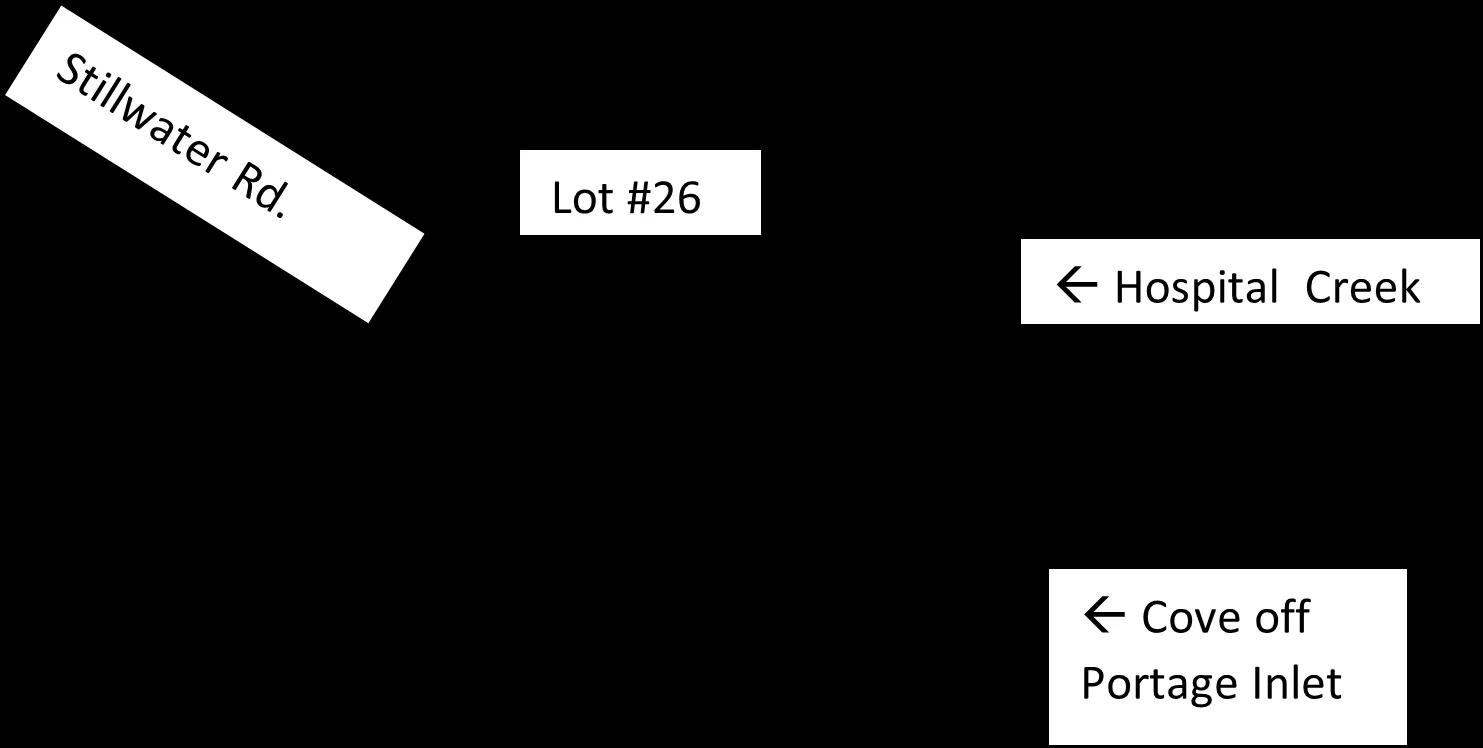
Stillwater Shoreline Access is a non-signed water viewpoint (as opposed to access) at the end of a dead-end road that receives little bicycle or pedestrian traffic. There is a steep and well vegetated slope between the road and adjacent cove off Portage Inlet, with little evidence of dog or human activity. The slope includes a mix of native (primarily Douglas-fir overstory with snowberry), non-native and invasive plant species including but not limited to Himalayan blackberry, English hawthorn, spurge laurel (daphne) and English ivy. The difficult water access and lack of currents supports extensive duck and bird activity in the cove and along the shoreline. The shoreline includes a healthy salt marsh along the upper intertidal area, including Lyngbye’s sedge and seashore salt grass. There are non-native and invasive plant species above and below the high-water mark (HWM). Some of the non-native and invasive plants are escapees from neighbouring properties, e.g. English ivy, and Iris.
Water from two on-site stormwater outfalls that receive road runoff and discharge directly into the cove was tested by the CRD in 2019 for quality and sediments. No major concerns were noted; water from the outfalls will be resampled in 2022.
Water quality in the cove is in part dependent on the health of Hospital Creek, and Hospital Creek receives discharge from large parking lots and hardscape at Victoria General Hospital. The CRD last sampled outflows into Hospital Creek in 2019 and found the water quality to ‘moderate’ (options are high, moderate and low, with low being the best. In 2019 Stillwater outflow was ‘low’).
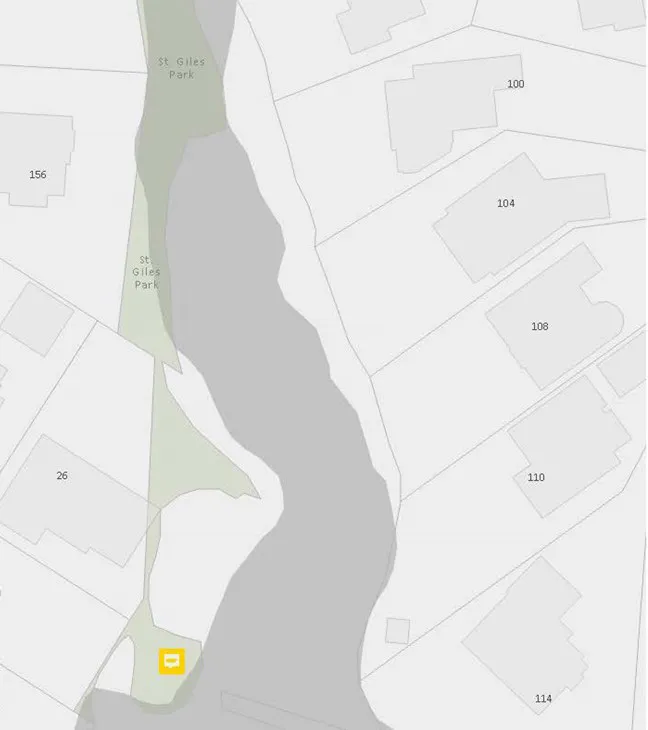
The house and carport on Lot 26 encroaches onto TOVR lands just north of Stillwater Road. There are no amenities on this site.

Challenges
- The dense vegetation and steep terrain between Stillwater Road and the shoreline makes managing/removing on-site invasive plant species challenging. Long term landscape management is to be low maintenance.
- DFO approval is required to do any work, including removal of invasive species, below the HWM.
- Increasing human (and dog) activity at Stillwater Shore Access would be detrimental to the bird habitat in and around the cove. To be safe, it would also require significant effort.
- There have been instances of illegal dumping at the Stillwater outfall.
- There is no road end signage identifying the public amenity (viewpoint) or habitat value.
- There is high potential for archaeological sites near the shoreline in this location.
Stillwater Shore Viewpoint Opportunities & Recommendations
- Create an informal viewing area at the end of Stillwater Road and protect bird habitat by preventing access to the bank and shoreline. It is recommended this be achieved by placing 3 large seating boulders on the grass area at the end of the road, and creating a view corridor from the boulders to Portage Inlet through judicious pruning. Ideally the cove with ducks would also be seen from the boulders, however, the view corridor should be no wider than necessary and must not provide access to the bank.
- Boulders should have no sharp edges and be set 1/3 -1/2 into the ground when placed. Locate boulders after invasive plant species have been removed to take advantage of any view corridors created through that process.
- Give this road end a name, and install identification sign. Signage is to indicate it is a viewpoint and that there is no shoreline access.
- Restore the bank, shoreline and habitat. It is recommended that invasive species (English ivy, blackberry, iris, English hawthorn, et al) and non-native trees be removed, and that newly created expansive gaps be replanted with native species selected from the recommended plant list starting on page 55 of this report. Invasive plant species removal may require several seasons and should follow a pre-determined strategy, and be monitored. Following ‘Green Shores’ principles and guidelines for shoreline restoration is recommended. https://stewardshipcentrebc.ca/green-shores-home/
- Not all gaps will need to be re-planted. It is recommended that areas suitable for topping with organic compost and allowed to fill in naturally be determined in the field at time of clearing by vegetation/restoration RPBio., (e.g. Lehna Malmkvist, Swell Environmental).
- There is no irrigation on this site. New vegetation on bank and shoreline above HWM to be planted in fall at start of rainy season. After planting mulch immediately with 100mm depth organic mulch, such as composted leaf mulch, to help retain moisture and mitigate invasive species spread. Newly planted areas to be maintained for minimum 2-year establishment period.
- Obtain permission from DFO to work (remove invasive species and plant) at or below the HWM. This is a requirement not a recommendation. https://www.dfo-mpo.gc.ca/pnw-ppe/reviews-revues/request-review-demande-d-examen-004-eng.html The two reduced-risk work windows are:
- July 1- Oct 1 (preferred for longer daylight, daytime low tides, less risk for erosion and sedimentation)
- December 1 – Feb 1 (difficult to work because low tides are at night and there is risk of heavy rainfall)
- Inclusion of interpretive signs identifying ducks in the area and/or wildlife benefits of restoring and maintaining native plant species habitats is recommended. Signage should be unobtrusive and harmonize with natural surroundings. Signage regarding restricted activities may be ultimately required but need not be installed immediately. The intent is to draw minimal attention to this site. See examples at https://www.crd.bc.ca/ELSI/projects-outreach/projects/interpretive-signs-at-esquimalt-lagoon
- Determine where archaeological sites are, if any, on the Stillwater Viewpoint shoreline, and acknowledge them in accordance with the wishes of the local First Nation.
Recommended Plant List (all native species)
Trees Suitable for Replacing Invasive Species on Bank
| Common Name | Botanical Name | Notes |
|---|---|---|
| Bigleaf Maple | Acer macrophyllum | Largest maple in Canada, typically to 15m tall with 15m spread but often larger, deciduous |
| Black Hawthorn | Crataegus menziesii | Small tree/large shrub 1-4m tall, deciduous. |
| Douglas Fir | Pseudotsuga menziesii | 12m+ tall x 3.7m+ spread, evergreen conifer |
| Garry Oak | Quercus garryana | To 20m+ tall, slow growing, deciduous |
| Pacific Crabapple | Malus fusca | Small tree/large shrub 2-12m tall, saltwater/sea spray tolerant, deciduous |
Shrubs Suitable for Replacing Invasive Species on Bank (Upper Slope)
| Common Name | Botanical Name | Notes |
|---|---|---|
| Saskatoon | Amelanchier alnifolia | To 1.5m tall, deciduous, not shade tolerant |
| Salal | Gaultheria shallon | Usually to 1m tall but can get taller, evergreen, not tolerant of full sun |
| Red-flowering Currant | Ribes sanguineum | 1-3m tall, deciduous, sun to light shade |
| Snowberry | Symphoricarpos albus | 0.5-2m tall, deciduous, light shade |
| Oceanspray | Holodiscus discolor | 1-3m tall, flowers turn brown & persist over winter, deciduous |
| Tall Oregon Grape | Mahonia aquifolium | To 1.8m tall, broadleaf evergreen, full sun or dappled shade, leaves prickly (resemble holly) |
| June Plum | Oemleria cerasiformis | 1.8 – 4.8m tall, full sun to dappled shade, deciduous. Also considered a small tree. |
| Nootka Rose | Rosa nutkana | 0.5-3m tall, full sun to part shade, aggressive spreader, thorny, deciduous. |
Understory Plants Suitable for Replacing Invasive Species on Bank (Upper Slope)
| Common Name | Botanical Name | Notes |
|---|---|---|
| Licorice Fern | Polypodium glycyrrhiza | 15-30cm tall, part to full shade, evergreen |
| Kinnikinnick | Arctostaphylos uva ursi | Trailing evergreen groundcover, not tolerant of shade |
| Low Oregon Grape | Mahonia nervosa | To 60cm tall, broadleaf evergreen, sun or shade, leaves resemble holly (prickly). Also considered a small shrub. |
| Sword Fern | Polystichum munitum | To 1.5m tall, evergreen, sun or shade |
| Tall Fringecup | Tellima grandiflora | Perennial 40-cm tall, shade to semi-shade |
Plants Suitable for Planting at Shoreline/Lower Slope
| Common Name | Botanical Name | Notes |
|---|---|---|
| Hooker’s Willow | Salix hookeriana | 5.5-7m tall, saltwater/sea spray tolerant, deciduous |
| Licorice Fern | Polypodium glycyrrhiza | 15-30cm tall, part to full shade, saltwater/sea spray tolerant, evergreen |
| Oceanspray | Holodiscus discolor | 1-3m tall, flowers turn brown & persist over winter, saltwater/sea spray tolerant, deciduous |
| Red-flowering Currant | Ribes sanguineum | 1-3m tall, deciduous, sun to light shade |
| Red-osier dogwood | Cornus stolonifera | To 2.8m tall, saltwater/sea spray tolerant, deciduous |
| Salmonberry | Rubus spectabilis | 1-3.5m tall, saltwater/sea spray tolerant, prickly, deciduous |
| Scouler’s Willow | Salix scouleriana | 2-12m tall, saltwater/sea spray tolerant, deciduous, sun to light shade |
| Snowberry | Symphoricarpos albus | 0.5-2m tall, deciduous, light shade |
| Sweetgale | Myrica gale | 1-2m tall, saltwater/sea spray tolerant, sun to part shade, deciduous |
| Sword Fern | Polystichum munitum | To 1.5m tall, saltwater/sea spray tolerant, sun to part shade, evergreen |
Plants Suitable for Planting in Salt Marsh
| Common Name | Botanical Name | Notes |
|---|---|---|
| Coast Silverweed | Potentilla egidii | Saltwater/sea spray tolerant |
| Lyngbye’s Sedge | Carex lyngbyei | Saltwater/sea spray tolerant |
| Olney’s Bulrush | Schoenoplectus americanus | Saltwater/sea spray tolerant |
| Perennial Saltwort aka American Glasswort | Sarcocornia pacifica | Saltwater/sea spray tolerant |
| Seashore Saltgrass | Distichlis spicata ssp. spicata | Saltwater/sea spray tolerant |
| Seaside Arrowgrass | Triglochin maritima | Saltwater/sea spray tolerant |
| Seaside Plantain | Plantago maritima | Saltwater/sea spray tolerant |
| Silver Burweed | Ambrosia chamissonis | Saltwater/sea spray tolerant |
Site Photos
End of report.
Document Images
(25)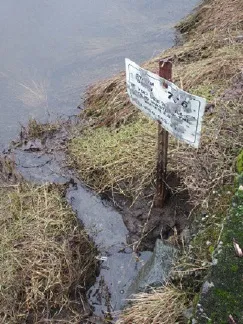
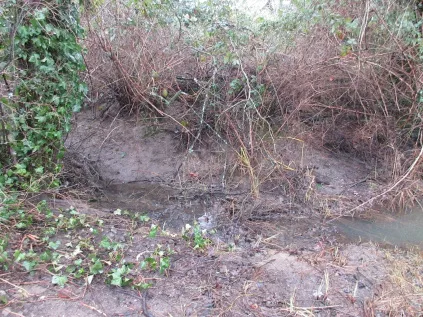
On shoreline behind 1 Midwood Rd. Area to remain untouched as per CRD water quality consultant, Sara Stallard.
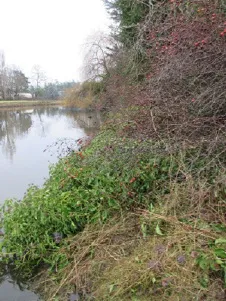
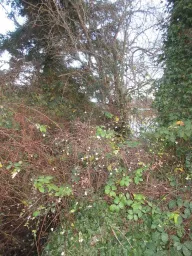
Views of Shoreline
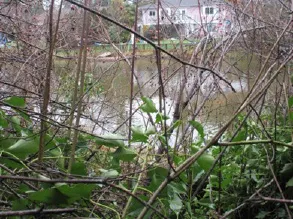
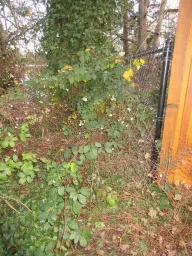
Existing Vegetation – Roses and Invasive English Ivy
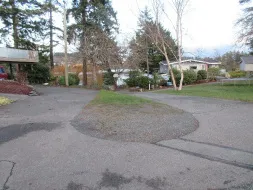
View from Kingham Place to Portage Inlet. 66 Kingham on left. 137 Kingham on right.
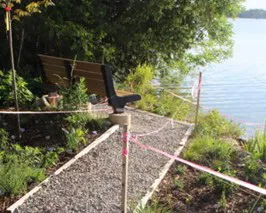
Bench image for reference only.
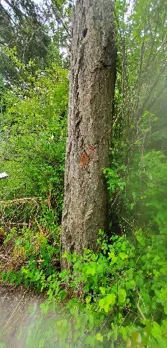
Wildlife tree
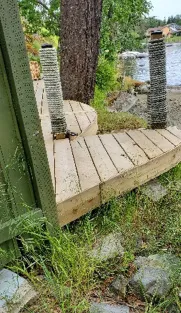
Beach stair at 66 Kingham Place to be screened on Polly water access site to prevent public use and beach access.

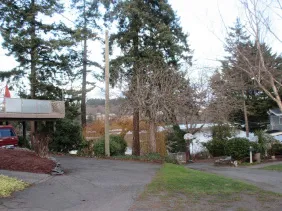
View from driveway at 137 Kingham Place to Portage Inlet. Early spring 2022.
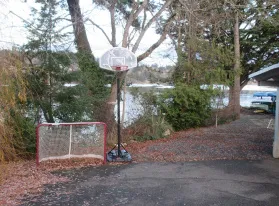
66 Kingham Place (on left). Early spring 2022.
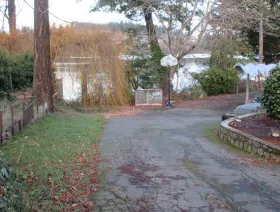
137 Kingham Place. Early spring 2022.

Sign image for reference: CAUTION! PLANTS AT WORK
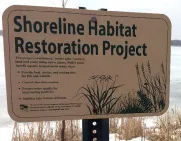
Sign image for reference: Shoreline Habitat Restoration Project
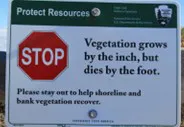
Sign image for reference: Protect Resources STOP Vegetation grows by the inch...
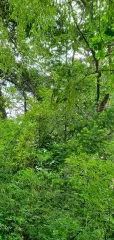
Sign image for reference: PLEASE KEEP OUT IMPORTANT BIRD SITE
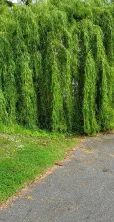
Willow (summer, looking north)
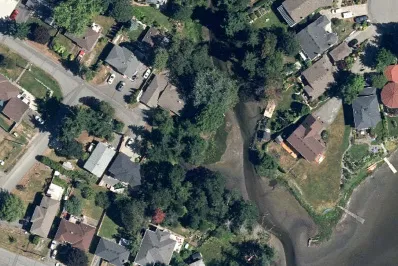
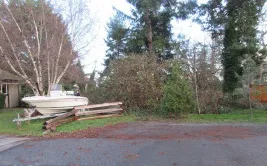
Photo showing field fit for proposed boulders
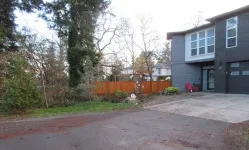
Neighbour on south side Stillwater Road end. TOVR land is on left side of photo, beginning at edge of fence.
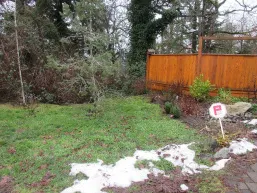
Neighbour on north side of Stillwater Road end. Stillwater shore access is on right side of photo. Exact location of north property line not clear.
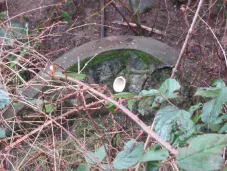
Shoreline at end Stillwater Road east of outfalls (cove shoreline).
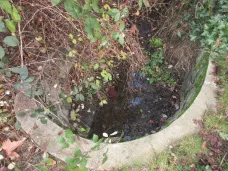
Vegetation on bank.