Voices of the community - Installation of Noise Mitigation on Trans Canada Highway
A collection of letters and presentation slides from residents requesting noise mitigation measures, such as tree barriers, along the Trans-Canada Highway.
Voices of the community
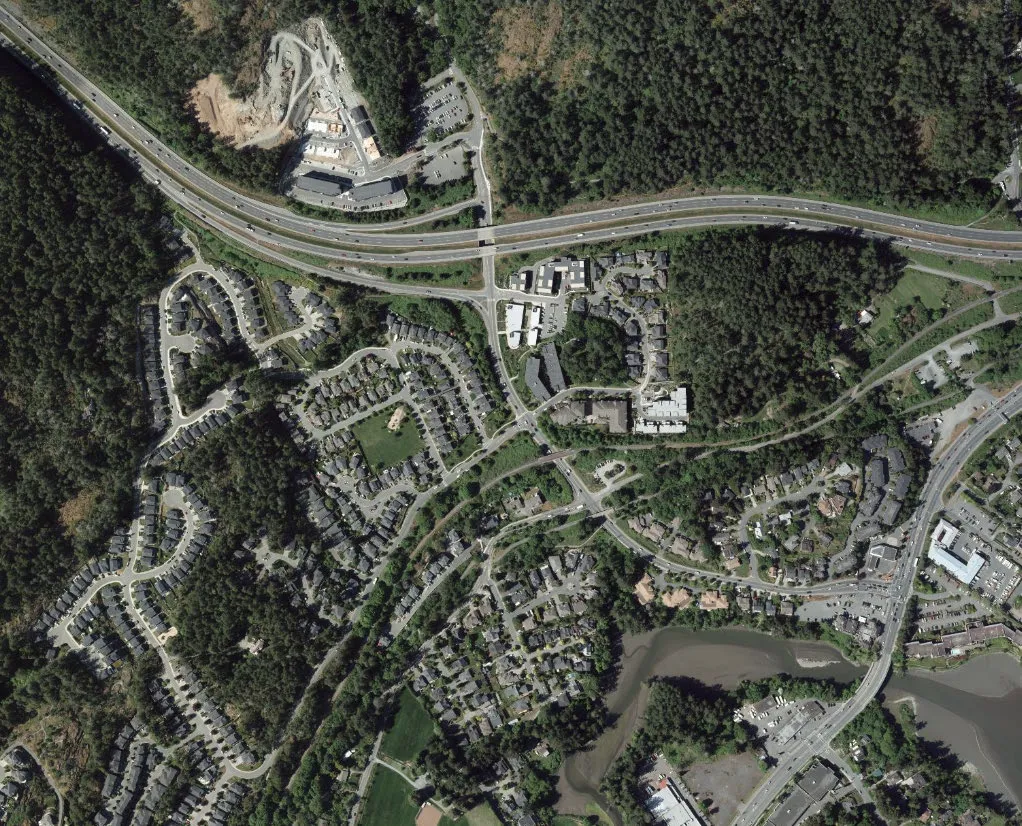
114 Thetis Vale Crescent
I would also like to ask that the Town include traffic noise mitigation strategies to include the area on 6 Mile Rd; from Atkins Rd up to West Park Lane, as well as the exit from the highway onto 6 Mile Rd.
The frequency of large transport vehicles using compression breaks along this stretch of highway and along 6 Mile Rd, starting as early as 5:00 a.m. is negatively affecting the enjoyment of my home and neighborhood compared to 5, 10, and 15 years ago.
I am aware that this is not the first time that concern has been expressed by residents of the 6 Mile and Chilco neighbourhoods.
Please allow Mr. Painter the time and respect to present not just his concerns, but many who live here.
Ron Stonehouse
2431 Lund Rd
I am writing as a concerned resident of our town regarding a matter that has become increasingly challenging for our community. Over the past few years, I have noticed a significant increase in noise levels emanating from the highway near the Thetis Vale neighbourhood. This increase in noise can be attributed to the extensive development of buildings and homes in the surrounding area.
While I understand the need for development and growth in our town, the rising noise levels have had a noticeable impact on our quality of life. The continuous sound of traffic, especially during peak hours, has become a constant source of disturbance for many residents in our community. This disturbance affects our ability to enjoy our homes and outdoor spaces, disrupts our sleep, and ultimately detracts from the peaceful and pleasant environment we once cherished.
In light of this concern, I would like to endorse Ryan Painter’s proposal that the town council consider planting a barrier of trees along the highway, at the minimum, to help absorb and reduce the sound generated by passing vehicles. Such a green buffer could not only serve as a practical noise barrier but also enhance the visual aesthetics of our neighborhood.
I understand that implementing such a measure may require careful planning and resources, but I believe it would greatly benefit our community's overall well-being, helping to enhance the livability of our area and ensure that it remains a place we are proud to call home
Sincerely, Sherry Fraser
2380 Chilco Rd
When we moved in here in the fall of 2015, there was a fairly thick forest between us and the highway. We only heard the odd loud engine, otherwise it was just a distant highway hum. Then, all the trees came down to build the houses between us and the highway (we're at 2380 Chilco), which removed any natural noise barrier. But it became much, much worse after the condo buildings across the highway were built. It just seems like any vehicle noises reverberate off the condos, with nothing to stop it or absorb it. I can't imagine how the folks who live closer to the highway feel--not being able to sit outside during the nice weather and read a book, for example.
There are many studies about the health detriments to people when they live too close to a highway (particles from tires and exhaust--higher cancer rates), and the lack of enjoying peace and quiet. I am sure the city council members are aware of this--it's easy to google and find them. Weigh the cost of healthcare needed to fight environmentally caused cancers, and the small amount needed to build proper barriers, and it's a no-brainer to try to prevent the cancers, asthma, breathing problems.
Aside from concrete just bouncing the noise back, which would make life miserable for the folks across the highway, concrete is also more expensive to use and is not environmentally sustainable. The sand used for making concrete is a finite resource. I like the idea of placing a barrier that absorbs the noise, and the addition of sturdy, native, drought-resistant trees and shrubs all around it.
Katherine Buchanan and Robb Smith
9 Massey Place
When we moved here in 2018, I stood at the upstairs bedroom window with my eyes closed listening for how loud the traffic was. I could hear some traffic, but it was tolerable. But things have changed. The development on the Westshore has resulted in a steady and noticeable increase in traffic and related noise.
I have also noticed how much louder the traffic noise is since a large apartment complex went up across the highway from us. The sound waves bounce off the hard surfaces of the building, amplifying the sound, making it more intense.
The noise now affects my ability to get to sleep and stay asleep thanks to loud trucks, Jake brakes, motorcycles, and even street racers peeling onto the highway from the Thetis Lake on ramp. It's very frustrating and disruptive.
There are studies that show traffic noise has been associated with health issues like interrupted sleep, increased stress, cardiovascular disease, and more.
I know there are people who say "hey, you bought near a highway so deal with it." We were willing to live with the noise level when we moved here, but things have changed noticeably as communities have grown, and more and more people head to work, school, shopping, sporting and entertainment activities, and appointments.
Now at night, I am awakened by loud mufflers, Jake brakes, motorcycles, and squealing tires from racers blasting up the Thetis Lake on the ramp to the highway. During the day it varies but there are times when it's difficult to concentrate if I'm reading a book in my backyard. Conversations can sometimes be tough. The increased traffic and activity also have resulted in an increased need for first responders and, therefore more sirens.
I want to emphasize this was not an issue when we moved here, and we were willing to put up with a certain amount of noise. But what we are subjected to now is affecting us, and our ability to enjoy our property.
Anything that can be done to help cut the noise, such as tree-planting or adding a higher berm, or a buffer wall, would certainly be welcome. It should probably have been a condition of development in the first place.
Thank you.
Sandy Hall
6 Casey Place
I find it appalling that no noise mitigation has been approved for our neighbourhood. The lack of a natural or artificial barrier between the TransCanada highway and the neighbourhood impedes on privacy for residents in their back/front yard and could possibly be a cause for permanent hearing loss if exposed for longer periods for homes built beside the highway. This issue has been raised in the past by several tax paying residents and nothing has been done by the city or province.
We moved from out-of-province into our home in 2022. I quickly became familiar with the provincial Noise Policy and Mitigation document after comparing our new neighbourhood to others in the CRD that had adequate physical barriers to mitigate highway noise. Although the neighbourhood is not new, I was surprised that nothing had been done by the province or city. For our family of 4, which includes 2 young children underage of 5, increased regular noise volumes are not a great start for their growing body. Our house is located beside the TransCanada and homes near ours have felt the brunt of the government’s inaction. I know that moderate highway noise is unavoidable, and I recognize it was our choice to live in this neighbourhood, but I believe the government has a part to play in keeping all neighbourhoods to the same standard of safety.
Jordan Mackintosh
2316 Chilco Rd
We first moved into the Chilco neighborhood in 2010, and our house at the time backed onto the highway exit ramp. We spent little time in the yard due to the noise, so in 2017 decided to move up the hill to a quieter neighborhood. Our backyard is all trees, and we loved spending time up there! However, we noticed that soon after moving the noise from the highway became more and more noticeable and loud.
Our quiet, tree-filled back yard is no longer peaceful and quiet. Since the condos were built by the Thetis Lake parking lots, the echoes of the highway bouncing off the condo buildings became so loud and it's almost as if we're right back in the house along the highway itself. Again, we're spending less time in the yard, which is such a shame - because we moved here specifically for the yard and the peacefulness it offered at the time.
Jamie Godwin
2 Casey Place
We agree there is a need for noise mitigation along the highway. We have been here for 6 years and it is just getting worse.
The 2 apartment buildings seem to bounce the noise off the highway and back into our community.
The tree planting would help but really feel a sound/safety barrier would be needed. The little black fence prevents some highway debris from coming through (not all) and does nothing for the noise impact or the safety of people walking along that trail. We would like to see a more solid sound/safety barrier installed.
We love this community and I’m sure everyone here would appreciate some noise reduction so our yards and parks could be enjoyed more.
Linda and Boyd Fairbrother
Additional Comments from community members
- Early morning use of compression release engine brakes (‘Jake brake’) by southbound trucks; bylaw violation
- This should have been handled by developer
- Concerns about cost downloading
A bad situation
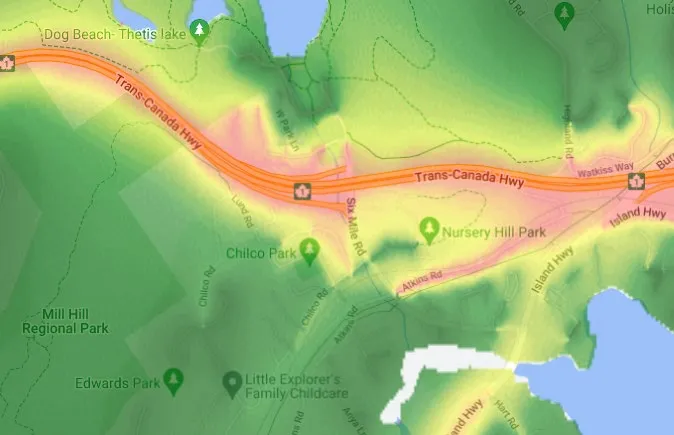
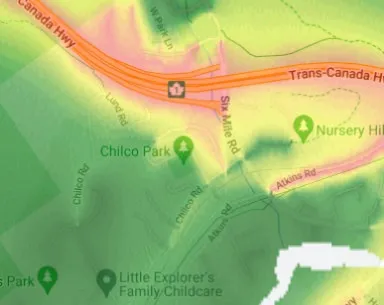
What do the experts say?
- Erica Walker, Assistant Professor of Epidemiology, Public Health, Brown University on how noise impacts our fight-or-flight response "Your heart rate increases. You begin to sweat. You begin to release these hormones that get you prepared for battle — or prepare you to run away from it,“
- Ongoing stress leads to adverse health outcomes
- Hugh Davies, a professor in the School of Population and Public Health at UBC has been studying link between cardiovascular disease and exposure to noise
- Shown that heart disease rates are higher for people living in noisy neighbourhoods (2012)
- Same results are shown for diabetes as well as reduced birth weight among babies born whose mothers lived in noisy areas
- Shown students exposed to airplane noise (60 – 85 dBA) show lower reading scores
What is safe?
- World Health Organization “recommends average noise exposure to road traffic should be no louder than 53 decibels during the day, and not more than 45 decibels at night.
- Most residential streets rate around 53 decibels
- Thetis Vale ranges from low 40s to high 80s
What are we asking for
- Place sound-absorbing, buffering barriers along Thetis Vale/Nursery Hill/Highway 1
- Ensure future planning takes into account population growth along highways and noisy corridors and requires developers to implement noise mitigation strategies