Town of View Royal, Statement of Significance, 2010: ST. COLUMBA ANGLICAN CHURCH
A heritage statement of significance for St. Columba Anglican Church, outlining its historical, architectural, and cultural value to the community.
Town of View Royal, Statement of Significance, 2010
ST. COLUMBA ANGLICAN CHURCH
40 High Street, View Royal, British Columbia
Owner: Anglican Synod Diocese of British Columbia Legal Description: Lot 1, Plan 45466, Section 9, Esquimalt Land District Architect: A. Gaunt (St. Columba Church) Date(s): 1912 (construction); 1913 (small addition)
Description of Historic Place
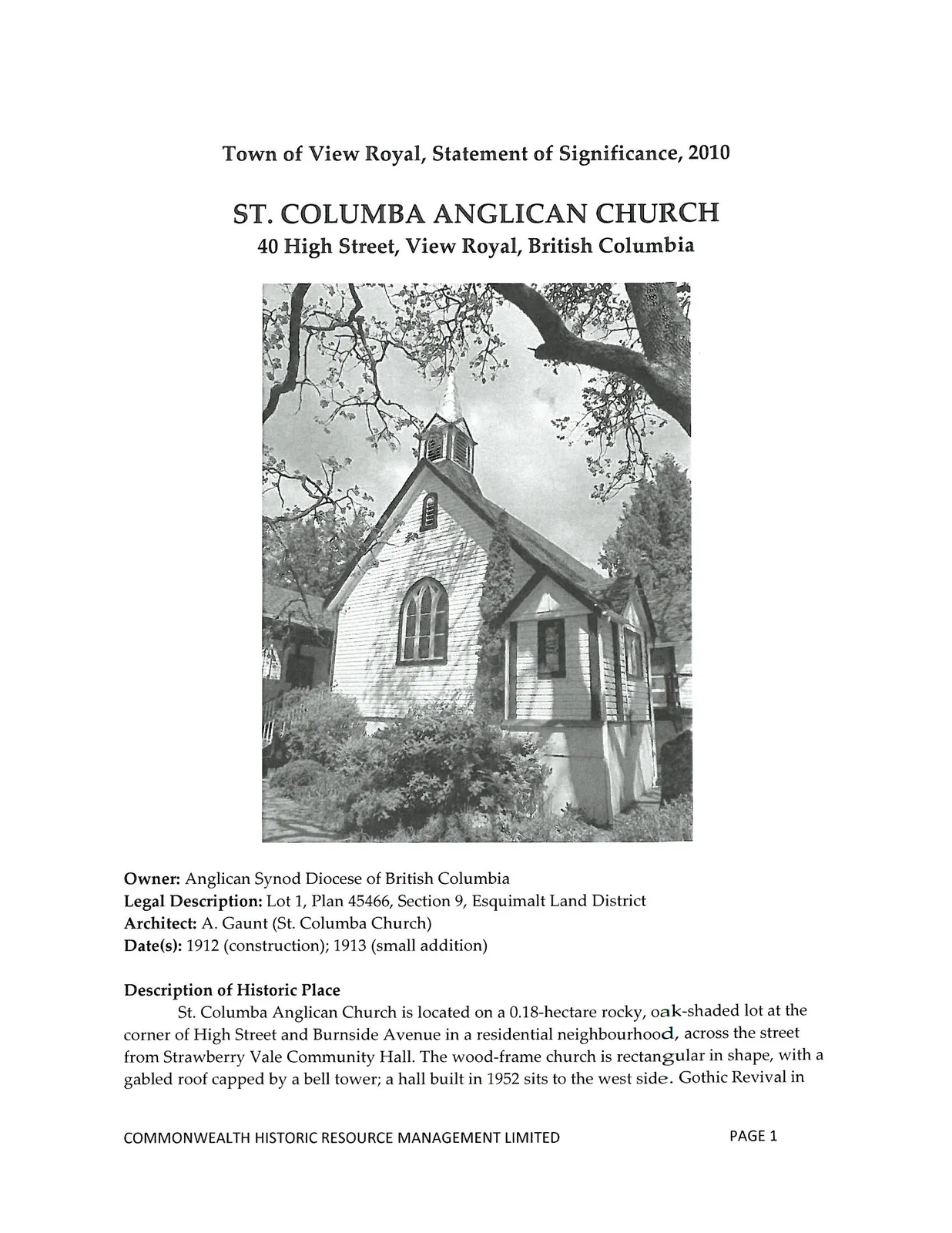
St. Columba Anglican Church is located on a 0.18-hectare rocky, oak-shaded lot at the corner of High Street and Burnside Avenue in a residential neighbourhood, across the street from Strawberry Vale Community Hall. The wood-frame church is rectangular in shape, with a gabled roof capped by a bell tower; a hall built in 1952 sits to the west side. Gothic Revival in style, the church exhibits a vertical emphasis in many of its design features. The interior of the church is notable for its dark wood high-hipped board ceiling, wainscoting, and especially its stained glass windows, four of which depict the Irish St. Columba.
Heritage Value of Historic Place
St. Columba Anglican Church, built in 1912, is of historic value as a tangible expression of Victoria’s explosive growth between 1901 and mid-1912, known as the “Edwardian Era Boom”. This date represented the apogee in property speculation and investment, fueled by a flood of immigrants arriving after the Boer War (1899), anticipated completion of the Panama Canal (shortening travel and shipment time from Europe), and the arrival or expansion of railways and streetcars extending west and north from Victoria. Suburban land speculation and development reached outward from Victoria during this boom into sparsely occupied farming areas like Strawberry Vale, now part of View Royal. The construction of St. Columba Church represents this boom period of growth and development.
St. Columba Anglican Church also possesses cultural-social value. It is located across the street from a community hall built in the 1890s, and together these buildings formed the social nucleus of the Strawberry Vale settlement. A parish hall, constructed in 1952, provided an additional place for church activities—suppers, concerts, various fund-raising events—and a place for neighbours to socialize. The opening of the a nursery school in the basement of the church in 1974 (and continuing to this day) has contributed to St. Columba’s social value for Strawberry Vale neighbours.
Character-Defining Elements
- siting on a rocky outcropping, shaded by large Garry oaks and evergreen trees, located across the street from Strawberry Vale Community Hall;
- Continuous use as a church;
- wood-frame construction sheathed with horizontal drop siding, with windows surrounded by plain wooden molding;
- Gothic Revival design elements, including a steeply pitched roof, square bell tower with tall octagonal spire and pointed-arch windows;
- four stained glass windows of St. Columba and one each of the good shepherd, Ruth, and the Madonna; and
- interior dark wood ceiling boards, wainscoting, and window and door molding
Document Images
(1)