APPENDIX A - What We Heard: CRD Engagement on Sheltering and Supportive Housing
A report summarizing findings from regional engagement sessions with social services, non-profits, and people with lived experience regarding homelessness.
What We Heard: A Report of the Findings from the Capital Regional District’s Engagement on Sheltering and Supportive Housing
Capital Regional District | December 2025

Introduction
The Capital Regional District (CRD) engaged CitySpaces to update the Regional Housing Affordability Strategy (RHAS), last revised in 2018. The 2018 RHAS established five goals, each supported by objectives and strategies to guide the CRD’s housing initiatives:
- Build the right supply of housing across the spectrum;
- Sustain a shared regional response to existing and emerging housing demand;
- Protect and maintain existing non-market and market rental housing stock;
- Develop and operationalize a regionally coordinated housing and homelessness response; and
- Create community understanding and support for affordable housing developments.
Anticipated in 2026, the updated RHAS will identify opportunities and actions to advance housing affordability across the Capital Region, reflecting changing housing market conditions, recent developments in housing legislation, and evolving housing needs and priorities.
As a component of this work, the Community Social Planning Council of Greater Victoria (CSPC) led a comprehensive regional engagement process focused on the CRD's potential role in advancing regional sheltering and supportive housing objectives. This focused engagement process responds to a CRD Board motion directing staff to undertake regional engagement to determine the CRD’s potential role in advancing regional supportive housing and sheltering objectives. This report summarizes findings from the engagement process, which occurred between September 23rd and October 10th, 2025.
The engagement process included two streams with distinct participant groups:
- representatives from the homelessness serving sector and individuals/groups with lived and living experience of homelessness, and
- local governments and strategic partners.
A letter invitation was also sent to First Nations within whose territories the CRD conducts its business, inviting their participation and outlining engagement opportunities.
The report is composed of three main sections:
- The first section provides an overview of the engagement process for both streams of engagement.
- The second section summarizes the findings from all engagement activities, highlighting recurring themes and issues.
- The final section of the report highlights feedback regarding the potential role of the CRD and actions that the regional district could take to support a coordinated regional approach to addressing homelessness.
Engagement Approach & Overview
Engagement with Social Services and Non-profit Housing Providers
From planning, to invitation, to execution and analysis, the engagement with social service and non-profit housing providers was grounded in a commitment to equity, accessibility, and inclusion. Recognizing that factors contributing to homelessness are complex and deeply personal, particular attention was taken to include the voices of those with lived and living experience of homelessness, ensuring that their involvement was handled respectfully and reflected how they wanted to contribute. To better understand the scope of homelessness across the region, it was also vital that the engagement was inclusive and encompassed the entire CRD, rather than focusing on areas where services for homeless people are concentrated. The engagement emphasized regional representation to capture the many ways that homelessness is experienced within the different municipalities and electoral areas that encompass the CRD.
PARTICIPANT RECRUITMENT AND SELECTION
The invitation list composed of Indigenous and non-Indigenous social service organizations and non-profit housing providers, health (both government and community), housing services including services offered through local First Nations, and lived and living experience individuals/groups. Other groups who were invited included community and residents’ associations, housing and related departments at local universities, and Business Associations (see Appendix 1 for a full list of those invited).
ACCESSIBILITY AND DESIGN
A facilitated workshop design was used with small groups to ensure that everyone had ample opportunity to comment. To increase accessibility, capture diverse perspectives, and ensure a regional approach to engagement, the in-person workshops were held in different locations across the region - Langford, Esquimalt, Sidney, and one workshop was held via Zoom for those who could only attend online. Additionally, in-person workshops were held in central locations in the different communities in spaces that are well known and accessed by groups from inside and outside of the area (e.g., Mary Winspear Centre in Sidney and Salvation Army Connection Point Church and Resource Centre in Langford).
Workshops were facilitated (one facilitator per table) by members of the CSPC research team. To ensure that each participant had the opportunity to contribute to their full extent, each group had a maximum of 7 participants with an average of 5 participants per table across workshops. A roundtable format was used, allowing each participant the opportunity to comment on every question. Time permitting, participants were provided with two opportunities to respond to each question. The same questions were used at each workshop, with a slight condensing of the questions for the online workshop to allow for a shorter duration.
Questions were open-ended and developed in collaboration between CSPC, CitySpaces, and the CRD, with aim of understanding current gaps in services and housing, barriers to access, and opportunities for the CRD to provide regional leadership (see Appendix 1 for the list of questions). Extensive notes were taken by the CSPC research team member at each of the tables to capture comments. For those who were unable to attend a workshop, responses were received by email.
To aid in the analysis of findings, the notes from the workshops and email responses to questions were entered into a spreadsheet organized by question and separated by workshop. The analysis involved going line-by-line through each response to identify themes within and across questions.
VALUING THE VOICES OF PEOPLE WITH LIVED AND LIVING EXPERIENCE
In recognition of their time and expertise, honoraria were provided to participants with lived or living experience of homelessness who attended one of the workshops. Although many individuals with lived and living experience of homelessness opted to attend one of the facilitated workshops, recognized groups representing people with lived and living experience in the community were also given the option to have a dedicated workshop facilitated by CSPC staff scheduled at a time and location convenient for them. The People with Lived and Living Experience (PWLLE) Advisory Committee with Victoria Community Action Team requested a dedicated workshop (see page 13 for a detailed summary of the workshop with the PWLLE Advisory Committee).
ATTENDANCE AND EVALUATION
To assess meaningful engagement, we evaluated the workshops based on several factors. 78 participants attended over five engagements (10 were provided via email), representing diverse sectors from across the region, including healthcare workers, lived experts, housing providers, chamber of commerce representatives, health and housing providers from local nations, and frontline social service providers. 31 participants (46%) completed feedback forms. The majority of participants reported satisfaction with the workshops. Dissatisfaction was reported due to skepticism about the usefulness of engagement on informing the regional housing affordability strategy update.
Engagement with Local Government and Strategic Partners
A workshop was hosted on October 9th, 2025 in Esquimalt, BC to engage local government staff and strategic partners in understanding the region’s diverse supportive housing and sheltering needs. The workshop also sought to identify ways the CRD could support local government efforts and strengthen coordination across the region.
The workshop brought together local government staff and strategic partners to:
- Brief participants on the work being advanced by the CRD and explore how it could better support emerging and ongoing challenges related to housing precarity and homelessness.
- Provide an opportunity to hear directly from BC Housing and the CRD about the Alignment Project, a shared federal-provincial initiative related to homelessness and how participants could inform efforts across the region.
- Gather feedback on a proposed regional approach to supportive housing and sheltering for inclusion in this report, providing insight into regional challenges and opportunities to strengthen coordination.
The workshop was held in partnership with BC Housing, who contributed expertise and perspectives on homelessness at the provincial level. Ultimately, the workshop helped inform this report by examining ongoing efforts to improve regional coordination of programs and services for those experiencing, or at imminent risk of homelessness.
PARTICIPANT RECRUITMENT AND SELECTION
Invitations were sent to CAOs and staff from the CRD’s 13 member municipalities, 3 electoral areas, BC Housing, the Ministry of Housing and Municipal Affairs, the Homeless Encampment Action Response Team (HEART) and Homeless Encampment Action Response Temporary Housing (HEARTH) working groups, the Canadian Alliance to End Homelessness, and other provincial partners (see Appendix 1 for a list of invitees).
ACCESSIBILITY AND DESIGN
The CRD, BC Housing, CSPC, and CitySpaces delivered a presentation on the RHAS Update process, engagement activities to date, and related initiatives. Following the presentation and questions and answer period, the workshop shifted to small group discussions.
Consistent with the design used in the workshops with the homelessness serving sector and people with lived and living experience, a facilitated workshop design was used with small groups (maximum 8 people) to ensure that all participants had ample opportunity to contribute. Workshops were facilitated (one facilitator per table) by members of the project team and guided by a list of questions (see Appendix 1 for a list of questions). A roundtable format was used, allowing each participant the opportunity to comment on every question. Extensive notes were taken by the facilitators at each table to capture comments.
To aid in the analysis of findings, the notes from the workshop were entered onto a spreadsheet and organized by question. The analysis involved a detailed review of each question to identify themes within and across questions.
ATTENDANCE AND EVALUATION
There were 44 participants at the workshop with local government and strategic partners on October 9th, 2025. Feedback forms were placed at each seat for participants to complete at the end of the engagement. Feedback collected through post-workshop surveys indicated that participants found the session valuable. Comments highlighted a desire for future sessions to include a broader range of interest-holders, including Island Health, housing and service providers, First Nations, and other provincial ministries whose work intersects with housing such as the Ministries of Health, Justice, and Child and Family Development.
Summary of Findings
This section summarizes the main themes from both streams of engagement. Where possible, direct quotes from participants have been included.
Engagement with Social Services and Non-profit Housing Providers
HOMELESSNESS AS A REGIONAL ISSUE
Sector representatives described how homelessness looks across the region in similar and distinct ways, ranging from “hidden” to “highly visible.” They identified a spectrum of people experiencing hardship, from those who are couch surfing or sleeping in their vehicle, to people on the street with obvious unmet mental health and/or substance use needs. For them, homelessness looks like “people sleeping in doorways” or sheltering in encampments in wooded outlying areas, and increasingly, homelessness in the region consists of people sleeping in their vehicles. Although participants recognize that visible homelessness is newer in some areas, they view homelessness as a big problem in every area of the region, even areas that weren’t previously impacted.
It is generally understood by participants that people experiencing homelessness will gather near important services and community supports, like emergency shelters and other sources of material aid. As a result, homelessness and other associated issues tend to be more concentrated and visible in certain areas, such as downtown Victoria. Participants acknowledged that the highly charged political nature of homelessness contributes to the problem of uneven distribution of services and housing in the region, perpetuating and sustaining this problem, making resolutions more difficult to achieve.
PRIORITY POPULATIONS
Participants identified a diversity of different demographics as being ‘priority populations’ in critical need of housing and support. There is not one singular priority population, but many populations of concern, which reflects the breadth and urgency of the current situation. To meet their diverse support requirements, a range of service and housing options are needed in the region to provide adequate support.
Although participants did not coalesce around one priority population, there were populations consistently identified as being disproportionately impacted by homelessness and requiring urgent, targeted support. Across the region, feedback overwhelmingly pointed to the following population groups, which are presented in no particular order:
- Youth and seniors
- Individuals experiencing mental health or substance use challenges
- People living with disabilities
- Indigenous peoples and communities
- Men, women, and gender-diverse individuals - with a call for housing that meets their specific needs
- Newcomers and immigrants
- People experiencing housing or financial instability
- Individuals impacted by institutional gaps and system failures
For a summary of feedback pertaining to each population group listed, please see Appendix 2.
GAPS IN REGIONAL SERVICES
Participants identified multiple intersecting gaps in regional services and housing, highlighting areas where both services and housing need to be enhanced.
The main gaps in services are outlined below with examples of the types of suggested services.
- Geographic Gaps – Current clustering of services in downtown Victoria or other urban areas; need more service options in outlying communities.
- Ensuring a Focus on Prevention – Rent Banks, rental subsidies and grant programs, support for people who are precariously housed to keep them housed, etc.
- Access to Basic Health and Social Services – Access to primary care, mental health services, hygiene services, ID services, access to bus passes.
- High Acuity Services for People Living with Complex Needs – Specialized services, more mental health and social services to respond to higher acuity needs.
In terms of gaps in housing, a recurring theme within the workshops was the need for housing to go beyond just being shelter. It must integrate supports tailored to the specific needs of various populations, such as youth, families, and people in recovery for substance use challenges. Current shelter options are often temporary, overcrowded, and/or unsuitable for the diverse situations people face, contributing to increased vulnerability and continuing the cycle of homelessness. Expanding the variety of housing options across the region would help ensure that people’s unique needs can supported in their home community and provide “spaces where they feel safe, supported, and at home.”
Through the engagement sessions, participants identified the following types of housing needed:
- Housing with wraparound and integrated supports: Homes that provide comprehensive, coordinated services to meet residents’ diverse needs.
- Youth housing: Options for young people aging out of care systems, as well as dedicated housing for young mothers.
- Family housing: Affordable units with three or more bedrooms to accommodate larger families.
- Housing for people in recovery or actively using substances: A diverse range of housing options to support individuals at different stages of recovery and substance use.
- Diverse and scalable housing options: Smaller-scale shelters and housing integrated throughout various communities in the region, designed to support different populations.
- Alternative housing models: Development of tiny homes and conversion of unused or vacant buildings into housing and shelter spaces.
For a summary of participants' input regarding each housing group listed above, please see Appendix 3.
BARRIERS TO ACCESSING HOUSING
Across the region, individuals experiencing homelessness and housing precarity face a range of barriers that hinder their access to housing. Although participants identified many barriers, the following barriers were discussed most frequently:
- Technology: Limited access to phones, computers, and the internet makes it difficult for individuals to obtain information, complete applications, and connect with housing and related services.
- Applications and service navigation: Complex application processes and fragmented service systems create confusion and make it difficult to access supports.
- Financial barriers: For people receiving Persons with Disabilities (PWD) or income assistance, the shelter allowance is insufficient to cover housing costs. Additionally, individuals with low incomes often face rental discrimination from landlords.
- Shelter and support program rules: Restrictions on guests, pets, and personal belongings in shelters and supportive housing often deter individuals from accessing or remaining in these spaces.
- Safety and stigma: Many individuals avoid shelters due to concerns about personal safety and the stigma associated with homelessness and service use.
- Discrimination and social exclusion: Systemic discrimination and social isolation further limit housing opportunities.
For summary of participants feedback related to each type of barrier listed above, please see Appendix 4.
VISUALIZING THE REGION IN 10 YEARS
When asked what they would like the region to look like in 10 years, participants prioritized the wellbeing and safety of all community members, especially the most vulnerable, through a more cohesive and responsive system of services. Housing is no longer in crisis, but serves as a stable foundation for health, dignity, and inclusion. As one participant noted, “It will be harder to identify problems… because we’ve addressed them.” Homelessness is rare, and people have access to a spectrum of different housing options - supportive, transitional, permanent, culturally appropriate, affordable housing, and it is available across all municipalities.
At the core of this vision is a strong sense of community. Walkable, connected neighborhoods, shared living models, and welcoming public spaces foster connection and safety, ensuring youth, elders, families, and newcomers are supported and included. Cross-sector collaboration between governments, non-profits, schools, and developers, ensures housing is treated not just as a basic need, but as a foundation for a healthy, equitable, and thriving society.
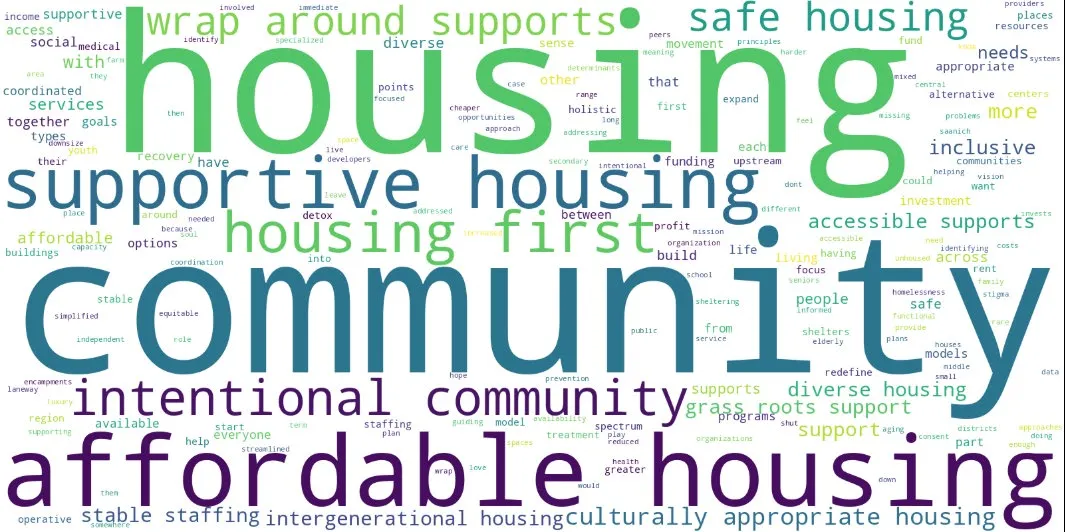
WORKSHOP WITH PERSONS WITH LIVED AND LIVING EXPERIENCE (PWLLE) ADVISORY COMMITTEE
Participants who attended the PWLLE Advisory Committee workshop expressed concerns around stigma regarding the term ‘lived experts,’ noting that it can oversimplify the diverse identities and expertise of individuals.
Among those in attendance were a not-for-profit executive director, a singer/songwriter, peer supporters and outreach workers, parents, paramedics, a master's student, a Metis senior and business owner, all of whom bring valuable lived experience alongside professional and personal expertise.
Participants identified several critical gaps and barriers in the current sheltering and supportive housing system, including the lack of detox centers and truly supportive housing options. Current-state sheltering and supportive housing were described as warehousing rather than promoting wellness. They emphasized that individuals are not choosing to live on the street over accessing shelter, rather they are refusing unsafe conditions.
One participant noted, “tents should not be illegal. If you don't have walls, you aren't safe.” Concerns include how jail has become housing, but criminal records make accessing supportive or permanent housing increasingly difficult. Overall, participants stressed that sheltering and supportive housing must be safe, dignified, and accessible - no one should have to choose between incarceration or the street to escape bad weather or receive care.
When asked about the future state of sheltering and supportive housing, participants envisioned supported, mixed-income buildings where, with the support of case management, individuals who are ready may be integrated into the community. They emphasized the importance of on-site, accessible services tailored to residents’ needs. Rather than a one-size-fits-all approach, future housing models should reflect the diversity of those they serve. Suggestions included culturally appropriate housing for Métis community members, and housing that allows partners, pets, and guests to live or visit together. Currently, identification is required for visitors, yet many individuals lack ID or face restrictions due to criminal records, creating additional barriers to connection and support.
Regarding the CRD's role in sheltering and supportive housing, participants shared that a range of housing options across the region would be ideal. Diversity here includes geographic location as well as varying levels of support. More specifically, there was an emphasis on mental health, substance use, and disability support. Participants suggested that every municipality should have an extreme weather response program and appropriate sheltering options. We heard that there is a desire for a coordinated effort to support people’s transition through the housing continuum, citing challenges with missing BC Housing calls thus extending time on the waitlist. The participants stated that individuals with lived and living experience should consistently be centered in decision-making processes, stating, “nothing about us without us.”
POTENTIAL CRD ROLES AND ACTIONS
Building a Coordinated Regional Response
Participants emphasized the need for a coordinated regional approach that extends beyond local government boundaries, supported by political will across all orders of government. Comments regarding political will were often in relation to a coordinated regional response wherein every municipality is doing their part and has an equal sense of commitment to addressing homelessness.
They described a coordinated regional approach as building community and deepening connections across the CRD and reducing stigma through education and increased awareness. For participants, there also needs to be a regional approach to determining where resources are located that results in a more equitable distribution across municipalities. They also emphasized the need for people with lived and living experience to be integrally involved in driving change. Participants identified the importance of collaboration and coordination with both the homelessness serving sector and with other levels of government. Each area and the key suggested actions are discussed separately below.
Collaboration and Coordination with the Homelessness Serving Sector
For those on the frontlines, there is an urgent need to bring together organizations across the capital region to develop a more coordinated, collaborative approach to addressing homelessness and housing precarity. Participants identified the need to develop shared definitions and goals, something that is currently lacking, and to build on what exists to consolidate efforts across organizational mandates and jurisdictions.
To bridge the disconnect between services and build capacity in important ways, participants identified two interconnected actions requiring regional leadership:
- Assisting with service navigation by improving information-sharing about available services and housing across the region. To support system navigation, participants highlighted the need for a coordinated, real-time regional database of services and housing that is accessible, efficient, and through which we’re better able to identify gaps in services and plan for future needs. Such a tool would improve system navigation, decrease administrative burden, and reduce the need for unhoused people to repeatedly tell their stories.
- Creating a regional approach to data collection, use, storage, and access. Participants talked about how the sector could use regional guidance and support that unifies all organizations through a coordinated approach to tracking and sharing data across the CRD. Other benefits of a coordinated response to data collection and usage noted by participants include being able to use data to educate and inform decision-making and determine the effectiveness of housing and services approaches.
Collaboration and Coordination with Other Levels of Government
For participants, a coordinated regional response to homelessness must unify and guide accountable action across all orders of government. As a bridge between local communities and higher levels of government, participants view the CRD as being well positioned to act in a coordinating role between levels of government.
Representatives of the homelessness serving sector identified 3 main actions requiring collaboration and coordination with other levels of government:
- Bringing everyone together and ensuring that all jurisdictions have the same goals, are tracking the same types of information, and are working across municipal boundaries to find shared solutions and build consensus. In practical terms, it also means a regional approach to siting services and housing, including temporary ‘extreme weather responses,’ that locates resources more evenly throughout the region. Participants also noted how a coordinated regional plan for locating services and housing should be aligned with municipal housing targets set by the province.
- Working closely with all levels of government to get more housing built. For participants, a primary aim of the coordinated regional response would be to advance multiple forms of housing for different income groups through diverse partnerships (public, private, and non-profit sectors) anchored by provincial and/or federal government support. This includes increasing the supply of deeply affordable (Rent Geared to Income) units for people with very low incomes.
- Participants discussed a tension between the urgency of need for housing that demands immediate action and the reality that even well placed, supported projects are not guaranteed. For them, a coordinated regional approach should plan for where resources are located, ensuring that every municipality is addressing a piece of the bigger problem. Participants noted that in siting much needed but contentious resources, it may be necessary to support the province to institute paramountcy.
- Working with provincial or federal government to address systemic problems including known cracks between service systems. A coordinated regional response would bring together different systems of government services – hospitals, psychiatric units, correctional institutions, and child welfare, to find ways to prevent discharges into homelessness. For participants, it can be as simple as notifying an organization that someone is being released before they show up at their door, allowing a chance to prepare. They also talked about the importance of working with government funders to lessen the administrative burden on service and housing providers through more streamlined reporting, paperwork, and data entry.
Engagement with Local Government and Strategic Partners
HOMELESSNESS AS A REGIONAL ISSUE
Local government and strategic partners who attended the October 9th workshop described homelessness across the region in different ways, many of which mirror the comments from the engagement with the homelessness serving sector. They describe homelessness as being most visible in downtown Victoria, where individuals who experience complex, overlapping support requirements - mental health, substance use, various disabilities - are more concentrated due to where services are primarily located. Workshop participants also noted that effective responses require coordination across intersecting services such as health, food security, and employment.
The participants talked about how communities are seeing rising housing precarity among seniors, many of whom are being renovicted or priced out after decades of stable tenancy. Some face re-entering a rental market where prices have tripled, while others are unable to downsize because mortgage and rental costs have both increased. This group is particularly vulnerable to sudden displacement and isolation. They also highlighted the rise of vehicular homelessness which includes individuals living in cars, trailers, and motorhomes for a range of reasons - from displacement and unaffordable rents to lifestyle choice or seasonal work. An example noted by a participant was a campground that houses a large number of permanent residents, despite being zoned as a campground. The populations they see being affected include seniors, students, and farm workers, many of whom live in rural or peripheral areas far from services. In these cases, “services” often extend beyond more traditional supports to include recreation centres for showers, food banks, and community kitchens.
Several communities also reported increased visibility of homelessness in parks, along regional trails, and near bottle depots. Some participants noted that the clean-up on Pandora Avenue in Victoria displaced individuals westward along the Galloping Goose and E&N corridors. Small, recurring encampments have formed where fire departments and bylaw officers regularly check on residents. Other participants from municipalities identified “resident homeless” individuals known to local police and fire services, who often avoid shelters due to safety concerns. While alcohol use is common, drug use is less prevalent. Participants emphasized the importance of addressing homelessness at this more manageable stage, when local staff in some municipalities still know and can support individuals before it escalates to the scale seen in Victoria’s downtown core.
In rural and semi-rural areas, many residents live in unpermitted secondary suites or accessory dwellings. Municipal staff from these areas highlighted a moral and regulatory dilemma: enforcing safety and zoning compliance risks displacing tenants, while non-enforcement poses liability concerns. This reflects a broader tension between maintaining safety standards and preventing further homelessness.
POTENTIAL CRD ROLES AND ACTIONS
Local government and strategic partners were asked to reflect on three key questions related to the potential roles and actions of the CRD.
- What is the CRD's role in supporting local government with supportive housing guidelines?
- What is the CRD's role in monitoring progress on homelessness and housing precarity?
- What is the CRD's role in coordinating a regional response to homelessness and housing precarity?
The discussions highlighted an urgent need for a more coordinated, transparent, and well-resourced regional approach to addressing homelessness in the region.
Participants expressed concern that the current housing and health service systems are not operating as efficiently or cohesively as needed. A recurring concern was the lack of accountability, with local governments often acting independently rather than as part of a coordinated regional response. Participants emphasized the importance of a clearly defined mandate that outlines roles and responsibilities across jurisdictions.
There was strong interest in the CRD taking on a more proactive leadership role, one that not only convenes partners and stakeholders but also removes systemic barriers, enables meaningful action, and fosters ongoing regional alignment. However, it was also noted that the CRD lacks the service authority and resources required to support an enhanced role in advancing collaborative and coordinated homelessness intervention. Several key themes emerged where the CRD could play a meaningful role in supporting a coordinated response. These include data collection and sharing, capacity building for housing and homelessness infrastructure, and fostering alignment across services and levels of government.
Data Collection, Integration, and Transparency
Participants emphasized the need for a more coordinated approach to collecting, using, and sharing data across the region. They highlighted the importance of leadership in developing and overseeing a regional data system - one that reduces duplication, improves transparency, and helps paint a clearer picture of housing need and homelessness across municipalities. It was expressed that this would support more consistent tracking of housing assets, service flows, and progress on homelessness targets, including the implementation of a By-Name List and integration of shelter and Point-in-Time (PiT) count data.
Local government and strategic partners also highlighted the importance of making data accessible to the broader community, including local First Nations and municipalities, while respecting Indigenous data sovereignty and ensuring informed consent. A well-managed data system would support decision-making, enable service coordination, identify priority populations, and strengthen advocacy efforts. Ultimately, improved data infrastructure would reduce administrative burden, support coordinated access and enhance transparency in housing and homelessness systems.
Capacity Building – Housing and Infrastructure Development
Participants identified a significant need for regional coordination to help local governments, particularly smaller or rural ones to advance housing development. Many local governments face challenges around internal capacity, land readiness, and connection with development partners. Feedback given noted that the CRD’s ownership of the Capital Region Housing Corporation (CRHC) uniquely positions it to lead or support non-profit housing development across the region. Participants identified areas where the CRD could assist such as offering technical support, facilitating partnerships, and helping make projects viable, especially where municipalities can offer land but lack development expertise.
There was also support for the CRD to play a coordinating role in advocating for shared housing and sheltering targets across municipalities. Participants emphasized the importance of the CRD guiding municipalities in meeting these targets and ensuring that supportive housing is developed equitably and distributed fairly throughout the region. They highlighted the need for municipalities to be better connected and aligned on housing and sheltering goals, enabling them to act collectively and address the broader regional challenges together.
Capacity Building – Homelessness Serving Sector
The participants highlighted the strain on the homelessness-serving sector and emphasized the need for greater coordination, consistent funding, and workforce support. Organizations are doing critical work under pressure, often without a clear picture of what others in the system are doing or how to align efforts.
The participants saw an important role for the CRD in helping to coordinate services, which they noted could include the CRD acting as a liaison between service providers, municipalities, and funders. More integrated work with health and social services, particularly Island Health, was also seen as necessary to build a regional system where housing, health, and other services are better integrated. Participants also identified a need to support workforce development and align standards of practice. Identifying hosting regional trainings and setting up shared administrative functions and other efficiencies as crucial supports. While these suggestions fall outside the CRD’s current mandate, participants viewed regional government as one of the few entities positioned to convene and influence cross-sector collaboration. Their feedback underscores both the sector’s need for stronger supports and the importance of clearly defining the roles and responsibilities of all organizations involved.
The importance of regional leadership and working together to leverage the knowledge and expertise within the region to the benefit of every municipality was also highlighted by participants. It’s necessary because many local governments are unsure how to engage or what role they can play. A coordinated regional response would help clarify roles and provide direct assistance to local governments in understanding and building local response that is part of a broader regional strategy.
Regional Alignment
Participants overwhelmingly called for a unified regional strategy that aligns efforts across municipalities, service providers, and levels of government. Many described current efforts as fragmented, with varying goals, policies, and funding applications across jurisdictions. There was strong interest in CRD convening regular meetings to bring partners together, review progress, and ensure a shared understanding of regional goals and priorities. Some suggested annual or bi-annual reviews of guidelines and outcomes to support accountability and course correction.
In building a coordinated regional response to homelessness, participants stressed how political will is key. Without political buy-in across the region with strong governance structures and shared leadership, progress risks being siloed or stalled completely. Participants supported a CRD role in creating space for intergovernmental collaboration, integrating planning and policy efforts, and advocating for stronger coordination with provincial ministries, particularly around zoning, service delivery, and funding. While municipalities differ in capacity, participants suggested that the CRD could help tailor roles based on readiness and resource levels, making involvement in a regional response more accessible.
To empower jurisdictions to respond, local governments also need clear expectations and a clear mandate from the province to act confidently and be able to attract funding. For participants, the ability to build the political will needed to support a coordinated regional response starts with a shared sense of responsibility and ability to act that comes from a clear provincial mandate.
Building a Coordinated Regional Response
Across the two streams of engagement, there was a high degree of alignment between themes despite the different perspectives represented. Resoundingly, strategic and local government partners, social services organizations, and non-profit housing providers see a role for the CRD developing and leading a coordinated regional response to homelessness and housing precarity.
Bringing together the themes across all workshops, there are three main roles where regional leadership is most needed in the development of a coordinated regional response:
- regional alignment;
- strengthening regional service and housing capacity; and
- developing regional information and data systems.
Each role and the required actions are discussed separately below.
Regional Alignment
As a foundational component of a successful coordinated regional approach, participants talked about the need to harness and build political will and promote accountability among partners wherever possible. A key action required for this to happen is a clear mandate for local governments to respond to issues of homelessness so they can act decisively and attract funding. Advocating for a clear mandate from the province is a necessary step towards creating regional alignment because without it, local governments are unable to move forward with confidence.
For participants across the workshops, regional alignment also means that all jurisdictions and potential partners are unified through a coordinated “whole of region” response that fosters cohesion around a shared purpose and understanding of the interconnected nature of the region. Achieving regional alignment requires a focus on relationships, building partnerships, and ensuring that the right people are at the table. For participants, it also involves establishing shared goals and priorities and supporting municipalities to meet provincial housing targets and other housing guidelines. In a coordinated and regionally aligned response, there is also an approach to determining where services and housing are located that considers the potential impacts within and between jurisdictions.
Strengthening Regional Housing and Service Capacity
Given the CRD’s role in the development and operation of housing through ownership of the CRHC and as the Community Entity for Reaching Home – Canada’s Homelessness Strategy, the participants view the CRD as being well positioned to lead a coordinated regional response. For participants, having well positioned and aligned organizations with the experience to lead a coordinated regional response, increases the potential for success.
The participants recognize the need for any coordinated regional response to reflect the unique situation in each jurisdiction that takes levels of experience in dealing with complex health and social issues like homelessness and the toxic drug crises into account, as well as existing infrastructure. Participants identified the need to take a broad view of the system of housing and services to understand what currently exists and what can be built on or scaled up through a coordinated regional response.
They also highlighted the need for better coordination in the homelessness serving sector with a focus on breaking down service silos, identifying and reducing redundances, and determining if resources are being used most effectively. Homelessness interventions are guided by programs, policies, and regulations established by provincial and federal governments, with the responsibility falling on communities and the homelessness serving sector to implement them. However, these challenges are too large and complex for non-profit organizations to address alone. To begin dismantling structural barriers, a “whole-of-government” approach is needed. This high level of collaboration is essential to improving conditions and outcomes at the community level.
Enhancing Regional Information and Data Systems
Participants across engagements identified the need for higher level coordination to improve service system navigation that includes the development of some kind of database to ensure there is easily accessible, up-to-date information on services and housing to aid in navigating the interconnected web of resources across the region. Participants noted that such a tool would also be helpful in identifying gaps in service and housing. Having a more cohesive, navigable system of homelessness services is an important part of establishing a Coordinated Access System which is as a community-wide system that streamlines the process for people experiencing homelessness to access housing and supports. A strong Coordinated Access System follows the principles of housing first and shares real-time data to facilitate the housing process.
The other related action is developing a coordinated regional response to collecting, sharing, and using data. Participants talked about how a coordinated regional ‘data’ response needs to build regional capacity for collecting, sharing, and using data. Different sources of homelessness data need to be brought together, including the Point in Time Homelessness Count, and there needs to be overarching guidance on what data to collect, how the data fits together, and how it will be used to inform a coordinated regional approach. Once again, participants identified a potential action being the creation of some type of shared database for regional data. For participants, an important part of a regional data strategy is evaluation and the development of program evaluations and related metrics to help demonstrate the efficacy of interventions and the impacts of a coordinated regional approach at different levels. A data-informed approach is needed to convince funders, government and other strategic partners, and the public of the impact, including potential cost-benefit analyses.
Table 1. Summary of Main Roles and Associated Actions
| Role | Actions |
|---|---|
| Regional Alignment | • Harness and build political will and promote accountability among partners • Advocate for clear mandate for municipalities to act • Create a unified “whole of region” approach that foster cohesion around a shared purpose • Focus on relationships and building partnerships • Establish shared goals and priorities • Support for municipalities to achieve provincial housing targets • Look for opportunities to leverage/pool resources • Use a regional approach for siting resources |
| Strengthening Regional Service and Housing Capacity | • Build a coordinated regional response that reflects the unique situation in each jurisdiction • Leverage successes and what’s working regionally • Breakdown service silos, reduce redundances, and ensure resources are being used most effectively • Build on role as Community Entity for Reaching Home |
| Enhancing Regional Information and Data Systems | • Improve system navigation and support the development of a Coordinated Access System • Develop an accessible, up-to-date database of housing and related services across the region • Develop a coordinated regional response to data collection, sharing, and use that includes a shared database • Use a data-informed approach to evaluation to demonstrate impact at different levels |
Concluding Comments
The purpose of this engagement process was to collect input from the homelessness serving sector, people with lived and living experience, local governments within the region, and strategic partners on the CRD’s potential role in advancing regional supportive housing and sheltering objectives.
Overall, participants underscored the need for a more coordinated, streamlined, and responsive system of housing and services across the region. Advancing this will require a regional approach with collaboration across sectors, communities, and levels of governments. Engagement illuminated opportunities for the CRD to play a role in supporting a coordinated, regional response to homelessness, working with other orders of government to:
- Advocate for a clear Provincial mandate outlining the roles and responsibilities of local governments in addressing homelessness;
- Advance political alignment across local governments, service providers, and other partners through a "whole of region" approach that establishes shared goals and priorities and recognizes the interconnected nature of the region;
- Coordinate across the homelessness serving sector to break down service silos and support a more streamlined, efficient system; and
- Enhance and align regional data systems to support the homelessness serving sector's ability to navigate resources and identify service gaps.
This scoped engagement process is one component of the ongoing work to update the RHAS, which is anticipated to be completed in 2026. The findings outlined in this report are intended to inform how the Strategy responds to the needs of those at risk of or experiencing homelessness, with a focus on outlining the CRD’s role in supporting municipal efforts and enhancing coordination across the region. Additional RHAS engagement focused more broadly on regional housing affordability is currently underway and will be summarized in a separate report later this year.
APPENDIX 1: Engagement Overview
Invite List for Workshops with the Homelessness Serving Sector
List of Invited Groups for the Homelessness Serving Sector Engagement
- Aboriginal Coalition to End Homelessness Society (ACEH)
- Alliance to End Homelessness in the Capital Region (AEHCR)
- Anawim Companion Society
- AVI Health and Community Services
- Beacon Community Services
- Beecher Bay (Sc'ianew) Nation – Health and Housing
- BGC South Vancouver Island
- Bridges for Women Society
- Burnside Gorge Community Association
- Cadboro Bay Residents Association
- Capital Region Housing Corporation (CRHC)
- Children's Health Foundation of Vancouver Island
- City of Victoria
- Community Living BC
- Connections Place
- Cordova Bay Association for Community Affairs
- Cornerstone Youth Society
- Destination Greater Victoria
- Elizabeth Fry Society
- Fairfield Community Association
- Falaise Community Association
- Federation of Community Social Services of BC
- Fernwood Neighbourhood Resource Group
- First Nations Health Authority
- The Foundry Victoria
- Goldstream Foodbank
- Gordon Head Community Association
- Gorge View Society
- Greater Victoria Chamber of Commerce
- Greater Victoria Housing Society
- Greater Victoria Public Library
- Habitat for Humanity Victoria
- Hulitan Family and Community Services Society
- Inter-Cultural Association of Greater Victoria
- Island Community Mental Health Association
- Island Community Services
- Island Health
- Island Metis Family and Community Services Society
- Islanders Working Against Violence
- John Howard Society of Victoria
- Kosapsum (xwsepsum) Nation
- Langford Residents Association
- Laren House Society
- Living Edge Community
- Lookout Housing and Health Society
- M’akola Housing Society
- Malahat (MÁLEXEŁ) Nation
- Margaret Laurence House | Second Stage Housing for Women
- Mental Health Recovery Partners - South Island
- Metis Nation of BC
- Metis Nation of Greater Victoria
- Ministry of Policy Development and Poverty Reduction
- Moms Stop the Harm
- Mustard Seed Family Centre
- Neighbourhood Solidarity with Unhoused Neighbours
- Neil Squire Society
- North Park Neighbourhood Association
- North Quadra Community Association
- Oak Bay Business Improvement Association
- Oasis Society
- Our Place Society
- Pacheedaht (paaʔčiidʔatx̣) Nation – Health and Housing
- Pacific Centre Family Services Association
- Pacifica Housing
- Pauquachin (BOKEĆEN) Nation – Health and Housing
- Peers Victoria Resource Society
- Penelekut (Spune'luxutth) Nation – Health and Housing
- PHS Community Services Society
- Prospect Lake District Community Association
- QomQem Coastal Connections
- Quadra Cedar Hill Community Association
- Quadra Village Community Centre
- Royal Roads
- Saanich Community Association Network
- Saanich Neighbourhood Place
- Saanich Peninsula Chamber of Commerce
- Salt Spring Island Chamber of Commerce
- Salt Spring Island Community Services
- Salt Spring Island Foundation
- Salvation Army ARC
- Sidney Business Improvement Area Society
- Society of St. Vincent de Paul
- SOLID Outreach Society
- Songhees Nation – Health and Housing
- Sooke Region Chamber of Commerce
- Sooke Shelter Society/Sooke Homelessness Coalition
- South Island Prosperity Partnership
- Surrounded by Cedar Child and Family Services Society
- The Cridge Centre for the Family
- The Existence Project
- Threshold Housing Society
- Thrive Social Services Society
- Together Against Poverty Society
- Township of Esquimalt
- Tsartlip (W̱JOȽEȽP) Nation – Health and Housing
- Tsawout (SȾÁUTW̱) Nation – Health and Housing
- Tseycum (W̱SIḴEM) Nation – Health and Housing
- T'Sou-ke Nation – Health and Housing
- Umbrella Society
- United Way BC
- United Way Southern Vancouver Island
- University of Victoria
- Veterans House Victoria
- Victoria Brain Injury Society
- Victoria Business Improvement Area (Downtown Victoria Business Association)
- Victoria Cool Aid Society
- Victoria Disability Resource Centre
- Victoria Division of Family Practice
- Victoria Downtown Residents Association
- Victoria Foundation
- Victoria Immigrant and Refugee Society
- Victoria Native Friendship Centre
- Victoria Rainbow Kitchen Society
- Victoria Tenant Action Group
- Victoria West Community Association
- Victoria Women in Need Community Cooperative (WIN)
- Victoria Women's Transition House
- Victoria Youth Empowerment Society
- Westshore Chamber of Commerce
- WorkBC
- YM/YWCA of Greater Victoria
- Young Parents Support Network
Invite List for Regional Coordination Workshop
List of Invited Groups: Local Government + Strategic Partner Workshop on October 9th, 2025
- Aboriginal Coalition to End Homelessness
- BC Housing
- BOḰEĆEN First Nation
- Canadian Alliance to End Homelessness
- City of Colwood
- City of Langford
- City of Victoria
- Cool Aid Society
- District of Central Saanich
- District of Highlands
- District of Metchosin
- District of North Saanich
- District of Oak Bay
- District of Saanich
- District of Sooke
- Housing, Infrastructure and Communities Canada
- Ministry of Housing and Municipal Affairs
- Ministry of Social Development and Poverty Reduction
- Our Place Society
- paaʔčiidʔatx̣ First Nation
- Pacifica Housing
- PHS Community Services Society
- Sc'ianew First Nation
- Songhees Nation
- Spune’luxutth
- SȾÁUTW̱ First Nation
- Town of Sidney
- Town of View Royal
- Township of Esquimalt
- T'Sou-ke First Nation
- Victoria Native Friendship Centre
- W̱SÁNEĆ Leadership Council
- xwsepsum Nation
Homelessness Serving Sector Workshop Questions
- What does homelessness look like in your community? Who are the priority populations?
- What specific actions could the CRD take to improve the situation for people experiencing homelessness or those at risk of homelessness?
- What are the gaps in services (including sheltering and supportive housing) for people experiencing homelessness in your community/for the people you serve?
- What are the barriers to accessing sheltering and supportive housing for people experiencing homelessness in your community/for the people you serve?
- What information or data would best support your organization in informing your work in homelessness services?
- What would you like the region to look like in ten years in terms of housing affordability and sheltering and supportive housing?
Regional Coordination Workshop Questions
- In your community, what does homelessness and housing precarity look like?
- What successes can you highlight in your community?
- What does a coordinated regional response to housing precarity and homelessness look like?
- What role do you see for your community/organization in a coordinated regional response?
- What role should the CRD play in:
- Supporting local government efforts with supportive housing guidelines.
- Monitoring progress on homelessness and housing precarity.
- Coordinating a regional response to homelessness and housing precarity.
APPENDIX 2 Feedback: Priority Populations
1. Youth and seniors
- Seniors- fixed incomes not aligned with cost of living
- Limited senior as well as youth specific housing
- Youth- gaps in support for transition when aging out of care
- Youth- experiencing more hidden homelessness
2. Individuals experiencing mental health or substance use challenges
- Not enough housing and support options to meet people where they are at in their recovery journey
- Greater support options needed for those experiencing domestic abuse and fleeing violence
- Deeper measures of trauma-informed care should be taken in approaches to services and housing systems.
- There are insufficient support measures and still a significant amount of stigma surrounding both mental health and addiction services
3. People living with disabilities
- Need for accessible, medically informed housing for those with high needs and diverse abilities
- physical, cognitive, and developmental disabilities, including traumatic brain injuries, autism, and chronic illnesses were identified as needing considerations when planning supportive housing
- Discharge from medical facilities occur with no appropriate support in place
4. People experiencing housing or financial instability
- More people experiencing homelessness for the first time due to rising costs of living, sudden job losses, and evictions
- Increasing amount of community experiencing hidden homelessness; living in vehicles, tents, or the woods, not just in central urban areas like downtown Victoria but across the entire region, including in more rural areas
5. Individuals impacted by institutional gaps and system failures
- Individuals exiting jail, foster care, hospitals, or other institutional settings face abrupt transitions with little support
- Many experiencing homelessness have become deeply institutionalized and distrustful of systems
6. Men, women, and gender-diverse individuals
- There are not enough shelter options for women, gender-diverse individuals, and non-binary people that are informed and address safety concerns that these populations have in accessing shelters
- Men, particularly vulnerable young white males, are dying on the streets in increasing numbers but are often overlooked due to service prioritization models
7. Newcomers and immigrants
- This population faces challenges with language barriers, documentation issues, and a lack of culturally appropriate services
8. Indigenous Peoples and communities
- Indigenous people are overly represented among those experiencing homelessness
- More culturally safe and Indigenous-led housing initiatives needed
APPENDIX 3 Feedback: Types of Housing and Approaches Needed
1. Youth Housing
- Wrap-around services should be tied to youth housing to prevent chronic adult homelessness
- More second stage and transitional units for youth needed
2. Family Housing
- Safe and appropriate housing needed specifically for young mothers
- Young mothers face barriers to accessing housing due to age requirements on applications, leaving this population vulnerable
- More family-specific shelters are needed to prevent separating families
3. People in Recovery and Still Using Substances
- Diverse options are needed to support people at various stages of substance use and recovery
- Current models often force people to choose between abstinence-based ("dry") and harm-reduction ("wet") environments, with little in between
- People going through withdrawal are often banned from “dry sites” which poses health and safety risks
4. Wraparound and Integrated Supports
- Successful housing must integrate mental health care, substance use treatment, case management, culturally safe services, life skills training, and other wraparound supports
- Longterm solutions must also be imbedded into housing such as clinics, childcare, and access to groceries
5. Need for Diverse and Scaled Options
- More specific housing options needed for various populations
- Non-profit led housing developments
- Low-barrier shelters with fewer restrictions
- Smaller scale shelters and homes spread throughout the CRD
6. Alternative Housing Options
- Expanding development of tiny home villages with both wet and dry options, and spread throughout the CRD
- Converting unused office and commercial spaces into shelters or housing
- Support creative low-cost building materials and techniques
- Updating bylaws to allow more alternative housing models
APPENDIX 4 Feedback: Barriers to Accessing Housing
1. Technology
- Lack of access to phones, computers, internet, and digital literacy keeps people from applying for housing or services
- Devices are frequently lost or stolen for those without fixed addresses
- Digital requirements from provincial and federal systems pose challenges for those with varying digital literacy
2. Applications and Service Navigation
- Application forms are complicated, repetitive, and difficult to access, particularly for those with limited literacy, cognitive challenges, or who are navigating trauma
- Fixed addresses, ID, transportation, and time are barriers to applying to services and housing
- Emphasized need for not-for-profit or outreach workers to help people interpret and navigate these systems
- Austerity measures and cutbacks have reduced office hours, staffing levels, and local access points, making systems feel more distant and less responsive
3. Financial Barriers
- Provincial disability or income assistance shelter allowance is not enough for current rental prices
- Low-income renters, especially first-time renters or youth without references, are routinely denied by landlords
4. Support/Sheltering Challenges
- Supportive housing’s strict rules can be a challenge to many and limit freedom and personal autonomy
- People feel forced into housing that doesn’t reflect their cultural or family needs, such as for multigenerational or culturally appropriate spaces
5. Safety and Stigma
- Violence, substance use, and a lack of privacy can make shelters inaccessible or traumatic, particularly for seniors, families, and gender-diverse individuals who may not feel safe in gendered spaces
- Stigma is attached to supportive housing, which can lead to discrimination when trying to enter market rentals
6. Discrimination and Social Exclusion
- Racism, ableism, and anti-homeless sentiment (NIMBYism) were identified as barriers to accessing shelters, and more permanent housing options
- Individuals with no fixed address, without ID, or with visible mental health or substance use challenges are often excluded and denied housing and support
CitySpaces Offices:
301 – 375 5th Avenue West Vancouver BC V5Y 1J6 604–687–2281
100 – 814 Broughton Street Victoria BC V8W 1E4 250–383–0304

Document Images
(2)