Advancing Child & Youth Well-Being Across the West Shore-Sooke Region: The Business Case for a Dedicated Municipal Leaders’ Advisory Team (MLAT) Coordinator
Comprehensive business case document proposing a regional coordinator role to support child and youth well-being initiatives across seven municipalities.
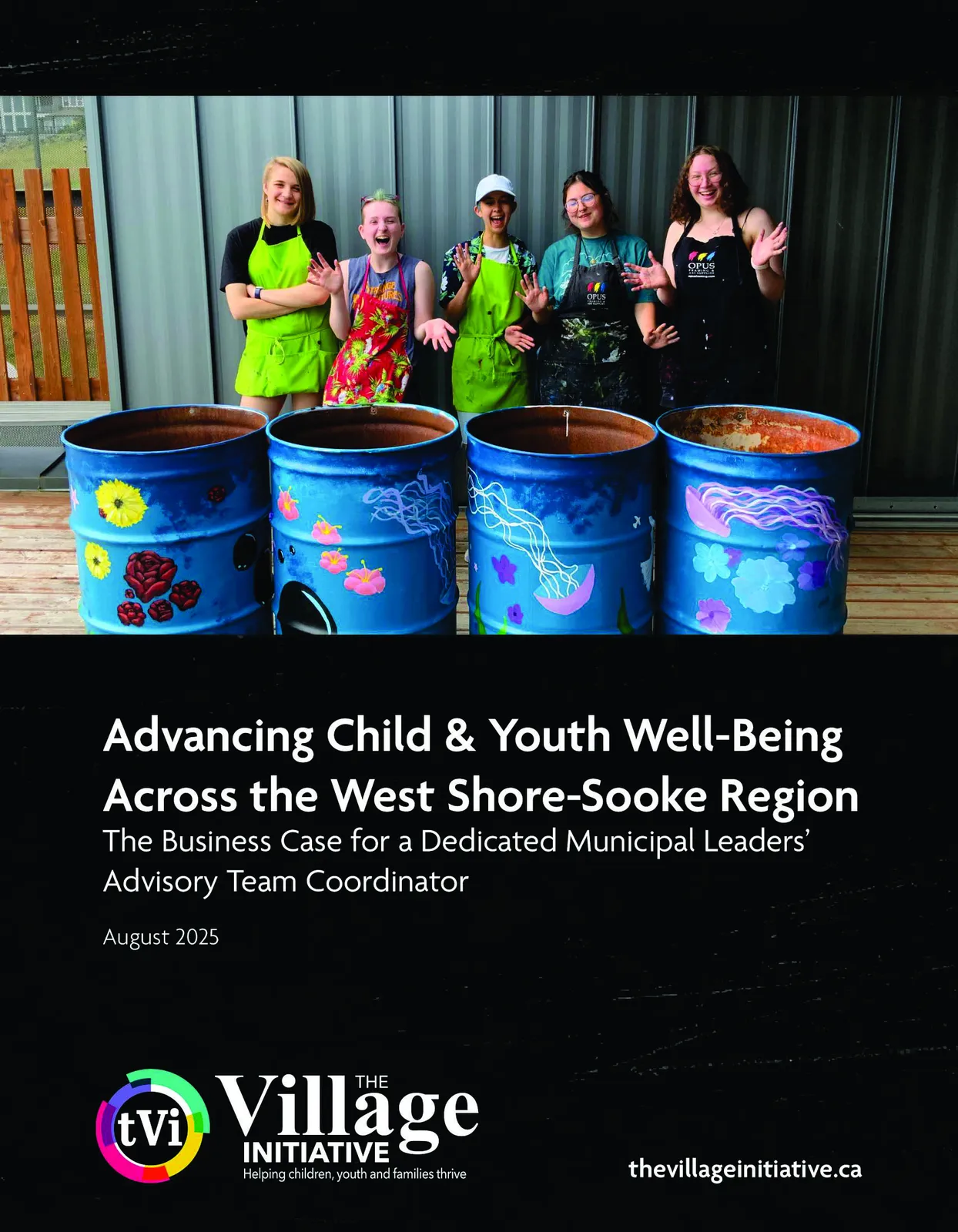
Advancing Child & Youth Well-Being Across the West Shore-Sooke Region
The Business Case for a Dedicated Municipal Leaders’ Advisory Team Coordinator
August 2025
Gratitude
Thank you to our generous sponsors.
Contents
- Executive Summary .............................................................................................................................. 1
- Background and Context ...................................................................................................................... 2
- Problem Statement ............................................................................................................................... 4
- Proposed Solution................................................................................................................................. 5
- Evidence and Rationale ........................................................................................................................ 6
- Benefits .................................................................................................................................................. 7
- Cost Estimate ........................................................................................................................................ 8
- Funding .................................................................................................................................................. 9
- Governance and Oversight ................................................................................................................. 9
- Contributions from Other Key Partners ............................................................................................. 9
- Potential Risks and Mitigation Strategies ........................................................................................ 10
- Conclusion ........................................................................................................................................ 11 Appendix 1: Draft MLAT Coordinator Job Description .......................................................................... 12 Appendix 2: Opportunities for West Shore-Sooke Municipalities to Collaborate to Improve Youth Well-Being ............................................................................................................................................... 16 Appendix 3: Rationale for Community Social Planning Council (CPSC) to Serve as the Host Organization ............................................................................................................................................ 22
- References ........................................................................................................................................ 24
1. Executive Summary
The Municipal Leaders Advisory Team (MLAT) is a joint, collaborative initiative of seven municipalities— Colwood, Langford, Sooke, Highlands, Metchosin, Juan de Fuca Electoral Area, and View Royal—with active participation from Sooke School District (SD62), The Village Initiative, and the Island Health Population & Public Health Team. The overarching MLAT objective is to work collaboratively across the West Shore-Sooke region to advance the best possible outcomes for children, youth, and families in the Region.
The MLAT is a bold, collective leadership initiative that recognizes that the well-being of West Shore-Sooke children, youth, and families is a shared responsibility that transcends municipal boundaries. Given the inherent challenges in establishing and maintaining collaborative actions across these seven municipalities, the MLAT’s success will depend on a shared resource that provides the clear and consistent mechanism to coordinate, align, and sustain regional action.
This business case proposes that the seven participating MLAT municipalities agree to hire a dedicated MLAT Coordinator to serve as the central resource required to sustain regional action and lead staff support for the MLAT. This individual would play a pivotal role in driving the MLAT’s work forward—ensuring consistency, accountability, and strategic follow-through on the regional actions established by MLAT. Responsibilities would include liaising with municipal staff across the Region, maintaining strong relationships with community partners, preparing meeting agendas and supporting information, identifying opportunities for collaboration, securing funding for MLAT initiatives, tracking and evaluating outcomes, and ensuring progress on shared priorities. A full draft job description can be found in Appendix 1.
The estimated cost for the position is $105,000-115,000, inclusive of employee benefits and employer costs. The Sooke School District has generously committed $15,000 annually for three years to this position. It is proposed that the remaining $100,000 be funded by the participating municipalities, with contributions allocated proportionally based on population size. A three to five-year funding commitment is recommended to ensure the long-term sustainability of the regional collaborative initiatives and allow for the opportunity to evaluate the MLAT’s impact. It is recommended that the position is hosted by the Community Social Planning Council of Greater Victoria, a neutral body whose mission is aligned with the objectives of the MLAT and is strongly interested in providing such backbone support.
Investing in this role now represents a strategic opportunity to enhance child and youth well-being in the West Shore-Sooke region—laying the foundation for young people to thrive, succeed in school, and contribute meaningfully to their communities. This dedicated position will help the Region move from the spirit of collaboration to coordinated action—turning shared priorities into measurable positive outcomes for children, youth, and families.
2. Background and Context
Well-Being of Youth and Children in the Region
The well-being of children and youth is a shared and urgent priority across West Shore-Sooke communities. Consultation with community partners and recent data has illuminated that children, youth, and families living across the Region are struggling in several key measures of well-being. These include:
- Social Connection: Youth in grades 7-12 in the South Island (SI) have experienced a declining sense of belonging to their community, schools, and peers in recent years. One in four SI youth report feeling lonely often or always. These challenges are also being experienced by younger children. For example, grade 6 students in SD62 report lower levels of peer belonging than the provincial average. Moreover, data from the Early Development Instrument (EDI) indicates that there have been meaningful declines in social competence for kindergarten children in the Sooke School District over the period of 2004-2022. Amongst youth, social isolation and loneliness has been linked to poor mental health outcomes such as depression and suicide. On the other hand, positive social connections and feelings of belonging promote psychological well-being.
- Mental Well-Being: In 2023, SI youth in grades 7-12 self-rated their mental health as worse than youth did in 2018 and 2013, indicating a need for urgent action to support youth in fostering strong mental health. One in four SI youth (26%) report having an anxiety disorder, which is higher than the provincial average (22%). Engagement in self-harm has increased over the last decade, with a quarter of youth reporting self-harm within a period of 12 months. Moreover, in 2023, 20% of SI youth did not (or could not) access the mental health supports they felt they required. On average, grade 6 students in the Sooke School District have lower levels of optimism, self-esteem, happiness, and self-regulation (i.e., impulse control) than students of the same age across British Columbia. EDI data also indicates increases in anxious, aggressive, and inattentive behaviour for kindergarten children in the Sooke School District over the period of 2004-2022.
- Hope for the Future: The majority of SI youth in grades 7-12 (64%) are experiencing at least some feelings of despair. SI youth were less likely to feel hopeful about their future in 2023 than they were in 2018, with 17% feeling not at all or only a little hopeful. Almost one third of students in grade 6 in the Sooke School District disagree with the idea that they can make a difference in the world. Importantly, higher levels of hope in youth have been linked to better academic performance and stronger psychological well-being.
There are viable solutions to help address these challenges and improve youth well-being in the West Shore-Sooke Region. Local youth have specifically asked for improved transportation networks across the Region to increase access to key services, schools, and employment opportunities. Youth in the Region have also requested an increase in the number of affordable programs and services, and access to safe and accessible community spaces to connect with their peers.
The Municipal Leaders Advisory Team (MLAT) Initiative
Municipalities have many tools at their disposal to help improve child and youth wellbeing. These tools include providing welcoming spaces for youth to gather, developing a built environment that is conducive to play, creating opportunities for youth to connect with nature, offering robust, youth-friendly transportation options, facilitating opportunities for youth employment, and providing opportunities for youth to engage in community building and planning. West Shore-Sooke municipalities have already prioritized numerous efforts to improve child and youth well-being in areas such transportation, civic engagement, youth-friendly spaces, and recreational opportunities.
The MLAT initiative was launched in partnership with The Village Initiative to build on this work and the efforts of numerous local health and social service agencies. Its primary goal is to identify and act on strategic opportunities where regional collaboration can accelerate progress and deepen impact. Collaborative opportunities available to West Shore-Sooke municipalities for advancing youth well-being in the areas of transportation, employment, civic engagement, access to youth-friendly spaces, physical activity and recreation, and arts and culture are provided in Appendix 2.
In addition to the seven local municipalities, the MLAT initiative benefits from the active engagement of:
- The Village Initiative (TVI): TVI is a regional network of over 70 community service organizations dedicated to improving the lives of children, youth, and families living in the West Shore-Sooke region. Having served the Region for many years, these organizations bring deep insight into local needs and possess a current, nuanced understanding of evolving priorities. They are not only well-versed in available local resources but also serve as assets that can be strategically leveraged to advance the goals of the MLAT.
- Sooke School District (SD62): a co-founder of TVI, serves more than 13,000 students across West Shore-Sooke, SD62 brings a deep understanding of the challenges and opportunities facing local children, youth and families. Their participation ensures that MLAT efforts are aligned with the needs of students and schools.
- Island Health, Population & Public Health (PPH): the other co-founder of TVI, works to promote health, prevent disease, and address the social determinants of health at the population level. PPH is highly committed to improving child and youth well-being across its various geographic areas, including the West Shore-Sooke region. The PPH team is actively providing support and expertise to the MLAT initiative through direct involvement of their Community Development and Healthy Public Policy teams.
With active involvement of the seven municipalities, Sooke School District, Island Health’s PPH team, and other members of TVI’s wide membership of community service organizations, the MLAT initiative provides an important opportunity to transform the state of child and youth well-being in the West Shore-Sooke region.
3. Problem Statement
Initial meetings and mayoral support demonstrate that momentum for the MLAT initiative is strong. Maintaining this momentum and moving toward measurable impact will require the establishment of a common vision, mutually-reinforcing activities, regular communication, and shared measurement and evaluation frameworks. Achieving these conditions requires dedicated coordination support.
A critical component of successful multi-stakeholder teams is the presence of a dedicated staff person who acts as the central point person— responsible for keeping work aligned with shared priorities, maintaining consistent communication amongst partners, ensuring that implementation stays on track, and evaluating outcomes.
This central coordination role is not simply administrative—it is the engine that drives progress, strengthens relationships, and enables accountability across jurisdictions. Without it, communication can become fragmented, priorities may drift, and opportunities for collaboration and learning may be missed.
4. Proposed Solution
A dedicated MLAT Coordinator will provide the critical backbone functions that will allow the MLAT to effectively and efficiently achieve its objectives. Key job functions of the MLAT Coordinator would include:
- Act as the central point of contact and trusted liaison for all aspects of the MLAT actions—ensuring alignment across partners, keeping work on track between meetings, and providing continuity through election cycles or staff changes.
- Monitor existing and proposed municipal policies, explore opportunities for collaboration, and advance potential regional actions.
- Establish and maintain strong relationships with other MLAT partners —including local community service providers, The Village Initiative, the Island Health PPH team, and Sooke School District — to harness the full power of collective cross-stakeholder impact.
- Secure ongoing financial support for MLAT initiatives and enhance the Region’s capacity to act on shared priorities.
- Coordinate with staff across municipalities, which will eliminate duplicative efforts and create efficiencies that directly support the implementation of MLAT action items.
- Establish a shared measurement and evaluation plan to capture the success of MLAT actions and use new data to inform adjustments to the MLAT’s strategy.
- Prepare meeting agendas and supporting material for senior management, municipal staff, and members of Councils at the direction of the MLAT.
To ensure that the MLAT can effectively identify, enact, and evaluate the effectiveness of its regional initiatives, we recommend that the MLAT Coordinator is funded as a multi-year 1.0 FTE position, optimally for five years. Appendix 1 provides a detailed draft job description.
5. Evidence and Rationale
There is convincing evidence that hiring a dedicated Coordinator is essential for the success of regional collaborative efforts like the MLAT.
Analyses of prior multi-stakeholder initiatives highlight that backbone support—provided by a full-time staff member with coordination, facilitation, and relationship-building skills—is a key element of successful multi-partner initiatives. Reviews of these initiatives caution that failing to adopt this necessary infrastructure is major reason why some collaborative initiatives are not able to achieve their objectives.
Further research shows that a well-supported coordination role helps drive progress across several domains: creating a shared vision and strategy, engaging in effective coordination activities, establishing shared measurement practices, building public will, advancing policy, and mobilizing funding. Dedicated coordination also improves accountability by enabling regular goal setting, progress tracking, and transparent reporting to partners and decision-makers.
For example, the Children and Youth Planning Table of Waterloo Region (CYPT) is a long-standing partnership of service providers, researchers, planning bodies (including the cities of Waterloo, Kitchener, and Cambridge), and funders dedicated to improving child and youth well-being in the Waterloo area of Ontario. To coordinate and advance their work, CYPT employs dedicated backbone staff that “drive initiatives forward and strategically knit efforts together.” These staff play a critical role in facilitating communication between partners, chairing working groups, leading community engagement, guiding the strategic direction, mobilizing resources, and managing administrative needs. As noted in the CYPT’s 2024 Annual Report, these backbone staff provide “essential support for the work of the collective.” With this dedicated support, the CYPT has been able to collect and provide actionable data on youth well-being to key member organizations (e.g., Waterloo Regional Policing Services), fund numerous youth-led projects, engage youth voices to identify priorities, and bring together stakeholders across sectors to advance youth-identified priorities such as free transportation.
In summary, research and real-world examples highlight that backbone support staff are not optional – they are foundational to achieving results and sustaining multi-partner initiatives like MLAT.
7. Benefits
In the context of the MLAT, hiring a MLAT Coordinator to serve as the central point person will generate a range of high impact benefits:
- Enhanced Collaboration: A dedicated Coordinator will ensure that opportunities for collaboration are systematically identified, discussed, and acted upon. This will enable the participating municipalities in the MLAT to engage in meaningful action that leads to tangible outcomes for their constituents.
- Enhanced Operational Efficiency: Centralized coordination will reduce duplications across municipalities and streamline communications. This will ease burdens on senior municipal staff members and local Council members.
- Improved Sustainability: As a dedicated, shared staff member, the MLAT Coordinator will add value to each municipality by providing consistency during election cycles and staff turnover. This will allow Council members and staff to easily stay up to date with the MLAT initiative, preventing lost time.
- Stronger Relationships with Community Partners: A dedicated Coordinator will have the capacity to develop strong and sustainable relationships with key community partners, including the Island Health PPH team, Sooke School District, and other Village network members —ensuring effective alignment across sectors, which is necessary for the implementation of MLAT priorities.
- Cost Savings: Sustaining progress on child and youth well-being through a successful MLAT process could generate long-term savings for the Region by reducing demand on costly social services.
- Stronger Accountability: the MLAT Coordinator will facilitate regular goal setting, performance tracking, and outcome reporting. This will ensure that all municipalities remain accountable to their MLAT commitments, which will improve the impact of regional collaborative initiatives. Outcome reporting will also allow municipalities to transparently report on progress to their constituents and celebrate successes.
- Improved Child and Youth Well-Being Outcomes: Most importantly, investing in the success of the MLAT by hiring a MLAT Coordinator provides the best chance of achieving meaningful progress on key child and youth well-being priorities across the Region.
8. Cost Estimate
The estimated cost for the MLAT Coordinator is $105,000-115,000 per year, including salary, benefits, and overhead. A general breakdown of these costs is presented below.
Estimated Total Annual Cost:
| Budget Item | Estimated Cost (CAD) |
|---|---|
| Salary | 85,000-95,000 |
| Benefits | 17,000 |
| Equipment/Training | 3000 |
| Total Estimated Cost | 105,000-115,000 |
The Sooke School District has generously committed $15,000 annually for three years to this position. It is proposed that the remaining $100,000 be funded by the participating municipalities, with contributions allocated proportionally based on population size. This results in the following contributions should all participating municipalities support the proposal:
| Municipality | Population Size- Statistics Canada 2021 | Contribution/year for 3-year period beginning April 1/2026 |
|---|---|---|
| Langford | 46,584 | $46,699 |
| Colwood | 18,961 | $19,008 |
| Sooke | 15,086 | $15,123 |
| View Royal | 11,575 | $11,603 |
| Metchosin | 5,067 | $5,079 |
| Highlands | 2,482 | $2,488 |
| Total | 99,755 | $100,000 |
Investing in the MLAT Coordinator now represents a strategic opportunity for municipalities to foster long-term community well-being and economic vitality. Youth who are socially connected, hopeful, and supported through coordinated services are more likely to be academically engaged, emotionally resilient, and active contributors to their communities. These positive outcomes can translate into reduced demand for municipal services such as policing, bylaw enforcement, and public space maintenance, while enhancing community safety and cohesion.
By supporting the success of the MLAT initiative through the hiring of a dedicated Coordinator, municipalities can proactively strengthen cross-sector collaboration, promote early intervention, and ensure that children and youth have access to the supports they need to thrive. This investment not only improves outcomes for young people but also helps municipalities make efficient use of public resources and avoid the higher costs associated with reactive service delivery.
9. Funding
The Coordinator would be funded through all seven involved municipalities based on a calculation of 50% population size and 50% property assessment value.
10. Governance and Oversight
It is recommended that the Coordinator be embedded within a neutral organization that has agreed to host the role: the Community Social Planning Council of Greater Victoria (CSPC). CSPC is a non-partisan, regionally focused organization with over 90 years of experience working collaboratively with all levels of government, the health and social services sectors, and individuals with lived experience across the Capital Region. The Council is community-led and dedicated to advancing social and health-related priorities. Its deep connections and proven track record in leading community initiatives make it a well-positioned and mission-aligned host for the MLAT Coordinator role (Appendix 3 provides more detail).
The Coordinator would act on the guidance of the MLAT. On a day-to-day basis, the Coordinator would report to the Executive Director of the Social Planning Council. Updates to all Councils would be delivered bi-annually.
11. Contributions from Other Key Partners
As described, there are several key partners that are invested in the success of the MLAT initiative. These include The Village Initiative network of community organizations, including Sooke School District and the Island Health Population & Public Health team. One example of tangible contributions of these partners include:
Island Health Population and Public Health Team, from whom the following in-kind support will be provided:
- 15 – 20 hours per month of dedicated capacity and support from the Community Health Promoter for the Capital Region (valued at ~$10,144 per annum)
- Additional support as needed from other Island Health colleagues
Specific contributions from the Island Health PPH team may include providing and interpreting local health data, offering evidence and assistance with policy development, reviewing the potential equity impacts of new policies and programs, navigating PPH resources and services, and providing other support as requested by the MLAT.
12. Potential Risks and Mitigation Strategies
The impact of the MLAT Coordinator will depend on a thoughtful and well-defined governance structure. One key risk is financial instability, particularly if one or more municipalities withdraw support in future years. To mitigate this, a multi-year funding commitment should be ratified by all participating councils, with supplementary funding sources—such as grants—explored to provide contingency support. A related risk is staff retention. Embedding the position within the Community Social Planning Council of Greater Victoria helps address this by offering a stable work environment, mission-aligned colleagues, defined benefits, and a clear reporting structure. These elements contribute to the long-term sustainability and attractiveness of the role.
Another risk involves differing expectations among municipalities regarding the Coordinator’s scope and responsibilities. To ensure alignment, a detailed job description (Appendix 1) and work plan will be developed under the direction of MLAT, with oversight and regular performance reviews conducted by the host organization. Bi-annual updates will be provided to the MLAT to maintain transparency and accountability.
Finally, the Coordinator may face challenges navigating the diverse priorities of the seven municipalities. Hosting the position in a neutral organization, rather than within a single municipality, allows the coordinator to maintain impartiality. A Memorandum of Understanding will further support this neutrality by outlining shared objectives, decision-making protocols, and conflict resolution mechanisms.
13. Conclusion
Municipal governments play a critical role in supporting the well-being of children, youth, and families. They deliver essential services, promote equitable access to resources and opportunities, and help create safe, supportive environments for young people to thrive. Through regional collaboration and engagement with the Sooke School District, Island Health’s Population & Public Health team, and other members of The Village network, the MLAT initiative offers an important opportunity to strengthen child and youth well-being across the Region. To realize this potential, hiring a dedicated MLAT coordinator is essential. This central coordination role will provide the leadership, alignment, and continuity required to transform shared priorities into meaningful, lasting outcomes for children, youth, and families throughout the Region.
Appendix 1: Draft MLAT Coordinator Job Description
Municipal Leaders Advisory Team (MLAT) Coordinator for Child and Youth Well-Being
PURPOSE AND OBJECTIVE
The MLAT Coordinator is the central point person and dedicated backbone support for the Municipal Leaders Advisory Team (MLAT)—a collaborative initiative of seven municipalities (Colwood, Highlands, Langford, Metchosin, Port Renfrew/Juan de Fuca, Sooke, and View Royal). The Village Initiative, Sooke School District, and Island Health’s Population & Public Health (PPH) team are also active participants in the MLAT. The MLAT’s overarching goal is to advance the best possible outcomes for children, youth, and families across the Region through coordinated regional action.
This role is embedded in the Community Social Planning Council of Greater Victoria. Reporting to the Executive Director of the Community Social Planning Council, the MLAT Coordinator plays a vital leadership and coordination role. This includes supporting the planning, implementation, evaluation, and communication of MLAT initiatives across jurisdictions and stakeholder groups. The Coordinator will drive forward collaborative efforts, reduce duplication, build shared regional priorities, and sustain progress on MLAT priorities.
Travel between sites will be a requirement of this position.
KEY RESPONSIBILITIES
- Act as the central point of contact and trusted liaison for all aspects of the MLAT actions—ensuring alignment across partners, keeping work on track between meetings, and providing continuity through election cycles or staff changes.
- Monitor existing and proposed municipal policies, explore opportunities for collaboration, and advance potential regional actions.
- Prepare meeting agendas and supporting material for senior management, municipal staff, and members of Councils at the direction of the MLAT.
- Establish and maintain strong relationships with other MLAT partners —including local community service providers, the Village Initiative, the Island Health PPH team, and the Sooke School District— to harness the full power of collective cross-stakeholder impact.
- Secure ongoing financial support for MLAT initiatives and enhance the Region’s capacity to act on shared priorities.
- Coordinate with staff across municipalities, which will eliminate duplicative efforts and create efficiencies that directly support the implementation of MLAT action items.
- Establish a shared measurement and evaluation plan to capture the success of MLAT actions and use new data to inform adjustments to the MLAT’s strategy.
REQUIRED QUALIFICATIONS
- Education:
- A Master’s degree in a relevant field such as Public Administration, Public Health, Social Work, Urban Planning, Community Development, or related discipline.
- Experience:
- A minimum of 3 years of experience in coordination, project management, or policy implementation, preferably in a government, public health, or nonprofit context.
- Demonstrated success leading or coordinating multi-stakeholder initiatives, partnerships, or collaborations.
- Experience working with or in municipal governments or other public sector institutions.
Candidates with a comparable combination of education and experience will also be considered.
- Skills:
- Strong organizational, facilitation, and project management skills, including the ability to manage multiple priorities and timelines.
- Excellent verbal and written communication skills, with the ability to prepare briefings, reports, and presentations for elected officials, municipal staff, and community stakeholders.
- Proven ability to build and maintain effective working relationships with diverse stakeholders across sectors and jurisdictions.
- Thorough understanding of the policy making process at the municipal level.
- Ability to interpret local data and scientific information and apply it to policy.
- Proficient at integrating and analyzing qualitative and quantitative data and developing shared measurement and evaluation frameworks.
- Demonstrated understanding of the determinants of child, youth, and family well-being.
- Experience applying equity principles in policy or program work.
PREFERRED QUALIFICATIONS
Alongside the required qualifications, we will prioritize candidates who have:
- Experience working in regional or cross-jurisdictional partnerships, including reporting to more than one governance body.
- Knowledge of West Shore-Sooke communities, municipal structures, and child/youth-serving systems.
- Familiarity with funding proposal development, resource mobilization, and administrative budgeting.
- Understanding of the Collective Impact model or similar cross-sector frameworks.
SKILLS AND ABILITIES
- Strategic Facilitation: Ability to effectively convene and guide group discussions, synthesize information, and help interest-holder groups and systems move towards shared goals.
- Relationship Building: Exceptionally strong at building and sustaining effective relationships with regional community members, interest holders, and organizations. Able to effectively collaborate with urban planners, social planners, transportation planners, healthcare professionals, social development practitioners, and safety, bylaw, and school-based teams.
- Research: Able to find, interpret, and apply scientific information to inform regional priority development and subsequent action items.
- Planning and Implementation: Competent at developing and implementing regional plans, leveraging established planning and resources, setting goals, and monitoring progress.
- Advocacy: Proficient in advocating for regional needs and representing various community and interest holder group interests. Able to apply an equity lens to ensure that MLAT actions address the self-identified needs of vulnerable groups in the Region.
- Problem-Solving: Ability to identify problems, analyze causes, and contribute to the development of effective solutions.
- Leadership: Strong leadership skills to inspire, motivate, and guide interest-holders towards positive change.
- Resource Sharing: Effective at providing information to interest holders regarding relevant programs, services, engagement, and training opportunities to assist in building capacity and reducing duplication efforts among participating organizations.
- Communication Skills: Effective verbal and written communication skills to convey information, build relationships, and foster collaboration.
- Evaluation and Accountability: Proficient at integrating and analyzing data to support the evaluation of regional initiatives.
BENEFITS AND COMPENSATION
This position offers a competitive salary range of $85,000 to $95,000 annually, commensurate with experience and qualifications.
As a certified Living Wage Employer, CSPC is committed to ensuring all staff earn a wage that reflects the true cost of living in Greater Victoria. CSPC also conducts the region’s annual living wage calculations, reinforcing our dedication to economic justice and community well-being.
We offer a comprehensive benefits package that includes:
- Extended health benefits fully covered by the employer
- Monthly transit pass provided to support sustainable commuting
Appendix 2: Opportunities for West Shore-Sooke Municipalities to Collaborate to Improve Youth Well-Being
Collaborative Stages for Advancing Youth Well-Being
West Shore–Sooke municipalities can collaborate at multiple stages—engagement, planning, policy and program development, funding, implementation, and evaluation—to more effectively support youth well-being across the region, in collaboration with community partners. At each stage, there are opportunities to improve efficiency, reduce duplication, and scale up successful initiatives that are already making a difference in individual communities.
- Engagement: Municipalities can jointly engage youth, families, and service providers to understand lived experiences, identify barriers, and co-develop priorities. Shared engagement processes can ensure youth voices are heard consistently across jurisdictions.
- Planning: Collaborative planning allows municipalities to align goals, coordinate timelines, and integrate youth well-being into broader strategies such as transportation, housing, and recreation.
- Policy and Program Development: Municipalities can co-design policies and programs that reflect shared values and regional needs, while leveraging existing models that are already working well in one community.
- Funding: Joint funding applications and pooled resources can unlock larger investments, reduce administrative burden, and support long-term sustainability of youth-focused initiatives.
- Implementation: Coordinated delivery of services and infrastructure—such as transit, trails, or youth programming—can ensure consistency, expand reach, and maximize impact across municipal boundaries.
- Evaluation: Municipalities can share data, track outcomes, and learn from each other’s successes and challenges. A regional approach to evaluation supports continuous improvement and accountability.
By collaborating across these stages, municipalities can build a more cohesive and responsive system that promotes youth well-being and ensures that young people have access to safe, supportive environments in which to thrive.
Specific Opportunities for Collaboration Within Municipal Focus Areas
This section outlines specific opportunities for collaboration to improve youth well-being in the West Shore-Sooke region. These opportunities are organized into key municipal focus areas—transportation, employment, civic engagement, access to youth-friendly spaces, physical activity and recreation, and arts and culture.
These ideas emerged from a preliminary review of existing municipal plans and programs in Colwood, Langford, Sooke, Highlands, Metchosin, the Juan de Fuca Electoral Area, and View Royal. They are intended as a starting point and a resource to support ongoing dialogue and shared exploration among members of the Municipal Leaders Advisory Team (MLAT). Prioritization of these opportunities could be guided by meaningful engagement with West Shore–Sooke youth, as well as input from local community organizations and Island Health’s Population and Public Health team.
Active and Public Transportation
West Shore-Sooke youth have asked for improved transit networks across the Region to increase access to key services, schools, and employment opportunities. This youth-identified need is well-aligned with the efforts of West Shore-Sooke municipalities to enhance transit, reduce congestion, and promote active transportation. Through joint planning, West Shore-Sooke municipalities can ensure safe, youth-friendly connectivity exists both within and between municipalities.
Municipalities can collaborate to engage youth directly in identifying transportation barriers, which may include frequency of service, safety, transit stop locations, or other concerns. With support from The Village Initiative and its network of youth-serving organizations, municipalities can better understand where and when youth are traveling, and what infrastructure or services are needed to support them.
Building on this engagement, West Shore-Sooke municipalities can work together to align land use plans to ensure that trails, bike lanes, and sidewalks are safe, accessible, and connected across municipal boundaries—especially to key destinations such as schools, recreation centers, and employment hubs.
The MLAT could also expand access to existing transportation initiatives, such as Capital Bike’s “Everyone Rides” and “Ride the Road” program. These programs help equip youth with the skills to travel on a bicycle safely and confidently. They are currently offered in some but not all West Shore–Sooke elementary and middle schools.
Finally, the MLAT can play a key role in elevating regional youth transit priorities, ensuring they are reflected in broader planning and advocacy efforts at the Capital Regional District and provincial levels.
Employment Opportunities
Youth in the South Island are experiencing declining levels of hope for their future. Providing employment opportunities that allow youth to develop skills and discover potential career paths may help to improve hope in this population.
West Shore–Sooke municipalities can begin by identifying shared goals for youth employment and aligning them with broader economic development strategies. For example, Metchosin’s focus on agriculture, View Royal’s support for heritage tourism, and Sooke’s interest in attracting low-carbon resilient businesses represent diverse opportunities that, when coordinated, can offer youth a wide range of career pathways across the region.
Building on this shared vision, municipalities can collaborate to develop policies and programs that support youth employment. This could include creating a West Shore/Sooke Youth and Young Adult Employment Hub in partnership with the Westshore WorkBC Centre. The hub would centralize job postings, internships, and training opportunities for youth, post-secondary students, and new graduates, making it easier for young people to access meaningful work experiences in the West Shore-Sooke region.
To support these initiatives, municipalities and partners could pool resources and pursue joint funding applications—such as federal or provincial grants—to expand successful programs like the START Youth Employment and Skills Strategy Program, delivered by the WorkLink Employment Society.
Civic Engagement, Volunteerism, & Leadership
The BC Healthy Communities Child and Youth Mental Well-Being Resource Guide identifies participation in community as a key contributor to youth well-being. Benefits of meaningful participation include a stronger sense of belonging, increased sense of independence and responsibility, enhanced self-esteem, deeper social connections with peers and adults, and a greater sense of purpose and hope for the future. Participation can take many forms, such as involvement in planning and governance, volunteering with local organizations, and developing leadership skills.
Promising initiatives already underway—such as Sooke’s Youth Advisory Committee and/or the Youth Advisory Circle that has been established to support our local Foundry—could be scaled and adapted across the region to strengthen youth participation in civic life. For example, a regional Youth Advisory Council could be established, giving youth from all West Shore–Sooke communities a direct platform to contribute to MLAT initiatives and municipal decision-making. This would help ensure that youth voices are consistently reflected in regional planning and policy development.
In addition, municipalities and partners could collaborate on the creation of a Youth Volunteer Hub—a centralized resource that captures and shares volunteer opportunities across the region. This hub could support youth in finding meaningful ways to get involved, while also helping municipalities and community organizations engage young people more effectively.
Safe, Accessible, and Inclusive Places
West Shore-Sooke youth have expressed a desire for increased access to safe, inclusive, and welcoming spaces where they can connect with peers and adult mentors. Physical spaces play a foundational role in fostering these connections, which are critical to youth well-being.
Regional planning can help identify optimal locations for new youth spaces and opportunities to enhance existing ones. Equity mapping could be conducted to prioritize development in areas with limited program offerings or higher proportions of families facing systematic barriers (e.g., low-income households, newcomers).
Pooling resources across municipalities and partner organizations can strengthen applications for federal and provincial grants to support new space projects. For example, joint efforts could help fund the replacement of the Sooke skatepark or upgrades to existing youth facilities.
The use of existing facilities—such as the Hangout Room in Sooke, After School Drop-In at Emery Hall in Colwood, and The Shore at the Juan de Fuca Recreation Centre—could also be expanded by coordinating hours of access and supporting shared programming across sites.
Physical Activity and Recreation
Data from the Adolescent Health Survey indicates that most youth (81%) in the West Shore-Sooke region are not meeting the Canadian guidelines for engagement in physical activity, which recommends an hour of moderate to vigorous physical activity for youth aged 12-17 years old every day. Physical activity has a range of benefits for youth, including improved physical and psychological well-being.
The MLAT could support collaboration between West Shore Parks & Recreation and the Sooke and Electoral Areas Parks and Recreation Commission (SEAPARC) and other partners to coordinate access to youth recreation opportunities across the region. Planning efforts could include the development of a joint calendar of recreational programs offered by West Shore Parks & Recreation, SEAPARC, and local community groups to improve awareness and access.
West Shore-Sooke municipalities could work together to establish a discounted regional youth recreation pass, building on existing programs such as the regional recreation pass and the L.I.F.E. pass. This would allow youth to access facilities across the region more easily, and could positively benefit youth that are experiencing economic disadvantages.
Providing safe and accessible active transportation routes (e.g., bike lanes, sidewalks) between municipalities is another way to encourage physical activity and improve access to recreation.
Finally, the MLAT could support initiatives such as “Play Streets”, which temporarily closes streets that are not major transportation routes to allow kids to play. This is a way to encourage physical activity and play for children that may not be able to access formal recreational opportunities.
Arts & Culture
Arts & culture activities offer valuable opportunities to engage youth in meaningful ways. These types of activities may be particularly impactful for youth from socially and economically disadvantaged backgrounds. Promoting arts & culture has been identified as a priority by many West Shore-Sooke municipalities.
West Shore-Sooke municipalities could work together to identify regional space and programming needs for youth that are interested in arts and culture activities. The MLAT could also support collaboration among local organizations—such as the West Shore Arts Council, the Juan de Fuca Performing Arts Centre Society, the Metchosin Arts & Cultural Centre Association, and the Sooke Arts Council—to co-develop youth-focused arts programming. Existing festivals, such as the Sooke Music Festival and Colwood’s Lagoon Arts & Culture Festival, could be expanded to include more youth-friendly components.
Finally, the MLAT could help advocate for funding to support youth arts initiatives, including a new theatre in the West Shore, leveraging the CRD’s recently proposed regional theatre funding model.
Conclusion
There are many opportunities for West Shore–Sooke municipalities to work together to support youth well-being. These opportunities span key municipal focus areas such as transportation, employment, civic engagement, youth-friendly spaces, physical activity and recreation, and arts and culture.
This document is intended to assist with initial idea generation and may also serve as a resource for future conversations. By collaborating, municipalities, in collaboration with community partners, can increase efficiency and scale up what already works—leveraging shared resources, knowledge, and successful models to create a stronger, more coordinated regional impact.
Authors
This appendix was authored by: Raquel Burgess, MSc PhD Community Health Promoter, Capital Region, Island Health Population & Public Health (PPH) Team
With input from: Sorcha Collins, MSc PhD, Senior Policy Lead, Healthy Public Policy and Strategy, Island Health PPH Team Matthew McLean, Healthy Communities Coordinator, Island Health PPH Team Jana Cranch, Environmental Public Health Consultant, Island Health PPH Team Neil Arason, Injury Prevention Specialist, South Island, Island Health PPH Team
Appendix 3: Rationale for Community Social Planning Council (CPSC) to Serve as the Host Organization
CSPC’s History and Positioning in the Region
The Community Social Planning Council of Greater Victoria (CSPC) is a longstanding regional umbrella organization for the broader social service sector in the Capital Regional District. With a mission to advocate equity and better quality of life for everyone in the region, CSPC’s work helps to ensure that ongoing and emergent social and health-related issues are well understood, and that our community has the tools needed to develop solutions to these issues. We do this by providing community-based research and engagement processes that bring people together to inform decision-making across all sectors in support of broad-based well-being. We also provide timely, accessible services for low-income households and other marginalized groups that fill key gaps in community resources. Through CSPC’s community-based research and service delivery, we work in close collaboration with local municipalities, member and partner organizations across the health and social services sectors, Indigenous and other impacted communities, and people with lived/living experience.
The benefits of having CSPC serve as the backbone organization for MLAT include:
- CSPC is a neutral, non-partisan, regional organization that has worked collaboratively with all levels of government, the health and social services sectors, and people with lived/living experience in the Capital Regional District for over 90 years.
- CSPC can leverage our extensive experience and connections gained through leading important community initiatives including current and past work in the region (e.g., Complete Communities, administering the Point-in-Time Count for the region for multiple years, updating CRD’s Regional Housing Affordability Strategy) to the benefit of MLAT and children, youth, and families across the West Shore-Sooke Region.
- CSPC is community-led organization whose work touches on all aspects of health and wellbeing for the citizens of the Capital Regional District.
- As a community-led nonprofit with insider knowledge of the systems that affect all of us, we are tapped into the wisdom of the community and build trust and ownership in solutions.
Given our substantial history of community-based research and analysis, policy development, and multi-disciplinary and cross-sector community engagement, CSPC is well positioned to support the MLAT initiative. CSPC’s core leadership including the Executive Director and Chair of the Board of Directors see an important alignment between CSPC’s work and the priorities of the Municipal Leadership Advisory Team (MLAT), and as such, are highly supportive of CSPC providing this role.
CSPC is a certified living wage employer (CSPC does the living wage calculations for Greater Victoria every year), and our staff are provided with extended health benefits that are fully covered by the employer. In addition, staff are provided with a monthly bus pass to support them with their transit.
The coordinator role for MLAT adds to our existing capacity through the addition of a consistent function that is reasonably predictable year-over-year, by strengthening our reach in the West Shore-Sooke region, and through the provision of a unique professional development opportunity for a CSPC staff member.
The reporting structure will be developed in close collaboration with the MLAT and its Executive, including how information will flow on a day-to-day basis and what will go to the whole committee versus members of the Executive.
The position and the MLAT will be set up for success through the following practices:
- Ensuring predictable, regular updates in a format that is most easily received by members.
- Facilitating open and respectful communication, including ensuring that all members have an opportunity for input.
- Sending out information well in advance of meetings to allow time for review.
- Keeping meetings productive and on track and having a consistent format for meetings as well as the minutes from meetings.
11. References
1 Forsyth K, Smith A, Poon C, Peled M. South Vancouver Island: 2023 BC Adolescent Health Survey Results. Vancouver, BC: McCreary Centre Society, 2024 https://mcs.bc.ca/about_bcahs.
2 Human Early Learning Partnership. Middle Years Development Instrument [MDI] Grade 6 report. School District Results, 2024-2025. Sooke (SD62). Vancouver, BC: University of British Columbia, School of Population and Public Health, 2025.
3 Human Early Learning Partnership. Early Development Instrument (EDI) Data Dashboard (School District 62, Wave 8). https://dashboard.earlylearning.ubc.ca/ (accessed July 18, 2025).
4 Parr EJ, Shochet IM, Cockshaw WD, Kelly RL. General Belonging is a Key Predictor of Adolescent Depressive Symptoms and Partially Mediates School Belonging. School Ment Health 2020; 12: 626–37.
5 Almeida IL de L, Rego JF, Teixeira ACG, Moreira MR. Social isolation and its impact on child and adolescent development: a systematic review. Rev Paul Pediatr 2021; 40: e2020385.
6 Loades ME, Chatburn E, Higson-Sweeney N, et al. Rapid Systematic Review: The Impact of Social Isolation and Loneliness on the Mental Health of Children and Adolescents in the Context of COVID-19. J Am Acad Child Adolesc Psychiatry 2020; 59: 1218-1239.e3.
7 Shochet IM, Dadds MR, Ham D, Montague R. School Connectedness Is an Underemphasized Parameter in Adolescent Mental Health: Results of a Community Prediction Study. J Clin Child Adolesc Psychol 2006; 35: 170–9.
8 Lester L, Waters S, Cross D. The Relationship Between School Connectedness and Mental Health During the Transition to Secondary School: A Path Analysis. J Psychol Couns Sch 2013; 23: 157–71.
9 Arango A, Brent D, Grupp-Phelan J, et al. Social connectedness and adolescent suicide risk. J Child Psychol Psychiatry 2024; 65: 785–97.
10 Marraccini ME, Brier ZMF. School connectedness and suicidal thoughts and behaviors: A systematic meta-analysis. Sch Psychol Q 2017; 32: 5–21.
11 Fulginiti A, He AS, Negriff S. Suicidal because I don’t feel connected or vice versa? A longitudinal study of suicidal ideation and connectedness among child welfare youth. Child Abuse Negl 2018; 86: 278–89.
12 Whitlock J, Wyman PA, Moore SR. Connectedness and Suicide Prevention in Adolescents: Pathways and Implications. Suicide Life Threat Behav 2014; 44: 246–72.
13 Arango A, Cole-Lewis Y, Lindsay R, Yeguez CE, Clark M, King C. The Protective Role of Connectedness on Depression and Suicidal Ideation Among Bully Victimized Youth. J Clin Child Adolesc Psychol 2019; 48: 728–39.
14 Jose PE, Ryan N, Pryor J. Does Social Connectedness Promote a Greater Sense of Well-Being in Adolescence Over Time? J Res Adolesc 2012; 22: 235–51.
15 Alvarez CV, Mirza L, Das-Munshi J, Oswald TK. Social connection interventions and depression in young adults: a systematic review and meta-analysis. Soc Psychiatry Psychiatr Epidemiol 2025; 60: 549–62.
16 Yuen M, Wu L. Relationship between school connectedness and psychological well-being in adolescents: a meta-analysis. Curr Psychol 2024; 43: 10590–605.
17 Yang Y, Ma X, Kelifa MO, Li X, Chen Z, Wang P. The relationship between childhood abuse and depression among adolescents: The mediating role of school connectedness and psychological resilience. Child Abuse Negl 2022; 131: 105760.
18 Scarf D, Moradi S, McGaw K, et al. Somewhere I belong: Long-term increases in adolescents’ resilience are predicted by perceived belonging to the in-group. Br J Soc Psychol 2016; 55: 588–99.
19 Oberle E, Ji XR, Guhn M, Schonert-Reichl KA, Gadermann AM. Benefits of Extracurricular Participation in Early Adolescence: Associations with Peer Belonging and Mental Health. J Youth Adolesc 2019; 48: 2255–70.
20 Kashiwabara T, Fujiwara T, Doi S, Yamaoka Y. Association between Hope for the Future and Academic Performance in Adolescents: Results from the K-CHILD Study. Int J Environ Res Public Health 2022; 19: 11890.
21 Marques SC, Gallagher MW, Lopez SJ. Hope- and Academic-Related Outcomes: A Meta-Analysis. School Ment Health 2017; 9: 250–62.
22 Bryce CI, Alexander BL, Fraser AM, Fabes RA. Dimensions of hope in adolescence: Relations to academic functioning and well-being. Psychol Sch 2020; 57: 171–90.
23 Long KNG, Wilkinson R, Cowden RG, Chen Y, VanderWeele TJ. Hope in adolescence and subsequent health and well-being in adulthood: An outcome-wide longitudinal study. Soc Sci Med 2024; 347: 116704.
24 Gunasiri H, Wang Y, Watkins E-M, Capetola T, Henderson-Wilson C, Patrick R. Hope, Coping and Eco-Anxiety: Young People’s Mental Health in a Climate-Impacted Australia. Int J Environ Res Public Health 2022; 19: 5528.
25 The Next 5 Years: A Roadmap to Improved Futures for Youth in Sooke and the West Shore. McCreary Centre Society, School District 62, Island Health, The Village Initiative, 2024 https://thevillageinitiative.ca/wp-content/uploads/2024/03/AHS-Next-5-Years-RoadMap-E-Version.pdf (accessed June 24, 2025).
26 BC Healthy Communities, Vancouver Coastal Health. Child and Youth Mental Well-Being Resources: Information Guide. Vancouver, BC, 2024 https://bchealthycommunities.ca/index.php/child-and-youth-mental-well-being-resources/.
27 Youth Engagement. City Colwood. https://www.colwood.ca/community-services/health-well-being/youth-engagement (accessed Sept 8, 2025).
28 Youth Advisory Committee (District of Sooke). https://sooke.civicweb.net/document/16525/ (accessed Sept 8, 2025).
29 Langford Transportation Planning & Projects. City Langford. 2025; published online March 31. https://langford.ca/residents/infrastructure-projects/langford-transportation-planning-and-projects/ (accessed Sept 25, 2025).
30 District of Highlands Official Community Plan No. 277, 2007. District of Highlands, BC: District of Highlands, 2025 https://www.highlands.bc.ca/sites/31/files/2025-06/277%20-%20Official%20Community%20Plan%20-%20May%2020%2C%202025.pdf (accessed July 18, 2025).
31 Making Waves: City of Colwood Official Community Plan. City of Colwood, BC, 2022 https://colwood.civicweb.net/document/131567/ (accessed July 18, 2025).
32 Official Community Plan (OCP) Bylaw: District of Sooke. District of Sooke, BC, 2023 https://sooke.ca/district-services/departments/development-services/official-community-plan/.
33 View Royal Official Community Plan. Town of View Royal, BC, 2011 https://www.viewroyal.ca/assets/Town~Hall/Bylaws/811%20Offfical%20Community%20Plan.pdf (accessed July 18, 2025).
34 Metchosin Active Transportation Network Plan DRAFT. District of Metchosin, 2024 https://www.metchosin.ca/sites/metchosin.ca/files/2025-02/Metchosin%20Active%20Transportation%20Network%20Plan%20DRAFT%20-%20Dec%2017%202024.pdf (accessed Sept 24, 2025).
35 Active Transportation Network Plan: Capital Regional District Juan de Fuca Electoral Area. Capital Regional District; Bunt & Associates https://www.crd.ca/media/file/juan-de-fucaactive-transportation-network-plan (accessed Sept 24, 2025).
36 Sooke School District Enrolment Continues to Climb. Sooke Sch. Dist. 2023; published online Nov 7. https://www.sd62.bc.ca/news-events/news/sooke-school-district-enrolment-continues-climb (accessed July 18, 2025).
37 Vancouver Island Health Authority. Island Health Population & Public Health 2023-2028 Strategic Plan. Victoria, BC: Vancouver Island Health Authority https://www.islandhealth.ca/sites/default/files/mho/population-public-health-strategy/pph-strategy-plan.pdf (accessed July 11, 2025).
38 Kania J, Kramer M. Collective Impact. Stanf Soc Innov Rev 2011; : 36–41.
39 Turner S, Merchant K, Kania J, Martin E. Understanding the Value of Backbone Organizations in Collective Impact: Part 2. Stanf Soc Innov Rev 2012; published online July 18. https://ssir.org/articles/entry/understanding_the_value_of_backbone_organizations_in_collective_impact_2 (accessed July 14, 2025).
40 DuBow W, Hug S, Serafini B, Litzler E. Expanding our understanding of backbone organizations in collective impact initiatives. Community Dev 2018; 49: 256–73.
41 Children and Youth Planning Table of Waterloo Region: 2024 Annual Report. Children and Youth Planning Table of Waterloo Region, 2024 https://childrenandyouthplanningtable.ca/wp-content/uploads/2025/03/2024-CYPT-Annual-Report-FINAL-tagged.pdf (accessed July 16, 2025).
42 Backbone Team. Child. Youth Plan. Table. https://childrenandyouthplanningtable.ca/backbone-team/ (accessed July 16, 2025).
43 CYPT Groups. Child. Youth Plan. Table Waterloo Reg. https://childrenandyouthplanningtable.ca/groups-2/ (accessed Aug 12, 2025).
44 The Tamarack Institute. The Tamarack Collective Impact Toolkit. https://www.tamarackcommunity.ca/collective-impact-toolkit-backbone (accessed July 14, 2025).
45 Making the Case for Investing in Mental Health in Canada. Mental Health Commission of Canada, 2013 https://mentalhealthcommission.ca/wp-content/uploads/2021/09/Investing_in_Mental_Health_FINAL_Version_ENG_0.pdf (accessed July 14, 2025).
46 Heckman JJ, Moon SH, Pinto R, Savelyev PA, Yavitz A. The rate of return to the HighScope Perry Preschool Program. J Public Econ 2010; 94: 114–28.
47 Wellander L, Wells MB, Feldman I. Does Prevention Pay? Costs and Potential Cost-savings of School Interventions Targeting Children with Mental Health Problems. J Ment Health Policy Econ 2016.
48 Lerner RM. The Positive Youth Development Perspective: Theoretical and Empirical Bases of a Strengths-Based Approach to Adolescent Development. In: Lopez SJ, Snyder CR, eds. The Oxford Handbook of Positive Psychology. Oxford University Press, 2009: 0.
49 Zolkoski SM, Bullock LM. Resilience in children and youth: A review. Child Youth Serv Rev 2012; 34: 2295–303.
50 Maag E, Lou C, Casas M, Daly H, Garriga G, Hunter L. The Return on Investing in Children (Research Report). Urban Institute, 2023.
51 What is effective crime prevention for municipalities? https://ccfsc-cccs.ca/wp-content/uploads/2024/01/CMNCP_AB1_2018_ENG_oct16_digitalAODA.pdf (accessed Aug 11, 2025).
52 Transportation Master Plan Update. City Colwood. https://letstalkcolwood.ca/transportationplan (accessed Sept 24, 2025).
53 Navigating Sooke: Transforming Traffic Challenges into Solutions. Dist. Sooke. https://sooke.ca/district-services/departments/engineering/transportation-master-planning-projects/ (accessed Sept 24, 2025).
54 Transportation Plan & Active Transportation Plan. Lets Chat Langford. https://www.letschatlangford.ca/transportation (accessed Sept 24, 2025).
55 Roads and Transportation. Dist. Highl. BC. https://www.highlands.ca/community-services/roads-and-transportation (accessed Sept 24, 2025).
56 Town of View Royal Launches Update to Transportation Master Plan. Town View R. 2025; published online Sept 10. https://www.viewroyal.ca/EN/meta/new/2025-latest-news/town-of-view-royal-launches-update-to-transportation-master-plan.html (accessed Sept 24, 2025).
57 Bike Courses for All Ages at Capital Bike. 2023; published online Oct 16. https://ibikesmart.ca/courses/ (accessed Sept 22, 2025).
58 Thern E, Munter J de, Hemmingsson T, Rasmussen F. Long-term effects of youth unemployment on mental health: does an economic crisis make a difference? J Epidemiol Community Health 2017; 71: 344–9.
59 Upland Agricultural Consulting. Metchosin Agricultural Area Plan. District of Metchosin, BC, 2024 https://www.metchosin.ca/sites/metchosin.ca/files/2024-09/Metchosin%20Ag%20Plan_FINAL.pdf (accessed Sept 8, 2025).
60 Town of View Royal Strategic Plan 2023-2026. Town of View Royal, BC, 2024 https://www.viewroyal.ca/assets/Home/Whats~New/2024/2024%2003%2012%20DRAFT%202023-2026%20Strategic%20Plan-.pdf (accessed Sept 8, 2025).
61 Community Economic Development Strategy and Action Plan. District of Sooke, BC, 2021 https://ehq-production-canada.s3.ca-central-1.amazonaws.com/171aab3b306466a58bfc992fe38e0576cad2f9c6/original/1643141493/5fe151f9be212ff8f87df382c1e89360_District_of_Sooke_CED_Strategy_and_Action_Plan_-_approved_Dec_13__2021.pdf?X-Amz-Algorithm=AWS4-HMAC-SHA256&X-Amz-Credential=AKIA4KKNQAKIFWFOUYFI%2F20250924%2Fca-central-1%2Fs3%2Faws4_request&X-Amz-Date=20250924T224041Z&X-Amz-Expires=300&X-Amz-SignedHeaders=host&X-Amz-Signature=047ea76fd9b0b5959e02af1d484d941c9e8f202708e9de37ba8f39753dc5df35.
62 START: Skills Training & Readiness for Tomorrow. Work. Employ. Soc. https://worklink.bc.ca/start-program/ (accessed Sept 8, 2025).
63 BC Healthy Communities, Vancouver Coastal Health. Child and Youth Mental Well-Being Resources: Participation. https://bchealthycommunities.ca/wp-content/uploads/2024/11/CYMW_Participation_2.pdf (accessed Sept 11, 2025).
64 Newland LA, Giger JT, Lawler MJ, Roh S, Brockevelt BL, Schweinle A. Multilevel Analysis of Child and Adolescent Subjective Well-Being Across 14 Countries: Child- and Country-Level Predictors. Child Dev 2019; 90: 395–413.
65 BC Healthy Communities, Vancouver Coastal Health. Child and Youth Mental Well-Being Resources: Social Connection & Belonging. https://bchealthycommunities.ca/wp-content/uploads/2024/11/CYMW_Participation_2.pdf (accessed Sept 11, 2025).
66 Hale GE, Colquhoun L, Lancastle D, Lewis N, Tyson PJ. Review: Physical activity interventions for the mental health and well-being of adolescents – a systematic review. Child Adolesc Ment Health 2021; 26: 357–68.
67 Eddolls WTB, McNarry MA, Lester L, Winn CON, Stratton G, Mackintosh KA. The association between physical activity, fitness and body mass index on mental well-being and quality of life in adolescents. Qual Life Res 2018; 27: 2313–20.
68 Biddle SJH, Ciaccioni S, Thomas G, Vergeer I. Physical activity and mental health in children and adolescents: An updated review of reviews and an analysis of causality. Psychol Sport Exerc 2019; 42: 146–55.
69 Financial Support. West Shore Parks Recreat. https://www.wspr.ca/inclusion-support/financial-support (accessed Sept 8, 2025).
70 Play Streets. Soc. Child. Youth BC. https://scyofbc.org/play-streets/ (accessed Sept 23, 2025).
71 Catterall JS, Dumais SA, Hampden-Thompson G. The Arts and Achievement in At-Risk Youth: Findings from Four Longitudinal Studies. Research Report #55. Washington, DC: National Endowment for the Arts, 2012 https://eric.ed.gov/?id=ED530822 (accessed Sept 8, 2025).
72 Arts & Culture. City Langford. https://langford.ca/leisure/arts-culture/ (accessed Sept 24, 2025).
73 Lo MJ. CRD takes step toward regional funding of public theatres. Vic. Times Colon. 2025; published online July 15. https://www.timescolonist.com/local-news/crd-takes-steps-towards-regional-funding-of-public-theatres-10943123 (accessed Sept 12, 2025).