WEST SHORE RCMP FACILITY EXPANSION COUNCIL VALIDATION REPORT
The detailed technical validation report for the RCMP facility, covering scope, budget, and project values.
WEST SHORE RCMP FACILITY EXPANSION
COUNCIL VALIDATION REPORT
DECEMBER 19, 2025
LAND ACKNOWLEDGEMENT
We acknowledge and honour the traditional territories of the Coast Salish, specifically Xwsepsum (Esquimalt), Lekwungen (Songhees), Sc’ianew (Beecher Bay), and the W_SÁNEĆ Peoples represented by the Tsartlip, Pauquachin, Tsawout, Tseycum, and Malahat Nations. We thank them for sharing their beautiful land.

IPD TEAM VALIDATION COMMITMENT
The IPD Team Validation commitment is for the IPD partners to design, construct and deliver the West Shore RCMP Facility Expansion Project. This specifically includes:
- Delivering the project to meet the Conditions of Satisfaction, Base Program and Performance Requirements as outlined herein.
- To deliver this project including site work and commissioning for the integrated new and existing buildings in a manner that prioritizes operational continuity for the RCMP with the anticipated fully operational date of April 2029.
- To deliver this project within the specified IPD Team budget of $87,496,144 including Base Target Costs and Profit costs as outlined herein.
- Agreeing to a joint project leadership and management structure and approach as outlined in the IPD governance herein to accomplish these deliverables.
December 19, 2025
Kinetic Construction Ltd. Bruce Vasarhely
Group2 Architecture Interior Design Ltd. Craig Webber
Stantec Architecture Ltd. Elisa Brandts
WSP Canada Inc. - Structural Kristy Neish
Introba Canada LLP Scott Ghomeshi
Erb Technical Contracting Ltd. David Erb
WSP Canada Inc. - Electrical Jerry Espino
Houle Electric Limited Navid Ramer
Table of Contents
I. EXECUTIVE SUMMARY ... PG. 1
i. Project Background ii. Project Scope Summary iii. Project Budget & Schedule Summary
II. PROJECT HISTORY ... PG. 5
i. Rationale for Facility Expansion ii. Rationale for Delivery Method Selection
III. IPD PROJECT OVERVIEW ... PG. 7
i. IPD Team Organizational Structure & Description ii. Validation Strategy & Approach iii. Project Conditions of Satisfaction v. IPD Team Project Values vi. Key Governance Process Summary
IV. PROJECT EXECUTION PLAN ... PG. 14
i. Commitment to Safety & Environment ii. Operational Continuity Approach
BLOCK PLANS & CONCEPTUAL EXTERIOR RENDERS ... PG. 17
GLOSSARY
Added Value Incentive Items (AVII) These are identified scope items (from Section VIII) that provide measurable additional value to the project beyond the Base Scope. These are identified and agreed upon AVII items. This process is managed by the PMT, approved by the SMT and as such, is subject to the governance outlined in the poly-party agreement.
Allowable Cost (Maximum Allowable Cost) The owner’s maximum project cost afforded to the IPD team, based on the project business case which is the subject of the validation study. This includes all direct design and construction costs typically considered in a project delivery as well as profit and are defined in the Validation Agreement.
Base Program This represents the scope defined by the IPD team as the commitment for the elements that are essential to deliver, confirmed at the completion of the validation process.
Base Target Cost (BTC) The estimated direct project costs determined at the end of Validation, including overhead and project contingency but excluding profits. This establishes the IPD team’s commitment at the end of the Validation phase to deliver the Base Program within the BTC.
Big Room A space where IPD teams work together and all interest holders across the project team can come together through physical and/or virtual co-location and work collaboratively in an environment that is open and transparent. This is intended to stimulate and support communication and dialogue, resulting in greater holistic efficiency and generate work product that is updated in real time, resulting in less rework and waste applied to the project.
Conditions of Satisfaction (CoS) A description of the owner’s criteria for successful project completion, documented in the Validation Agreement as a commitment by the IPD team. These can be overarching statements that summarize the more detailed Base Program narratives and additional performance requirements as outlined in the Validation Report.
Cost Model(ing) A cost model is a shared and transparent conceptual estimate that reflects the team’s current best understanding of what the project should cost, integrating scope, design, risk, means and methods. In Validation, this is intended to guide decisions, maintain alignment and ensure value-driven holistic choices that are ‘Best for Project’. This typically includes a variety of methods depending on the situation. After Validation Agreement, this cost model forms the basis for the IPD Team’s financial management model.
“E” Division “E” Division is the division of the Royal Canadian Mounted Police in British Columbia. It is the largest Division in the RCMP, providing federal and provincial services throughout the province.
Integrated Project Delivery (IPD) IPD is a project delivery model, where the Owner and all key parties including consultants and contractors operate under a single agreement to deliver the project collaboratively. This is a relational contract that includes shared risk and reward parameters, reduced liabilities, joint project management and shared responsibility for all project outcomes. IPD is characterized by transparent working environments that are highly collaborative and innovative, focused on value and delivering what is ‘Best for Project’.
IPD Team (Poly Party Project Team Members) The IPD team is made up of contract poly party members who have placed their profit at risk and have the opportunity for increased profitability, based on project outcome. Other project team members who are not signatory to the poly-party agreement are engaged through appropriate subcontracts or sub-consulting agreements that reflect the appropriate flow-through terms.
Milestone This is a key point on a project’s master schedule that defines the start or completion of a major phase, decision or event. In IPD, milestones serve as shared commitments which are jointly defined, validated, and actively managed by the IPD Team to ensure alignment with all commitments made at Validation Agreement. These provide focus for adaptive and agile planning to allow the team to regain and improve schedule outcomes to achieve the final delivery commitment. Specific milestones are typically selected as achievement events that are used as well for the profit distribution and associated governance for the poly-party members.
Non-Signatory Team Member A company that is participating in the project that is not part of the IPD team. That is, they are not included in the signed IPD agreement placing their profits at risk with shared risk/reward and other terms.
Overhead A reimbursable cost payable to the IPD Team that reflects their corporate non-direct project costs such as rent, executive salaries, and other non-project-specific costs. The amount is most commonly expressed as a percentage or fixed amount, it was established at the outset of the project and is applied to the direct project costs.
Plus/Delta Performed at the end of an activity, such as a meeting, a decision process, a phase or construction event. This is a continuous improvement reflection process that is used to evaluate the activity. Generally, two questions are asked and discussed: Plus: what produced value during this activity? Delta: what could we change to improve the process or outcome?
Poly-Party Agreement Is an integrated form of agreement that is used in IPD which involves more than three project partners (such as the owner, designer, engineers, contractor and major trades). This is a contractual structure that is relevant to project commitment, performance expectations, governance, insurance and other terms.
Profit Pool (Risk/Reward) This is agreed upon IPD Team’s total profit that has been placed at risk, confirmed at the time of Validation Agreement. The profit pool can increase or decrease depending on the actual project cost as compared to the Base Target Cost. Profit distribution occurs through a controlled governance structure and only at pre-determined achievement events if the actual spending is on track to be under Base Target Costs. The profit pool can only be adjusted in select circumstances, such as the incorporation of Owner’s Added Value Incentive Items (AVII) or at the completion of the Warranty Phase of the project.
Programmatic Describing the nature of something happening or executed according to a program, schedule, or method. In architecture, the use of the term programmatic is often utilized to relate to the functional program including the intended purposes of a space, room, or location within a project.
Project Implementation Team (PIT) PITs are used in collaborative working structures to allow for nimble, multidisciplinary groups of project participants to perform work in IPD. They are assigned to specific project needs under the direction of the PMT including areas such as building systems, envelope or site conditions. These provide a flexible structure throughout the IPD project and should be focused according to the project needs. PITs typically include all IPD Team members and expanded members of the Owner’s team and can also involve non-signatory participants.
Project Management Team (PMT) A team made up of representatives from each organization that is a signatory to the poly-party IPD agreement, including the Owner, as specified in the IPD contract. The PMT is charged to provide the joint and collective management and leadership for the project, operating within a collaborative governance structure for the duration of the project to develop the project and achieve the commitments as outlined in the Validation Agreement. PMT responsibilities include management and direction of all project scope, financial, delivery and personnel related aspects as well as guiding and performing all administrative duties. The PMT is responsible to the Senior Management Team (SMT) and provides direction to all Project Implementation Teams (PITs).
Project Objective Includes all Owner requirements, goals, and constraints that the IPD Team must deliver on for the project. This is comprised of the Conditions of Satisfaction, Base Program, Program Requirements, Added Value Incentives Items, as well as the Budget (Base Target Cost plus Profit Pool) and Delivery expectations, which can include construction delivery logistics expectations, operational considerations and other implementation documents. The Project Objective is another term for the Validation Agreement as it reflects all requirements for measuring the Project’s success.
Project Team The totality of all firms participating in the project, regardless of their status in the risk/reward structure. There may be firms working on the project that are not part of the risk/reward structure at any point in the project. These are referred to as non-signatory or the project team. The totality of all the individuals on the team are referenced as project participants. (See also IPD Team and Non-Signatory).
Risk Register A detailed record of all risks that the IPD Team has identified for the project that could potentially impact successful completion within the budget and delivery parameters defined, including probability of occurrence, timing and mitigation actions to respond. These are developed collaboratively and are jointly managed continuously by the IPD team. This is typically accompanied by an ‘Opportunities Register’ which is used together with the Risk Register to form the IPD Team’s project contingency that is managed by the PMT.
Senior Management Team (SMT) A team made up of senior or executive representatives from the organizations that are signatories to the poly-party IPD agreement, including the Owner. The SMT signs the contract and provides oversight for the project and PMT, including engaging in resolving alignment issues working within the IPD governance structure as a collective.
Target Value Design/Delivery (TVD) A holistic and disciplined management practice that drives the design and construction to delivering Owner’s defined value within project constraints. This integrated team-based approach involves designing to cost targets, integrate constructability and optimize the design such that the maximum degree of owner defined value can be integrated to the project within the constraints provided. This involves integrated work structuring of design, cost modeling and innovative construction practices. In IPD, this process starts at the outset of Validation and remains as the focus for the project duration.
Trade Partners Within IPD context, Trade Partners are the poly-party IPD Team members who have placed their profit at risk alongside all other members with equal representation within the PMT and SMT governance structure. This terminology is also used casually in the industry today to respectfully represent subcontractors (trade contractors) who are delivering a specific craft to installing work directly in construction. Trade contractors can also be subcontracted to IPD Team Trade Partners within the IPD Team as non-signatory members.
Validation (Validation Phase) This is the structured period at the start of an IPD project during which the IPD Team jointly studies the Owner’s business case for the project, then develops and confirms that the Owner’s Conditions of Satisfaction and Base Program can be delivered within the agreed upon target cost, delivery parameters and constraints. This phase is highly collaborative and involves the Owner directly. Successful completion of the Validation phase results in a jointly endorsed Validation Report with the IPD Team commitments outlined and the Poly-Party Agreement with the Owner’s approval to proceed with execution.
I. EXECUTIVE SUMMARY
i. Project Background
The West Shore Communities of Langford, Colwood, and View Royal have been experiencing rapid growth over the past decade, which has resulted in the addition of both officers and support staff to provide policing services to their communities. The Communities have contracted with the RCMP to provide public safety services, and as part of that agreement are required to provide the appropriate facilities.
In 2019, the RCMP Officer in Charge (OIC) Superintendent Todd Preston communicated that the current facility is at capacity and that additional space is needed to accommodate both the current staff and any future growth. Starting in 2020, the West Shore Communities engaged in an evaluation process to build out the project business case resulting in the 2023 council approvals to proceed with this facility expansion capital project using the IPD model. The IPD team procurement process subsequently concluded in December 2024.
a. Future Growth As of April 2025, there are 110 members and 41 municipal employees at the Langford detachment for a total Full Time Equivalent (FTE) count of 151. The current building is 13,000 square feet short of supporting the current 151 FTE’s as the 1960s building is limited to functioning primarily as storage space.
The size of policing for the facility based on FTEs was done in consultation with the municipalities and provided to the IPD Team. The original FTE number provided by the municipalities was 287 for 2045. Updated information on population projections was provided at the end of Validation and is outlined in the following table.
| YEAR | 2025 | 2045* | 2050* |
|---|---|---|---|
| Langford | 59,813 | 92,319 | 95,836 |
| Colwood | 22,159 | 27,210 | 28,251 |
| View Royal | 12,589 | 15,456 | 15,963 |
| Metchosin | 5,219 | 5,079 | 5,221 |
| Highlands | 2,619 | 3,093 | 3,272 |
| Songhees & Esquimalt | 1,789 | 1,910 | 1,996 |
| Total Population | 104,188 | 145,067 | 150,538 |
| Officer Count | 131 | 182 | 189 |
| Support Staff | 49 | 67 | 70 |
| Total FTEs | 180 | 249 | 258 |
| *Based on BC Stats Population Projections (where available) |
The above chart notes 180 FTEs presumed for 2025, which is less than the current actual FTEs in the detachment. Actual officer and support staff typically materialize between 80% and 90% of budgeted levels, as demonstrated by the current 151 FTE number over the prediction of 180 FTEs by the municipalities.
The Functional Programming PIT, in collaboration with the local RCMP, determined where the future FTEs would be allocated amongst the detachment departments. The building is designed with 188 dedicated workstations and supports 263 FTEs, with strategies to increase the workstation numbers if required. With the anticipated growth rate of the needs of the communities and detachments, the building program will be able to support 25+ years.
ii. Project Scope Summary
Throughout the Validation phase, once security clearances were set up, the IPD team verified the project Base Program and functional program through close collaboration with the user group. The expansion meets the new 2024 BC Building Code which outlines current post-disaster requirements, new BC Step Code sustainability targets, and the most current RCMP Project Management Manual standards. The existing 1999 building will have minor renovations with a focus on interior improvements for operational flow with changes to department organization.
The project Base Program includes office spaces for municipal staff and RCMP members, exhibit and records storage, public lobby and reception, multiple meeting and project rooms, improved staff kitchen and lunch spaces, and locker rooms and fitness space.
During the functional programming development at the beginning of Validation, additional space was requested for certain programmatic elements. For example, a forensics lab was included in the initial program with an expected area of 364sq.m as well as additional areas for future growth beyond the 25 years requirement. The IPD team was later informed that the forensics lab was not an RCMP requirement for this project, so it was removed from the program. This prompted critical evaluation and removal of other future growth space (beyond the 25 years). These changes to the base program, alongside other optimizations, allowed for strategic space adjustments and a reduction of one floor to the building and the IPD team to successfully validate within the owner's maximum allowable budget.
The new expansion will be 5 storeys, including the basement and mechanical penthouse. This has increased the total facility area by 2,056 sq.m.
| BUILDING | AREA (SQ.M.) | AREA (SQ.FT.) |
|---|---|---|
| Existing 1999 (3 storeys) | 2,410 | 25,941 |
| Existing 1960s (2 storeys) | 710 | 7,642 |
| Current Total | 3,120 | 33,538 |
| New Expansion (5 storeys) | 5,176 | 55,714 |
| Total Facility Area incl. 1999 Building | 7,586 | 81,665 |
Facility area breakdown between current and proposed
The site requires a significant portion of the available land to be dedicated to parking, including the RCMP members, operational fleet vehicles and support staff. Given the site constraints, the design approach taken was to maximize parking allocation while optimizing the site layout considering the streamlined building footprint, accessible entry ramping required and minimal low profile landscaped areas for clear line-of-sight and security.
Through the program verification and Validation cost modeling, the IPD team is confident the building design will serve West Shore for 25 years accommodating anticipated future growth in the new building. At that time, it is assumed the existing 1999 building will be replaced and this expansion will continue to be utilized. The 1999 replacement building would then support new departments and the growth of the existing departments.

I. EXECUTIVE SUMMARY
iii. Project Budget & Schedule Summary
a. Project Budget Summary The IPD Team budget includes all design, construction and delivery costs as outlined in the full Validation Report. This includes all direct costs as well as the agreed upon contingency plus the profit pool (which is placed at risk). The IPD team’s validation challenge was to meet the project objectives within a maximum allowable budget of $87,500,000. After the extensive 7-month validation study and optimization, the team is able to commit to a Base Target Cost of $82,466,384.00 and a total IPD Team budget including Profit of $87,496,143.62 which is within the allowable budget. The high-level divisional breakdown of the detailed budget is as shown.
Following Validation acceptance, the IPD Team will proceed with the remaining detailed design and construction activities, collaboratively managing delivery of the project within the Base Target Cost in accordance with the joint IPD Team governance framework established under the CCDC 30-2025 contract. As the IPD Team executes the project, the team will be evaluating profit distribution releases at pre-specified achievement events, which will only occur if there is agreement with all members (including the owner) that the team is on budget and on schedule.
This governance structure enables flexibility in how scopes of work are managed while contractually reinforcing the team’s obligation to act in the “Best for Project” rather than in pursuit of individual self-interest. It emphasizes proactive planning, collective risk mitigation, and innovation to drive further optimization and cost efficiencies, while maintaining the base program and the Conditions of Satisfaction (CoS) commitments.
DIVISIONAL DESCRIPTION / TOTAL
| DIVISIONAL DESCRIPTION | TOTAL |
|---|---|
| General Requirements | $7,845,632.08 |
| Demolition / Abatement | $739,874.00 |
| 90’s Building Renovation | $1,185,754.90 |
| Concrete | $5,237,768.94 |
| Masonry | $177,711.99 |
| Metals | $8,366,929.17 |
| Wood & Plastics | $952,936.42 |
| Thermal & Moisture | $3,073,566.49 |
| Openings | $2,957,105.95 |
| Finishes | $4,395,646.46 |
| Specialties | $860,410.00 |
| Equipment | $375,600.00 |
| Furnishings | $1,624,140.90 |
| Conveying Equipment | $400,000.00 |
| Fire Suppression | $385,914.55 |
| Plumbing | $2,819,975.10 |
| HVAC | $7,006,283.41 |
| Automation | $600,000.00 |
| Electrical | $8,904,813.49 |
| Communications | $1,624,384.23 |
| Security | $935,203.70 |
| Earthwork | $1,724,390.00 |
| Exterior Improvements / Landscaping | $1,349,391.15 |
| Utilities | $675,537.54 |
| Off Site Development | $464,437.50 |
| CONSTRUCTION DIVISIONAL COST | $64,683,407.97 |
| New-to-Existing Building Integrations | $14,462,393.03 |
| Risk & Opportunity Register | $3,320,583.00 |
| IPD TEAM TARGET COST | $82,466,384.00 |
| Profit Pool | $5,029,759.62 |
| TOTAL IPD TEAM BUDGET | $87,496,143.62 |
I. EXECUTIVE SUMMARY
b. Project Schedule Summary The IPD Team was onboarded in December 2024, however, Validation activities did not engage fully until the required RCMP clearance was approved so that the team could access information (all team members passed through in February 2025). Validation phase is considered complete upon submission of this report which outlines an execution plan that will proceed upon the West Shore community approval (expected in January 2026).
The delivery schedule, as well as all budget assumptions for the expansion, was developed with a priority placed on operational continuity for the RCMP. This assumes a post validation start timing of February 2026 to engage in the remaining detailed design, planning and procurement activities to support the project commitment.
The on-site construction work begins with demolition of the existing 1960s building that is anticipated to occur in May 2026. The building decanting has already started by the detachment, which has removed downstream risk of delay. Construction on the new building will begin in August 2026 and will be executed in a manner that has detailed design completed with an overlap (phases will be concurrent). Full detailed design completion (including interiors) will not be completed until March 2029.
Where possible, renovations to the existing building are anticipated to occur in tandem with the construction of the new building while maintaining 24/7 operations. Select areas of high sensitivity for the renovation will occur after the completion of the new build.
Following the successful completion of all construction activities, including site work and commissioning, both the existing and new buildings at the West Shore RCMP Facility Expansion are anticipated to be fully operational by August 2029.
| MILESTONE | DATE |
|---|---|
| Validation Start | December 2024 |
| Validation Submitted | December 2025 |
| Validation Approved | January 2026 |
| Demolition of 1960s | May 2026 |
| Excavation Permit | June 2026 |
| Building Permit | December 2026 |
| Construction Starts | August 2026 |
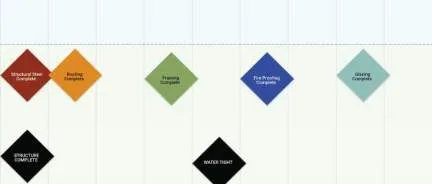
| Structure Complete | September 2027 |
| Weather Tight | January 2028 |
| Finishes Complete | January 2029 |
| New Building Complete | March 2029 |
| Renovation Complete | July 2029 |
| Substantial Completion | July 2029 |
Project schedule high level milestones
II. PROJECT HISTORY
i. Rationale for Facility Expansion
In 2020 the Owners (Cities of Langford and Colwood and the Town of View Royal) engaged Colliers Project Leaders to begin to help create an Options Analysis to identify key stakeholders, identify the scope of the project including size, scale, and complexity, consider site options, and consider schedule, cost, and procurement approach.
Explorations were done to study both acquiring a new site, and the viability of using the current site. It was determined that redeveloping the existing site was preferred as the building is in a centralized location with good access to major transportation routes. The existing 1999 building is also in good condition. Investments have been made in the current facility that will be maintained, but it is now at capacity. Projections by the RCMP show the need for increased space in the immediate term. As the communities continue to grow, so too does the need for specialized and diversified policing services, increased use of technology, modern facilities, and a larger staff contingent to maintain the current policing level of service in the region.
Further to this, WA Architects were engaged in 2021 to generate a design feasibility study working with the RCMP for the detachment expansion to occur on the existing site. In 2022, this as well as the full Options Analysis work was presented to the Owners, which confirmed that the facility would require an estimated 89,000-96,000 square feet to accommodate 25 years of growth, and that the project would require a budget of $86 million (+/- 25%) if it were to be developed on the existing site.
This was used as the basis for the project planning with the original intention to start the project IPD Validation process in April of 2023.
ii. Rationale for Delivery Method Selection
In 2022, a workshop with the Owners was held to consider various capital project delivery models for this project. After a significant evaluation process and considering the Options Analysis outcome as previously outlined, the West Shore municipalities selected Integrated Project Delivery (IPD) as the procurement and delivery methodology to be used on this project. It was shared that the top rationale for the Owner’s team selection of IPD was as follows:
- One single relational contract signed by all parties with a shared risk/reward framework with non-owner parties placing their profit at risk.
- Significantly reduced options for claims and litigation as there is a waiving of liabilities (except willful negligence).
- Provides both strategic and tactical approaches for risk mitigation to budget overages from an owner’s perspective.
- Provides transparency and clarity as it relates to all financial processes and activities across both design and construction.
- Allows for a Validation Phase to explore options and problem solve the project and site complexities with the Owner and RCMP. This is a highly engaged part of the process before the full scope, budget and delivery commitments are set.
- Addressed the complexity surrounding the multi-municipality Ownership group to ensure success in meeting the growth needs for RCMP operations.
Subsequent to the decision to use IPD, (which was approved in 2023 by the Langford, Colwood, and View Royal councils), the Owners procured an IPD Advisor as a first step. Colliers Project Leaders were engaged in March 2024 to begin the Owner’s readiness process and support the procurement of a full IPD team. This was completed in December of 2024 which allowed the project to start Validation in 2025 following RCMP security clearances.
It is important to note, that the Validation phase paused in June of 2025 to allow for a “check to proceed” with the Owner. In July 2025, the RCMP Detachment hosted the IPD Team to provide a thorough and transparent progress update for all Langford, Colwood, and View Royal councils, which had full representation. This presentation detailed all investigations done by the team, the budget challenges and steps forward which outlined the validation investment as well as the inherent process involved working within an IPD model. Each of the Langford, Colwood, and View Royal councils approved the IPD team to proceed in September 2025 working within some maximum budget parameters ($87.5M) that was originally given to the team, alongside the validation completion target of December 2025.
III. IPD PROJECT OVERVIEW
The main goals of the project are outlined in the Conditions of Satisfaction (COS) in Section iii. of this report. The COS was initially developed through a joint process with the Langford, Colwood, and View Royal CAOs as well as the RCMP OIC for use in the validation study with the understanding that the joint councils would be the ultimate authority in approving the COS and the Validation.
The West Shore RCMP Facility Expansion includes accommodation for the RCMP to operate for the next 25 years of growth, considering the FTE projections provided to the team by the municipalities. This includes the following program elements:
- Public spaces — including public waiting area, reception desk, interview rooms, and multipurpose/media room.
- Offices — including closed offices, focus rooms, breakout rooms, meeting rooms, project rooms, open workstations, storage, refresh kitchenettes, and business centers.
- Document storage and processing spaces.
- One new forensics bay.
- Locker rooms — including 2 male, 2 female, and 1 gender neutral inclusive.
- Fitness area.
- Minor updates to the existing 1999 building to interview rooms, storage, and offices spaces.
- Exterior upgrades to the entry plaza, parking lot, and access roads.
The initial Validation work to achieve this was largely informed by the initial feasibility study concept referenced previously. However, additional options were explored in the effort to find more optimal solutions for the site layout and building placement.
The concept design proposed in this report confirms a new building to replace the existing 1960s building with a 5-storey facility in approximately the same footprint as originally contemplated with appropriate tie ins to a prudently renovated 1999 building. The main challenge was to validate a new structural building design that accommodated the 2024 BC building code as well as including all required program elements. This was resolved through an intensive vetting and development process to explore the seismic and post-disaster structural requirements as well as the mechanical, electrical, and other standards to be met within the constraints of budget, stringent requirements, and RCMP operational continuity for the project construction.
Upon the approval of the Validation report, the project proceeds to the next IPD phase of Detailed Design and Procurement, which has been aligned with an overlapping Construction phase for optimal overall project delivery.
Upon the approval of the Validation report , the project proceeds to the next IPD phase of the Detailed Design and Procurement which has been aligned with an overlapping Construction phase for optimal overall project delivery.
III. IPD PROJECT OVERVIEW
i. IPD Team Organizational Structure & Description
The graphic on the illustrates the IPD partners and the organizational structure of the team, including Senior Management Team (SMT), Project Management Team (PMT), and Project Implementation Teams (PITs).
This IPD Team is accountable to the West Shore Municipality Owners through the CAOs for the generation of an RCMP facility and systems that meet their requirements as well as meeting the needs of the Authority of Jurisdiction for this building.
III. IPD PROJECT OVERVIEW
ii. Validation Strategy & Approach
The IPD Team followed best practices using Lean Project Delivery as a departure from traditional methods to allow for a collaborative and integrated design and constructability approach. This involves the entire team designing to a budget from the start of the process and addressing the challenges to the project holistically, including mitigating risk jointly from day one. Validation is a Go/NoGo stage of the IPD model requiring the Owner’s final approval. Validation phase concludes with an agreement including a Validation report, whereby the non-Owner parties can place their profits at risk with the commitment to deliver the facility within the parameters outlined.
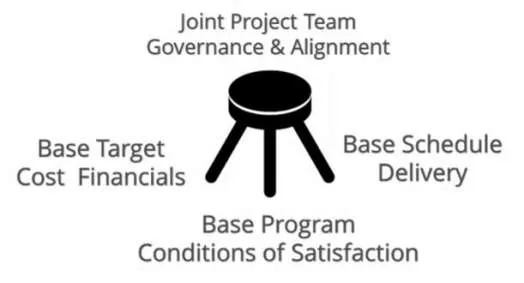
At Validation launch, the IPD team focused on exploring all aspects of the project delivery starting with the Base Program and Conditions of Satisfaction and assessing how the Allowable Budget can be achieved through the financial breakdown of project costs including all assumptions involving design time, construction operations, supply chain logistics and delivery constraints. Alongside this, the IPD team also developed governance and alignment processes that involve how the PMT and SMT will operate. This process can also be referred to as a validation study, and it has been referred to by this team as a ‘3-Legged Stool’.
Joint Project Team Governance & Alignment
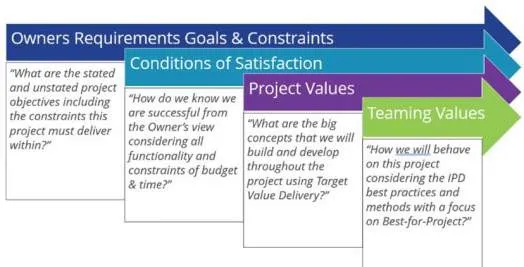
This also included a values development process that is intended to create team alignment with the owner that is focused on what is ‘Best for Project’ (which is the mantra of IPD projects) vs. self serving interests. This involves breaking down the Owners Requirements, Goals and Constraints as well as further developing the Conditions of Satisfaction, aspirational Project Values and Teaming Values to support ongoing team health and a productive, collaborative team working environment.
The team also used an IPD best practice and Lean operating system called Target Value Delivery (TVD). This involves the following:
- Continuous Values alignment with the Owner and building users on requirements
- Holistic project problem solving that starts with the ‘Big Rocks’ to ensure an optimal solution can be found overall (vs. fragmented design considerations)
- Set-based design collaborative and concurrent practices to reduce rework in the design process
- Construction-informed design with integrated disciplinary considerations
- Transparent, open and agile cost modeling and conceptual estimation practices including benchmarking and parametric analysis
- Early, active and rigorous joint risk identification and management
- Varying levels of design development to inform target cost development and creating increased cost certainty
- Use of structured decision-making systems and associated methods
- Collaborative problem-solving approaches
- Identification and use of innovative practices
The Validation Phase has included bi-weekly collaborative ‘Big Room’ working sessions where team members gather to address the big challenges of the project in an interactive way to ‘short cut’ the traditional longer design practices. These have included two-week design sprints with virtual sessions to focus the team’s work during off-weeks and make the most productive use of time. The ‘Big Room’ structure is highly collaborative and transparent so that rapid problem solving can occur tightly coupled with action.
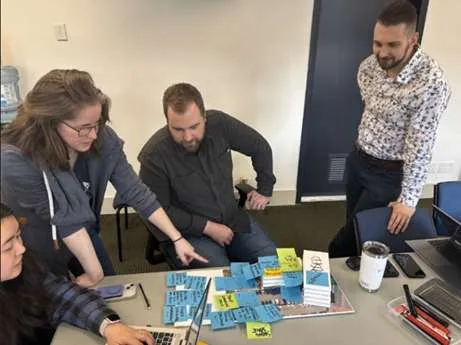
The validation work and Big Room sessions were led by the full IPD team including the owner’s PMT and SMT, as well as involving the RCMP (both local and E-Division). Throughout validation, the project was continuously and iteratively evaluated so that all design choices are weighed against cost impacts with all parties at the table. Given the complexity and specific building code specifications alongside reducing the budget, the team had various stages of TVD exploration in the attempt to offset the cost impacts from the 2024 building code specifications alongside reducing the operational continuity impacts for the RCMP.
The Validation phase process took 7 months actual working time, not including onboarding, security clearances and the pause required for the Owners ‘check to proceed’.
Timeline is as follows:
- December 1, 2024 — IPD Team selection complete with subsequent service agreement sign-off and soft validation launch and onboarding
- February 12, 2025 — IPD Team member full access granted by RCMP with security clearances. (This marks the official start to Validation procedures.)
- June 20, 2025 — Pens down and pause for Owner’s check to proceed followed by July 18, presentation to all councils
- September 15, 2025 — Owner’s team approved the re-engagement of the IPD team to continue the Validation process
- October 8, 2025 — Big Room’s resumed
- November 20, 2025 — CAO meeting alignment with Colliers IPD advisors to confirm validation parameters achieved with final documentation process underway
- December 19, 2025 — Validation Report submission.
III. IPD PROJECT OVERVIEW
iii. Project Conditions of Satisfaction
These form the definition of success for the project completion or handoff from the Owner’s perspective and therefore are central in the project execution alongside the Project Values. These represent the overarching commitment that the team will deliver on, which summarizes the base project and detailed project assumptions.
| COS CATEGORY | DESCRIPTION (TO BE EVIDENCED OR MEASURED AT PROJECT COMPLETION) | HOW DID THE IPD TEAM MEET THE COS? |
|---|---|---|
| 1. Facility Access & Presence for the Community | * The RCMP detachment should have a dignified and welcoming street presence, contributing positively to the local urban fabric, serving both the RCMP and community needs. * This includes blending the new build with the existing (1999) building renovation, and complete demolition of the older building (1960s). * The building design should enhance public access and staff workspaces, incorporating natural light, open spaces, and a functional layout. |
* The new facility will incorporate modern, timeless exterior finishes integrating into and enhancing the local urban surroundings. * The existing 1960s building will be demolished, and the new facility will seamlessly blend into the 1999 existing building united through a welcoming entrance canopy. * Public wayfinding is intuitive with universal access incorporated at the front entry. * Interior spaces are arranged to optimize operational flow and maximize access to daylight for all occupants. |
| 2. Resilience & Sustainability | * The new facility must meet the current BC Energy Step Code required levels and be built to a post-disaster structural standard. * The existing building will be seismically separated from the existing building. * The design should contemplate energy-efficient systems, sustainable materials, and construction practices that minimize long-term operating costs and environmental impact. |
* New building to be designed to meet the Structural Post-Disaster requirements in the BCBC 2024. * New building to be seismically separated from the existing building. * New building to meet BC Energy Step Code 2 by incorporating high performing building envelop, energy efficiency MEP equipment into design. * New building to meet BC Zero Carbon Step Code EL4 by eliminating natural gas and utilizing all electric-driven equipment. |
| 3. Operational Continuity | * The RCMP Detachment must stay fully operational during all construction phases. Secure parking with two exit routes must always be maintained. * Construction execution will be planned to minimize disruption to the community and ensure safety on-site. |
* Construction and logistical schedule has been outlined with appropriate contingencies to ensure RCMP operational continuity and minimize disruption. * The main IT and electrical rooms being located in the new building, upgrading end-of-life equipment, and ensuring post-disaster functionality with emergency power. |
| 4. Functional Design / Future Proofing | * The building provides sufficient square footage to address RCMP functional programmatic requirements including consideration for operational adjacencies and secure/specialized spaces. This includes flexibility to adapt to technological advancements and increased staffing needs to accommodate 25 years of forecasted growth. * The building should include accommodations to support only the appropriate alternate tenants while allowing for future RCMP growth. |
* The final building will be an estimated 82,000sq ft and is expected to accommodate FTEs for over 25 years per projections provided. This includes a new build of 55,714 sq.ft. and 25,941 sq.ft. of the 1999 building renovation. * Allows for additional future growth by locating the lateral system along the perimeter walls where possible, which allows for future renovations and relocation of partition walls without expensive structural upgrades. * The building will support the continued tenancy of the Canadian Firearms Program within the existing 1999 building. |
| 5. Indigenous Engagement & Integration | * The project will include intentional and meaningful engagement with the Local First Nations Communities supported by this detachment for the purpose of building relationships. * The facility will reflect thoughtful integration of indigenous culture where possible. |
* The intent of the IPD team is to engage with the Local First Nations Communities in an appropriate manner that is led and supported by the RCMP detachment’s leadership for the purpose of learning and promoting thoughtful integration of indigenous culture within the facility detailed design. |
| 6. Budget and Schedule | * The IPD team is to validate and deliver the project within the $87.5 million maximum IPD team allowable budget. * The IPD team will deliver the project (including design and construction) in a manner that demonstrates best for project and prioritizes operational continuity as described in the Condition of Satisfaction above. |
* Budget has been confirmed within maximum allowable including contingencies as outlined in this report. * Project delivery schedule for remaining design, construction and commissioning has been carefully sequenced to meet COS and integrated to budget assumptions. * Poly-party members will be placing profits at risk according to the IPD contractual governance process. |
III. IPD PROJECT OVERVIEW
iv. IPD Team Project Values
Project Values were collaboratively established by the IPD team during the initial Validation Big Rooms and confirmed early in 2025. These are intended to be aspirational in nature and further build on the Conditions of Satisfaction and are used to inform the delivery of this project.
PROJECT VALUES
BUILDING LEGACY We are dedicated to designing an RCMP detachment that serves our West Shore communities, exemplifying sustainable development and responsible investment of public funds.
DEVELOPING COMMUNITY We commit to designing a welcoming and inclusive facility that becomes part of the urban fabric and serves as an enduring icon of civic pride.
SAFETY & WELLNESS We will create a safe and secure facility that supports the health, wellness, and resilience of its staff and visitors.
FUNCTIONAL & INTUITIVE SPACES We commit to designing a facility that improves functionality and leverages technology that is reliable and well suited to ensure operational efficiency. It works.
DESIGN EXCELLENCE We will build an innovative, future-ready building that exemplifies design excellence and creates a durable, resilient facility.
TEAMING VALUES Teaming Values are a specific set of behavioural commitments that the team agrees to abide by throughout the project. These are used in team health checks which are conducted at each Big Room. These values are scored and discussed by the IPD team to guide continuous improvement and awareness throughout the project. This ensures the team can function effectively and efficiently as a joint and collective project workgroup for the duration of the project.
INTEGRITY We act honestly and authentically, and uphold each others’ integrity and professionalism.
RAPPORT We build rapport by creating connections with each other based on trust, respect, and mutual understanding.
ACCOUNTABILITY We hold ourselves accountable through due diligence and thorough process, and deliver with efficiency and strong work ethic.
COMMUNICATION We listen and engage with openness and inclusivity, ensuring all perspectives and voices are heard.
CURIOSITY We foster curiosity and critical thinking to amplify knowledge, innovation, and continuous improvement.
III. IPD PROJECT OVERVIEW
v. Key Governance Process Summary
The IPD Team will follow the governance process laid out in the CCDC 30 -2025 contract. The governance of the project is led by the Project Management Team (PMT) with oversight and guidance from the Senior Management Team (SMT). A working structure called the Project Implementation Teams (PITs) has been designed, adapted and will be maintained by the PMT which are depicted in the organizational graphic in Section iii.
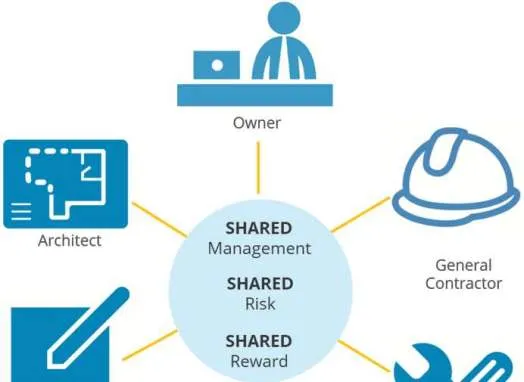
a. Reimbursable Allowable Costs and Fees All direct and actual costs that are incurred by the IPD signatories in executing the design and construction of the project are considered reimbursable and are invoiced on a monthly basis using the agreed upon rates. The IPD team uses an open, peer-review style process for invoice approvals to ensure mutual accountability to managing costs within budget. The time-based cost tables show payment rates for all team members transparently, capturing the base hourly cost and overhead component with no profits included in these rates as they have been fully transferred to the Profit Pool by each signatory and managed according to that governance process.
b. Budget Management & Profit Pool Distribution The Profit Pool is agreed upon at the time of Validation and calculated using the accepted profit figures per party (submitted at time of IPD team procurement) and the scope of work for each IPD signatory. This profit amount is held separate from monthly project invoicing and placed at risk. It is distributed at selected Achievement Events (which are chosen from critical milestones across the remaining project execution) which forms the potential profit payment distribution plan for the IPD team.
The PMT/SMT only distributes the agreed upon profits during execution (post Validation) if and when the team is on track with budget and schedule as outlined in the Validation agreement. In order to facilitate this governance, the PMT has the responsibility to continuously manage actual spending and forecast updates including risks and opportunity register reconciliations simultaneously with other delivery commitments.
If the project is experiencing (or at risk of) budget overruns, the team is able to address this proactively and will be focusing efforts on additional improvements, mitigation and recovery strategies. When this happens, this means that the Actual costs are trending over Base Target Cost and will consume the IPD team's Profit Pool.
If the project is trending under budget (Base Target Cost), the IPD Team may consider the addition of new scope items, referred to as Added Value Incentive Items (AVII), which are funded from the Owner’s portion of the shared savings. AVIIs are evaluated and approved by the IPD Team based on Owner priorities, confirmation that sufficient Owner savings are available, and verification that the item can be introduced at the identified ‘Last Responsible Moment’ which is the latest point at which the scope can be added without negatively impacting other project commitments related to cost, schedule, or performance.
It is important to note that there are no typical change orders in IPD practice. The only conditions that may result in a change order are:
- If the owner chooses to add new performance requirements to the base scope that were not previously agreed upon at time of validation
- If there are significant unknowns encountered that could not have been reasonably accounted for by the team within the risk register and contingency
- If there is a change in law during execution that was not contemplated by the team during validation causing a cost impact
c. Financial Management and Tools The PMT is responsible for all aspects of the financial management and project performance including the delivery schedule. As previously described, these are proactive processes to ensure the team can be most responsive to the actual project spending, therefore a number of tools and methods are used to support this approach, including but not limited to:
- Project cost projections and Base Target Cost management reporting
- Risk & Opportunities Register management
- Target Value Delivery optimization and innovations
- Last Planner System & Sprint Board agile planning
- Decision Logs & PMT Bulletin framework
- Visual Dashboard management
- Peer Review and quality control checks for financial data and systems
The PMT will manage all financials with oversight from the SMT as per governance. This will include rigorous internal financial quality control checks done monthly and at profit distribution points to ensure all of the key financials of the project are being managed per contractual agreement. This includes monitoring of the time-based costs and resources loaded work plans, equipment, tools and materials spending, project contingency use, and ensuring lien holdback retention as the project progresses.
IV. PROJECT EXECUTION PLAN
i. Commitment to Safety & Environment
Safety encompasses not only physical well-being but also mental and emotional health. In modern construction projects, ensuring a safe environment for all personnel, stakeholders, and the public is a foundational requirement. In an IPD project, there is added focus on psychological safety of all team members alongside the physical safety on construction sites which ensures the well-being of workers and the public. IPD projects enhance construction safety outcomes. This IPD team is committed to safety as well as the environmental considerations associated with construction site best practices.
a. Construction Safety within IPD
- Safety is Considered Early in the Process: The IPD team builds in a safety conscience early to design and constructability plans creating improved hazard prevention.
- Improved Communication: Regular, open meetings foster information sharing about safety risks throughout the project lifecycle. Real-time problem-solving helps identify and mitigate hazards quickly.
- Shared Responsibility: Safety is our collective goal, not just the contractor’s duty. Financial incentives align everyone’s interests, including prioritizing safety.
- Lean Design & Construction Integration: This IPD team has been using Lean practices to improve value, reduce waste and create orderly workflows thus minimizing high-risk improvisations that can cause safety concern.
- Better Planning, Scheduling and Logistics: Enhanced coordination means fewer conflicts on-site. Reduces rush work, congestion, and unsafe workarounds.
b. Safety Plan & Procedures Safety is a priority for this IPD team, and it includes the best practices from each of the signatories for implementation from start to finish. The builder poly-party members have the direct responsibility for managing safety onsite, led by the General Contractor.
On all projects, safety is a General Contractor’s primary focus. Corporate Health, Safety, and Environmental (HSE) Manager, in collaboration with the Site Superintendent, Project Manager, and Branch Manager, develops site-specific safety programs. There is alignment to these programs across all builder partners so that any party working on site will abide by these programs.
These include:
- Stakeholder Communication: Keeping stakeholders informed of construction activities and schedules.
- On-Site Safety Personnel: Having a full-time Site Superintendent and dedicated First Aid personnel.
- Documentation and Checklists: Maintaining an Emergency Contact Sheet, Site Set Up Checklist, Detailed Site Inspection Checklist, and orientation forms for new and younger workers.
- Safe Job Procedures: Implementing site-specific safe job procedures, such as Fall Protection plan, Confined Space Plan, and Hot Work plans.
- Full-Time Construction Safety Officer: Employing a full-time Construction Safety Officer to ensure the site-specific safety plan is executed.
c. Construction Site Safety Overview
- Risk Assessment: Conducting a thorough risk assessment before any project begins, inspecting the site for potential hazards, and creating a detailed safety plan to address them.
- Safety Meetings: Holding regular safety meetings to remind everyone of the risks and the importance of following safety protocols. These meetings often include “Toolbox Talks,” which are short, focused discussions on specific safety issues.
- Fall Prevention: Installing fall protection systems such as guardrails, toe boards, and safety nets, and ensuring that workers use safety harnesses when necessary.
- Equipment Maintenance: Performing regular maintenance checks on equipment to prevent accidents caused by machinery failures.
- Adherence to Guidelines: Adhering to WorkSafe BC safety guidelines, which cover various aspects of construction safety, including fall protection, trenching, and the provision of safety equipment.
- Culture of Safety: Creating a culture of safety by encouraging workers to prioritize safety and report any hazards or unsafe practices they observe. Continuous training and education help reinforce the importance of safety and keep everyone informed about best practices.
d. First Aid Measures Available The Project will have a full-time, dedicated Level 2 or 3 Occupational First Aid person on-site to handle any medical emergencies. First aid stations will be equipped with all necessary and easily accessible supplies. Additionally, the Site Superintendent and safety staff will conduct regular safety orientations and toolbox meetings to keep everyone informed about first aid procedures. The site will also have emergency contact sheets, site setup checklists, and detailed site inspection checklists to ensure preparedness and quick response in case of an incident.
e. Minor and Major Incidents With minor incidences, a dedicated First Aid person will quickly address the situation to prevent escalation, provide first aid if necessary, and secure the area. Subsequently, documentation is created to capture the details of the incident, including what happened, who was involved, and any contributing factors. An investigation follows to understand the root cause and identify underlying issues. A corrective action plan is created to prevent similar incidents in the future, which might include additional training, changes to procedures, or improvements in safety equipment. Communication is key, so that all relevant parties are kept informed about the incident and the steps taken to address it, ensuring transparency and learning opportunities for the entire team.
With major incidents, emergency protocols will be activated immediately, which includes calling emergency services, evacuating the area if necessary, and providing urgent medical care. An incident command structure will be established to manage the response effectively, with roles and responsibilities assigned to ensure a coordinated effort. A thorough investigation is conducted to determine the cause of the incident, involving evidence gathering, witness interviews, and data analysis. The incident will be reported to relevant authorities and stakeholders, complying with legal and regulatory requirements. The incident is then reviewed to identify lessons learned and implement changes to prevent recurrence, which may involve revising safety protocols, enhancing training programs, or upgrading equipment. Support is provided to affected individuals, including medical care, counseling, and assistance with any necessary follow-up actions.
IV. PROJECT EXECUTION PLAN
ii. Operational Continuity Approach
The IPD team has been working to adapt construction logistics during the validation process so that operational impacts due to construction are mitigated. The purpose of the execution plan is to detail out the strategy for managing construction, contractor access, and logistics during both the demolition of the 1960 building, the new construction to the west of the 1999 building, as well as for renovation work within the 1999 building. These plans have been reviewed during the validation process with the local RCMP and E-Divisions for alignment. The IPD team will continue to interact with the RCMP during the design and construction process to improve and optimize logistics as required situationally.
a. New Construction From the start of the demolition and abatement of the 1960’s building through to completion of the new building, the construction area will be segregated with 6’ tall construction fencing. This will ensure construction stays contained and does not interfere with RCMP operations or security. A hoarding wall will be constructed as per Building Code requirements to prevent unauthorized access and separate the operational facility from the construction area.
The IPD team will manage the security clearance requirements working with RCMP. It has been assumed that any persons working on the new building will not be required to have Enhanced Reliability Status (ERS) or Facility Access Level 2 (FA2) security clearance due to the physical separation between the existing operational 1999 building and the new build. Information for those without ERS or FA2 clearance will be sanitized for security purposes with the use of cleansed drawings and specifications.
In order to maintain operational continuity, the RCMP requires two points of vehicle access/egress from the parking lot. The gated exit onto Veterans Memorial Parkway will be relocated to the east side of the property to access Winster Road, while the existing gate on Atkins Road will remain operational throughout construction. There is a construction model being used by the team to support this project ( CM Builder™ 3D) which outlines the flow of work as well as items such as construction fencing, crane location, laydown areas, and access during the construction process.
The RCMP will continue to have access to the two secure sally ports throughout construction including access via the existing ramp. There will be no parking available to the RCMP on the ramp in order to provide crane logistics, existing generator relocation, and to facilitate access during construction work. The third garage bay currently containing bike storage will be utilized for a temporary water connection to service the existing building while construction is underway.
b. Phased Renovation of the 1999 Building To support the operations of the RCMP, the renovation scope of the occupied building has been phased to reduce impact to staff and operations, while optimizing available space and reducing disruptions during the overall construction schedule. Phased renovation drawings have been developed to show the areas where work is being conducted, the anticipated timeframe when they will occur, and how the team will support construction access throughout the operating facility.
During the renovation phase, at least one individual from one of the IPD partners with ERS security clearance will be present to supervise the construction activities within the delineated construction area. When materials or personnel need to transit between work areas, an ERS-cleared individual will escort the movement, while a second ERS-cleared individual remains on site to supervise any workers remaining within the construction area. Work being done in secure areas will require knowledgeable escorts provided by the RCMP at no cost to the project.
The RCMP has been participating in the validation process with the IPD team and has communicated support for these plans. This includes construction work occurring during regular working hours as these renovation areas will be segregated from other areas with hoarding in order to minimize dirt, debris, and disruption to staff. The detachment is operational 24/7, and therefore it is recognized that some work may need to be done outside of primary hours when running new services or transitioning through the operational area that is not directly under construction. This has been accounted for within the IPD team’s delivery plan.
BLOCK PLANS & CONCEPTUAL EXTERIOR RENDERS
Security & Sanitization The initial renderings and block plans included in this submission are intended solely to illustrate design intent. To comply with RCMP security requirements, the block plans and renderings have been cleansed for security reasons. Security-sensitive information has been removed or generalized, including but not limited to:
- Access control and intrusion detection elements
- Surveillance coverage and device layouts
- Secure circulation routes and protected zones
- Locations or identifiers of critical infrastructure and communications systems
Limitations: These documents do not constitute operational, security, or construction documentation and must not be relied upon for security planning or system implementation. Any reproduction, external sharing, or secondary use requires prior RCMP authorization.
The current concept design and finalized design will incorporate the Project Conditions of Satisfaction as documented within this report.

Document Images
(31)
Architectural rendering of the proposed multi-story West Shore RCMP Facility Expansion building and public entrance

Photo of the existing West Shore RCMP 1999 facility building

Diagram showing Overall project funding breakdown. Owners Total Borrowed Funds of $103,000,000. Supporting Municipality Project Management Costs include Colliers IPD Advisory Services and Owners Held Project Contingency totaling $10,503,856. The IPD Team Budget of $87,496,144 consists of the Profit Pool ($5,029,760) and the IPD Team Target Cost ($82,466,384). The IPD Team Target Cost comprises IPD Team Contingency ($3,320,583) and Direct Costs ($79,145,801).

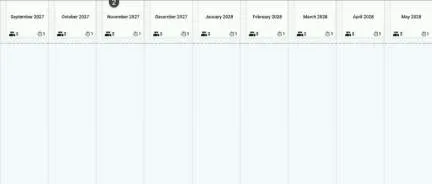
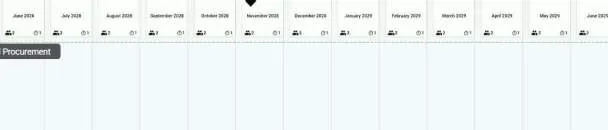
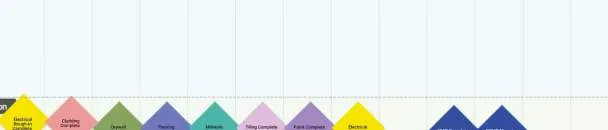
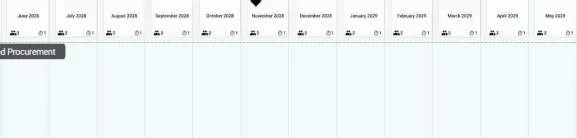
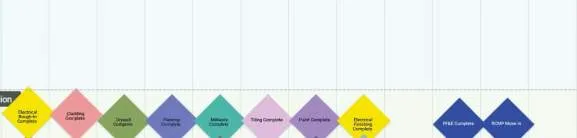
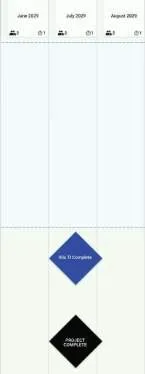
Team visual design & construction milestone planning timeline showing a multi-year progression from late 2024 to late 2029

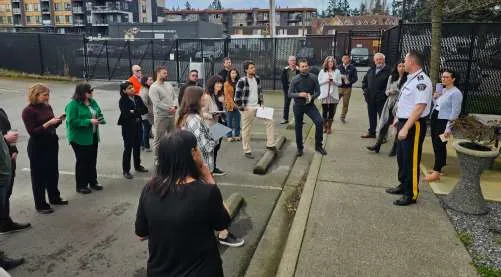
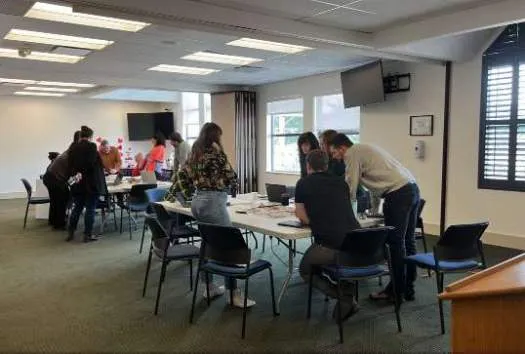
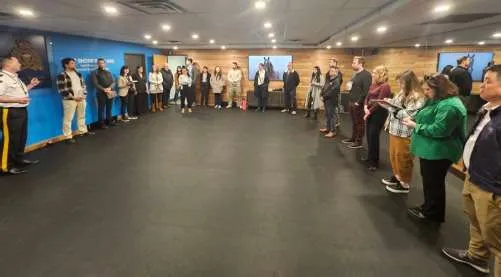
Photo of team members on a facility tour during the early validation phase

Detailed IPD Team Organizational Structure bubble diagram. **SMT Bubble:** Scott Sommerville, Craig Webber, Elisa Brandts, Bruce Vasarhely, Kristy Neish, Scott Ghomeshi, Dave Erb, Jerry Espino, Navid Ramer. **PMT Bubble:** Kari Anne Gaume, Byron Grant, Matt Sander, Hemna Marwah, Erica Mak, Chelsea Paton, Derek Stephenson, Matt Moore, Kartik Vashishta. **Current PITs Bubble:** Architecture PIT, Structural PIT, Building PIT, Mechanical PIT, Electrical PIT, Constructability PIT, BIM PIT, Cost Modeling PIT. **Initial PITs Bubble:** Existing Conditions PIT, Building & Site Planning PIT, Enabling Works PIT, Functional Programming PIT.