Appendix
CRD Liquid Waste Principles and Approach - Appendix B
October 21, 2014Pages 173–1741 section
Guiding principles for the wastewater planning process, including value for money and sustainability.
October 8, 2014
PRINCIPLES AND APPROACH
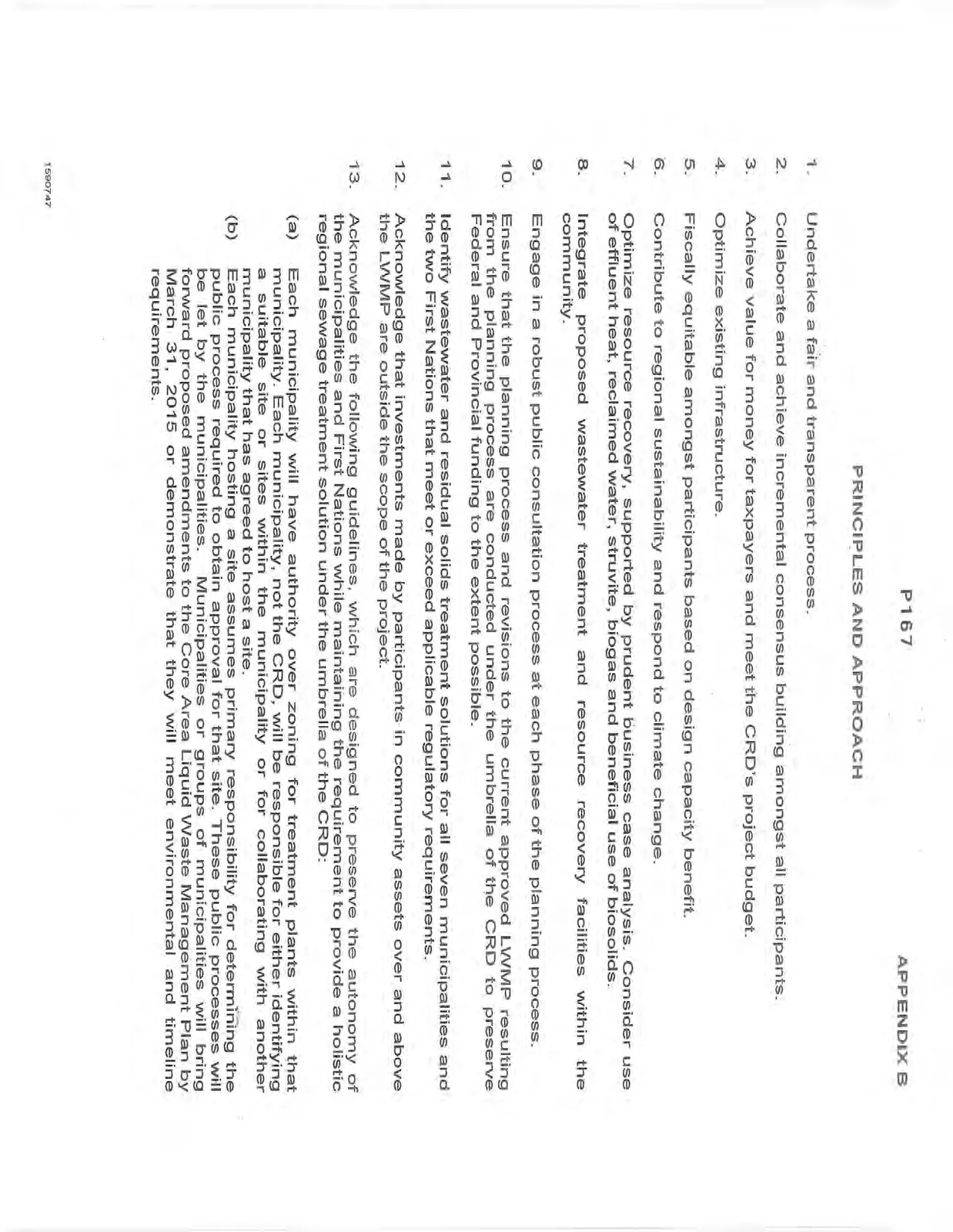
- Undertake a fair and transparent process.
- Collaborate and achieve incremental consensus building amongst all participants.
- Achieve value for money for taxpayers and meet the CRD's project budget.
- Optimize existing infrastructure.
- Fiscally equitable amongst participants based on design capacity benefit.
- Contribute to regional sustainability and respond to climate change.
- Optimize resource recovery, supported by prudent business case analysis. Consider use of effluent heat, reclaimed water, struvite, biogas and beneficial use of biosolids.
- Integrate proposed wastewater treatment and resource recovery facilities within the community.
- Engage in a robust public consultation process at each phase of the planning process.
- Ensure that the planning process and revisions to the current approved LWMP resulting from the planning process are conducted under the umbrella of the CRD to preserve Federal and Provincial funding to the extent possible.
- Identify wastewater and residual solids treatment solutions for all seven municipalities and the two First Nations that meet or exceed applicable regulatory requirements.
- Acknowledge that investments made by participants in community assets over and above the LWMP are outside the scope of the project.
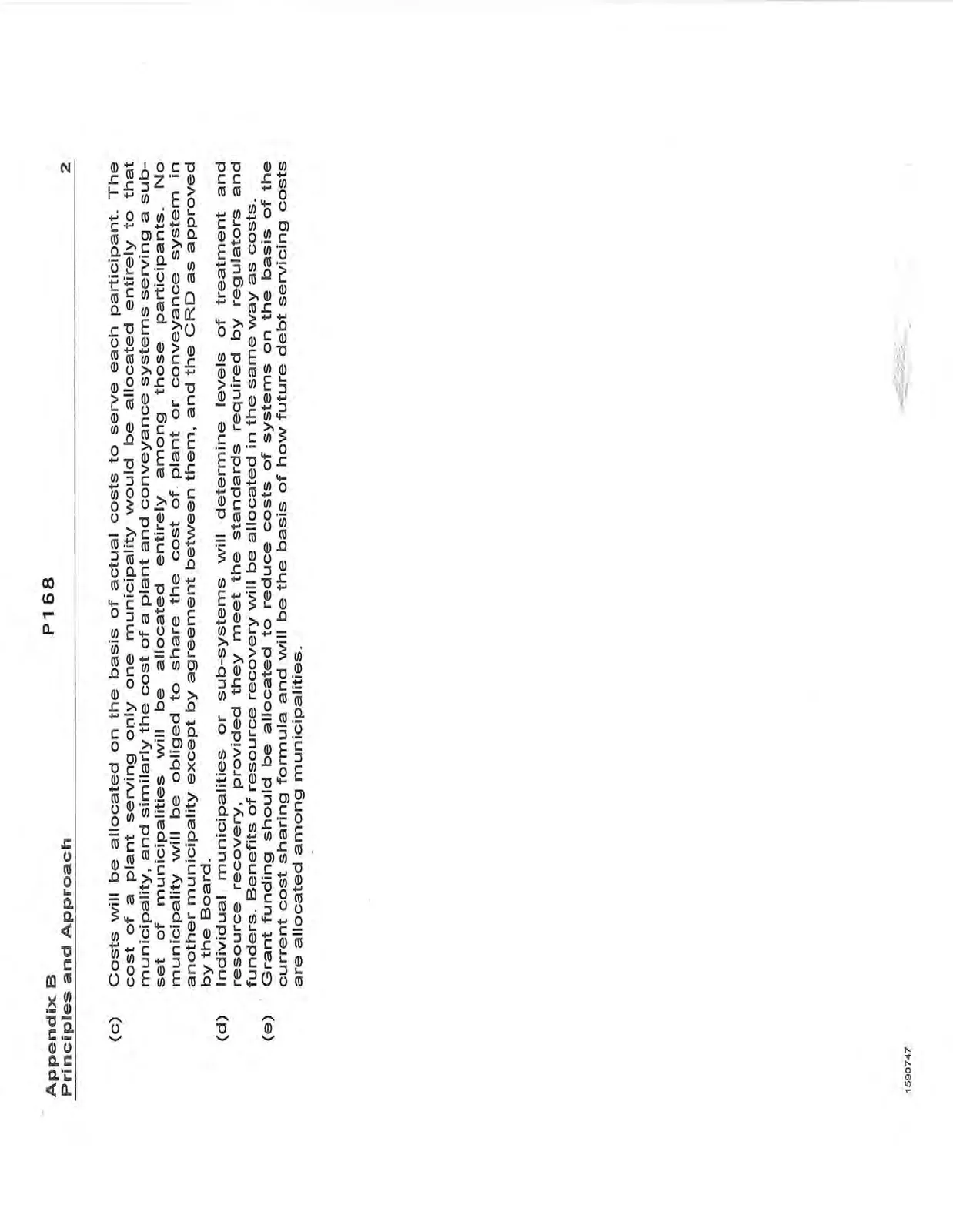
- Acknowledge the following guidelines, which are designed to preserve the autonomy of the municipalities and First Nations while maintaining the requirement to provide a holistic regional sewage treatment solution under the umbrella of the CRD: (a) Each municipality will have authority over zoning for treatment plants within that municipality. Each municipality, not the CRD, will be responsible for either identifying a suitable site or sites within the municipality or for collaborating with another municipality that has agreed to host a site. (b) Each municipality hosting a site assumes primary responsibility for determining the public process required to obtain approval for that site. These public processes will be led by the municipalities. Municipalities or groups of municipalities will bring forward proposed amendments to the Core Area Liquid Waste Management Plan by March 31, 2015 or demonstrate that they will meet environmental and timeline requirements. (c) Costs will be allocated on the basis of actual costs to serve each participant. The cost of a plant serving only one municipality would be allocated entirely to that municipality, and similarly the cost of a plant and conveyance systems serving a sub-set of municipalities will be allocated entirely among those participants. No municipality will be obliged to share the cost of plant or conveyance system in another municipality except by agreement between them, and the CRD as approved by the Board. (d) Individual municipalities or sub-systems will determine levels of treatment and resource recovery, provided they meet the standards required by regulators and funders. Benefits of resource recovery will be allocated in the same way as costs. (e) Grant funding should be allocated to reduce costs of systems on the basis of the current cost sharing formula and will be the basis of how future debt servicing costs are allocated among municipalities.
Page 173–174
Document Images
(2)
Extracted from: 2014 10 21 Council Agenda