Pacific Centre Family Services COPE Quarterly Report
Quarterly report for the Community Outreach Prevention Education program serving youth in West Shore communities.
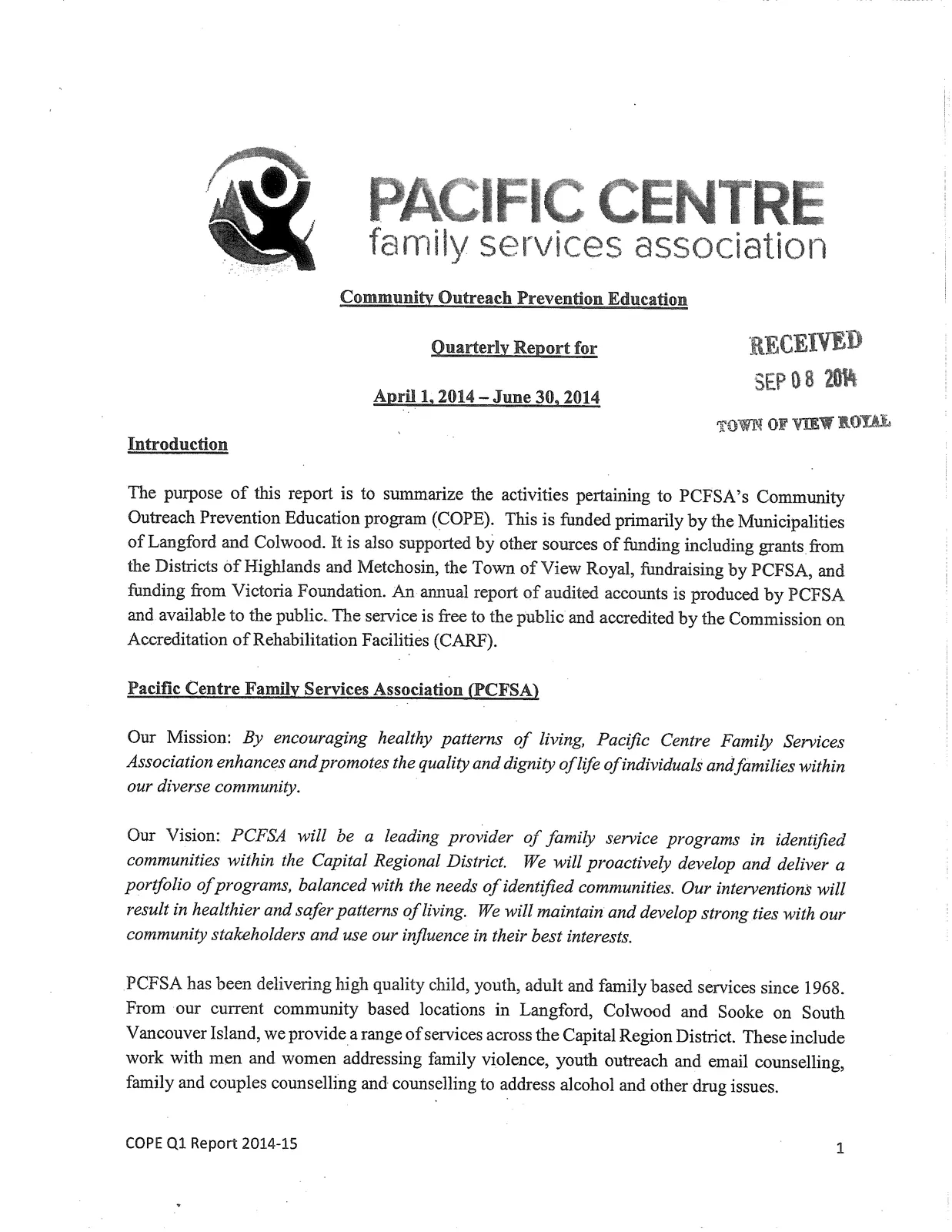
PACIFIC CENTRE family services association
Community Outreach Prevention Education
Quarterly Report for April 1, 2014 – June 30, 2014
Introduction
The purpose of this report is to summarize the activities pertaining to PCFSA’s Community Outreach Prevention Education program (COPE). This is funded primarily by the Municipalities of Langford and Colwood. It is also supported by other sources of funding including grants from the Districts of Highlands and Metchosin, the Town of View Royal, fundraising by PCFSA, and funding from Victoria Foundation. An annual report of audited accounts is produced by PCFSA and available to the public. The service is free to the public and accredited by the Commission on Accreditation of Rehabilitation Facilities (CARF).
Pacific Centre Family Services Association (PCFSA)
Our Mission:
By encouraging healthy patterns of living, Pacific Centre Family Services Association enhances and promotes the quality and dignity of life of individuals and families within our diverse community.
Our Vision:
PCFSA will be a leading provider of family service programs in identified communities within the Capital Regional District. We will proactively develop and deliver a portfolio of programs, balanced with the needs of identified communities. Our interventions will result in healthier and safer patterns of living. We will maintain and develop strong ties with our community stakeholders and use our influence in their best interests.
PCFSA has been delivering high quality child, youth, adult and family based services since 1968. From our current community based locations in Langford, Colwood and Sooke on South Vancouver Island, we provide a range of services across the Capital Region District. These include work with men and women addressing family violence, youth outreach and email counselling, family and couples counselling and counselling to address alcohol and other drug issues.
COPE
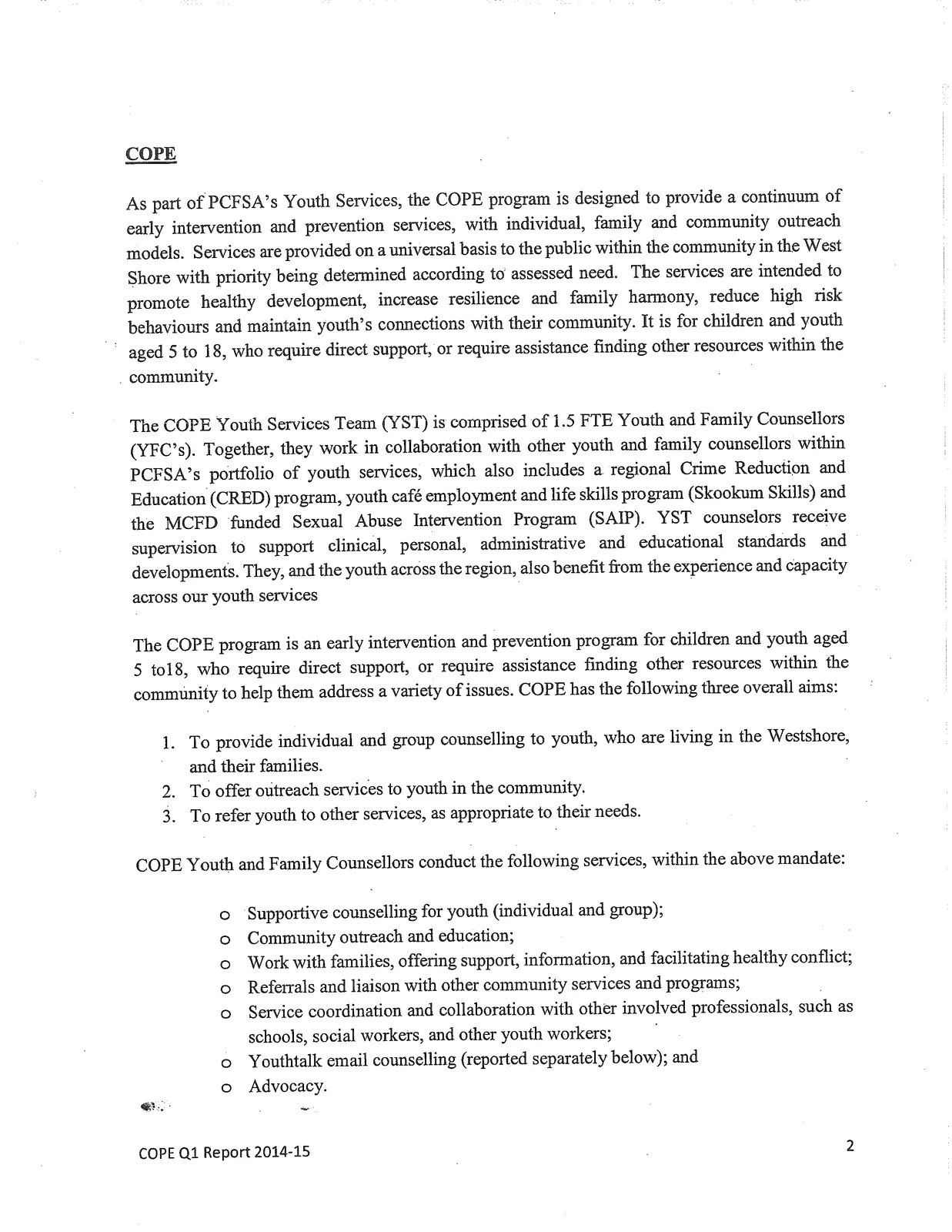
As part of PCFSA’s Youth Services, the COPE program is designed to provide a continuum of early intervention and prevention services, with individual, family and community outreach models. Services are provided on a universal basis to the public within the community in the West Shore with priority being determined according to assessed need. The services are intended to promote healthy development, increase resilience and family harmony, reduce high risk behaviours and maintain youth’s connections with their community. It is for children and youth aged 5 to 18, who require direct support, or require assistance finding other resources within the community.
The COPE Youth Services Team (YST) is comprised of 1.5 FTE Youth and Family Counsellors (YFC’s). Together, they work in collaboration with other youth and family counsellors within PCFSA’s portfolio of youth services, which also includes a regional Crime Reduction and Education (CRED) program, youth café employment and life skills program (Skookum Skills) and the MCFD funded Sexual Abuse Intervention Program (SAIP). YST counsellors receive supervision to support clinical, personal, administrative and educational standards and developments. They, and the youth across the region, also benefit from the experience and capacity across our youth services.
The COPE program is an early intervention and prevention program for children and youth aged 5 to18, who require direct support, or require assistance finding other resources within the community to help them address a variety of issues. COPE has the following three overall aims:
- To provide individual and group counselling to youth, who are living in the Westshore, and their families.
- To offer outreach services to youth in the community.
- To refer youth to other services, as appropriate to their needs.
COPE Youth and Family Counsellors conduct the following services, within the above mandate:
- Supportive counselling for youth (individual and group);
- Community outreach and education;
- Work with families, offering support, information, and facilitating healthy conflict;
- Referrals and liaison with other community services and programs;
- Service coordination and collaboration with other involved professionals, such as schools, social workers, and other youth workers;
- Youthtalk email counselling (reported separately below); and
- Advocacy.
Referrals
Referrals to the COPE Program are made by the youth themselves, parents, professionals and other concerned community members. The referral request for service is responded to within 5-7 business days by our intake counsellor. In this process, an initial screening and assessment takes place to assist with prioritization.
The referrals address a continuum of need, from youth who are at serious risk of harm, exploitation, injury, suicide or abuse to more situation-focused interventions, such as recent separation/divorce in family, illness or change in household, introduction of step parents, or adjusting to new or step siblings.
The referral list is managed on a weekly basis by the Youth Services Team (YST), where youth and families’ needs are prioritized in an attempt to assist their access to appropriate services. The team thereby works to ensure that the best services at the right time can be provided within this contract as far as possible. All counsellors maintain a caseload at maximum capacity.
Environmental Context
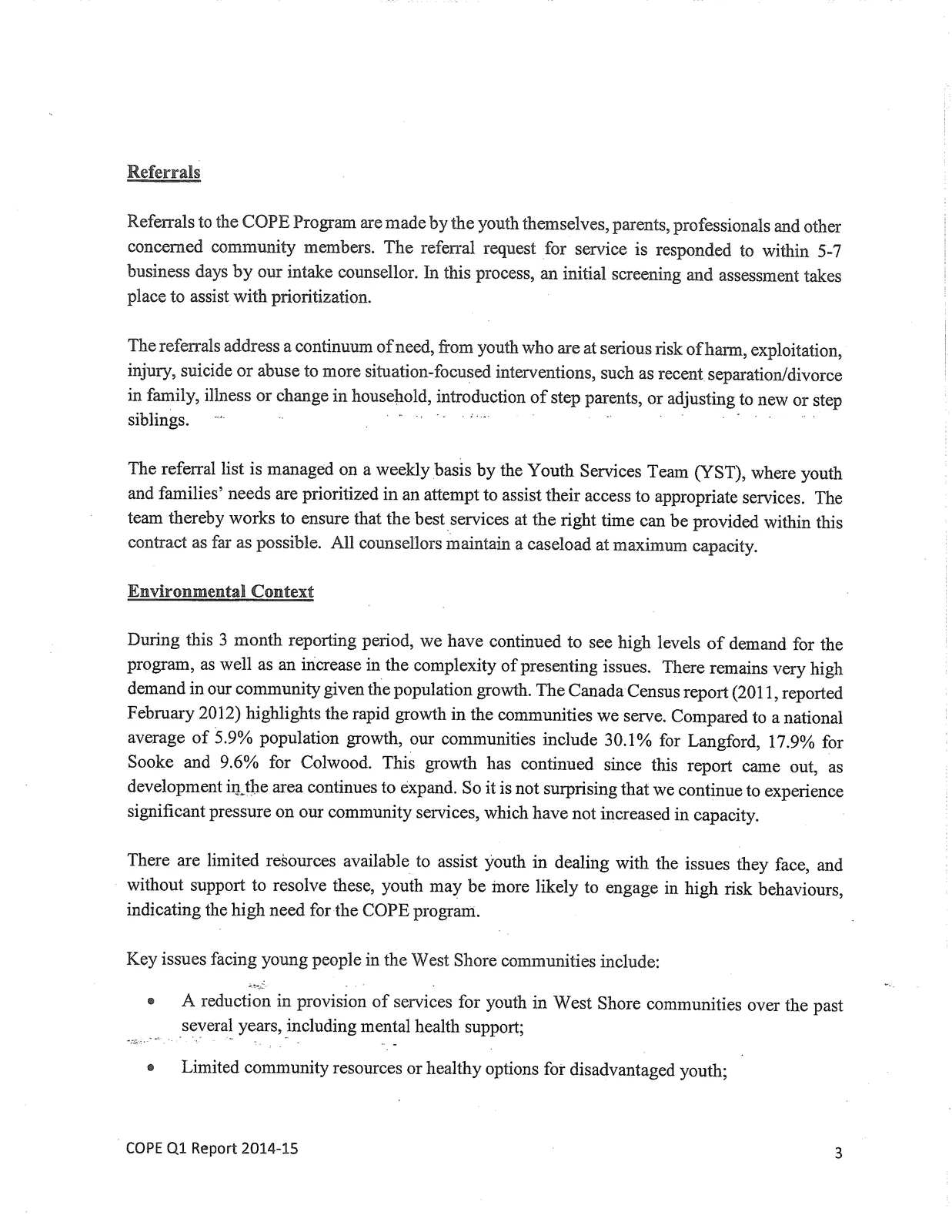
During this 3 month reporting period, we have continued to see high levels of demand for the program, as well as an increase in the complexity of presenting issues. There remains very high demand in our community given the population growth. The Canada Census report (2011, reported February 2012) highlights the rapid growth in the communities we serve. Compared to a national average of 5.9% population growth, our communities include 30.1% for Langford, 17.9% for Sooke and 9.6% for Colwood. This growth has continued since this report came out, as development in the area continues to expand. So it is not surprising that we continue to experience significant pressure on our community services, which have not increased in capacity.
There are limited resources available to assist youth in dealing with the issues they face, and without support to resolve these, youth may be more likely to engage in high risk behaviours, indicating the high need for the COPE program.
Key issues facing young people in the West Shore communities include:
- A reduction in provision of services for youth in West Shore communities over the past several years, including mental health support;
- Limited community resources or healthy options for disadvantaged youth;
- Barriers to opportunities due to transit issues, including safety issues;
- Childhood exposure to domestic violence;
- Sexual exploitation, and associated violence, drug use and abuse;
- Substance abuse and misuse, and a higher than the provincial average prevalence of marijuana and alcohol use among youth (McCreary Centre Society, 2009);
- Unstable housing/shelter (Elliott Urban Planning, 2012).
Program Outputs
The COPE Youth and Family Counsellors (YFC’s) are responsible for individual case management, group work programming and community engagement activities. The youth are experiencing different issues and have individual plans designed to address their needs. The average length of time youth are engaged in this service is approximately 3-6 months. We continually assess and respond to common trends identified by the youth, delivering creative group programming based on need and feedback from the youth themselves. We are currently looking collaborating with other community agencies to offer a social skills group, as well as a girls’ anxiety group.
PCFSA’s COPE program served 47 youth this 3 month period, through individual and/or group programming, with additional youth receiving support through email counselling (see below). This is a substantial increase from 29 youth served during the same time period last year. Forty-five of those youth receiving face to face service were new referrals into the program and 20 youth were discharged from the program.
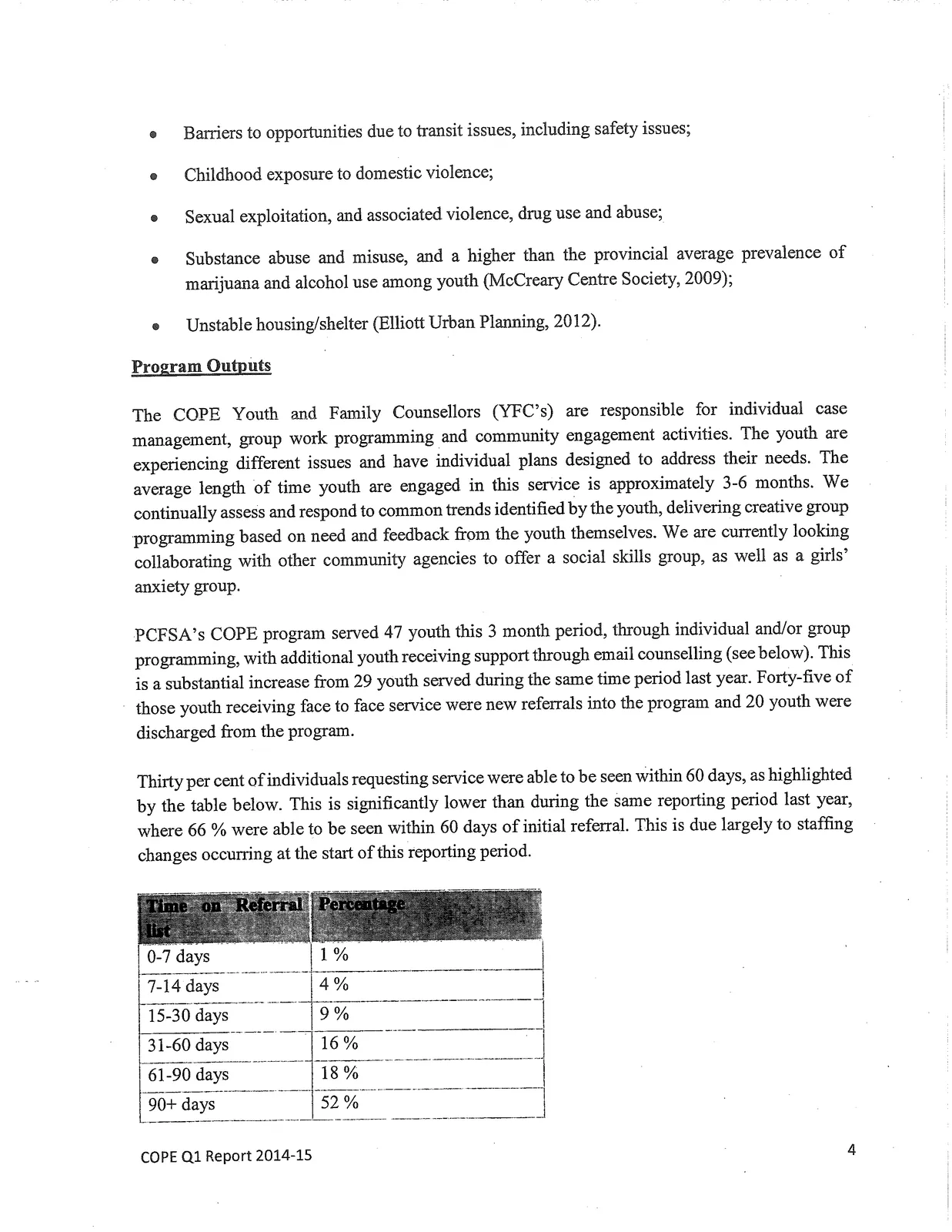
Thirty per cent of individuals requesting service were able to be seen within 60 days, as highlighted by the table below. This is significantly lower than during the same reporting period last year, where 66 % were able to be seen within 60 days of initial referral. This is due largely to staffing changes occurring at the start of this reporting period.
| Time on Referral list | Percentage |
|---|---|
| 0-7 days | 1 % |
| 7-14 days | 4 % |
| 15-30 days | 9 % |
| 31-60 days | 16 % |
| 61-90 days | 18 % |
| 90+ days | 52 % |
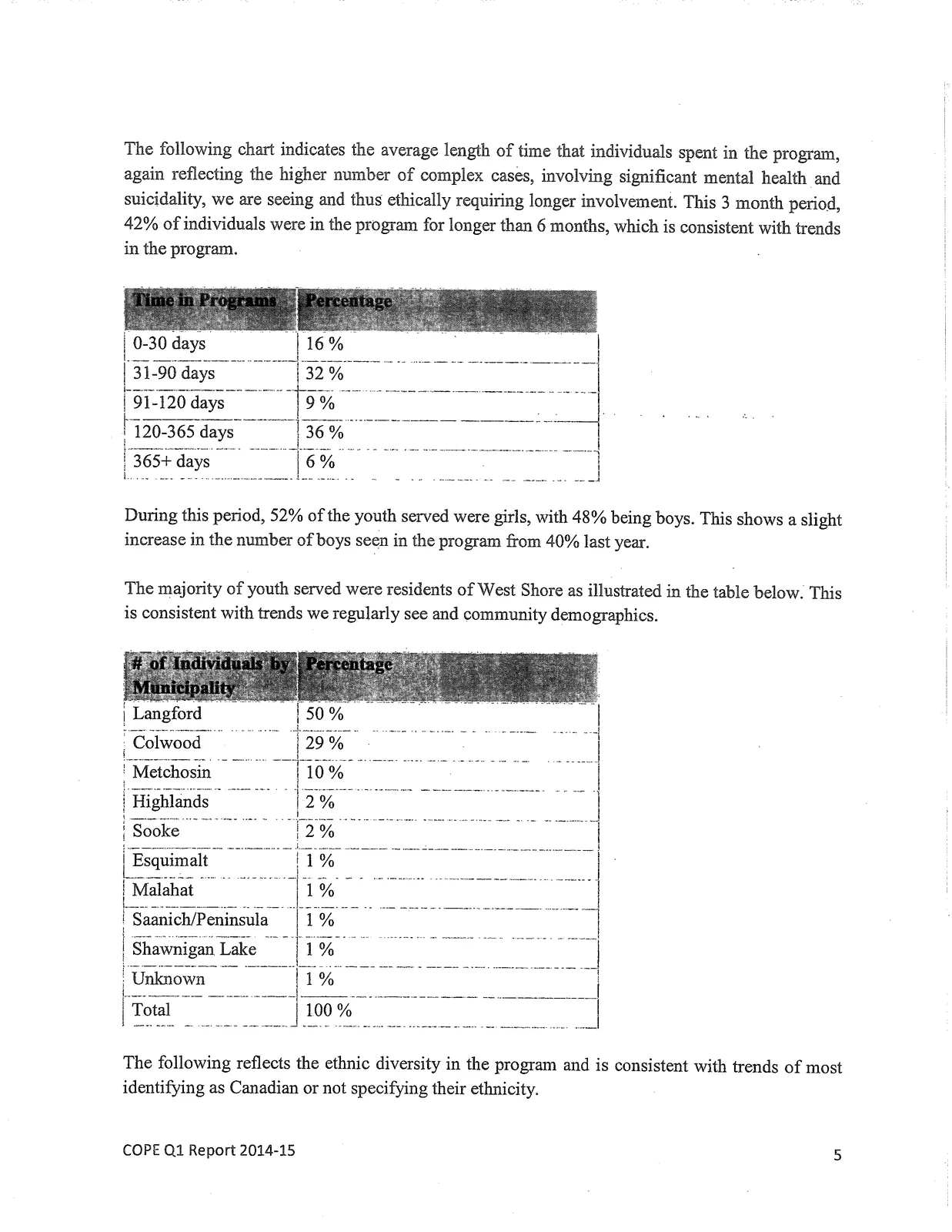
The following chart indicates the average length of time that individuals spent in the program, again reflecting the higher number of complex cases, involving significant mental health and suicidality, we are seeing and thus ethically requiring longer involvement. This 3 month period, 42% of individuals were in the program for longer than 6 months, which is consistent with trends in the program.
| Time in Programs | Percentage |
|---|---|
| 0-30 days | 16 % |
| 31-90 days | 32 % |
| 91-120 days | 9 % |
| 120-365 days | 36 % |
| 365+ days | 6 % |
During this period, 52% of the youth served were girls, with 48% being boys. This shows a slight increase in the number of boys seen in the program from 40% last year.
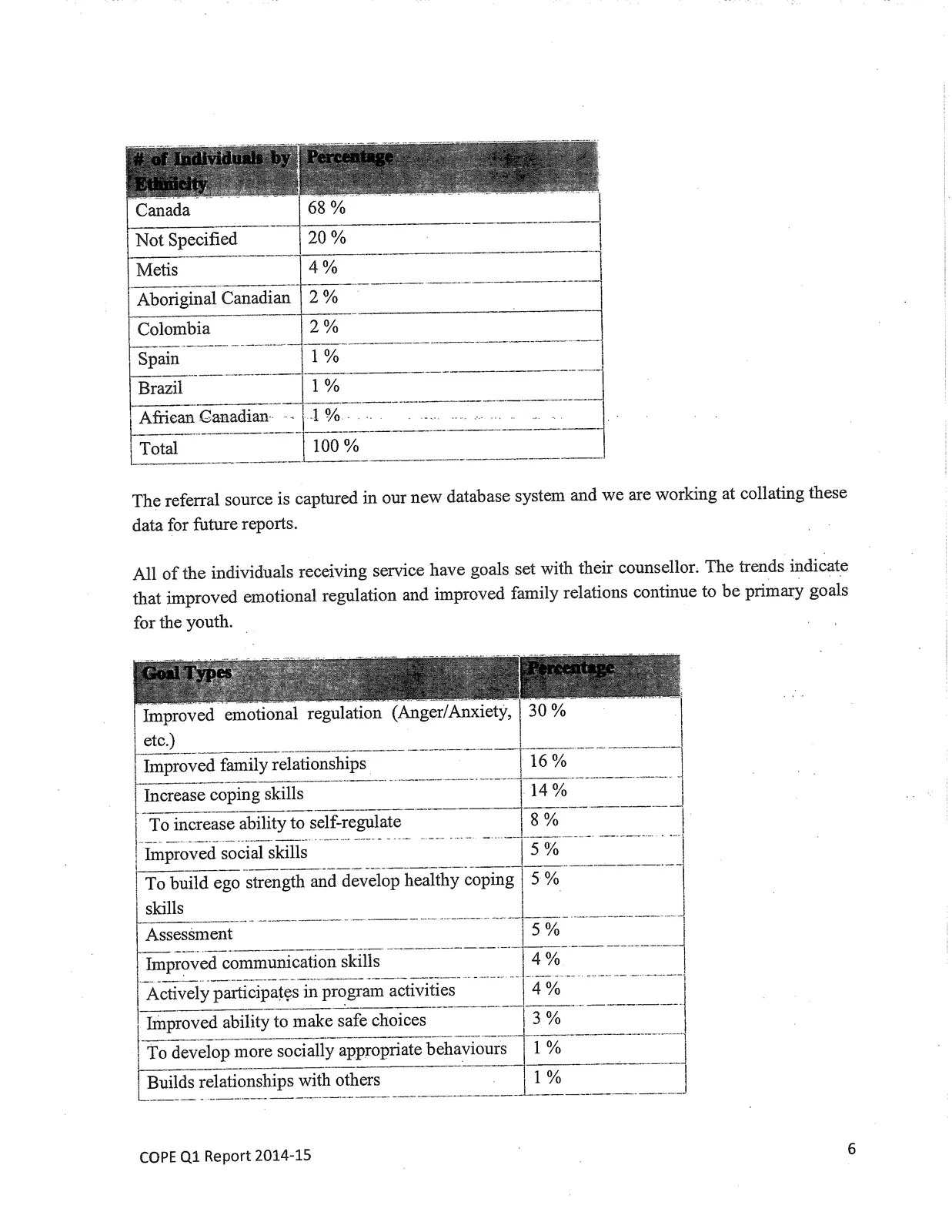
The majority of youth served were residents of West Shore as illustrated in the table below. This is consistent with trends we regularly see and community demographics.
| # of Individuals by Municipality | Percentage |
|---|---|
| Langford | 50 % |
| Colwood | 29 % |
| Metchosin | 10 % |
| Highlands | 2 % |
| Sooke | 2 % |
| Esquimalt | 1 % |
| Malahat | 1 % |
| Saanich/Peninsula | 1 % |
| Shawnigan Lake | 1 % |
| Unknown | 1 % |
| Total | 100 % |
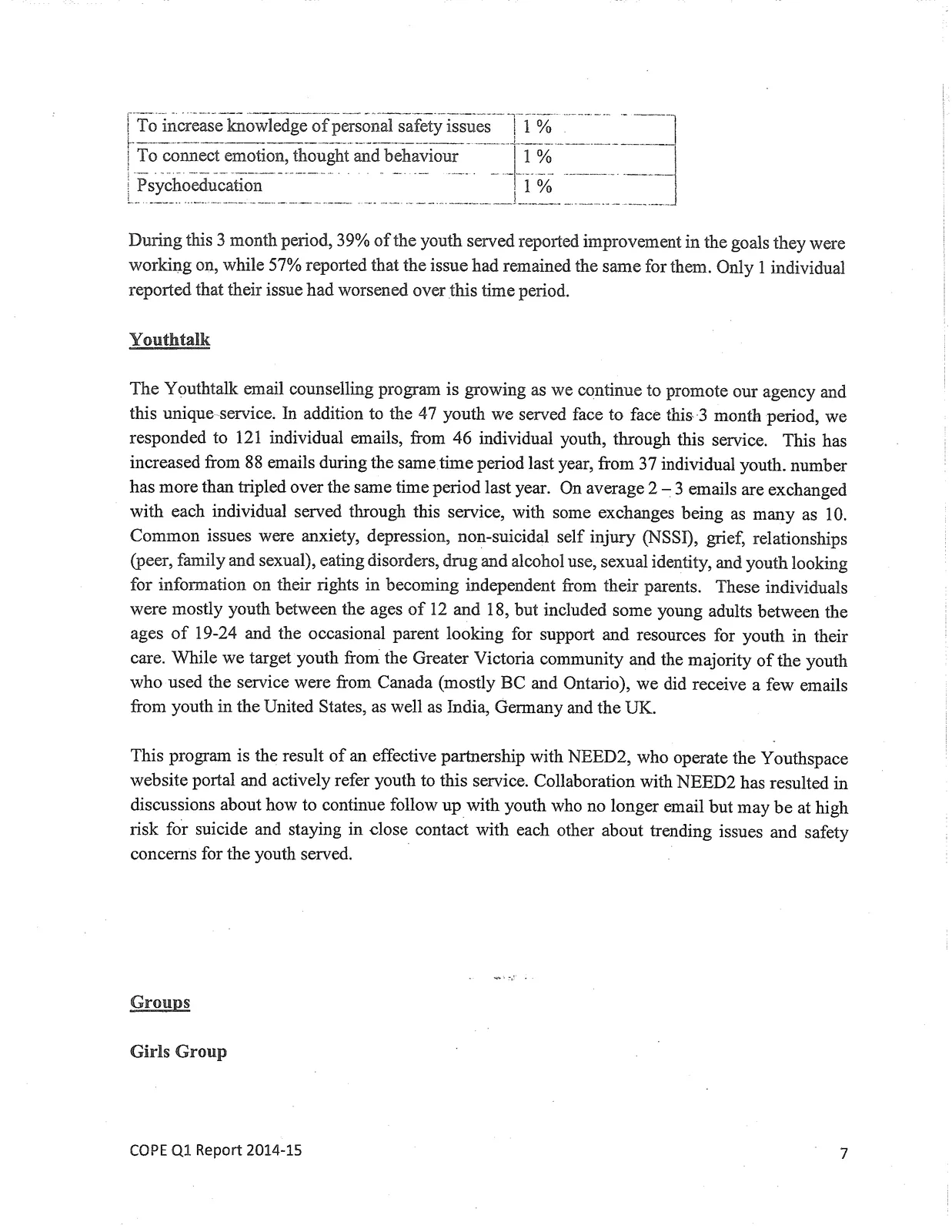
The following reflects the ethnic diversity in the program and is consistent with trends of most identifying as Canadian or not specifying their ethnicity.
| # of Individuals by Ethnicity | Percentage |
|---|---|
| Canada | 68 % |
| Not Specified | 20 % |
| Metis | 4 % |
| Aboriginal Canadian | 2 % |
| Colombia | 2 % |
| Spain | 1 % |
| Brazil | 1 % |
| African Canadian | 1 % |
| Total | 100 % |
The referral source is captured in our new database system and we are working at collating these data for future reports.
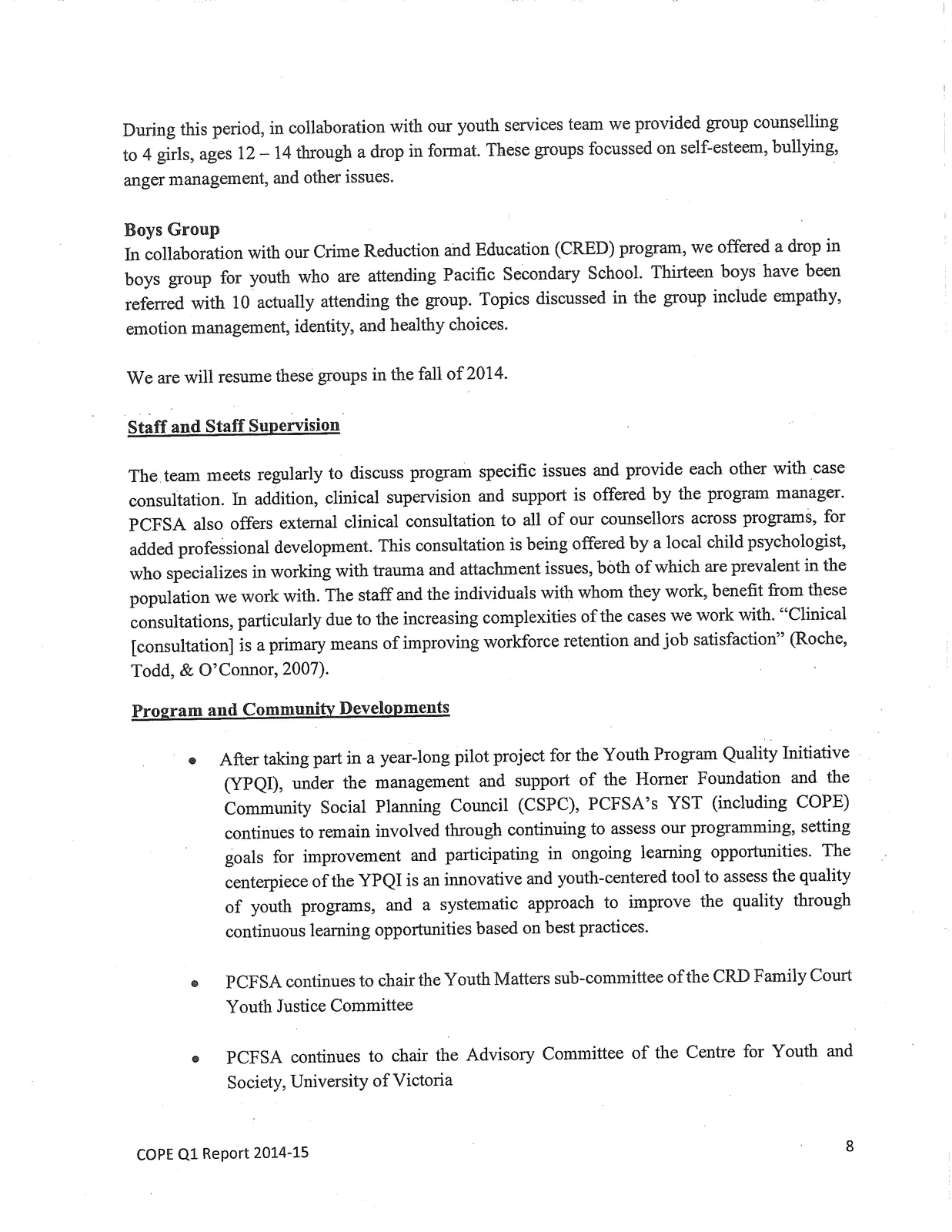
All of the individuals receiving service have goals set with their counsellor. The trends indicate that improved emotional regulation and improved family relations continue to be primary goals for the youth.
| Goal Types | Percentage |
|---|---|
| Improved emotional regulation (Anger/Anxiety, etc.) | 30 % |
| Improved family relationships | 16 % |
| Increase coping skills | 14 % |
| To increase ability to self-regulate | 8 % |
| Improved social skills | 5 % |
| To build ego strength and develop healthy coping skills | 5 % |
| Assessment | 5 % |
| Improved communication skills | 4 % |
| Actively participates in program activities | 4 % |
| Improved ability to make safe choices | 3 % |
| To develop more socially appropriate behaviours | 1 % |
| Builds relationships with others | 1 % |
| To increase knowledge of personal safety issues | 1 % |
| To connect emotion, thought and behaviour | 1 % |
| Psychoeducation | 1 % |
During this 3 month period, 39% of the youth served reported improvement in the goals they were working on, while 57% reported that the issue had remained the same for them. Only 1 individual reported that their issue had worsened over this time period.
Youthtalk
The Youthtalk email counselling program is growing as we continue to promote our agency and this unique service. In addition to the 47 youth we served face to face this 3 month period, we responded to 121 individual emails, from 46 individual youth, through this service. This has increased from 88 emails during the same time period last year, from 37 individual youth. number has more than tripled over the same time period last year. On average 2 – 3 emails are exchanged with each individual served through this service, with some exchanges being as many as 10. Common issues were anxiety, depression, non-suicidal self injury (NSSI), grief, relationships (peer, family and sexual), eating disorders, drug and alcohol use, sexual identity, and youth looking for information on their rights in becoming independent from their parents. These individuals were mostly youth between the ages of 12 and 18, but included some young adults between the ages of 19-24 and the occasional parent looking for support and resources for youth in their care. While we target youth from the Greater Victoria community and the majority of the youth who used the service were from Canada (mostly BC and Ontario), we did receive a few emails from youth in the United States, as well as India, Germany and the UK.
This program is the result of an effective partnership with NEED2, who operate the Youthspace website portal and actively refer youth to this service. Collaboration with NEED2 has resulted in discussions about how to continue follow up with youth who no longer email but may be at high risk for suicide and staying in close contact with each other about trending issues and safety concerns for the youth served.
Groups
Girls Group
During this period, in collaboration with our youth services team we provided group counselling to 4 girls, ages 12 – 14 through a drop in format. These groups focussed on self-esteem, bullying, anger management, and other issues.
Boys Group
In collaboration with our Crime Reduction and Education (CRED) program, we offered a drop in boys group for youth who are attending Pacific Secondary School. Thirteen boys have been referred with 10 actually attending the group. Topics discussed in the group include empathy, emotion management, identity, and healthy choices.
We are will resume these groups in the fall of 2014.
Staff and Staff Supervision
The team meets regularly to discuss program specific issues and provide each other with case consultation. In addition, clinical supervision and support is offered by the program manager. PCFSA also offers external clinical consultation to all of our counsellors across programs, for added professional development. This consultation is being offered by a local child psychologist, who specializes in working with trauma and attachment issues, both of which are prevalent in the population we work with. The staff and the individuals with whom they work, benefit from these consultations, particularly due to the increasing complexities of the cases we work with. “Clinical [consultation] is a primary means of improving workforce retention and job satisfaction” (Roche, Todd, & O’Connor, 2007).
Program and Community Developments
- After taking part in a year-long pilot project for the Youth Program Quality Initiative (YPQI), under the management and support of the Horner Foundation and the Community Social Planning Council (CSPC), PCFSA’s YST (including COPE) continues to remain involved through continuing to assess our programming, setting goals for improvement and participating in ongoing learning opportunities. The centerpiece of the YPQI is an innovative and youth-centered tool to assess the quality of youth programs, and a systematic approach to improve the quality through continuous learning opportunities based on best practices.
- PCFSA continues to chair the Youth Matters sub-committee of the CRD Family Court Youth Justice Committee
- PCFSA continues to chair the Advisory Committee of the Centre for Youth and Society, University of Victoria
- PCFSA continues to actively participate in the Langford City Protective Services Committee
- PCFSA continues to chair the West Shore Family Strategy group
Service Improvement Plan
Program Accessibility
- Our enhanced intake process of assigning a dedicated, full-time and independently funded PCFSA duty worker to receive all referrals and assess level of need and triage referrals appropriately has enabled us to respond to youth in a more timely way.
- We continue to look at creative ways to increase the capacity of our services, including adding groups and engaging practicum students
- As our group programs continue to develop, we are looking at new ways to collaborate with other agencies and programs.
- We have been involved in the community consultations regarding the Neighbourhood Learning Centres in the new high schools.
Program Efficiency
- As the number emails responded to with our email counselling service, Youthtalk, has continued to remain very high, we have invested in additional PCFSA resources to create a dedicated part time staff position for this unique program.
- PCFSA’s youth and family counsellors continually review their caseload to transition youth who have achieved their goals and engage with youth who are in need of immediate support.
- We continue to provide group counselling, which has allowed us to provide services to more youth and continue to look at ways to collaborate with other agencies.
Program Effectiveness
- We are continuing to improve our database system on a regular basis, with a goal toward providing information with regard to measurable and aggregate outcomes for the program. We are now exploring alternatives to our current system, which may help facilitate this process.
- We continue to support staff in their professional development and to ensure that the COPE program is delivered in a collaborative, integrated and cooperative way through our community networking.
Program Satisfaction
- We offer a range of methods for youth and their families to offer feedback about the services they receive as well as offer ideas about the services they would like to see offered. These include a paper survey, an anonymous web-based survey, focus groups, and impromptu conversations with youth groups.
- We facilitate opportunities for youth to act as consultants and presenters, such as the housing conference at Belmont High School September 2013.
Goals
- To incorporate the feedback from our Youth Engagement Groups and assessments form the Youth Program Quality Initiative into our youth programming, strategic planning and community developments.
- To continue to improve upon our current database system, to collate information on referral information and outcomes.
- To continue to offer professional development opportunities for the program staff.
- To improve upon our methods of seeking feedback from the youth we serve in the program, their caregivers, and referral agents.
- To build on collaborations with partner agencies to further develop groups and other programming.
Liz Nelson Program Manager August 2014
Document Images
(10)