This site is in beta — data may be incomplete and features are still being added.
Council Meeting/Documents/With 16 to 20 on board, Brad buttons it up (Salmon Relocation Presentation)
Presentation

With 16 to 20 on board, Brad buttons it up (Salmon Relocation Presentation)

May 17, 2022Pages 53–6512 sections

A photo presentation by K. Gray of the Mill Bay and District Conservation Society documenting the process of relocating Coho salmon using tanks, trucks, and chutes.

50 to 60 Coho salmon moved per truckShawnigan LakeSaanich Inlet WatershedRelocation to upper and lower creeks

With 16 to 20 on board, Brad buttons it up
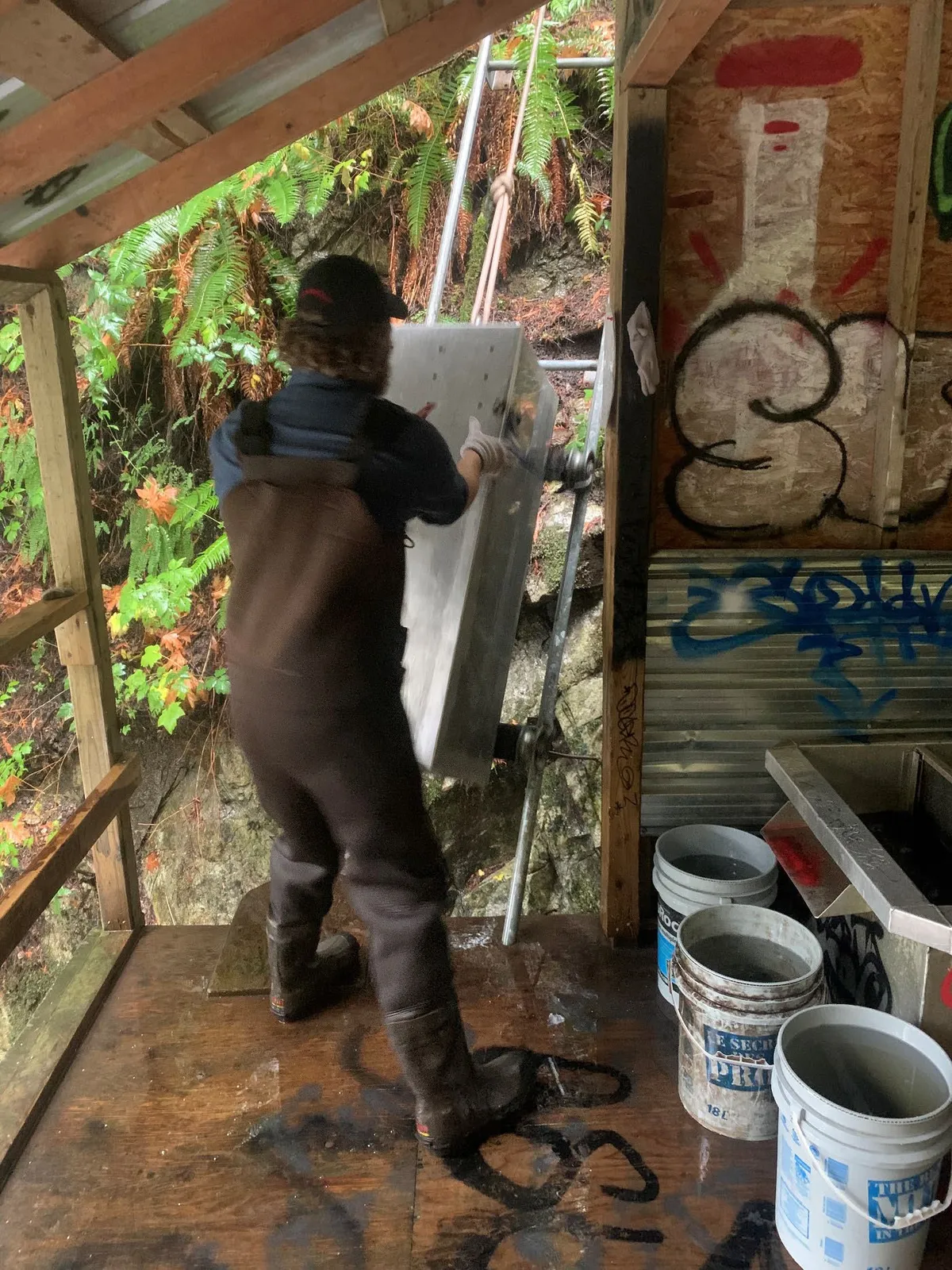
Brad closing the lid of the metal trolley tank inside a wooden structure.
Page 53–65

And away we go!

The tank is pulled up a dozen metres on a rail track over a steep and rocky hillside with the help of a pickup truck.

Page 53–65

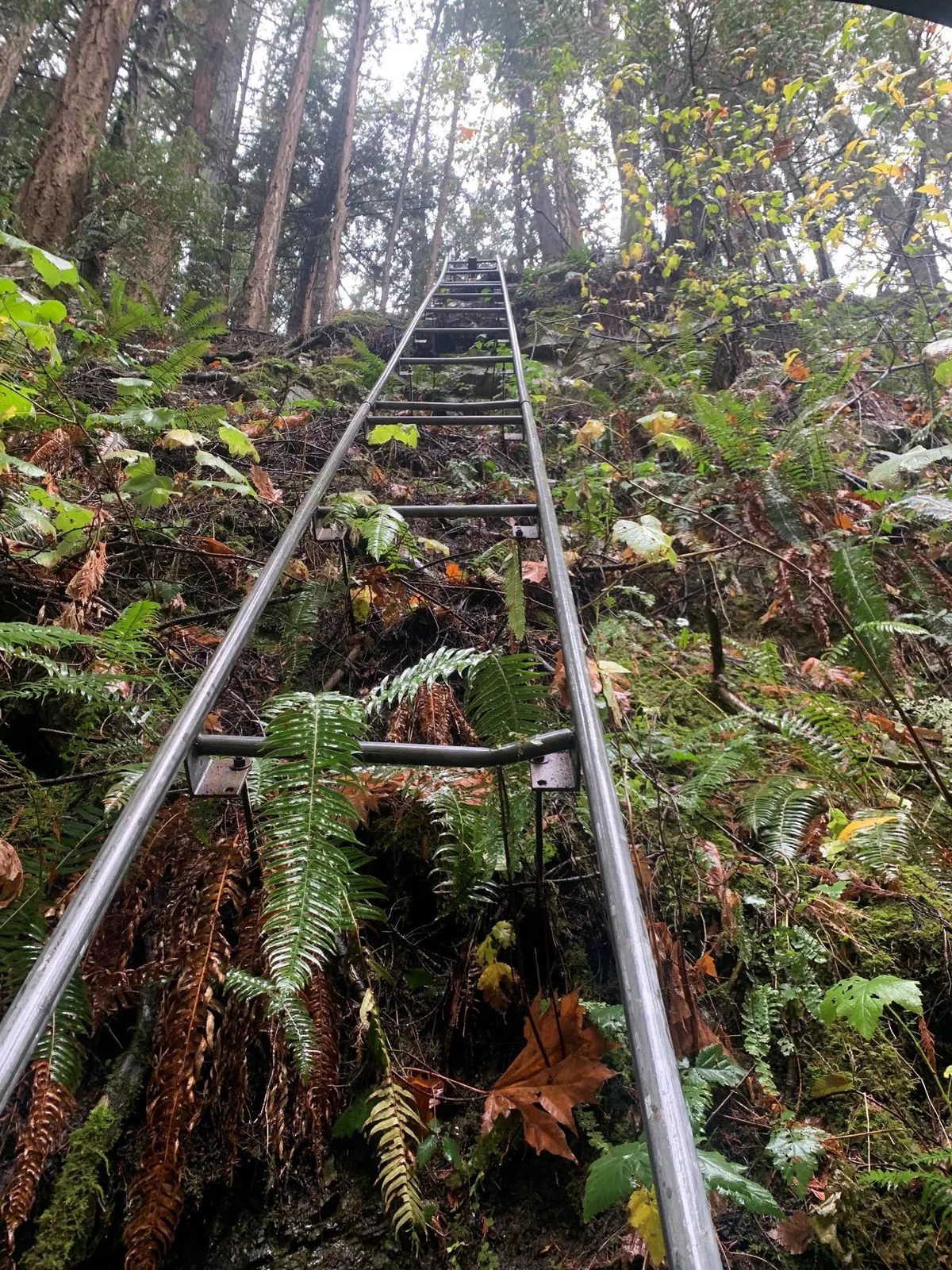
Up & over the ridge to the waiting gang above
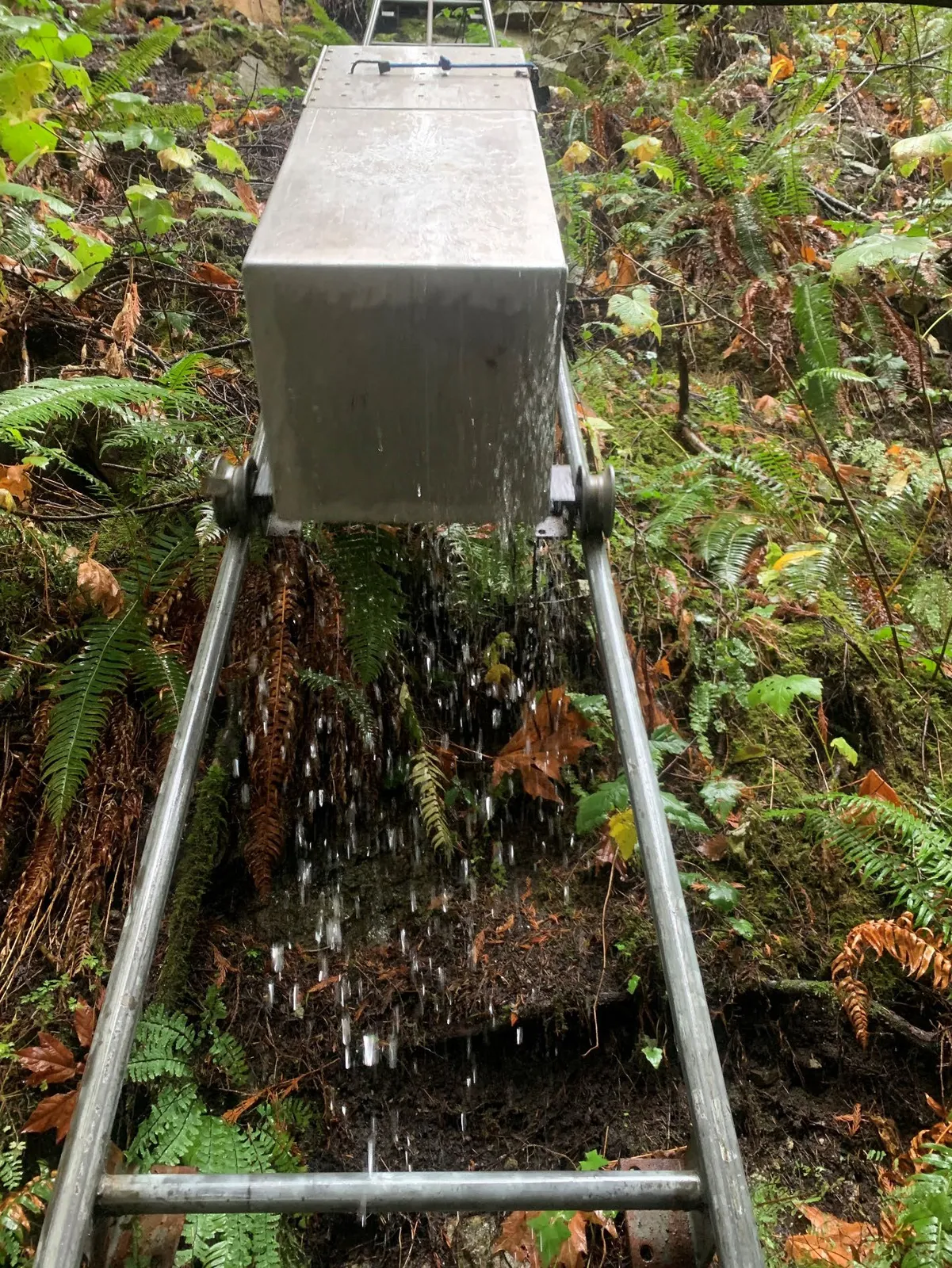
The trolley tank ascending the metal rail track.
View up the steep rail track through ferns and forest toward the ridge.
Page 53–65

Waiting for the tank truck

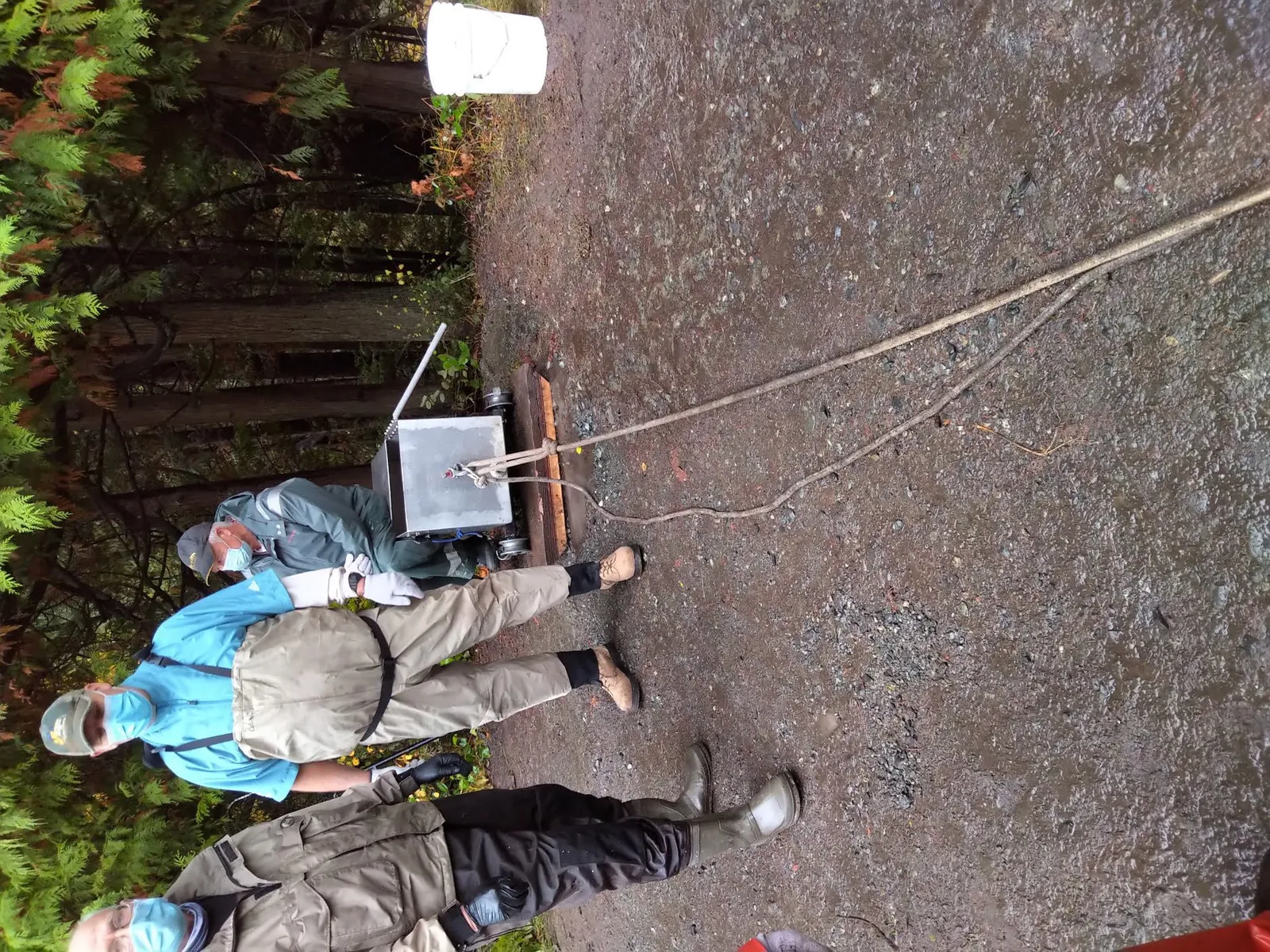
To raise the trolley tank, the rope is pulled through a pully by a pickup.
The tow rope stretched across a muddy clearing, leading to the trolley tank.
Page 53–65

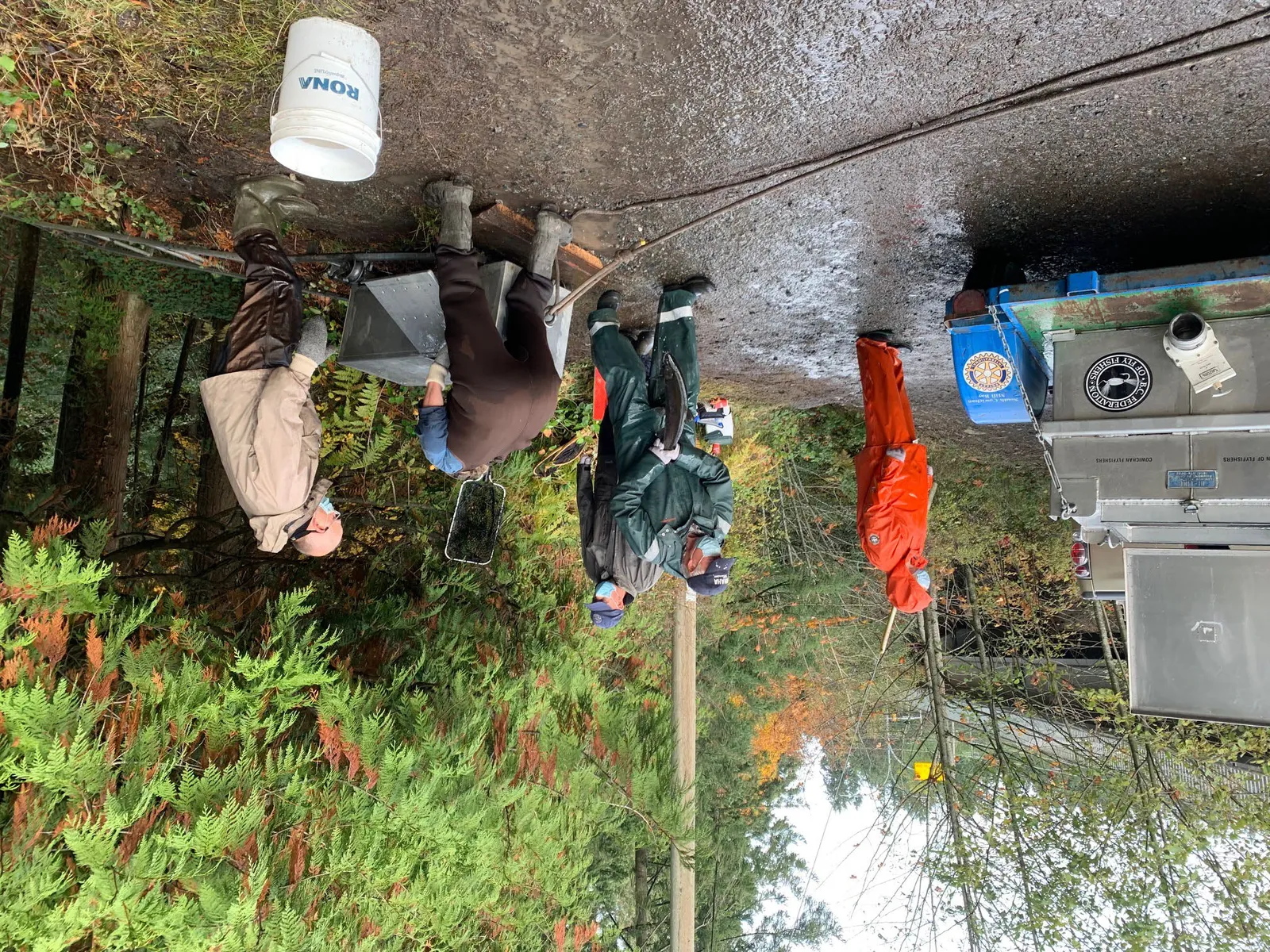
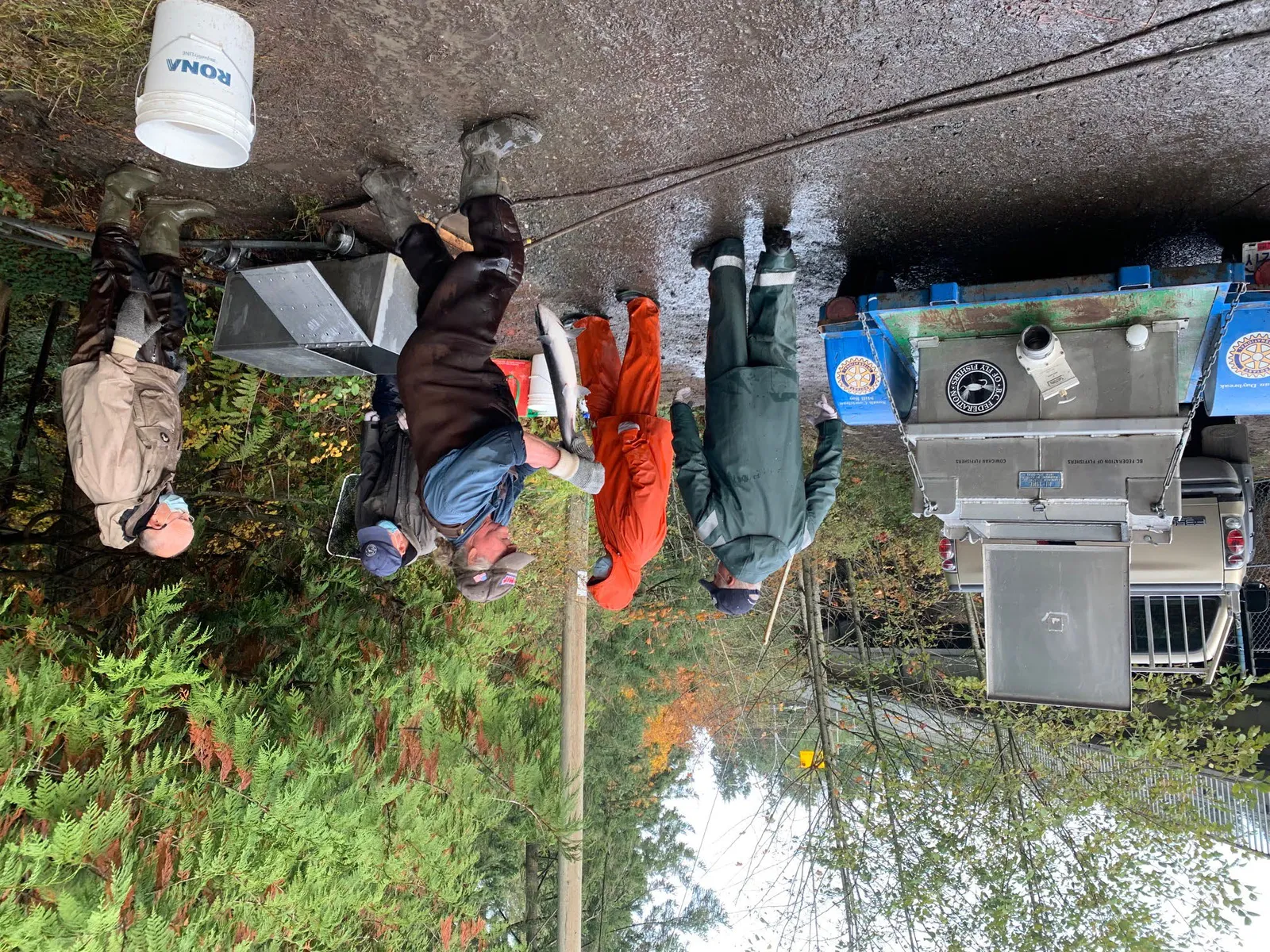
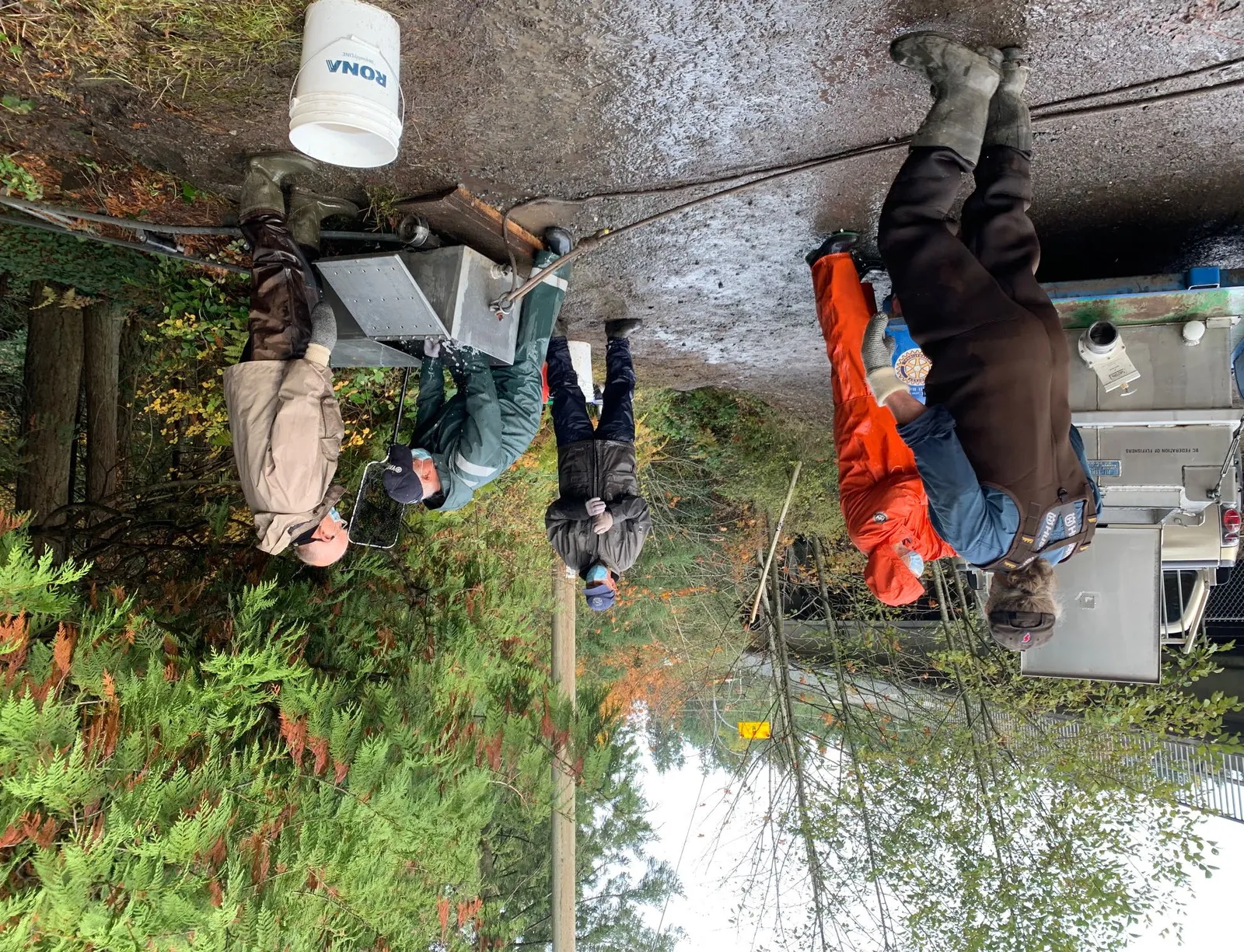
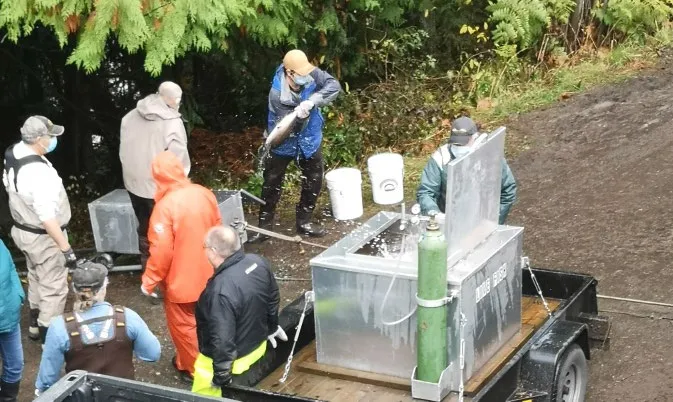
At the road above, volunteers unload the fish from the trolley tank, and place them into water-filled tanks towed by pickup trucks.

A group of volunteers transferring a salmon from the trolley tank into a large transport tank equipped with an oxygen cylinder.

Tow rope attached to a pickup

A volunteer in waders and a face mask holding a large Coho salmon near a white RONA bucket.
Volunteers working around the transport tank and trolley tank on the roadside.
Multiple volunteers in rain gear handling fish and managing the equipment.
Page 53–65

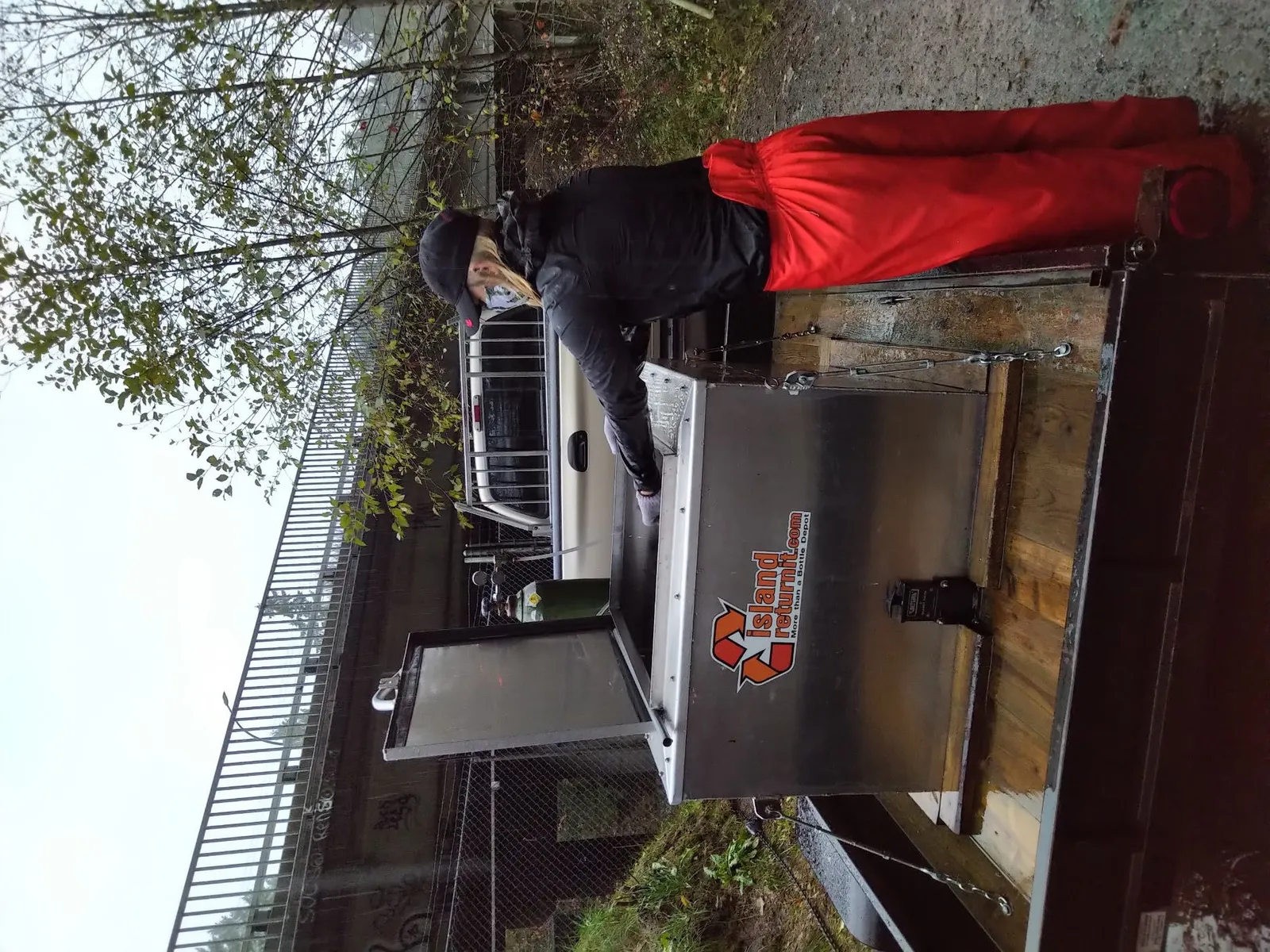
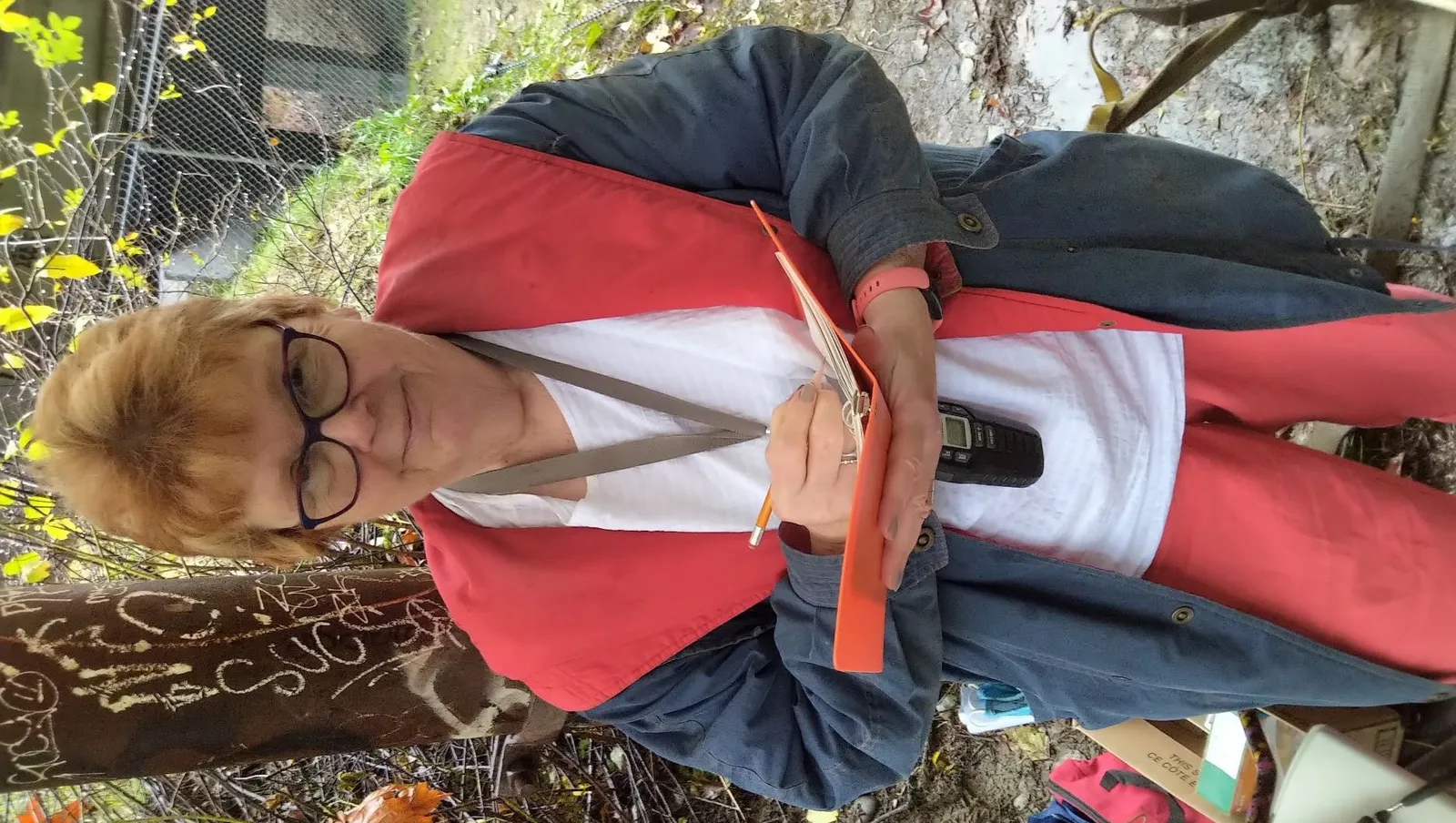
Each one transferred to the tanks is quickly assessed to determine its sex and condition – information recorded in a ledger.
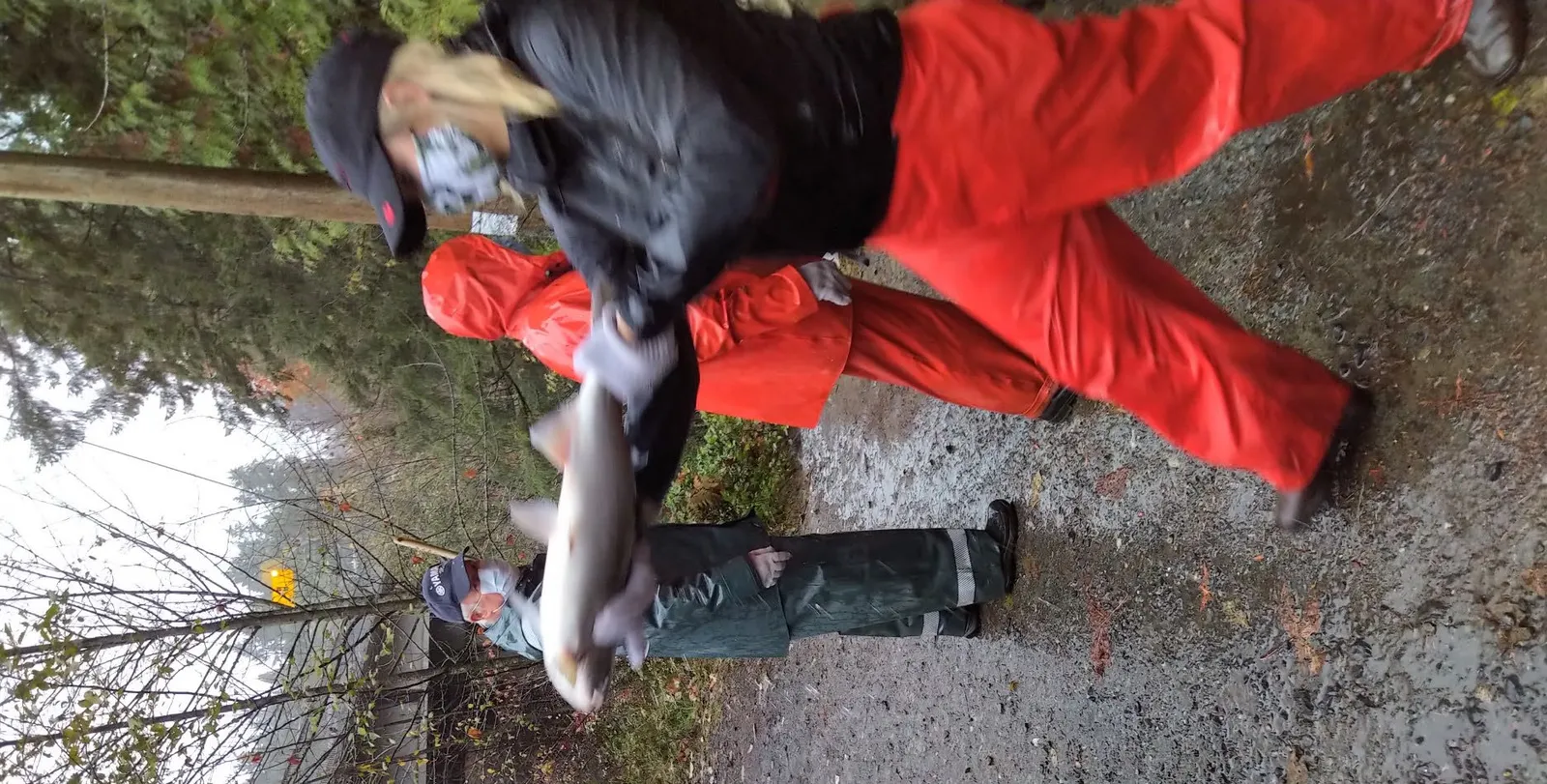
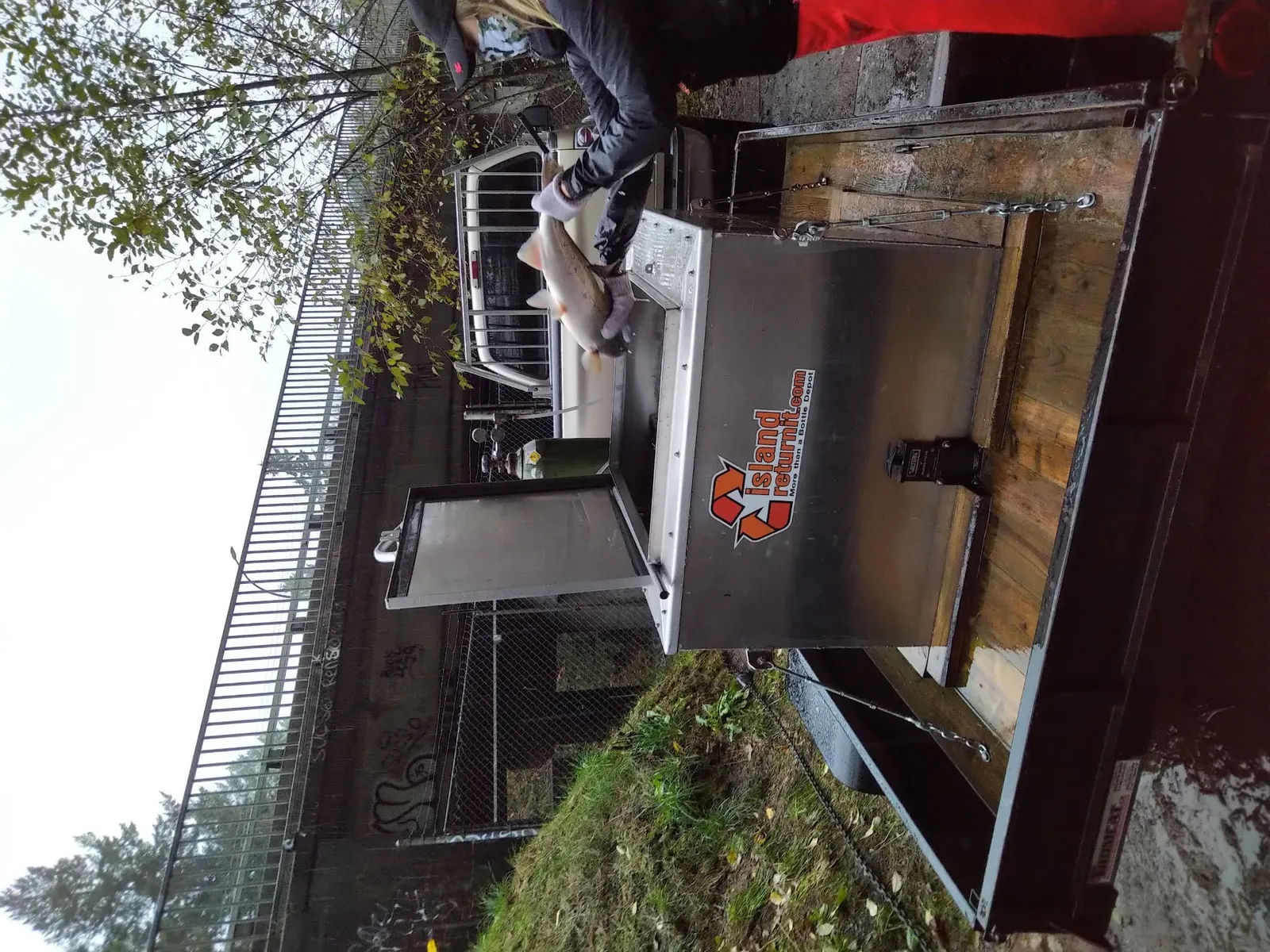
A volunteer in red rain pants placing a salmon into the "Island Return-it" branded transport tank.
A closer view of the salmon being carefully deposited into the transport tank.
A volunteer wearing glasses and a face mask recording data in an orange ledger.

Three trolley tanks full are put into the truck tank for a total of 50 to 60 Coho.

The trucks of salmon are driven up to release areas on the upper creek.

Volunteers gathered around the transport equipment during the transfer process.
Page 53–65

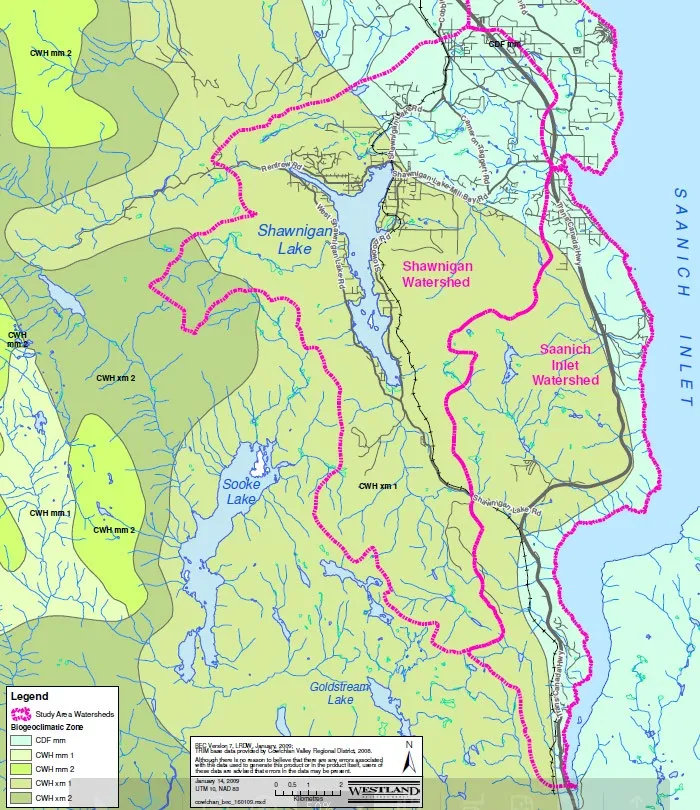
Fish are released in the lower creek or in Shawnigan Lake

Those released to Shawnigan Lake, migrate to streams inflowing to the lake.

Maps Source: South Cowichan Water Plan Study, WorleyParsons, 2009
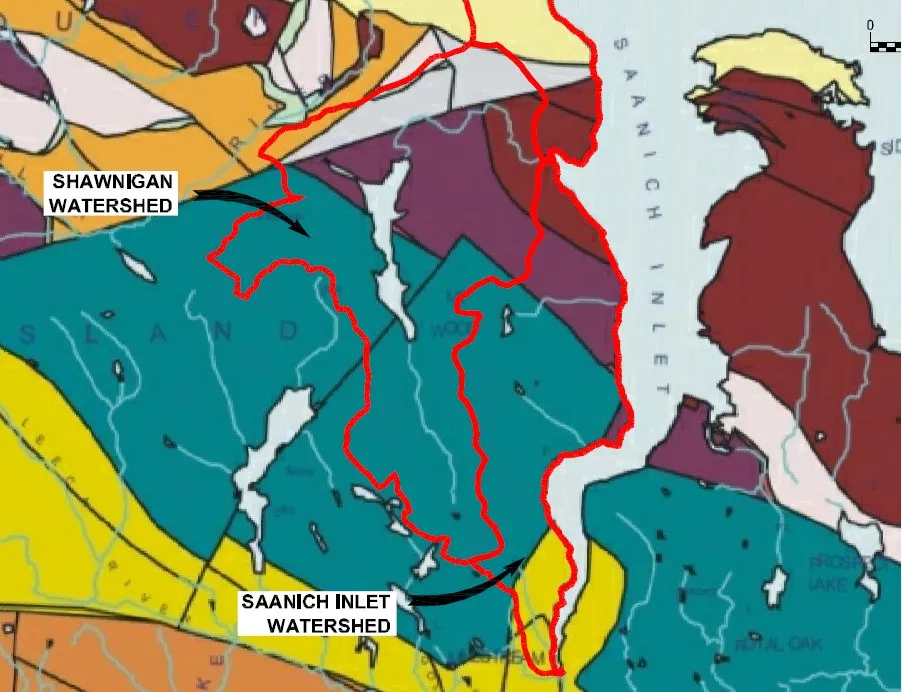
A geologic map highlighting the Shawnigan and Saanich Inlet Watersheds.
A detailed watershed map showing Shawnigan Lake, Sooke Lake, and Goldstream Lake.
Page 53–65

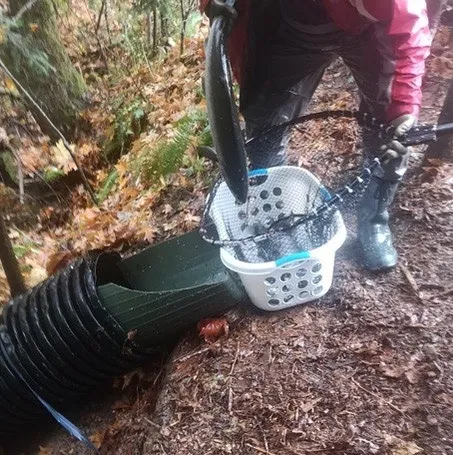
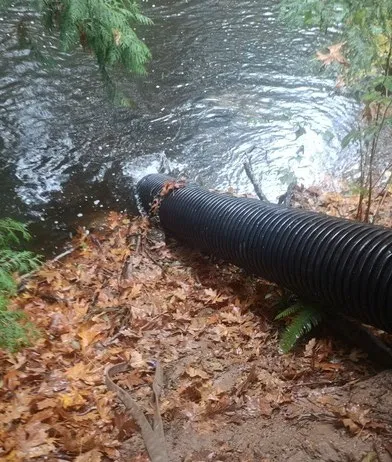
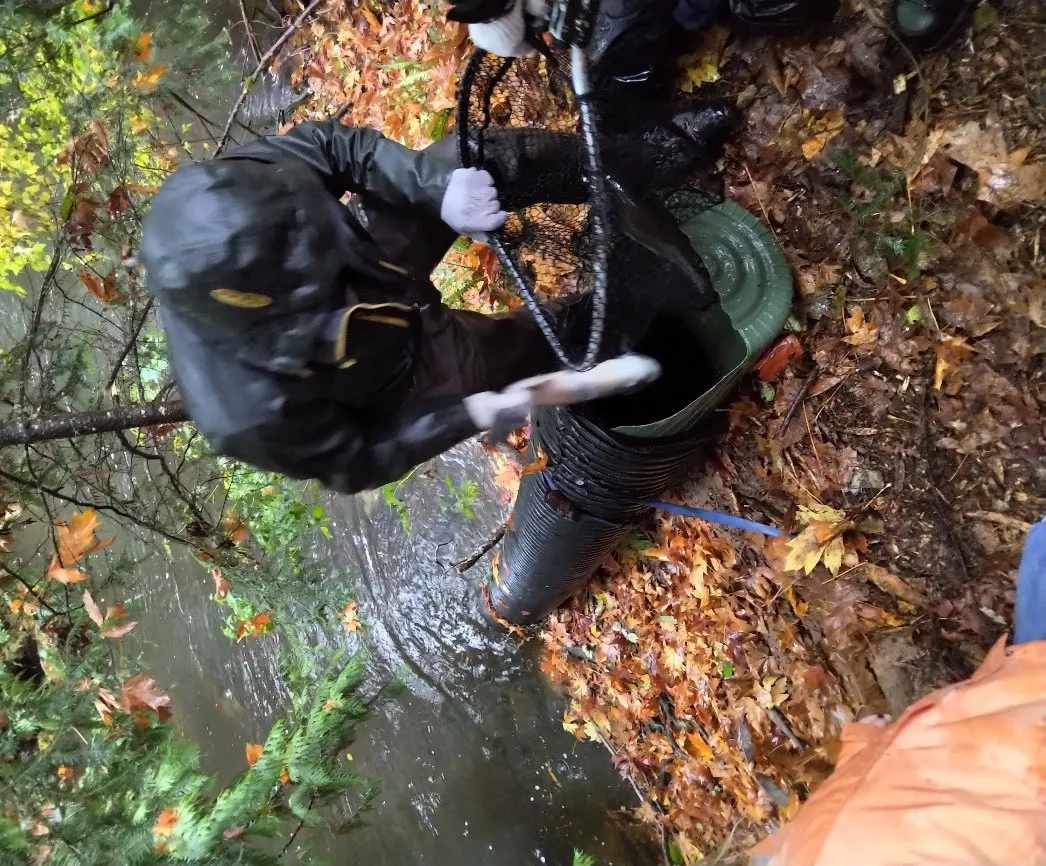
At the Wilkinson drop-off point:

Out of the tank…..…..Down the chute……….Into the creek
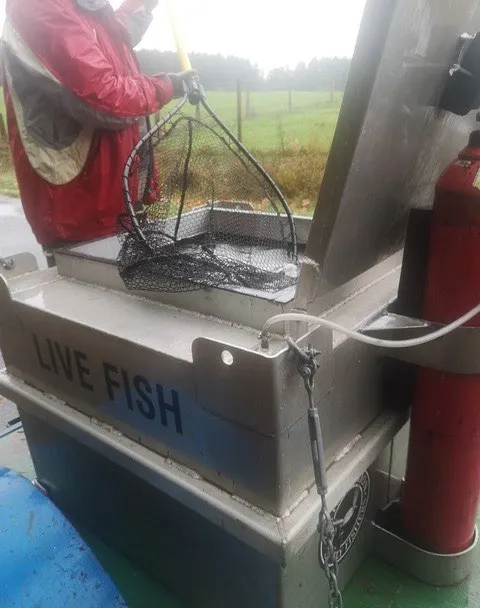
A volunteer using a net to lift a salmon from the transport tank marked "LIVE FISH."
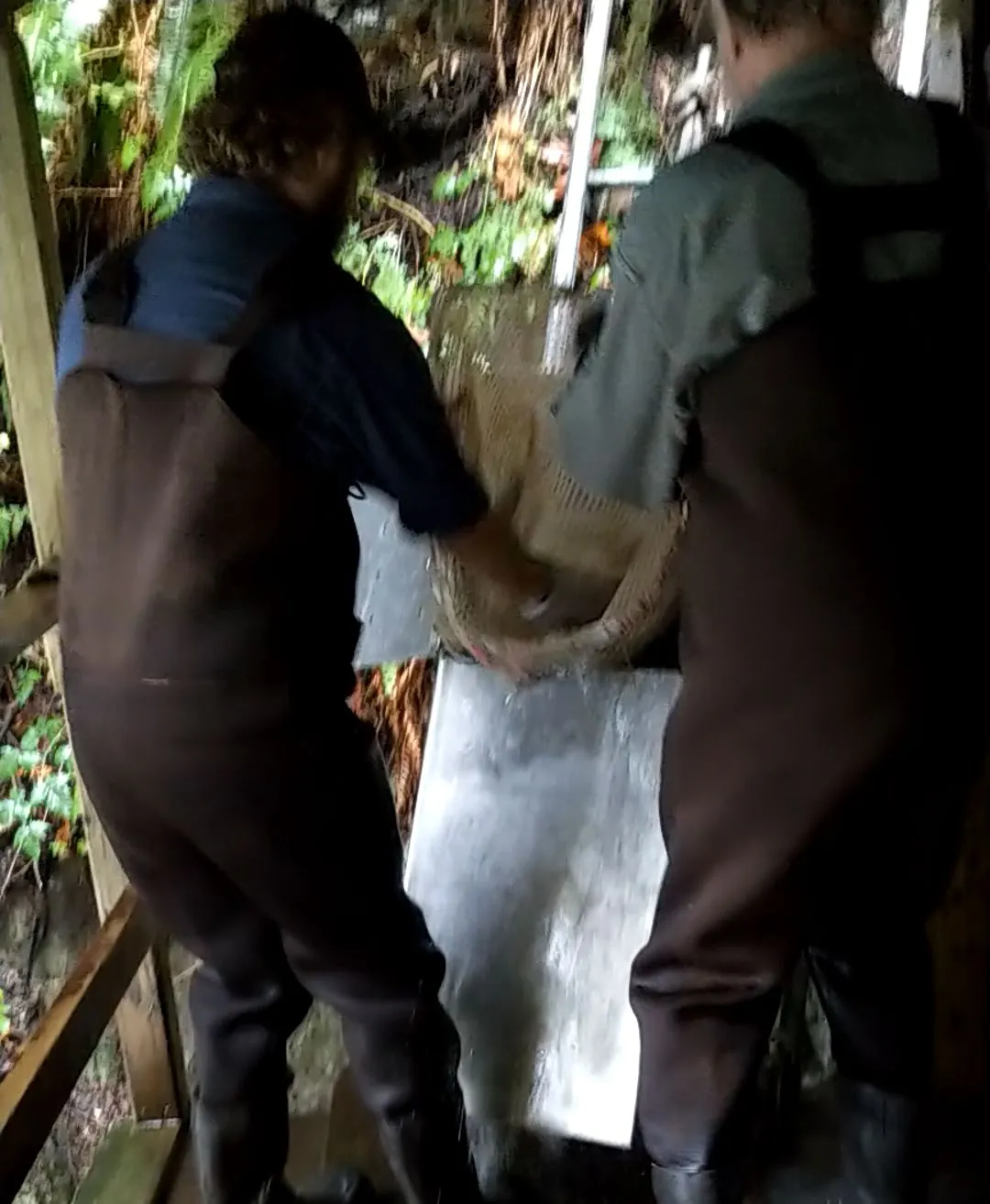
A volunteer pouring a basket of salmon into the head of a large black corrugated release chute.
The end of the corrugated chute discharging salmon into the creek.
Page 53–65

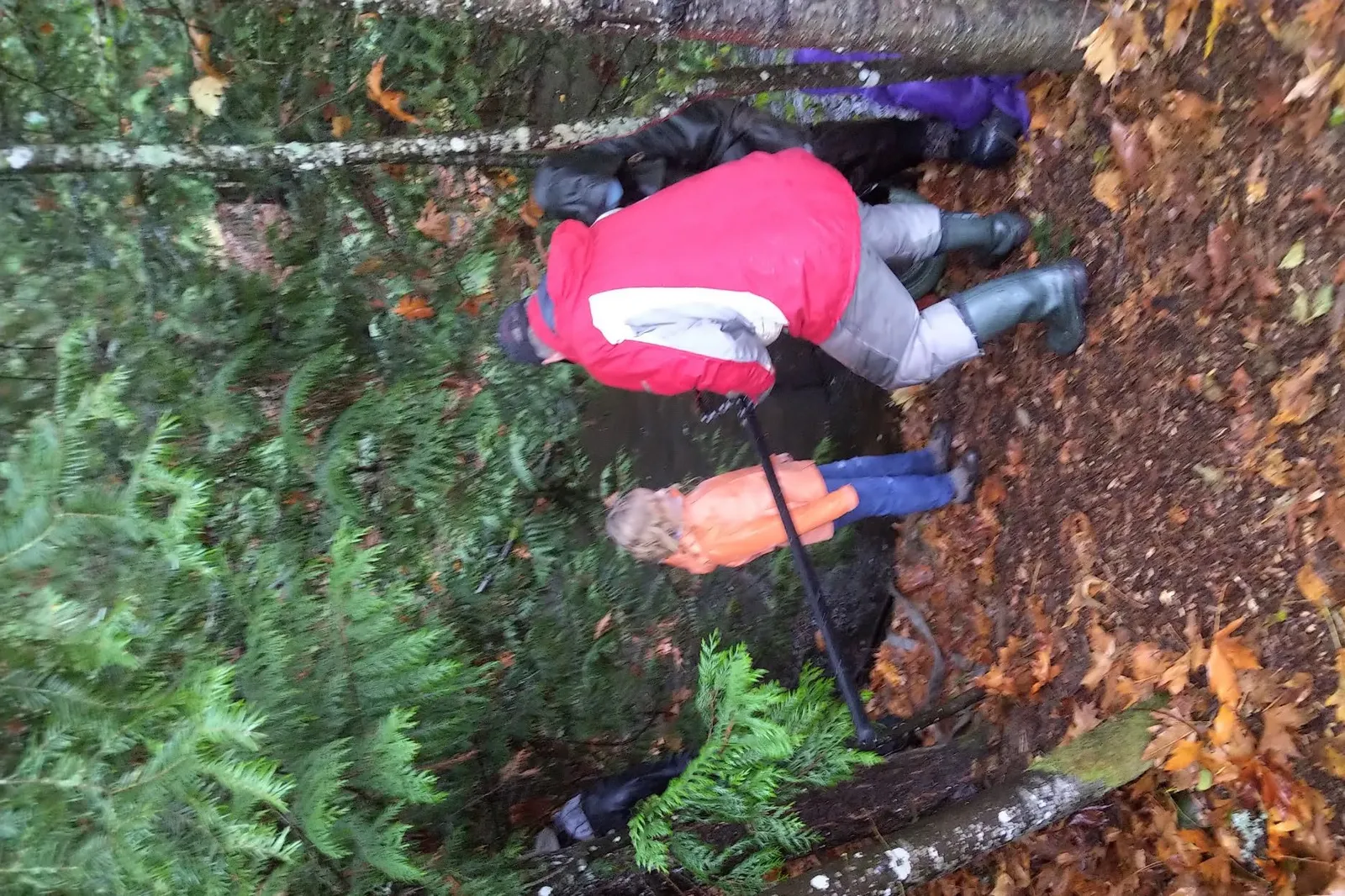
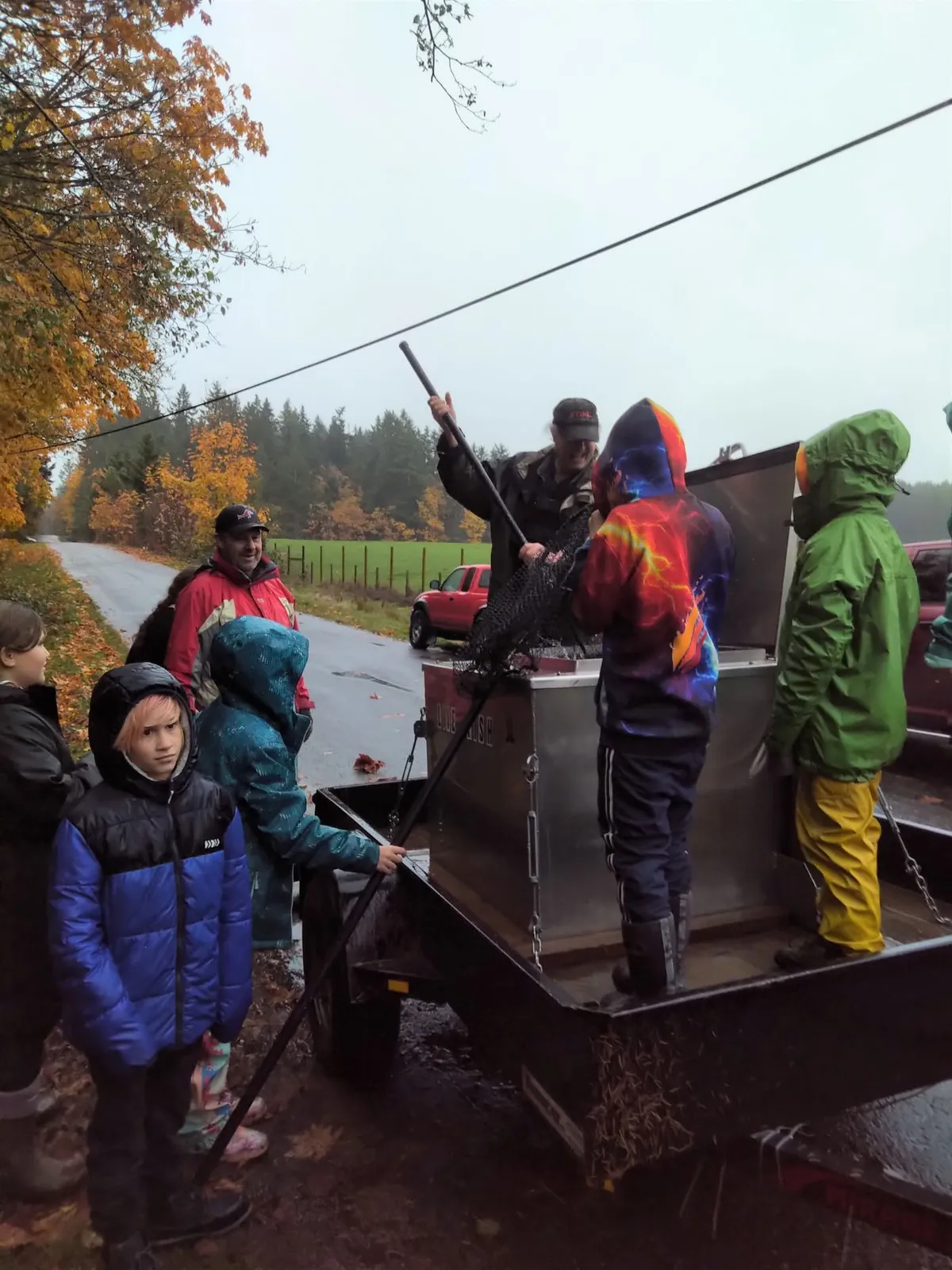
School kids join the fun. Recruiting future volunteers!

Children and adult volunteers standing on a trailer around the transport tank.
A child in an orange jacket watching as a volunteer guides a salmon into the release chute.
Volunteers and a child on the creek bank releasing salmon from the chute into the water.
Page 53–65

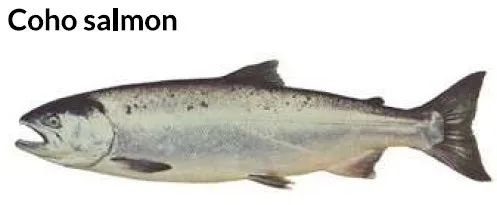
Coho Salmon

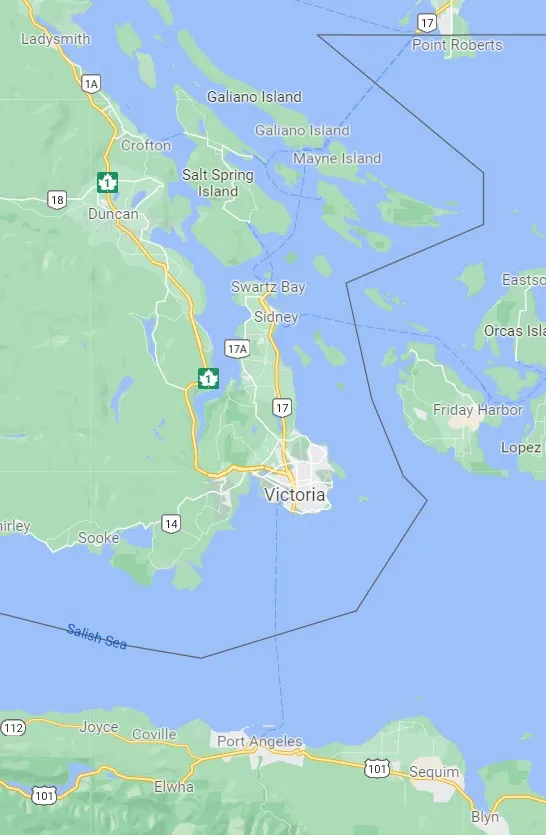
It seems so successful. Why not a few more places!
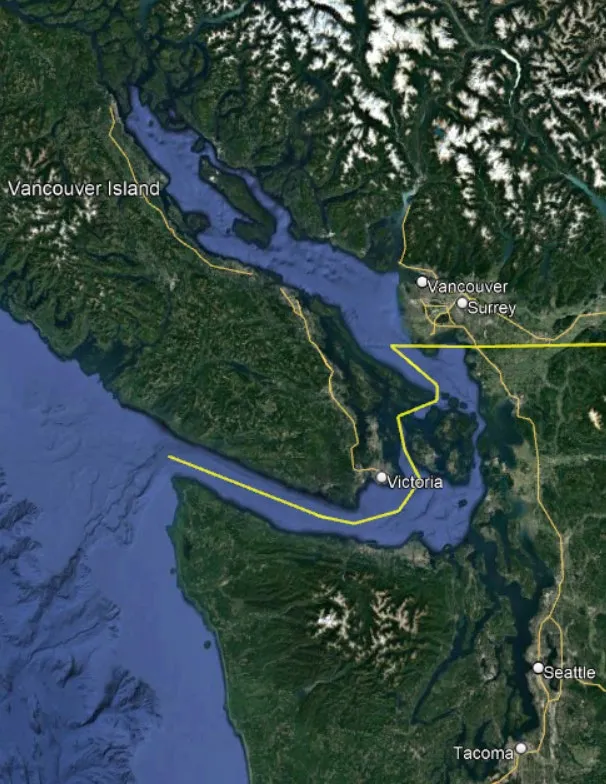
Satellite view of Vancouver Island and the surrounding waterways.
Illustration showing ten examples of Coho salmon.
A road map of the Southern Vancouver Island region, including Victoria and Duncan.
Page 53–65

Chinook Salmon Migration
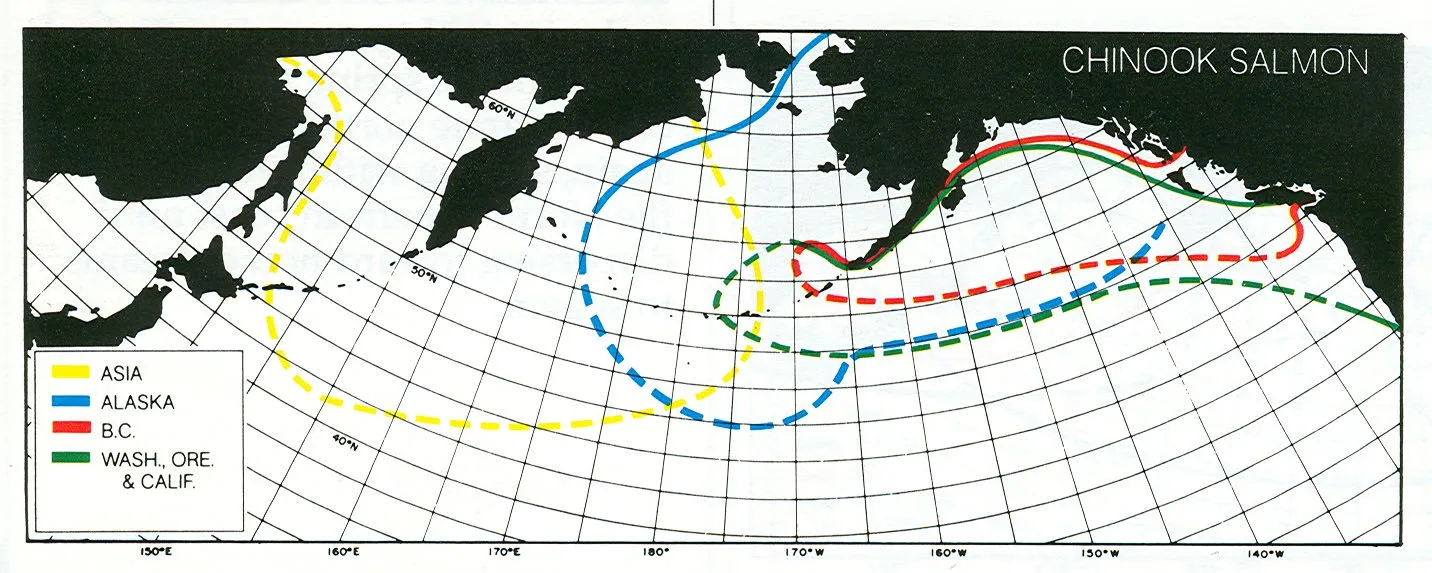
A map of the North Pacific Ocean detailing the migration patterns of Chinook Salmon from Asia, Alaska, B.C., and the Western United States.
Page 53–65

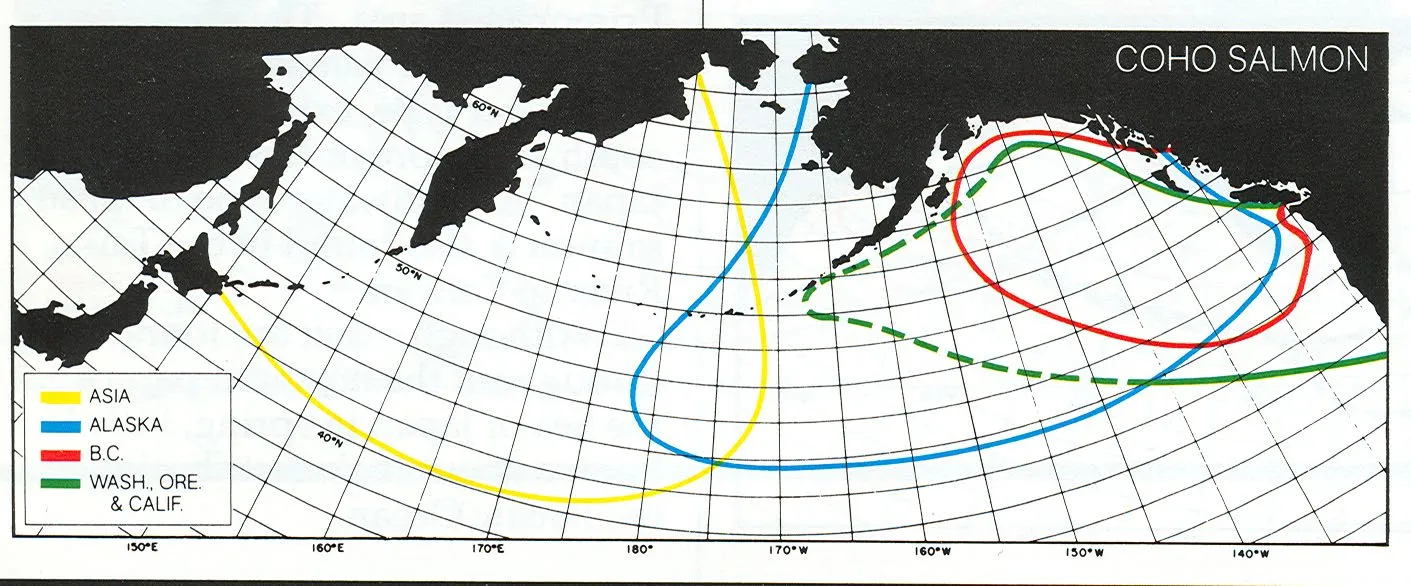
Coho Salmon Migration

A map of the North Pacific Ocean detailing the migration patterns of Coho Salmon from Asia, Alaska, B.C., and the Western United States.
Page 53–65

Document Images

(36)

Document image
Document image
Document image
Document image
Document image
Document image
Document image
Document image
Document image
Document image
Document image
Document image
Document image
Document image
Document image
Document image
Document image
Document image
Document image
Document image
Document image
Document image
Document image
Document image
Document image
Document image
Document image
Document image
Document image
Document image
Document image
Document image
Document image
Document image
Document image
Document image
Extracted from: 2022 05 17 Council Agenda - Agenda - Pdf