Community Wildfire Resiliency Plan 2024 Factsheet
A factsheet summarizing the update to View Royal’s 2007 Community Wildfire Protection Plan, noting that 80% of assessable public land has a low threat rating.
Community Wildfire Resiliency Plan 2024
Factsheet
Town of View Royal February 2025
The Town of View Royal is in the West Shore region of Greater Victoria, along the waterfront of Esquimalt Harbour and Portage Inlet. It is bounded by several different jurisdictions: City of Colwood, Township of Esquimalt, Esquimalt (Kosapsum) First Nation, District of Highlands, City of Langford, District of Saanich and Songhees First Nation. View Royal is within the traditional territory of the lək̓ʷəŋən (Lekwungen) People.
What is the history of fire in View Royal?
In View Royal and on southeast Vancouver Island in general, wildfires occur with moderate frequency and with lower severity. Based on the provincial dataset, large, difficult-to-control wildfires are rare. The Old Man Lake fire in July 2024 was the closest recent wildfire to impact View Royal, burning about 230 ha of second growth forest just north of Sooke Potholes Regional Park (Figure 1). The fire was human-caused and received full suppression efforts from BC Wildfire Service. View Royal Fire Rescue also regularly responds to small brush fires in regional parks. Overall, View Royal does not have the same wildfire risk profile as communities in the interior of BC; however, the risk of interface wildfires is still present within the West Shore, in which interface wildfires can still occur and adversely impact values within the municipality.
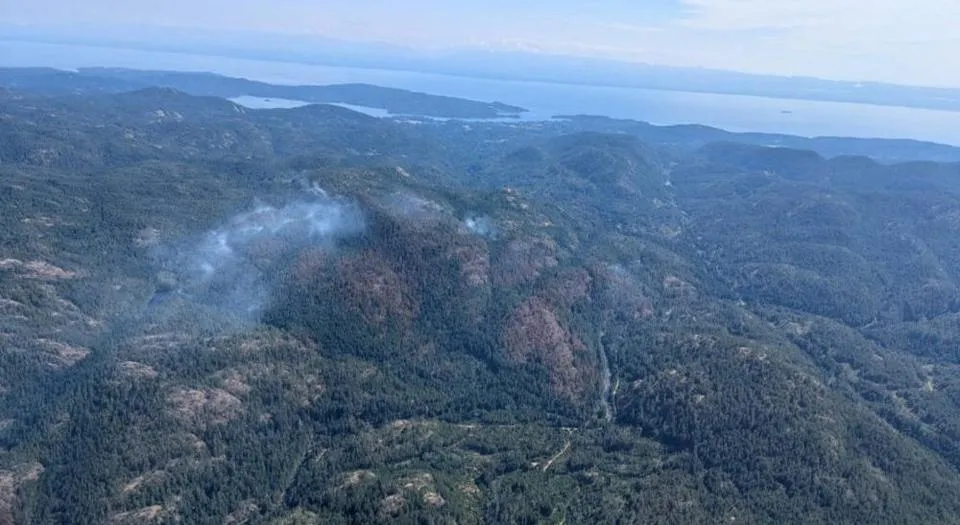
¹ Victoria Times Colonist. (2024). Trails, parks starting to reopen as Old Man Lake fire near Sooke settles down https://www.timescolonist.com/local-news/trails-parks-starting-to-reopen-as-old-man-lake-fire-near-sooke-settles-down-9358381
What is a Community Wildfire Resiliency Plan?
This Community Wildfire Resiliency Plan (CWRP) is an update to View Royal’s 2007 Community Wildfire Protection Plan. A CWRP is both a localized risk assessment and an action plan to improve wildfire resiliency in a region.
What was done?
The Community Wildfire Resiliency Plan process consists of five general phases:
- Consultation with the Town of View Royal and project stakeholders;
- Review of plans and legislation regarding emergency response and wildfire;
- Community description and identification of values at risk;
- Field and GIS assessment of the local wildfire risk, and;
- Analysis and action plan.
What did we find?
Fuel types, terrain and fire weather contribute to a low wildfire threat rating in most of the municipality. Approximately 80% of assessable public land received a low threat rating and 20% received a moderate threat rating. Due to funding program restrictions, these analyses exclude private land, which is an important limitation given that a significant proportion of area within View Royal is privately owned. As well, the assessment quantifies threat as it relates to forest fuels and does not include the ignition potential of residential landscaping, structures or other infrastructure.
However, this does not mean that lower intensity wildfires cannot still burn close to homes and other values and impact them. As a result, there is an emphasis in this plan towards FireSmart education, policy, training, and development considerations. Areas of the municipality that are a high priority for risk reduction actions include the neighborhoods that surround Thetis Lake Regional Park and residences in the northern areas of the municipality due to their proximity to interface forest fuels.
Why is wildfire risk low to moderate?
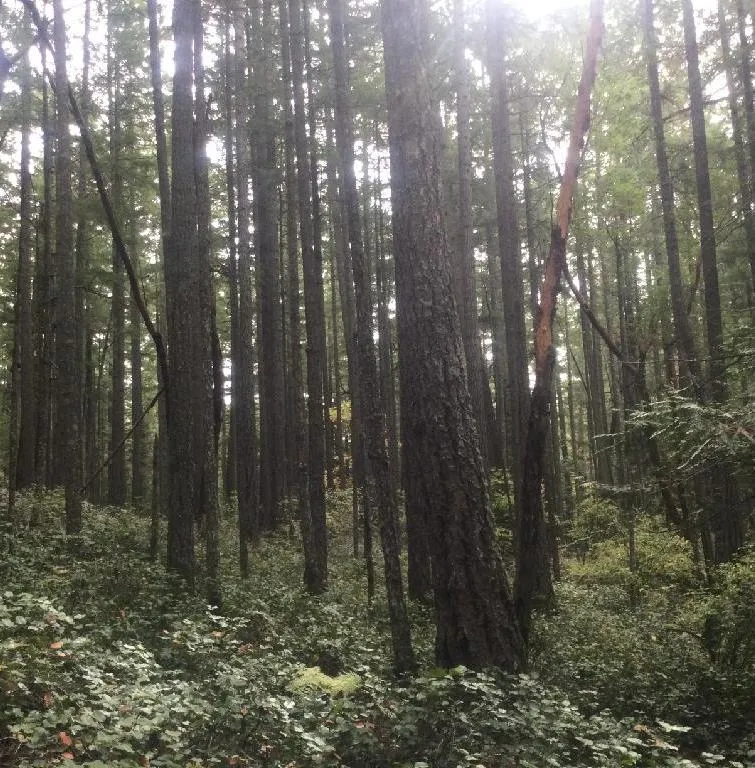
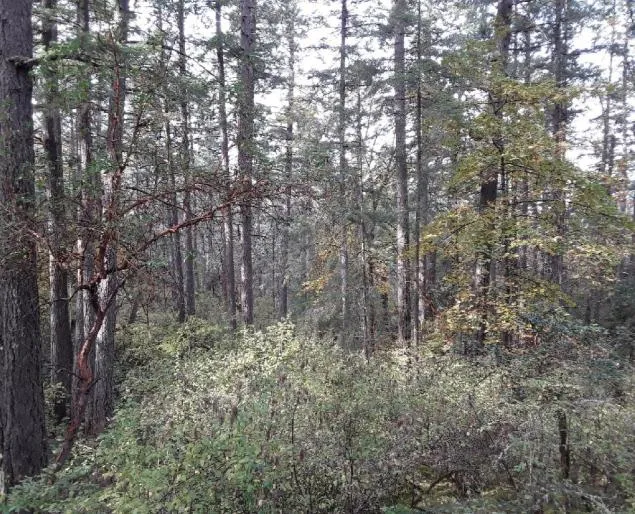
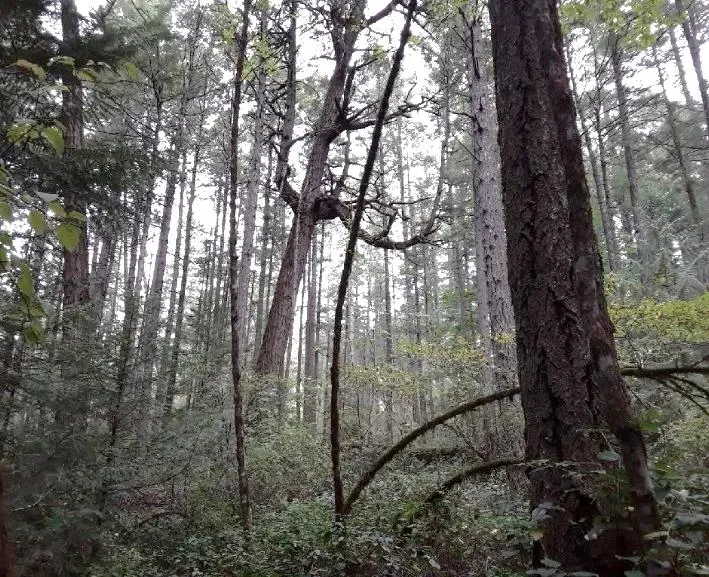
Although View Royal has substantial areas of Wildland Urban Interface² – where structures and other development meet or intermingle with undeveloped wildland or vegetative fuels – forests generally exhibit lower hazard characteristics. Tree canopies are open and porous, providing sufficient light for deciduous, low-flammability herbs and shrubs to grow. Typically, the bottom branches of the overstory tree crowns grow well above the forest floor, creating a large fuel strata gap that inhibits the potential for a higher intensity crown fire. Surface fuels, which can include twigs and branches shed from young trees, and the stems of dead trees, are scarce due to the healthy overstory that has established. While vegetation in these forests can burn under extreme fire weather conditions, the discontinuity in vertical and horizontal fuel loading and the absence of significant quantities of surface fuels mean that most forest stands represent a low wildfire hazard.
Near the town centre, much of the community is made up of developed, non-fuel areas. City parks have landscaped gardens, lawns, and sports fields. With consistent irrigation and predominantly deciduous vegetation, these also represent areas of low wildfire hazard.
View Royal has a warm and dry climate that is conducive to periods of high fire danger during the summer. However, lightening is rare and most ignitions are human-caused. View Royal Fire Rescue is fully equipped to respond to wildland fires, with assistance provided by BC Wildfire Service if needed.
² https://firesmartcanada.ca/about-firesmart/the-wildland-urban-interface-wui/
What is View Royal doing?
Following recommendations from FireSmart BC and their previous community wildfire plans, View Royal has the three foundational elements of a wildfire resilient community in place: a FireSmart Coordinator, a CWRP, and participation in a FireSmart Committee.
View Royal’s FireSmart program helps residents prepare by offering free Wildfire Mitigation Program home assessments and educational events. The CWRP includes forty-two action items for View Royal to consider implementing across a range of FireSmart themes: Education, Legislation and Development Considerations, Interagency Cooperation, Cross Training and Fire Department Resources, Emergency Planning, and Vegetation Management.
What should I do?
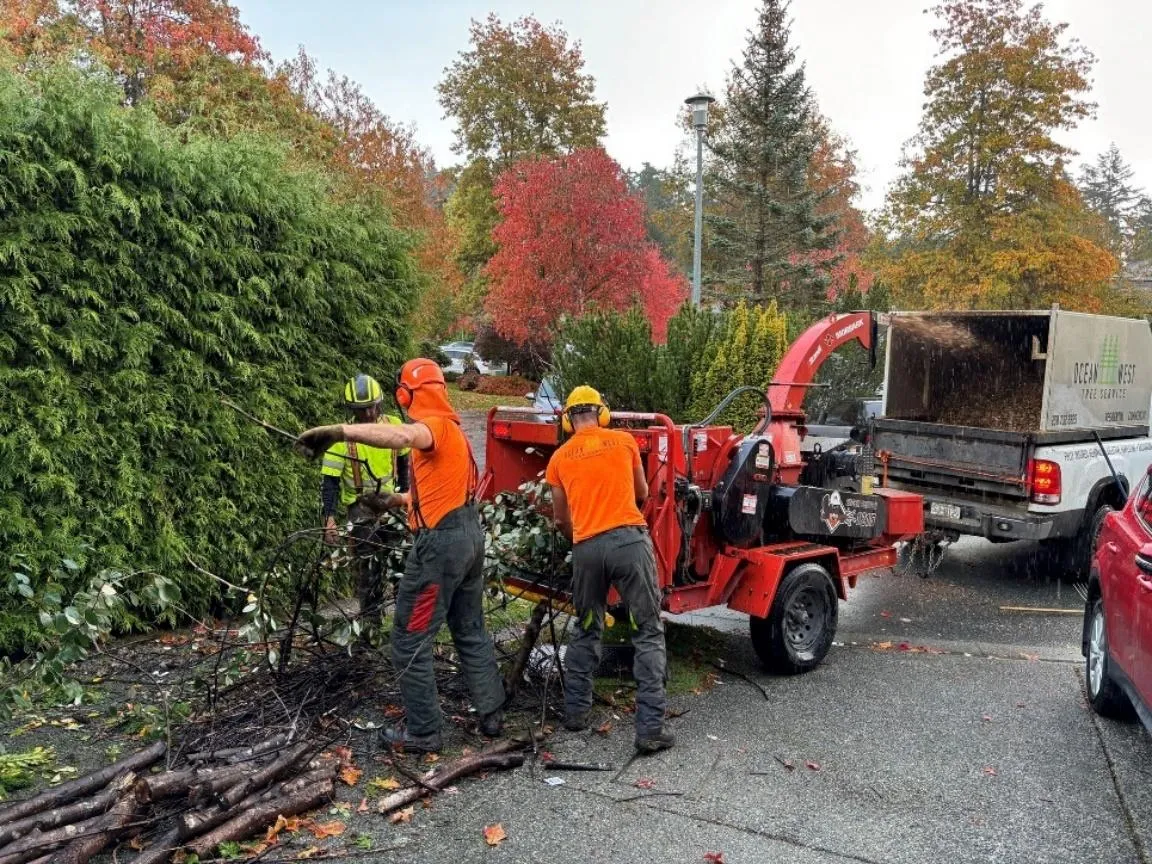
The best thing that you can do to improve the wildfire resiliency of your community is to implement FireSmart actions on your property. This includes simple tasks like requesting a free home hazard assessment, regularly cleaning your roof and gutters, and removing combustibles from the area around your home.
Learn more by visiting the View Royal FireSmart webpage, Facebook page, emailing the View Royal FireSmart Coordinator (firesmart@viewroyal.ca) or by exploring the resources provided online by FireSmart BC.