ATTACHMENT 2: WHAT WE HEARD SUMMARY REPORT - Planning for the Future of Watkiss Way Park
A report summarizing the engagement approach and feedback collected from residents during open houses and online surveys regarding the park design.
WHAT WE HEARD SUMMARY REPORT
Planning for the Future of Watkiss Way Park
Town of View Royal | December 2024
PROJECT OVERVIEW
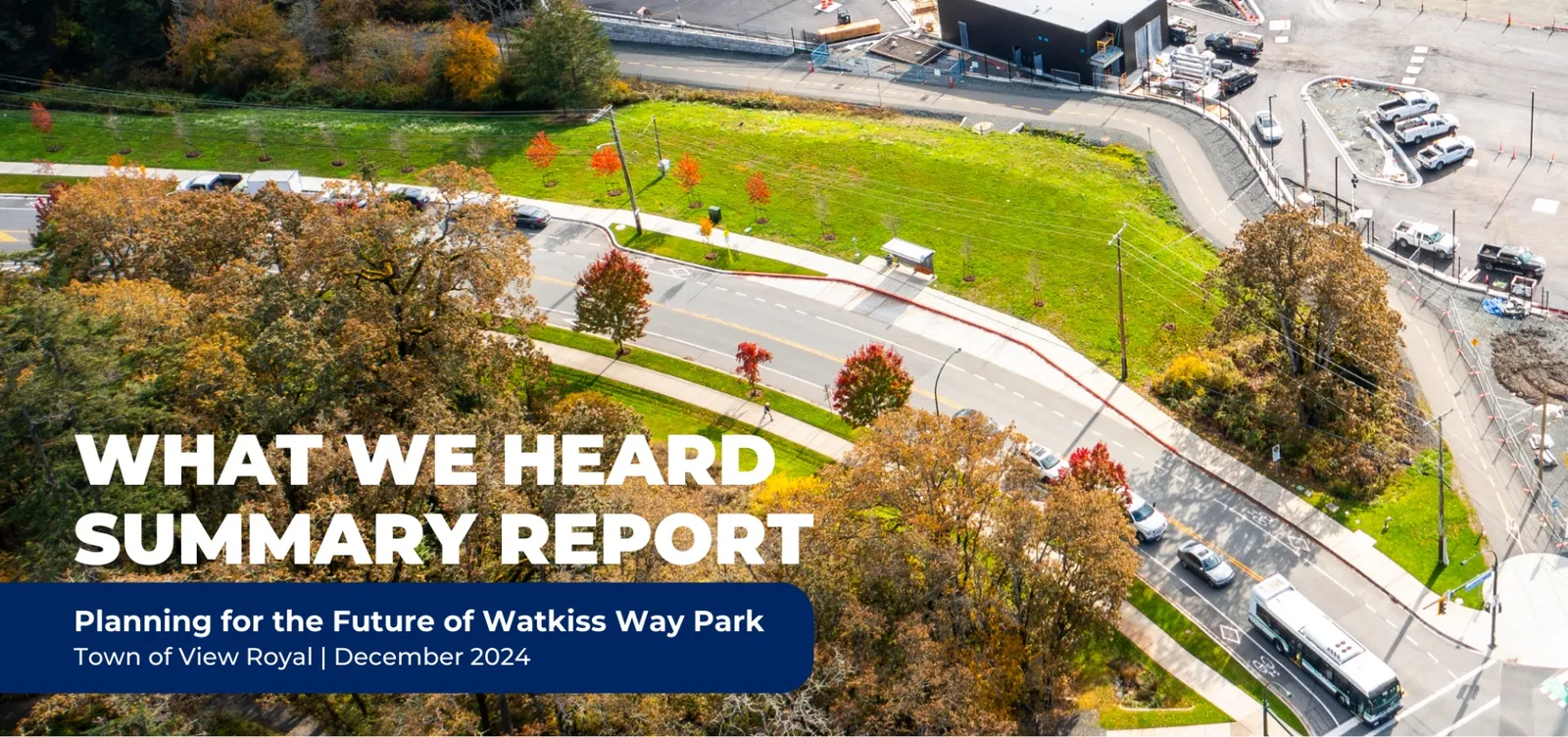
The redevelopment of the property at Watkiss Way and Burnside Road by BC Transit has provided a 1.5-acre linear space for the Town of View Royal to create a new neighbourhood park. Located near the Galloping Goose Regional Trail, the site offers opportunities for both active and passive recreation while balancing technical constraints, such as the presence CRD water infrastructure and Provincial land restrictions.
In fall 2023, the Town gathered feedback from the community during the first phase of engagement. Insights helped shape a draft concept design that reflects local priorities. This second phase focused on gathering public feedback on the draft design, ensuring the final park meets the community's needs.
ENGAGEMENT APPROACH
The second round of engagement was conducted in November 2024, guided by IAP2 principles at the “consult” level. The objective was to collect feedback on the draft concept through accessible engagement methods.
Engagement Goals
- Present the draft concept design for community review and feedback.
- Provide in-person and online opportunities for participation.
- Ensure transparency by summarizing past community input and explaining how it influences decisions.
ENGAGEMENT ACTIVITIES
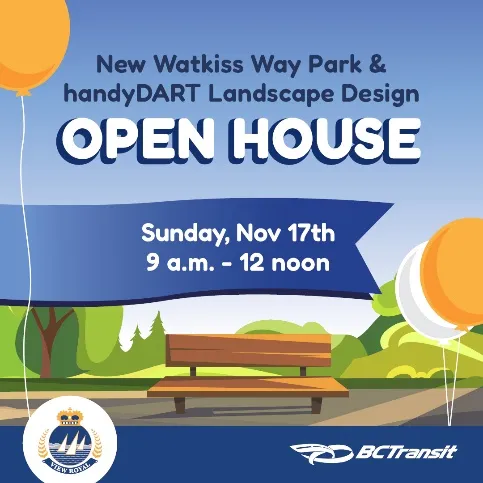
- Joint Open House: Held on November 17, 2024, in partnership with BC Transit, featuring information on both the draft park design and handyDART landscape design.
- Online Survey: Open from November 15 to December 1, 2024, gathering input on the draft concept design.
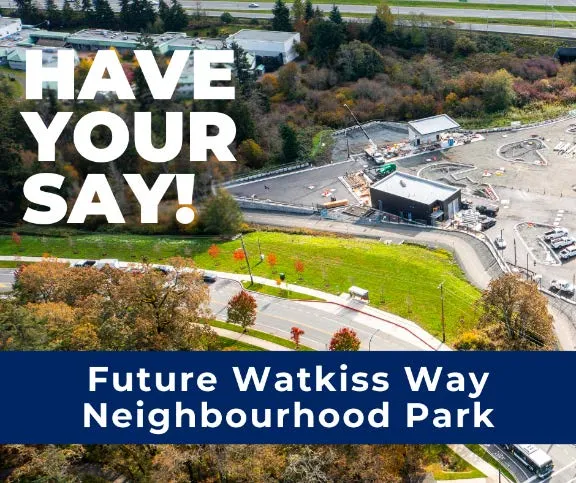
- Outreach Efforts: Promoted through social media, the Town’s November digital e-Update, direct mail, signage, and email campaigns.
WHAT WE HEARD:
Open House Input
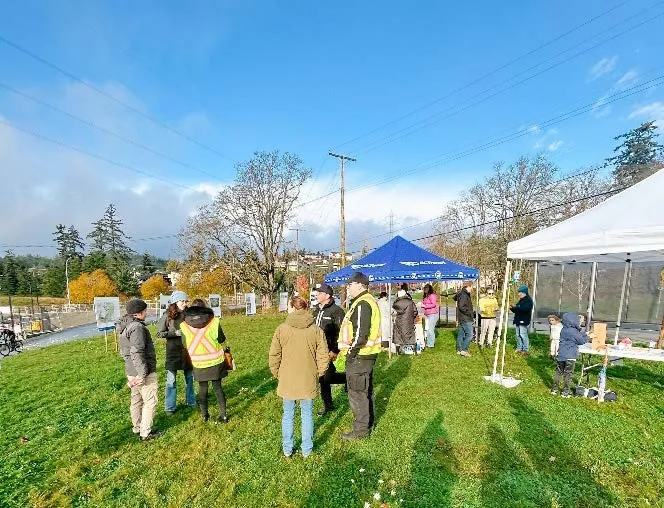
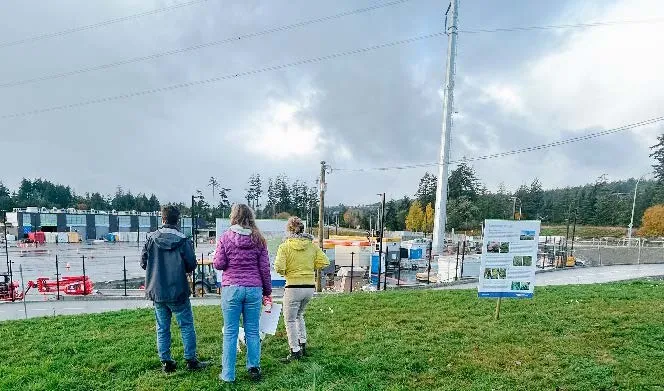
An open house was held on November 17, 2024 at the site of the future community park. The come-and-go event featured a series of interactive boards to collect on-the-spot feedback about the proposed design concept for the park.
68 residents attended the event and the following is a summary of what we heard through this engagement method.
Impressions of the Draft Design
Event participants were asked to use ‘hot dots’ to indicate what they think of the overall draft design and whether the design meets the objectives of a quiet park.
Another interactive board invited participants to use ‘hot dots’ to mark the features in the draft design that they most favored.
| WHAT DO YOU THINK ABOUT THE OVERALL DRAFT DESIGN? | ||||
|---|---|---|---|---|
| I LOVE IT | I LIKE IT | I FEEL NEUTRAL ABOUT IT | I DISLIKE IT | I STRONGLY DISLIKE IT |
| 11 | 12 | 0 | 0 | 0 |
| DOES THE PROPOSED PARK DESIGN MEET THE OBJECTIVES OF A QUIET PARK? | ||
|---|---|---|
| YES, IT MEETS OBJECTIVES | PARTIALLY, BUT COULD USE ADJUSTMENTS | NO, IT DOESN’T MEET OBJECTIVES |
| 3 | 1 | 0 |
| ARE THERE SPECIFIC FEATURES IN THE DRAFT DESIGN THAT YOU LIKE? | |||
|---|---|---|---|
| CURVED BENCHES | VIEW ROYAL LOG | BIRD HOUSES | NATIVE PLANTING |
| 5 | 3 | 7 | 3 |
| GRAVEL PATHWAY | LAWN AREA | SPLIT RAIL FENCE | |
| 1 | 1 | 1 |
Event participants were invited to share additional comments and suggestions about the park design, which included:
- More trees (2)
- Bat houses
- Drinking fountains (2)
- Lighting
- Flowering trees/bushes
- Sound barrier (2)
- Dog waste bags
- Garbage receptacle
- Covered seating
Survey Questions and Findings
The online survey was available from November 15 – December 1, 2024 on the Town’s website. In total, 45 people participated in the survey.
1. Where Respondents Live
To begin the survey, respondents were asked if they live in View Royal. The results show almost all respondents (93%) live in View Royal, while 7% live in neighboring communities such as Saanich.
2. Neighbourhood Identification
Respondents identified their neighbourhoods, with representation from Burnside (37%), Helmcken (22%), and other areas nearby.
3. Age of Respondents
Respondents identified their age group, offering a clear snapshot of demographic representation. Just over a quarter of respondents (27%) indicated they are 65 years or older. Eleven percent (11%) indicated they are under 35 years old.
4. Equity-Deserving Group Identification
Survey respondents shared various demographic details, highlighting their diverse backgrounds and lived experiences. While 29% identified as new to View Royal (within the last 5 years), another 29% selected "none of the above." Caregivers for children made up 24%, while 22% noted that they or someone in their household was born outside of Canada. Smaller percentages identified as 2SLGBTQ+ (7%), racialized persons (7%), or individuals with disabilities (7%). Eleven percent preferred not to answer.
5. Awareness of the Engagement Process
Social media was the most common way respondents learned about the public engagement process, accounting for 42% of responses. Other notable sources included park signage (18%), email notifications (16%), and the Town of View Royal website (16%). Fewer participants cited direct mail or flyers (13%), Town/BC Transit staff (11%), and local media or other sources (both at 7%).
6. Impressions of the Draft Design
The draft park design received mostly positive feedback, with 59% (26) of respondents expressing approval (14% "love it" and 45% "like it"). About 25% (11) felt neutral, while 16% (7) expressed negative views (9% "dislike it" and 7% "strongly dislike it").
7. Quiet Park Objectives
Most respondents (60% or 25) believe the proposed park design meets the objectives of a quiet park. Another 36% (15) feel it partially meets the objectives but could use adjustments, while 5% (2) say it does not meet the objectives.
8. Preferred Features
The most liked features in the draft park design are native shrubs and perennials (60%), birdhouses (56%), curved benches and gravel pathways (49% each), and the open lawn area (47%). The split rail fence (44%) and View Royal logo designed into concrete (33%) were also appreciated.
9. Accessibility
The majority found the design accessible, with 38% (16) rating it as "very accessible" and 36% (15) as "somewhat accessible." About 21% (9) were neutral, while only 5% (2) found it "somewhat inaccessible," and none rated it "very inaccessible."
As a follow up question, respondents were asked to identify specific areas where accessibility improvements can be made. Seventeen (17) respondents provided feedback. Suggestions include:
- Paved or hard-packed pathways for wheelchairs to replace gravel (4 respondents).
- Shaded seating and more benches to accommodate seniors and visitors (4).
- Handicap parking and improved fencing to enhance access and aesthetics (3).
- Enclosed dog area for off-leash safety (2).
- Requests for pickleball courts and a gazebo (2).
- Safety barriers for sloped areas (2).
- Additional suggestions included improved seating materials and removal of split rail fencing (2).
- Indigenous heritage connection through art or acknowledgment (1).
10. Environmental Considerations
The majority found the draft design effectively addressed environmental aspects, with 48% (20) rating it as "very well" and 33% (14) as "somewhat well." About 12% (5) were neutral, while 7% (3) felt it did not address environmental aspects well.
As a follow up question, respondents were asked to identify environmental features or sustainable practices they would like to see included. Twenty (20) respondents provided feedback. Suggestions include:
- Bat houses to support local wildlife and conservation efforts (3 respondents).
- Pollinator gardens and rain gardens for environmental and educational purposes (2).
- Recycling/waste receptacles and dog waste bag stations (2).
- Requests for water bottle fill stations and bioswales for sustainability (2).
- Suggestions to reduce or replace traditional lawns with native plants or clover for environmental benefits (2).
- Additional ideas included fountains, wildlife cameras, and improved garbage collection (3).
11. Likelihood of Use
The majority of respondents indicated they were likely to use the park, with 42% (19) selecting "very likely" and 27% (12) "somewhat likely." About 13% (6) were neutral, while smaller proportions rated it as "somewhat unlikely" (7% or 3) or "very unlikely" (11% or 5).
12. Type of Activities
Walking was the most envisioned activity (56%), followed by enjoying nature (44%) and using the park as a rest stop for regional trail users (38%). Bird watching was popular with 31%, while 22% each saw the park as a space for gathering with friends/family or for other activities. Playing (20%), reading (18%), and picnicking (16%) were less common choices, and yoga was the least selected activity (2%).
13. Final Comments and Suggestions
The end the survey, respondents were provided an opportunity to share final comments and suggestions. Twenty-eight (28) respondents provided a response to this question.
Key additional comments and suggestions for the park design include:
- Requests for dog parks or designated dog areas (3 respondents).
- Suggestions for playgrounds, play structures, or interactive elements for kids (4).
- Requests for increased seating, picnic tables, and shaded areas (3).
- Emphasis on more trees and native plants to improve noise reduction and aesthetics (3).
- Concerns about homeless encampments and park security (3).
- Requests for washrooms, water fountains, or drinking stations (2).
- Suggestions to reduce invasive species and maintain the area (2).
Next Steps
The feedback collected during this phase will be used to refine the park design. This "What We Heard" report, along with the proposed final concept, will be presented to Town Council in early 2025. Updates will be available on the project website: Watkiss Way Neighbourhood Park.