Scotty Tree & Arborist Service Ltd. Tree Assessment and Development Report
A technical report assessing eight trees on and near the property, detailing health and required protection measures during construction.
Tree Assessment and Development Report
Scotty Tree & Arborist Service Ltd.
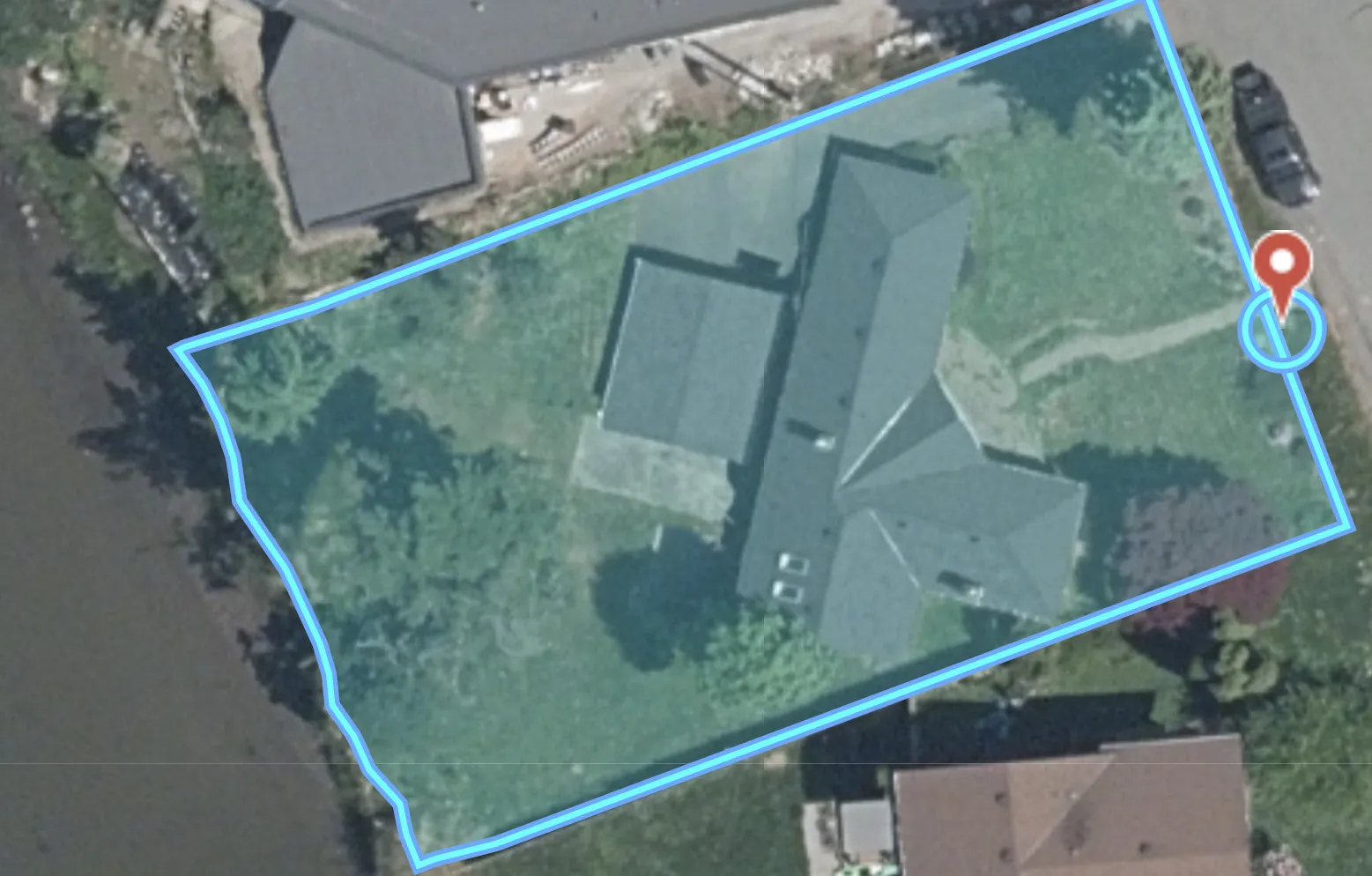
Prepared for 2818 Shoreline Rd, View Royal BC SUBMITTED 2 June, 2025 (Edited 10 July, 2025)
Scott Mitchell ISA Arborist PN-6138-A Hazard Tree Assessor CTRA 309 TRAQ certified 250-220-9298
To whom it may concern,
By request, Scotty Tree & Arborist Service Ltd has assessed the trees on the property of 2818 Shoreline Drive, View Royal, BC for a development project.
Executive Summary:
This proposal calls for a new dwelling after removing the existing home. To better protect the one remaining bylaw protected tree in the front yard, it is recommended the sewer, storm and storm services stay to the north side of the lot. Three remaining bylaw protected Oak and Douglas fir trees in the back yard were found to have structural issues and or decreased vitality. Two bylaw protected trees will be removed to facilitate excavations for the new residence. One bylaw protected 31cm Deodar tree requires removal for landscaping. Ample space is available in the back yard for new tree plantings for replacement trees.
Tree Impact Summary Table:
| Tree Status | Total | To be Retained | To be Removed | To be Planted |
|---|---|---|---|---|
| On-site trees, Bylaw protected | 7 | 4 | 3 | 6 |
| On-site trees non-bylaw protected | NA | NA | NA | See landscape plan |
| Municipal trees | 0 | 0 | 0 | 0 |
| Neighboring Trees, Bylaw protected | 1 | 1 | 0 | 0 |
| Neighboring trees, non-bylaw protected | NA | NA | NA | 0 |
| Total | 8 | 5 | 3 | 6 + See landscape plan |
See tree inventory table for complete tree summary of trees requiring management.
Introduction:
Scotty tree was contracted to assess the trees on this property to determine the impact of adding a larger dwelling to the property. The entire property was assessed, including neighboring and municipal trees.
Methodology:
Detailed analysis of the proposed development plan was used to inform analysis of the trees, particularly in terms of the underground service excavation locations. Scotty Tree used standard arboricultural observation and physical examinations to determine tree health and confirm rooting areas. Soil analysis was conducted by physical exploration. Consultation with the leading reference book (Trees and Development, Nelda Matheny and James R. Clark) was used to determine protected root zones and tree suitability for development on this property.
Observations and Discussion:
1. Underground services:
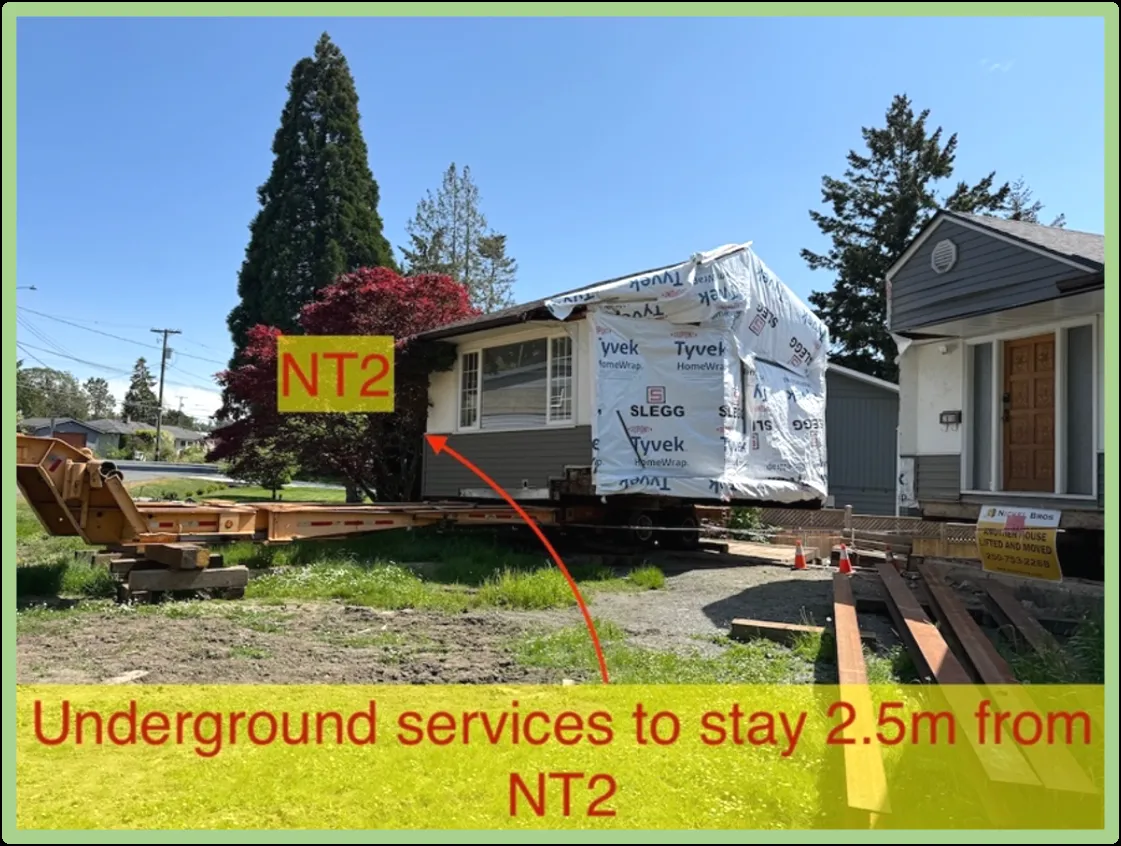
Excavations for water, sewer and storm services should stay 2.5m from NT2 if replaced. See tree management site plan.
2. Material storage:
Sufficient space is availiable outside of the root zones of bylaw protected trees along with presently paved driveway surfaces to accommodate material storage without infringing on root zones. See tree management site plan.
3. Replacement tree locations:
Multiple areas in the front and back of this lot can accommodate the required replacement trees. Replacement tree planting locations and species must be acceptable to the municipality.
4. Dogwood OS1:
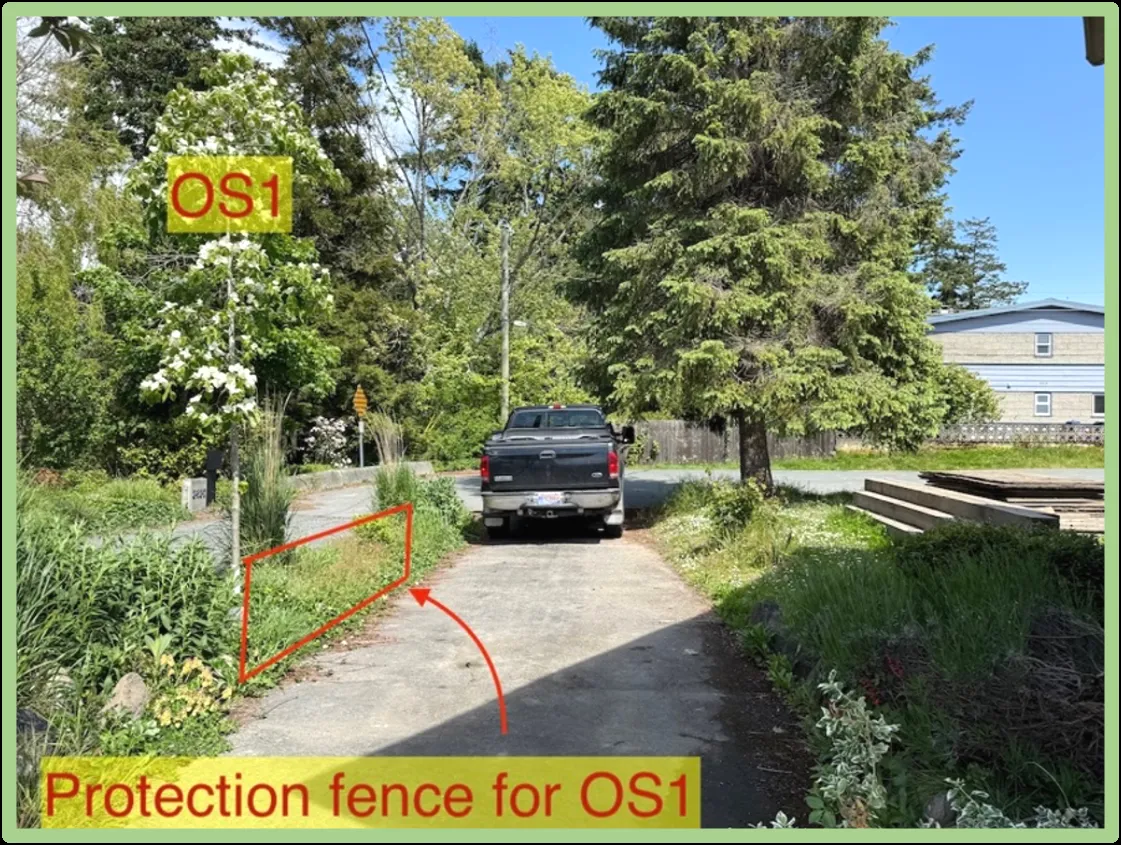
Not included in the original survey, a newly planted dogwood tree located adjacent the proposed driveway in the neighbour’s yard appears to be a replacement tree. Protection fencing should be erected to remind contactors this small tree is likely bylaw protected.
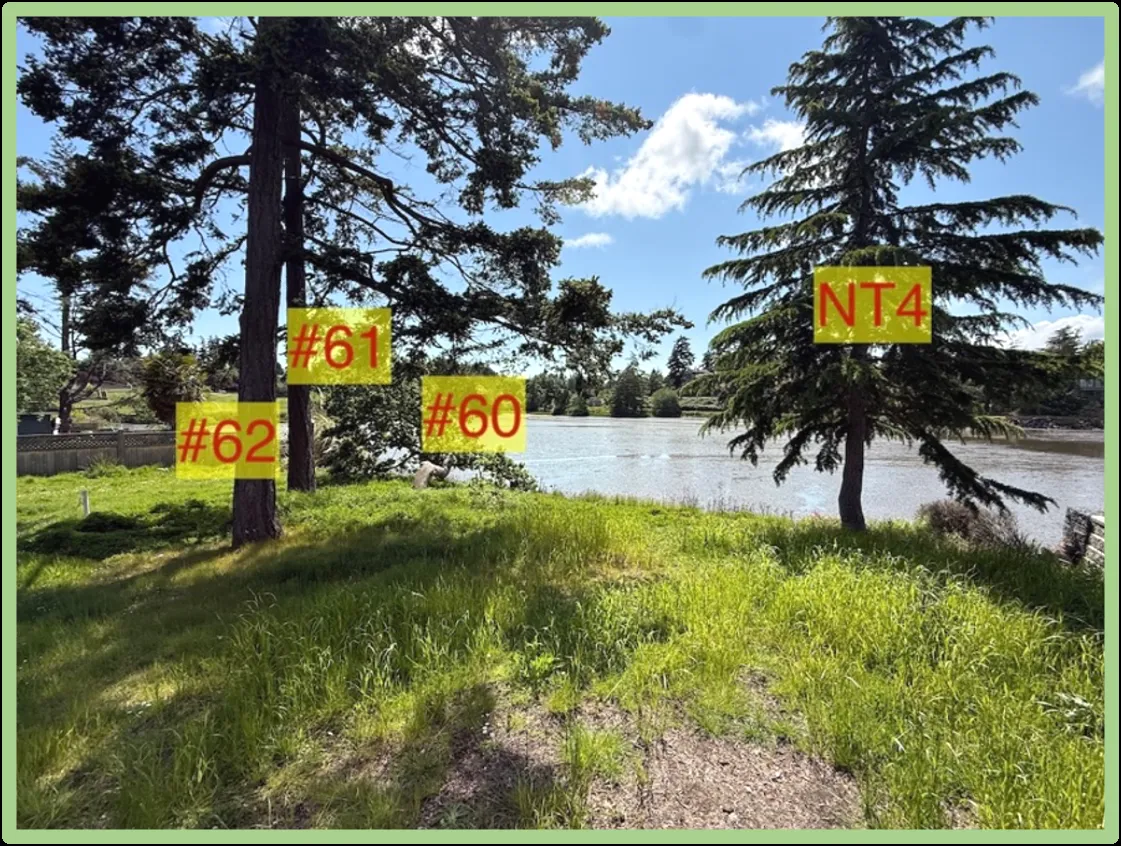
5. Trees #60 to #62:
These three trees were found to have had poor pruning practices in the past that likely led to their diminished structure and health. Trees #61 and #62 are topped Douglas firs that were assessed to have smaller root zones then the trunk diameter suggests. The topping of these trees has led to a large trunk size then the supported canopy. Tree #61 was found to be in decline, while the adjacent Douglas fir tree #62 shows good vigor. Oak tree #60 has grown its main trunk laterally after an upright leader was removed leaving decay on the tension side of this tree. Little to no impacts are expected from development, otherwise these trees would be considered for removal.
Conclusions and Recommendations:
After the removal of three bylaw protected trees, the retained bylaw protected trees will have no meaningful long-term impacts. Material storage areas have been identified on the tree management site plan. Sewer and storm services should be at least 2.5m from NT2. The neighbouring dogwood tree will be sufficiently protected from a 1m protection fence erected along the property line. Protective fencing will better assure the protection of the protected root areas, while permitting access for construction activities.
1. Install protective fences that cordon off property trees:
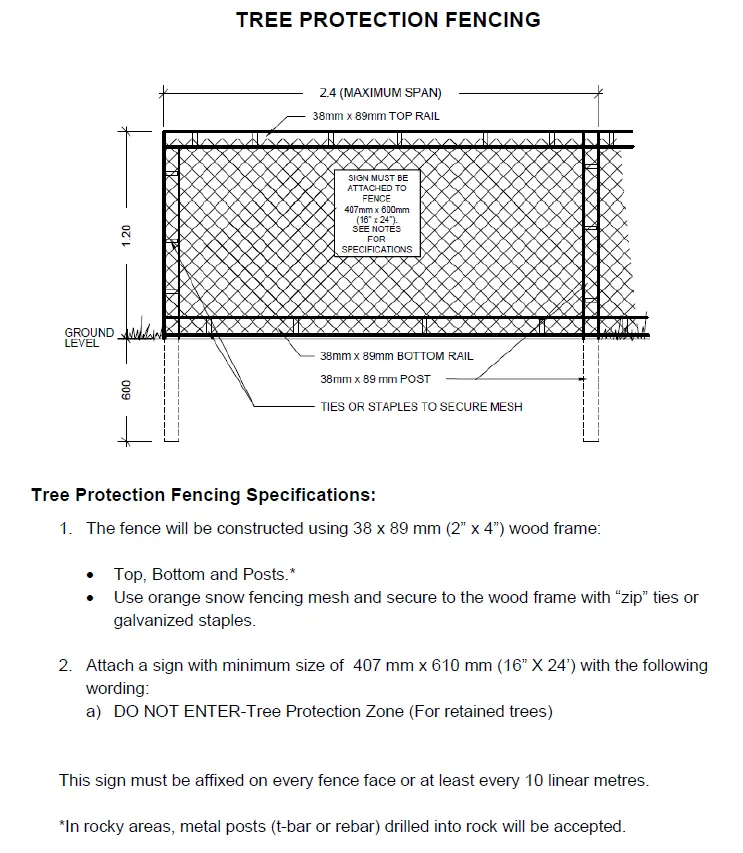
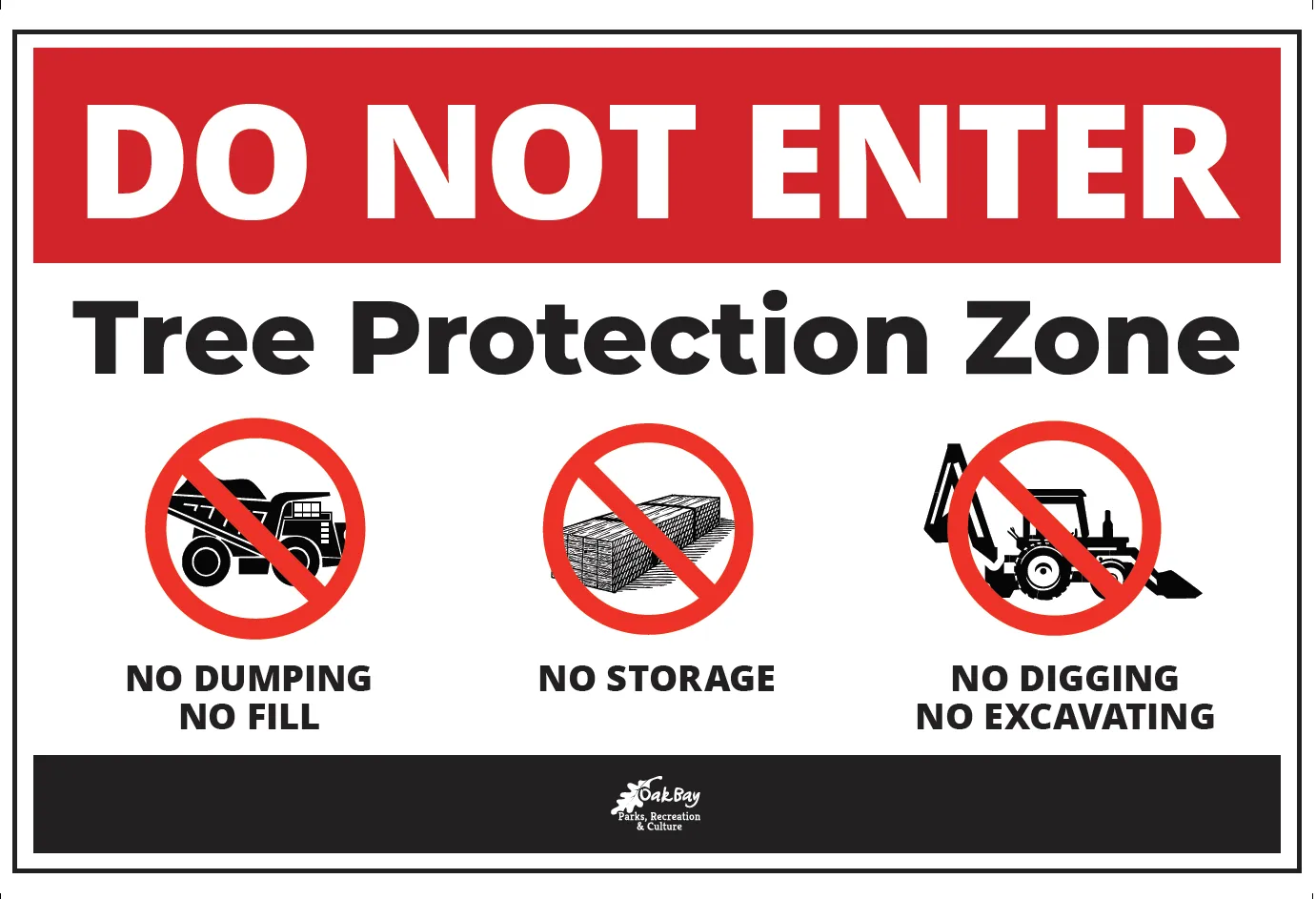
Protective fences and signage should be installed around bylaw protected trees. Detailed below is the Oak Bay fencing guide Protective fence dimensions, although not necessarily representative of the critical rooting zones will serve as a visual reminder to workers of the importance of not impacting these areas. (See tree management site plan for scaled dimensions)
Tree Protection Fencing Specifications:
- The fence will be constructed using 38 x 89 mm (2” x 4”) wood frame:
- Top, Bottom and Posts.*
- Use orange snow fencing mesh and secure to the wood frame with “zip” ties or galvanized staples.
- Attach a sign with minimum size of 407 mm x 610 mm (16” X 24”) with the following wording: a) DO NOT ENTER-Tree Protection Zone (For retained trees)
This sign must be affixed on every fence face or at least every 10 linear metres.
*In rocky areas, metal posts (t-bar or rebar) drilled into rock will be accepted.
Tree Inventory Table:
| Tree ID | Species | Status | DBH (cm) | PRZ * Factor | PRZ* (m) Radius | Canopy Spread (m) Dia | Health | Structural Condition | Site specific Construction Tolerance | Retain or removal - Reason | Remarks / Recommendations |
|---|---|---|---|---|---|---|---|---|---|---|---|
| #60 | Oak | Bylaw | 30 | 12:1 | 3.6 | 5 | Good | Fair | Good | Retain | Decay on tension side of lower trunk. Significant lean. |
| #61 | Douglas fir | Bylaw | 47/** 30 | 12:1 | 3.6 | 5 | Poor to fair | Fair | Good | Retain | In decline. Topped. Assessed as 30cm for root zone. |
| #62 | Douglas fir | Bylaw | 53/** 30 | 12:1 | 3.6 | 5 | Good | Fair | Good | Retain | Topped. Assessed as 30cm for root zone. |
| NT1 | Spruce | Bylaw | 45 | 12:1 | 5.4 | 6 | Good | Fair | Good | Excavations | Topped and regrew 3 stems |
| NT2 | Japanese Maple | Bylaw | 35/** 20 | 12:1 | 2.4 | 7 | Fair | Fair | Fair | Retain | 3 stems measured (10, 12, 13cm = 35cm) assessed as 20cm for root zone. |
| NT3 | Ash | Bylaw | 22 | 12:1 | 2.6 | 5 | Good | Fair | Good | Excavations | Pollarded |
| NT4 | Deodar | Bylaw | 31 | 12:1 | 3.7 | 5 | Good | Good | Good | Landscaping | |
| OS1 | Dogwood | Bylaw | 5 | 12:1 | 1 | 1 | Good | Good | Good | Retain | Likely replacement tree |
*PRZ - Protected Root Zone (12 to 1 for Good-Moderate construction tolerance & healthy trees / 18 to 1 for Poor construction tolerance or poor health) NBL = Non-Bylaw protected tree. ** - root zone modified for accuracy. Recommend
For further clarifications feel free to text @ 250 220 9298 or leave an electronic message at scottytree@me.com. Scotty tree Service is insured through Northbridge insurance of Canada, Policy CP 4181105 00.
Sincerely,
Scott Mitchell Submitted 2 June, 2025 (Edited 10 July, 2025)
ISA Arborist, PN-6138-A, PNW CTRA 309, TRAQ certified Scotty Tree & Arborist Service #7 10075 Fifth St, Sidney BC, V8L-2X8
TREE MANAGEMENT SITE PLAN
MODIFIED FROM CLIENT PROVIDED SITE PLAN
For informational purposes only June 2, 2025
Scotty Tree and Arborist #7 10075 Fifth St Sidney, BC, V8L 2X8
LEGEND
- Protective Fencing: Red boundary line
- Anti-compaction Zone: (2 X 19mm plywood/20cm wood chips) - Brown hatched area
- Unfenced protected area: No storage of material or construction activities without arborist supervision. No transiting machinery or vehicles without arborist supervision and/or anti-compaction. - Yellow area
- Protected Root Zone: Established by DBH or assessments - Orange circle
- Canopy Spread: Dotted green circle
- Tree to be removed: Red X
- Hedges / shrubs: As per development plans - Dark green line
- Replacement tree area: As per development plans - Solid light green circle
- Root zone diameter adjusted by assessment: Marked with **
- Underground service area: Blue shaded rectangle
- Tree as per development plans: Individual tree icons
Site Plan Notes:
- OS1 Dogwood: 0.05m. Protection fence, 1m on property line.
- NT1 Spruce: 0.45m. Material storage area designated nearby.
- NT2 Maple: 0.35m. **2.4m root zone radius. Protection fence, 2.5m by 5m.
- Water and sewer lines: To be kept out of root zones.
- NT3 Ash: 0.22m.
- NT4 Deodar: 0.31m.
- Tree #60 Oak: 0.3m.
- Tree #61 Douglas Fir: 0.47m. **3.6m root zone radius.
- Tree #62 Douglas Fir: 0.53m. **3.6m root zone radius.
- Protection fencing: Noted at various distances (6m, 4.5m, 1.5m, 5m, and 6m).
- Material storage: Identified in multiple locations outside critical root zones.
- Planting zones: Including Zone with foreshore native planting, Zone with native grasses, and Zone with planted native plants.
- Replacement trees: Ample room noted in designated planting areas.
- Floor levels: New dwelling floor levels noted at N 3.8m.
- Retaining wall: New concrete landscape elements planned.
Document Images
(2)