HIGHWAY NOISE MITIGATION UPDATE SIX MILE OFF-RAMP
A technical report from the Director of Engineering regarding the feasibility and costs of installing noise barrier walls along Highway 1.
TOWN OF VIEW ROYAL COUNCIL REPORT
TO: Council DATE: July 8, 2024 FROM: Ivan Leung, P.Eng, Director of Engineering MEETING DATE: July 16, 2024
HIGHWAY NOISE MITIGATION UPDATE SIX MILE OFF-RAMP
PURPOSE:
The purpose of this report is to update Council on the noise mitigative effectiveness of installing a wall on Hwy 1, parallel to the Six Mile Road off-ramp. This report also provides options and approximate costs for Council consideration.
OPTIONS:
| Option | Description |
|---|---|
| Option #1 (recommended) | THAT Council receive the staff report for information. |
| Option #2 | THAT Council direct staff to proceed to detail design for one of the alignments identified in the staff report. AND THAT Project Summary C-179 be amended in the future 2025-2029 Financial Plan to include constructions costs at a future date. |
TIME CRITICAL:
Council decisions will inform on the future of installing noise mitigative infrastructure by the Hwy 1 off-ramp to Six Mile Road.
ALIGNMENT WITH TOWN OBJECTIVES:
This report informs on the Town’s Noise Barrier Feasibility – Hwy 1 Off-ramp at Six Mile Road project, a discretionary project included in the 2024-2028 Financial Plan at the request of Council (Project Summary C-179).
EXECUTIVE SUMMARY:
Through industry standard noise monitoring and modelling by BKL Consulting, it was determined that highway noise within the Casey Place / Lund Road / Massey Place range from less than 50 dBA to over 65 dBA, with limited areas exceeding 70 dBA but less than 75 dBA.
There is a general lack of noise level guidelines for existing residential neighbourhoods (Federal and Provincial literature are based on noise within the workplace). As a result, BKL referred to the closest guidelines possible to provide more clarity on the issue:
- Land use compatibility for residences with moderate outdoor use: ANSI/ASA S12.9 Part 5 (reference only and not a requirement to be met);
- KPI for successful use of a noise barrier: 5 dBA improvement at fronting residences per MoTI’s Policy for Assessing and Mitigating Noise Impacts from New and Upgraded Numbered Highways.
Three alignments were suggested by BKL all with varying benefits and setbacks relating to feasibility, costs and equity:
| Alignment | Feasibility¹ | Costs² | Equity |
|---|---|---|---|
| #1 - Singular Wall at Off-ramp | The simplest of the three alignments with less geotechnical and maintenance challenges | $670K - $1.1M | Successful reduction only for Casey Pl. and North Lund Rd. No significant improvement to Mid Lund next to the Hwy |
| #2 - Singular Wall, extending to top of rock cut area | The least simple of the three alignments with significant geotechnical and maintenance challenges | $930 - $1.5M | Successful reduction for most residences next to the Hwy (Casey Pl, North and Mid Lund Rd, Massey Pl) |
| #3 - Two walls: Alignment #1 plus additional wall on Hwy 1 | Similar challenges to Alignment #1 plus additional MoTI permitting and agreements. The costliest alignment for both capital and maintenance costs | $1.3M - $2.0M | Successful reduction for most residences in the neighbourhood with noise >65 dBA. |
¹ All alignments have geotechnical challenges due to site location, slope stability issues and accessibility to construct and maintain the noise barrier(s) ² Capital costs only and does not include design, construction inspection, or annual maintenance or lifecycle costs. Costs are approximate only based on general unit rates provided to the best knowledge by BKL. Additional engineering, inspection and costs attributed to “unknown-unknown” complexities are still present
While Alignment #1 costs are the closest in line with staff’s estimate in previous Council reporting, all alignments have significant cost implications to the Town and its ability to deliver projects currently identified in the 5-Year Financial Plan. Constructing this project within the Financial Plan will require delay in other important projects; an alternative approach could be to enact a Local Improvement Area to fund the works by the neighbourhood benefiting from a noise barrier wall.
BACKGROUND:
Staff retained the services of BKL Consultants (“BKL”) to (1) conduct an acoustics analysis of the Lund / Thetis Vale neighbourhood, (2) provide recommendations to mitigate noise, and (3) provide approximate unit costs to install the mitigative measures. BKL are experienced in highway noise mitigation measures and have consulted for the Ministry of Transportation and Infrastructure (“MoTI”) on many occasions.
Data Collection
Industry standard sound level monitoring was conducted by BKL over a three-day period in April 2024, extending through peak traffic and including weekend periods. The analysis was further calibrated using Town data, including terrain elevation data, highway traffic data and aerial photography.
Design Criteria: Noise Mitigation and Targets
The noise mitigation criteria were based on MoTI’s Policy for Assessing and Mitigating Noise Impacts from New and upgraded Numbered Highways. While this policy is specifically meant for applying to new and upgraded highways, the lack of directly applicable noise mitigation criteria for homes near existing highways makes this policy the closest guideline that can be reasonably used.
The MoTI policy states that the noise benefit provided by mitigation should be at least 5 decibels (dBA) at fronting residences to be considered sufficiently effective. This corresponds to a 30% decrease in perceived loudness.
DISCUSSION:
Figure 1 identifies the existing noise environment of the Lund / Thetis Vale neighbourhood (the “Neighbourhood”):
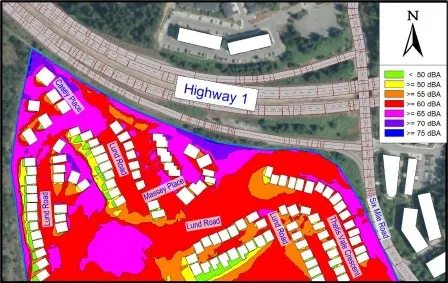
Figure 1: Existing Noise, Courtesy of BKL Consulting
As expected, the noise levels are generally higher for residents directly abutting the highway than further south. Highway noise ranges from less than 50 dBA to over 65 dBA, with limited areas exceeding 70 dBA but less than 75 dBA.
Through staff research, Provincial and Federal literature on noise levels is generally focused on noise within the workplace (WorksafeBC, Canadian Centre for Occupational Health and Safety, Health Canada). However, BKL does refer to an American National Standard (ANSI) that summarizes the land use compatibility and corresponding noise levels for multi family residences with moderate outdoor use:
Table 1: Land Use Compatibility for Multiple Family Residences with Moderate Outdoor Use¹
| Noise Level | Compatibility |
|---|---|
| Less than 60 dBA | Compatible |
| 60-65 dBA | Marginally Compatible |
| Greater than 65 dBA | Incompatible |
However, it should be noted that the above correlation is for reference only and does not pertain to any standard that must be adhered to.
Solutions
BKL was tasked with assessing the performance of noise mitigation barriers along the Hwy 1 Off-ramp towards Six Mile Road. The findings were generally as follows:
- Adequate noise mitigation can be achieved for the residences on Casey Place and some residences on the segment of Lund Rd between Massey Pl and Casey Pl. The magnitude of success is dependent on the location of the barrier(s).
- Noise mitigation performance becomes less effective eastwards towards Six Mile Road due to topography.
- A barrier along the off-ramp does not provide noticeable or effective noise mitigation in the Thetis Vale and Lower Lund Rd area of the Neighbourhood. Therefore, the extent of the noise barrier wall in this report fall short of this Neighbourhood to improve cost-to-benefits.
Three alignments
BKL provided three (3) barrier alignments for the Town’s consideration. Each alignment has impacts on noise benefit, capital costs, and operational (maintenance) costs:
Alignment #1 – Singular Wall along Off-ramp to Six Mile Rd, terminating before rock cut
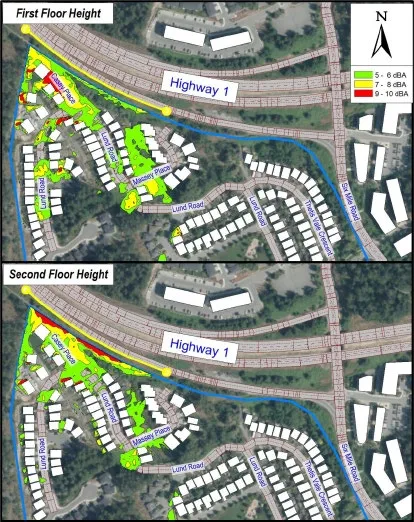
Figure 2: Noise Reduction Amount for Alignment #1
- Pros: Benefits the homes closest to Hwy 1 (Casey Place, Upper Lund Rd, Massey Pl)
- Cons: Less benefit to Mid Lund Rd. Geotechnical challenges due to slope stability.
Alignment #2 – Singular Wall along Off-ramp to Six Mile Rd, extending to top of rock cut
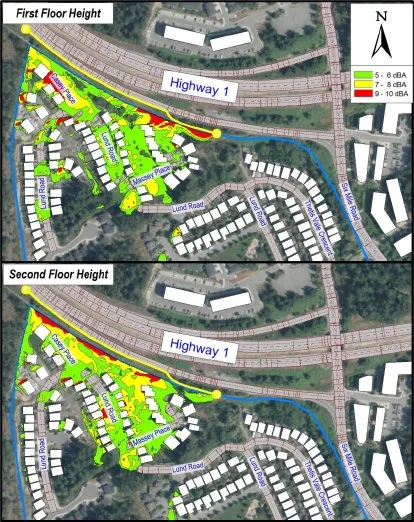
Figure 3: Noise Reduction Amount for Alignment #2
- Pros: Provides greater noise improvement coverage than Alignment #1 (Casey Pl, Upper and Mid Lund Rd, Massey Pl)
- Cons: Higher costs due to the complexity of installing a noise barrier on top of an existing rock cut (may be extremely difficult due to lack of space, working area, and may require removal of trees on rock slope), higher maintenance costs due to complexity
Alignment #3 – Wall on Off-ramp AND Wall along Hwy 1
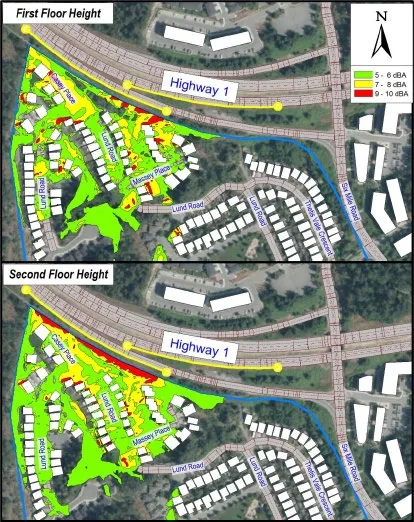
Figure 4: Noise Reduction Amount for Alignment #3
- Pros: Provides the greatest noise improvement coverage (most areas >65dBA are improved)
- Cons: Significantly higher capital costs, significantly higher maintenance costs due to potential damage annually to wall on Hwy 1 (snow plowing, MVI’s).
STAFF COMMENTARY
There is no ‘one clear answer’ to address the issue of highway noise in the Neighbourhood. However, staff identify the following three pillars to provide more clarity into this complex issue, for Council’s deliberation:
- Feasibility & the Environment: What additional challenges does each alignment present? Can the work be done without impacting the environment (existing trees)?
- Annual Operational (Taxation) Costs: How much will it cost residents of the Town of View Royal for an asset that benefits the Neighbourhood? Are operational costs more favourable for one alignment than the rest?
- Equity: Is there an alignment that reduces highway noise equitably and fairly within the Neighbourhood?
Staff provide the following commentary with respect to these three pillars:
Table 2: Staff Commentary on Noise Barrier Alignments
| Alignment | Feasibility & the Environment | Annual Operational Costs | Equity |
|---|---|---|---|
| #1 | The most feasible with less impact to the environment (no trees) | Significant but less impactful than the other alignments. Less prone to damage (e.g. snow plowing, MVI’s) | Only addresses homes >65 dBA in the Casey Pl / North Lund area. Massey Place and Mid Lund Rd still exposed |
| #2 | The extension into the rock cut could pose significant feasibility issues and more costs. More information on how to install required (geotechnical, structural). Trees in the rock cut area may need to be removed, changing the form and character of the landscape | Similar to Alignment #1 except there are more risks to higher maintenance costs if the barrier on top of the rock cut requires repairs (accessibility, WorkSafe on steep slopes) | Addresses homes >65 dBA directly adjacent Hwy 1 and a portion of Mid Lund Rd. Tuzo Ct and Pitt Pl homes still exposed but these homes are further back from Hwy. |
| #3 | Similar Feasibility with Alignment #1. Additional permitting required from MoTI for the second barrier | Likely the highest costs expected due to anticipated damage to Hwy 1 barrier (e.g. snow plowing, MVI’s, Insurance). | Addresses most homes in the Neighbourhood with Hwy noise >65 dBA. |
Additional Considerations
Additional analysis was conducted by BKL to confirm other considerations previously raised by Council:
- Performance of trees and vegetation as a noise mitigation option: technically, the data indicates that a thin buffer of trees and vegetation does not provide any acoustical benefit. However, studies have found that such vegetation that obstructs the view of noise sources can provide a psychological benefit instead.
- Sound reflections from the midrise buildings north of the highway: this particular issue was modelled by BKL and it was found that sound reflecting off the building towards the Neighbourhood is not significant compared to the direct sound coming from highway traffic.
SUSTAINABILITY/CLIMATE CHANGE IMPACTS:
No impacts to sustainability or climate change are expected with this project. However, Council may elect to direct staff to choose an ‘eco’ noise barrier wall to mitigate the use of non-renewable resources. While such solutions are available and can be amenable by MoTI, the costs and scope were not identified in the BKL report.
FINANCIAL IMPLICATIONS:
MoTI has stated that any noise barrier along the Hwy 1 off-ramp to Six Mile Road would be 100% the responsibility of the Town and to be owned and maintained by the Town.
Order of magnitude construction costs for various noise barrier walls are provided below. These costs provide an update to previous cost estimates suggested by the Town that was based on limited and potentially outdated information. The costs provided vary depending on materials and wall suppliers:
- $380 to $500 per square metre for concrete noise walls
- $690 to $770 per square metre for aluminum noise walls
A cost comparison for each alignment, with anticipated budget risks, is identified in Table 3 (excluding engineering services and inspections). The higher end of the unit rate was used for conservativeness due to the site complexities identified in Table 2:
Table 3: Cost Comparisons
| Alignment | Direct Construction Cost (Based on Unit Rate of Various Materials) | Risks to Cost Increases |
|---|---|---|
| Alignment #1 ~265m | $670k - $1.1M | Additional geotechnical design and construction work to support the barrier on top of the slope |
| Alignment #2 ~265m plus 70m on top of rock cut | $930k - $1.5M | Additional geotechnical design, construction work and accessibility challenges to support the barrier on top of the slope and on top of the rock cut (50% contingency for section on rock cut) |
| Alignment #3 ~515m | $1.3M - $2.0M | Additional geotechnical design and construction work to support the barrier on top of the slope |
It is difficult to determine the maintenance costs of each alignment until a wall material is chosen and detail design conducted. Regardless, it is expected that Alignment #3 will have the highest maintenance and lifecycle costs due to anticipated regular repairs that would be required. Additional costs may be required if MoTI requires “crash rated walls”.
An ‘eco’ noise barrier solution is expected to be up to 50% higher in costs.
The construction costs of the noise barrier wall within the current 5-year Financial Plan will have implications to the Town’s ability to deliver other projects, given the finite budget available. It is conceivable that other projects in the Financial Plan may need to be delayed to fund the construction of a noise barrier wall.
Alternatively, Council may consider enacting a Local Improvement Area to the Neighbourhood to fund the cost of the noise barrier wall.
ALTERNATIVES:
There are three (3) options for Council:
Option #1 Receive for information.
Many of the existing noise barrier walls on Hwy 1 in View Royal are aging and MoTI are aware of this. Anticipated replacement timelines are in the mid to long term. While MoTI has always stated that the barrier along the Hwy 1 off-ramp would be at 100% the cost of the Town and to be owned and maintained by the Town, partnerships in the future may be an option to obtain better rates.
Option #2 Direct staff to proceed to detail design for one of the alignments identified in the staff report, and that Project Summary C-179 be amended to include construction costs at a future year.
Doing so would provide a shelf-ready design with construction dependent on future budget deliberations or if additional grant funding becomes available. However, challenges may arise from a purchasing perspective as most noise barrier wall installations are based on a design-build model. This would result in the need for a variance from the Town’s Purchasing Policy to direct award to the successful designer if the project is to proceed to construction in the future.
| CONCURRENCE: | Initials | Comments |
|---|---|---|
| Chief Administrative Officer | SS | I concur with the recommendation |
| REVIEWED BY: | Initials |
|---|---|
| Director of Corporate Administration | NR |
| Director of Finance | NR |
| Director of Development Services | NR |
| Director of Engineering and Parks | IL |
| Director of Protective Services | NR |
Document Images
(1)