PARKS WAYFINDING STRATEGY INTRODUCTION
An earlier staff report introducing the framework and objectives for the Town's Parks Wayfinding Strategy.
PARKS WAYFINDING STRATEGY INTRODUCTION
TO: Committee of the Whole
DATE: December 6, 2021
FROM: J. Davison, MCIP RPP, Community Planner
MEETING DATE: December 14, 2021
RECOMMENDATION
THAT Council receive the report dated December 6, 2021 from the Community Planner entitled “Parks Wayfinding Strategy Introduction” for information.
CHIEF ADMINISTRATIVE OFFICER’S COMMENTS
I concur with the recommendation.
DIRECTOR OF DEVELOPMENT SERVICES’ COMMENTS
I concur with the recommendation.
DIRECTOR OF ENGINEERING’S COMMENTS
I concur with the recommendation.
PURPOSE OF REPORT
The purpose of this report is to introduce a framework for developing a Parks Wayfinding Strategy for the Town of View Royal. This report emerged as a request from Council as part of the budget process. The initial direction was to do a one-off sign for a park, followed by development of a way-finding strategy.
BACKGROUND
In 2015 the Town added wayfinding signs for cycling and pedestrian linkages to and from the E&N and the Galloping Goose regional pathways. The Town updated the Parks and Trails Guide in 2019, with activities summaries, trails, walking loops and mapping of various activities, parking locations, viewpoints, and other points of interest.
This report focuses on the options for adding physical signs within parks. In the View Royal Parks Master Plan wayfinding and interpretive signage emerged as an issue to be added or improved upon within parks in View Royal. In the past, Council has also pondered a pathway/trail rating system to be included in information provided on Town maps and signage.
This item was introduced to the Parks, Recreation and Environment Advisory Committee in . The PREAC recommendation is as follows:
THAT the Parks, Recreation and Environment Advisory Committee supports the sign typology as presented by the Community Planner for View Royal Parks Wayfinding system.
PROJECT INFORMATION
Adding signs to parks requires identifying clear objectives in balancing two goals: providing a useful amount of information to users while minimizing visual clutter.
There is a variety of information that can be conveyed in a sign within a park:
- Name of park (English name, First Nations name)
- Park regulations (no smoking, hours open, dogs on or off leash, parking restrictions, fire bans, etc.)
- Park features (kayak launch, picnic tables, swimming, playground etc.)
- Mapping (trails, park features, natural areas etc.)
- Interpretive signs (cultural heritage, natural heritage, history, natural processes, wildlife, etc.)
- Directional signs (providing direction and distance to park features)
Providing the above information on signs requires the consideration of the following:
- The type of sign
- The design of each sign
- The location of each sign
Current Signage
View Royal’s current parks signage could be improved. While there is consistency in the parks naming signs, there is often a sign pole of Town and CRD bylaw information presented in an often visually cluttered way. There is a lack of information about park features, mapping, interpretive and directional signage that could assist park users. In many cases there is also a lack of cultural sensitivity in identifying non-colonial park features, histories and naming. The need for significant amounts of signage in the Town is likely reduced by the prevalence of smart phones and the mapping and directional information that is readily available in personal cell phones.
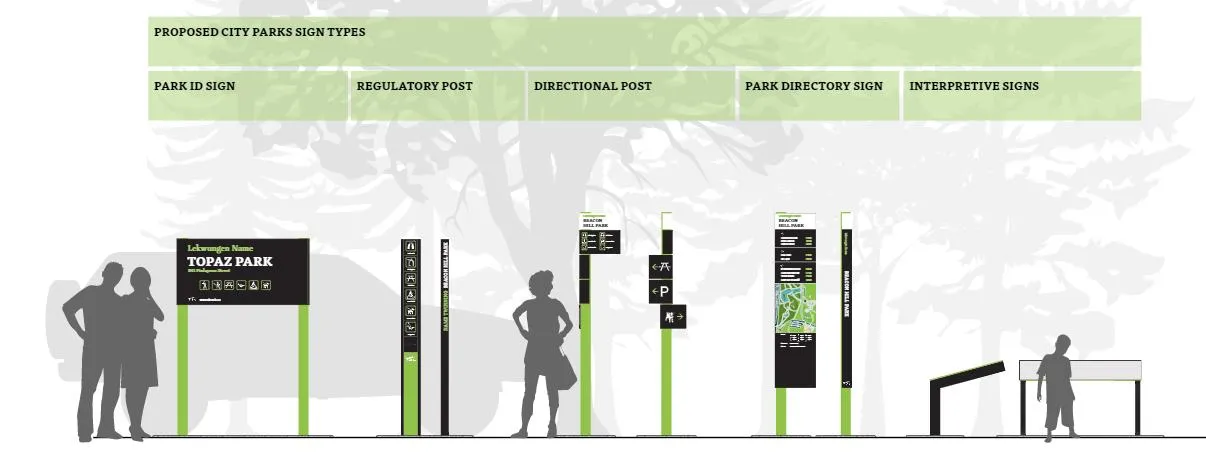
As per the attached Victoria City Parks Signage document, the standardization of type, design and location makes for consistent, attractive, and predictable messaging within a parks system.
Location of Sign
As part of the recent Victoria City Parks Signage Guidelines public consultation process, the clear consensus among stakeholders is that main arrival points are the most critical areas for signage in parks. Staff believe that similar findings would be made in View Royal.
The lessons learned from the Victoria process include larger parks require more information, and the type of information provided is unique to each park. The system by which signs are located can be standardized. Wayfinding within parks beyond providing locations of features at main arrival points is only required for parks which are large or difficult to navigate.
The proposal from staff builds on these best practices to create a standard system of sign location for View Royal parks.
Type of Sign
Staff suggests using the parks classification system from the Parks Master Plan and identifying the need for the type of sign within each park, and which elements are needed on which signs.
The 2017 Parks Master Plan identifies the following park classifications and the parks that fall under that classification.
Community Parks Generally large parks providing passive and active recreation options, with a range of amenities of interest to the entire community. These spaces may also contain significant environmental features
- View Royal Park
- Helmcken Centennial Park
- Portage Park
Neighbourhood Parks These are generally smaller in area than community parks and respond to the open space and recreation needs of local residents. Amenities include passive and active recreation uses, along with significant open space
- Aldersmith Park
- Glenairlie Park
- Chilco Park
- Chancellor Park
- Newstead Park
- Chalmers Park
Neighbourhood Greenspace These are small, open spaces in residential areas, some offering playground equipment intended for use by local residents. Ideally, all residents have access to a Neighbourhood Greenspace within ½ kilometre walking distance from their home
- Throughout View Royal
Natural Greenspace These areas protect natural systems and preserve sensitive ecosystems. Recreational use is limited to passive enjoyment and pedestrian trails.
- Burnside Watkiss Park
- Eagle Creek Park
- Edwards Park
- Robin Hill Park
- Nursery Hill Park
- Richards Island Park
- Burnside Watkiss Park
- Thetis Vale Phase 7 Park
- Knockan Hill Park
Shoreline Accesses There are several parks that provide waterfront access, as well as a network of shoreline access points that are in some cases undeveloped or inaccessible to residents.
- Portage Inlet Linear Park and various road ends
Linear Parks Linear parks play a role in providing connections between park spaces, as well as providing for walking, hiking, and biking opportunities.
- Heddle Park
- Heddle Linear Connection
- Portage Inlet Linear Connection
Special Purpose Areas These areas include points of historical and cultural interest that are of special interest in the town
- Lime Kiln Park
- Craigflower Manor
- Welland Legacy Park
Community Parks and Natural Greenspaces may require arrival-point information including name, park features, mapping, regulatory, and, sometimes, wayfinding and interpretive signage. Neighbourhood parks may require less information, and Neighbourhood Greenspaces may only require naming and some regulatory information. On the other hand, Special Purpose Areas like Lime Kiln Park may warrant a full interpretive sign with history of the site and additional context.
The City of Victoria has outlined very clear sign typologies within their sign document, indicated here:
Design of Sign
Signs should have consistent design and messaging and contain legible fonts and symbols which are designed to be inclusive of a wide audience. This can include allowances for visually disabled people and colourblind individuals. The signs would be expected to be View Royal themed in colour, resistant to vandalism and graffiti, of durable materials, and visually unobtrusive.
Cost of Signs
Staff are working to secure cost estimates for various sign typologies and this will inform budget requests for the 2022-27 Financial Plan. We note that small operational costs are expected with signs for annual cleaning and maintenance.
DISCUSSION
While the Town may not have the immediate capacity to match the level of service that the City of Victoria has provided regarding parks signage, staff suggests that a framework for current and future sign standards be created in much the same manner as the City’s. In this way, addition of signs in parks can be consistent, predictable, and repeatable for all locations within the Town.
Should Council wish to further a spirit of reconciliation in this process, consultation with Esquimalt Nation and Songhees Nation could be helpful in determining any applicable First Nations names for the locations, which, as has been done in some Victoria cases, could be added to the signs.
The Town may wish to consider contracting external content providers for interpretive signage and this can be included in future budget proposals.
Attached to the report is a sample sign implementation plan for View Royal Park and for Portage Park.
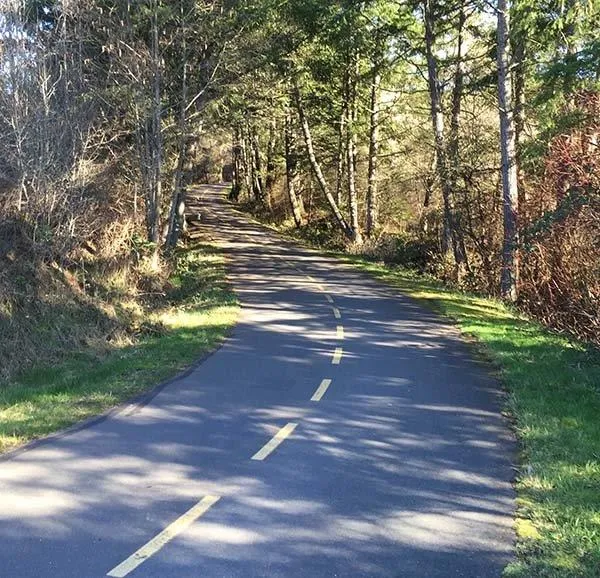
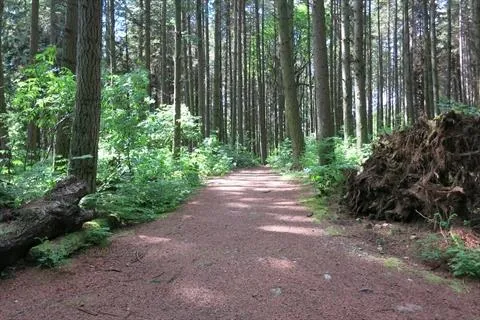
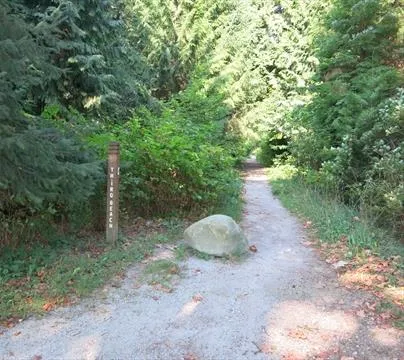
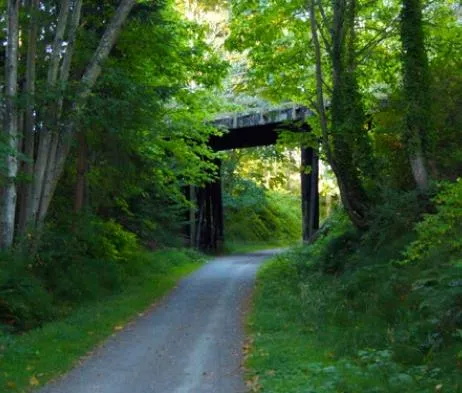
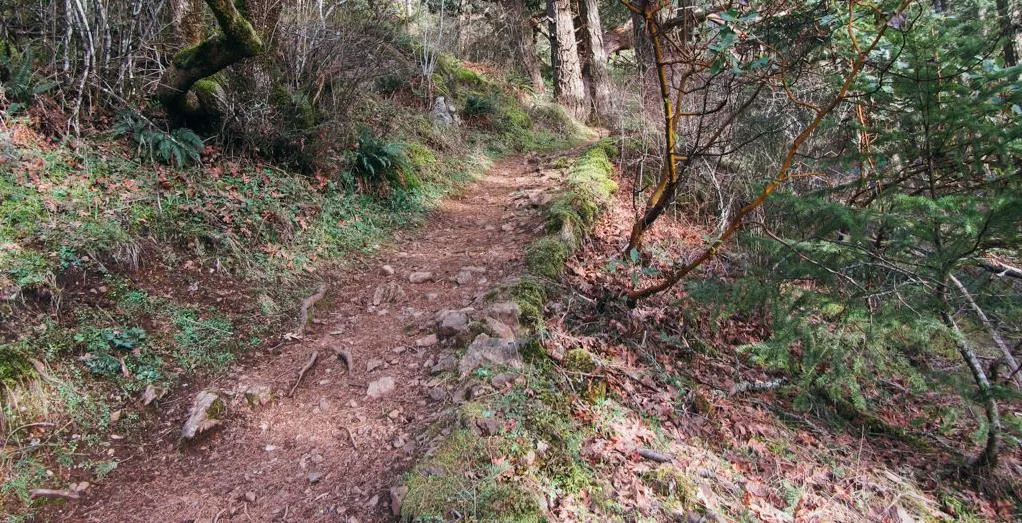
Council may consider adding a trail rating system to the Town’s signage. PREAC has had conversations about this topic in the past. Creating various ratings would assist in determining trail accessibility for all users of the park. A sample framework could be the following (as a starting point, or example):
NEXT STEPS
Should Council wish to implement such a signage system for View Royal’s park system, staff can follow up with:
- Finalize a Sign Strategy document mirroring the City of Victoria document.
- Draft plans for major parks as per the attached Portage Park Sign Strategy example.
- Secure cost estimates for each type of sign and costs per park and include in 2022 budget process.
- Consult with First Nations regarding park and place names.
- Draft a trail rating system for the Town’s trail network.
It is staff’s intention to closely follow the Town’s Parks Master Plan regarding the classification of the Town’s parks and the identification of the features found within.
RECOMMENDATION
THAT Council receive the report dated December 6, 2021 from the Community Planner entitled “Parks Wayfinding Strategy Introduction” for information.
SUBMITTED BY: J. Davison, MCIP RPP, Planner
REVIEWED BY: L. Chase, MCIP RPP, Director of Development Services
ATTACHMENTS:
- Town of View Royal Draft Parks Sign Strategy for View Royal Park – Staff - 2021
- Portage Park Sign Strategy Example – Staff - 2021
- Victoria City Parks Signage – City of Victoria – 2018
Document Images
(3)