Town of View Royal DRAFT Sample Parks Sign Strategy - View Royal Park
Draft design document illustrating how the sign strategy would be applied specifically to View Royal Park.
Town of View Royal DRAFT Sample Parks Sign Strategy
View Royal Park

Draft Sample Park Sign Strategy for View Royal Park
This document is intended to illustrate how signage in parks could be implemented in View Royal. The strategy borrows heavily from the City of Victoria’s parks wayfinding system. Please note that this is not intended to be a comprehensive illustration of View Royal Park’s facilities but rather intended to illustrate some of the sign applications in the park’s context.
The signage is intended to be within parks and identify park features. Off-network features like location of streets, pathways, school facilities, etc. have not been contemplated at this time. Such things could be implemented as part of a larger Town wayfinding strategy.

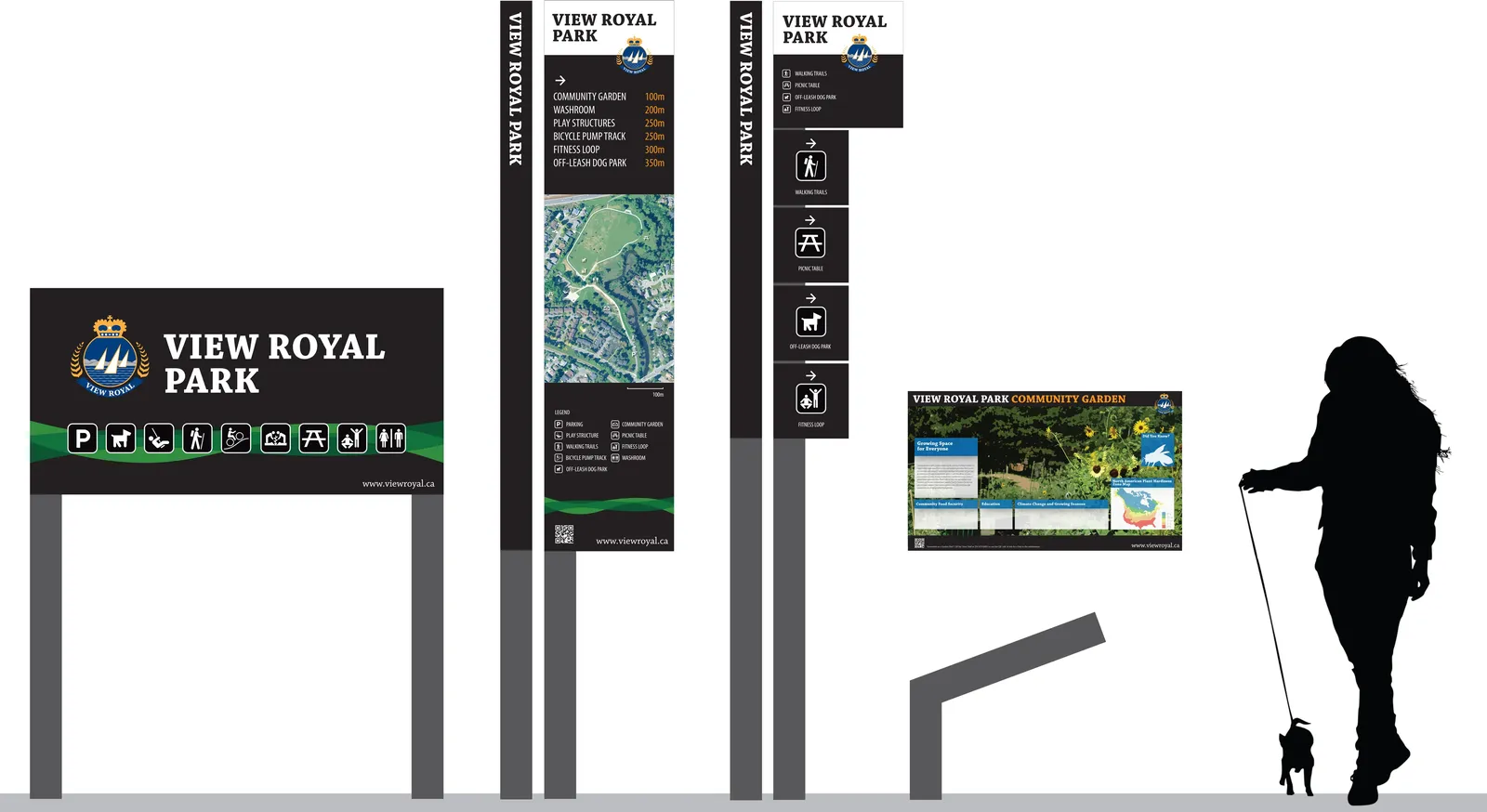
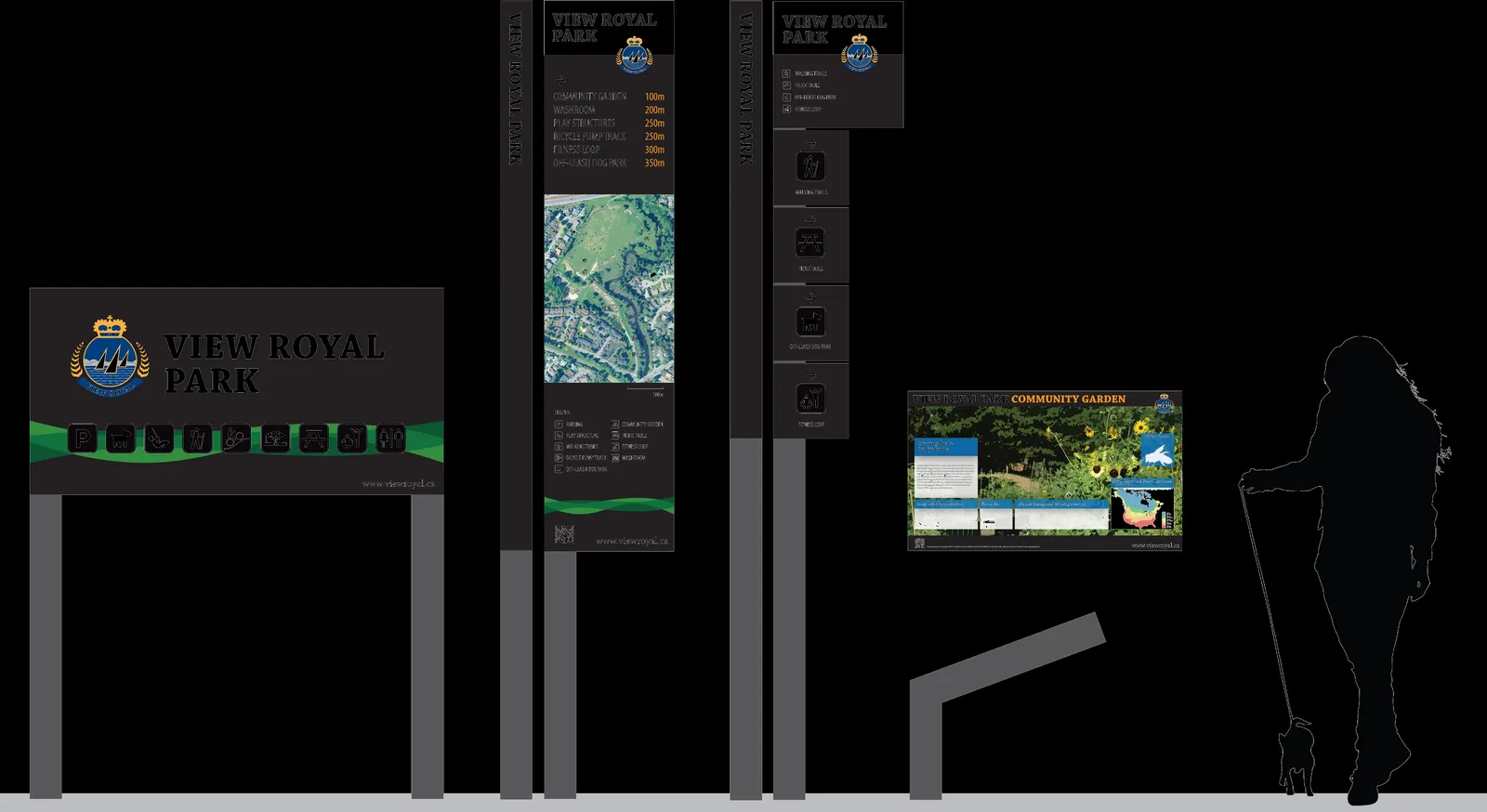
- Park Identification Sign
- Directory Sign
- Directional Post
- Interpretive Sign
Park Identification Sign
Park Identification Signs are designed to be placed at the main access to the park and be visible from adjacent roadways and bike lanes and convey the name of the park and its major facilities.
Symbols need not show all park facilities if it becomes too visually cluttered on the sign. Ideally not more than 6 symbols should be on the sign as it becomes difficult to read at traffic speeds.

Directory Sign
Directory Signs are designed to be the primary pedestrian information sign for the park, including distance and direction to major park facilities, a map showing the locations of all facilities, a scale, a legend, and a QR code to link to a mobile phone version of the park directory.
The sign is positioned at the main pedestrian entrance to the park.

Directional Post
Directional Posts are designed to be secondary pedestrian information signs positioned at secondary park entrances and at major decision-making points within the park.
The sign will convey the name of the park and directions to those facilities.

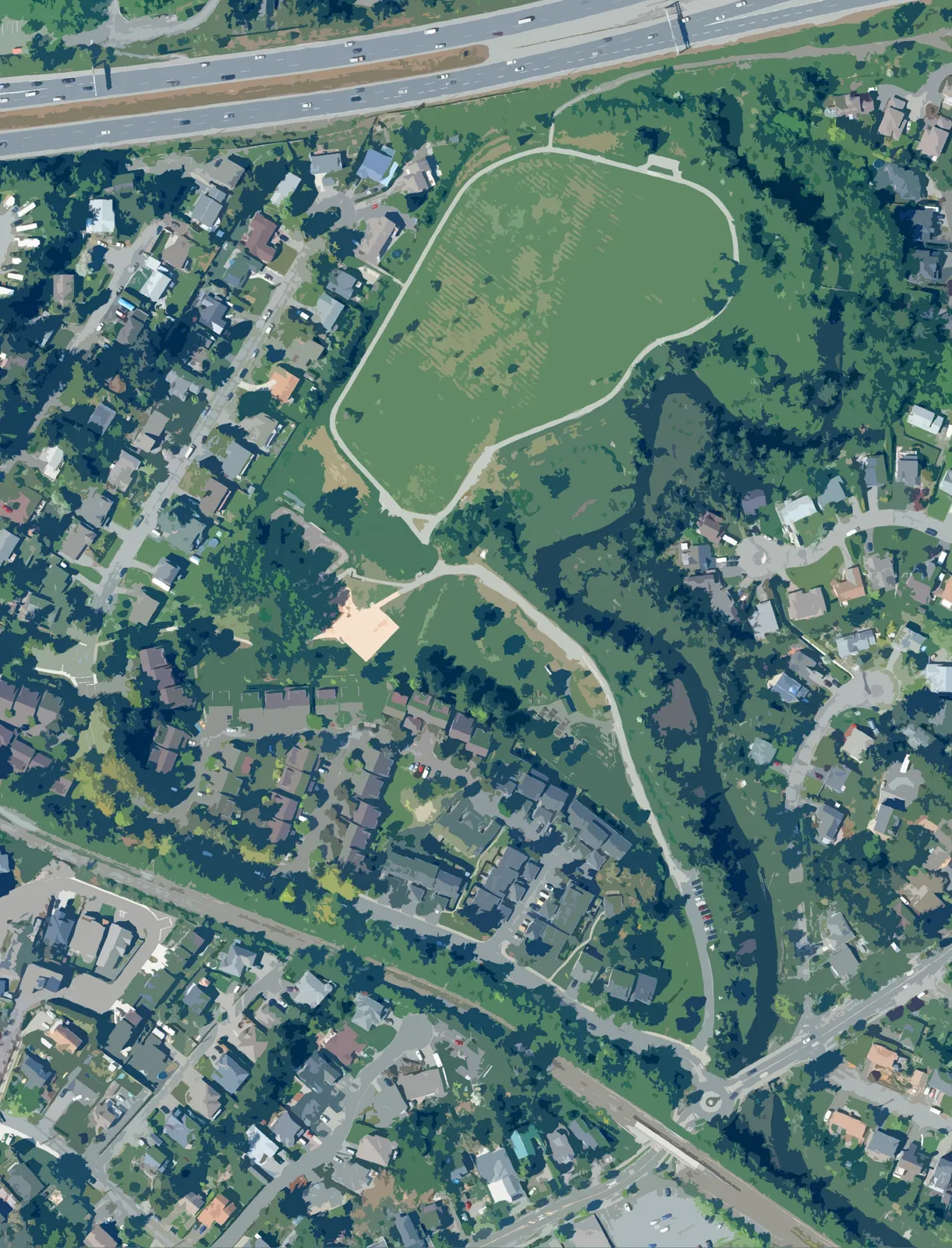
[Aerial map of View Royal Park with five yellow dots indicating various proposed locations for Directional Posts at path junctions and secondary entrances]


Interpretive Sign
Interpretive Signs are intended to be educational. They provide detailed information about park features, which may be natural history or processes, cultural histories and features, wildlife information, park facilities, or other pieces of interesting or important information.
These signs can be various sizes depending on the feature in question.

[Aerial map of View Royal Park with a yellow dot indicating the location for an Interpretive Sign at the community garden area]
Document Images
(1)