Correspondence: Letter from B. Burchill re: Potential Liabilities
Correspondence from the Association for Responsible and Environmentally Sustainable Sewage Treatment (ARESST) raising concerns about CRD's potential legal liabilities regarding RFP payments.
July 13, 2015
To CRD Board;
Re: Potential Liabilities
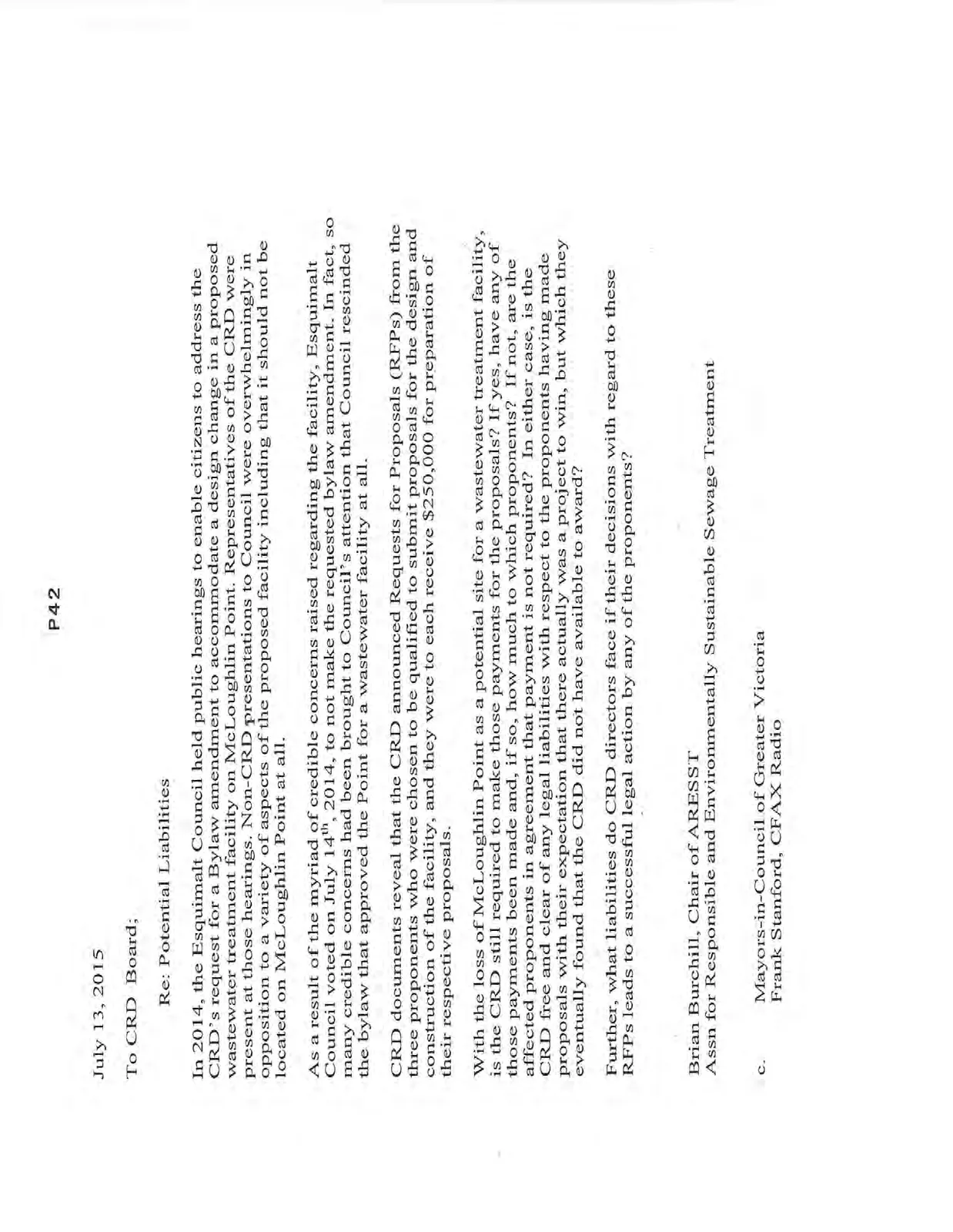
In 2014, the Esquimalt Council held public hearings to enable citizens to address the CRD's request for a Bylaw amendment to accommodate a design change in a proposed wastewater treatment facility on McLoughlin Point. Representatives of the CRD were present at those hearings. Non-CRD presentations to Council were overwhelmingly in opposition to a variety of aspects of the proposed facility including that it should not be located on McLoughlin Point at all.
As a result of the myriad of credible concerns raised regarding the facility, Esquimalt Council voted on July 14th, 2014, to not make the requested bylaw amendment. In fact, so many credible concerns had been brought to Council's attention that Council rescinded the bylaw that approved the Point for a wastewater facility at all.
CRD documents reveal that the CRD announced Requests for Proposals (RFPs) from the three proponents who were chosen to be qualified to submit proposals for the design and construction of the facility, and they were to receive $250,000 for preparation of their respective proposals.
With the loss of McLoughlin Point as a potential site for a wastewater treatment facility, is the CRD still required to make those payments for the proposals? If yes, have any of those payments been made and, if so, how much to which proponents? If not, are the affected proponents in agreement that payment is not required? In either case, is the CRD free and clear of any legal liabilities with respect to the proponents having made proposals with their expectation that there actually was a project to win, but which they eventually found that the CRD did not have available to award?
Further, what liabilities do CRD directors face if their decisions with regard to these RFPs leads to a successful legal action by any of the proponents?
Brian Burchill, Chair of ARESST Assn for Responsible and Environmentally Sustainable Sewage Treatment
c. Mayors-in-Council of Greater Victoria Frank Stanford, CFAX Radio
Document Images
(1)