CAPITAL REGIONAL DISTRICT REGIONAL WATER SUPPLY (RWS) – DEVELOPMENT COST CHARGE (DCC) PROGRAM Presentation
A presentation slide deck detailing the philosophy, rate calculation, and proposed fees for the new regional water supply development cost charges.
CAPITAL REGIONAL DISTRICT REGIONAL WATER SUPPLY (RWS) – DEVELOPMENT COST CHARGE (DCC) PROGRAM
Town of View Royal: Council Presentation November 7, 2023
CRD INTRODUCTION
Supporting Corporate Documents:
- CRD 2023-2026 Corporate Plan
- CRD Regional Water Supply (RWS) 2017 Strategic Plan
- CRD RWS 2022 Master Plan
Political Oversight and Direction:
- Water Advisory Committee (WAC)
- Regional Water Supply Commission (RWSC)
- CRD Board
WHAT IS THE REGIONAL WATER SUPPLY (RWS) SERVICE?
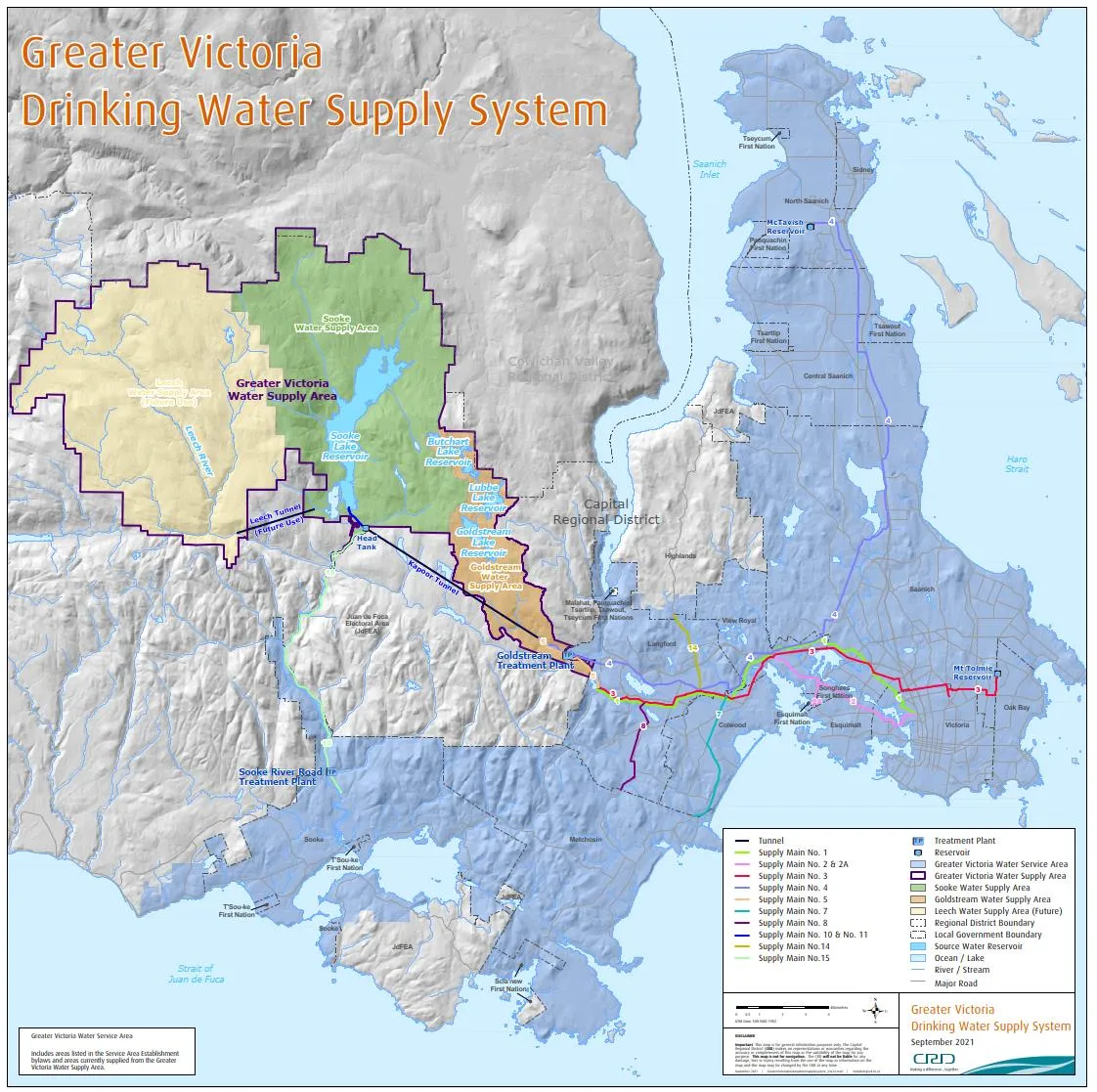
- The CRD’s Regional Water Supply (RWS) Service provides bulk drinking water to the Municipalities and First Nations in the Greater Victoria Area
- The system provides water for residential, industrial, commercial, institutional, and agricultural uses to approximately 400,000 people
- The primary source is the Sooke Lake Reservoir
- Major components of the RWS system include: 3 watersheds, 15 dams, 2 tunnels, 2 disinfection facilities, ~120km of transmission mains
AGENDA
- DCC Overview and Current DCC Rates
- Proposed Regional Water Supply (RWS) DCC:
- Program Development
- Policy Considerations
- Proposed RWS DCC Bylaw: Program and Rates
- Discussion/Questions
OVERVIEW OF DCCs
WHAT ARE DCCs?
- Fees to help communities recover the costs of “off-site” infrastructure needed for growth (i.e., capacity)
- Regulated by the province
- Section 14, Division 19 of the Local Government Act
- Provincial DCC Best Practices Guide
- Development Cost Charge Guide for Elected Officials
- Ministerial approval
PHILOSOPHY OF DCCs
- Foster fairness (e.g., “benefiter pay” principle means growth pays for growth)
- Ensure consistency
- Minimize financial risk to the CRD
- Ensure certainty for the development community (e.g., clear policy framework) and that services support growth and development
- Promote transparency and equitability
- Ensure timely processing of development applications
WHO PAYS DCCs?
- Applicants for subdivision approval to create single family development sites
- Applicants for building permits to construct multi-family, commercial, industrial, and institutional development
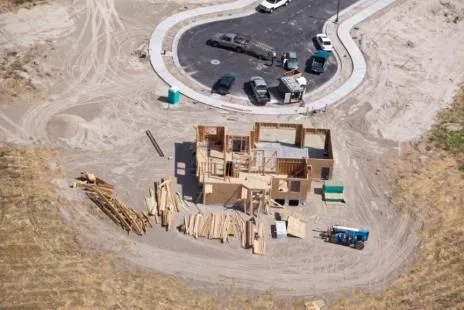
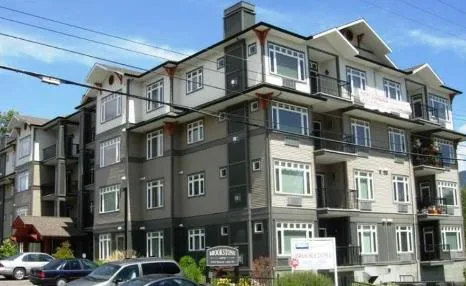
CURRENT DCC RATES IN VIEW ROYAL
| Development Category | View Royal Verbiage | Collection Unit | Municipal DCCs | JDF WDS* | Total |
|---|---|---|---|---|---|
| Low Density Residential (single family) | Detached Residential | per Lot | $9,806 | $2,922 | $12,728 |
| Medium Density Multi Family (duplex) | Detached Residential | per Unit | $9,806 | $2,557 | $12,363 |
| Medium Density Multi Family (townhouse) | Multi-Family Residential | Per Unit | $6,519 | $2,557 | $9,076 |
| High Density Multi-Family (apartments) | Multi-Family Residential | per Unit | $6,519 | $1,644 | $8,163 |
| Commercial | Commercial | per GFA in m² | $40.59 | $10.74 | $51.33 |
| Industrial | N/A | per GFA in m² | $0 | $5.82 | $5.82 |
| Institutional | Institutional | per GFA in m² | $48.11 | $23.74 | $71.85 |
* The Juan de Fuca Water Distribution Service DCC Bylaw update is underway
RWS DCC PROGRAM DEVELOPMENT
GROWTH PROJECTIONS AND TIMELINE
Determining project timing and priorities over the 30-year time horizon (2023-2053) based on where growth is occurring.
DCC PROGRAM DEVELOPMENT, CAPITAL COSTS, AND PROJECT LIST
DCC projects within the 30-year timeframe were identified from available infrastructure/capital plans and staff input, including the Regional Water Supply 2022 Master Plan and the CRD RWS 2023 Capital Plan. The RWS 2022 Master Plan recommends $2B+ in infrastructure upgrades over the next 30 years.
Eligible DCC projects were prioritized based on their benefit to future growth and their likelihood of being constructed within the 30-year DCC time horizon. Conversely, renewal is not DCC-eligible.
PROJECT BENEFIT ALLOCATIONS
Determining the relative benefit of each project to the existing community vs. new development and the proportion of capital costs attributable to new vs. existing development.
HOW DO WE DETERMINE THE DCC RATE?
The process involves:
- Technical Inputs: Population Growth and Building Permit Data are used to Estimate Growth.
- Technical Inputs: Master Plans, Strategic Plans, and Capital Plans are used to Determine Capital Costs and Project Timing.
- Technical Inputs: Determining the Benefit Factors based on the extent to which projects are driven by growth (e.g., 50%/50% split).
- Policy Inputs: The CRD Board decision is used to Determine DCC Assist Factor.
- Calculated Values: These inputs result in the final Calculate DCC Rates.

30-YEAR GROWTH ESTIMATES: VIEW ROYAL
RESIDENTIAL
- Low-Density Residential: 335 units
- Medium-Density Residential: 800 units
- High-Density Residential: 1200 units
INDUSTRIAL, COMMERCIAL, INSTITUTIONAL (ICI)
- Commercial: 52,500 m²
- Institutional: 7,500 m²
- Industrial: 7,500 m²
DCC ASSIST FACTOR
- The Local Government Act requires the CRD to “assist” development for DCCs
- The assist amount would be funded through the Regional Water Supply rate; CRD member municipalities are not responsible for funding the Assist Factor
- The Assist Factor can vary from 1% (least assistance) to 99% (most assistance)
- Assist Factors are typically between 1% and 10%
- Proposed RWS DCC rates assume the minimum 1% Assist Factor
RWS DCC PROGRAM – PROJECTS & COSTS – 30 YEARS
| Project | Total Program Costs | Benefit to New vs. Existing Development | DCC Recoverable (i.e., Developer Responsibility) | CRD Costs (i.e., CRD Responsibility) |
|---|---|---|---|---|
| Sooke Lake Reservoir Deep Northern Intake | $74.7M | 35% | $25.9M | $48.8M |
| Leech Watershed | $28.5M | 100% | $28.2M | $0.3M |
| Water Filtration Plant | $819.1M | 35% | $283.8M | $535.3M |
| Transmission Mains | $487.0M | 35% | $168.7M | $318.2M |
| Smith Hill Storage Tank | $31.3M | 50% | $15.5M | $15.8M |
| Studies/Modelling | $3.8M | 35% | $1.3M | $2.5M |
| TOTAL | $1,444.4M | 35-100% | $523.4M | $920.9M |
Note: The 1% Assist Factor is equivalent to $5.3M; the CRD will recover this cost through the Regional Water Supply rate
RWS DCC DRAFT RATES
PROPOSED RWS DCC PROGRAM – RATES
| Development Category | View Royal Verbiage | Collection Unit | RWS Proposed Rate | JDF WDS Rate | Municipal DCCs | Total DCC Rate |
|---|---|---|---|---|---|---|
| Low Density Residential (Single Family) | Detached Residential | per Lot | $9,044 | $2,922 | $9,806 | $21,772 |
| Medium Density Multi Family (duplex) | Detached Residential | per Unit | $7,914 | $2,557 | $9,806 | $20,277 |
| Medium Density Multi Family (townhouse) | Multi-Family Residential | per Unit | $7,914 | $2,557 | $6,519 | $16,990 |
| High Density Multi-Family (apartments) | Multi-Family Residential | per Unit | $5,087 | $1,644 | $6,519 | $13,250 |
| Commercial | Commercial | per GFA in m² | $33.92 | $10.74 | $40.59 | $85.25 |
| Industrial | N/A | per GFA in m² | $16.96 | $5.82 | $0 | $22.78 |
| Institutional | Institutional | per GFA in m² | $73.48 | $23.74 | $48.11 | $145.33 |
COMMUNITY COMPARISONS
Detached Dwelling Comparison (Per Unit)
- Coquitlam (2023): $79,080.00
- Abbotsford (2021): $35,645.00
- Kelowna (2022): $35,082.00
- Langley (City) (2012)*: $34,348.00
- Saanich (District of) (2019): $23,444.00
- Langford (2022): $22,854.00
- Colwood (2021): $22,058.96
- View Royal (2023): $21,772.00
- Victoria (2022): $15,915.19
- Nanaimo (2022): $14,862.27
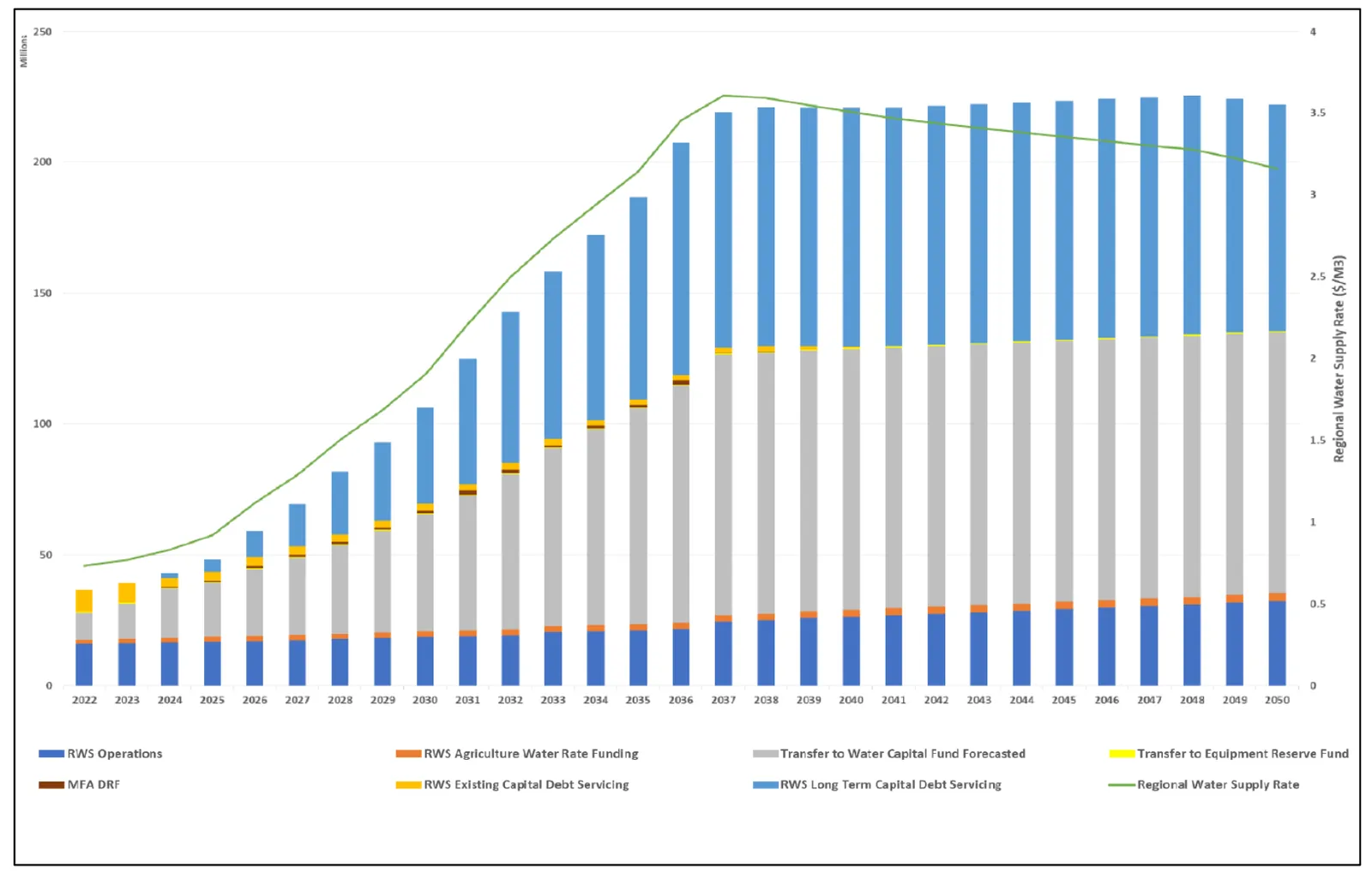
RWS SERVICE CONCEPTUAL RATE INCREASES (NO DCCs OR GRANTS)
STAKEHOLDER CONSULTATION AND BYLAW ADOPTION
- Meetings with Staff from Member Municipalities to Confirm Growth Estimates
- Meetings with Elected Officials in Member Municipalities (We are here!)
- Consultation with CRD Board, RWS Commission, and Staff*
- Facilitate open houses for the public and development community meetings to provide notification and seek feedback on draft rates
- Use the CRD’s website to provide information and updates for the general public as the project progresses
*Regional Water Supply Commission
RWS DCC BYLAW IMPLEMENTATION
- If adopted, the DCC program has a proposed implementation date of early 2025
- 12-month in-stream application protection from updated DCC rates
- Many applicants will not be impacted until early 2026
- CRD will re-evaluate and update the program every 5 years to account for changes in growth, project costs, and any grants received
Implementation Steps: Present Draft DCC Bylaw to CRD Board -> Three Readings of DCC Bylaw -> Provincial Approval (Inspector of Municipalities) -> Bylaw Adoption
DISCUSSION & QUESTIONS
THANK YOU!