Environmental Overview Assessment for 297 View Royal Ave.
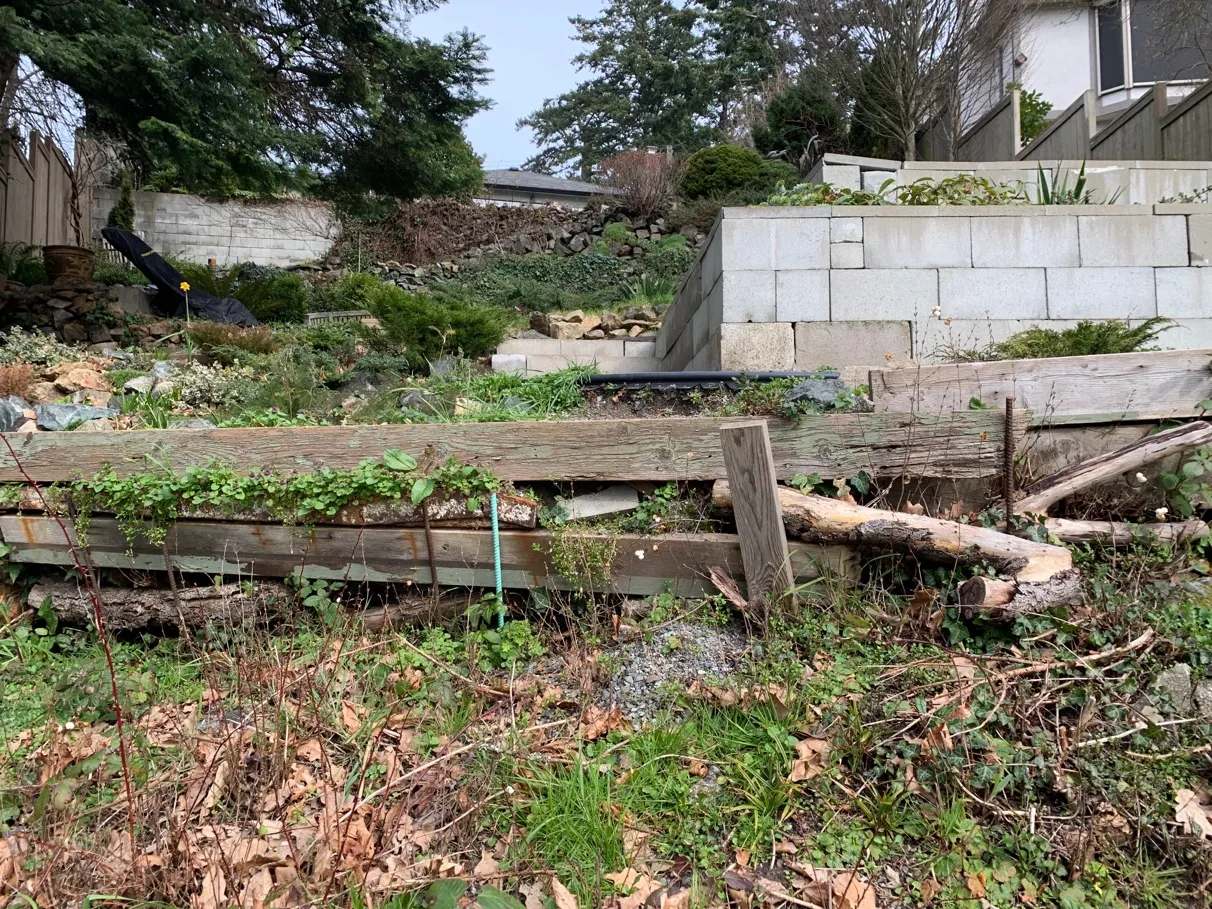
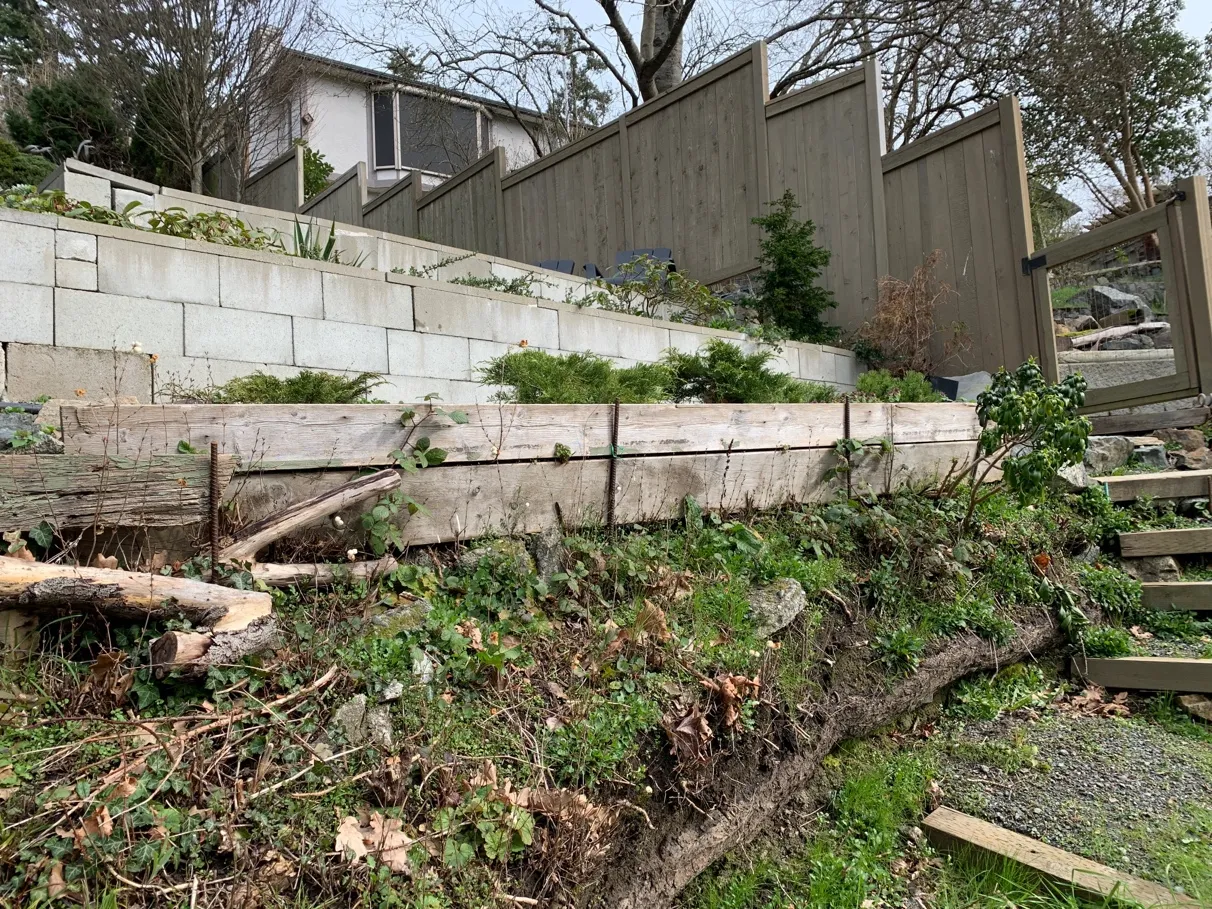
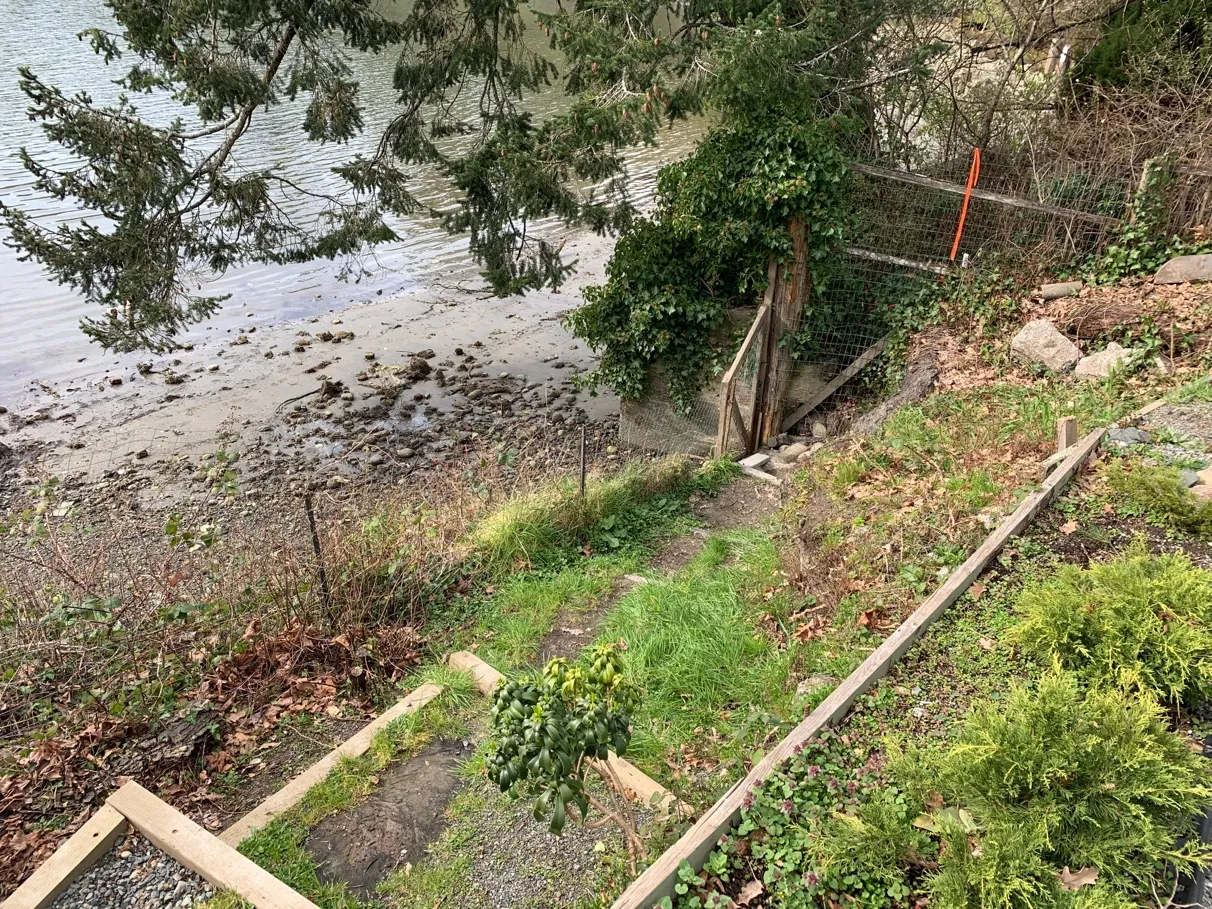
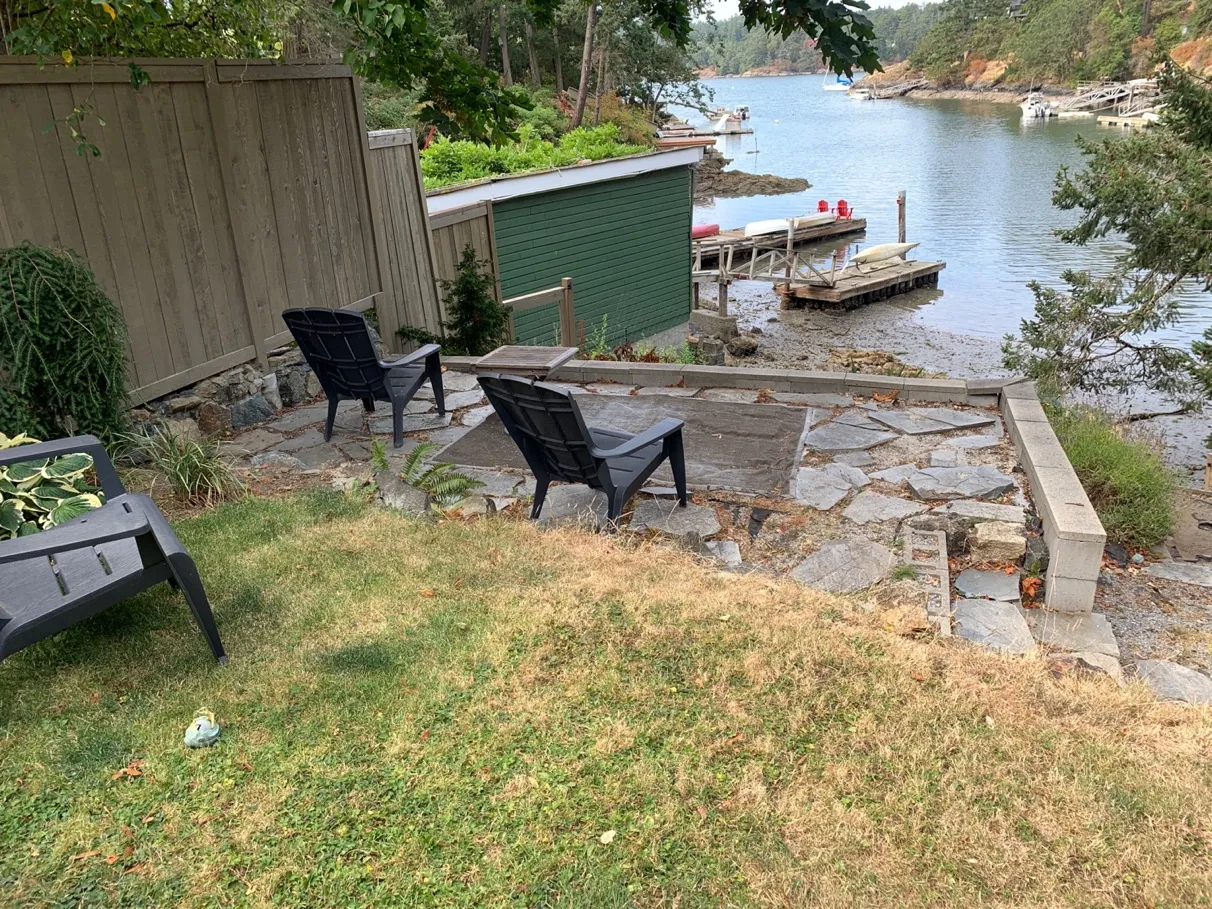
A comprehensive consultant report assessing environmental conditions and protection measures for a shoreline stabilization project at 297 View Royal Ave, including site maps and photo documentation.
Environmental Overview Assessment for 297 View Royal Ave., Town of View Royal, June 16, 2022
Environmental Protection Measures
The following general Environmental Protection Measures (EPMs) are recommended for work around water. Environmental Protection Measures specific to the final construction timelines, methods and materials may differ slightly.
Project Reviews will be submitted to the federal Department of Fisheries and Oceans (DFO) and to the federal Department of National Defence (DND). The following are recommended to meet the DFO requirements: Measures to Protect Fish & Fish Habitat (https://www.dfo-mpo.gc.ca/pnw-ppe/measures-mesures-eng.html):
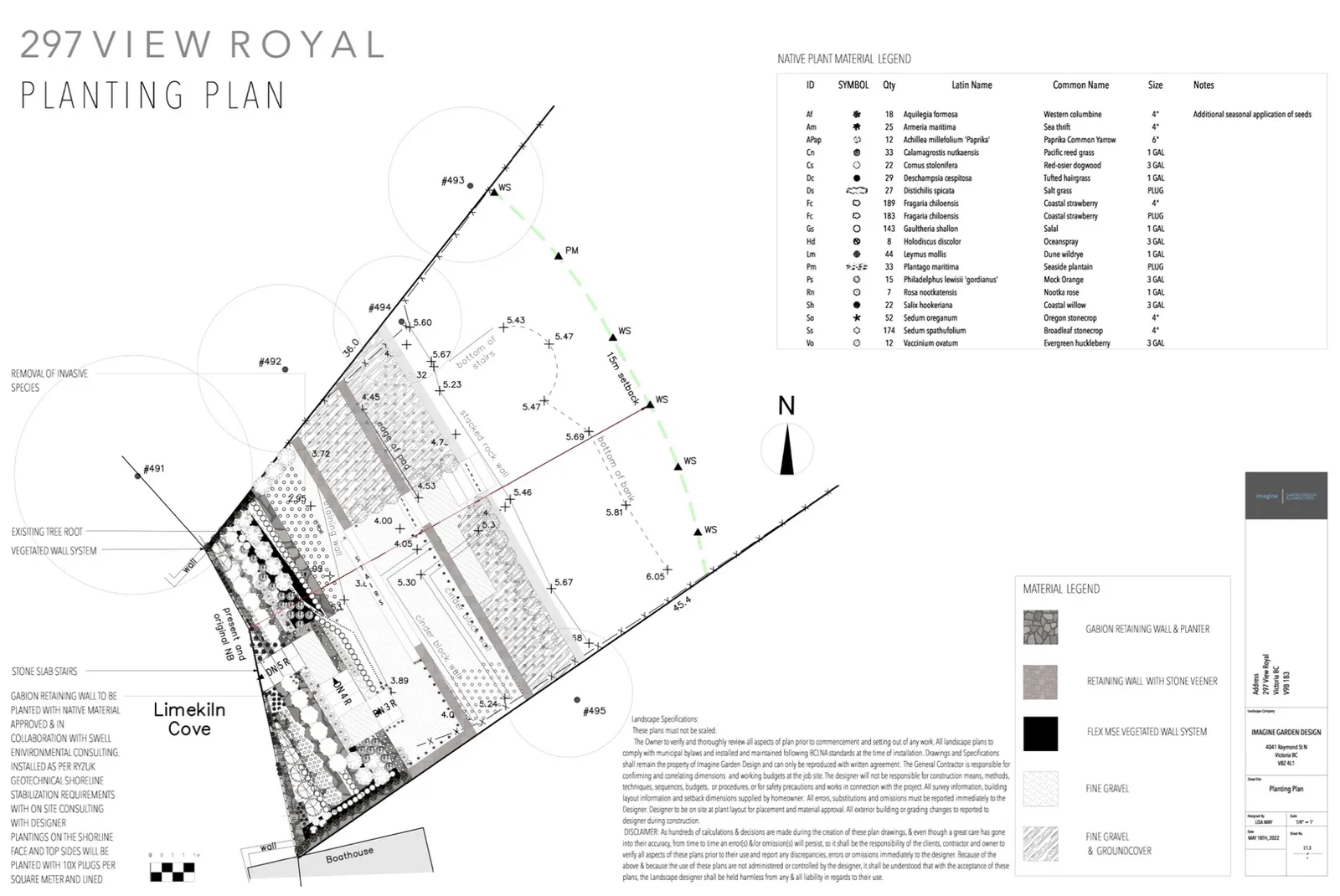
- Maintain riparian vegetation (native vegetation will be salvaged and replanted where possible; approximately 47% of the entire DPA will be restored with extensive native groundcover and large and medium sized native shrubs, focussed along the bottom of the slope in the DPA, near the shoreline).
- Carry out works, undertakings and activities on land.
- Maintain fish passage
- Ensure proper sediment control
- Prevent entry of deleterious substances in water
Additionally, any release of deleterious substances into the marine environment could be considered a harmful alteration, disruption or destruction (HADD) of fish habitat.
The following EPMs (see below) and environmental monitoring are recommended to reduce the risk of potential inadvertent negative impacts to marine life.
Protecting ecological features
- Locations no-go zones, retained trees and vegetation, and sensitive areas are fenced/marked and communicated to all personnel, including sub-contractors and trades.
- Install tree protection as recommended by the arborist (Appendix 2)
- Avoid placing soil/gravel piles and heavy construction materials around roots of trees to be retained, or otherwise cutting into root zones or compacting soils by driving and parking vehicles on root zones.
- Arborist (Concrete Jungle Forestry (CJF)) to be consulted during work within critical root zones of trees (Appendix 2):
- All Bylaw protected trees will be retained; ID Nos. 491, 492, 494, 495 require protective measures, No. 493 does not.
- Among mandated tree protection measures CJF is responsible for:
- Discuss canopy pruning goals / practice with tree service contractor prior to beginning work.
- Layout protection fence alignment with builder at site.
- Consult on temporary machine / materials access slope design / location.
- Layout wood chip soil compaction protection with contractor.
- Oversee temporary machine / materials access slope construction.
- Oversee excavation along:
- North property line between waterline and Grand fir 494.
- South property line within Bigleaf maple 495 8.1m PRZ.
- 1.5m either side of Douglas-fir 491 35cm surface holding roots 1, 2.
- Prune excavation exposed roots >/=2.5cm diameter flush at undamaged tissue.
- Consult on location of plantable walls where these encroach toward Douglas-fir 491 35cm surface holding roots 1, 2.
- Remain available to other consultants, home owner and builder until end of project.
- Occasionally visit site to ensure tree protection measures maintained / functional.
- If requested by View Royal; supply project completion / Bylaw 1069, 2022 protected tree impact assessment report.
- With no Bylaw protected trees removed; replacement trees are not required for this project.
Pre-Clearing Nesting Bird Survey
- Nesting birds and their nests are protected by both the federal Migratory Bird Convention Act and Section 34 of the BC Wildlife Act, care must be taken to avoid destruction of nests when clearing and/or developing any property.
- Section 34 of the BC Wildlife Act protects birds and their eggs from possession, molestation or destruction. The nests of eagles, peregrine falcons, gyrfalcons, ospreys, herons, and burrowing owls are protected at all times of the year. The nests of all other species are protected when the birds or their eggs are in the nest.
- If possible, tree removal and vegetation clearing should be conducted between August 15 and February 1 to minimize the risk of damaging nests.
- Pre-clearing nesting bird surveys should be conducted if tree or vegetation removal will occur during breeding season (February 1 to August 15). While the period between August 15 and March 15 has been identified by Environment Canada and the BC Ministry of Environment as the general period least likely to involve active bird nesting, this time period does not coincide with the breeding and nesting habits of eagles, many owls species, or herons (Grant Bracher, FLNR and Ann Nightingale, VNHS pers. comm. 2018), therefore we recommend a nesting bird survey be conducted if tree and vegetation clearing will occur between February 1 and August 15. The nesting bird survey should be conducted within 1-2 days of the initiation of clearing, depending on the timing during the nesting season.
- The following chart identifies the lowest/highest risk breeding periods for this location:
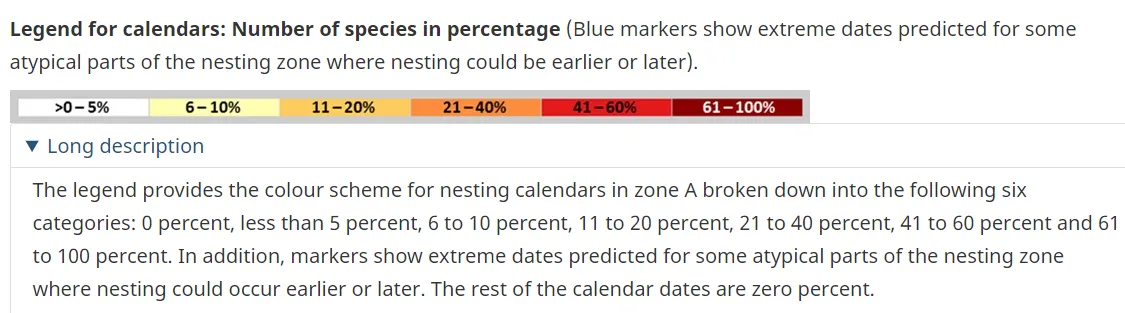
- When work must be conducted within the breeding window, the following document provides information on steps that can be taken to reduce the risk of disturbing a bird nest. https://www.canada.ca/en/environment-climate-change/services/avoiding-harm-migratory-birds/reduce-risk-migratory-birds.html
- Ideally, vegetation removal should be done outside of the breeding season, but the property owners should be aware that there are some birds (Anna’s Hummingbird, Red Crossbill, Great Horned Owl) that nest during the “off” season.
- In addition to the actual detection of a nest during vegetation removal, the crew should also watch for signs of high agitation by birds, indicating a nest or young are in the immediate area. If during tree and vegetation removal a nest is discovered:
- halt all disruptive activities in the nesting area
- move away as quickly and quietly as possible
- avoid disturbing the surrounding vegetation, and avoid making a trail to and from the nest
- protect the nest with a buffer zone
- avoid the immediate area until the young have naturally left the vicinity of the nest
- If a nest with young has been exposed to the elements or predation by removal of surrounding vegetation, the nest with young should immediately be taken to the nearest Wildlife Rehabilitation Centre. For this site, that would be the BC SPCA WildARC at 1020 Malloch Rd. in Metchosin.
Environmental Protection Measures During Construction
The contractor must implement environmental protection measures to ensure that the project has the minimum impact and no contaminants, such as sediment-laden water or spills, enter the marine environment.
- The work is proposed to take place within the Reduced Risk Fisheries Window for marine shorelines (July 1 to October 1).
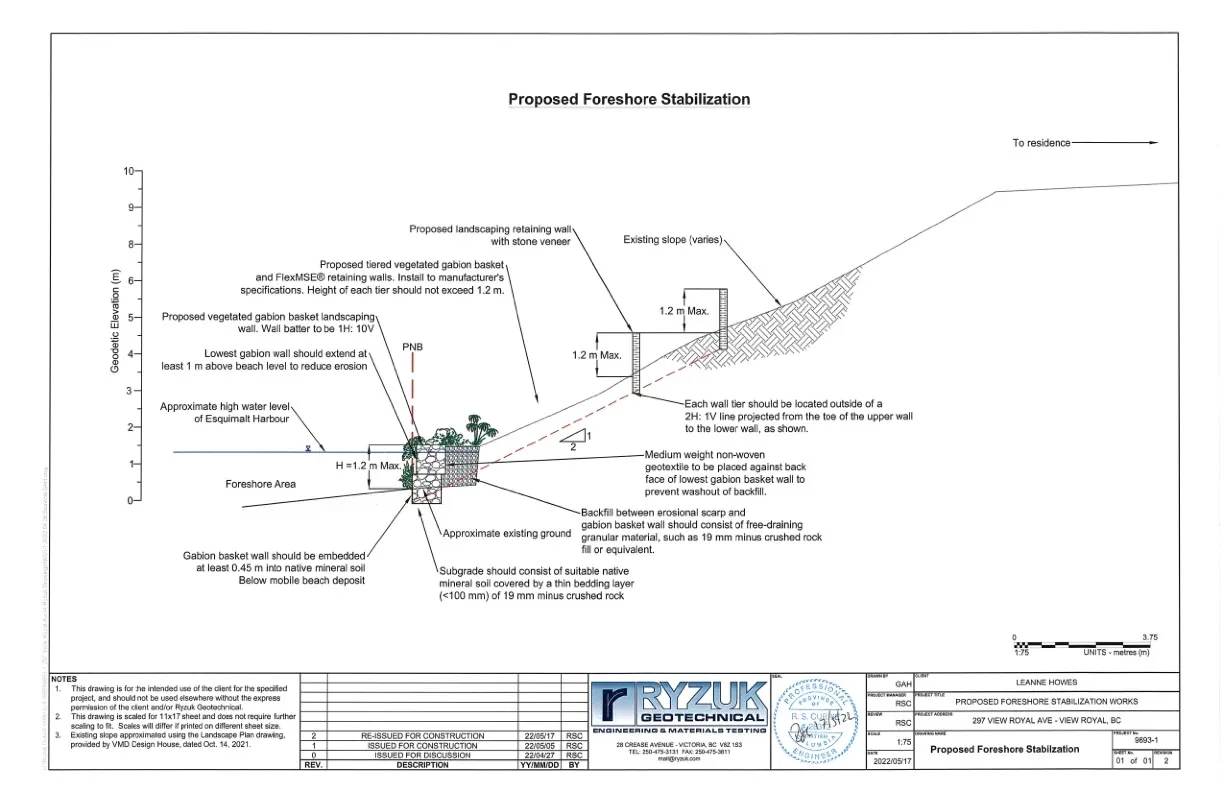
- All of the work will be constructed from the top of slope and no work below the PNB will occur (with the exception of ESC measures below)
- Minimize tree and vegetation removal to the minimum required to construct the shoreline stabilization structures.
- Prior to any tree or vegetation removal, a Pre-clearing Bird Nesting Survey will be conducted between February and August.
- Follow the ISA Certified arborist-recommendation prior to and during construction to protect retained trees during construction, including (see Appendix 2 for detail instructions).
- Salvage native plants to re-use in the DPA where possible, under direction of the QEP.
- Remove invasive species (Himalayan blackberry, English ivy, morning glory, buttercup, and spurge laurel). Maintenance will be required to control invasive species.
EPMs for construction are recommended as follows:
- Work will be completed during forecasted dry weather, particularly during the lower shoreline excavation and gabion installation (no work in heavy rainfall).
- Work will proceed from the upland side of the high water mark (PNB). No access for heavy equipment will occur on the shoreline.
- Exposed excavations and soil piles are to be placed away from the shoreline and covered with tarps or poly sheeting during precipitation such that sediment-laden water cannot flow into the waterbodies.
- Exposed soil will be planted as soon as possible once work is complete.
- Sediment fences or other measures will be installed as needed, to prevent sediment from migrating into the marine environment. A sediment fence or floating sediment curtain is suggested to contain impacts during the excavation and installation for the shoreline gabion and will be determined during construction.
- Do not direct water runoff from the site or dewatering from excavations directly into the marine environment. If dewatering of excavations is required, the Environmental Monitor must be consulted to determine where runoff can be directed.
- Existing trees and native vegetation to be retained will be marked with highly visible flagging or snow fence and care will be taken when working around trees (as per specific arborist recommendations above).
- Ensure the materials at the work site have been secured at end of day and in rough weather.
- Ensure no tracking of sediments on to roadways from truck traffic (road sweeping and installing rock/hog fuel at entrance to minimize tracking)
Spill Prevention Measures
Spill Prevention Measures will be implemented to minimize the potential for contaminants to enter the marine environment:
- Equipment will be inspected and will be power-washed/cleaned offsite prior to working adjacent to water bodies. Hydraulic fittings on equipment working near the water’s edge may require absorbent wrapping (‘diapering’ with spill pads and zip ties) if not using inherently biodegradable hydraulic fluid.
- Fuelling of any machinery or generators will occur in a designated area away from water bodies (30 m) and catchbasins. Portable generators or fuelled equipment and fuel cans should be placed in spill-proof containers sized to contain a volume greater than the fuel capacity of the equipment (e.g. plastic bin, spill trays, or impermeable containment areas such as a poly-lined bermed depression).
- Spill kits (capable of addressing the volume of fuel/oils/chemicals on site) will accompany all heavy equipment on site and operators will be trained in their use. This will include absorbent booms capable of containing leaks on the shoreline (~20 m total length).
- No concrete work is proposed along the shoreline, but concrete retaining walls with stone veneer will be constructed up the slope.
- Ensure concrete wastes are contained: wet concrete is not deposited into surrounding water, remove excess concrete, and do not allow water from equipment and tool cleaning to enter the marine environment. Any concrete pouring from the upper slope should be carefully monitored with no concrete to enter the marine environment. Wet cement is highly alkaline and can have severely adverse effects on aquatic life, including fish. Freshly poured concrete needs to be covered when rain is forecasted, or runoff needs to be isolated from waterbodies during the curing process. Cast in place concrete will not come in contact with fish-bearing waters for at least 48 hrs.
- In case of spills, the following general steps are recommended:
- Stop source of spill/prevent further spillage (turn off valves, right overturned containers)
- Block spill from reaching aquatic environment or pathways to waterbodies
- Block spill from spreading
- Call Environmental Monitors
- Clean up spilled materials
- A site run-through of spill scenarios should be discussed with the crews that will be working on site, with specific tasks assigned to personal when potential high-risk activities are planned.
Site Restoration
- Plant material should be pre-ordered from the nursery to ensure it is available for the construction period (seed, plugs, and potted plants)
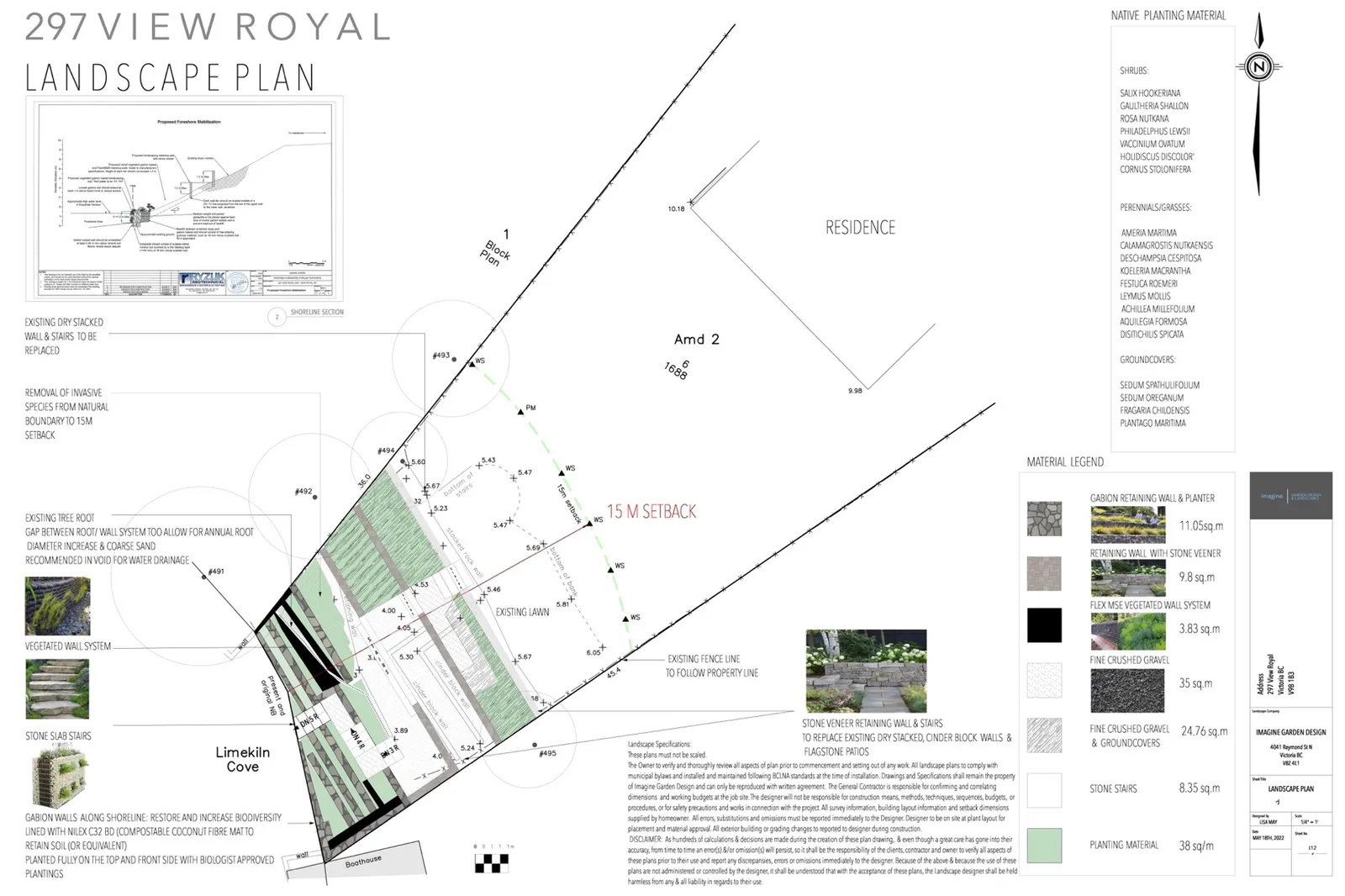
- Following completion of construction, implement the planting plan (Figures 4 and 5)
- Weed-free growing medium to be added as shown in the landscape plan
- Remove and control invasive species prior to planting.
- Vegetation to be planted as per Figures 4 and 5. Substitutions must be approved by the RPBio.
- The planted area above the intertidal area should be mulched with 10 cm composted mulch.
- Irrigation, minimum of:
- Years 1 and 2 - Watering 2/week deeply during the growing season or if plants are wilting.
- Years 3 and onwards - Water as needed to establish and wean plants off irrigation.
- Maintenance
- Invasive species removal a minimum of 4 times/growing season for a minimum of 3 growing seasons
- Temporary fencing
- Deer protection fencing may be required until the vegetation is established enough to withstand browsing (3-5 years)
- Suggested sources for native plants:
- Satinflower Nurseries (Saanich) – http://www.satinflower.ca/
- Streamside Native Plants (Bowser) – http://www.streamsidenativeplants.com/
- Premier Pacific Seeds - https://premierpacificseeds.ca/
Environmental Monitoring
Environmental monitoring is required in order to reduce the potential for inadvertent negative impacts to the environment and to ensure that environmental protection measures are properly implemented and maintained, especially during shoreline works. Environmental monitoring from the start of the project will be necessary to meet regulatory permit reporting requirements.
- Owner must notify Swell Environmental a minimum of 4 weeks prior to the initiation of the works.
- Preconstruction meeting with owner, contractor, Swell, arborist, and Ryzuk Geotechnical to review Project Tasks, Environmental Protection Measures and Permit Requirements.
- Site visits, periodically during key phases, as determined by the QEP, such as:
- Inspect Erosion & Sediment Control measures once they are installed
- During excavation within the 5 m shoreline area
- During initial excavation in the 15 m shoreline area
- During installation of first row of shoreline stabilization works and filling of first gabions
- During initial invasive species removal and native species planting
- During heavy rainfall (>10mm/24 hours) until the QEP is satisfied that erosion and sediment control measures are preventing sediment laden water from entering the marine environment
- Emergencies, such as spills
- To assess completion of the project
- Monitoring during construction will also consist of photos to be sent by the owner or contractor to the QEP periodically throughout the construction period to show protection of native vegetation and functioning of ESC measures. Photographs from on-site contractors during development can reduce overall monitoring costs. If needed, due to uncertainty or changes to the construction process, the QEP will schedule site visits as needed.
- Preparation of a completion report to be provided to the Town of View Royal, DFO, and DND to ensure all Development Permit, DFO and DND Project Review requirements are completed with 3 months of the completion of construction.
Summary
The works within the DPA have been designed to address the shoreline stabilization issues identified by Ryzuk Geotechnical on the site (Appendix 1). Provided the Environmental Protection Measures described are followed, we expect the proposed construction activities to have minimal negative impacts to the current ecological condition of the ecosystems of the 15m DPA setback or the intertidal area of Esquimalt Harbour, or create HADD (Harmful Alteration, Disruption or Destruction) of Fish Habitat. The restoration activities (invasive species removal and native plantings) will provide improvement over the current ecological conditions for the upland, shoreline, and marine ecosystems.
References
- Archipelago Marine Research Ltd. 2004. Subtidal Survey of Physical and Biological Features of Esquimalt Harbour. Revised version prepared for CFB Esquimalt, Department of National Defence – Formation Environment Risk Management, Victoria, BC. Archipelago Marine Research Ltd. 2004
- Romanuk, Tamara N., and Colin D. Levings. (2010). Reciprocal Subsidies and Food Web Pathways Leading to Chum Salmon Fry in a Temperate Marine-Terrestrial Ecotone. PLoS ONE, 5(4), e10073. http://doi.org/10.1371/journal.pone.0010073