Colquitz/Gorge Watershed Special Management Area Concept Paper
A detailed proposal from the Songhees Nation for a cooperative multi-agency management area for the watershed.
Te’mexw Treaty Association and Songhees Nation March 31, 2019
Colquitz/Gorge Watershed Special Management Area Concept Paper
Project purpose
The goal of the Colquitz/Gorge Watershed Special Management Area Project is to build a cooperative partnership among Local, Regional, Provincial, Federal and First Nation governments in Greater Victoria, to explore practical, collaborative approaches for protecting and improving sustainability of the salmon and herring runs in the Colquitz/Gorge watershed.
Background
A Special Management Area is an area where natural, cultural and recreational values are considered in land use and development decision making.
This paper outlines the proposed Special Management Areas (SMA) referenced in Section 21 of Chapter 9 of the Te’mexw Treaty Association Agreement-in-Principal:
“21. Prior to the Final Agreement any Te’mexw Member First Nation may identify areas of special interest within the Te’mexw Member First Nation Area, and if such areas are identified the Parties will discuss the Te’mexw Member First Nation's role in the management of each area, including special management measures that may be required.”
The Treaty Association conceptually proposes two Special Management Areas:
- A SMAs is proposed for Songhees Nation focused on the Colquitz River Watershed, including Gorge Waterway and Portage Inlet, and
- A second SMA is proposed for T’Sou-ke First Nation focused on the Sooke Basin.
Project objectives
The proposed preliminary objectives for the SMAs are to:
- ensure sustainable salmon populations in the Colquitz River;
- ensure a sustainable herring population in the Gorge Waterway; and
- rehabilitate the Sooke Basin to enable harvesting of bivalve shellfish without the requirement for depuration.
The proposal is to initially focus on the Colquitz/Gorge watershed and then apply lessons learned and successes to a similar model for Sooke Harbour Special Management Area.
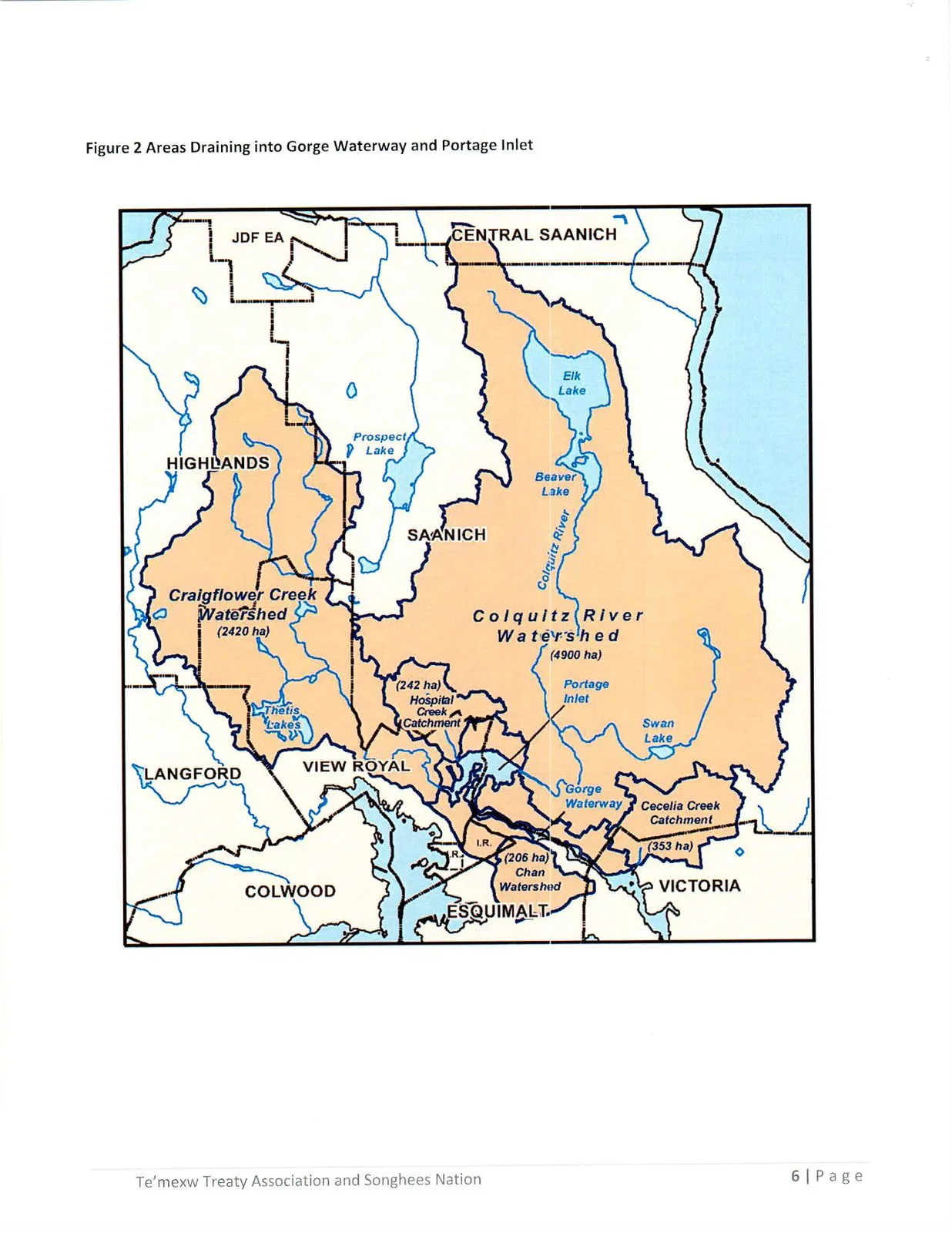
The proposed boundaries for the Colquitz/Gorge SMA are shown on the attached maps. The boundaries shown are for discussion purposes only and may be subject to change.
Concept
A multi-agency organization is proposed for Colquitz/Gorge Special Management Area, to:
- identify and achieve SMA objective(s);
- oversee/govern the implementation of an action plan; and
- monitor progress towards achieving the SMA objectives.
It is expected that participants in the SMA organization will include First Nations, local governments, the Capital Regional District, relevant Federal and Provincial ministries, and other relevant jurisdictions (e.g. Victoria Harbour Authority).
The aim of the SMA partnership is to generate outcomes that cannot be achieved by participants working in isolation. Participants will be invited to collaborate on:
- determining the structure of the organization;
- developing a Statement of Principals; and
- formalizing the mechanisms of coordinating and management of activities among participants.
The overarching goal is to establish a partnership, where participants identify their interests and take part in common projects. It is also anticipated that nonprofit organizations and the private sector may also partner resulting in interorganizational alliances.
The SMA organization may have a governing body with representatives from each participant. The SMA organization may also have a technical body which could include representatives from the participants and may include representatives from other agencies (e.g. University of Victoria or NGOs).
It is proposed that in order to ensure participants are satisfied the SMA organization is achieving its objectives, the organization could have a fixed term (proposed 10 years), with an option and mechanism identified to extend the term if further progress may be made.
It is not anticipated that the SMA organization will have land use or regulatory powers but would be a cooperative body.
It is expected that SMA participants would work together to achieve the SMA objectives through activities such as:
- developing an action plan including sub-objectives and priorities, which may take into account previous studies (see Appendix B for selected examples);
- recommending policies, guidelines, codes of practice, bylaws, regulations, and other management measures;
- recommending specific actions, for example specific infrastructure projects;
- undertaking specific projects and studies; and
- promoting awareness and engaging the public.
The list above is intended to clarify the concept rather than be comprehensive. It is expected that SMA participants would take independent actions such as:
- incorporate SMA policies into Official Community Plans as development permit areas;
- incorporate the SMA policies into the CRD Regional Growth Strategy;
- incorporate management measures into local government and First Nation bylaws where appropriate; and
- consider recommended priorities and actions when planning capital projects and infrastructure works.
It is expected that the Canada and British Columbia would assist this process. For example, by:
- providing capacity funding to support participation by First Nations;
- modifying eligibility project criteria and/or priorities so that projects that contribute to SMA objectives are eligible for funding under grant programs such as Gas Tax funding, Coastal Restoration Fund, Community Works Fund, Green Municipal Fund, and Clean Water and Wastewater Fund (these are intended as examples and not a comprehensive list);
- considering providing special powers to local governments within the SMA for the purpose of achieving SMA objectives (for example, BC might consider providing local governments with specific powers that have priority over the Farm Practices Protection Act);
- considering participating in implementation agreements under s. 451 of the Local Government Act where SMAs are incorporated into CRD’s Regional Growth Strategy; and
- considering establishing special regulations applicable within the SMA areas (for example, prohibiting wastewater discharges other than storm drains).
The drafting of this concept paper was assisted by Emergent Sustainable Solutions.
APPENDIX 1
Figure 1 Colquitz River Watershed Map
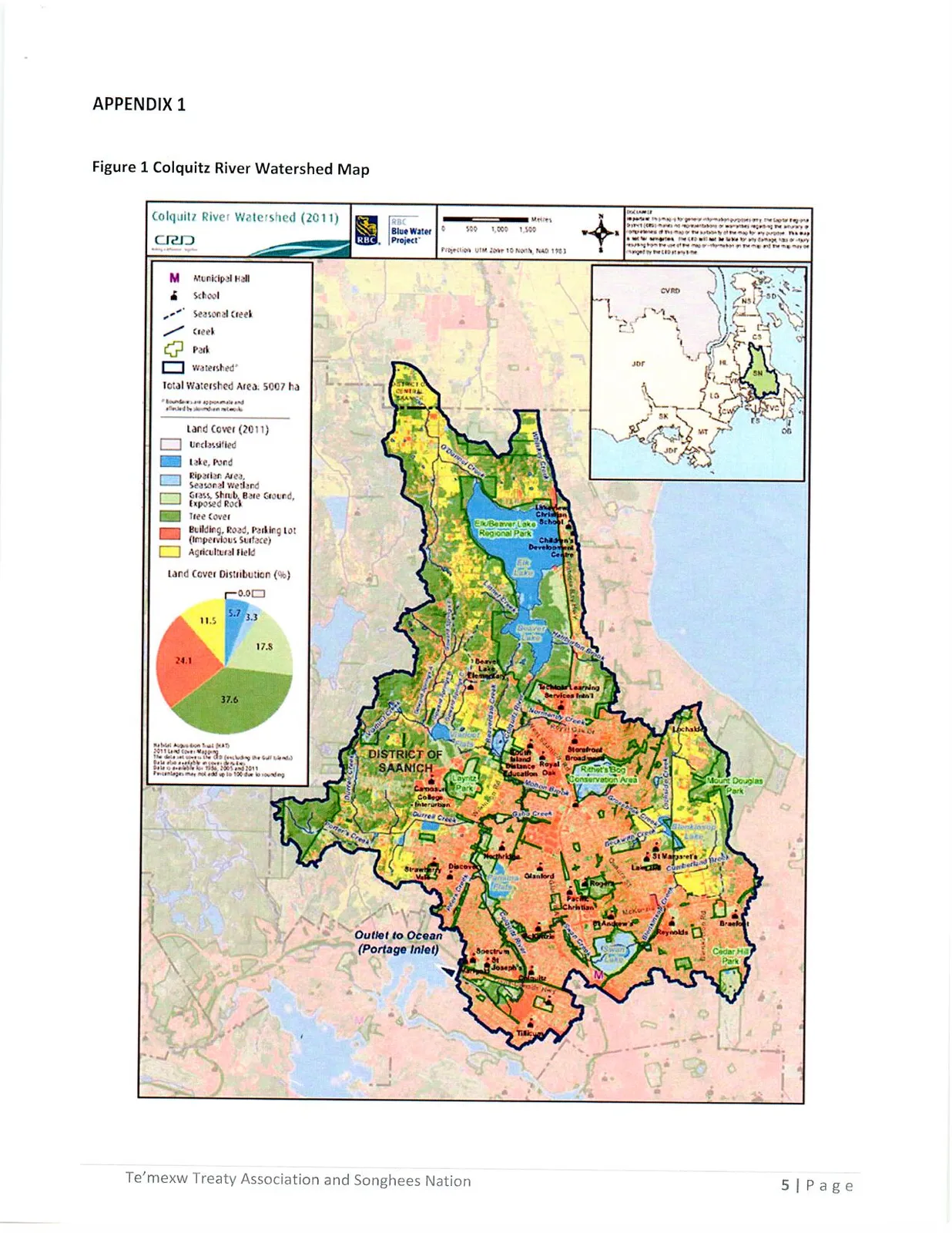
Figure 2 Areas Draining into Gorge Waterway and Portage Inlet
APPENDIX 2
Excerpts from Colquitz River Watershed Proper Functioning Condition Assessment, 2009 https://www.crd.bc.ca/docs/default-source/es-watersheds-pdf/colquitz-river-watershed-proper-functioning-condition-assessment.pdf?sfvrsn=0 and Craigflower Watershed Management Plan, 1998 https://www.crd.bc.ca/docs/default-source/es-watersheds-pdf/craigflower-watershed-management-plan.pdf?sfvrsn=15d494c9_0
In 2009 the CRD published the Colquitz River Watershed Proper Functioning Condition Assessment, 2009 and in 1998 the Craigflower Watershed Management Plan, 1998 (the Craigflower is a primary system feeding into Portage Inlet and the Gorge Waterway.) These reports, although dated, identity specific objectives based on comprehensive watershed assessments and specific recommendations to achieve these objectives and will be valuable assets to the SMA initiative. It should be noted that Songhees participation is lacking in these reports.
The following are sample goals and objectives from the Craigflower report that align with Songhees objectives:
- Water quality will be improved and maintained;
- Riparian and aquatic ecosystems will support healthy populations of fish (anadromous and resident) and wildlife; and
- Native vegetation will be protected and restored throughout the watershed, providing habitat for birds, wildlife and fish.
Sample recommended ‘actions’ to achieve the goals set out above include:
- Change zoning bylaws and OCP’s to protect the variable riparian zone defined by mapping the fisheries sensitive zones;
- Modify Stormwater Management Bylaws;
- Amend tree-cutting bylaws to prevent tree-cutting and other vegetation removal in the identified riparian zone; and
- Prepare a feasibility study of storing more water in the watershed.
The Colquitz report is structured around the more general objective of restoration to a “Proper Functioning Condition”, with priority rankings for specific reaches of the Colquitz River.
Sample actions from the Colquitz report include:
- Control invasive plan species;
- Fence riparian corridors in park areas;
- Continue acquiring property adjacent to the Colquitz River for management and protection; and
- Install weirs in some locations to trap sediment and build up a channel to access its floodplain (to improve watershed storage capacity).
Document Images
(4)