Second Letter from Jason Austin Re: CRD Proposal for Farmlands Trust
Detailed arguments from Jason Austin against the current CRD proposal, citing inaccuracies and high administrative costs.
The Mayor and Council
May 2, 2019
My name is Jason Austin. I am a retired CPA and now an active farmer on 5 acres in Central Saanich. For the last 26 years I have donated my farm produce to the food banks.
I was the largest provider of fresh produce to the food banks in the Capital Region in 2018, sending in 42,000 lbs.
It is with these dual backgrounds that I write to you now about the CRD proposal for a farmlands trust. The links to the CRD proposal are at Item 7.13 of the agenda at https://www.crd.bc.ca/docs/default-source/crd-document-library/committeedocuments/capitalregionaldistrictboard/20190410/2019-04-10agendapkgrb.pdf?sfvrsn=98e9ccca_4 There are 6 reports to read. In addition, the CRD has written to the municipalities and made statements in a Question and Answer format.
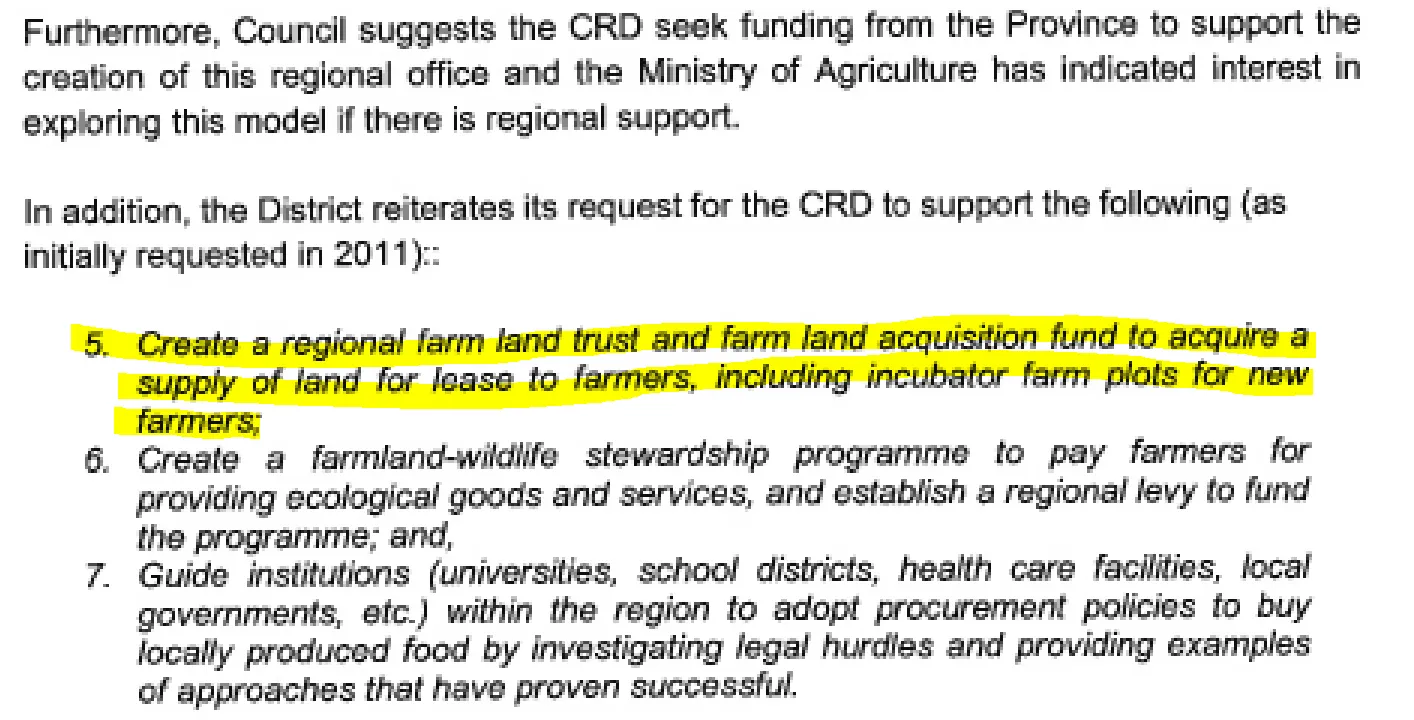
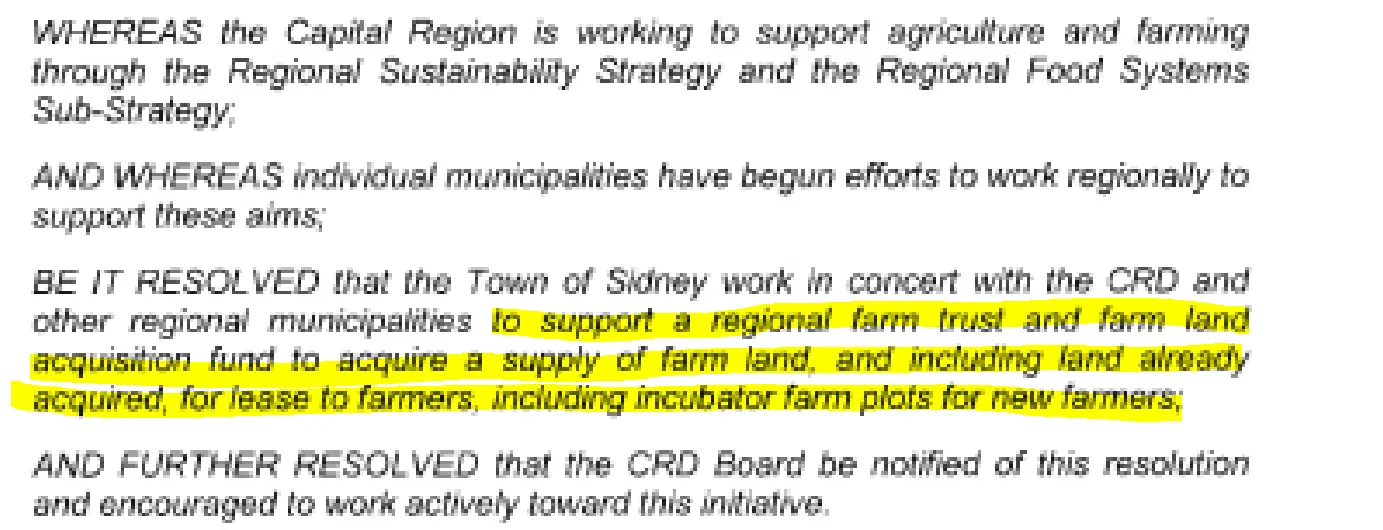
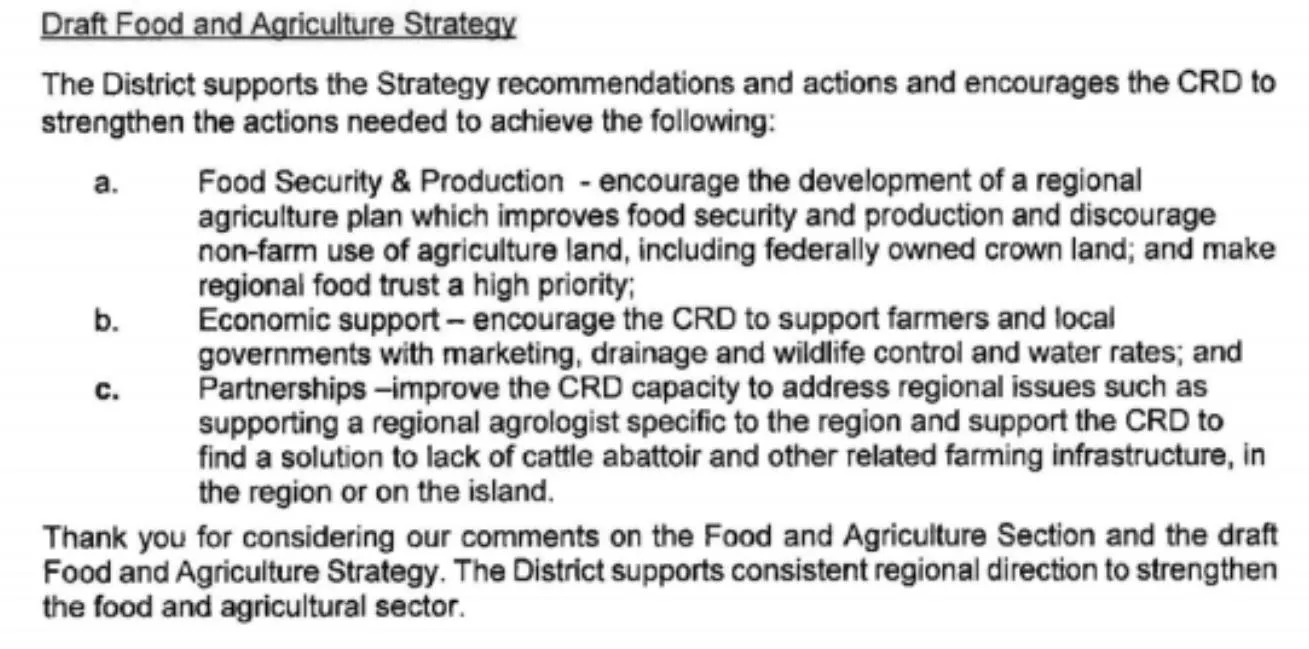
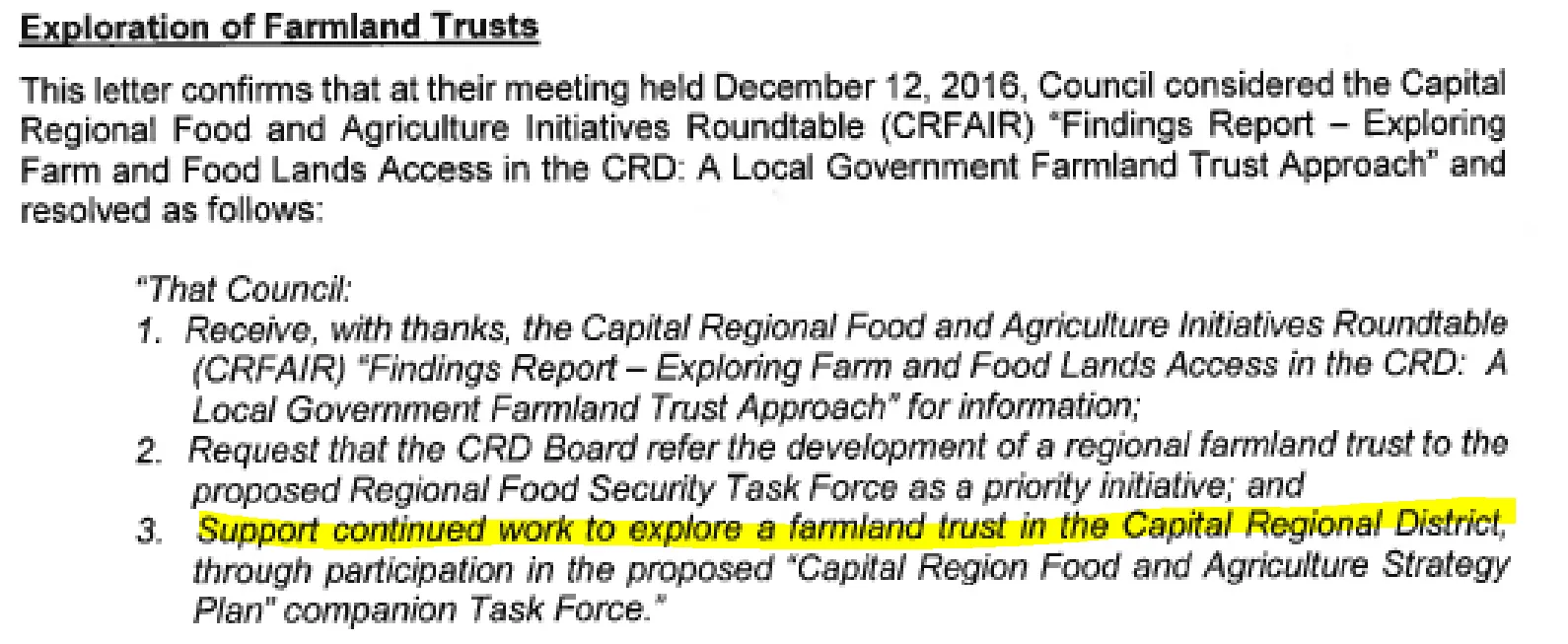
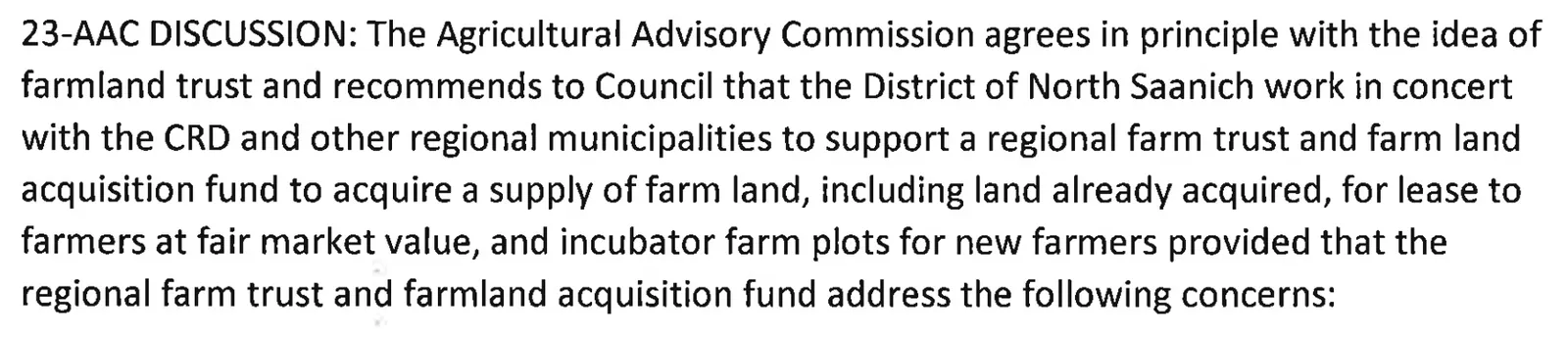
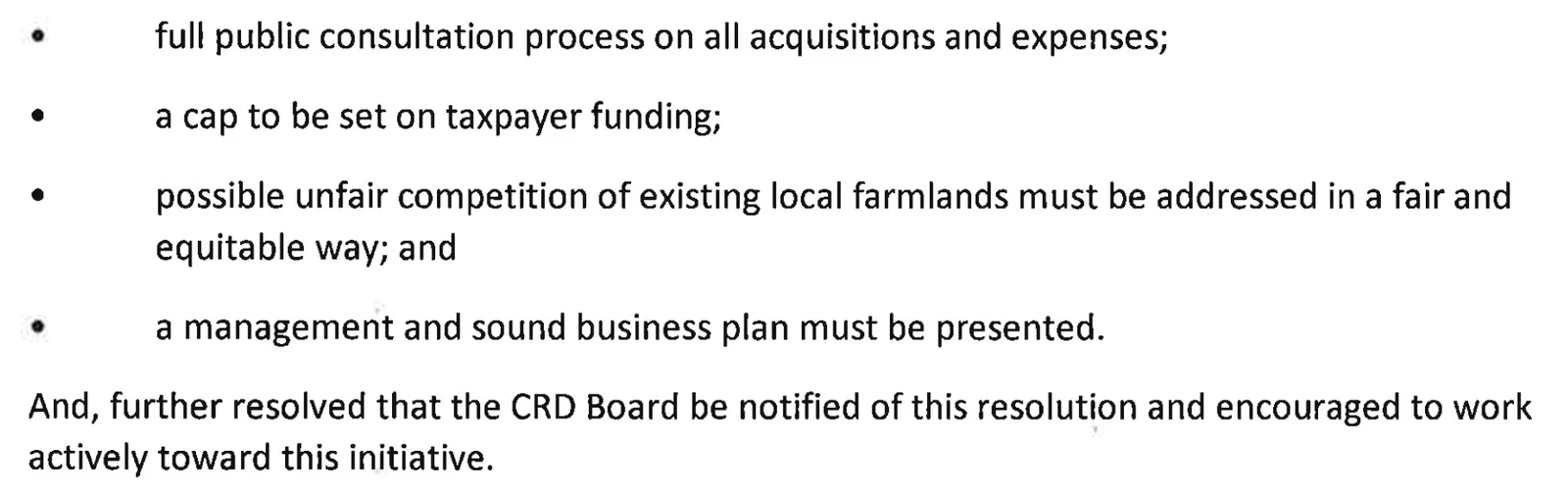
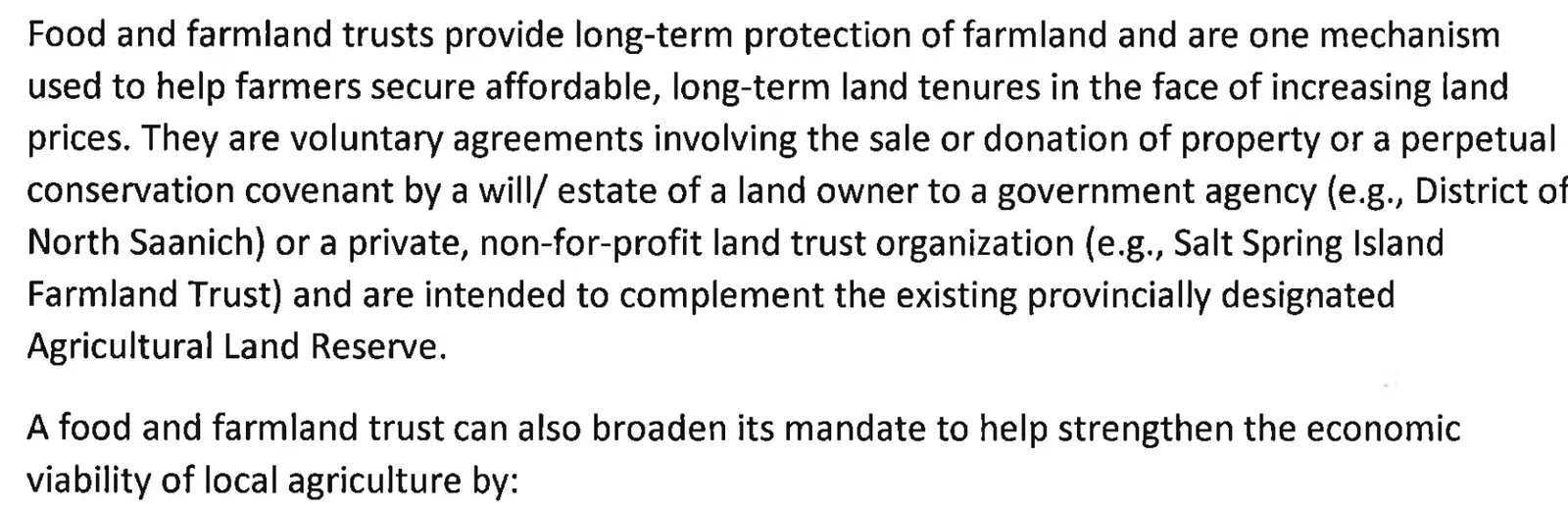
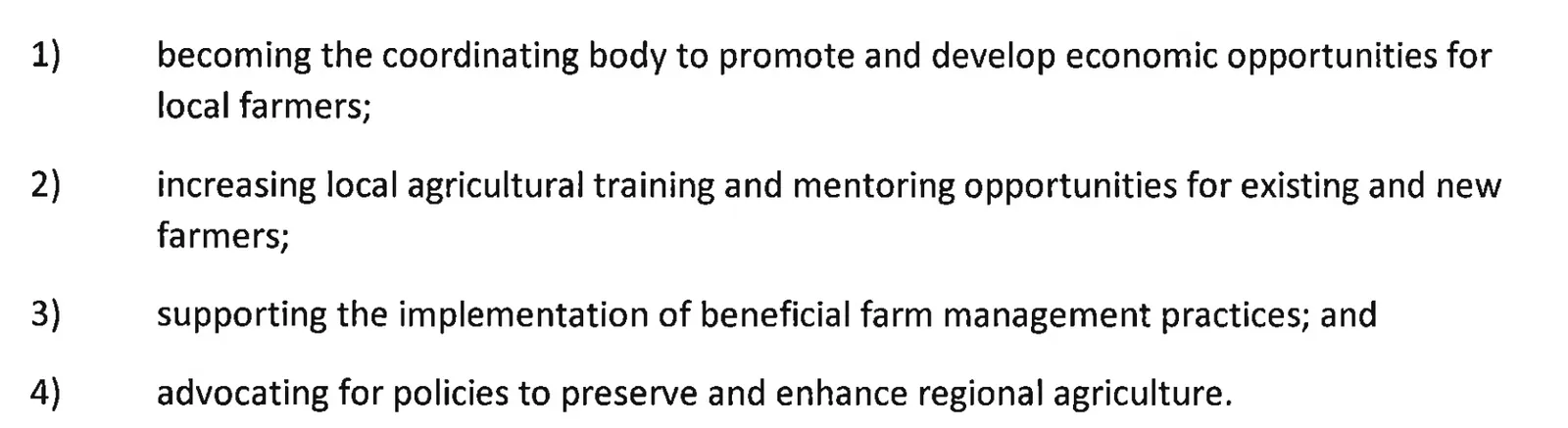
In the past Saanich, Central Saanich, North Saanich and Sidney, supported
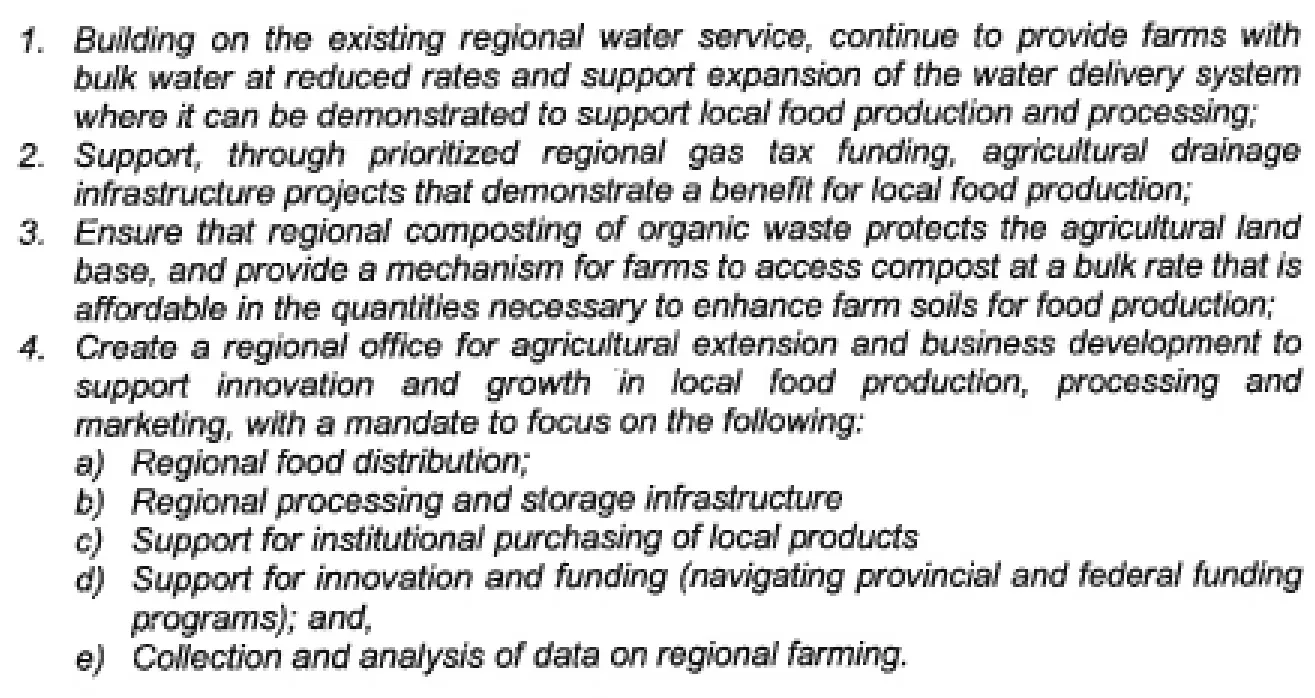
the creation of a regional farm land trust and farm land acquisition fund to acquire a supply of land for lease to farmers, including incubator farm plots for new farmers.
See Appendix 1. It is clear from those letters the municipalities contemplated a passive land holding trust that would lease to any farmer, and have incubator plots for new farmers.
What has been proposed by the CRD is very different. It calls for the lands to be actively administered by an NGO and leased only to entrant farmers, and that the municipalities or others pay all the costs
- to provide fencing; irrigation, drainage
- to buy the farm equipment including tractors
- to provide a level of bureaucracy of 1 ½ persons at $70,000 per person to manage these farm lands
- for web site and advertising to compete with the existing farmers.
This CRD proposal would use public funds to set up the entrant farmers in direct competition with the existing farmers, and then to advertise against them in the future. It is wrong.
The proposal acknowledges that the municipalities would have to subsidize these operations for ever into the future for at least $127,000 a year but that assumes all the grants are obtained. If they are not the municipalities would be on the hook for the extra shortfall.
Farmland ranks right up there with motherhood and apple pie, and the CRD proposal plays on those sentimental feelings but it lacks clarity. I have spent considerable time attempting to understand the figures bandied about in the proposal, and I cannot make sense of them. What is clear though is that the high costs arise because of the departure from the passive trust envisaged originally by the municipalities. Under their intent the only involvement would be the periodic leasing of the lands which could be handled in-house by CRD staff. It is the involvement of the NGO and the proposal to set up the entrant farmers in competition with existing farmers that creates this heavy cost.
Not only is this wrong, but how much more evidence do we need to show that the CRD and NGO’s are not equipped to operate or manage businesses – this would become the agricultural equivalent of the sewage project as the grants fell through and the entrant farmers fail.
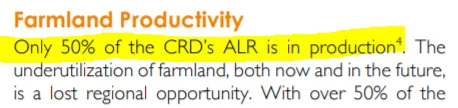
The CRD erroneously claims that the BC Ministry of Agriculture say 50% of the farmland in the Capital Region is unproductive (Appendix 2)
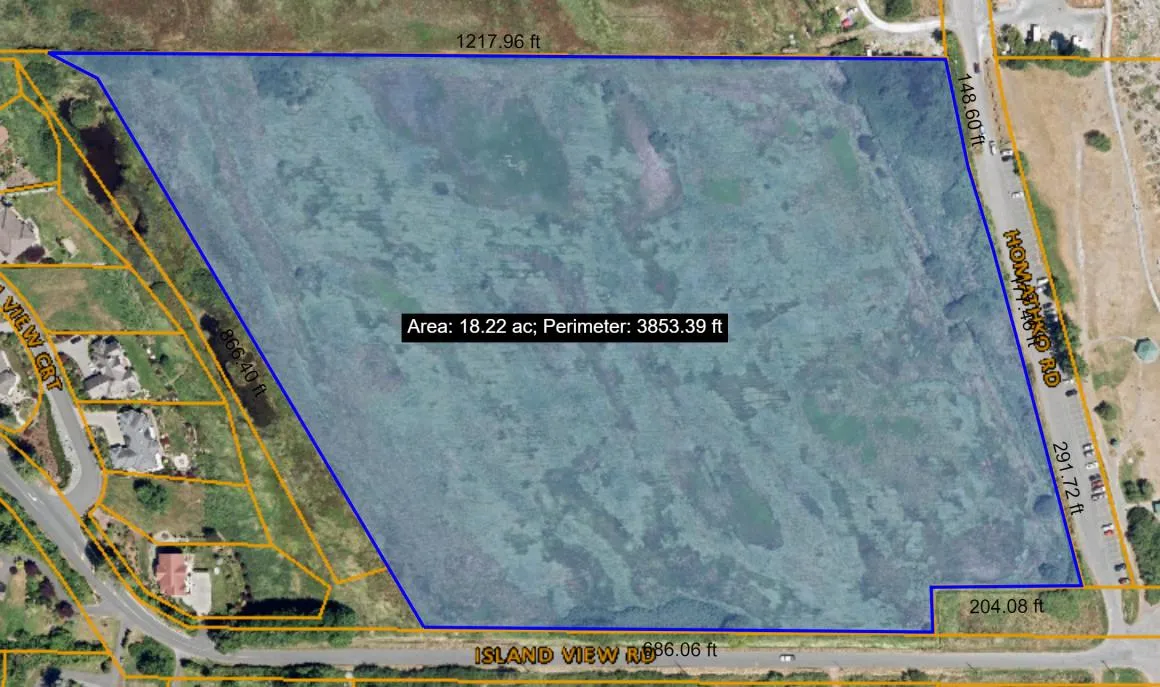
The report also erroneously claims that Central Saanich spends $64,600 on its 18 acre field at Island View. Central Saanich spend nothing on that land (Appendix 3). This error is so obvious it makes one wonder if anyone read the proposal. Like the strange claim at page 6 that farmland can be used for swimming and recreational hunting! Really? – anyone swimming in a farm dugout takes their life in their hands! – and recreational hunting on farmland in the CRD? – did no one read this?
Another example of something that should have been caught, is in the CRD Appendices at page xiv:
Agricultural activities taking place within a CRD foodlands access program would likely mirror existing regional farm practices. Within the CRD, the majority of farms do not include large numbers of animal livestock, although nearly half do have small poultry operations. The 2016 Agricultural Census indicates the following livestock and poultry data for CRD farms:
• 46% include chickens in their operations (average of approximately 300 birds on those farms, which is considered small scale)
This is the table where these numbers came from:
| Census of Agriculture Data (continued) | 2006 Farms | 2006 Number | 2011 Farms | 2011 Number | 2016 Farms | 2016 Number |
|---|---|---|---|---|---|---|
| Animals on Farms | ||||||
| Hens & Chickens | 382 | 449,487 | 456 | 232,779 | 465 | 152,879 |
The consultant divided 152,879 birds by 465 farms, and concluded that farmers had 300+ bird each. But these numbers cannot be averaged as the consultant did. Poultry growing in BC is on a quota system for more than 200 birds, and no new quotas is available for Vancouver Island. There are two groups of growers - a few commercial growers who have many thousands of birds, and the rest of us with small flocks. The numbers cannot be averaged, and to say the average farmer has 300 birds and that new entrants may grow 300 too, is plain wrong. Again you have to ask “did no one read this stuff”?
An astonishing omission in the CRD proposal is that there is no projected business plan from the perspective of the proposed entrant farmers. The only numbers that are hinted at are in Table 7 of the main report at page 23. There the report suggests these new farmers will gross $100,000 on 5 acres, $50,000 on 20 acres of hay production, and $500,000 on 80 acres of mixed use. There is nothing to substantiate these high numbers. The authors of this CRD report also did a report to Saanich in 2016 “District of Saanich Agriculture and Food Security Plan Background Report” that included this table:
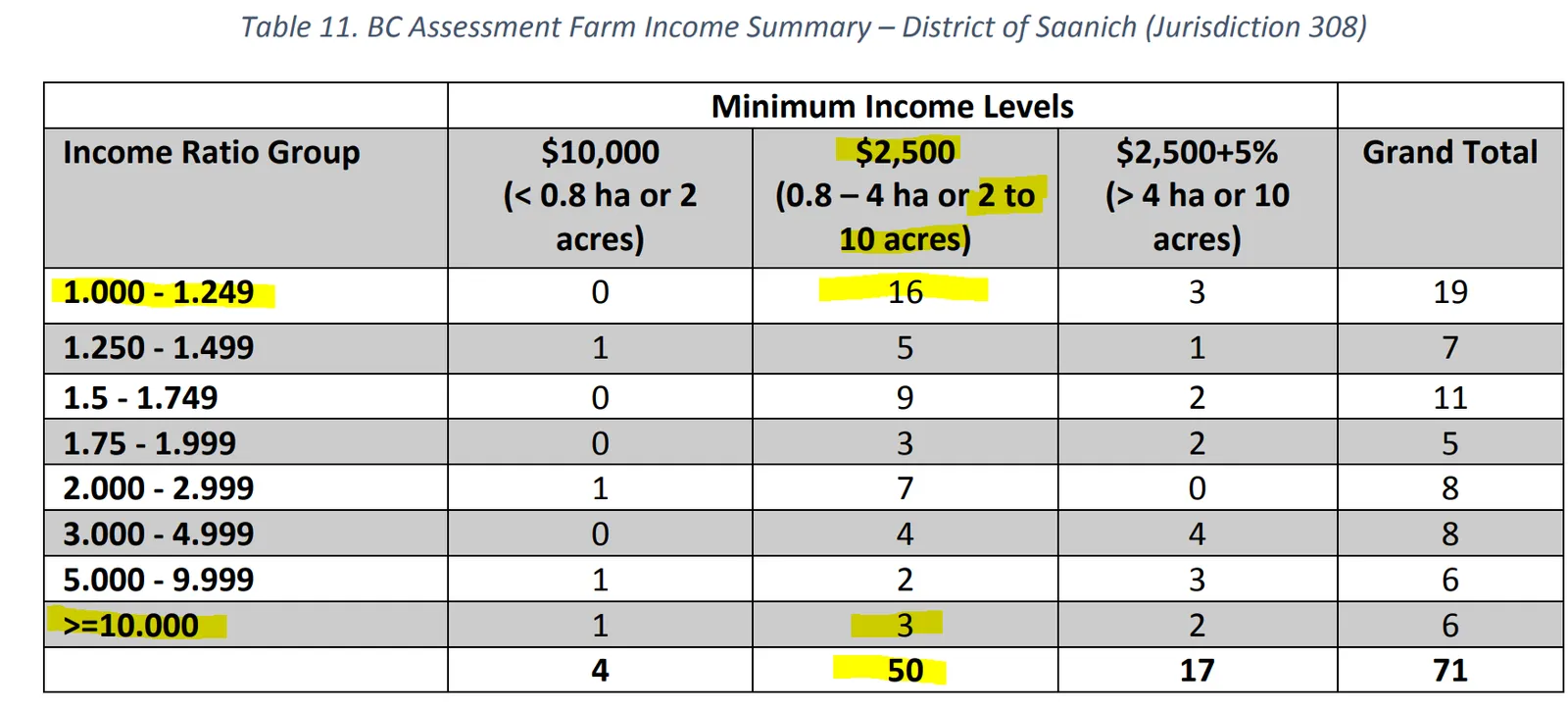
| Income Ratio Group | $10,000 (< 0.8 ha or 2 acres) | $2,500 (0.8 – 4 ha or 2 to 10 acres) | $2,500+5% (> 4 ha or 10 acres) | Grand Total |
|---|---|---|---|---|
| 1.000 - 1.249 | 0 | 16 | 3 | 19 |
| 1.250 - 1.499 | 1 | 5 | 1 | 7 |
| 1.5 - 1.749 | 0 | 9 | 2 | 11 |
| 1.75 - 1.999 | 0 | 3 | 2 | 5 |
| 2.000 - 2.999 | 1 | 7 | 0 | 8 |
| 3.000 - 4.999 | 0 | 4 | 4 | 8 |
| 5.000 - 9.999 | 1 | 2 | 3 | 6 |
| >=10.000 | 1 | 3 | 2 | 6 |
| Total | 4 | 50 | 17 | 71 |
To get farm status, farms much achieve minimum gross income levels which are set according to their size. Under 2 acres is $10,000; between 2-10 acres is $2,500; and more than 10 acres is $2,500 plus 5% of the land value. Looking at the middle column of farms between 2-10 acres, the first row shows that 16 farms (32%) only did between 1 – 1.249 of their minimum, ie between $2,500 - $3,122 (1.249 x $2,500). And at the high end of the scale, only 3 farms out of 50 did more than $25,000 (10 x $2,500).
In other words, this table says that 94% of the Saanich farms between 2-10 acres, achieved less that $25,000 in gross income. Yet the same authors in the CRD proposal now suggest a new farmer with no experience will gross $100,000 on 5 acres!
It may be that some entrepreneurs will achieve higher income by value adding – like making jam from berries, or establishing a produce box business, but value added does not count as farm income.
I have seen the sample letter that CRFair is asking people to send to you, but CRFair themselves say on their website:
In the Capital Region, most of our food providers continue to struggle with economic viability. We are blessed with rich alluvial soils and a favourable growing climate that can produce food year round. Despite these advantages, competition with "cheap foods" from global sources has led to a decline in our ability to support local infrastructure and capacity to maintain a secure regional food supply. [my emphasis]
If the established, experienced farmers are struggling, how do we expect inexperienced entrant farmers to survive? The CRD report says that farmers are getting older – that is because their kids are smart enough to see there is no financial return for the hard work that farming requires!
Consider this quote from the 2004 “A baseline assessment of food security in British Columbia’s Capital Region”
… Canadians have become so accustomed to paying a minimal amount for food that farmers now spend 86 cents in operating expenses for every dollar they make from receipts of agricultural products …
This is what the Stats Canada report said of total gross farm receipts:
| Census of Agriculture Data | 2006 | 2011 | 2016 |
|---|---|---|---|
| Total Farmland Area⁵ | ha | 13,563 | 13,606 |
| Number of Farms | # | 991 | 1,093 |
| Average Farm Size | ha | 13.7 | 12.4 |
| Total Farm Operators | # | 1,430 | 1,660 |
| Total Farm Capital | $958,435,626 | $1,573,835,484 | |
| Total Gross Farm Receipts | $54,261,663 | $50,874,004 |
It won’t be good math but think about this: If 1,495 farmer operators gross $64,588,697, the baseline report above suggests they will net only $6,048 per operator. ($64,588,697 x .14 / 1,495). The math can be challenged, and the large commercial farmers will make more, but the point is that most small farmers make little money.
If this proposal were to proceed, the likelihood is the majority of the entrant farmers would fail, and the municipalities would be called on to bail them out. And at the same time, the existing farmers would be harmed from the unfair competition created by taxpayer funds.
That 2004 report “A baseline assessment of food security in British Columbia’s Capital Region” said on page 7:
In order for local farming to thrive, consumers must pay a price that is reflective of the costs of production – the real cost of food.
There are thousands in need in the Capital Region who cannot pay the cost of produce now, and there lies the conundrum for you:
- Do you spend public money as suggested by the CRD, to set up entrant farmers who will compete with the existing farmers, and will need consumers to pay higher prices in order for them to survive and therefore put food further from the reach of those in need,
- or do you set up a program designed to provide affordable nutritious food for those in need?
I walk the walk. For 26 years I have donated all my farm produce to those in need, and I believe that where our resources should be applied. I will write a separate letter with ideas for that.
I recommend you reject the proposal by the CRD for an NGO administered farmland trust
- it is factually inaccurate;
- it is reliant on grants from other agencies which are not guaranteed
- it can only succeed if food prices are driven up in the Capital Region
- no business case has been made for the entrant farmers, and the likelihood is they will fail
- it would use tax payer funds to harm the existing farmers, many of whom are struggling
- and it talks as if it will magically create farmland from thin air, but that farmland already exists in public hands and is protected by Council and by the province under the ALR
I recommend you support the intent originally envisaged by the municipalities for
the creation of a regional farm land trust and farm land acquisition fund to acquire a supply of land for lease to farmers, including incubator farm plots for new farmers.
with the clarification that this be a passive farmland trust run by the CRD staff, and there be no administration of the leased land other than in the normal role of landlord..
Yours truly,
Jason Austin Lamont Road, Saanichton
Appendix 1 - Past municipal support for a land bank
February 2014 Central Saanich
2014 July Town of Sidney
2014 October North Saanich
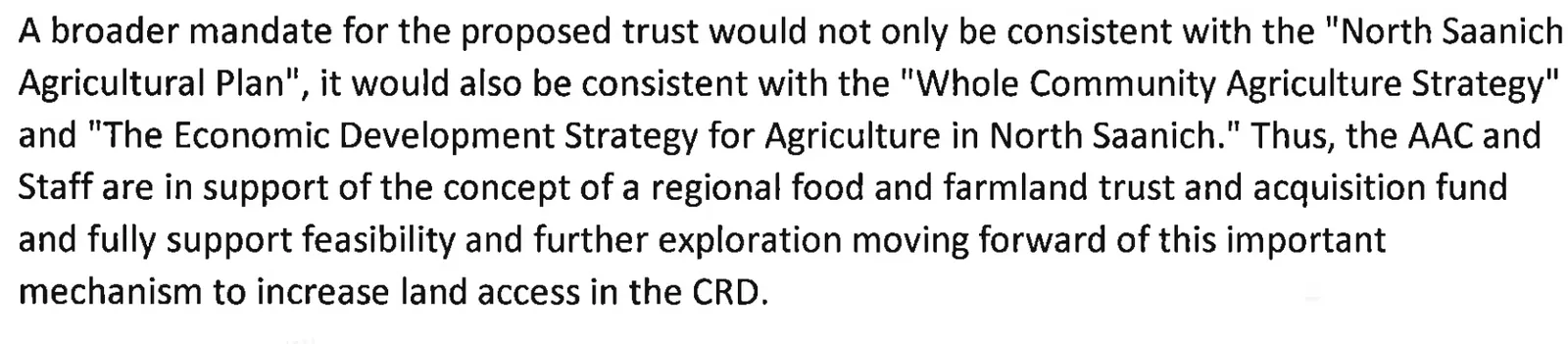
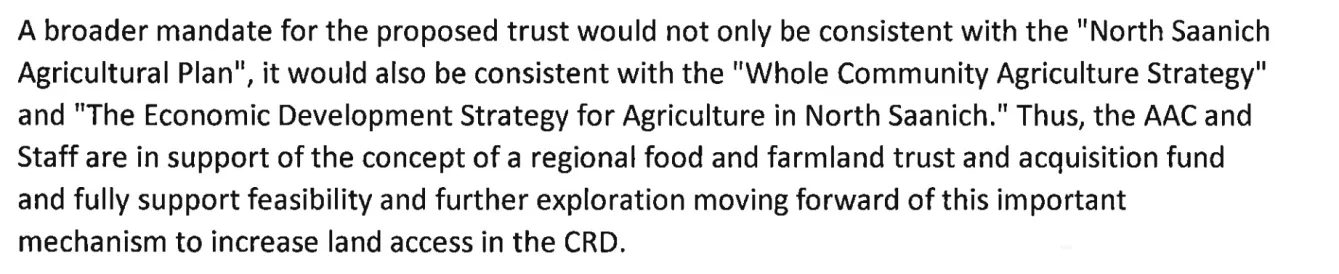
That Council direct staff to send a letter of support to the CRD and other municipalities to consider establishing a regional farmland trust and farmland acquisition fund.
2016 September North Saanich
The District comments on the Strategy’s recommendations and actions in context of the following District of North Saanich Strategic Plan objectives:
To enhance protection of regional rural and agricultural municipalities and public agricultural holdings in the region with a farm land acquisition program.
and
2016 December Saanich
Exploration of Farmland Trusts
2017 September North Saanich
Appendix 2 - Percentage of land in the ALR that is productive
The CRD proposal claims that only 50% of the ALR land in the Capital Region is productive, and quotes the BC Ministry of Agriculture as the source of this. This is an extract from the CRD proposal:
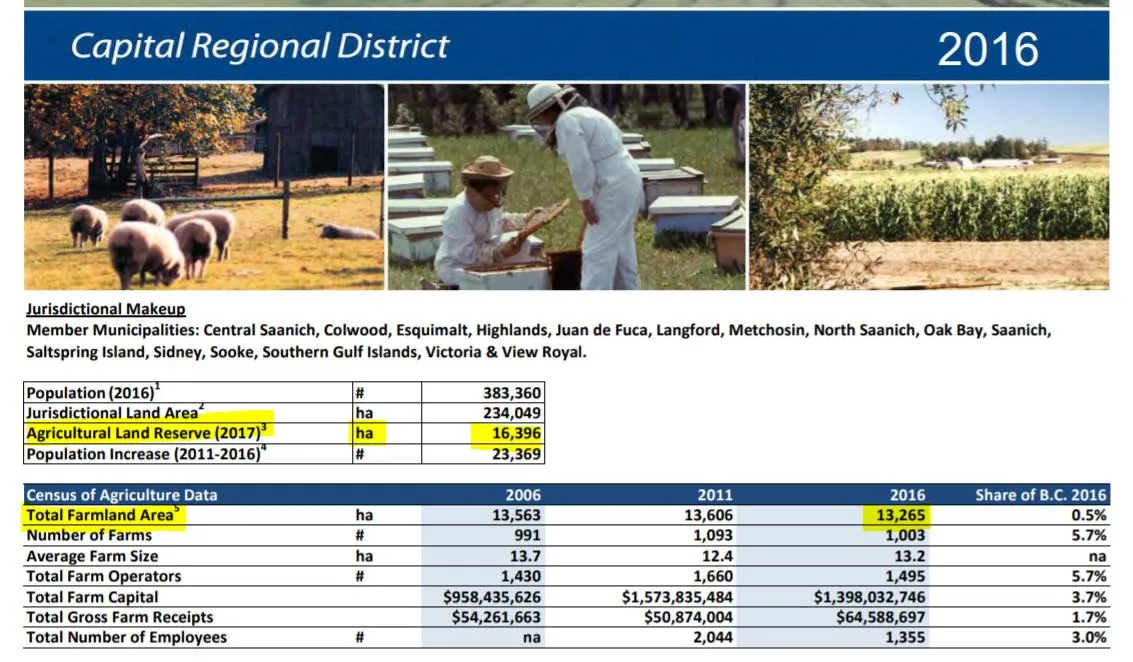
This is not correct.
Here are tables from the BC Ministry of Agriculture analysis of the 2016 agricultural census of the Capital Region. For brevity I have only shown what I believe is relevant. See the link for the whole table.
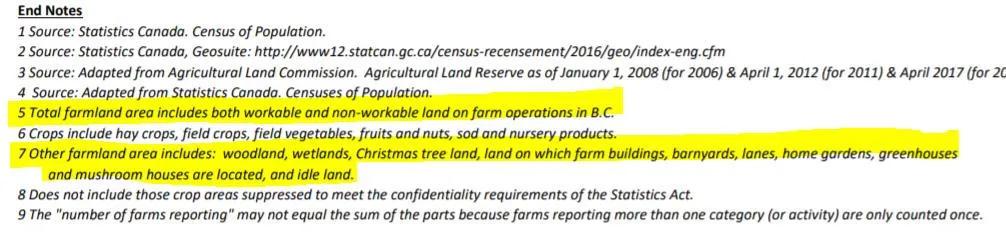
This table shows the 2016 total farmland area is 13,265 ha and the area of the ALR is 16,396 ha. This suggests that 81% of the ALR is productive.
I emailed the author of the proposal and asked why the report said only 50% of the farm land is productive when the statistics show 81%. The answer given was:
The numbers in the agricultural census indicate 16,396 ha ALR as you note. Under Total Farmland Area, we subtract the subcategory of “All Other Land” which includes woodlands, wetlands, and other non-farmable areas (see Footnote 7 of that Ag in Brief document). When that adjustment is made you get 53% productivity in 2006, 59% in 2016. I still think this is an overestimation, as per Footnote 5, which explains that the total Farmland Area (13,265 ha) includes both workable and non-workable land. However, it’s the best figures we have, short of a full Agricultural Land Use Inventory. Interestingly, this is one of the last regions in the province to conduct an Agricultural Land Use Inventory. [my emphasis]
This answer is troubling.
The CRD proposal stated it was the BC Ministry of Agriculture who said that only 50% of the ALR is productive. They did not. On the face of it, the Ministry data shows that 81% of the ALR is productive It appears that the claim that 50% of the ALR is unproductive was simply plucked from the air.
In the response above, the statement was made: “… we subtract the subcategory of “All Other Land” which includes woodlands, wetlands, and other non-farmable areas”. This was not accurate either and the example given was misleading. Following is the Note 7 to the Ministry data – nothing is said about “non-farmable”:
7. “Other farmland area” includes: woodland, wetlands, Christmas tree land, land on which farm buildings, barnyards, lanes, home gardens, greenhouses and mushroom houses are located, and idle land.
Far from being “non-farmable”, the category of “All other land” includes some of the most intensely productive land in the ALR – chicken barns, green houses, and mushroom barns. Woodland and Christmas tree land are productive farm uses. Home gardens are productive. None of this should be deducted from the calculation of productivity.
This discussion only addresses the false claim in the CRD report that the BC Ministry of Agriculture said that 50% of the ALR land is not productive. What this discussion does not address, is if the use made of the farmland is the highest and best use of that farmland. You only have to look around to see that the bulk of the farmland is in grass, and not in food crops. That is another issue.
3. Apples and oranges
The discussion above followed the direction used in the CRD proposal of dividing the farmed area by the area of the ALR. But even this was wrong because these data sets are coming from different sources and the numbers speak of different things.
The BC Agriculture web pages shows the ALR data came from the ALC And the total farmland area and numbers below that came from Statistic Canada.
These are not the same thing.
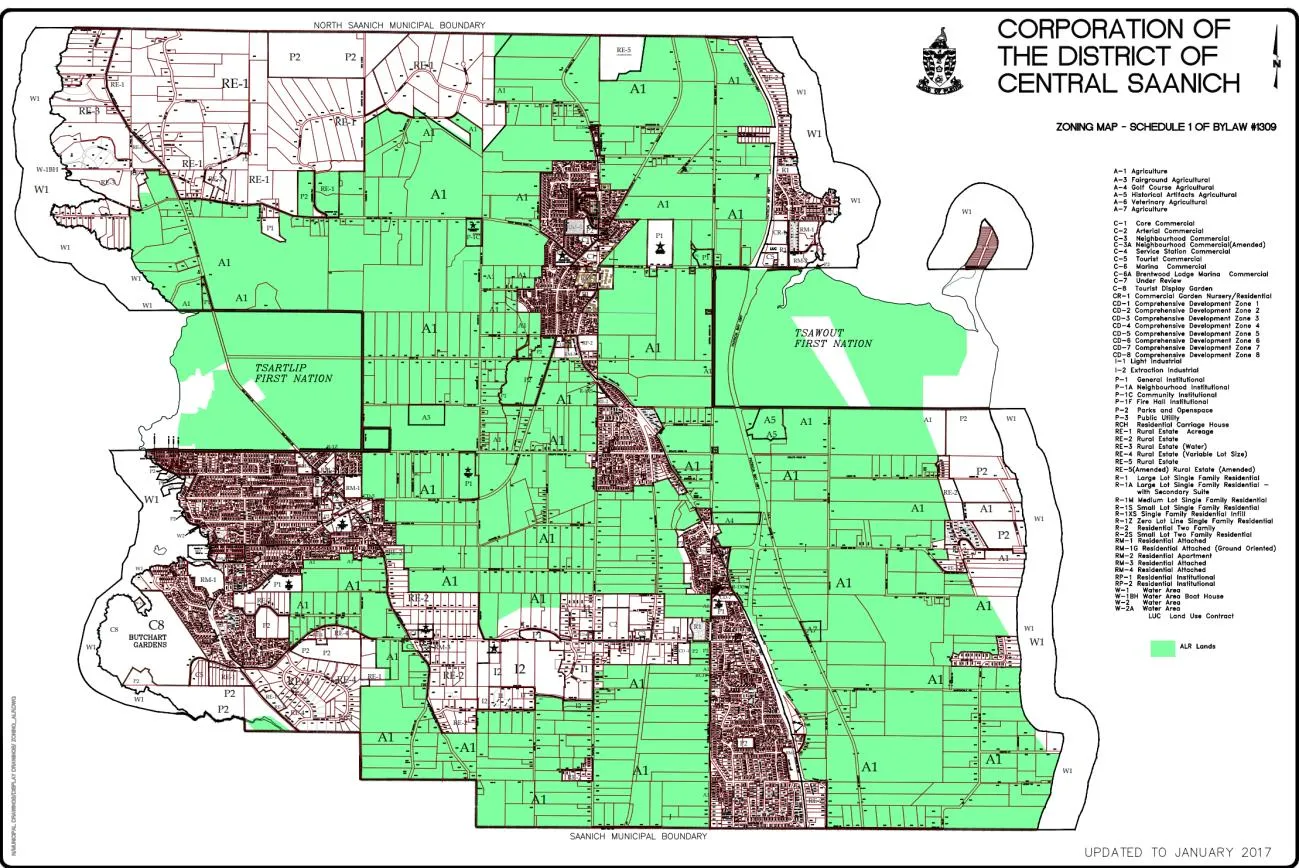
- The ALR area in the Capital Region is measured by the BC Assessment Authority regardless of what is on it. Below is a map of the ALR lands in Central Saanich Notice the ALR area in Central Saanich includes two First Nations reserves, several municipal parks such as Centennial Park, and even the high school at Stelly’s.
- The “Total Farmland Area” is the total farmland area in the Capital Region as self reported by farmers to Statistics Canada. Some small amount of this reported farmland lies outside the ALR boundaries.
In other words, the ALR area of 16,396ha appears to be significantly inflated by First Nations Reserves, municipal parks, and schools, none of which are seriously intended to be farmed. I have asked BC Assessment Authority and the Agricultural Land Reserve for confirmation that these areas were counted in the ALR area measured as 16,396ha, but have not heard back yet. If they were, then the productivity ratio would rise substantially when they were removed.
The “Total Farmland Area” includes some farms outside the ALR boundaries. I suspect this will not be significant but it should be known.
The bottom line is the “Total Farmland Area” and the “ALR area in the Capital Region”, are measuring difference things – they are apples and oranges – and they should not have been used to measure farmland productivity as they were.
Appendix 3 - Cost to Central Saanich to maintain the 18 acres at Island View Road
The CRD report states at page 20:
… the annual maintenance activities associated with a 19-acre field adjacent to Island View Park in Central Saanich includes mowing, ditch clearing, and routine maintenance (e.g., fencing inspections and repairs) and currently amounts to approximately $3,400 per acre per year, or $64,600 per year for the whole 19-acre site.
And at page 28 states
Local case studies identify the costs incurred to maintain public lands “as-is” currently range from $360 to $3,400 per acre per year, depending on the site characteristics and the level of public access. These figures should be kept in mind when considering investment levels associated with the costs of running a farmland access program.
And elsewhere it uses this $3,400 per acre per year, to say in effect that municipalities are spending up to this $3.400 per acre each year so it won’t really cost them much to give the land to the proposed Farmland trust.
The reality is that Central Saanich spends nothing on this 18 acre field (not 19 acres as said in the report). Central Saanich acquired this property for free as part of an approval for an upland subdivision. The land is not drained. The fences have not been touched in years. And a neighbouring farmer cuts the grass for nothing. On the south and east sides of the field is a major drainage ditch that serves the upland areas as far away as Welch Road, but this has nothing to do with the field. The ridiculous number of $64,600 should have raised an alarm with the consultant. And everyone at the CRD knows there is no work to this field, so how could this major error have come uncaught through the Committee stage and then the full CRD board? It would seem that no one bothered to read the proposal.