212 Shadow Ridge Place, View Royal - Tree Risk Assessment
A professional arborist assessment regarding the health and structural integrity of a 68cm DBH Douglas-fir tree, noting internal decay and compromised integrity.
212 Shadow Ridge Place, View Royal
Tree Risk Assessment
68cm DBH Douglas-fir (Pseudotsuga menziesii)
PREPARED FOR: Judy Hasiuk 212 Shadow Ridge Place Saanich, BC V8Z 7Y2
PREPARED BY: Talbot, Mackenzie & Associates Tom Talbot – Consulting Arborist ISA Certified # PN-0211A TRAQ – Qualified
Noah Borges – Consulting Arborist ISA Certified # PN-8409A
DATE OF ISSUANCE: November 13, 2018
Jobsite Property: 212 Shadow Ridge Place, Saanich Date of Site Visit(s): November 2, 2018 Site Conditions: Residential backyard. No construction activity or signs of disturbance.
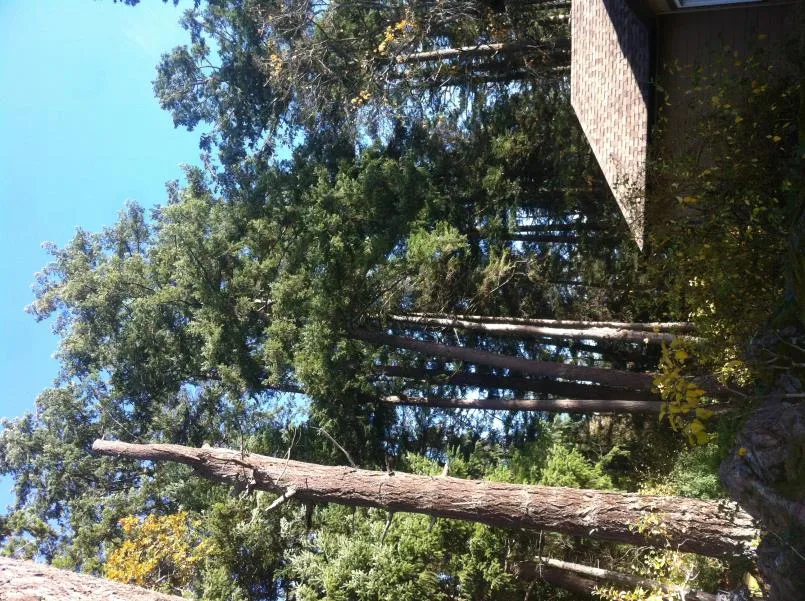
During our November 2, 2018 site visit, at the owner’s request, we visually examined the health and structure of a 68cm DBH Douglas-fir (Pseudotsuga menziesii) located in the backyard of 212 Shadow Ridge Place.
The tree appears in good health, with normal foliage size, density, and annual shoot growth for a species its size and the entirety of its critical root zone is covered by turf or small plants in a landscaped area of the backyard. It has a live crown ratio (LCR) of approximately 50%, which is normal for a Douglas-fir that has grown in an area where it is partially exposed to winds. It has an uncorrected lean (approximately 10º) toward the house. There is small deadwood in the tree’s crown with a maximum diameter of approximately 5cm.
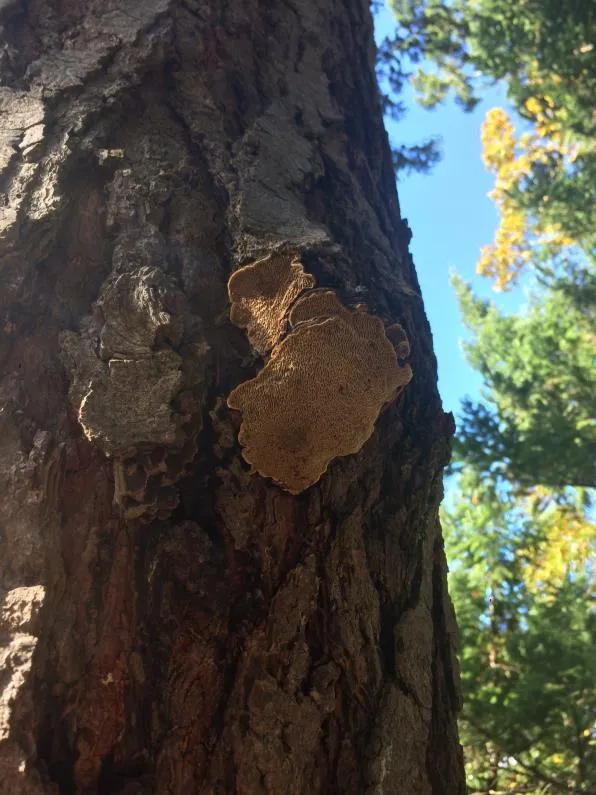
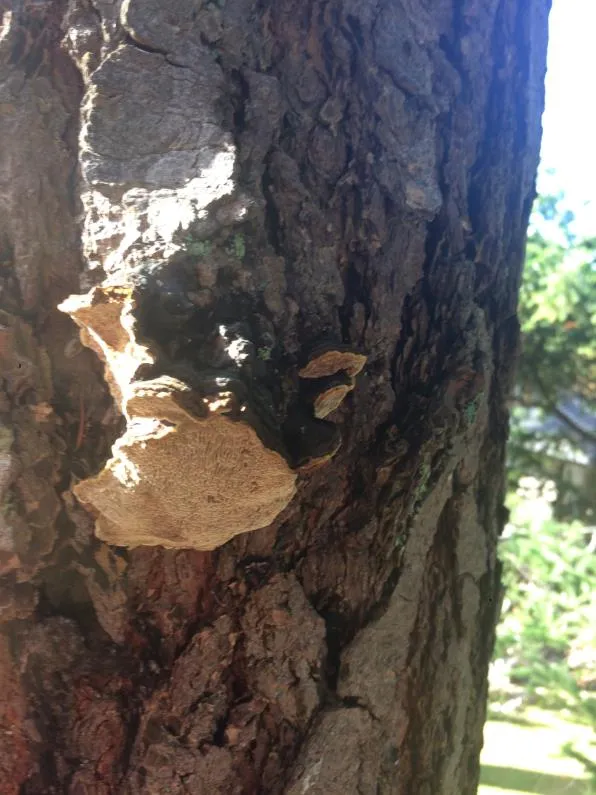
Three fruiting bodies of the wood decay pathogen Porodaedalea pini were observed on the east side of the trunk, approximately 8, 10, and 13m above ground level. This pathogen usually causes decay beginning above ground level, but it may lead to butt and root rot. Both the heartwood and sapwood of trees may be affected.
A resistograph reading was taken at the root collar on the east side. It did not show any significant drops in resistance that would indicate the presence of internal decay or cavities. Three increment samples were also taken, as the pattern of decay caused by P. pini cannot always be clearly interpreted through resistograph readings.
An increment sample taken at the base of the tree extracted wood that was structurally sound with no evidence of decay.
An extension ladder was used to more closely inspect the fruiting bodies and to take increment samples in their vicinity, as the incipient stages of decay may be localized to the areas immediately surrounding them.
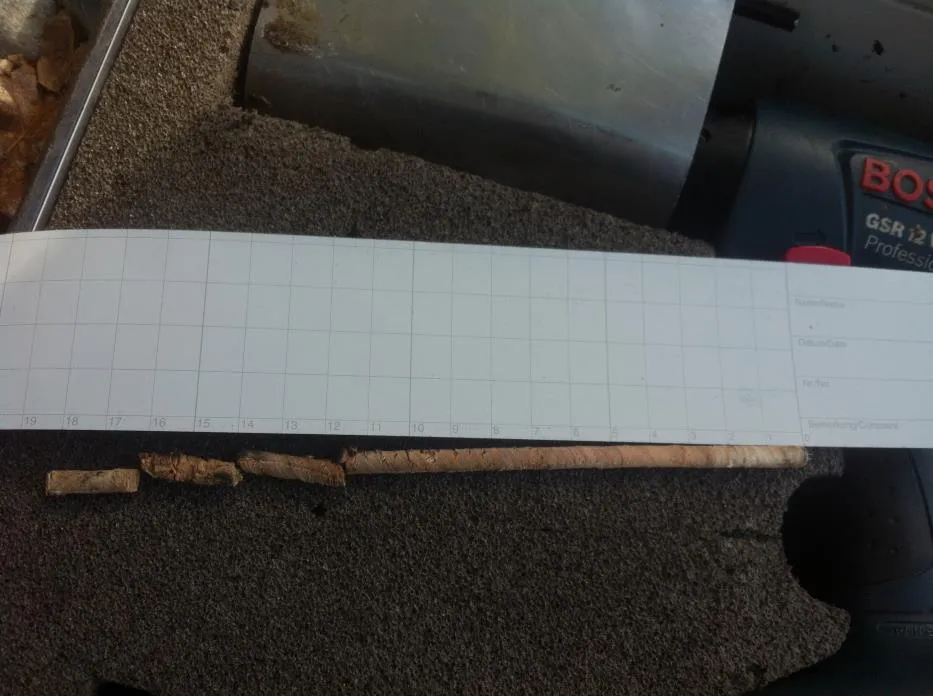
The second increment sample was taken just above the lowest fruiting body, which is located 8m above ground level. At the height of the sample, the trunk has a diameter of 48cm. The extracted wood appeared to have only sound wood up to 5cm into the trunk of the tree. Small decay pockets were observed in the wood 5-10cm into the trunk, indicative of the incipient stages of decay. Beyond 10cm from the outside of the tree, the extracted wood showed signs of significant decay; the wood is dark and spongy and, in our opinion, its structural integrity is compromised.
A third sample was taken 20cm below the lowest fruiting body. The extracted wood at this height was also sound only up to 5cm into the trunk of the tree but the interior of the trunk was less extensively decayed than the higher sample.
In our opinion, the increment samples confirm that there is a localized area of decay in the vicinity of the fruiting bodies, with the shell wall (structurally sound wood) as narrow as 5cm in some areas. We were not able to reach higher up the trunk of the tree to conduct testing near the two higher fruiting bodies, where we anticipate decay is likely the most extensive.
At 8m above ground, we estimate the shell wall thickness to be 20cm (the areas of incipient decay are included in our calculation of the shell wall, as they likely still provide structural support). Using a standard of over 30% shell wall thickness as a guide to evaluate the effect of decay on the structural capacity of the tree, remedial action is currently not required to reduce the risk of trunk failure. However, we anticipate the structural integrity of the tree will continue to decline (the tree already falls below the 30% threshold when these areas of incipient decay are excluded in the shell wall thickness calculation) and, therefore, it may be prudent to remove the tree as the risk associated with it will only continue to increase.
Should the tree fail where we performed our testing (approximately 8m above ground level), targets include the subject and neighbour’s residences and backyards. In our opinion, there is currently a moderate degree of risk associated with this tree, which will only increase as the area of extensive decay spreads.
Alternatively, if the tree is to be retained, we recommend it be monitored and inspected regularly (every 2-3 years) to track the progression of decay. It is our understanding that the owner of the tree would prefer to remove the tree.
Please do not hesitate to call us at 250-479-8733 should you have any questions.
Thank you,
Tom Talbot ISA Certified: #PN-0211A TRAQ – Qualified
Noah Borges ISA Certified: #PN-8409A
Talbot Mackenzie & Associates ISA Certified & Consulting Arborists
Disclosure Statement
Arborists are professionals who examine trees and use their training, knowledge and experience to recommend techniques and procedures that will improve the health and structure of individual trees or group of trees, or to mitigate associated risks. Trees are living organisms, whose health and structure change, and are influenced by age, continued growth, climate, weather conditions, and insect and disease pathogens. Indicators of structural weakness and disease are often hidden within the tree structure or beneath the ground. It is not possible for an arborist to identify every flaw or condition that could result in failure nor can he/she guarantee that the tree will remain healthy and free of risk.
Remedial care and mitigation measures recommended are based on the visible and detectable indicators present at the time of the examination and cannot be guaranteed to alleviate all symptoms or to mitigate all risk posed.
Document Images
(1)