Environmental Assessment for 327 Bessborough Close (Swell Consulting)
Consultant report evaluating the environmental conditions and impacts of construction within the Development Permit Area.
Sandra & Lloyd Hamel 327 Bessborough Close Victoria, BC
27 July 2015
RE: Environmental Assessment for 327 Bessborough Close (Town of View Royal) for retaining wall construction within the Natural Watercourse and Shoreline Areas Development Permit Area
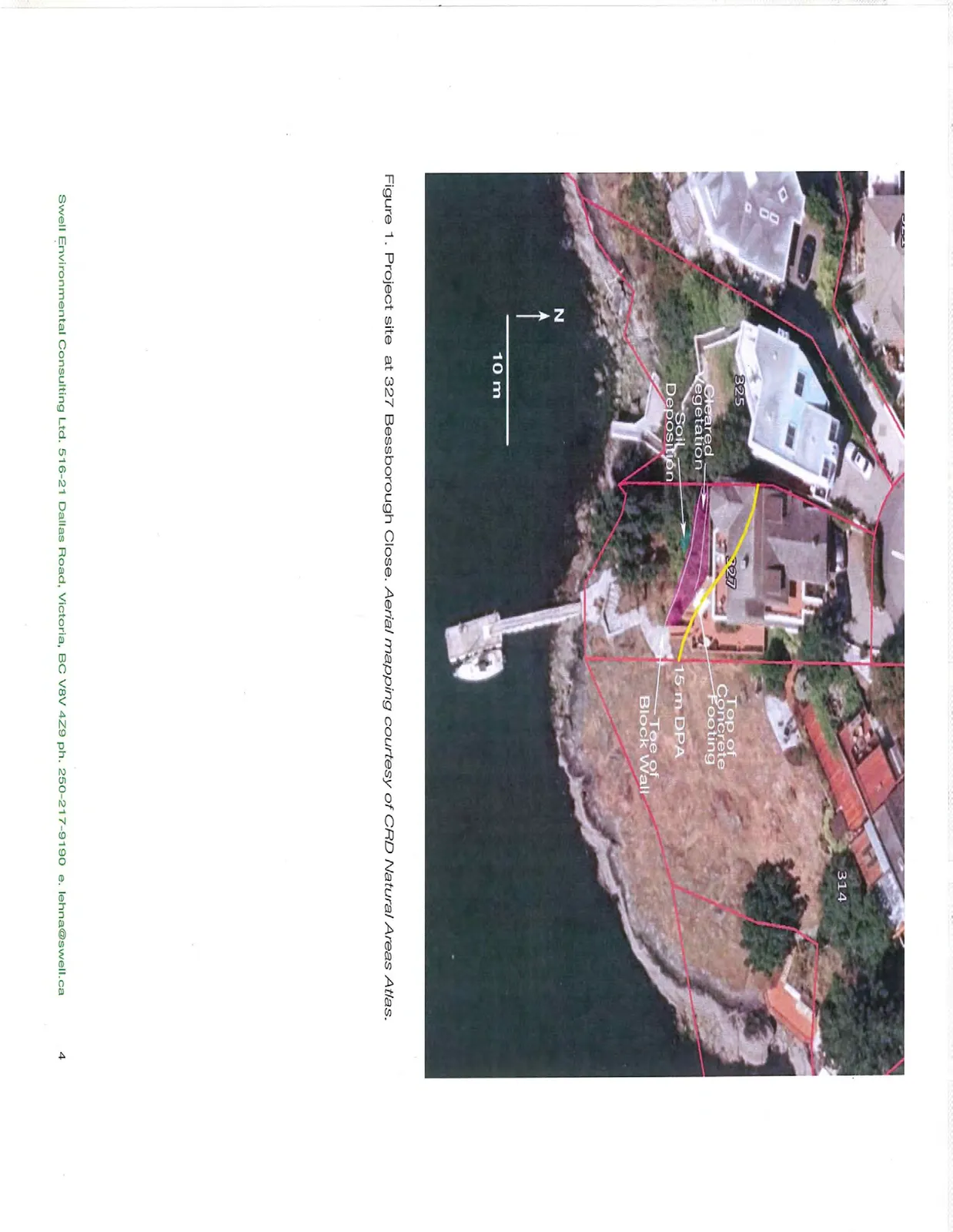
On 14 July 2015, Lehna Malmkvist, MSc., RPBio of Swell Environmental Consulting Ltd. (Swell) visited the site at 327 Bessborough Close to determine the effects on the condition of the development permit area (DPA) in reference to unpermitted construction of a retaining wall that had been initiated within the Town of View Royal's Natural Watercourse and Shoreline Areas Development Permit Area (Figure 1). As per View Royal's Schedule Q of the Official Community Plan (2011) Bylaw No. 811, the site was assessed for sensitive ecosystems, red and blue listed species, wildlife trees, and all environmentally sensitive areas within the site. This Environmental assessment summarizes the environmental conditions at the property and impacts from the retaining wall construction work zone.
Site Conditions
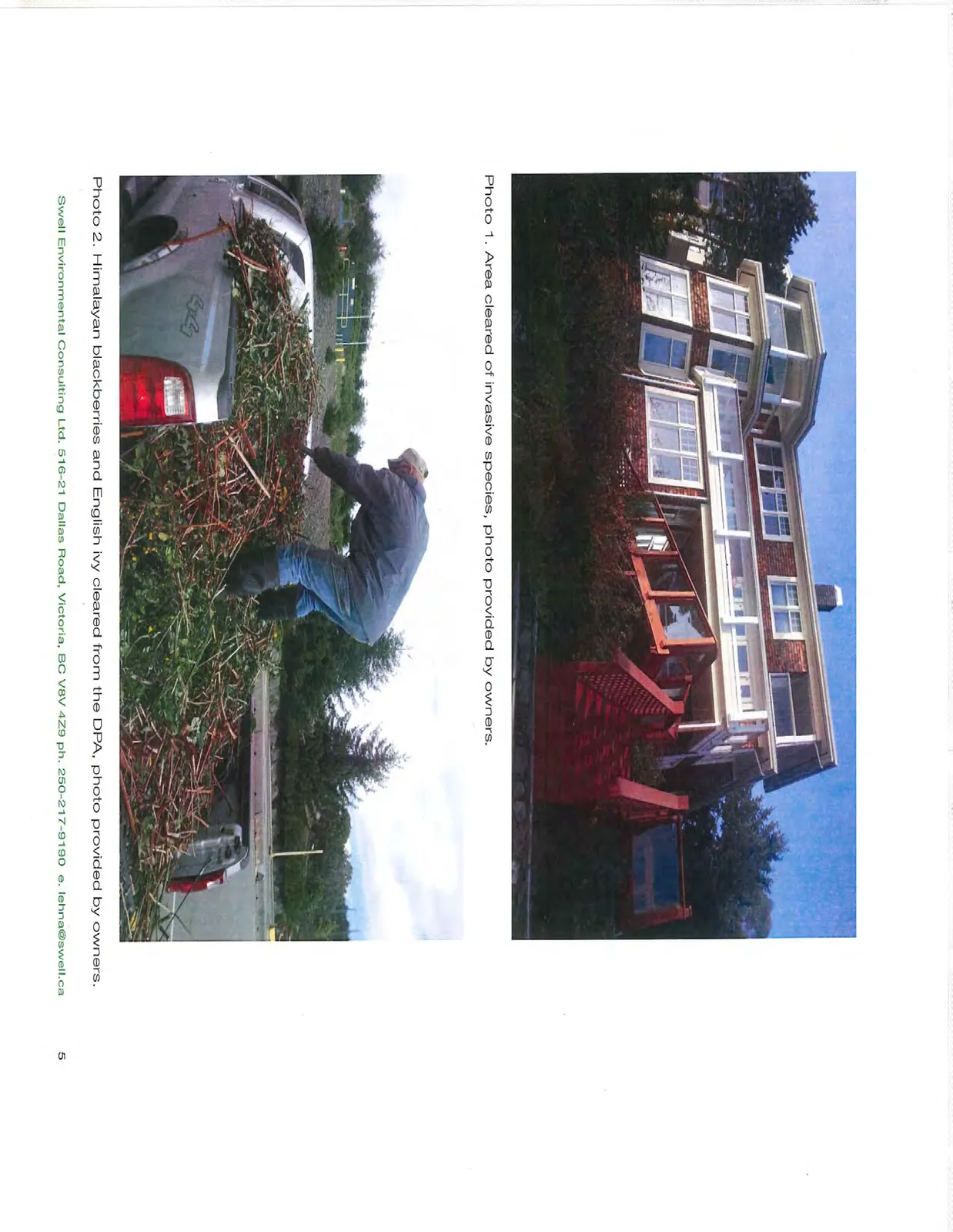
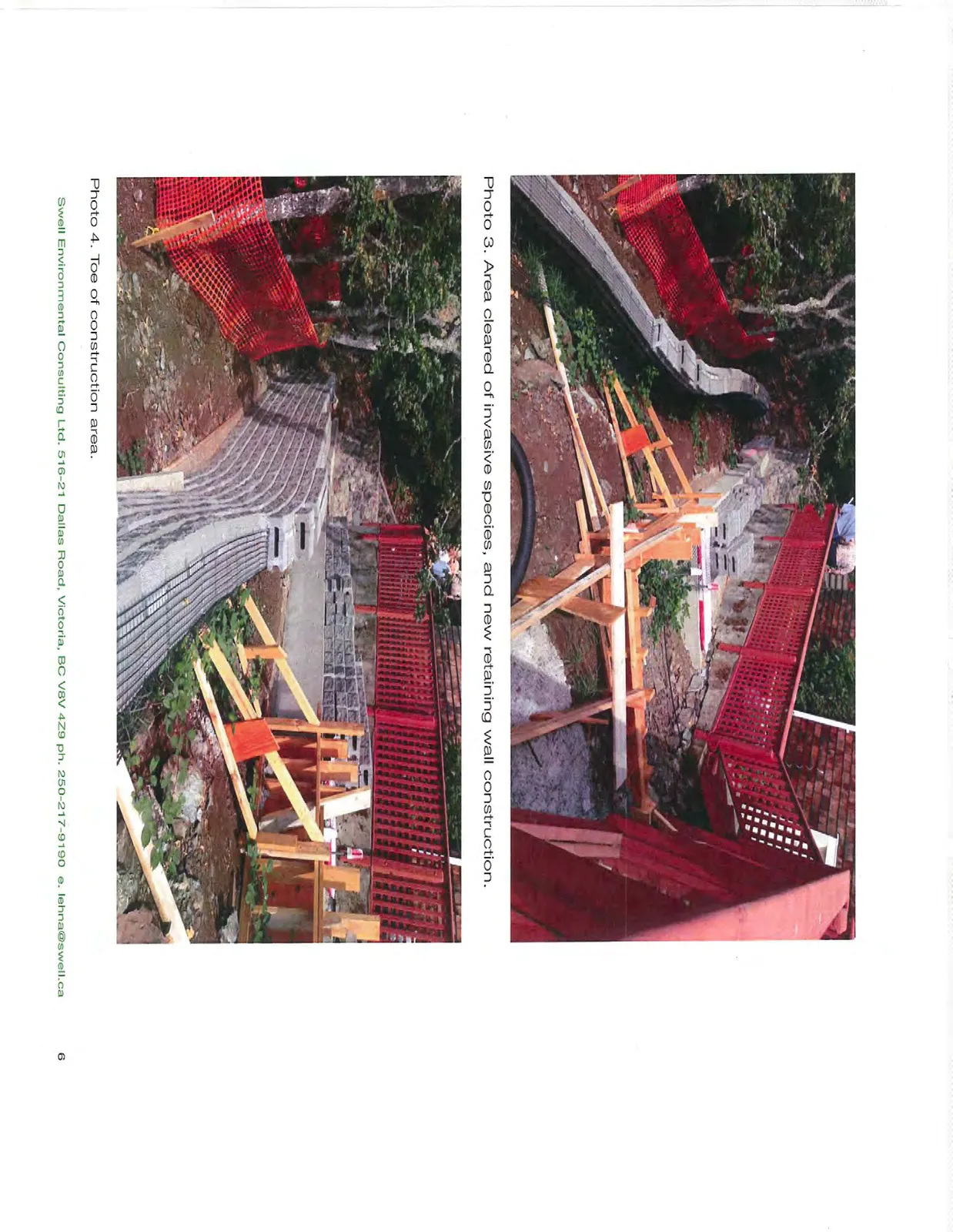
The approximately 720 m² waterfront site is a developed lot with a single-family home, gardens, invasive, non-native and native vegetation (Photos 1-4). The site slopes to the south with a steep drop along the bedrock cliff to the marine environment. The 15-m DPA setback consists of decks, rock stairway, retaining wall, grassy rocky outcrop areas, and patches of native vegetation. The shoreline is bedrock with a dock.
The vegetation within the DPA includes Garry oaks (Quercus garryana), Douglas-fir (Pseudostuga menziesii) with an understory of native shrubs including snowberry (Symphoricarpos alba) and ocean spray (Holodiscus discolor), with the remainder consisting of ornamentals and invasive species such as: English ivy (Hedera helix), Himalayan blackberry (Rubus discolor).
A review of the Conservation Data Centre (CDC) and Sensitive Ecosystem Inventory (SEI) mapping resulted in no known data inventory points for this site. No rare or uncommon wildlife or plant species were observed on the site and the historical development of the site makes the presence of rare and uncommon species unlikely. No current nesting or obvious wildlife activity was noted.
Project
The owners have initiated a project to repair a retaining wall adjacent to the house, and to construct a new retaining wall approximately 2-3 metres south, to create a landscaping terrace.
The project to date has:
- cleared invasive non-native vegetation (Himalayan blackberry and English ivy) from the area between the two retaining walls (Photos 1, 2 and 3). The few native species were retained (e.g. Saskatoon and snowberry)
- repaired the retaining wall adjacent to the house (Photos 3 and 4)
- partially constructed a new, second retaining wall (Photos 3 and 4)
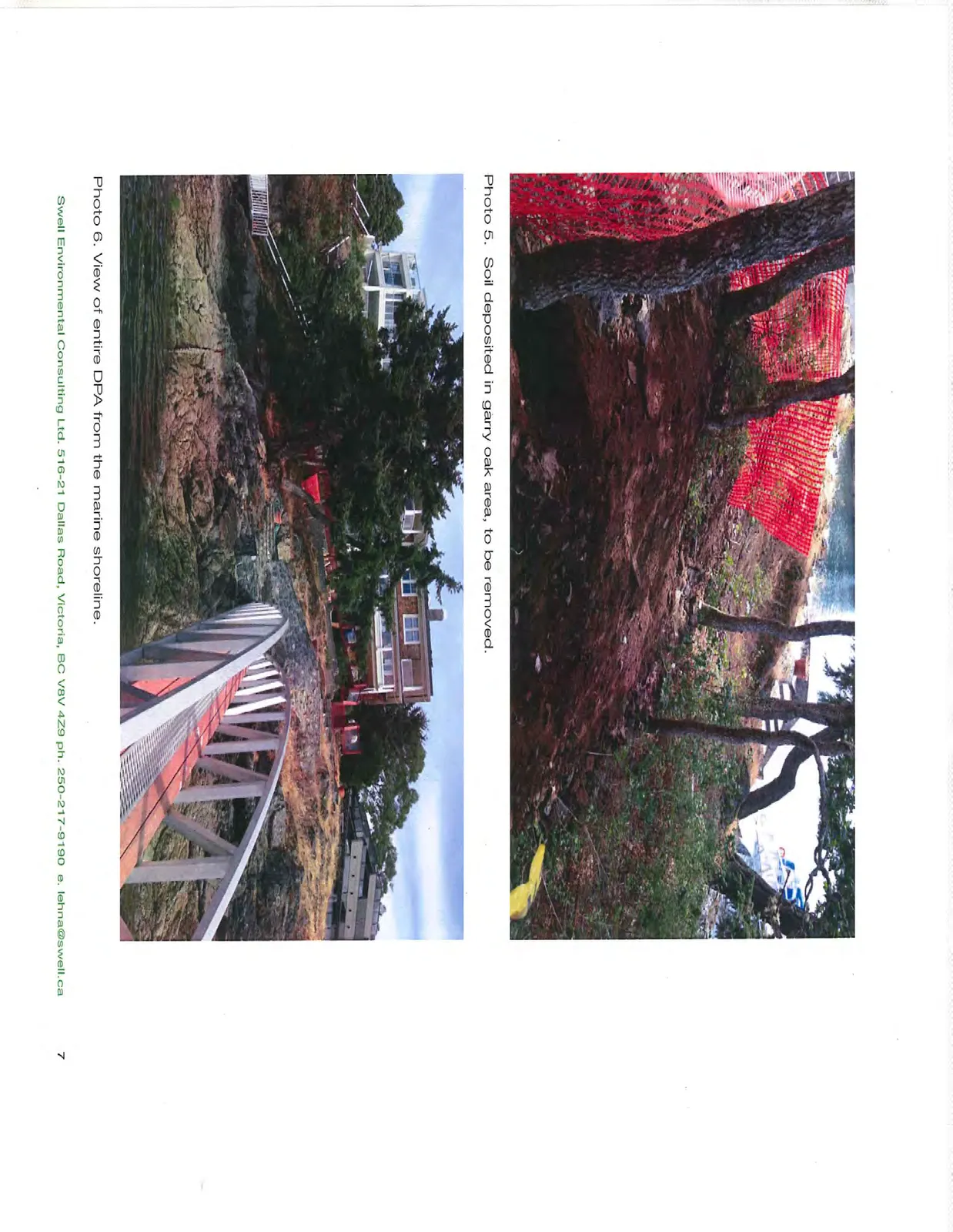
- deposited soil adjacent to garry oaks in the DPA (Photo 5)
The remaining work proposed is:
- complete the retaining wall construction
- install soil and vegetation between the two walls to create a landscaped terrace
- remove soil deposited adjacent to garry oaks in the DPA
Natural Watercourse and Shoreline Areas Development Permit Area, Bylaw No. 811
According to the View Royal Official Community Plan (OCP 2011) Bylaw No. 811, the following Guidelines would apply to the Natural Watercourse and Shoreline Areas DPA in this location:
General Guidelines
- Development of riparian and shoreline areas should be limited and not negatively impact the ecological health of the immediate area or impede public access.
- Retention of existing healthy riparian and shoreline vegetation should be maximized with any paths, structures or other constructed areas sited to minimize impact on trees and sensitive areas.
- Restoration of riparian and shoreline vegetation and habitat, including removal of invasive species, is encouraged for all properties within this Development Permit Area.
- Development should result in a net increase in native vegetation in almost all circumstances including trees, shrubs and grasses.
- For shoreline areas heavily impacted by previous development, target the restoration of ecologically appropriate vegetation for an average 15m wide (minimum 5 m) shoreline zone over 50% of the shore length.
- Riparian and shoreline area development should sensitively manage storm water, focusing on infiltration and release of storm water in ways and quantities that mimics natural patterns, avoids scouring and erosion and results in storm water free from pollutants.
- Shoreline protection measures should be limited to those necessary to prevent damage to existing structures or established uses on adjacent upland. [Additional guidelines applicable to shoreline stabilization are not included here, as this shoreline has been previously hardened and no additional works have been proposed – Swell.]
- The preservation and enhancement of native trees and shrub clusters that overhang the waters edge is strongly encouraged as these provide shade, protection and feeding habitat for fish and wildlife.
Impact of Development on Natural Conditions
The following effects are expected based on the development proposal:
- Approx. 10 m² will be converted from non-native vegetation to block or concrete retaining walls.
- Invasive species removal and revegetation with native species.
- Soil deposited in the area of the garry oaks immediately south of the new wall construction will be removed.
Recommendations and Best Management Practices (BMPs)
The following Best Management Practices are recommended to ensure minimal risk to the DPA:
- Erosion & Sediment Control and Spill Prevention & Response measures must be implemented to protect the marine ecosystem from construction activities:
- Schedule construction activities during dry weather;
- Ensure concrete wastes are contained: wet concrete is not deposited into surrounding water, remove excess concrete, and do not allow water from equipment and tool cleaning to enter the environment;
- Cover exposed soils (e.g. tarps, grass seed);
- All work to be conducted by hand.
- Soil removal and tree protection as described by arborists at Talbot & McKenzie.
- Revegetation as designed by LADR Landscape Architects with approximately 50% of the area cleared converted to lawn and 50% to native species.
In addition to the above BMPs, View Royal Bylaw No. 811 recommends restoration of shoreline ecosystems where possible. The 15-m DPA would benefit from continued removal of invasive species and replanting of native species. The owner has indicated an enthusiasm for this on an ongoing basis. Native species should be planted with the target guidelines from the OCP in mind. A list of appropriate native species for the 15-m setback can be supplied upon request. Continued removal of Himalayan blackberry and English ivy would provide an excellent benefit for the ecology of the DPA.
Provided the Best Management Practices and restoration recommendations above are followed, we do not expect the proposed construction activities to have any negative impacts to the current ecosystems of the 15-m DPA setback.
In summary, the works completed to date and the remaining proposed work will not disturb any rare or endangered species or ecosystems, and, provided the measures described in this assessment are followed, no negative effects on the ecology of the marine environment and shoreline conditions are expected.
Please do not hesitate to contact us with any questions you may have.
Sincerely,
Lehna Malmkvist, MSc, RPBio (#1613)
Document Images
(3)