Swell Environmental Review for 2820 Shoreline Drive
A comprehensive environmental assessment regarding the proposed works within the Natural Watercourse and Shoreline Development Permit Area.
Kyle Peatt 2820 Shoreline Drive View Royal, BC
March 16, 2021
RE: Natural Watercourse and Shoreline Development Permit Area Review for 2820 Shoreline Drive, Victoria, BC, Town of View Royal
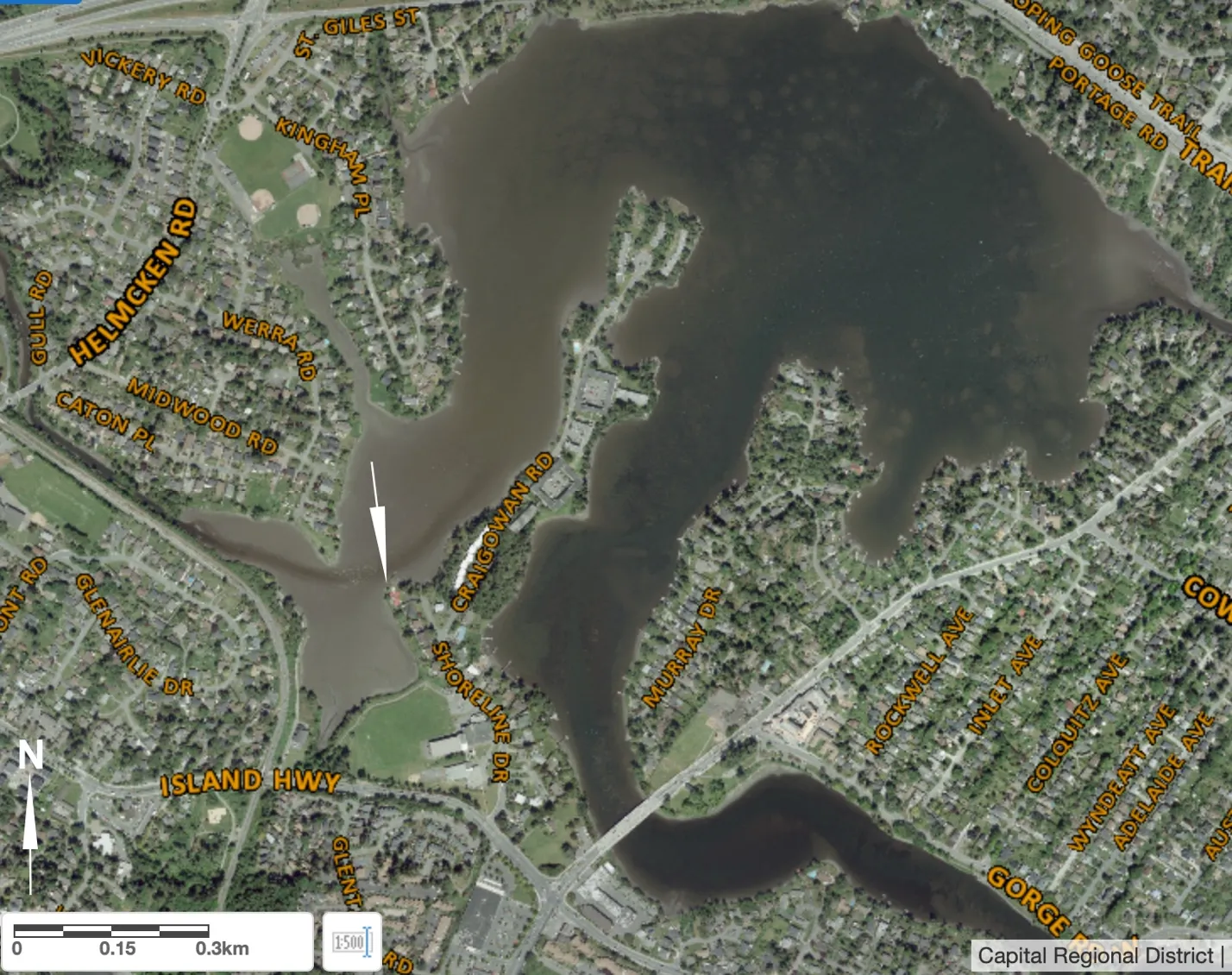
On 19 November 2020 Lehna Malmkvist, MSc, RPBio. of Swell Environmental Consulting Ltd. (Swell) visited the site at 2820 Shoreline Drive, in the Town of View Royal, to review the existing site conditions and works proposed by the owner that are within the Town of View Royal’s Natural Watercourse and Shoreline Areas Development Permit Area (SDPA) (Figure 1). As per View Royal’s Schedule Q of the Official Community Plan (2011) Bylaw No. 811, the proposal was evaluated with the intent to minimise detrimental impacts to the shoreline. The Natural Watercourse and Shoreline Areas Development Permit Area is an area encompassing a 15-m from the natural boundary of the sea and is referred to as the SDPA in this letter.
Natural Watercourse and Shoreline Areas Development Permit Area, Bylaw No. 811
The View Royal Official Community Plan (OCP 2011) Bylaw No. 811, identifies the following Guidelines that apply to the Natural Watercourse and Shoreline Areas DPA:
- Development of riparian and shoreline areas should be limited and not negatively impact the ecological health of the immediate area or impede public access.
- Retention of existing healthy riparian and shoreline vegetation should be maximized with any paths, structures or other constructed areas sited to minimize impact on trees and sensitive areas.
- Restoration of riparian and shoreline vegetation and habitat, including removal of invasive species, is encouraged for all properties within this Development Permit Area.
- Development should result in a net increase in native vegetation in almost all circumstances including trees, shrubs and grasses.
- For shoreline areas heavily impacted by previous development, target the restoration of ecologically appropriate vegetation for an average 15m wide (minimum 5 m) shoreline zone over 50% of the shore length.
- Riparian and shoreline area development should sensitively manage storm water, focusing on infiltration and release of storm water in ways and quantities that mimics natural patterns, avoids scouring and erosion and results in storm water free from pollutants.
- The preservation and enhancement of native trees and shrub clusters that overhang the waters edge is strongly encouraged as these provide shade, protection and feeding habitat for fish and wildlife.
Proposed Works
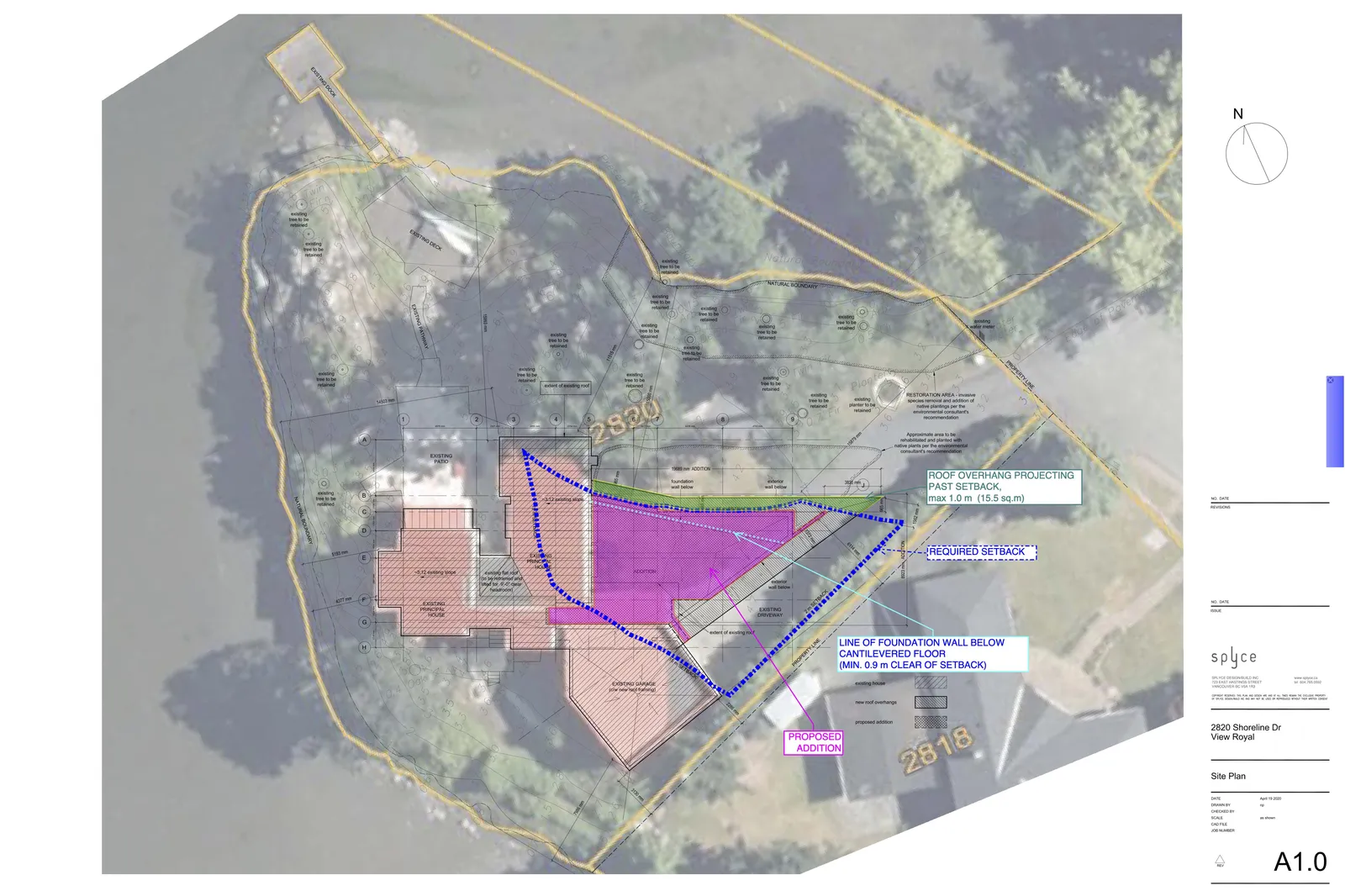
The owner is proposing to build an addition to the existing house on the property within the SDPA. The building addition foundation is outside the SDPA, however, there are associated works within the SDPA shown on Figure 2:
- Temporary excavation into the SDPA for the construction footprint (max 1.0 m into the SDPA 15.5m², along the north side of the addition)
- Roof overhang of the SDPA max 1.0 m into the SDPA 15.5m², along the north side of the addition)
- Restoration of a portion of the SDPA (invasive species removal and replanting native species) adjacent to the proposed works along 24m of shoreline approximately 5m or up to the existing path (approx. 120m²)
The runoff from the building will be managed by connecting into the drains for the existing house.
Restoration of a portion of the SDPA is proposed to compensate for the encroachment, to improve the ecological condition of the SPDA and to meet the SDPA Guidelines. The restoration work will consist of invasive species removal and replanting native species adjacent to the proposed works along 25m of shoreline approximately 5m wide or up to the existing path (approx. 125m²) (Figure 2).
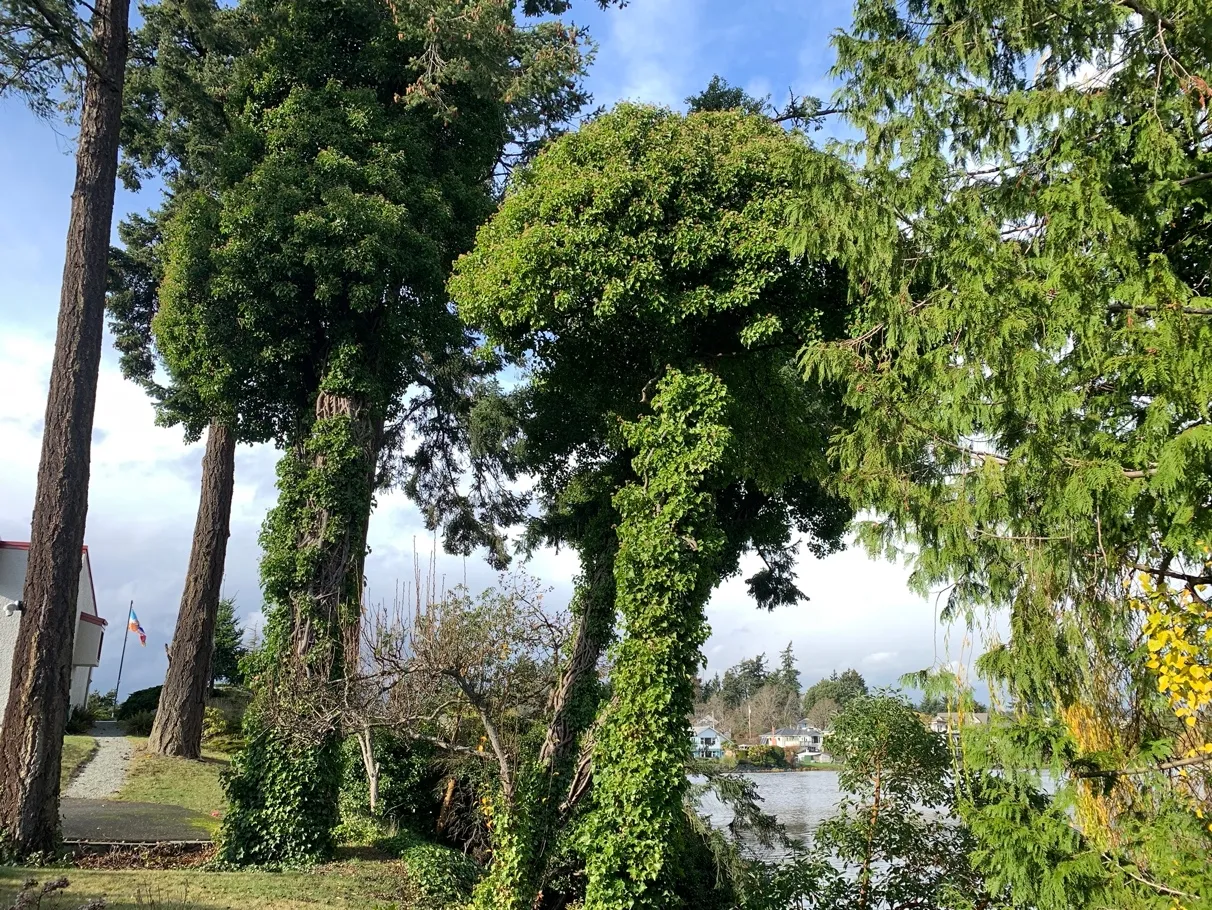
- removal of English ivy (on ground and on trees), spurge laurel and St. John’s Wort, ornamental species and other non-native invasive species encountered in the proposed restoration area
- replanting native species within the proposed restoration area as described in Table 1.
- native vegetation will be planted to BC Landscape Society standards
- mulch planted area with 10cm of composted mulch following planting
- irrigate for a minimum of 3 years
- maintain area by controlling invasive species
Site Conditions
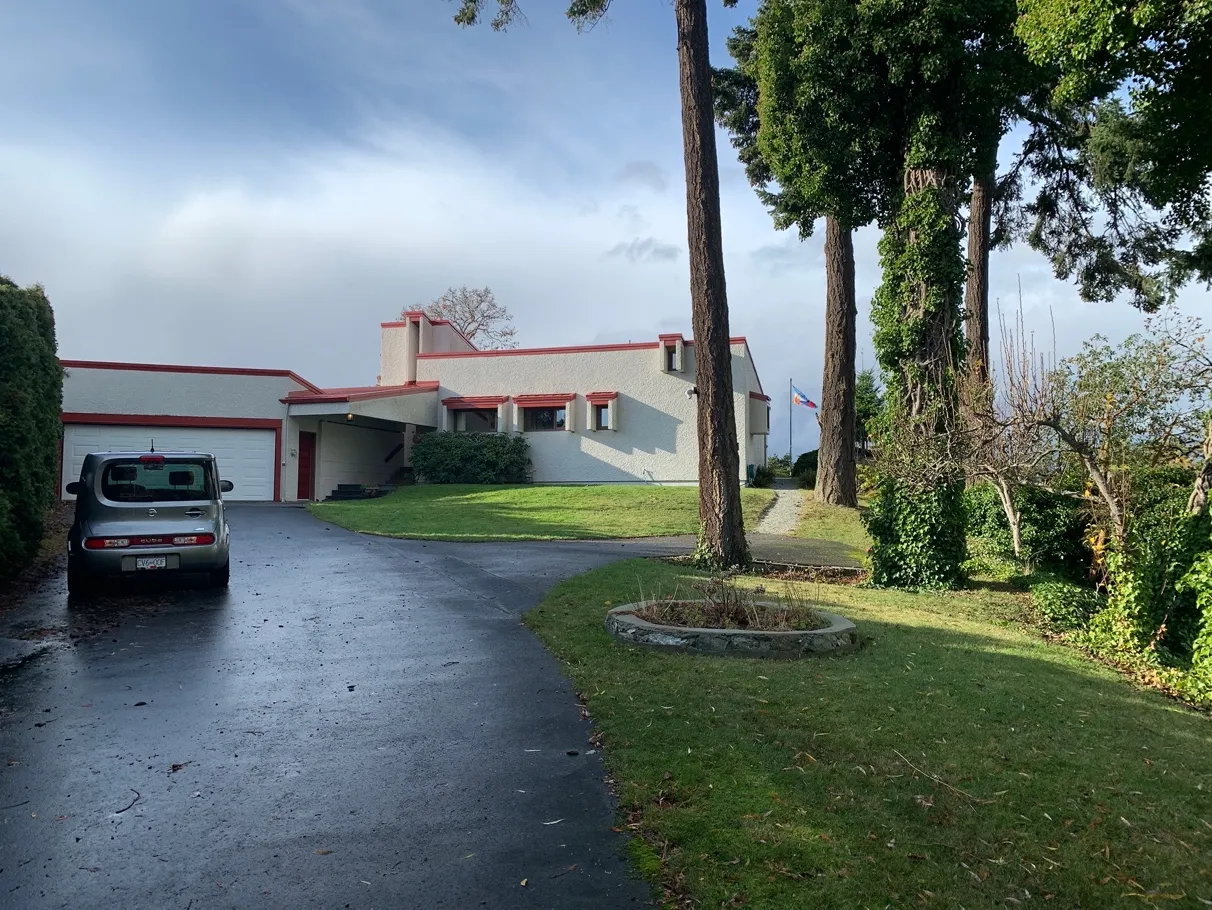
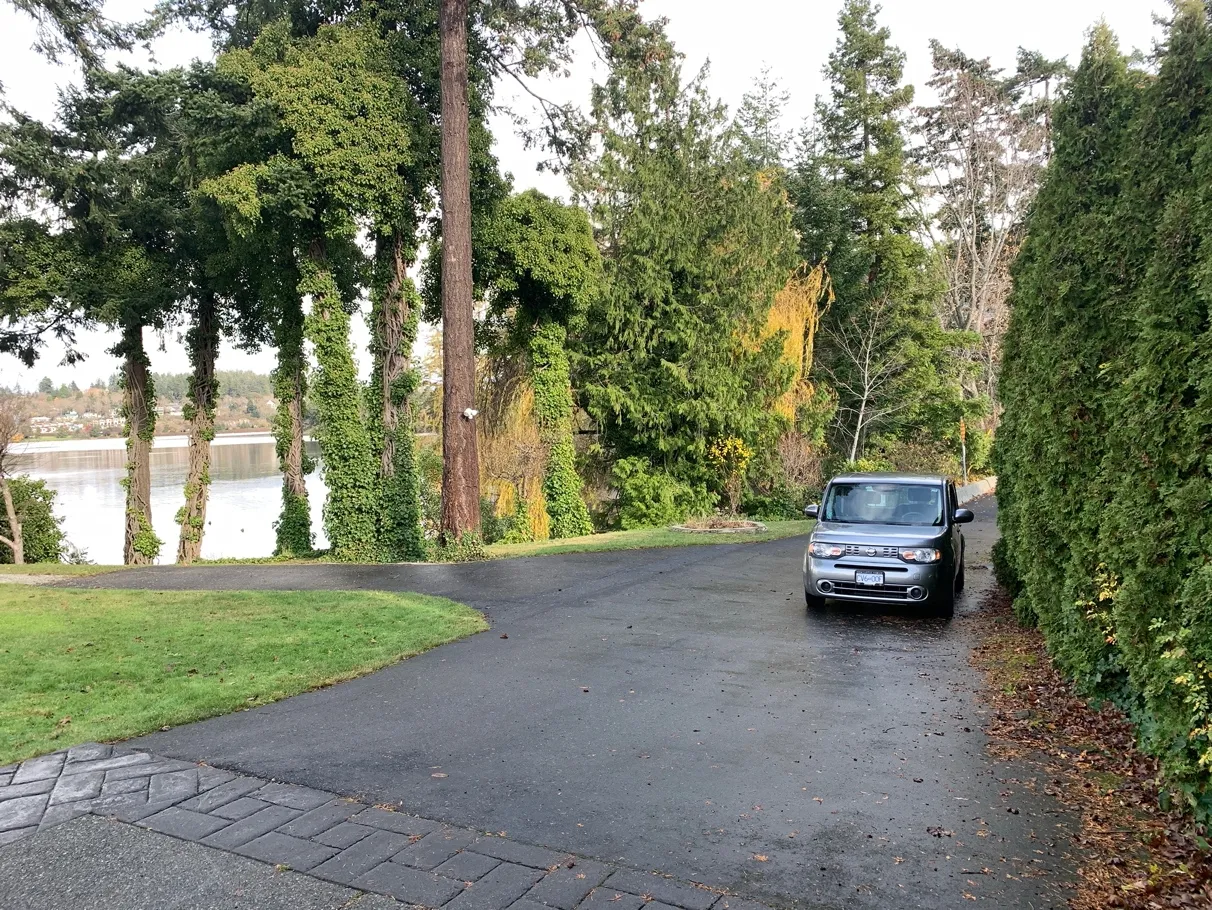
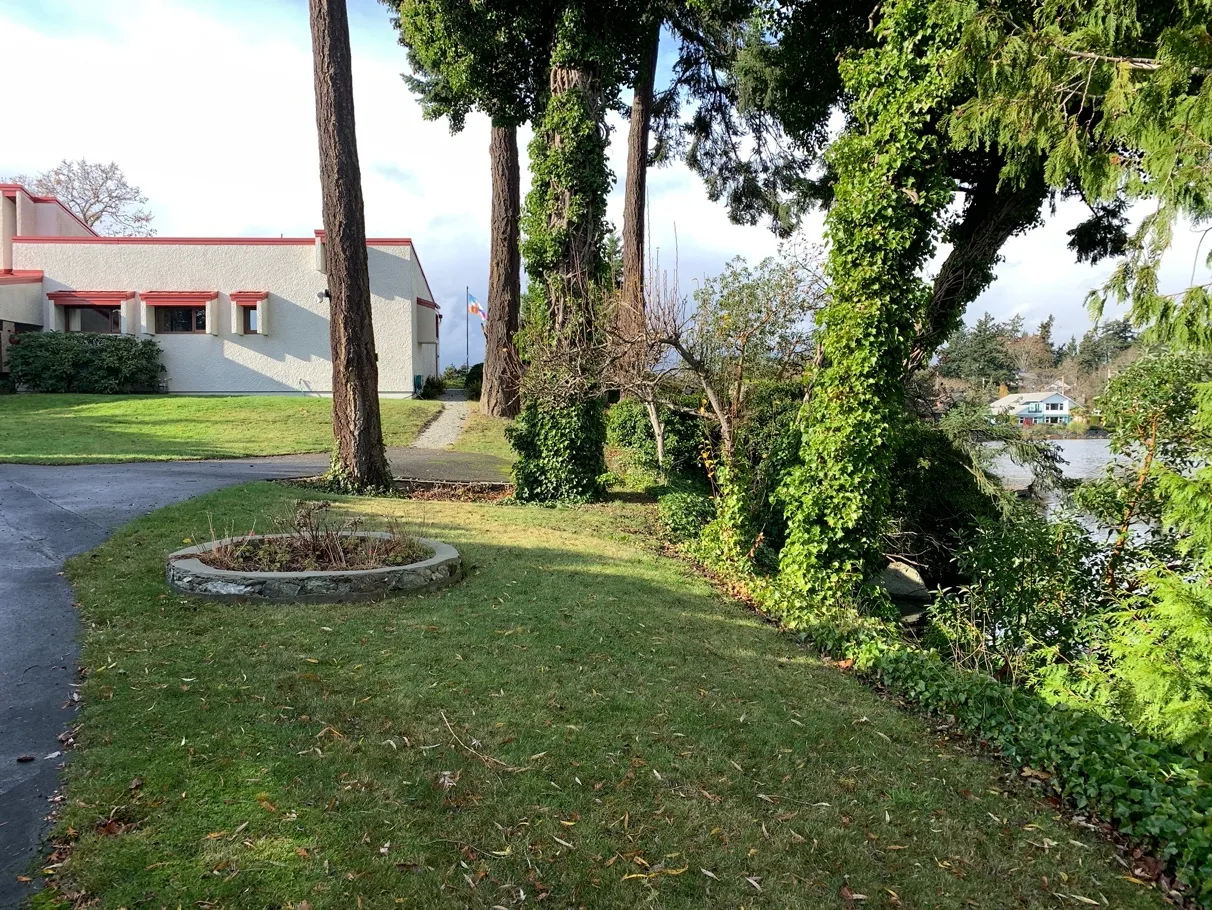
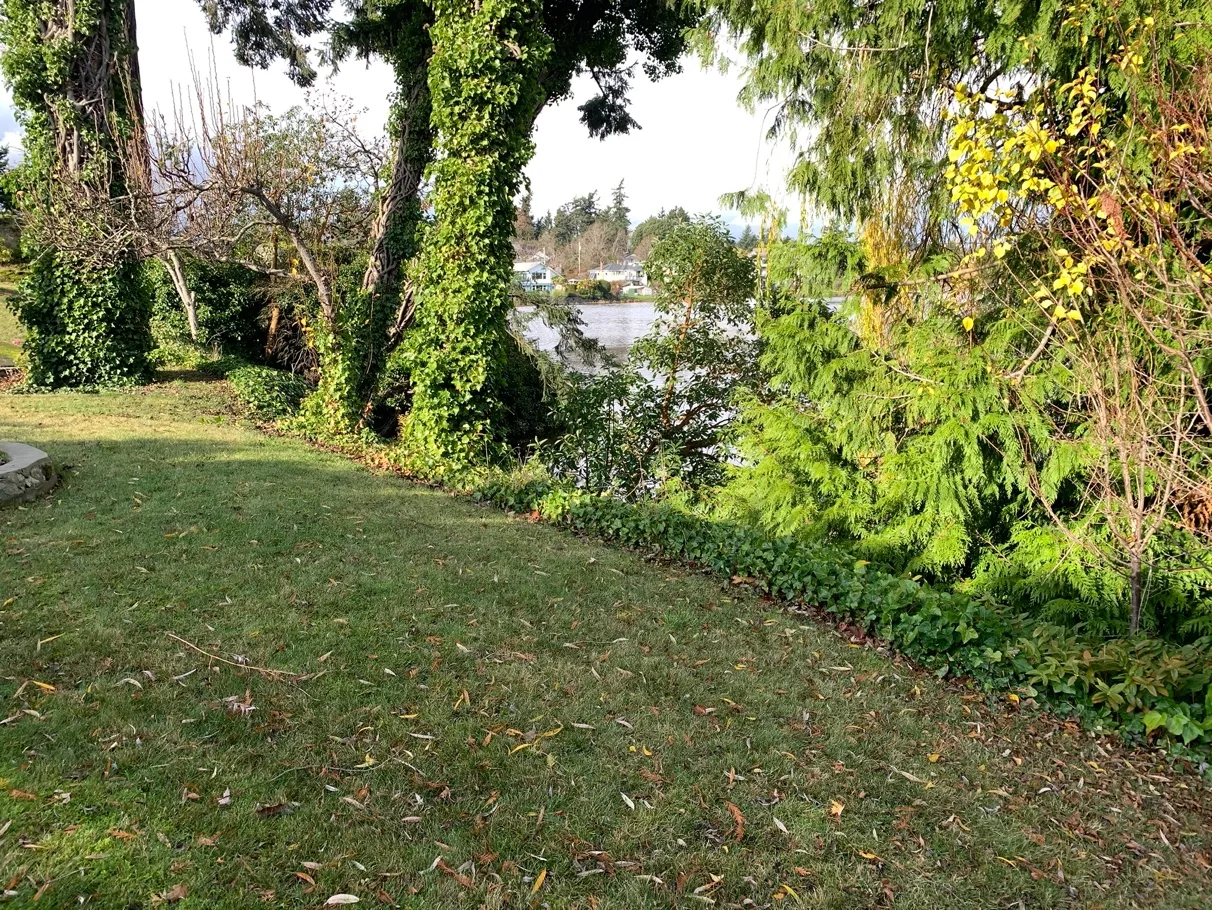
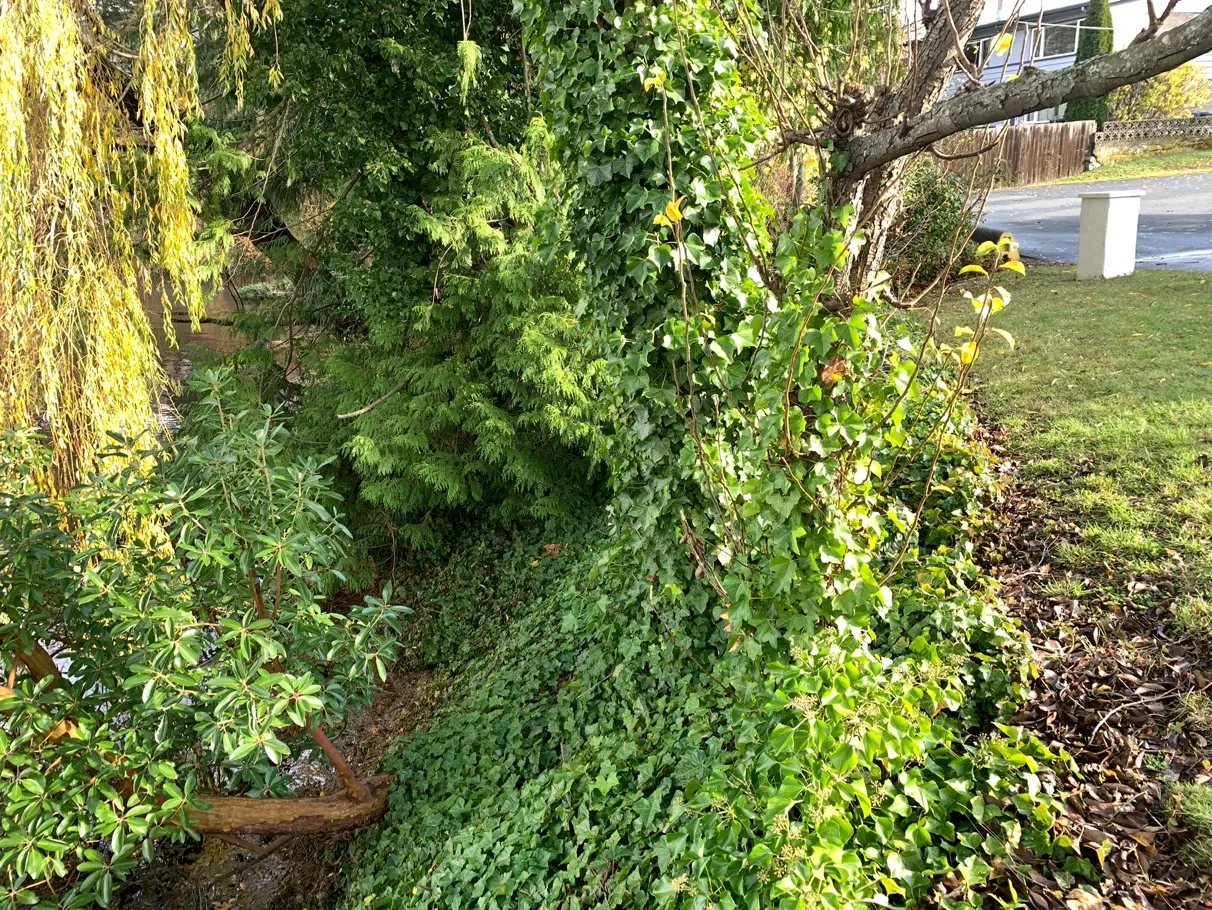
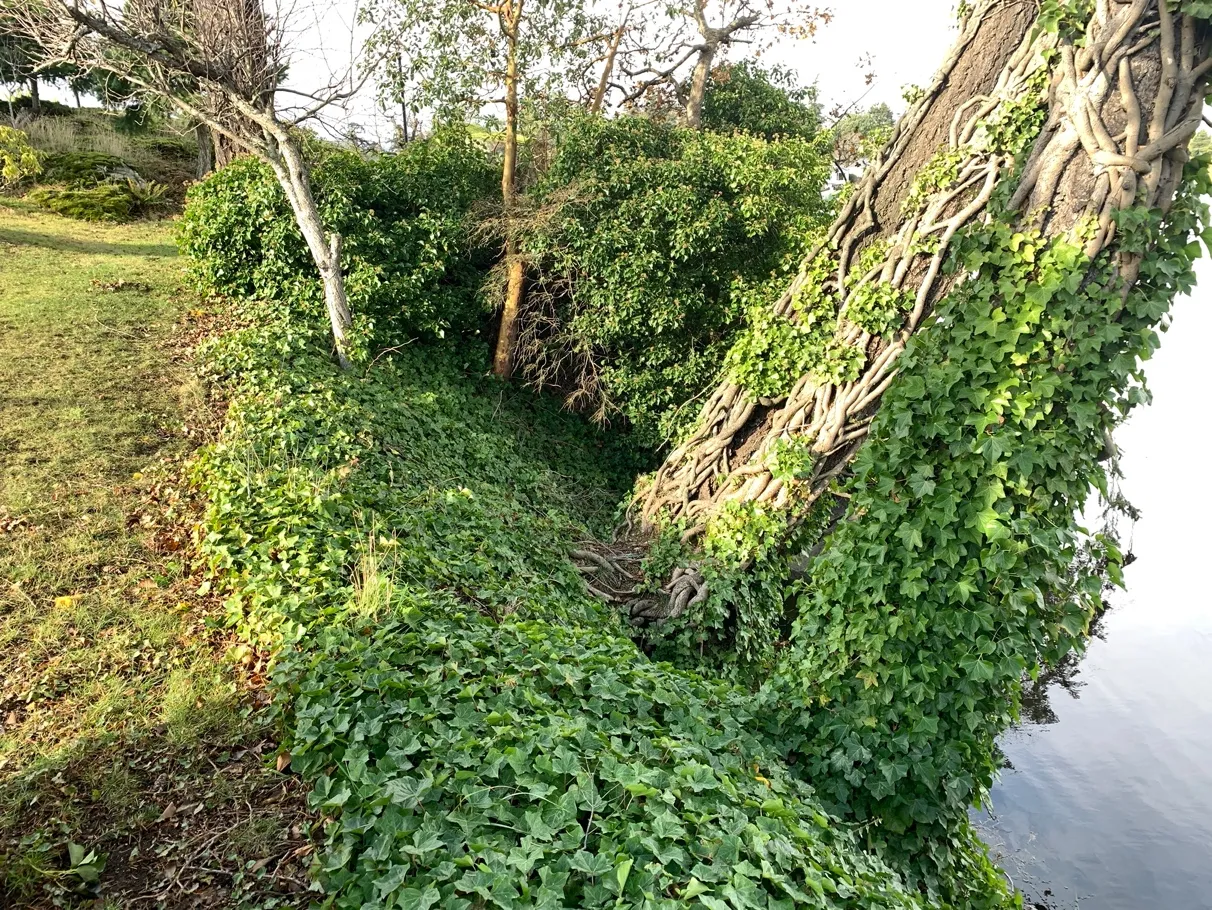
The property has been previously developed with an existing single family home, driveway, landscaping, patios, paths, and a dock. The proposed construction work is within an existing lawn and driveway area (Photos 1 and 2). Within the SDPA, adjacent to the area of the proposed development there is additional lawn, path, large trees, and shoreline vegetation which includes ornamental and invasive, non-native species, along with native plant species (Photos 3-7).
The vegetation in the SDPA adjacent to the proposed work site between the proposed addition and the marine environment consists of lawn and a path, with mature Douglas-fir (Pseudotsuga menziesii), western redcedar (Thuja plicata), arbutus (Arbutus menziesii), weeping willow (Salix babylonica), red-osier dogwood (Cornus stolonifera) and an understory of lawn and dense invasive English ivy (Hedra helix) with other invasives spurge laurel (Daphne laureola) and St. John’s Wort (Hypericum sp.), and other ornamental species.
The SDPA around the rest of the property is mix of house, dock, rocky outcrop, landscaping, lawn, native plants, ornamental plantings and invasive species.
Environmental Impacts and Recommendations
The proposed works within the SDPA will all take place within the footprint of an existing driveway and lawn (Photos 1 and 2), so there is no expected loss of trees, native understory vegetation or other negative environmental impacts. The work may be within the Protected Root Zone of trees within the SPDA, so a ISA certified aborist should be consulted prior to construction to provide tree protection recommendations.
In order to improve the ecological condition of the SDPA, compensate for the proposed work in the SDPA and meet the SDPA Guidelines, the owner will restore a section of shoreline by control the English ivy, spurge laurel, St. John’s wort, and other non-native species on the top of the slope between the proposed work and marine ecosystem and replant the area with native species (Figure 2, Table 1).
The possible environmental impacts of the construction work (excavation) and the restoration work (invasive species removal and planting), in an area adjacent to the marine environment are: erosion of bare soil, sedimentation of the marine environment, petroleum spills.
These potential impacts are minimised by the following Environmental Protection Measures.
Protecting ecological features
- Locations no-go zones, retained trees and vegetation, and sensitive areas are fenced/marked and communicated to all personnel, including sub-contractors and trades.
- Avoid placing soil/gravel piles and heavy construction materials around roots of trees to be retained, or otherwise cutting into root zones or compacting soils by driving and parking vehicles on root zones. Protective tree fencing is recommended for delineating protected areas.
- Follow arborist’s recommendations for tree protection.
Erosion & Sediment Control
- Minimize vegetation removal
- Excavations conducted during forecasted dry weather, where possible
- Do not direct water runoff from the site or dewatering from excavations directly into the marine environment. If dewatering of excavations is required, the Environmental Monitor must be consulted to determine where runoff can be directed or if sediment settling facilities (tanks, berms) are required.
- Cover exposed soils, if needed (e.g. poly, tarps, mulch, seeding, ‘rough and loose’ treatment)
- installing erosion and sediment control measures for the construction (e.g. sediment fencing or mounded mulch) to prevent sediment laden runoff from entering the SDPA or marine environment;
- Ensure soil and debris stockpiles are placed away from the shoreline and sediment-laden water cannot flow into the waterbodies.
- If needed in the restoration area, install biodegradable coir mats on the shoreline slope to retain soils after invasive species are removed;
- Contact Environmental Monitors immediately with any concerns.
Spill Prevention and Response
- Equipment is inspected for leaks prior to beginning work.
- Spill response kits (capable of addressing the volume of fuel/oils/chemicals on site) are on site when any heavy machinery is working, and operators are trained in their use.
- Equipment refueling is at a designated location and >30 m from aquatic ecosystems or isolated from stormdrains.
- Fuel generators must be placed in a spill-proof container capable of addressing the maximum volume of fuel involved (e.g. plastic bin, or other impermeable containment area such as poly-lined bermed depression).
- Store all fuel cans in spill-proof containers (e.g. as above).
- Concrete wash-water and wet concrete is highly alkaline and toxic to fish and other aquatic organisms. All concrete wash-water from equipment, trucks and/or hand tools needs to be directed to a settling area away from runoff paths to the waterbodies. Freshly poured concrete needs to be covered when rain is forecasted or runoff needs to be isolated from waterbodies during the curing process.
- In case of spills, the following general steps are recommended:
- Stop source of spill/prevent further spillage (turn off valves, right overturned containers)
- Block spill from reaching aquatic environment or pathways to waterbodies
- Block spill from spreading
- Call Environmental Monitors
- Clean up spilled materials
Environmental Monitoring
- Environmental Monitor to oversee construction activities, including (but not limited to)
- pre-construction meeting
- project start up
- heavy rainfall events greater than 10 mm until such time that the QEP is satisfied that the ESC and other protective measures are containing heavy rainfall as designed.
- periodically throughout the construction period to ensure BMPs are followed
- during invasive species removal and native species planting
- at completion
In summary, the footprint of the proposed work in the SDPA is small (approx. 15 m²), and is within an existing lawn and driveway area, therefore the proposed work is not expected to cause negative impacts to the ecological condition of the SDPA. If the environmental protection measures are implemented, no sedimentation or spills should occur and there are no damage should occur to the SDPA or marine environment. The proposed restoration of approx. 24m of shoreline length (approx. 120m²) by removing invasive species and planting native species will improve the ecological condition of the SDPA.
Please do not hesitate to contact me with any questions you may have.
Sincerely,
Lehna Malmkvist, MSc, RPBio (#1613)
Table 1. Recommended native plants for the SDPA.
| TREES | Species | Density |
|---|---|---|
| bigleaf maple | Acer macrophyllum | |
| red alder | Alnus rubra | |
| arbutus | Arbutus menziesii | |
| western redcedar | Thuja plicata | |
| Douglas-fir | Pseudotsuga menziesii | |
| Pacific crab apple | Malus fusca | |
| Pacific willow | Salix lucida ssp. lasiandra | |
| LARGE SHRUBS | ||
| Saskatoon | Amelanchier alnifolia | 1/2m2 |
| red-osier dogwood | Cornus stolonifera | 1/2m2 |
| oceanspray | Holodiscus discolor | 1/2m2 |
| black twinberry | Lonicera involucrata | 1/2m2 |
| June plum | Oemleria cerasiformis | 1/2m2 |
| mock orange (Coastal) | Philadelphus lewisii 'Gordianus' | 1/2m2 |
| red flowering currant | Ribes sanguineum | 1/2m2 |
| Hooker's willow | Salix hookeriana | 1/2m2 |
| Scouler's willow | Salix scouleriana | 1/2m2 |
| Sitka willow | Salix sitchensis | 1/2m2 |
| Nootka rose | Rosa nutkana | 1/m2 |
| SMALL-MEDIUM SHRUBS & PERENNIALS | ||
| salmonberry | Rubus spectabilis | 1/m2 |
| thimbleberry | Rubus parviflorus | 1/m2 |
| red elderberry | Sambucus racemosa ssp. pubens | 1/m2 |
| hardhack | Spiraea douglasii ssp. douglasii | 1/m2 |
| common snowberry | Symphoricarpos alba | 1/m2 |
| evergreen huckleberry | Vaccinium ovatum | 1/m2 |
| black huckleberry | Vaccinium membranaceum | 1/m2 |
| salal | Gaultheria shallon | 1/m2 |
| sword fern | Polystichum munitum | 1/m2 |
| GROUNDCOVER | ||
| kinnickinnick | Arctostaphylos uva-ursi | 3/m2 |
| field chickweed | Cerastium arvense | 3/m2 |
| coastal strawberry | Fragaria chiloensis | 3/m2 |
| woodland strawberry | Fragaria vesca | 3/m2 |
| trailing blackberry | Rubus ursinus | 3/m2 |
| hairy honeysuckle | Lonicera hispidula | 3/m2 |
| orange honeysuckle | Lonicera ciliosa | 3/m2 |
| Yerba buena | Clinopodium douglasii | 3/m2 |
*substitutions must be approved by the RPBio
Document Images
(1)