RE: Natural Watercourse and Shoreline Development Permit Area Review for 331 Stewart Ave
Environmental consulting report reviewing the proposed works within the Natural Watercourse and Shoreline Areas Development Permit Area.
Gary Jackson 329 Stewart Ave. Victoria, BC V9B 1R6
December 20, 2018
RE: Natural Watercourse and Shoreline Development Permit Area Review for 331 Stewart Ave, Victoria, BC, Town of View Royal
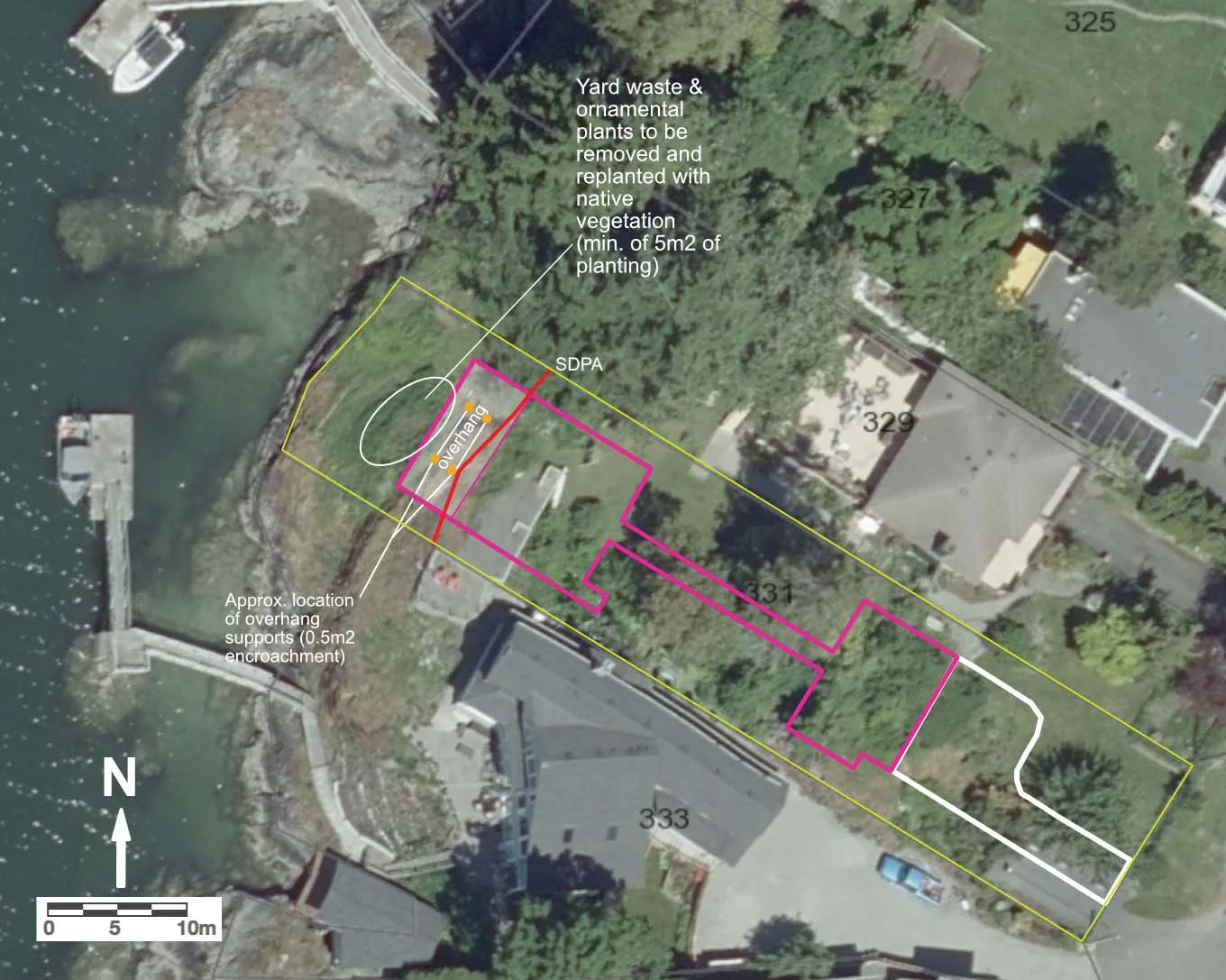
On 26 November 2018 Lehna Malmkvist, MSc, RPBio. of Swell Environmental Consulting Ltd. (Swell) visited the site at 331 Stewart Ave, in the Town of View Royal, to review the existing site conditions and works proposed by the owner that are within the Town of View Royal’s Natural Watercourse and Shoreline Areas Development Permit Area (SDPA) (Figure 1). As per View Royal’s Schedule Q of the Official Community Plan (2011) Bylaw No. 811, the proposal was evaluated with the intent to minimise detrimental impacts to the shoreline. The Natural Watercourse and Shoreline Areas Development Permit Area is an area encompassing a 15-m from the natural boundary of the sea and is referred to as the SDPA in this letter.
Natural Watercourse and Shoreline Areas Development Permit Area, Bylaw No. 811
The View Royal Official Community Plan (OCP 2011) Bylaw No. 811, identifies the following Guidelines that apply to the Natural Watercourse and Shoreline Areas DPA:
- Development of riparian and shoreline areas should be limited and not negatively impact the ecological health of the immediate area or impede public access.
- Retention of existing healthy riparian and shoreline vegetation should be maximized with any paths, structures or other constructed areas sited to minimize impact on trees and sensitive areas.
- Restoration of riparian and shoreline vegetation and habitat, including removal of invasive species, is encouraged for all properties within this Development Permit Area.
- Development should result in a net increase in native vegetation in almost all circumstances including trees, shrubs and grasses.
- For shoreline areas heavily impacted by previous development, target the restoration of ecologically appropriate vegetation for an average 15m wide (minimum 5 m) shoreline zone over 50% of the shore length.
- Riparian and shoreline area development should sensitively manage storm water, focusing on infiltration and release of storm water in ways and quantities that mimics natural patterns, avoids scouring and erosion and results in storm water free from pollutants.
- The preservation and enhancement of native trees and shrub clusters that overhang the waters edge is strongly encouraged as these provide shade, protection and feeding habitat for fish and wildlife.
Proposed Works
The owner is proposing to build a new single family home and associated infrastructure on the property. Within the SDPA, the proposed works are shown on Figure 1 and include:
- Overhanging portion of the house and deck
- 4 supports (footprint of approximately 1’ x 1’ each)
- Removal of non-native, invasive species
- Planting native species
The location of the house has been shifted towards the shoreline on the property to overhang the SDPA in order to preserve trees and vegetation in the centre of the property and to eliminate the requirement for blasting on the site. The building will be situated such that the northwest wall and the construction footprint (work area) will be outside the Shoreline Development Permit Area.
The stormwater management design has not yet been determined, the owners and designers are aware of the requirement to meet the following SDPA requirement (page 168 of the OCP):
vi. Riparian and shoreline area development should sensitively manage storm water, focusing on infiltration and release of storm water in ways and quantities that mimics natural patterns, avoids scouring and erosion and results in storm water free from pollutants.
Site Conditions
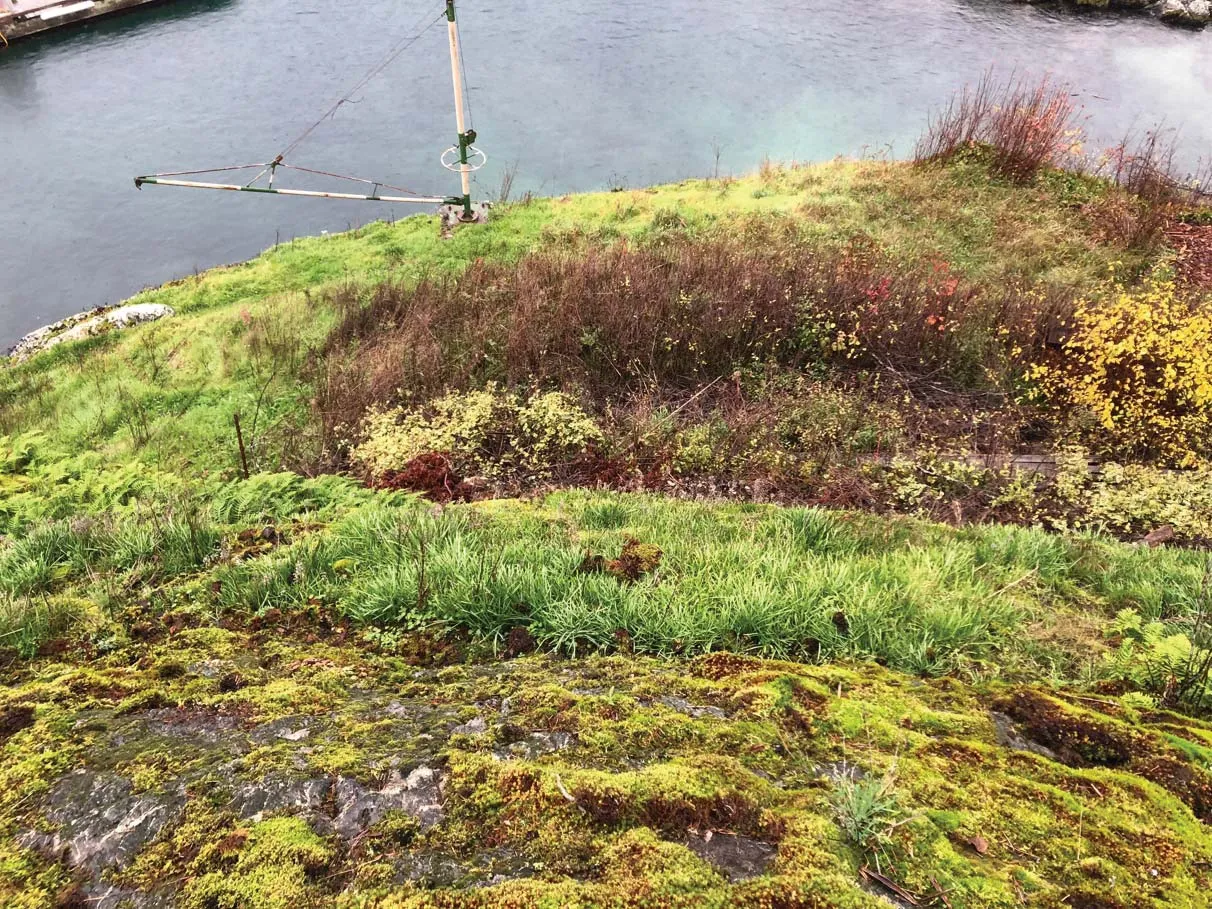
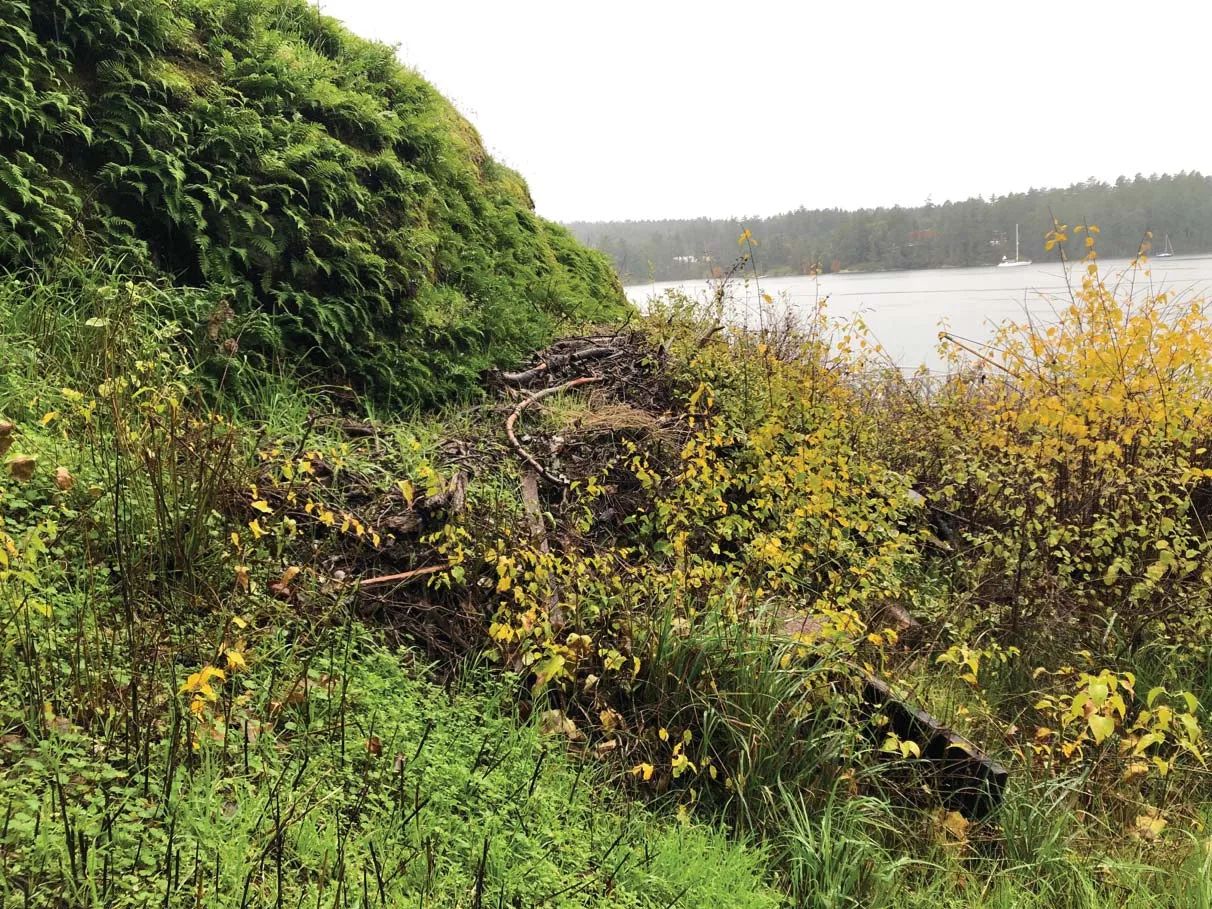
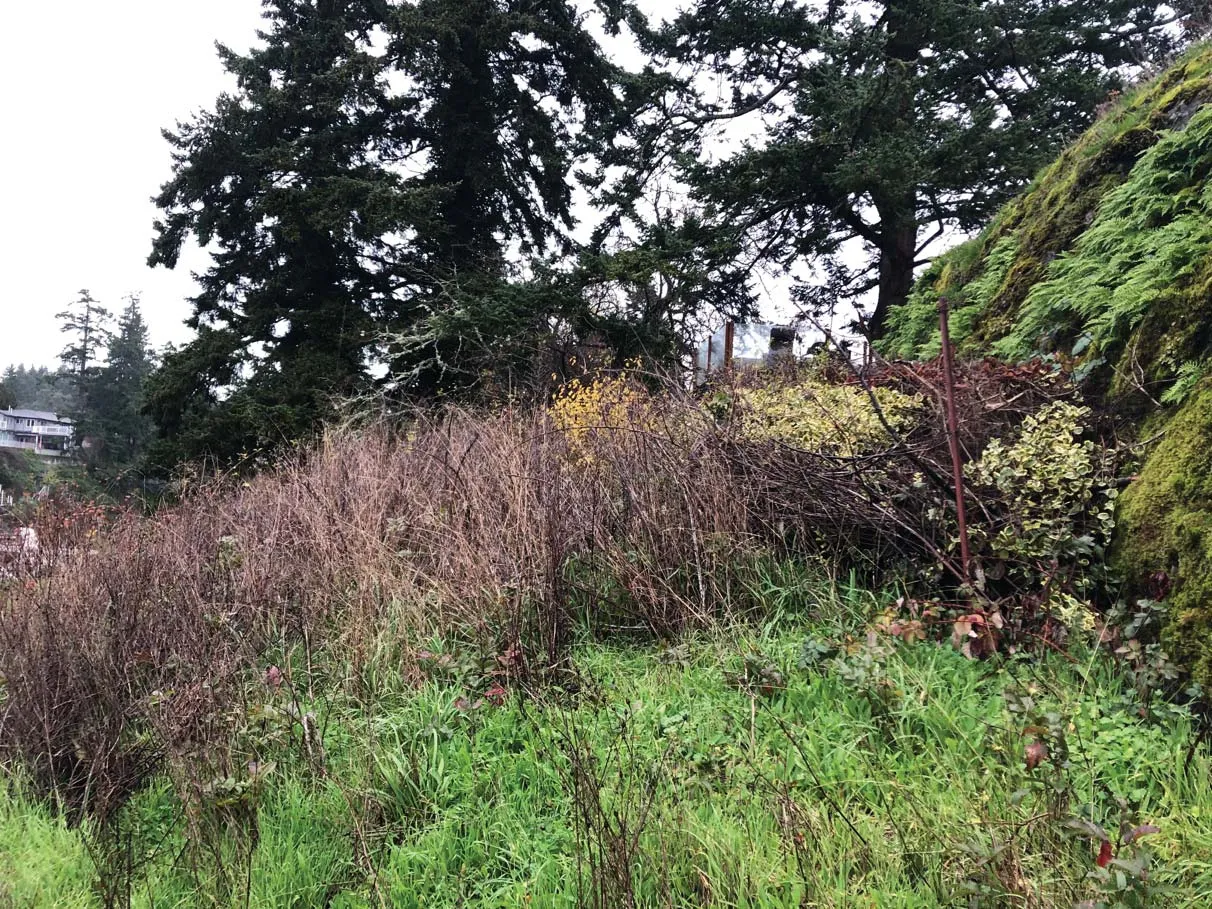
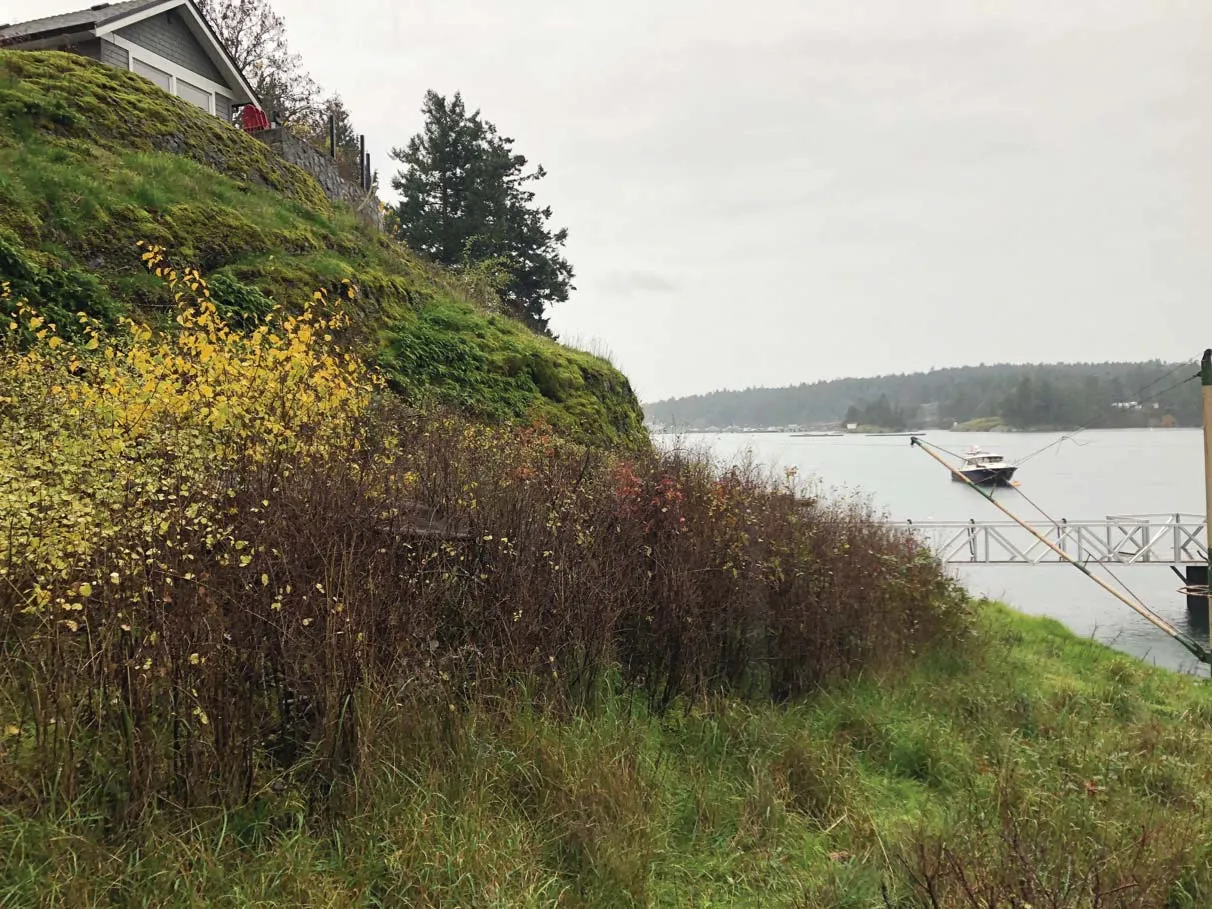
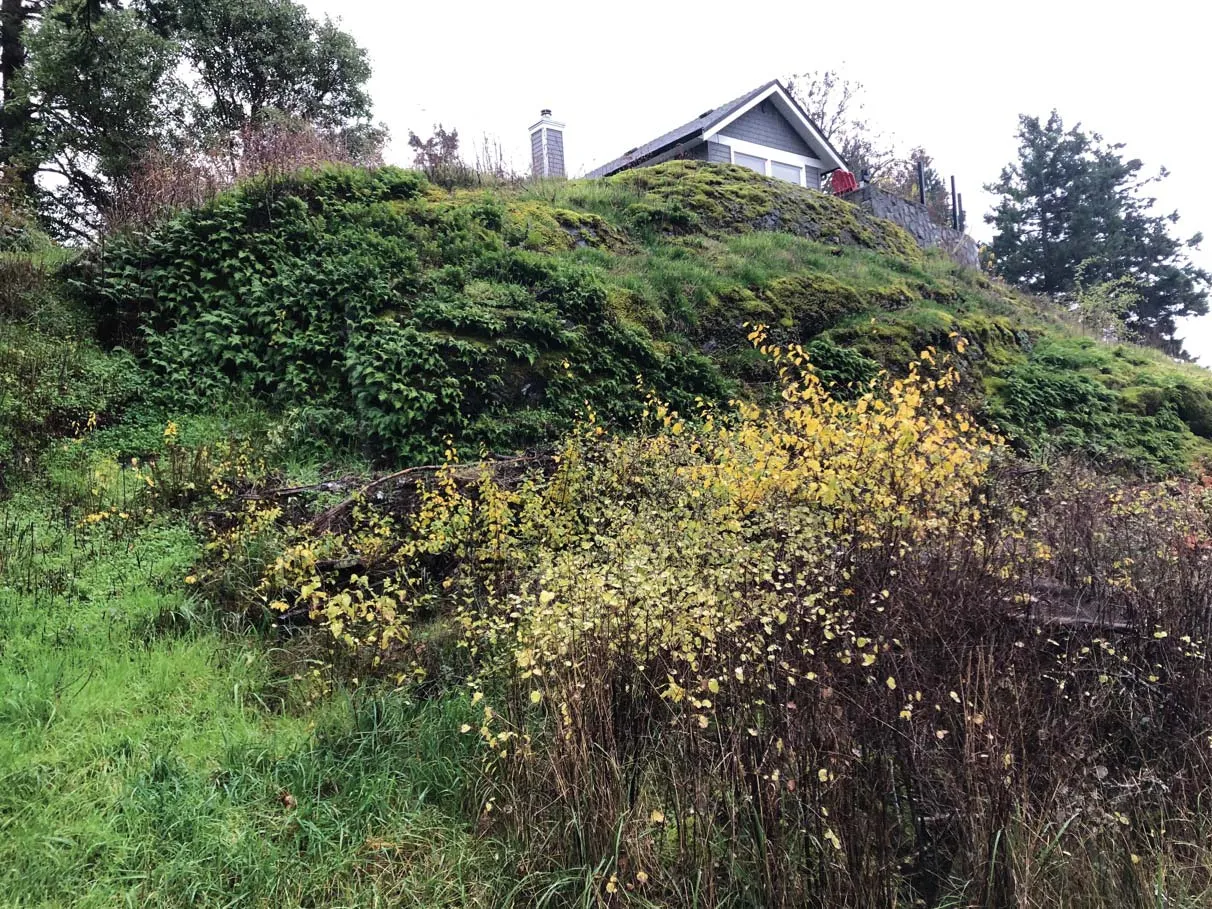
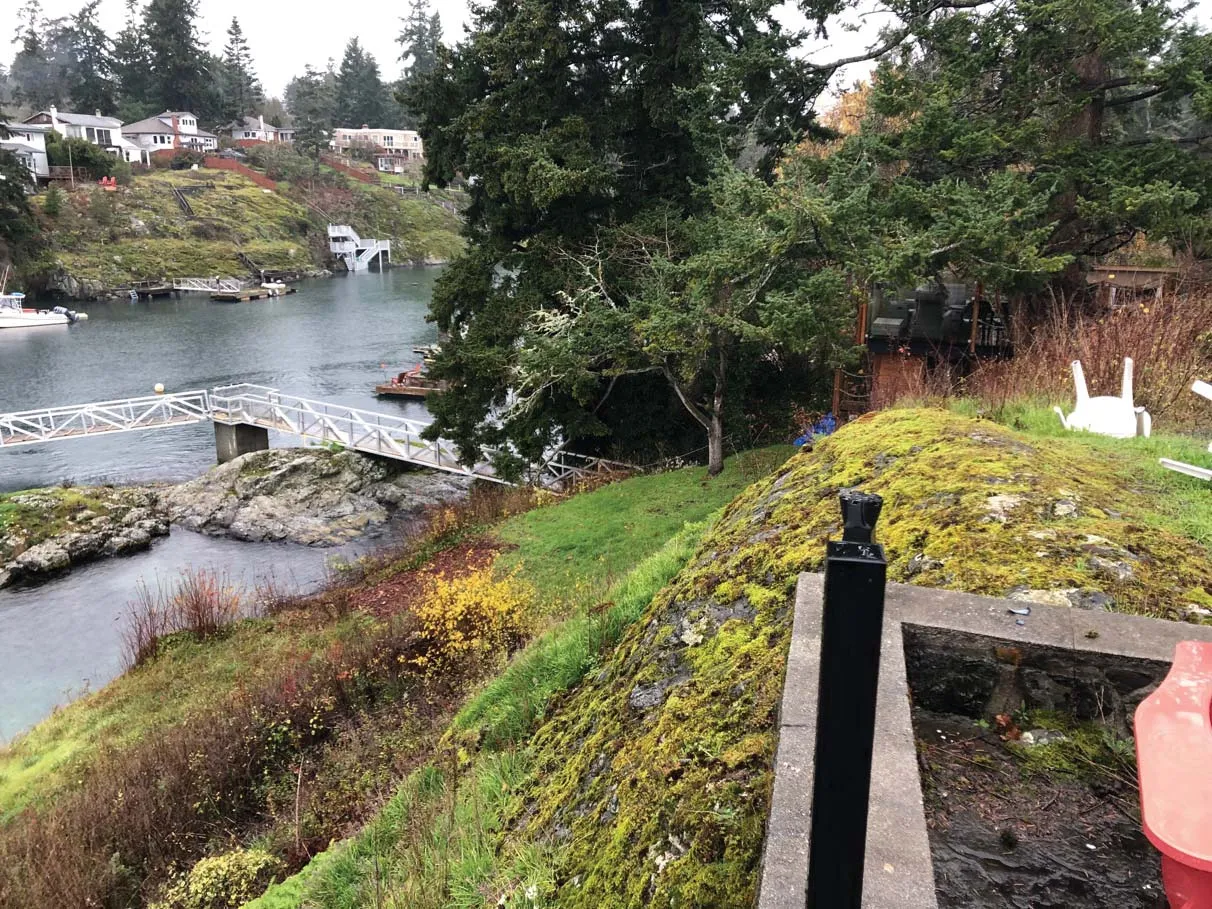
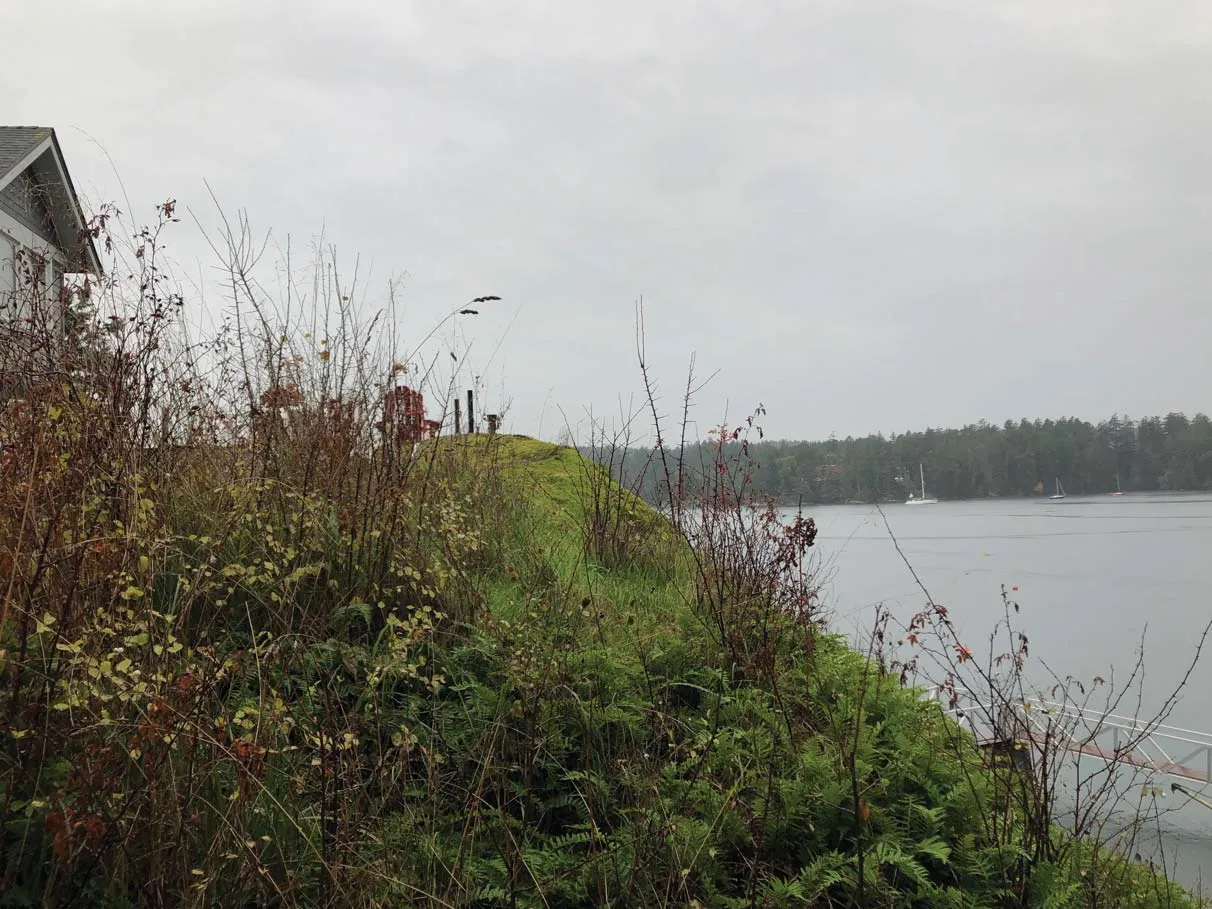
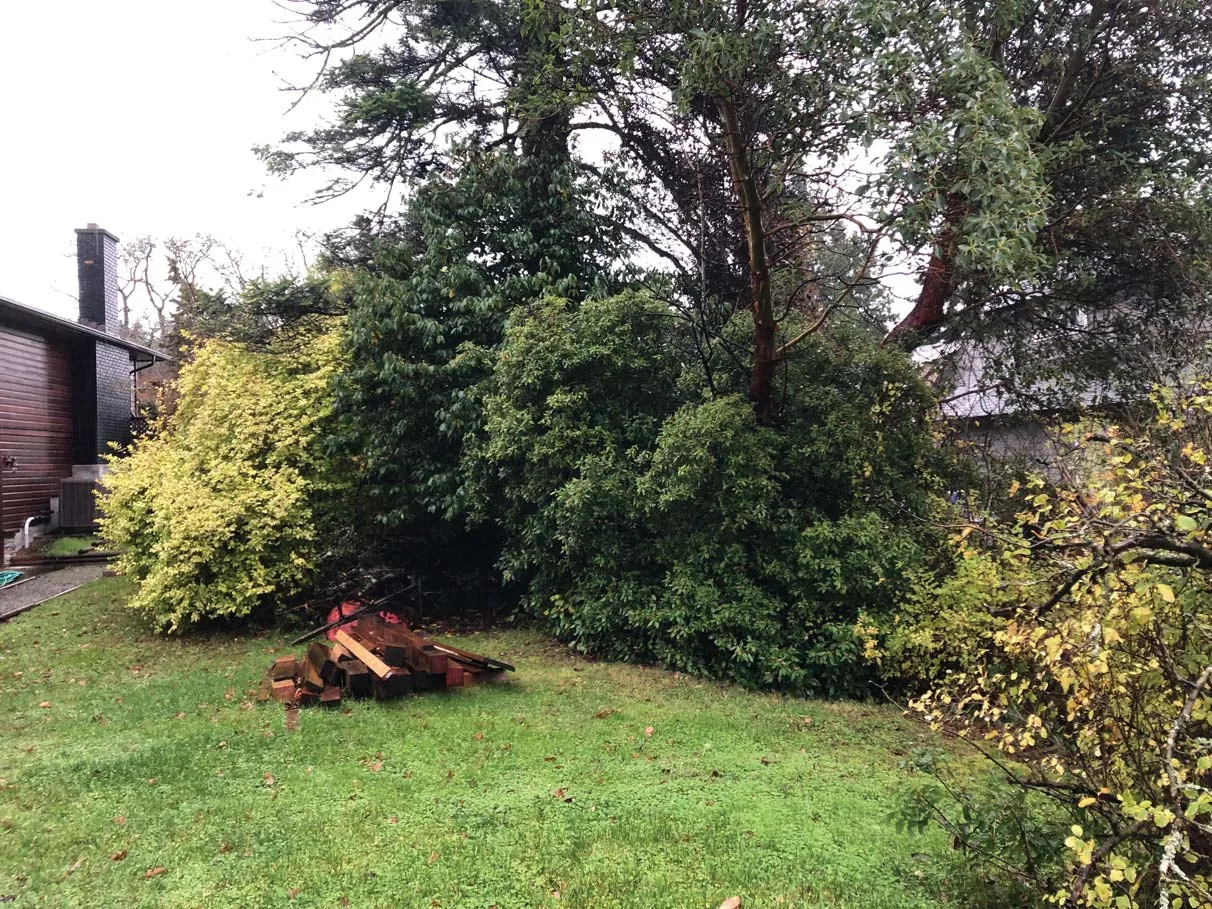
The property has been historically developed with partial clearing, landscaping and a patio. Within the SDPA, there is a steep rocky outcrop slope, a boat lift, and extensive establishment of ornamental and invasive, non-native species, along with some native plant species (Photos 1-7).
The vegetation consists of primarily invasive non-native species agricultural grasses, periwinkle (Vinca sp.), English ivy (Hedra helix), Himalayan blackberry (Rubus armeniacus), laurel-leaved daphne (Daphne laureola), dove’s foot geranium (Geranium molle), herb-robert (Geranium robertiantum), California poppy (Eschscholzia californica) and an ornamental flower, likely blue bells (Hyacinthoides sp.), as well as and other ornamental and weedy species. Native species include rocky outcrops with licorice fern (Polypodium glycyrrhiza), stonecrop (Sedum sp.), and mosses, and the lower, less steep area, with a large patch of snowberry (Symphoricarpos alba), which is in poor health, with interspersed Nootka rose (Rosa nutkana), oceanspray (Holodiscus discolor), dull Oregon grape (Mahonia nervosa). There is a large pile of yard waste within the SDPA.
No rare species were observed and the season is not the optimal time to observe this type of vegetation, however, the disturbed nature and dominance of invasive, non-native species indicates that it is unlikely for rare species to be present at the site.
Site Plan & Side Elevation
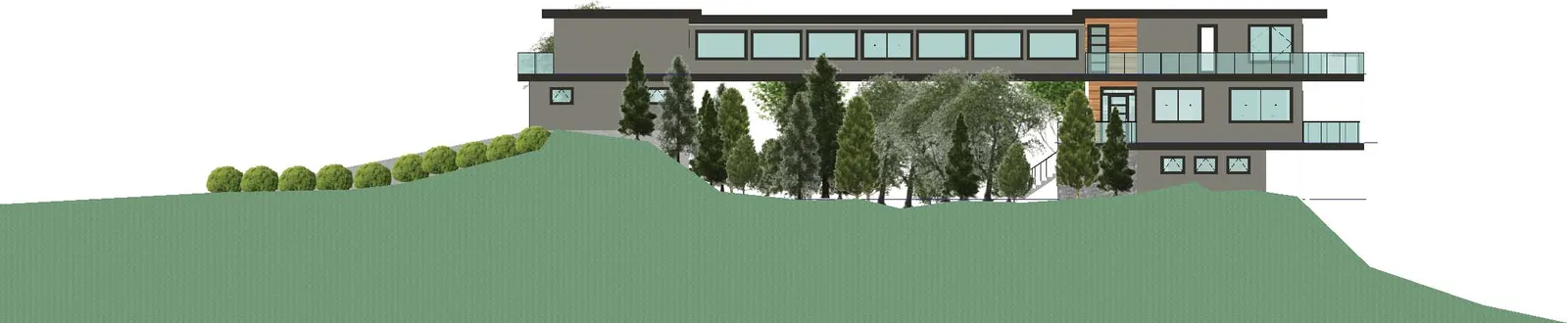
[Figure 1. Site Plan.]
Environmental Impacts and Recommendations
The owner’s proposed works within the SDPA will result at the maximum in the removal of 0.5 m² of native vegetation (Figure 1):
- 4 supports (footprint of approximately 1’ x 1’ each) for the overhanging portion of the house and deck
The overhanging portion of the house and deck are not expected to result in any changes to the ecological condition of the SDPA, because they will be quite high above the ground level as it drops off steeply, allowing light and rainfall to reach the existing vegetation.
The owner is proposing to offset the impact of the approx. 0.5 m² removal of native species and the overhanging building by removing the pile of yard waste, as well as removing invasive species and planting a minimum of 5 m² of native vegetation within the SDPA (Figure 1). Plants are recommended at a minimum of 4 - 1 gallon pots per m² or 6 – 10 cm pots per m². Planting species, sizes and numbers are included in Table 1.
Table 1. Vegetation for planting in 5 m² compensation planting area
| Common Name | Scientific Name | Number & Size |
|---|---|---|
| Pearly Everlasting | Anaphalis margaritacea | 3 - 1 gallon |
| Sea Thrift | Armeria maritima | 6 - 10 cm |
| Sea Blush | Plectritis congesta | 12 - 10 cm |
| Oceanspray | Holodiscus discolor | 3 – 1 gallon |
| Mock Orange | Philadelphus lewisii | 3 – 1 gallon |
| Red-flowering Currant | Ribes sanguineum | 3 – 1 gallon |
(substitutions must be reviewed and approved by the RPBio)
The plants should be planted to BC Landscape Standards including:
- Certified weed-free top soil, up to 30 cm, depending on native soil conditions after invasive species are cleared
- 10cm of composted, certified weed-free mulch applied after planting
- irrigation for a minimum of 2 growing seasons (water deeply twice per week)
- ongoing weeding and invasive species removal
In order to improve the ecological condition of the SDPA beyond what is required to compensate for the native vegetation removal for the posts, it is recommended that the owner continue to manage invasive species and plant native species. Some suggested species are in Table 2, other suitable species may be available at native plant nurseries such as Saanich Native Plants (www.saanichnativeplants.com) or Streamside Native Plants (www.streamsidenativeplants.com), these are also excellent resources for selecting other native plants for landscaping the SDPA.
Table 2. Suggested native species for additional planting in the SDPA.
| Common Name | Scientific Name |
|---|---|
| Nodding Onion | Allium cernuum |
| Pearly Everlasting | Anaphalis margaritacea |
| Sea Thrift | Armeria maritima |
| Woolly Sunflower | Eriophyllum lanatum |
| Coastal Strawberry | Fragaria chiloensis |
| Sea Blush | Plectritis congesta |
| Oceanspray | Holodiscus discolor |
| Mock Orange | Philadelphus lewisii |
| Red-flowering Currant | Ribes sanguineum |
| Nootka Rose | Rosa nutkana |
| Common Snowberry | Symphoricarpos albus |
The possible environmental impacts of the house construction work (installing supports for the overhang), in an area adjacent to the marine environment are: erosion of bare soil, sedimentation of the marine environment, petroleum spills and damage to existing indigenous plant species onsite.
These potential impacts are minimised by the following Best Management Practices:
- clearly marking and protecting the SDPA boundary (e.g. orange snow fencing)
- providing clear instructions to construction contractor and crew, and landscaping contractor of native plants to be retained and Best Management Practices outlined in this letter;
- if possible, locate the overhang supports not on areas of native licorice fern and moss.
- take care in installing the supports to not trample native vegetation in the SDPA
- timing all works, in particular excavations, and topsoil additions within forecasted dry weather;
- mulching or otherwise covering bare soils (e.g. tarps or poly for temporary covering) immediately;
- ensuring spills to the marine environment are avoided by:
- checking machinery for oil and gas leaks;
- providing spill containment for any generators or pumps (purpose-built trays or plastic bins);
- providing Spill Kits onsite for any machinery at work within 30 m of the High Water Mark and ensuring operators are trained in their use;
- installing erosion and sediment control measures for the house construction (e.g. sediment fencing) to prevent sediment laden runoff from entering the SDPA or marine environment;
- Environmental Monitor to oversee construction activities, including (but not limited to)
- pre-construction meeting
- project start up
- extreme rain events
- periodically throughout the construction period to ensure BMPs are followed
- monitoring plant survival for a 2-year period and replacing dead plants.
Summary
In summary, the footprint of the proposed work on-the-ground in the SDPA is very small (approx. 0.5 m²), and the proposed overhang is not expected to cause negative impacts to the SDPA. Constructing the house adjacent to SDPA, with an overhanging portion allows a large area of vegetation and trees in the centre of the property to be retained (Photo 8). If invasive species removal is conducted, the compensation planting plan is installed as proposed, and the house supports are installed using best management practices, there are no adverse effects expected on the existing ecological condition of the SDPA. Additional invasive species management and planting of native species will result in an improvement upon the current condition of the SDPA. Invasive species on the property should continue to be controlled in conjunction with the planting maintenance.
Sincerely,
Lehna Malmkvist, MSc, RPBio (#1613)