Attachment 5. Biologist’s Report – Swell Environmental Consulting Ltd – May 26, 2017
An environmental review and mitigation plan regarding the impact of development on the Natural Watercourse and Shoreline Development Permit Area.
Christopher Walker
265 View Royal Ave. Victoria, BC V9B 1A6
26 May 2017
RE: Natural Watercourse and Shoreline Development Permit Area Review for 265 View Royal Ave, Victoria, BC, Town of View Royal
On 15 May 2017, Lehna Malmkvist, MSc, RPBio. of Swell Environmental Consulting Ltd. (Swell) visited the site at 265 View Royal Ave, in the Town of View Royal, review the existing site conditions and works proposed by the owner that are within the Town of View Royal’s Natural Watercourse and Shoreline Areas Development Permit Area (SDPA) (Figure 1). As per View Royal’s Schedule Q of the Official Community Plan (2011) Bylaw No. 811, the proposal was evaluated with the intent to minimise detrimental impacts to the shoreline. The Natural Watercourse and Shoreline Areas Development Permit Area is an area encompassing a 15-m from the natural boundary of the sea and is referred to as the SDPA in this letter.
Natural Watercourse and Shoreline Areas Development Permit Area, Bylaw No. 811
The View Royal Official Community Plan (OCP 2011) Bylaw No. 811, identifies the following Guidelines that apply to the Natural Watercourse and Shoreline Areas DPA:
- Development of riparian and shoreline areas should be limited and not negatively impact the ecological health of the immediate area or impede public access.
- Retention of existing healthy riparian and shoreline vegetation should be maximized with any paths, structures or other constructed areas sited to minimize impact on trees and sensitive areas.
- Restoration of riparian and shoreline vegetation and habitat, including removal of invasive species, is encouraged for all properties within this Development Permit Area.
- Development should result in a net increase in native vegetation in almost all circumstances including trees, shrubs and grasses.
- For shoreline areas heavily impacted by previous development, target the restoration of ecologically appropriate vegetation for an average 15m wide (minimum 5 m) shoreline zone over 50% of the shore length.
- Riparian and shoreline area development should sensitively manage storm water, focusing on infiltration and release of storm water in ways and quantities that mimics natural patterns, avoids scouring and erosion and results in storm water free from pollutants.
- The preservation and enhancement of native trees and shrub clusters that overhang the waters edge is strongly encouraged as these provide shade, protection and feeding habitat for fish and wildlife.
Proposed Works
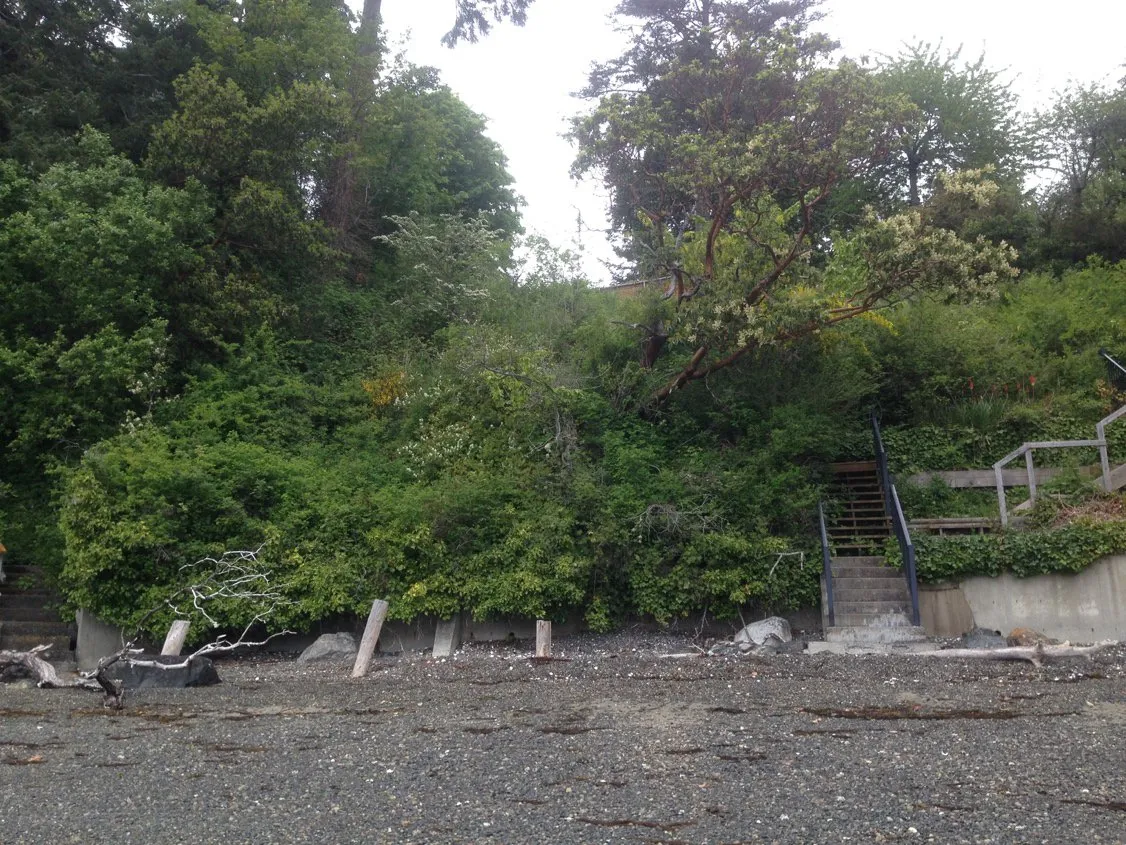
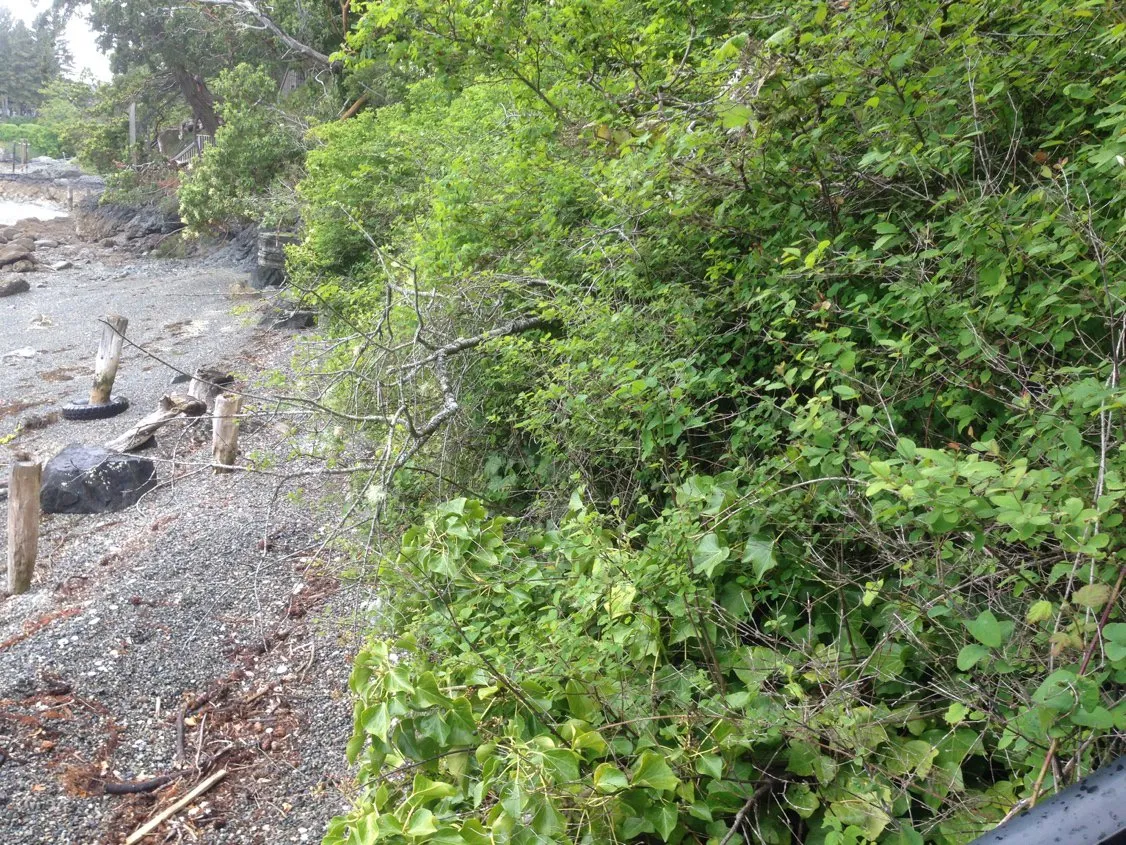
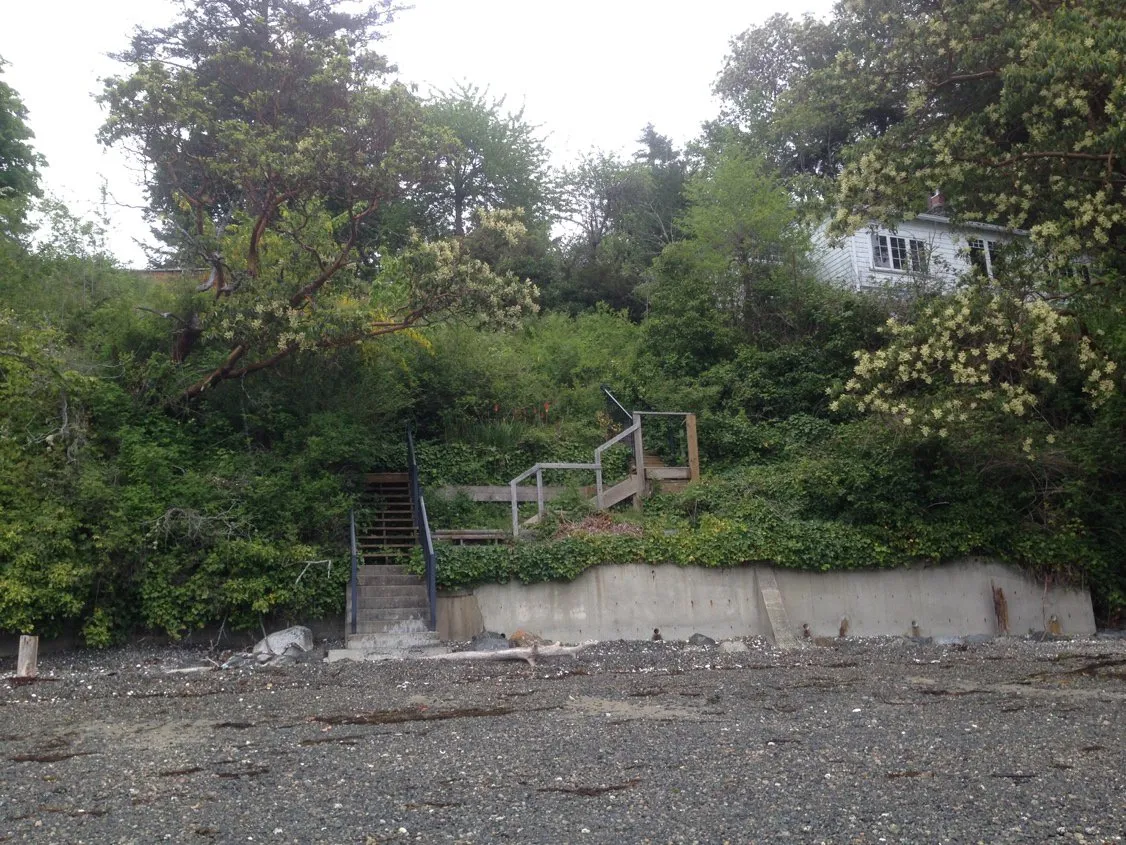
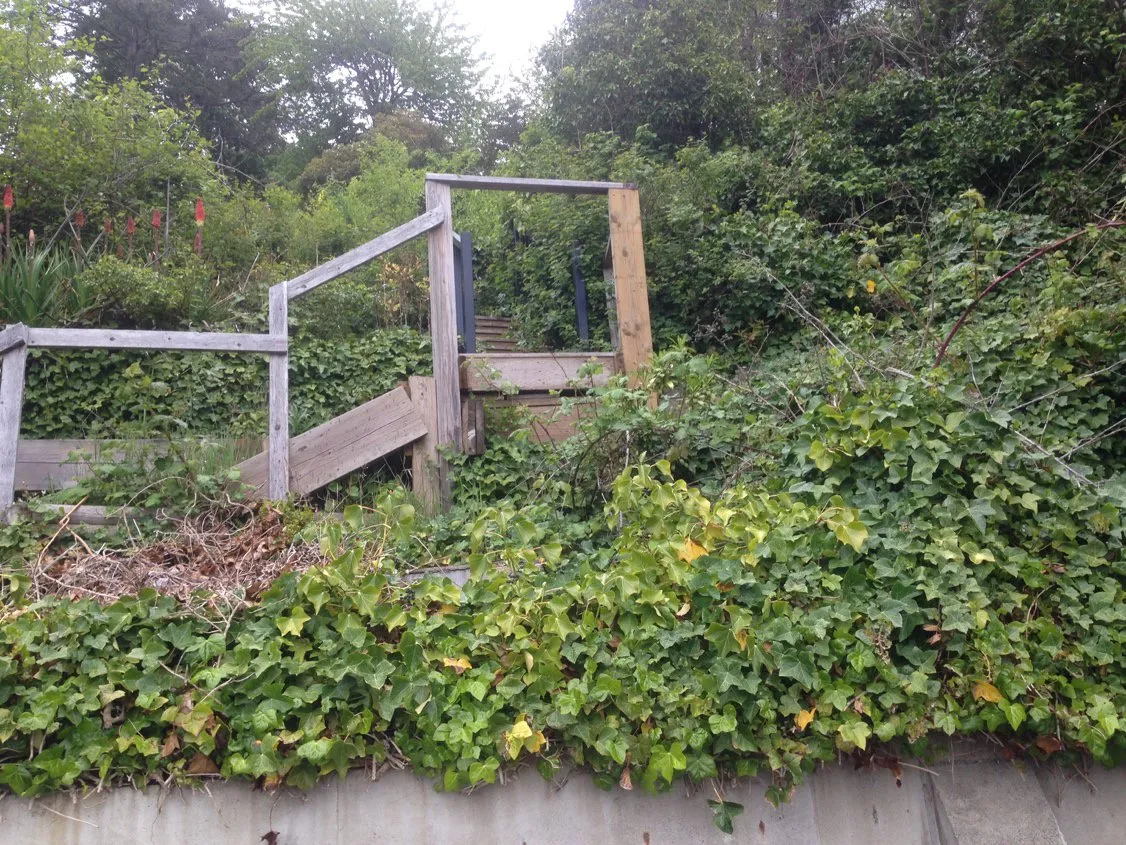
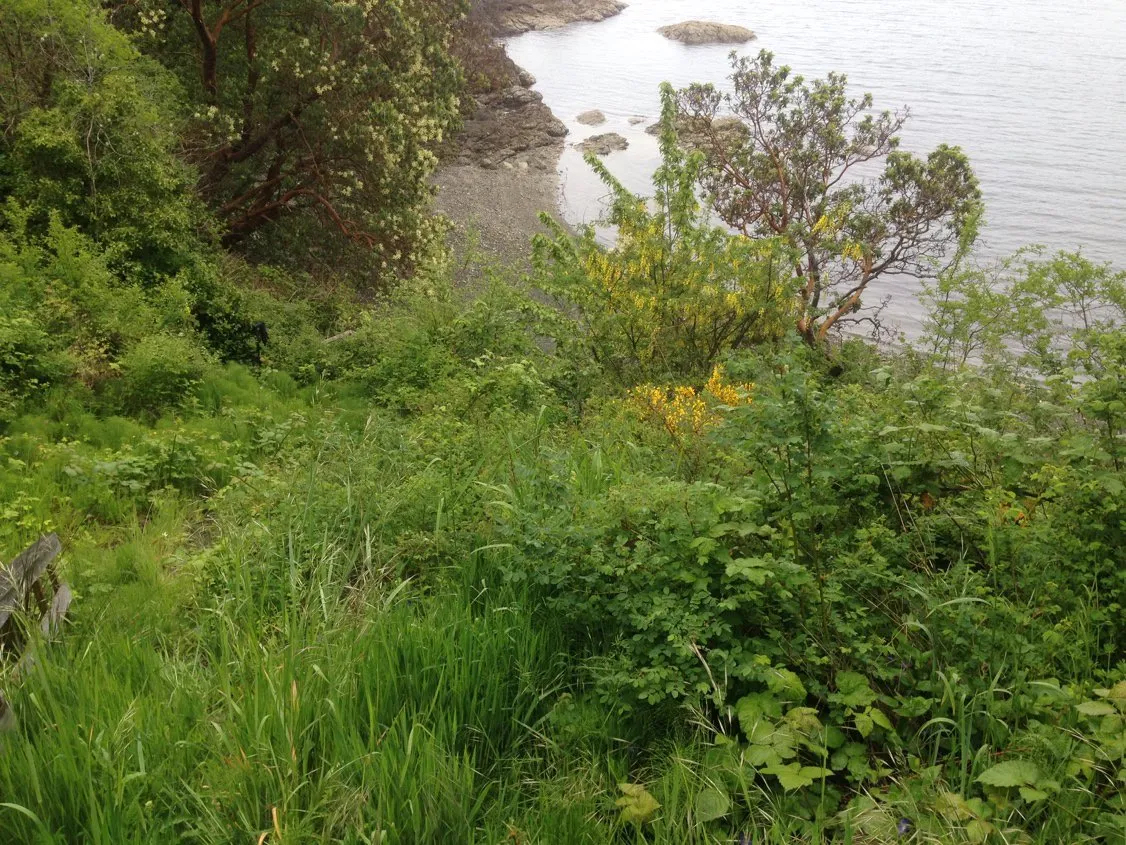
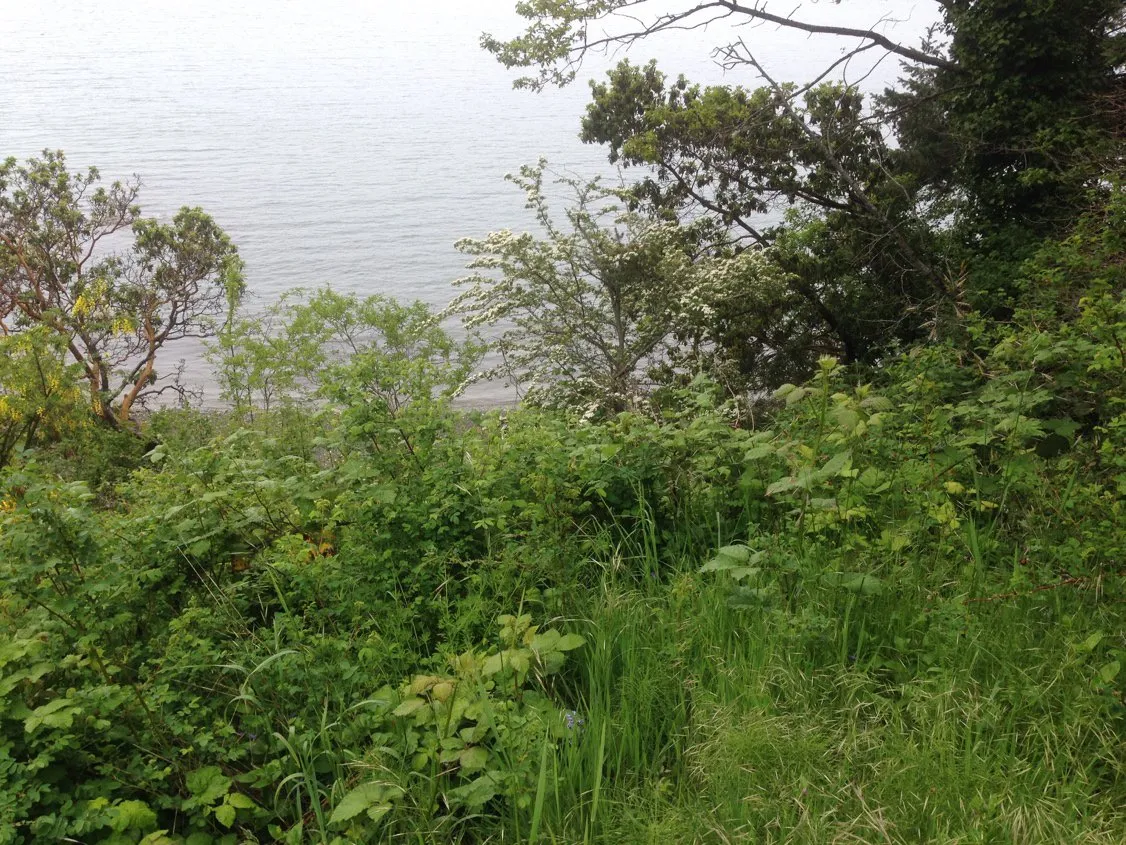
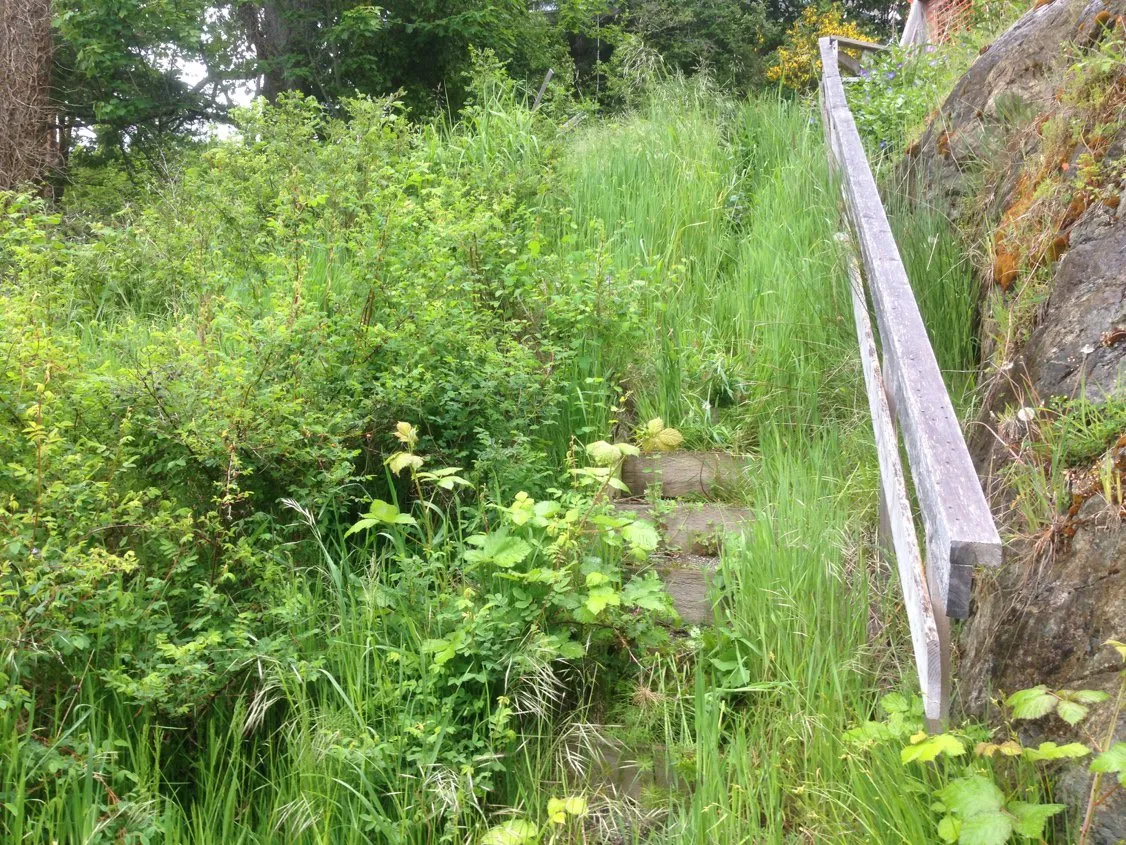
The owner is proposing to build a new single family home and associated infrastructure on the property. Within the SDPA, the proposed works are shown on Figure 1 and Photos 1-8 and include:
- Replacement of the existing walkway and stairs
- Surface runoff collection and infiltration area
- Small seating area (5m²) (over the infiltration area)
- Placement of boulders to stabilize soils, as needed
- Removal of non-native, invasive species
- Planting native species
Site Conditions
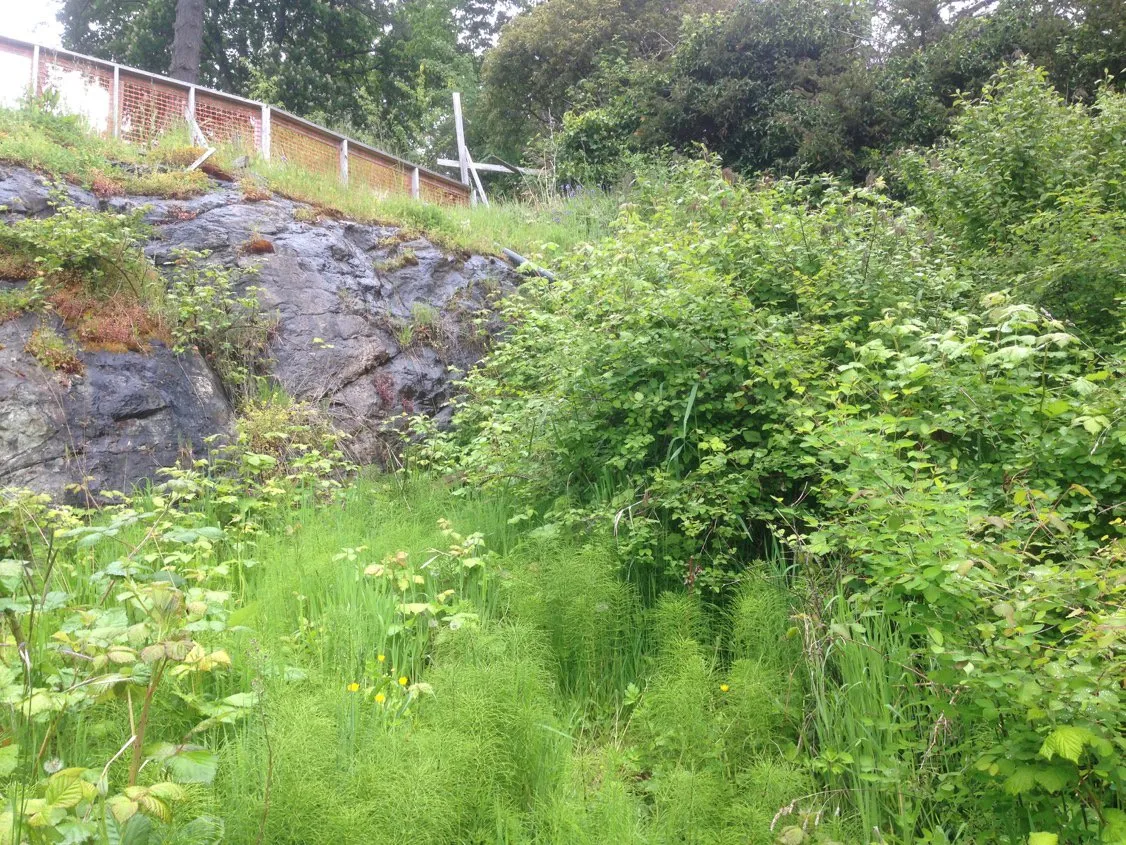
The property has been historically developed, and the previous house has been removed. Within the SDPA, there is a steep slope, with a pathway, stairs, and concrete sea wall, with remnant landscaping, and extensive establishment of ornamental and invasive, non-native species, along with some native plant species (Photos 1-6).
The vegetation consists of primarily invasive non-native species, English ivy (Hedra helix), Himalayan blackberry (Rubus armeniacus), periwinkle, (Vinca sp.) agricultural grasses, laurel-leaved daphne (Daphne laureola), Scotch broom (Cystisus scoparius), golden chain (Laburnum sp.), English hawthorn (Crategeus laevigata), thistles, and other weedy species. Ornamentals such as fruit trees, blue bells and red hot poker are present in former garden areas. And native species include: arbutus (Arbutus menziesii), shorepine (Pinus contorta), snowberry (Symphoricarpos alba), salal (Gaultheria shallon), Nootka rose (Rosa nutkana), oceanspray (Holodiscus discolor), saskatoon (Amelanchier alnifolia), and horsetail (Equisetum arvense).
Environmental Impacts and Recommendations
The owner’s proposed works within the SDPA will result in the removal of a small amount of native vegetation in two areas (Figure 1):
- Drainage infiltration / seating area – approx. 3 m² of oceanspray, snowberry and horsetail
- Replacement of stairs and footpath – approx. 2 m² of Nootka rose and snowberry
The remaining stair, path and drainage installation will be located where non-native, invasive species are currently located. All areas of non-native, invasive species that are disturbed during installation of the path, stairs and drainage will be replanted with native species, such as those listed in Table 2.
The owner is proposing to offset the impact of the approx. 5 m² incursion by removing invasive species and planting a minimum of 10 m² of native vegetation within the SPDA, in the areas closest to the shoreline, to help develop overhanging vegetation and habitat along the shore (Figure 1). Plants are recommending at 4 shrubs per m². Planting species, sizes and numbers are included in Table 1.
Table 1. Vegetation for planting in 10 m² compensation planting area.
| Common Name | Scientific Name | 1 gallon pots |
|---|---|---|
| saskatoon | Amelanchier alnifolia | 5 |
| red-osier dogwood | Cornus stonifera | 5 |
| salal | Gaultheria shallon | 5 |
| oceanspray | Holodiscus discolor | 5 |
| sword fern | Polystichum munitum | 3 |
| thimbleberry | Rubus parviflourus | 5 |
| salmonberry | Rubus spectablis | 5 |
| Scouler's willow | Salix scouleriana | 2 |
| common snowberry | Symphoricarpos albus | 5 |
The plants should be planted to BC Landscape Standards including:
- Certified weed-free top soil, up to 30 cm, depending on native soil conditions after invasive species are cleared
- 10cm of composted, certified weed-free mulch applied after planting
- installation of bio-degradable coco-fibre mats to retain soil and plants on steep slopes (>1:1)
- irrigation for a minimum of 2 growing season (water deeply twice per week)
- ongoing weeding and invasive species removal
In order to improve the ecological condition of the SDPA beyond what is required to compensate for the native vegetation removal, it is recommended that the owner continue to manage invasive species and plant native species. Some suggested species are in Table 2, other suitable species may be available at native plant nurseries such as Saanich Native Plants (saanichnativeplants.com) or Streamside Native Plants (streamsidenativeplants.com). All areas of non-native, invasive species that are disturbed during installation of the path, stairs and drainage will be replanted with native species, such as those listed in Table 2. All species planted in the SDPA will be native plants.
The proposed planting of native plants, and a greater general diversity of plant types from the existing condition offers an increase in habitat types for songbirds and other wildlife, as well as for local pollinators such as insects and hummingbirds.
Table 2. Suggested native species for planting in the SDPA.
| Common Name | Scientific Name |
|---|---|
| saskatoon | Amelanchier alnifolia |
| red-osier dogwood | Cornus stolonifera |
| black hawthorn | Crataegus douglasii |
| salal | Gaultheria shallon |
| oceanspray | Holodiscus discolor |
| black twinberry | Lonicera involucrata |
| Indian plum | Oemleria cerasiformis |
| mock orange (Coastal) | Philadelphus lewisii 'Gordianus' |
| sword fern | Polystichum munitum |
| Pacific Rhododendron | Rhododendron macrophyllum |
| red flowering currant | Ribes sanguineum |
| baldhip rose | Rosa gymnocarpa |
| nootka rose | Rosa nutkana |
| clustered wild rose | Rosa pisocarpa |
| thimbleberry | Rubus parviflourus |
| salmonberry | Rubus spectablis |
| Hooker's willow | Salix hookeriana |
| Pacific willow | Salix lucida (lasiandra) |
| Scouler's willow | Salix scouleriana |
| Sitka willow | Salix sitchensis |
| red elderberry | Sambucus racemosa |
| common snowberry | Symphoricarpos albus |
The possible environmental impacts of the landscaping work (drainage infrastructure, path and stair replacement, and invasive species management), in an area adjacent to the marine environment are: erosion of bare soil, sedimentation of the marine environment, petroleum spills and damage to existing indigenous plant species onsite and adjacent. These potential impacts are minimised by the following Best Management Practices:
- timing all works including excavations, and topsoil additions within the dry season and specifically with forecasted dry weather;
- on steep slopes (>1.1:1) installing biodegradable coco-fibre mats over bare soils prior to planting
- mulching or otherwise covering bare soils immediately;
- ensuring petroleum releases to the marine environment are avoided by:
- checking machinery for oil and gas leaks;
- providing spill containment for any generators or pumps (purpose-built trays or plastic bins);
- providing Spill Kits onsite for any machinery at work within 30 m of the High Water Mark and ensuring operators are trained in their use;
- clearly marking the existing indigenous plants and their surroundings with flagging tape and/or a protective barrier that will still allow access to individual plantings;
- providing clear instructions to landscaping crews, including drawings, of plants to remain and Best Management Practices outlined in this letter;
- installing erosion and sediment control measures for the house construction (e.g. sediment fencing) to prevent sediment laden runoff from entering the SDPA or marine environment;
- engaging an Environmental Monitor to oversee construction activities, including (but not limited to) start up, extreme rain events, and periodically throughout the construction period to ensure BMPs are followed; and
- monitoring plant survival for a 2-year period and replacing dead plants.
In summary, if invasive species removal and the compensation planting plan is installed as proposed, and the path, stair and drainage infrastructure is installed using best management practices, there are no adverse effects expected on the existing ecological condition of the SDPA. Additional invasive species management and planting of native species will result in an improvement upon the current condition of the SDPA. Invasive species on the property should continue to be controlled in conjunction with the planting maintenance.
Please do not hesitate to contact me with any questions you may have.
Sincerely,
Lehna Malmkvist, MSc, RPBio (#1613)
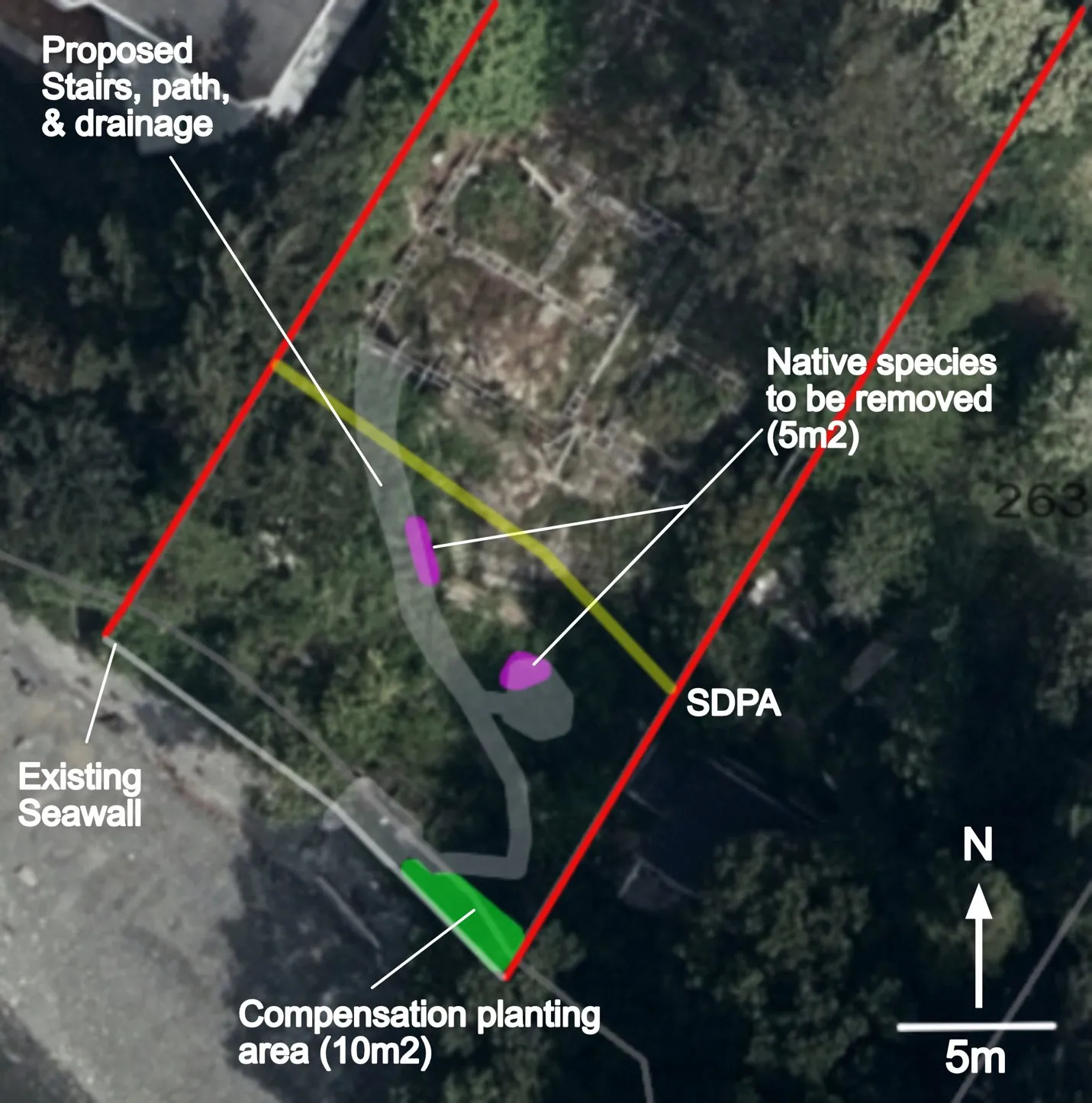
Figure 1. SDPA, footprint of proposed path, stairs and drainage, native plant removal and compensation planting. For additional details on path, stairs and drainage plan, see Christopher Developments’ 265 View Royal Ave – Development Permit Application drawings.
Document Images
(1)