STAFF REPORT: Late Payment Penalties on Property Taxes
A report from the Director of Finance clarifying current practices and legal constraints regarding the 10% late payment penalty on property taxes.
TOWN OF VIEW ROYAL COUNCIL REPORT
TO: Council FROM: D. Christenson, Director of Finance DATE: October 25, 2021 MEETING DATE: November 2, 2021
Late Payment Penalties on Property Taxes
RECOMMENDATION:
THAT the report from the Director of Finance dated October 25, 2021, be received.
CHIEF ADMINISTRATIVE OFFICER’S COMMENTS:
I concur with the recommendation.
PURPOSE OF REPORT:
To clarify the current practice in determining late payment penalties on property taxes.
BACKGROUND DISCUSSION:
With the growing prevalence of electronic payment as the preferred method to pay property taxes to the Town, there is a need to clarify current practice around the application of the 10% penalty for late payment.
Legislation
Penalties on taxes are imposed under provincial legislation and may only be waived under ministerial order. Revenue from penalties is municipal general revenue, as penalties essentially become current year property taxes when levied.
The Community Charter section 234 and Municipal Tax Regulation 426/2003 requires the Municipal Collector (the Director of Finance) to impose a 10% penalty on property taxes remaining unpaid after July 2 each year and stipulates those penalties on unpaid taxes become part of the property taxes due for the current year. The Community Charter (section 193) further stipulates that a council may only provide an exemption from property taxes if expressly authorized by the Community Charter or another Act (permissive tax exemptions, for example). Community Charter section 781 indicates that the power to manage and dispose of assets, including taxation revenue, may be conferred by the minister, if he/she considers it necessary or advisable.
Clearly, legislation would not permit Council to arbitrarily waive a properly levied property tax penalty.
The legislation does not provide details about how a municipality determines when a payment is received.
CURRENT PRACTICE
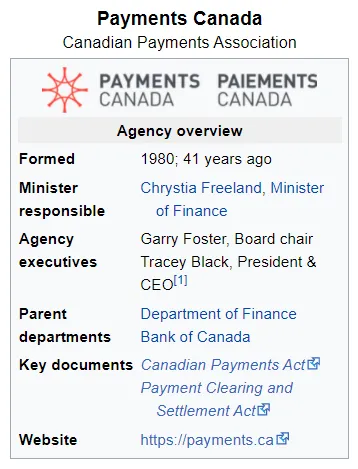
Online or telephone banking is only one of many ways View Royal taxpayers can pay their property taxes. Each payment method varies in terms of the amount of time required to be delivered to View Royal and be recorded as paid in the payor’s account. Online or telephone banking payments are governed by Payments Canada and the Town’s agreement with its bank. Under Payments Canada rules and View Royal’s banking agreement, View Royal must record the payment to the payor’s credit as of the date the payment was made, regardless of when the notification from the bank is received or processed, or when the funds are deposited to View Royal’s bank account. Payments made on or prior to the due date will reduce the outstanding amount and avoid the 10% penalty.
If an error occurred in the processing of a payment, and that error resulted in a penalty that would not have otherwise been levied, the Director of Finance will authorize the reversal of the penalty. For example, if accepted documentation indicated the payment date was on or before the due date, but the payment was recorded as late in error, the penalty would be reversed.
Time in transit
Each payment method may take a different amount of time between when the payment leaves the hands of the sender and is received by View Royal. This is the “time in transit”.
| Payment method | Approximate time in transit | Recorded payment date |
|---|---|---|
| Canada Post mail | Typically, 3-7 days | Same day as received |
| Courier | Typically, 1-2 days, depending on delivery service purchased | Same day as received |
| In-person delivery | None | Same day as received |
| After-hours drop box at Town Hall | Hours between drop-off and start of next business day | Next business day |
| Post-dated cheque received prior to due date | None | Date stated on cheque |
| Online/telephone banking | Typically, 1-2 business days, depending on bank | Date transaction was originated as shown on EDI* file |
*EDI: Electronic Data Interchange: the transfer of structured data, by agreed message standards, from one computer system to another without human intervention. See Electronic data interchange - Wikipedia
While each payment method may result in a recorded payment date that varies from the date the funds are deposited to View Royal’s bank account or have cleared, the deposit or clearing date is irrelevant to the question of the penalties since it is not used to determine the payment date.
Online/telephone banking transactions are like cheques sent by mail, in that an intermediary is involved in the process, over which neither the taxpayer nor View Royal has control. Under the current practice, both payment methods must be initiated some time prior to the due date to allow for sufficient “in transit” time. Both have verifiable dates associated with specific events. The mailed or couriered payment is receipted the same day it is received by the Town. The online/telephone banking transaction is shown in an EDI file with the transaction date in accordance with the financial institution processing cut-off times and Payments Canada rules. These processing times may vary between financial institutions but are typically dated the same or next business day. Taxpayers are informed of the processing time required by their financial institution when they make the payment (see note on Attachment 1: Sample of online banking transaction confirmation (CIBC) stating “Transactions submitted after 6 p.m. ET will be processed in 2 business days”).
Document Authentication
The current system is designed to eliminate ambiguity or “grey areas” when determining the effective payment date, because of the implication for penalties. Removing staff from a position of having to make a judgement call on whether a payment was received in time to avoid a penalty ensures a system of objectivity, consistency, and reliability, regardless of who the taxpayer is or the implications of the decision.
View Royal staff rely on authentic sources when determining the payment date for each payment method. The EDI file is the authentic source of information for online/telephone banking payments because it is downloaded directly from the banking system under secure and multi-factor authentication protocols, preventing access or manipulation by unauthorized individuals.
Other forms of documentation may be considered less reliable – screen grabs are images that can be photo-shopped. Electronic documents that are not digitally signed can be easily edited and modified with readily available software. Further, a screen grab of an online banking transaction cannot be solely relied on because the transaction may be subsequently cancelled, and reentered on a later date, resulting in the appearance of an on-time payment that was in fact made too late to avoid the penalty. Attachment 1 Sample of online banking transaction confirmation (CIBC) includes the statement “A bill payment can be deleted until 9:30 p.m. ET on the day it’s scheduled to be made.” Staff do not have the resources to verify the authenticity of these sorts of documents.
Obligation to inform
If the practice was changed to accept the taxpayer’s documentation of electronic payment date rather than the EDI file transaction date, does View Royal have the obligation to confirm the payment initiation date with every transaction that is listed on the EDI file with a date later than the due date? For example, in 2021 there were 32 payments totaling $101,371 with payment dates on the EDI file of July 3, 4, and 5. These payments may have been initiated anytime between July 1 and July 5. The property tax system does not contain property owners’ phone numbers so contacting each would be difficult at best and would likely lead to inconsistent application of the policy. Relying only on a taxpayer’s initiative to notice and complain about a penalty may marginalize other taxpayers with similar circumstances who are unaware of the opportunity to challenge the tax penalty.
Retroactivity
If the practice was changed to accept the taxpayer’s documentation of electronic payment date rather than the EDI file transaction date, how far back in time should View Royal consider penalty reversal? Additionally, up until what time in the future might a taxpayer challenge the application of a penalty? A clear statement of policy would need to be developed to inform the taxpayer and guide staff in administering these requests. In any case, there is likely to be individuals who miss the window of opportunity for challenging the tax penalty, again resulting in an advantage to those who are paying attention.
Other municipalities
During the week of October 18-22, 2021, Finance staff distributed a survey to determine how other municipalities determine the effective payment date for methods of payment that involve time in transit between the sender and the municipality. The survey and results are attached as Attachment 2 to this report. Please note that this survey is not likely a full representation of all municipalities in British Columbia and no effort to verify the results was undertaken. It is meant simply to provide a likely indication of how similar View Royal’s practices are to those of other municipalities.
Of the 22 municipalities who responded (including View Royal), more than 80% rely on the EDI transaction date as the payment date. While some municipalities may accept other less reliable documentation to determine payment date, the majority do not. Most (more than 70%) of responding municipalities do not accept postmarks or courier receipt date as payment date. View Royal’s practice of emptying the drop box at the front entrance early the morning following the tax due date and considering these remittances as “on time” matches that of most of the survey respondents.
These results indicate that it is likely that View Royal’s current practices regarding the determination of the property tax payment date align with most municipalities in British Columbia.
Communication
Staff make every effort to inform View Royal property owners of the various options available to them to remit their property tax payment on time. A copy of the 2021 Property Tax Notice form is attached to this report as Attachment 3, with pertinent sections highlighted, including the statement that “it remains the owner’s responsibility to ensure all taxes are paid by the due date”, and under the heading “Online Payments” it states, “Please allow sufficient time for electronic delivery of your payment as it is due July 2, 2021.” Similar wording is reflected on View Royal’s website, and staff will continue to seek effective means of getting this message out.
ALTERNATIVES:
- Council may direct staff to develop a policy to guide the acceptance of alternative payment documentation as proof of payment date. In doing so, it should identify the time frame in which such documentation will be accepted in relation to the payment due date, assuming reliance on the taxpayer to provide such documentation.
- Council may direct staff to report on the implications of and process required to implement an alternative tax collection scheme in which there is more than one tax due date, and the penalties associated with each due date. In effect, an alternative tax scheme provides a “second chance” for the taxpayer to avoid a late payment penalty; however, there will be financial implications to View Royal in terms of delayed cash flow and additional processing effort and costs.
RECOMMENDATION:
THAT the report from the Director of Finance dated October 25, 2021, be received.
Attachment 1: Sample of online banking transaction confirmation (CIBC) Attachment 2: Property Tax Penalties Survey and Response Analysis Attachment 3: View Royal 2021 Property Tax Notice
Document Images
(4)