Environmental Development Permit Area Assessment and Remediation - 49 Tovey Crescent
Ecological assessment report from Aqua-Tex Scientific Consulting regarding the impact of development and invasive species removal.
To: Mike DePalma, Flintstones Construction From: Cori L. Barraclough, M.Sc., R.P. Bio., CBiol., MRSB, PMP - Aquatic Ecologist Wm. Patrick Lucey, M.Sc., R.P. Bio., CBiol., MRSB, - Sr. Aquatic Ecologist Date: February 5, 2020 Re: Environmental Development Permit Area Assessment and Remediation- 49 Tovey Crescent File: /Users/coribarraclough/Desktop/49 Tovey Cres Ecological Assessment 20200203.docx
This memo outlines the findings of our field review of the foreshore Development Permit Area at 49 Tovey Crescent on February 1, 2020. It includes recommendations for removal of invasive species and replanting of affected areas, per View Royal Development Permit Area Guidelines.
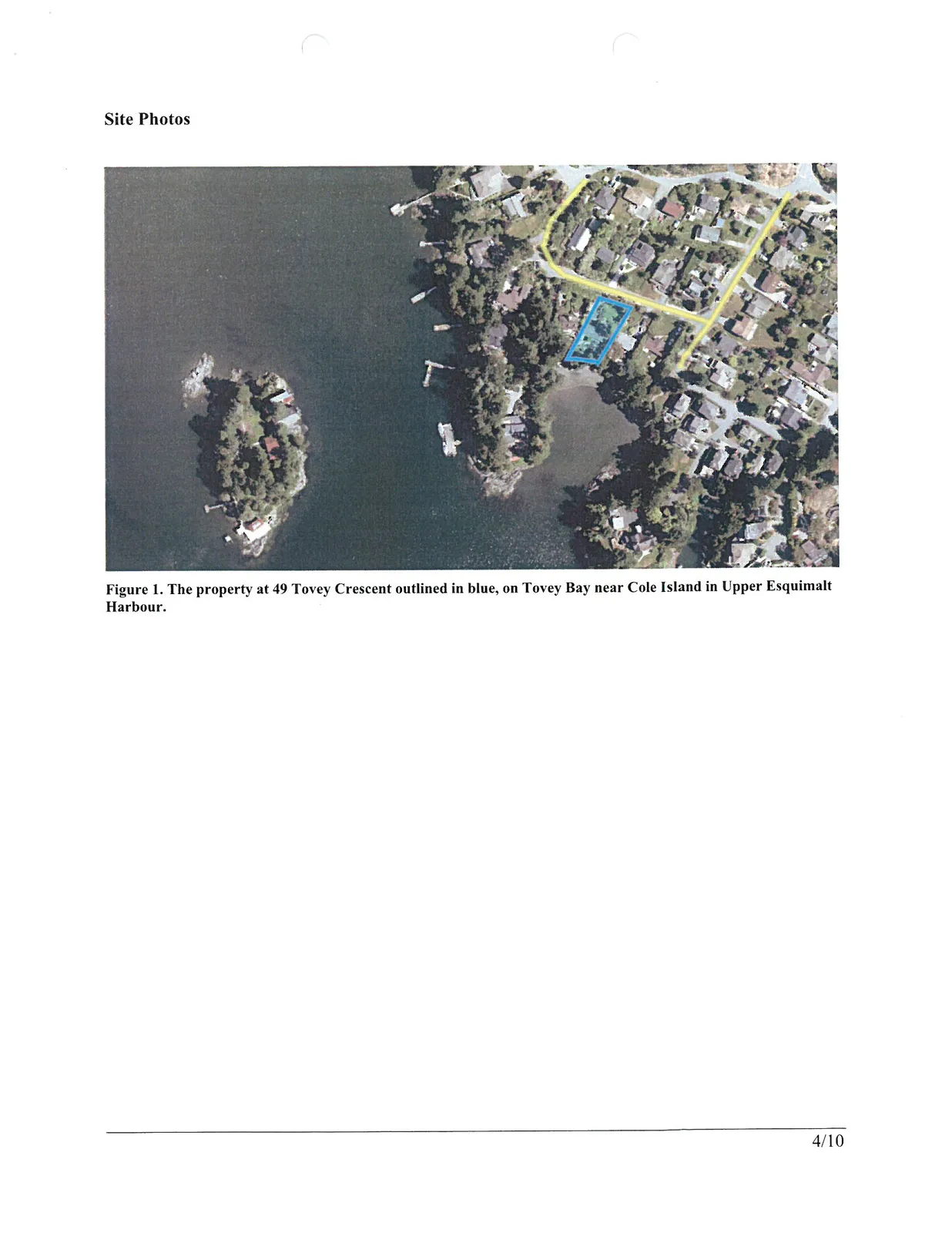
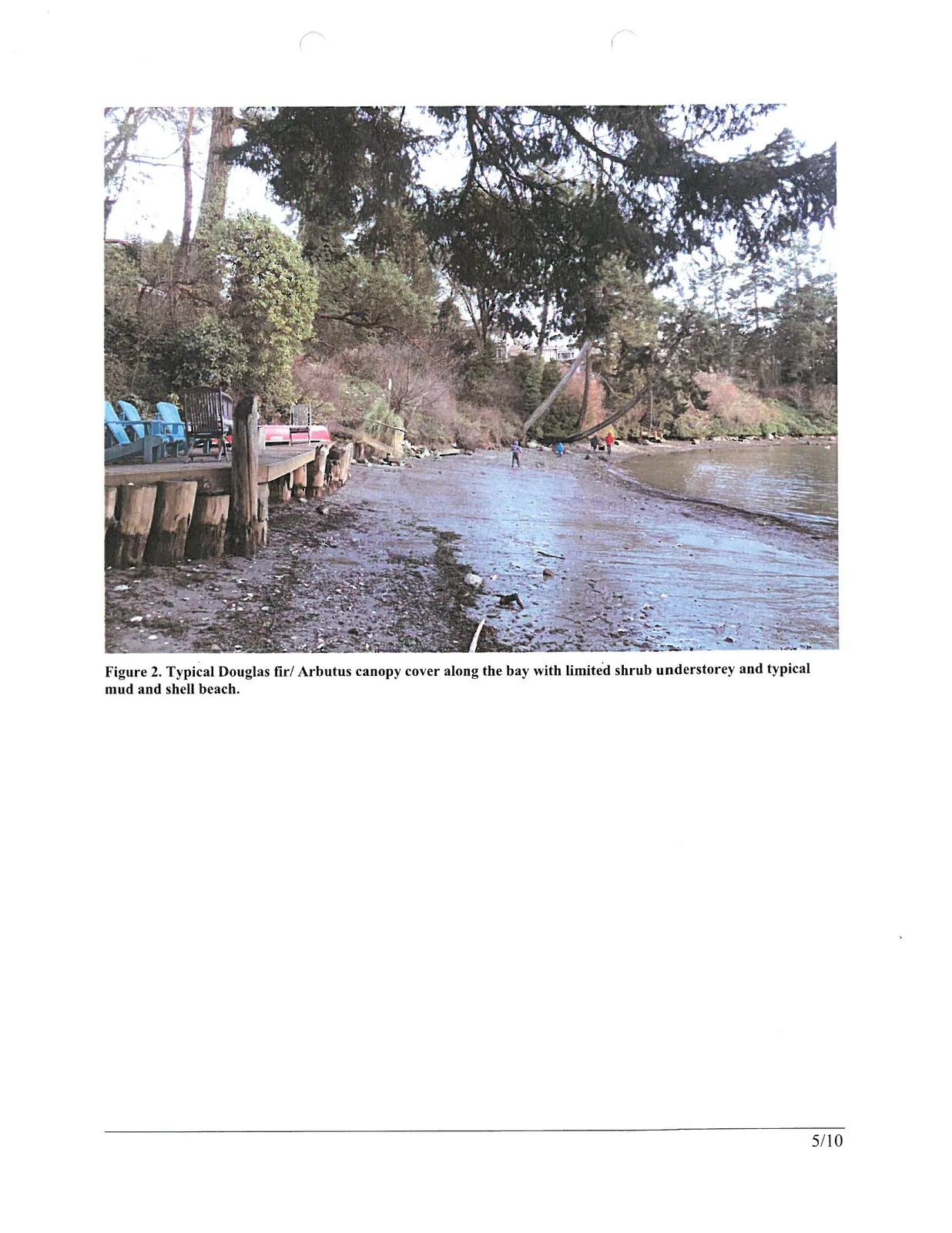
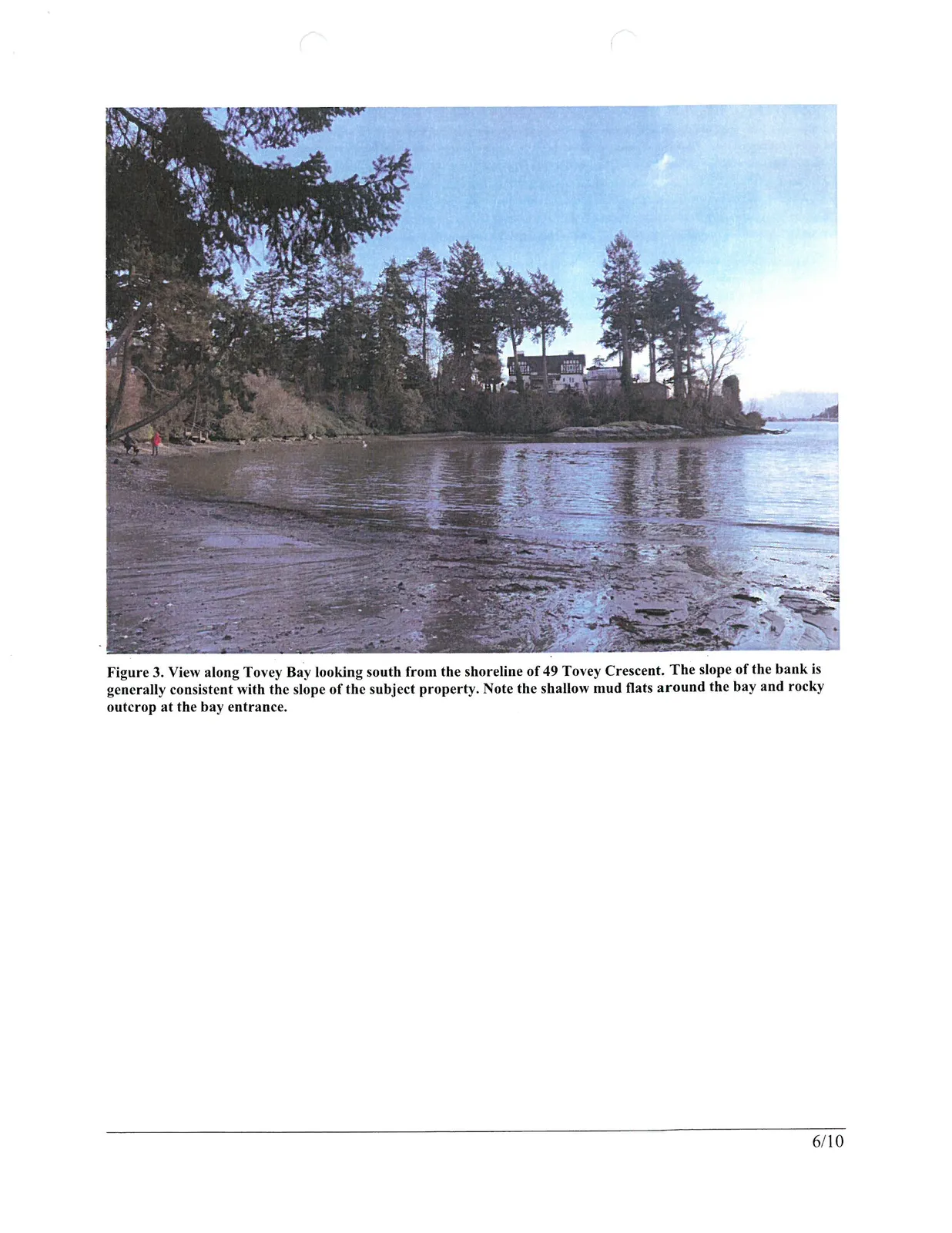
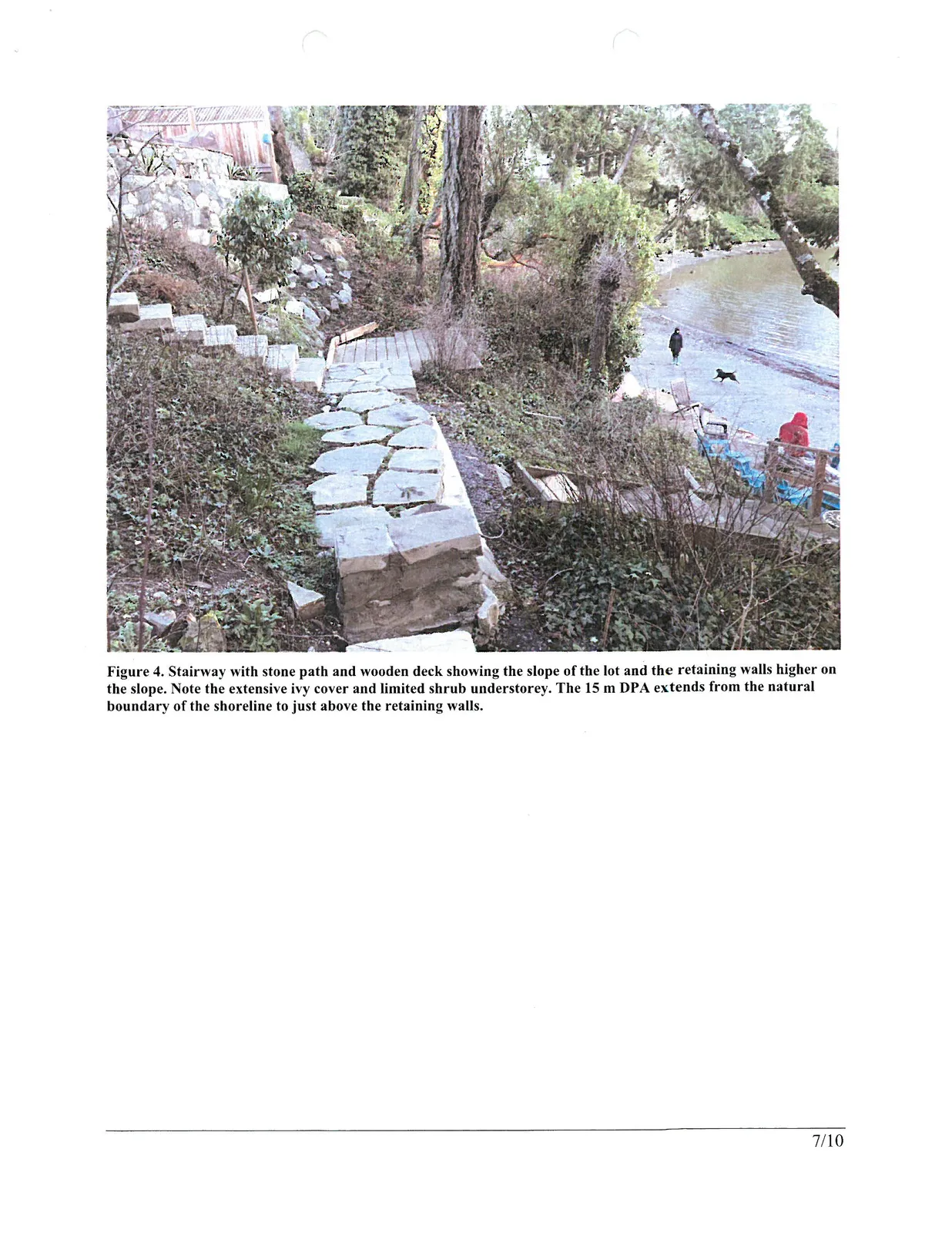
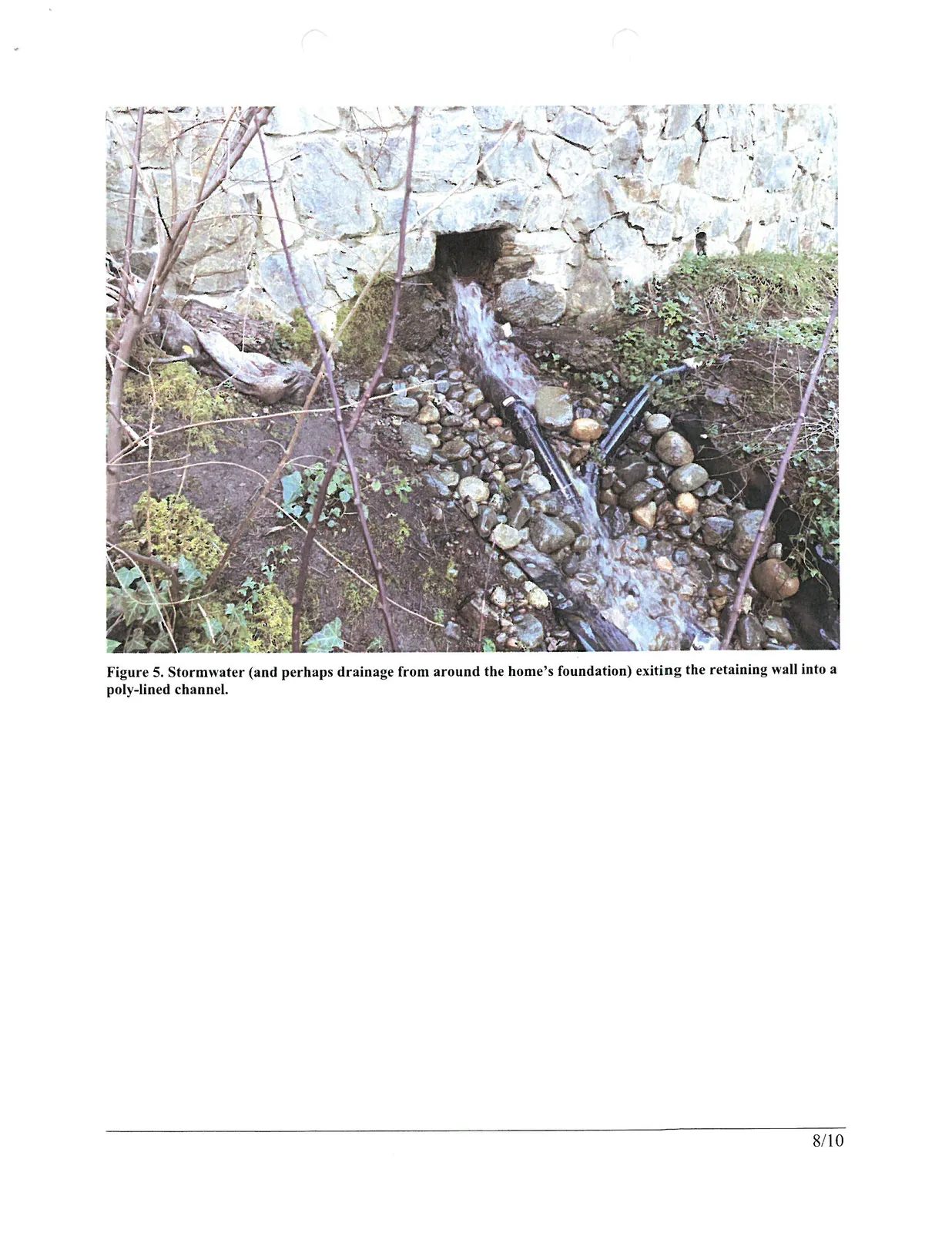
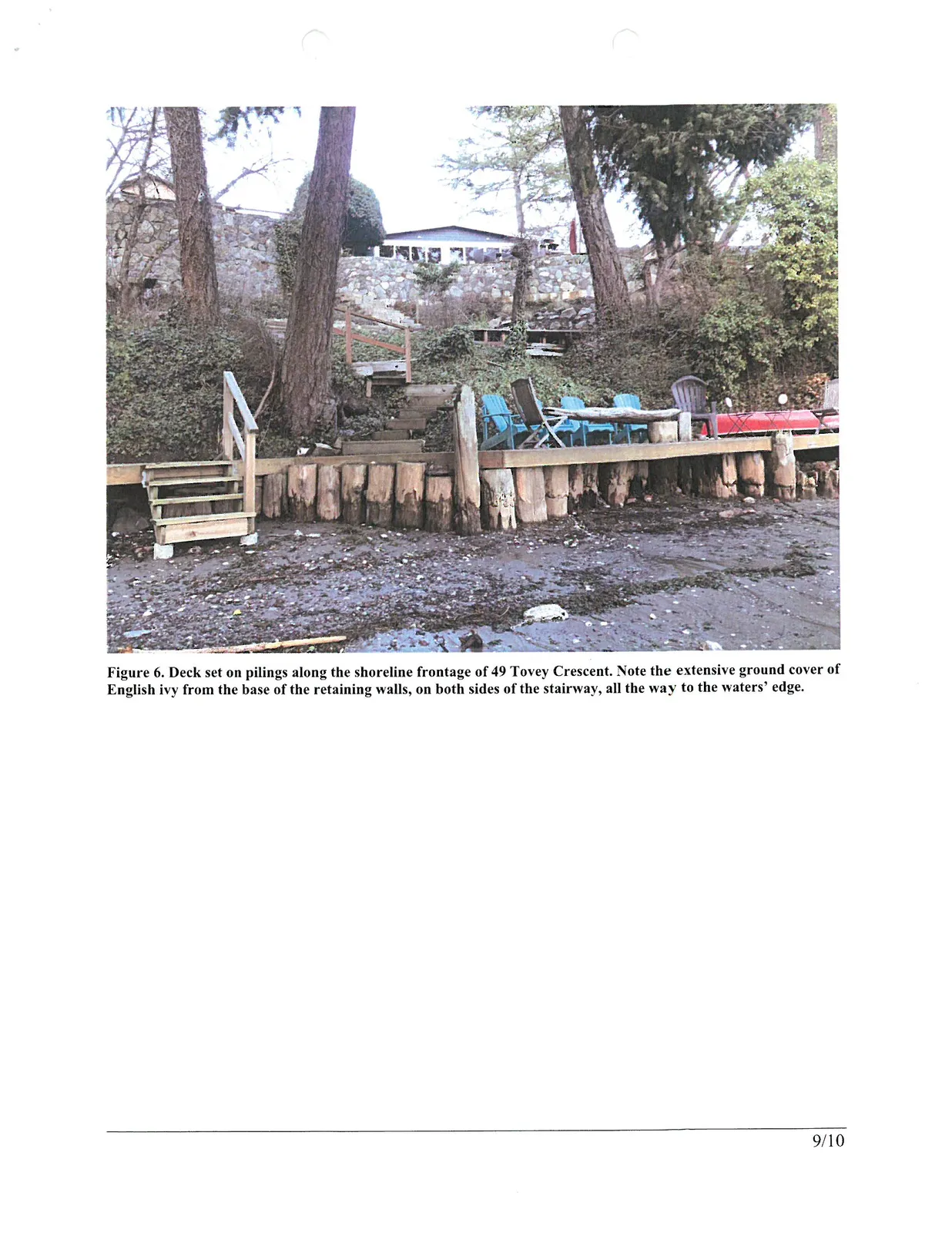
The property is situated on Tovey Bay and faces southeast. Tovey Bay is on the east side of Upper Esquimalt Harbour and immediately east of Cole Island (Figure 1). The pocket beach consists of marine muds and there is a rock outcropping within the bay which is more characteristic of the rocky shoreline on either side of Tovey Bay. The shoreline of the bay remains mostly unarmoured and there is good cover of large trees, mostly Douglas fir with interspersed Arbutus (Figure 2). The property in question is steeply-sloped (Figure 3). A series of terraces have been created, using rock retaining walls to stabilize the slope, and a series of stairs connect the house at the top of the slope with the shoreline (Figure 4). An armoured and poly-lined stormwater channel conveys water from the base of a retaining wall to the ocean (Figure 5). There is a deck, set on pilings, along the waters' edge (Figure 6).
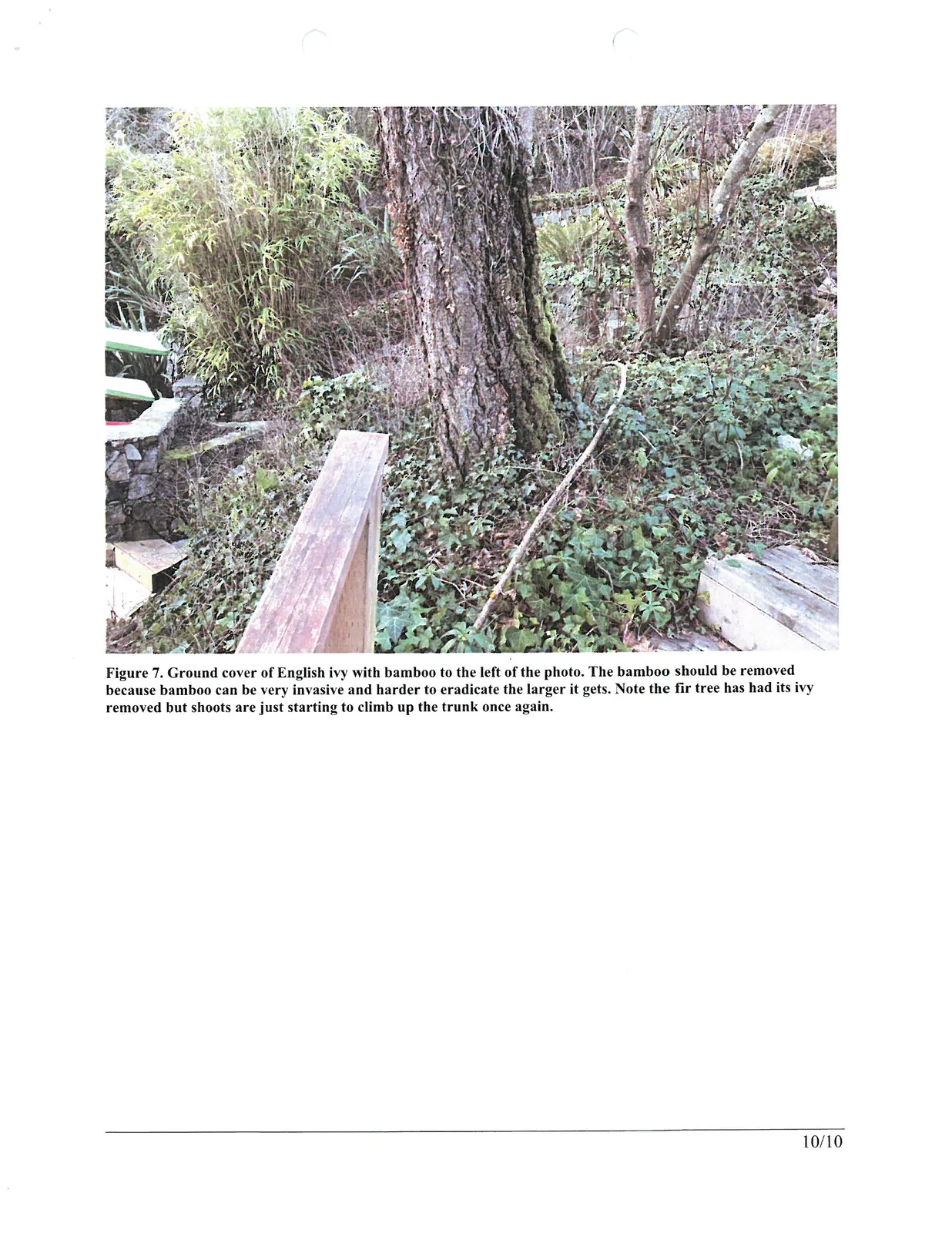
The forest canopy around the bay consists mostly of Douglas fir with a few Arbutus and western redcedar. There is a limited shrub understorey. The subject property is heavily infested with invasive species, particularly English ivy (Hedera helix), interspersed with daphne (spurge-laurel) (Daphne laureola), common periwinkle (Vinca minor), Scotch broom (Cytisus scoparius) and one ornamental bamboo near the property line. The neighbouring properties on both sides are also heavily-infested with English ivy. Fortunately, the homeowners have done a good job of keeping the ivy off the trees. In order to achieve control of this ivy infestation, it would need to be treated across all three properties, and perhaps the entire bay, otherwise efforts to eradicate it will be futile. None of the invasive plants present on this site are listed provincially or locally as noxious weeds under the BC Weed Control Act.
Ivy is very fast-growing and competes with trees for water. This may exacerbate drought stress, particularly as the CRD is experiencing longer, hotter summers. Grand fir and western redcedar are already at risk throughout much of the CRD. While Douglas fir are more resilient, ivy control will help conserve water on this slope. Heavy aerial infestations can also overburden tree branches or entire trees making them susceptible to wind snap or windthrow which can destabilize soils or slopes. It is therefore advisable to control ivy on this site.
A reasonable course of action, which would be cost-effective, would be to continue to focus on removing the ivy from the trees and larger shrubs and to remove the heaviest patches of ivy from the ground. Methods for removal (including cautions) are below. The daphne, broom and periwinkle should also be removed. These plants are few in number and removing them will help ensure that they do not spread. There may be other invasive plants present which were not readily identifiable during the winter February field visit. If noted on the site, any other invasive plants should also be removed by hand-pulling. All plants and attached soil should be carefully bagged, tagged and disposed of as "invasive plants" at the Hartland Landfill. While eradication on this lot is not reasonable given the seed sources on neighbouring properties, control of the invasive plants, and aerial (tree climbing) ivy in particular, is achievable.
Bare soils should be replanted with native plants, both to improve habitat for birds and other wildlife and to stabilize soils and prevent recolonization by invasive plants. The extent of replanting will depend upon the extent of invasive species control that the homeowners are able to achieve. Appropriate plants for this location include dull and tall Oregon grape (Mahonia nervosa and Mahonia aquifolium), sword fern (Polystichum munitum), snowberry (Symphoricarpos alba), Nootka rose (Rosa nutkana), and oceanspray (Holodiscus discolor). All of these plants are attractive, adaptable to a variety of soil and site conditions, are native to the CRD, have suitable roots for stabilizing slopes and provide food for birds and other wildlife. There are already several of these species on site which demonstrates their suitability to this location.
Removal and Handling of Invasive Plants
(courtesy Saanich Environmental Services)
Ivy removal:
From trees: Cut all vines (using loppers) in a complete strip around the trunk from ground to chest height, then pull or cut ground-growing vines around the base of the trunk. Leave the upper vines to decay on the tree and remove them once the foliage has died back to avoid damaging the tree's bark. Use a small pry bar to break away smaller stems from the trunk, taking care not to damage the bark. Never remove ivy from dead trees as it can be hazardous to do so.
Ivy growing on the ground can be removed by pulling vines and digging roots from the soil. It is best to work from the outside edge of the patch inwards to contain the spread.
Most ivy re-growth occurs from roots left in the soil but fragments of stems and leaves can also regenerate. Take precautions with ivy berries, which contain seeds that will readily sprout. Use heavy-duty garbage bags or tarps to remove all ivy from the worksite. Home composting is not recommended.
Daphne (Spurge-laurel) removal:
Pull small plants from moist soil. Cut larger plants just below the soil, year-round. Spurge-laurel stems may re-sprout after cutting and numerous seedlings may germinate so repeated site visits are necessary.
Always wear gloves when handling daphne because it produces a noxious substance which can cause severe eye and skin irritation. Never transport daphne cuttings or plants inside an enclosed vehicle because the noxious compounds can also cause respiratory irritation. Daphne spreads via seeds so cut plants should be wrapped in tarps for removal to avoid distributing berries to new sites. Home composting is not recommended.
Invasive plants should only be disposed of at Hartland landfill where they will be buried with landfill waste to prevent further spread. Plants must be bagged, tied securely and tagged "invasive plants" as regular garden waste is not permitted in the landfill.
Scotch broom
Scotch broom is best removed beginning in late summer, after native wildflowers have gone dormant but before its seed pods begin to open. Removal at this time will stop the addition of new seeds to the soil and may have the advantage of killing drought-stressed plants. Broom cut during wetter months may survive to re-sprout the following season. Removal can continue through to early winter, though care must be taken to stop work once native bulbs begin sprouting.
If the soil is moist and the stems are pencil width or smaller, broom plants can be pulled easily from the ground by hand. Larger plants should be cut below the root crown using loppers or a pruning saw. When removing Scotch broom, it is important to avoid disturbing the soil which can stimulate dormant broom seeds to sprout. Broom that is piled up and left on-site will leach toxins into the soil and suppress native plant growth in the vicinity. To avoid spreading seeds, load the broom onto a tarp and use this to carefully remove plants from the work site. Home composting is not recommended.
Site Photos
Document Images
(3)