Attachment 3: Addendum to Natural Watercourse and Shoreline Development Permit Area Review for 2820 Shoreline Drive
An environmental review addendum and supporting documentation, including a landscaping plan and site photos, for proposed works at 2820 Shoreline Drive to ensure compliance with shoreline protection bylaws.
Sheena McCallum and Kyle Peatt 2820 Shoreline Drive View Royal, BC
January 4, 2023
RE: Addendum to Natural Watercourse and Shoreline Development Permit Area Review for 2820 Shoreline Drive, Victoria, BC, Town of View Royal
I provided an Environmental Review for the proposed development in the Natural Watercourse and Shoreline Development Permit Area on March 16, 2021. This letter is an addendum to the report to address additional proposed landscaping within the DPA.
On August 29, 2022 Lehna Malmkvist, MSc, RPBio. of Swell Environmental Consulting Ltd. (Swell) visited the site at 2820 Shoreline Drive, in the Town of View Royal, to review the proposed additional landscaping within the Town of View Royal’s Natural Watercourse and Shoreline Areas Development Permit Area (SDPA) (Figure 1). As per View Royal’s Schedule Q of the Official Community Plan (2011) Bylaw No. 811, the proposal was evaluated with the intent to minimise detrimental impacts to the shoreline. The Natural Watercourse and Shoreline Areas Development Permit Area is an area encompassing a 15-m from the natural boundary of the sea and is referred to as the SDPA in this letter.
Natural Watercourse and Shoreline Areas Development Permit Area, Bylaw No. 811
The View Royal Official Community Plan (OCP 2011) Bylaw No. 811, identifies the following Guidelines that apply to the Natural Watercourse and Shoreline Areas DPA:
- Development of riparian and shoreline areas should be limited and not negatively impact the ecological health of the immediate area or impede public access.
- Retention of existing healthy riparian and shoreline vegetation should be maximized with any paths, structures or other constructed areas sited to minimize impact on trees and sensitive areas.
- Restoration of riparian and shoreline vegetation and habitat, including removal of invasive species, is encouraged for all properties within this Development Permit Area.
- Development should result in a net increase in native vegetation in almost all circumstances including trees, shrubs and grasses.
- For shoreline areas heavily impacted by previous development, target the restoration of ecologically appropriate vegetation for an average 15m wide (minimum 5 m) shoreline zone over 50% of the shore length.
- Riparian and shoreline area development should sensitively manage storm water, focusing on infiltration and release of storm water in ways and quantities that mimics natural patterns, avoids scouring and erosion and results in storm water free from pollutants.
- The preservation and enhancement of native trees and shrub clusters that overhang the waters’ edge is strongly encouraged as these provide shade, protection and feeding habitat for fish and wildlife.
Proposed Works
The additional proposed work in the DPA is (Figure 1):
- Remove asphalt driveway and replace with permeable grass-turf pavement
- Replacement of the wooden deck and steps along the shoreline to the dock
- Replacement of a concrete patio north of the house (with a smaller footprint than the existing)
- Replacement of two failing mortared rock walls with rock filled gabions
- Install of ornamental flower garden planting beds
- Removal of invasive species, in particular English ivy (Hedra helix) along the shoreline
- Plantings within the SDPA
- All plantings along the shoreline (3-5m) are native species and are replacing existing invasive species (e.g. English ivy)
- Remaining plantings are a mix of native and ornamental species (replacing lawn, English ivy, and existing ornamental plantings)
Full landscaping plan by Andrew van Egmond is included Appendix 1.
The proposed work will replace aging structures with similar structures/uses (patio, deck, garden areas) with smaller footprint and increased permeable surfaces. The areas of the proposed work are previously disturbed and dominated by invasive and ornamental vegetation. The proposed landscaping will remove invasive species (primarily English ivy) along the shoreline and increase the native plant habitat along the shoreline, including overhanging shrubby vegetation, which is important to provide cover, shade, food and nutrients for fish and other marine aquatic organisms. The owners have initiated the English ivy removal along the shoreline.
The project will reduce footprint of hard surfaces in the SDPA:
- Concrete patio (existing = 77m2, proposed = 48m2)
- Floating boardwalk / staircase down to deck above the bedrock
- Wooden deck (existing = 34m2, proposed = 31m2)
- Remove asphalt driveway and replace with permeable grass-turf pavement
Environmental Impacts and Recommendations
The following environmental protection measures must be implemented:
Protecting ecological features
- Locations no-go zones, retained trees and vegetation, and sensitive areas are fenced/marked and communicated to all personnel, including sub-contractors and trades.
- Avoid placing soil/gravel piles and heavy construction materials around roots of trees to be retained, or otherwise cutting into root zones or compacting soils by driving and parking vehicles on root zones. Protective tree fencing is recommended for delineating protected areas.
- Arborist to be consulted prior to construction to provide recommendations for tree protection and working within the critical root zone of SDPA trees.
Erosion & Sediment Control
- Minimize vegetation removal (except invasive species)
- Excavations conducted during forecasted dry weather
- Do not direct water runoff from the site or dewatering from excavations directly into the marine environment. If dewatering of excavations is required, the Environmental Monitor must be consulted to determine where runoff can be directed or if sediment settling facilities (tanks, berms) are required.
- Cover exposed soils, if needed (e.g. poly, tarps, mulch, seeding, ‘rough and loose’ treatment)
- Ensure soil and debris stockpiles are placed away from the shoreline and sediment-laden water cannot flow into the waterbodies.
- If needed, istalling erosion and sediment control measures (e.g. sediment fencing or mounded mulch) to prevent sediment laden runoff from entering the SDPA or marine environment;
- If needed in the restoration area, install biodegradable coir mats on the shoreline slope to retain soils after invasive species are removed;
- Contact Environmental Monitors immediately with any concerns.
Spill Prevention and Response
- Equipment is inspected for leaks prior to beginning work.
- Spill response kits (capable of addressing the volume of fuel/oils/chemicals on site) are on site when any heavy machinery is working, and operators are trained in their use.
- Equipment refueling is at a designated location and >30 m from aquatic ecosystems or isolated from stormdrains.
- Fuel generators must be placed in a spill-proof container capable of addressing the maximum volume of fuel involved (e.g. plastic bin, or other impermeable containment area such as poly lined bermed depression).
- Store all fuel cans in spill-proof containers (e.g. as above).
- Concrete wash-water and wet concrete is highly alkaline and toxic to fish and other aquatic organisms. All concrete wash-water from equipment, trucks and/or hand tools needs to be directed to a settling area away from runoff paths to the waterbodies. Freshly poured concrete needs to be covered when rain is forecasted or runoff needs to be isolated from waterbodies during the curing process.
- In case of spills, the following general steps are recommended:
- Stop source of spill/prevent further spillage (turn off valves, right overturned containers)
- Block spill from reaching aquatic environment or pathways to waterbodies
- Block spill from spreading
- Call Environmental Monitors
- Clean up spilled materials
Environmental Monitoring
- Environmental Monitor to oversee construction activities, including (but not limited to)
- pre-construction meeting
- project start up
- heavy rainfall events greater than 10 mm until such time that the QEP is satisfied that the ESC and other protective measures are containing heavy rainfall as designed.
- during invasive species removal and native species planting, if questions arise
- at completion
In summary, the footprint of the proposed work in the SDPA is within existing disturbed areas, including lawn, patio, decks, driveway, and previously landscaped areas, dominated by invasive and ornamental vegetation. The proposed work will replace similar structures/uses with similar structures with smaller footprints, therefore the proposed work is not expected to cause negative impacts to the ecological condition of the SDPA. If the environmental protection measures are implemented, no sedimentation or spills should occur and there are no damage should occur to the SDPA or marine environment. The proposed invasive species removal and replanting with native species along the shoreline will improve the ecological condition of the SDPA, including providing cover, shade, food and nutrients for fish and other marine aquatic organisms.
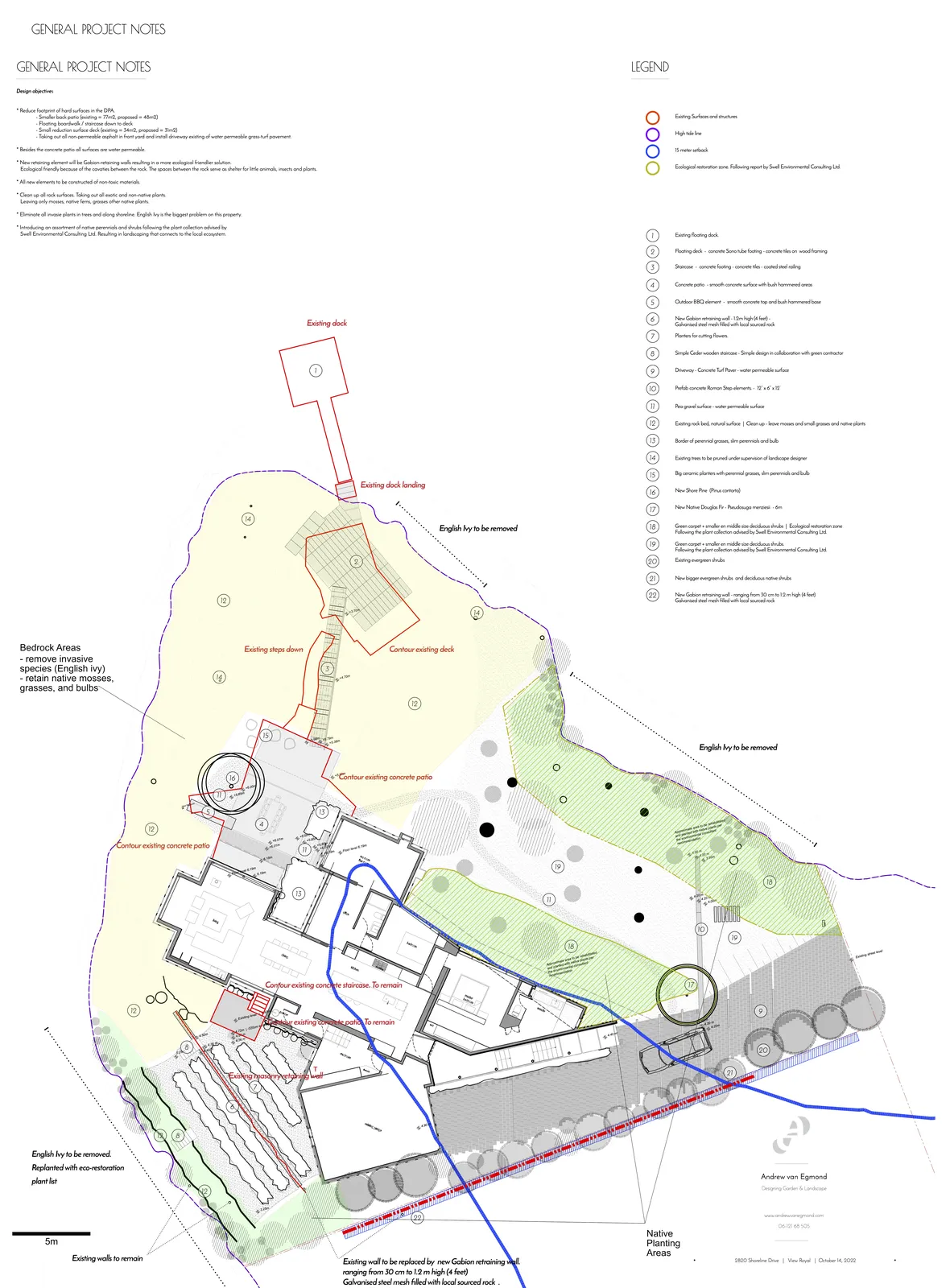
Figure 1. Landscaping plan by Andrew van Egmond with coloured planting areas added by Swell Environmental Consulting Ltd to highlight proposed works in the SDPA.
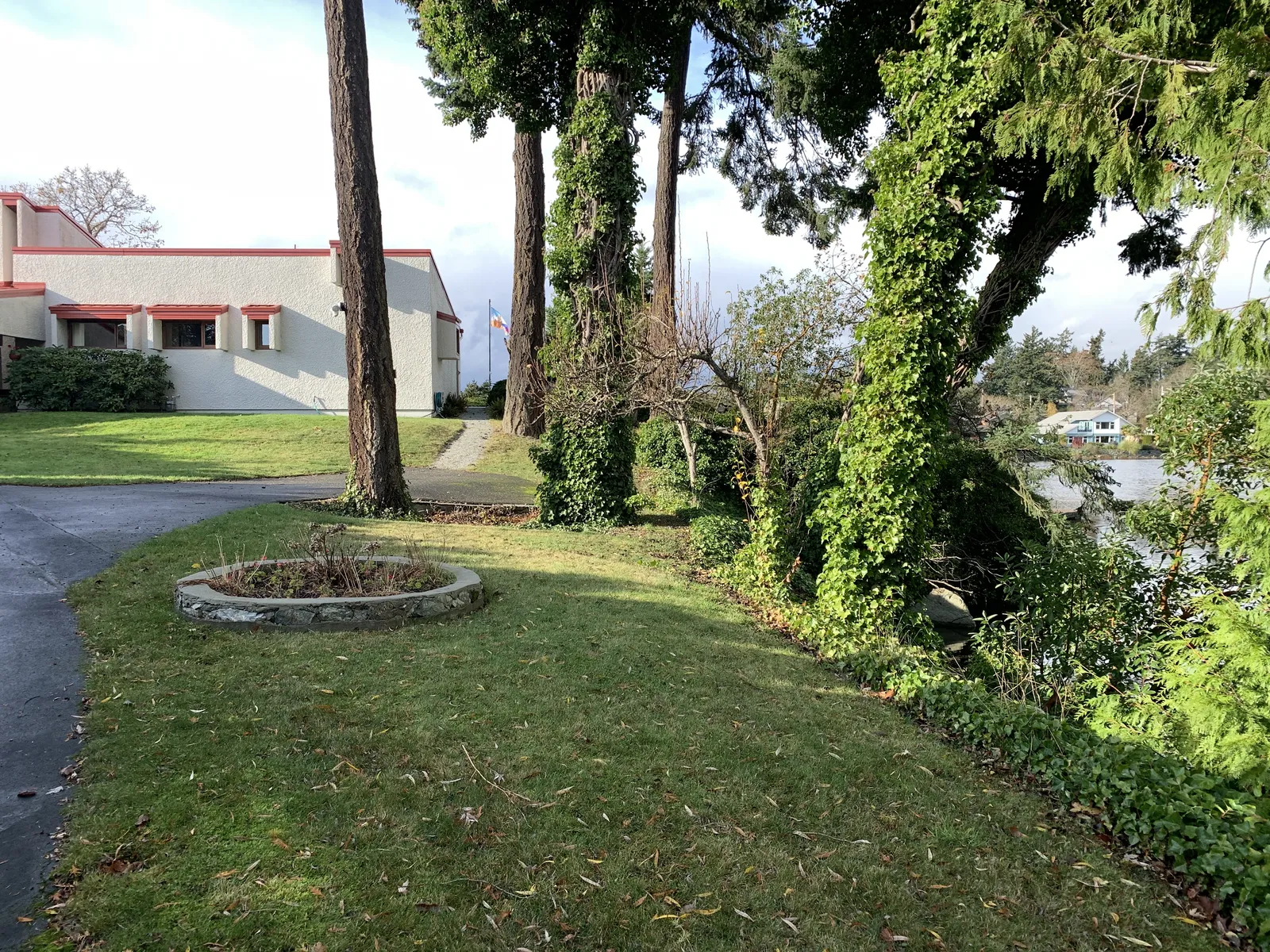
Photo 1. English ivy and other invasive species to be removed and a 5m wide strip planted with native species along 25m of shoreline (March 16, 2021 Report).
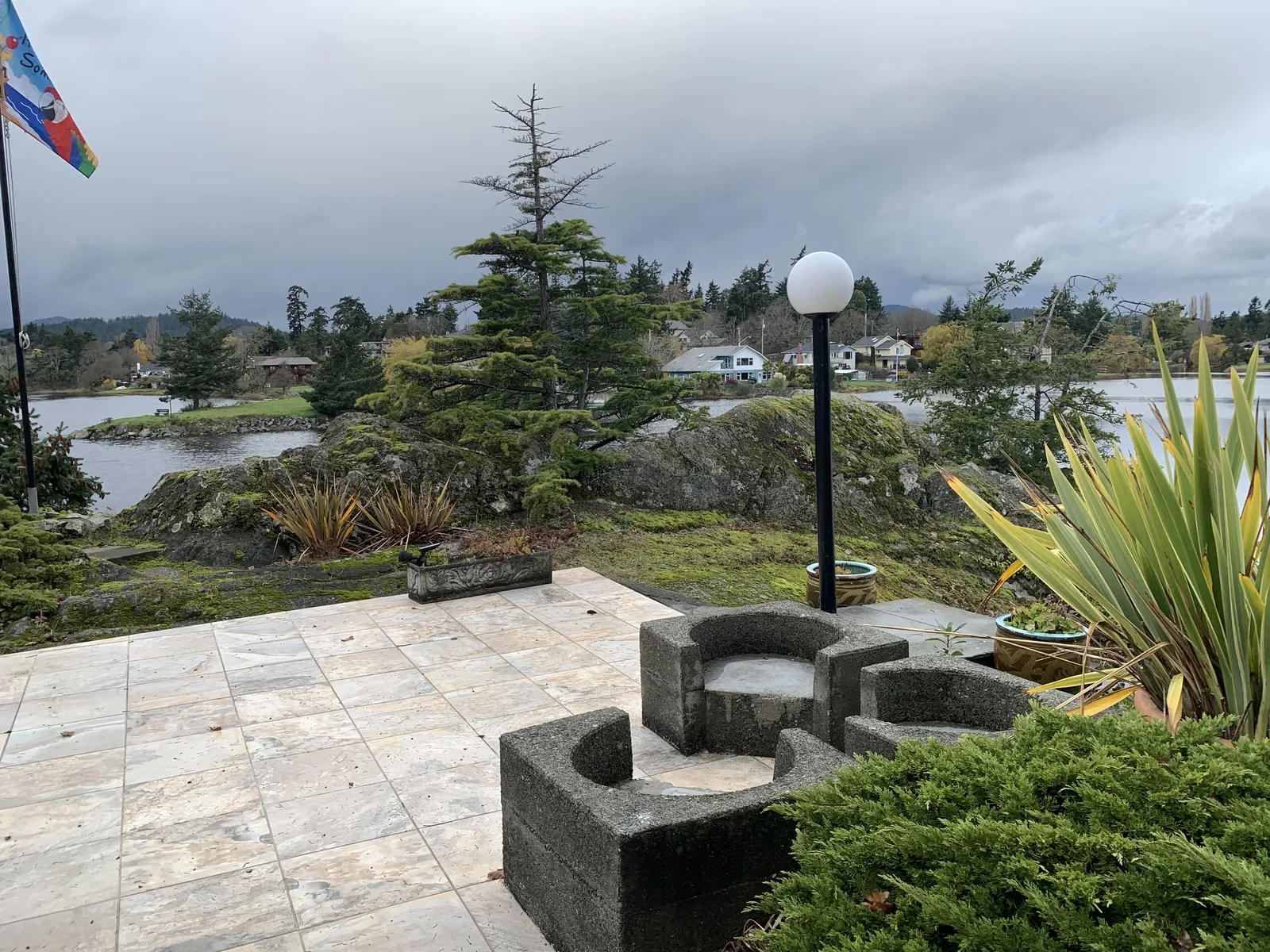
Photo 2. Patio to be replaced with smaller footprint patio. Bedrock areas to have ivy and invasives removed, mosses and native grasses to remain.
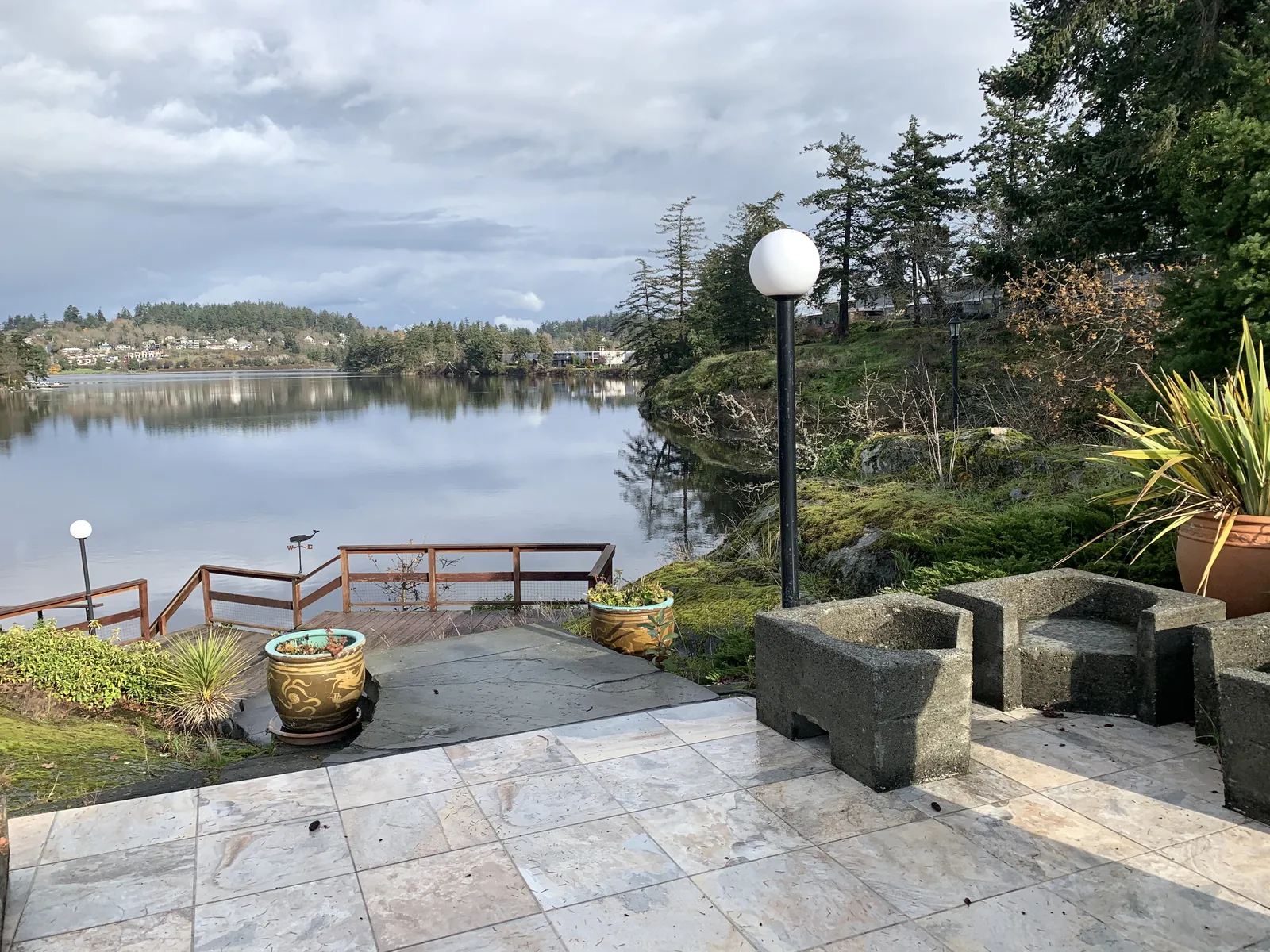
Photo 3. Patio to be replaced with smaller footprint patio. Bedrock areas to have ivy and invasives removed, mosses and native grasses to remain. Walkway to deck to be replaced.
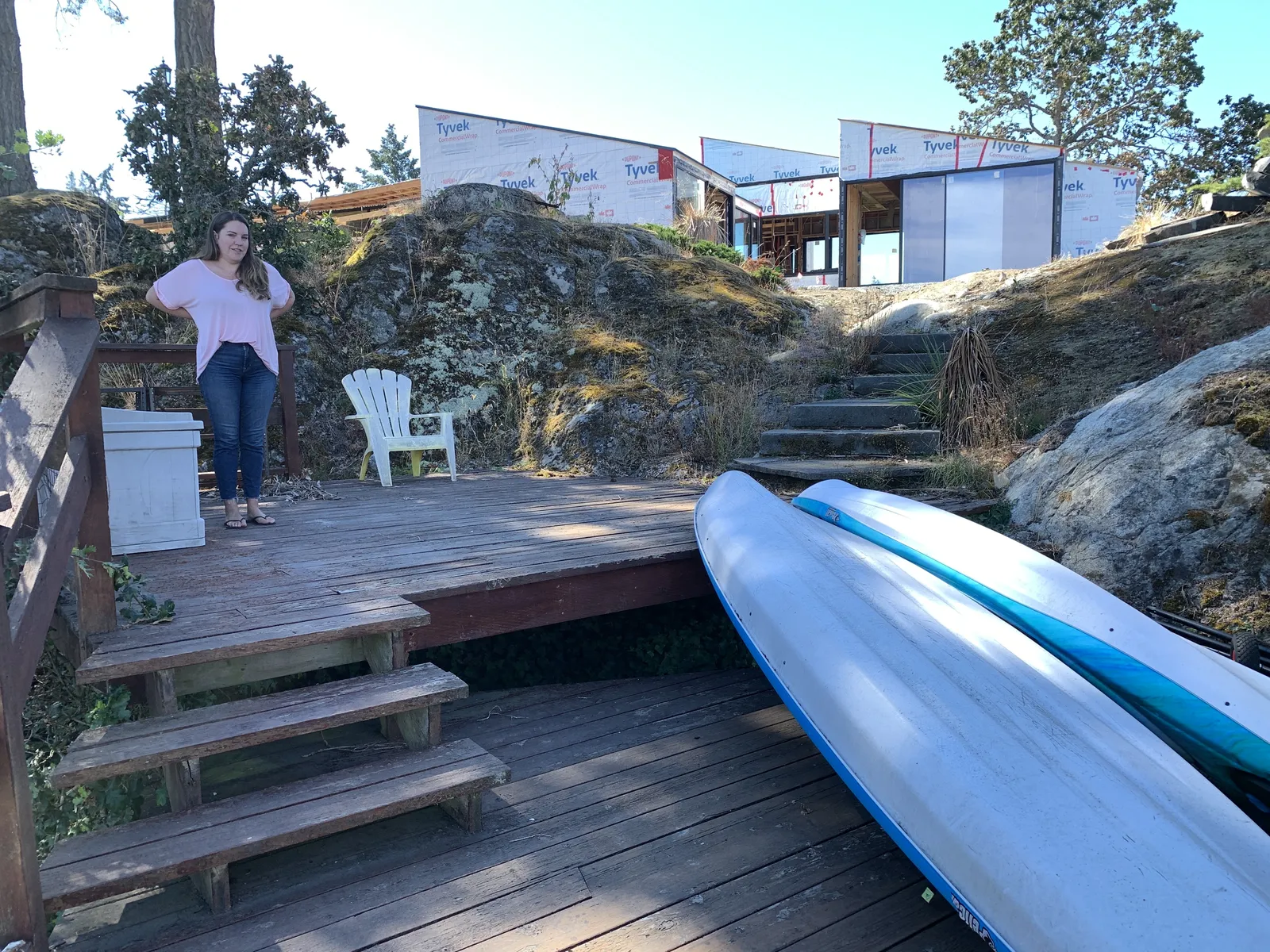
Photo 4. Wooden deck to be replaced with smaller footprint deck.
Document Images
(2)