Streets and Traffic Regulation Bylaw No. 609, 2005 Unofficial Consolidation / Streets Bylaw No 980, 2019
An unofficial consolidation of the existing Streets and Traffic Regulation Bylaw No. 609 showing proposed amendments and new provisions for the draft Streets Bylaw No. 980, 2019.
TOWN OF VIEW ROYAL BYLAW NO. 609
As Amended by Bylaw No. 655 and 958 CONSOLIDATED FOR CONVENIENCE ONLY
A BYLAW TO PROVIDE FOR GENERAL STREET REGULATIONS AND FOR THE REGULATION OF VEHICULAR TRAFFIC ON THE STREETS OF THE TOWN OF VIEW ROYAL
A BYLAW TO REGULATE THE USE OF STREETS AND PUBLIC LAND IN THE TOWN OF VIEW ROYAL
WHEREAS: the Municipal Council deems it necessary to regulate and prohibit all uses of or involving a highway or part of a highway within the Town of View Royal;
AND WHEREAS: the Municipal Council may by Bylaw regulate and prohibit in relation to all uses of or involving a highway or part of a highway in accordance with the provisions of the Community Charter and Motor Vehicle Act;
NOW, THEREFORE: the Municipal Council of the Town of View Royal, in open meeting assembled, enacts as follows:
The Council of the Town of View Royal, in open meeting assembled, enacts as follows:
Citation
1. This Bylaw may be cited for all purposes as the “Streets and Traffic Regulation Bylaw No. 609, 2005”.
SECTION 1: GENERAL
Citation and Previous Bylaw Repeal
1.1 This Bylaw may be cited as “Streets Bylaw No. 980, 2018”.
Administration [Bylaw 980 moves references to delegation from individual definitions.]
1.3 Provisions directing or empowering any officer of the Town to do any act or thing, or otherwise referencing the officer by the officer’s official title, also direct or empower that officer’s successors in office, the officer’s lawful deputy or designate and such person as the Council may by bylaw or resolution designate to act in the officer’s place.
1.4 The requirements of the Bylaw are supplementary to the requirements of any other Town bylaw. [New provision]
Exemptions [New provisions]
1.5 This Bylaw does not apply to:
1.5.1 persons employed by the Town, vehicles or other equipment owned or operated by employees, agents or contractors of the Town while lawfully engaged in Street or public utility construction, maintenance, or repair work on, over, or under the surface of a Street;
1.5.2 the driver of any emergency vehicle while it is responding to an emergency call and sounding an audible signal, siren, or bell, and showing at least a flashing red light, or at the scene of an emergency and showing at least a flashing red light;
1.5.3 the stopping or Parking of vehicles:
1.5.3.1 owned, leased or under contract with the Government of Canada, Province of British Columbia, the Town or persons employed by the Town;
1.5.3.2 by a public utility corporation;
1.5.3.3 as a tow vehicle;
while such vehicles are in use for official purposes.
PART 1 - INTERPRETATION
2. In this Bylaw and any orders made pursuant hereto the expressions used shall have the respective meanings assigned to them by the “Motor Vehicle Act” except as set forth in this Section or where the context otherwise requires.
In this Bylaw, unless the context otherwise requires:
SECTION 2: DEFINITIONS
2.1 Words and terms in this Bylaw have the same definitions as in the Motor Vehicle Act unless the word or term is specifically defined in section 2.2 of this Bylaw.
2.2 In this Bylaw, unless the context otherwise requires:
“Animal” shall mean but not be limited to stallion, mare, gelding, colt, mule, ass, bull, cow, heifer, calf, steer, ox, goat, sheep, lamb, kid or swine.
“Arterial Highway” shall have the same meaning as is set forth in the ”Highway Act”.
ACCESSIBLE PARKING ZONE means a Parking zone on a Street identified by a disabled Parking sign or marking;
ALIEN INVASIVE SPECIES means plants set out in Schedule 1 to the Spheres of Concurrent Jurisdiction – Environment and Wildlife Regulation, BC Reg. 144/2004;
ANGLE PARKING means the Parking of a vehicle other than parallel to a Curb or the lateral lines of a Roadway;
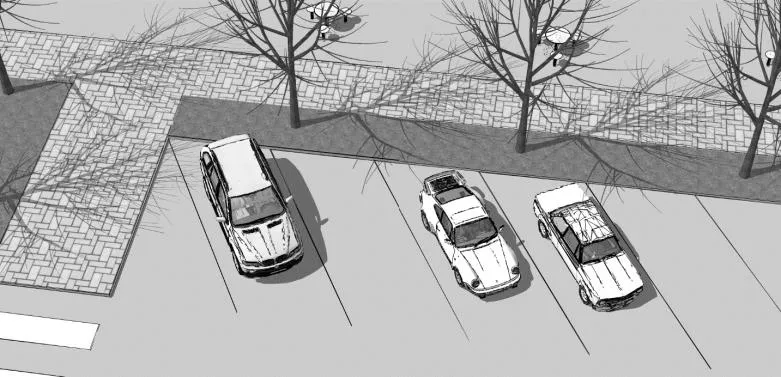
“Boulevard” shall mean that portion of the street between the curb lines or the lateral lines of a roadway and the adjoining property line, exclusive of the sidewalk.
BOULEVARD means that portion of a Street between the Curb lines or the lateral boundary lines of a Roadway and the adjacent property line or between Curbs on median strips or islands, but does not include Curbs, Ditches, Driveway Crossings, Shoulders, or Sidewalks;
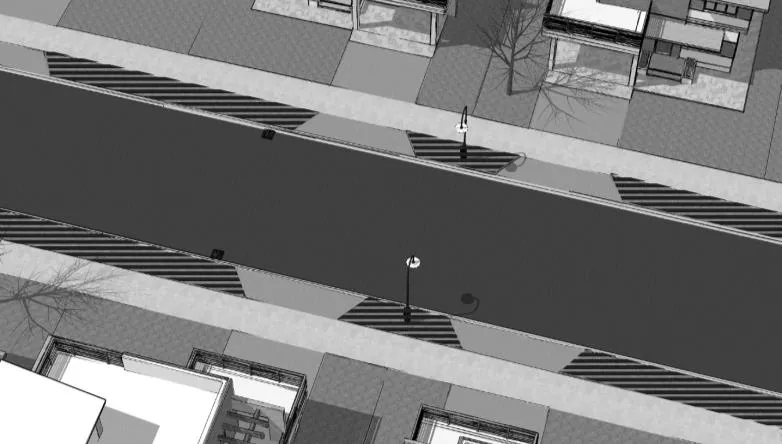
“Bus” shall mean a rail-less vehicle used as a public utility for the carriage of passengers.
BUS STOP ZONE means the area designated for public transit buses or school buses on a Street for the purpose of loading or unloading passengers. For public transit buses, this area is indicated by a public transit sign and red painted Curbs where applicable;
“Bylaw Enforcement Officer” shall mean the Bylaw Enforcement Officer of the Town of View Royal and/or a person or persons designated to act in that capacity.
BYLAW ENFORCEMENT OFFICER means the person appointed, from time to time, as the Town’s Bylaw Enforcement Officer;
“Chief Administrative Officer” shall mean the Chief Administrative Officer of the Town of View Royal and/or a person or persons designated to act in that capacity.
“Commercial Vehicle” shall mean a vehicle engaged in carrying goods, wares or merchandise and so licensed in accordance with the provisions of the “Motor Vehicle Act”.
COUNCIL means the elected Council of the Town of View Royal;
“Crosswalk” shall mean that portion of the roadway ordinarily included within the prolongation of the lateral lines of sidewalks at intersections and any portion of a highway indicated for pedestrian crossing by lines or other markings.
CURB means an improved transition between the Roadway and a Boulevard or Sidewalk;
“Cycle” shall mean a device having any number of wheels that is propelled by human power and on which a person may ride.
CYCLE means a device having any number of wheels that is propelled by human power on which a person may ride and includes a Motor Assisted Cycle, but does not include any device that is gas powered, a skateboard, roller skates or inline roller skates;
CYCLE LANE means portion of the Roadway designated for Cycles and identified by a sign or marking;
“Driver” shall mean any person who drives, operates, propels or who is in physical control of a vehicle.
DIRECTOR means the Town’s Director of Engineering;
DITCH a natural narrow channel or a channel dug into earth used for the conveyance of drainage;
DITCH IN-FILL means the filling in of a Ditch, including the installation of a culvert as required;
DRIVEWAY means that portion of a property that provides access to Parking or loading spaces within the property and is considered to be the extension of the property’s Street access;
DRIVEWAY CROSSING means the improved portion of the Boulevard or Sidewalk specifically designated and improved to provide vehicular access to a property, and includes the widest extent of the Driveway flare;
“Emergency Vehicle” means:
(a) an ambulance responding to a call or transporting a patient where there is an urgent emergency justifying a rate of speed in excess of any maximum rate of speed provided for in this Bylaw;
(b) a motor-vehicle carrying rescue or first-aid equipment where there is an urgent emergency justifying a rate of speed in excess of any maximum rate of speed provided for in this Bylaw;
(c) a motor-vehicle carrying fire-fighting equipment in responding to an alarm of fire;
(d) a motor-vehicle driven by a police officer or constable or by a member of the police branch of any of Her Majesty’s Armed Forces or a member of the Provincial Gaol Services in the discharge of his duty where there is an urgent emergency justifying a rate of speed in excess of any maximum rate of speed provided for in this Bylaw.
FIRE CHIEF means the Town’s Fire Chief;
GARDEN WASTE means any clippings, prunings, leaves or other parts of plants, shrubs or trees;
“Hired Vehicle” shall mean and include every vehicle carrying passengers or used or plying for hire within the Town of View Royal except vehicles used and operated as part of the public transportation system operating within the Town of View Royal.
HIGHWAY means the same as Street;
“Intersection” shall mean the area embraced within the prolongation of the lateral property lines of streets which join one another, whether such streets at the junction cross each other or merely meet at an angle without crossing each other.
“Lane” shall mean a public highway within the ordinary meaning of lane not designed for general travel and primarily used as a means of access to the rear of residences and business establishments.
“Loading Zone” shall mean an area or space on a roadway established by the authority of this by-law for the use of commercial vehicles in the loading and unloading of materials or passengers.
LANDSCAPED BOULEVARD means a regularly maintained Boulevard with or without a Curb and with or without an irrigation system that has been improved by the placement of top soil or other soil amendment, the planting of trees , the planting of shrubs, the placing of sod, or the seeding of grass or other perennial vegetation, and does not include a Boulevard on which only natural vegetation is growing, whether or not that natural vegetation is being or has been trimmed or otherwise managed by the Town or adjacent owner;
“Municipal Clerk” shall mean the Municipal Clerk of the Town of View Royal and/or a person or persons designated to act in that capacity.
“Municipal Council” shall mean the Municipal Council of the Town of View Royal.
“Municipality” shall mean the Town of View Royal.
NOXIOUS WEED means any plant designated as a weed in the Weed Control Act, and regulations adopted under that Act;
OVERSIZED VEHICLE means a motor vehicle which is in excess of seven (7.0) metres in length including any attached trailer or appurtenances;
OWNER means, with respect to a vehicle, the same as defined in the Motor Vehicle Act; and means, with respect to real property, the same as defined in the Community Charter;
PARCEL has the same meaning as defined in the Community Charter;
“Park”, “Parking” or “Parked” shall mean the standing of a vehicle whether occupied or not upon roadway otherwise than temporarily for the purpose of and while actually engaged in loading or unloading merchandise, discharging or taking on passengers or in obedience to traffic regulations or traffic signs or signals.
PARK means the standing of a vehicle, whether occupied or not, upon a Street except when the vehicle is:
i. engaged in loading or unloading; and ii. is standing for no more than two (2) minutes;
“Parking Stall” shall mean a portion of the roadway indicated by markers as a parking space for one vehicle.
“Passenger Zone” shall mean the area or space on a roadway established by the authority of this by-law for unloading of passengers only.
“Pedestrian” means any person afoot including any person confined to a wheelchair.
PEDESTRIAN means a person on foot or in a wheelchair, a carriage or a wheeled device powered by an electric motor intended for transporting disabled persons;
PERMIT means a permit issued under this Bylaw, including:
i. a Boulevard Improvement or Modifications Permit under section 9.4; ii. a Ditch In-Fill Permit under section 9.13; iii. a Driveway Crossing Permit under section 10.3; iv. a Street Occupancy Permit under section 11.1; v. a Street Use Permit under section 11.4; vi. a Street Construction Permit under section 11.5; and vii. an Oversize Vehicle Permit under section 11.7.
“Person” shall mean and include any person, corporation, partnership, firm, association or party.
PERSON means any individual, corporation, partnership, firm, association or party;
“Police Officer” shall mean any member of the police force providing policing services to the Town of View Royal, the Royal Canadian Mounted Police or any member of the police forces of the City of Victoria, the District of Oak Bay, the District of Saanich or Military Police from the Department of National Defence when requested to be on duty within the limits of the Town of View Royal.
“Private Lane” shall mean every way or place which is privately owned and used for vehicular travel by the owner or owners thereof and those having the permission of the owners, express or implied, but does not include a driveway between a single residence and a street.
PRIVATE ROAD means every way or place which is privately owned and used for vehicular travel by the Owner or Owners thereof and those having the permission of the Owners, express or implied, but does not include a driveway between a single residence and a Street;
“Public Place” shall mean and include all public squares, public gardens, public recreation grounds, parks, lanes and streets within the Town of View Royal.
PUBLIC LAND means all Streets, parks, unopened road allowances, or any other real property owned, held, or vested in the Town;
“Roadway” shall mean that portion of the street improved, designed or ordinarily used for vehicular traffic.
REFUSE means all manner of rubbish, trash, garbage, litter, debris, rubble, demolition waste, discarded or disused objects or construction materials, materials or items, junk, unused or dismantled electronic devices, machinery, old, discarded or unused mechanical or metal parts, glass or plastic bottles or objects, tin cans or other metal containers, paper, glass, pipes, dilapidated furniture, inoperative appliances and other similar things, and unused wood or wood products;
RESIDENT means a person who resides in the Town;
RESIDENTIAL PARKING ONLY ZONE means a portion of a Street designated for the purposes of sections 8.6 and 8.7;
ROAD ALLOWANCE means the same as Street;
ROADWAY means the portion of a Street that is constructed, improved, designed or used for vehicular traffic or cycle traffic or both;
“Safety Zone” shall mean the area or space within a street designated by the Municipal Council or the Chief Administrative Officer for the exclusive use of pedestrians and which is marked or indicated as such.
SHOULDER means an improved surface between the Boulevard and the Roadway;
“Sidewalk” shall mean that portion of a street between the curb lines or the lateral lines of a roadway and the adjacent property lines improved by the laying of concrete, gravel, planks or other material for the use of pedestrians.
SIDEWALK means that portion of the Boulevard, generally running parallel to the Street that has been improved for the use of Pedestrians;
“Sidewalk Crossing” shall mean that portion of a sidewalk permanently approved or designated for the passage of vehicular traffic and for the purposes of driveway width shall include any tapered curb section.
SOLICIT means to, without consideration, ask for money, donations, goods, or other things of value whether by spoken, written, or printed word or bodily gesture, for one’s self or for any other person, and solicitation has a corresponding meaning, but does not include soliciting for charity by an organization authorized by Council;
“Stop” (When Required) shall mean a complete cessation of movement.
“Stop” Or “Stopping” (When Prohibited) shall mean the coming to rest of a vehicle except when necessary to avoid conflict with other traffic or in compliance with the direction of a police officer or traffic control signal or traffic sign.
“Street” shall include highway, roadway, boulevard and sidewalk as well as any way, road, lane, alley, avenue, thoroughfare, drive, bridge, viaduct, square or open space in the Town which is open to the use of the public as a matter of right, for the purpose of traffic.
STREET means every road, lane, bridge, road allowance or right of way open to public use, and includes the Roadway, Shoulder, Boulevard, Ditch and Sidewalk, but does not include a private right of way on private property;
STRUCTURE means anything constructed or erected on a property, the use of which requires location on the ground or attachment to something having location on the ground, but does not include landscaping, walkways, driveways, or parking lots;
“Taxi” Or “Cab” shall mean a motor-vehicle which is operated, or plies, for hire by members of the public, and does not include an ambulance, a bus, a hearse, or a vehicle driven by the person who hires it.
“Taxi Stand” shall mean a portion of a street specifically designated for the exclusive use of taxis.
“Town” shall mean the Town of View Royal.
TOWN means the Town of View Royal;
TOWN SPECIFICATIONS are as defined in the Subdivision and Development Servicing Bylaw No. 985, 2017;
"Traffic Control Device” means a sign, signal, line, meter, marking, space, barrier or device placed or erected by authority of the Chief Administrative Officer, to control traffic.
TRAFFIC CONTROL DEVICE means a sign, signal, line, meter, marking, space, barrier or device placed or erected by authority of the Director to control traffic;
“Traffic Control Signal” shall mean any authorized device manually, electrically or mechanically operated for the regulation of traffic.
“Traffic Control Flashing Signal” shall mean any authorized device which is operated mechanically or electrically to regulate traffic by indicating by flashing coloured lights the precaution to be taken by traffic proceeding in any given direction.
“Traffic Sign” shall mean any authorized sign, signal (other than the traffic control signal and traffic control flashing signal) marking or other device placed, painted or erected for the guidance, regulation, warning, direction or prohibition of traffic, parking or stopping.
“Trailer” shall mean every vehicle with or without motive power designed for carrying property and for being drawn by a motor vehicle.
“Vehicle” shall mean and include any device in, upon or by which any person or property is or may be transported or drawn upon a street, irrespective of motor power, including a horse led or ridden, but shall not include power of electric or steam railways running only upon rails.
“Walkway” shall mean a path, footpath or right-of-way improved, designed or ordinarily used for pedestrian traffic.
“Weapon” shall mean and include all types of fire arms as well as air guns, air rifles, air pistols, spring guns, sling shots, bows, crossbows and arrows.
TRAFFIC CONTROL DEVICE means a sign, signal, line, meter, marking, space, barrier or device placed or erected by authority of the Director to control traffic;
PART 2 - PROCEDURE FOR MAKING ORDERS [Bylaw 980 shifts orders to Director of Engineering instead of Chief Administrative Officer.]
3. (1) Any order or orders, as outlined in Schedule A, made by the Chief Administrative Officer pursuant to any power delegated by this Bylaw shall come into force immediately unless a later date is specified in the order or orders. (Amendment Bylaw No. 655, 2006)
(2) The orders referred to in Subsection (1) hereof shall be set forth in writing and signed by the Chief Administrative Officer and forwarded to the Municipal Clerk for recording. (Amendment Bylaw No. 655, 2006)
(3) The Chief Administrative Officer may rescind, revoke, amend or vary any order or orders made by him/her by a further order or orders made in conformity with this Section. (Amendment Bylaw No. 655, 2006)
(4) Where in this Bylaw the Chief Administrative Officer is empowered to make any order or orders, such power may be exercised at any time or from time to time as he/she may deem necessary or expedient. (Amendment Bylaw No. 655, 2006)
(5) The Municipal Clerk shall have custody of all orders made pursuant to this Bylaw and, he/she shall preserve and keep the originals thereof. He/she shall keep on hand at least one duly certified copy of each order which on request shall be made available for perusal by any person during regular office hours and he/she shall furnish certified copies of such orders and may charge a fee as established by the Fees and Charges Bylaw. (Amendment Bylaw No. 655, 2006)
SECTION 3: AUTHORITIES
Director of Engineering and Council – General Authority
3.1. The Director may make, amend and revoke any orders and issue, revise and revoke any Permit for the purpose of exercising the Director’s authority under this Bylaw.
Powers of Municipal Council not affected by orders [Section 3.2 of Bylaw 980 maintains Council’s ability to revoke or revise orders and permits.]
4. Nothing in this Bylaw contained shall be construed to limit in any way the power of the Municipal Council to initiate, adopt, repeal or amend Bylaws in respect of any matter dealt with in this Bylaw, notwithstanding that any authority that has been given or delegated herein and any order or orders made by the Chief Administrative Officer shall be valid and effective only to the extent that they are not inconsistent with or repugnant to the provisions of any Bylaw of the Municipal Council for the time being in force. The Municipal Council may by resolution at any time rescind or revoke any order or orders made by the Chief Administrative Officer.
5. Deleted. (Amendment Bylaw No. 655, 2006)
3.2. Council may by resolution at any time exercise the power to revoke or revise any order or Permit made or issued by the Director.
PART 3 - TRAFFIC REGULATIONS
Powers of Chief Administrative Officer [Section 3.3 of Bylaw 980 delegates authority over the placement of traffic control devices to the Director of Engineering.]
6. (1) For the purpose of regulating the movement of traffic within the Town of View Royal, the Chief Administrative Officer may by order:
No “U” Turns
(a) designate the intersections where signs bearing words or symbols indicating that “U” turns are prohibited shall be placed;
No Left Turns
(b) designate the locations at intersections where signs bearing words or symbols indicating that left-hand turns are prohibited shall be placed;
“Stop” Signs
(c) designate the locations at intersections where signs bearing the word “stop” shall be placed;
Traffic Lights
(d) designate the locations where traffic signals as described in Section 126 of the “Motor Vehicle Act” shall be placed;
One-Way Streets
(e) designate the intersections where signs bearing words or symbols indicating that a street is a one-way street shall be placed together with such other signs as the Chief Administrative Officer deems advisable in order to prohibit traffic proceeding in more than one direction upon such one-way street;
Crosswalks
(f) designate the portions of streets which shall be cross-walks and shall be marked by distinctive lines or markers upon the street surfaces and where signs indicating such portions of streets are crosswalks shall be placed;
Laned Roadways
(g) designate the roadway or part of a roadway upon any street or part thereof to be a “laned roadway” within the meaning of the “Motor Vehicle Act” and providing for the marking thereof with suitable lines from the roadway;
Turning - Laned Roadways
(h) designate the lane or lanes upon a laned roadway at or near an intersection where suitable traffic-control devices be placed to direct that no turns or turns only in certain directions shall be made at the intersection by vehicles travelling in such lane or lanes;
Highway Lines
(i) designate the street or streets or portions thereof which shall be marked with lines in the manner provided by Section 155 of the “Motor Vehicle Act”;
Highway Dividers
(j) designate the street or streets or portions thereof which shall be divided in the manner provided by Section 163 of the “Motor Vehicle Act”;
School Zones
(k) designate the locations where signs shall be placed bearing the school zone symbol and stating a speed limit of 30 km/h or a numeral “30", as provided by Section 147(1) of the “Motor Vehicle Act”;
Playground Zones
(l) designate the locations where signs shall be placed bearing the playground zone symbol and stating a speed limit of 30 km/h or a numeral “30", as provided by Section 147(2) of the “Motor Vehicle Act”;
Truck Traffic Prohibited
(m) designate, by installation of signs, a street or portion of a street where truck traffic shall be prohibited. Trucks shall be defined as vehicles licensed for a gross vehicle weight in excess of 10,000 kg (G.V.W.) or having a length in excess of eight meters (8 m). Buses and trucks making a delivery to a site within the designated area shall be exempt from the prohibition; and
Traffic Calming Devices
(n) designate the locations where traffic calming devices such as speed humps, roundabouts and other devices are situated.
Director of Engineering – Authority for Placement of Traffic Control Devices
3.3. The Director may place or erect traffic control devices:
3.3.1. for the regulation, control, or prohibition of traffic, for the purposes of giving effect to the provisions of the Motor Vehicle Act and this Bylaw;
3.3.2. for the regulation, control, or prohibition of the stopping or Parking of vehicles on a Street or portion of a Street;
3.3.3. indicating that workforces and equipment are working on any Street where construction, widening, repair, marking, or other work is being carried out;
3.3.4. for temporary periods to prohibit Parking:
3.3.4.1. at any location where, in special circumstances it is deemed necessary to facilitate or safeguard traffic;
3.3.4.2. upon either or both sides of the Street or portion thereof along the route of any parade, special event, or in the vicinity of large gatherings; or
3.3.4.3. in front of any buildings or structures under construction, alteration, repair or demolition;
Director of Engineering – Authority over Other Signs
3.6. The Director may determine the size, location, and type of those signs that are not Traffic Control Devices that may be permitted on a Street.
3.7. The Director may alter, repaint, tear down or remove any sign or other thing on a Street, whether erected or placed thereon with or without the Director’s approval, without compensation to any person for loss or damage resulting from such alteration, repainting, tearing down or removal.
School Patrols [School traffic patrols are under the purview of each school. Motor Vehicle Act regulates movement of vehicle traffic at intersections and crosswalks.]
7. (1) The principal of any public or private school may appoint a number of the pupils of such school or adults to constitute a traffic patrol and thereupon such pupils shall be vested with power to require the stopping of vehicles at crosswalks by displaying flags or other devices bearing the word “Stop”.
(2) No driver of a vehicle which is approaching a cross-walk where a member of a traffic patrol is in attendance shall cause or permit the vehicle to proceed through or into the cross-walk when a flag or other device with the word “Stop” thereon is being displayed so as to face traffic approaching from either direction.
Firemen may Direct Traffic
8. Any member of the Fire Department of the Town of View Royal, or any member of a Fire Department providing Mutual Aid to the Town of View Royal, in attendance at or near any fire or other emergency may direct traffic on any street in the vicinity of such fire or other emergency and every person shall comply with the directions of any such member of the Fire Department.
Fire Chief – Authority to Direct Traffic
3.8. The Fire Chief may direct and regulate traffic in any manner deemed necessary for public safety and in doing so, may disregard any Traffic Control Device.
Fire Chief – Authority to Designate Fire Line [New provision]
3.9. The Fire Chief may designate in any manner, a line or lines near the location of a fire or emergency response incident, beyond which the public must not pass.
Temporary Closing of Streets
9. The Chief Administrative Officer shall be empowered without an order to direct that on any street where construction, reconstruction, widening, repair, marking or other work is being carried out, traffic control devices shall be erected or placed to regulate or prohibit traffic in the vicinity of such work and/or limit the rate of speed of vehicles.
Director of Engineering – Authority to Close Streets
3.5. The Director may when, in his or her opinion, any Street or section thereof is unsafe or unsuitable for traffic, or it is advisable that traffic should be restricted or diverted therefrom, to temporarily close such Street or section thereof, or restrict or divert the traffic thereon.
Work in Streets [Construction traffic control devices delegated to Director of Engineering and carried out in association with one of the new Permits.]
10. The Chief Administrative Officer shall be empowered without an order to direct that on any street where construction, reconstruction, widening, repair, marking or other work is being carried out, traffic-control devices shall be erected or placed indicating that men or equipment are working upon the street.
Moving of Vehicle into Vehicular Traffic [Section removed as already covered by the Motor Vehicle Act.]
11. No person shall move any vehicle from a stationary position at the curb of the roadway into the line of vehicular traffic upon the street without first having signalled his intention so to do by means of an appropriate hand and arm or mechanical signal as prescribed for left turns by the “Motor Vehicle Act” and unless he/she has ascertained that the movement can be made in safety, having regard to the nature, condition and use of the highway and the traffic which actually is at the time or might reasonably be expected to be on the highway.
Police - Temporary Traffic Control
12. Any police officer is hereby authorized to place or employ such temporary traffic-control devices as he/she deems necessary to assist him in controlling traffic.
Speed Limits
13. (1) The rate of speed at which a person may drive or operate a motor-vehicle upon a highway, roadway or lane in the Town of View Royal shall not exceed fifty (50) kilometres per hour, save in such portions of the Town in respect of which lesser maximum speeds are provided by this Bylaw or the “Motor Vehicle Act”;
(2) The Chief Administrative Officer shall cause to be placed upon the streets and places referred to in subsections (2) and (3) of this Section, such signs indicating the speed limits aforesaid, as may be required.
(3) The provisions of this Section shall not apply to an emergency vehicle as defined in Section 2 hereof.
PART 4 - PARKING AND STOPPING REGULATIONS
Powers of Chief Administrative Officer [Section 3.3 of Bylaw 980 delegates authority over the placement of traffic control devices to the Director of Engineering.]
14. (1) The Chief Administrative Officer may from time to time make orders in respect of all or any of the following matters or things, that is to say:
No Stopping Zones
(a) designating certain streets or portions of streets as “No Stopping” zones and designating the hours of the day during which stopping is prohibited within such zones;
No Parking Zones
(b) designating certain streets or portions of streets as a “No Parking” zone and designating the hours of the day during which parking is prohibited within such zone;
Limited Time Parking Zones
(c) designating certain streets or portions of streets as “Limited Time Parking” zones and designating the length of time during which vehicles may be continuously parked within such zones and designating the hours of the day during which the regulations in respect of any such zone or zones are to apply;
Loading Zones
(d) designating certain streets or portions of streets as “Loading” zones and designating the hours of the day which such zones are to be in effect as loading zones;
Taxi Stands
(e) designating certain streets or portions of streets as “Taxi Stands” for the exclusive use of cabs or any class of cabs;
Bus Zones
(f) designating certain streets or portions of streets as “Bus” zones for the exclusive use of transportation buses or any class or classes thereof and designating the day or days and the hours of the day during which the stopping, standing or parking therein of vehicles other than such buses or class or classes thereof is prohibited;
Safety Zones
(g) designating certain streets or portions of streets as “Safety” zones for the exclusive use of pedestrians and providing for the erection upon such safety zones of such platforms, curbing or structures as the Chief Administrative Officer may deem advisable for the greater convenience or safety of pedestrians;
Angle Parking
(h) designating certain streets or portions of streets as “Angle Parking” zones within which vehicles shall be parked only at an angle with the curb or edge of the roadway and generally designating certain streets or portions of streets and the hours and days within and during which stopping, standing or parking of the vehicles otherwise than in the manner prescribed by Section 190 of the “Motor Vehicle Act” is permitted or required and the conditions and restrictions applicable thereto;
Traffic Control Devices
(i) providing for the erection, placing, painting or marking upon any streets or portions of streets or such traffic-control devices as the Chief Administrative Officer deems necessary or expedient to give effect to the provisions of this Bylaw, or any orders made pursuant to this By-law, the “Motor Vehicle Act” and Regulations made thereunder, and such provisions may be included in any order made pursuant to any of the sub-paragraphs of this Subsection or may be set forth in a separate order or orders;
Reserved Parking
(j) setting apart and allotting certain portions of streets adjacent to any Federal, Provincial or Municipal public building for the exclusive use of officials and officers engaged therein for the parking of vehicles and providing that certain portions may be used exclusively by certain officials and officers and designating the hours of the day during which such portions of streets shall be so set apart and allotted;
Special Parking
(k) designating the streets or portions of streets where the drivers of vehicles shall not be required to park the vehicle in the manner prescribed by Section 190 of the “Motor Vehicle Act” and providing that the driver shall park the vehicle in the manner indicated by the lines or other markings or signs displayed in each of such places and designating the type or types of vehicles to which such orders shall apply;
Parking Vehicles over 7 metres
(l) designating the streets or portions of streets where the drivers of vehicles having together with any load carried thereon or any trailer attached thereto an overall length in excess of seven metres (7 m) may not park such vehicle except for the purpose of loading or unloading merchandise or freight;
Passenger Zones
(m) designating the streets or portions of streets which shall be “Passenger” zones for the exclusive use of vehicles while engaged in the loading or unloading of passengers;
‘Residential Parking Only’ Zones
(n) designating the streets or portions of the streets which shall be “Residential Parking Only” zones and designating the time or times when such streets or portions of such streets shall be so set apart and allotted;
Residential Permit Zones
(o) designating the streets or portions of the streets which shall be ‘Residential Permit Zones’ and designating the time or times when such streets or portions of such streets shall be so set apart and allotted; and
Skateboard Prohibition Zones
(p) designating streets, sidewalks or paths in public places where skateboarding, or use of any other human powered devices, is prohibited.
Prohibitions - No Stopping Zones [Parking Regulations now described in section 8 of Bylaw No. 980.]
15. No driver of a vehicle shall cause or permit such vehicle to stop or remain standing in any “No Stopping” zone during the hours of the day during which stopping therein is prohibited.
No Parking Zones
16. (1) No driver of a vehicle shall park such vehicle or permit the same to remain parked in any “No Parking” zone during the hours of the day during which parking therein is prohibited.
(a) Where any driver of a vehicle causes or permits such vehicle to remain at rest in a “No Parking” zone for the purpose of loading or unloading for a period in excess of two (2) minutes, such vehicle shall be deemed to be “parked” within the meaning of this Section.
Limited Time Parking Zones
17. No driver of a vehicle shall park such vehicle or permit the same to remain parked in any limited time parking zone for a period in excess of the time during which vehicles may be continuously parked within such zone as indicated by signs placed in or near such zones pursuant to this Bylaw.
Loading Zones
18. (1) No driver of a vehicle shall cause or permit such vehicle to stop or remain standing in any loading zone during the hours of the day when such loading zone is in effect unless the vehicle is a commercial vehicle as defined by this Bylaw and goods, wares or merchandise are actually being loaded or unloaded there from.
(2) No driver of a commercial vehicle shall cause or permit such vehicle to stop or remain standing in any loading zone during the hours mentioned in Subsection (1) for a period exceeding one-half (½) hour.
Taxi Stands
19. (1) No driver of a vehicle other than a cab shall cause or permit such vehicle to stop or remain standing within any area designated as a “Taxi Stand”.
(2) Where any Taxi Stand has been designated for the exclusive use of a particular class of cab, no driver of a vehicle not belonging to such class of cabs shall cause or permit such vehicle to stop or remain standing within such Taxi Stand.
Cabs to Stand Only in Allotted Stands
20. No person being a driver or operator of a taxi or cab shall cause, suffer or permit the same to be parked upon any street except within a Taxi Stand designated as such pursuant to this Bylaw.
Bus Zones
21. No driver of a vehicle not being a transportation bus of the class or classes for the exclusive use of which an area designated as a “Bus Zone” is set apart shall cause or permit such vehicle to stop or remain standing within any such area during the time or times when the same is designated as being so set apart.
Safety Zones
~~22. No driver or a vehicle shall cause or permit such vehicle to proceed into or be within any safety zone.~
SECTION 8: PARKING REGULATIONS
General Prohibitions for Stopping or Parking
8.1. Except when necessary to avoid conflict with traffic or to comply with the directions of a police officer or Traffic Control Device, or when allowed by signage or Permit, a driver or Owner of a vehicle must not park a vehicle:
8.1.1. on a Sidewalk;
8.1.2. on a Landscaped Boulevard;
8.1.3. on a centre median;
8.1.4. in front of or within two (2.0) metres of each side of a Driveway entrance abutting a Street;
8.1.5. within five (5.0) metres on all sides of any fire hydrant;
8.1.6. where the width of the shoulder available for Parking is less than two and one half (2.5) metres;
8.1.7. on a designated Cycle Lane or in a manner that obstructs access to a designated Cycle Lane;
8.1.8. on a Crosswalk or within six (6.0) metres of the approach to a Crosswalk;
8.1.9. in an intersection or within six (6.0) metres of the approach to any stop sign, flashing beacon, or Traffic Control Device located at the side of the Street or if the vehicle obstructs visibility of a Traffic Control Device or signage;
8.1.10. within fifteen (15.0) metres of a railway crossing;
8.1.11. within six (6.0) metres of an entrance to or exit from any designated playground or park, unless otherwise signed;
8.1.12. on a Street for the principal purpose of:
8.1.12.1. displaying any vehicle for sale;
8.1.12.2. advertising, greasing, painting, wrecking, storing, or repairing any vehicle, except where repairs are necessitated by an emergency;
8.1.12.3. displaying any signs; or
8.1.12.4. selling flowers, fruit, vegetables, sea foods, or any other commodity or article;
8.1.13. in a location that obstructs the free flow of traffic;
8.1.14. beside a vehicle already stopped or Parked at the Curb or edge of a Roadway;
8.1.15. on a bridge or other elevated structure on a Street except as permitted by a Traffic Control Device;
8.1.16. without displaying valid license plates;
8.1.17. in a Residential Parking Only Zone, except as permitted by section 8.7;
8.1.18. on a Street between the hours of 7:00 p.m. and 7:00 a.m. if the vehicle is an Oversized Vehicle;
8.1.19. on the paved portion of any Street without Curbs where the width of the pavement is six (6.0) metres or less;
8.1.20. anywhere if any part of the vehicle or any appurtenances thereon extends into the Roadway;
8.1.21. on a Street if a vehicle is obstructing firefighting operations or construction, improvement, maintenance, or snow removal work on the Street;
8.1.22. in a designated Accessible Parking Zone on any Street unless the vehicle displays, in plain view hanging from the inside rear-view mirror or on the dashboard in front of the driver’s position, an approved and valid parking permit issued through the Victoria Disability Resource Centre or other designated authority;
8.1.23. on a Street in a location or manner that causes damages to adjacent trees or tree roots;
8.1.24. on a road allowance that does not contain a Roadway;
8.1.25. in an area designated as a No Parking Zone except in accordance with signage indicating the applicable times and duration for parking, or at any time if no hours are indicated;
8.1.26. in contravention of a signage reserving a portion of a Street for official vehicles;
8.1.27. adjacent to a yellow or red painted Curb;
8.1.28. within a Bus Stop Zone, unless the vehicle is a type of bus for which the Bus Stop Zone is dedicated;
8.1.29. within twenty (20.0) metres of the approach to, or ten (10.0) metres beyond a, bus stop sign, unless the vehicle is a BC Transit bus;
8.1.30. on any Street for a continuous period in excess of seventy-two (72) hours; or
8.1.31. in any limited time Parking zone for a period in excess of the time as indicated by signs placed in or near such zones pursuant to this Bylaw.
8.2. A person who has parked a vehicle in a limited time parking zone shall not move a vehicle from one location to another in the same block or drive a vehicle out of the block and return to the same block.
Angle Parking
23. (1) No driver of a vehicle shall park such vehicle within an “Angle Parking Zone” except so that it shall stand within one-third (1/3) metre of and at an angle with the curb as indicated by the lines, markings or other signs placed for that purpose and at a distance of not less than one-half (½) metre from any other vehicle.
(2) No driver of a vehicle having an over-all length in excess of six metres (6m) shall park such vehicle in an “Angle Parking Zone”.
Parallel Parking
8.3. A driver or Owner of a vehicle must not park on a portion of a Street, unless the vehicle is parked:
8.3.1. parallel with the Curb or edge of Roadway;
8.3.2. facing the direction in which traffic travels on that side of the Street;
8.3.3. where there is a Curb, so that the right-hand wheels of the vehicle are within thirty (30.0) centimetres of the Curb;
8.3.4. where there is no Curb, so that the left-hand wheels of the vehicle are no more than thirty (30.0) centimetres onto the Roadway, provided that six metres (6.0 m) of Roadway remain unobstructed;
8.3.5. at least one (1) metre away from any vehicle parked in front of or behind that vehicle; and
8.3.6. if lines indicating parking spaces are installed, wholly within the space indicated by such marks.
Angle Parking
8.4. Upon those Streets that have been laid out or signed for Angle Parking, a driver or Owner of a vehicle shall not park a vehicle, unless the vehicle is parked:
8.4.1. at an angle of forty-five (45.0) degrees to the Curb or edge of pavement, and if marked by painted lines, parallel to and between such lines, and in all events, as close to the Curb or edge of pavement as practicable, and at a distance not less than one half (0.5) metre from an adjacent vehicle; and
8.4.2. in such a manner that the front of the vehicle is pointed substantially in the general direction of the movement of traffic on the side of the Street on which such vehicle is Parked and, where there is a Curb, with the nearest front of the vehicle within thirty (30.0) centimetres of the Curb;
Reserved Parking Areas
24. Where any portion of a street has been set apart for the exclusive use of any of the officials or officers mentioned in Section 14(1)(j) of this Bylaw, no driver of a vehicle who is not an official or officer to whom the said portion of the street has been allotted shall park such vehicle or permit the same to remain parked upon the portion of the street so set apart during the hours of the day during which such portion of the street is set apart.
Director of Engineering – Authority over Parking
3.4. The Director may set apart and allot portions of Streets adjacent to federal, provincial or Town public buildings for the exclusive use of officials and officers engaged in them for the Parking of vehicles, and the regulations of that Parking.
Special Parking [Removed; not applicable in the Town.]
25. Where lines, markings or other signs are placed upon any portion of a street indicating the manner in which vehicles shall be parked thereon, no driver of a vehicle shall park such vehicle on the said portion of a street except in accordance with such lines, markings or other signs.
Standing while Loading or Unloading Vehicles [Not required; loading and unloading vehicles is envisioned to be conducted from standard parking locations and therefore Section 8 Parking Regulations apply.]
26. Except as designated by order of the Chief Administrative Officer the driver of a vehicle while loading or unloading merchandise or freight may permit such vehicle to stand in any street otherwise than in the manner prescribed by Section 190 of the “Motor Vehicle Act” at any time on any day which is a holiday as defined by the “Interpretation Act”, or on any day between the hours of 7:30 a.m. and 6:00 p.m., or such other hours as may be designated by order of the Chief Administrative Officer; PROVIDED in either case that such vehicle is within a thirty degree (30º) angle with the curb and not further than one-third (1/3) metre from the curb at the nearest point; AND PROVIDED FURTHER that such vehicle is not within an “angle parking zone”.
Passenger Zones [Removed; not applicable in the Town.]
27. No driver of a vehicle shall cause or permit such vehicle to stop or remain standing in any “Passenger Zone” except for the purpose of unloading passengers and while actually engaged in so doing.
“Residential Parking Only” Zones
28. (1) Except as in Subsection (2) provided, no driver of a vehicle shall park or permit the same to remain parked in any zone designated as a “Residential Parking Only” zone during the time or times when such zone is set apart for residential parking.
(2) Notwithstanding the provisions of Subsection (1), it shall be lawful at any time for any person residing in any dwelling situate on any lot or lots abutting on any street or portion of a street designated as a “Residential Parking Only” zone or for any person being a guest in a dwelling as aforesaid or engaged in transacting business with or in performing work for or in rendering services to any person residing or being a guest as aforesaid to park any vehicle or permit the same to remain parked on such street or portion thereof.
(3) Nothing in this Section contained shall be construed so as to exempt any person from any provision of this Bylaw or of the “Motor Vehicle Act” relative to the parking or stopping of vehicles other than the provisions of Subsection (1).
Residential Parking Only Zones
8.6. The driver of a vehicle may Park a vehicle on the Street in a Residential Parking Only Zone, if, in relation to a dwelling located in an area abutting the Residential Parking Only Zone signs, the driver:
8.6.1. resides there;
8.6.2. is visiting an occupant there; or
8.6.3. is transacting business, performing work, or rendering services there.
8.7. A person must provide proof that the vehicle is registered to an address in that designated area or proof that the visitor is associated with that address, if requested by the Bylaw Enforcement Officer.
8.8. Residential Parking Only Zones are in effect at all times.
Residential Parking Permit Zones [Section removed; Residential Parking Only Zones continue to be available but permitting process removed.]
29. (1) In accordance with Section 28(1) and subject to the provisions of the “Motor Vehicle Act” and any other relevant provisions contained within this Bylaw and notwithstanding the provisions of Section 28(2), any person who
(a) resides on a street designated as a Residential Permit Zone, and
(b) holds a valid and subsisting permit issued pursuant to this Section may park any motor vehicle or motorcycle on which the permit is displayed as required by this Section, on that street on which that person’s place of residence abuts.
(2) No driver of any motor vehicle or motorcycle shall park it or permit it to remain parked in a Residential Permit Zone without first displaying a permit issued pursuant to this Section. The Chief Administrative Officer or a Police Officer may remove or cause to be removed any motor vehicle or motorcycle occupying any street in contravention of this Subsection, and order the vehicle to be impounded until the owner thereof shall have paid all of the fees and expenses of such removal, detention and impoundment, including charges for storage.
(3) Any permit issued pursuant to this Section shall be conspicuously displayed on the parked motor vehicle or motorcycle in such a manner to allow it to be readily observed and read by persons from outside of the vehicle on which it is displayed.
(4) Any person, whose place of residence abuts a street designated as a Residential Permit Zone, may apply in writing to the Chief Administrative Officer for a Residential Parking Permit.
(5) A maximum of two ‘Residential Parking Permits’ will be issued per residential address when a residence abuts a street designated as a Residential Permit Zone.
(6) Upon production of proof to the reasonable satisfaction of the Chief Administrative Officer of the loss or destruction of any permit, the Chief Administrative Officer may issue a replacement permit to the holder upon proof of residence adjacent to a street designated as a Residential Permit Zone.
(7) A Residential Parking Permit shall be in the form prescribed from time to time by the Chief Administrative Officer and shall include the following information:
Name of the Holder
Place of Residence (street address)
Date of Issuance
And shall display the following regulatory wording:
“This motor vehicle or motorcycle may be parked on any area of the street abutting the place of residence as above-noted in a manner provided by this Bylaw at any time and for the periods permitted under this Bylaw. This permit is NOT VALID unless it bears a municipal stamp.”
(8) Except as provided by this Section, nothing in this Section shall be construed so as to exempt any person from any provision of this Bylaw or from the “Motor Vehicle Act” relative to the parking or the stopping of motor vehicles or motorcycles.
Handicapped Parking
30. No driver of a vehicle shall park such vehicle in a designated handicapped parking area unless the vehicle displays an approved handicapped permit obtained from the Resource Centre for Independent Living (RCIL) on the front or rear window or hanging from the rear view mirror in plain view.
8.1.22. in a designated Accessible Parking Zone unless the vehicle displays, in plain view hanging from the inside rear-view mirror or on the dashboard in front of the driver’s position, an approved and valid parking permit issued through the Victoria Disability Resource Centre or other designated authority;
Abandoned Vehicles
31. No driver or owner of a vehicle shall cause or permit such vehicle to remain continuously parked upon any street for a period in excess of 72 continuous hours. Such vehicles may be marked by means of a sticker denoting the violation and the date and time so observed and at the end of the 72-hour period the vehicle shall be considered to be abandoned and is subject to tow away and impoundment at the expense of the owner of such vehicle. The sticker to be used for the purposes of this Section shall be in the form prescribed from time to time by a Police Officer.
Tow Away Zones
32. (1) The Chief Administrative Officer may by order designate the streets or portions of streets to be classified as Towaway Zones and the days or portions of days during which the said streets or portions of streets shall be classified as Towaway Zones and wherein signs declaring the same to be Towaway Zones or to like effect shall be displayed.
(2) Where a street or portion of street has been classified as an Towaway Zone, the Chief Administrative Officer or a Police Officer may remove or cause to be removed any vehicle which is found to be parked or stopped within such zone in contravention of this Bylaw or the “Motor Vehicle Act” and cause the same to be detained or impounded until the owner thereof shall have paid all the fees, costs and expenses of such removal, detention and impoundment including charges for storage.
(3) Where a vehicle has been found to be in contravention of Sections 15, 16, 17, 21, 31, 36, 38, or 49 of this Bylaw or Sections 187, 189 or 190 of the Motor Vehicle Act; the Chief Administrative Officer or a Police Officer may remove or cause to be removed any such vehicle and cause the vehicle to be impounded until the owner thereof shall have first paid all of the fees, costs and expenses of such removal, detention and impoundment including charges for storage.
Towing and Impoundment of Vehicles
8.9. The Bylaw Enforcement Officer, Director, a person authorized by the Director, Chief Administrative Officer or a police officer may remove and impound or cause to be removed and impounded a vehicle found in contravention of any of the provisions of this Bylaw.
8.10. The Owner of a vehicle removed or impounded under Section 8.9, must pay to the Town all of the fees, costs and expenses of removal, impoundment and storage of the vehicle as set out in Fees and Charges Bylaw No. 958, 2016 before the vehicle will be released to the Owner.
8.11. The Director may cause the vehicle to be sold at auction in accordance with the provisions of the Warehouse Lien Act, R.S.B.C. 1996, c. 480, as if the Town was a warehouse and the vehicle was subject to a lien under the Warehouse Lien Act, if any fees, costs, or expenses are not paid immediately.
Restricted Parking of Commercial Vehicles on Municipal Streets [Refer to Section 8: Parking Regulations]
33. (1) No driver or owner of a commercial vehicle licensed for a gross vehicle weight in excess of 10,000 kg (G.V.W.) or having a length in excess of eight metres (8m) shall permit such vehicle to be parked between the hours of 6:00 p.m. to 6:00 a.m. on any roadway or lane located within the Town, except on streets designated by the Chief Administrative Officer.
(2) No person who carries on a business in or from a house in a Single Family Residential or Two Family Residential area as defined by the Zoning Bylaw shall at any time park or allow to be parked more than one (1) commercial vehicle on any street in that district.
Restricted Parking of Construction Equipment on Municipal Streets
34. No driver or owner of construction equipment of any size and gross vehicle weight ( G.V.W.) shall permit such equipment to be parked between the hours of 12:00 p.m. to 6:00 a.m. on any roadway or lane located within the Town.
Distance Between Vehicles
35. Where vehicles are parked parallel to the edge of the roadway, no driver of a vehicle shall cause or permit the vehicle to be parked closer than one metre (1m) from any other parked vehicle.
Trailer Parking
36. (1) No operator or owner of a trailer shall permit such trailer to be parked on any roadway or lane located within the Town unless it is connected to a towing vehicle. Both the towing vehicle and the trailer must have current insurance coverage and valid registration and must display current licence plates with up-to-date renewal decals while so parked.
(2) Commercial trailers may be parked without being connected to a towing vehicle provided that the trailer:
(a) has current insurance coverage and valid registration and displays current licence plates with up-to-date renewal decals, and
(b) is parked on a highway designated by the Chief Administrative Officer under Section 33 of this Bylaw.
Trailer Parking
8.5. An operator or Owner of a trailer is not permitted to Park or leave such trailer on any Street unless:
8.5.1. it is connected to a towing vehicle; and
8.5.2. both the towing vehicle and the trailer have current insurance coverage and valid registration and display current license plates with up-to-date renewal decals while so Parked.
Miscellaneous Stopping, Standing and Parking Prohibitions [Refer to Section 8: Parking Regulations]
37. (1) Except when necessary to avoid conflict with traffic or to comply with the directions of a police officer or traffic control device, or except when a permit has been issued by the Town, no person shall stop, stand or park any vehicle:
(a) on a sidewalk or boulevard;
(b) in front of a public or private driveway;
(c) within any intersection, except as permitted by a sign;
(d) within 5 m of any fire hydrant, measured from a point on the curb or edge of the roadway which is closest to the fire hydrant;
(e) on any crosswalk;
(f) within 6 m of the approach side of any crosswalk;
(g) within 6 m upon the approach to any flashing beacon, stop sign, or traffic control signal located at the side of the roadway;
(h) within 15 m of the nearest rail of a railway crossing;
(i) in front of or within 1 m of any sidewalk crossing;
(j) upon any highway for the principal purpose of:
(i) displaying any vehicle for sale;
(ii) advertising, greasing, painting, wrecking, storing or repairing any vehicle, except where repairs are necessitated by an emergency;
(iii) displaying any signs;
(iv) selling flowers, fruit, vegetables, seafood, or any other commodity;
(k) alongside or opposite any street excavation or obstruction when the stopping, standing, or parking obstructs traffic;
(l) on the roadway side of a vehicle stopped or parked at the edge or curb of a roadway;
(m) upon any bridge or other elevated structure upon a highway except as permitted by a traffic control device;
(n) in any place in contravention of a traffic control device that gives notice that stopping, standing or parking is prohibited or restricted;
(o) in such manner as to obstruct the visibility of any standard traffic sign erected by or with the authority of the Minister of Highways or under the authority of this Bylaw.
Curb Parking
38. Except on any street or portion of a street, designated as an "Angle Parking" Zone by the Chief Administrative Officer, a driver shall not stop, stand, or park a vehicle on a roadway other than on the right side of the roadway and with the right hand wheels parallel to that side, and where there is a curb, within 30 cm of the curb.
Yellow Curb Lines
39. Without derogating from the powers of the Chief Administrative Officer under Section 14, no person shall stop, park or leave standing any motor vehicle, attended or unattended, adjacent to any portion of a curb painted yellow, except when necessary to avoid conflict with any other traffic or to comply with the direction of a police officer.
Recreational Vehicles
40. No person who resides within the Capital Regional District may park any motor home, camper truck, trailer used for recreational purposes, or any boat and trailer on any street between the hours of 10:00 p.m. and 6:00 a.m. daily.
Bus Parking
41. Unless expressly permitted to do so by the provisions of this Bylaw, no person shall park a charter bus, school bus, or a sightseeing bus or permit it to remain parked in front of any land zoned for residential purposes.
PART 5 - GENERAL STREET REGULATIONS
Funeral Processions
42. No driver of a vehicle shall drive between the vehicles comprising a funeral procession or other authorized procession while it is in motion, except in obedience to the directions of a traffic control device or of a police officer; providing that during the hours of daylight, a vehicle shall be deemed not to be in a procession unless the head lamps thereof are lighted.
Horns [Section removed as already covered by the Motor Vehicle Act.]
43. No person shall cause or permit the horn of a vehicle to be sounded on any highway or other public place except as required by the “Motor Vehicle Act” or for the purpose of giving reasonable warning to other persons using or about to use the highway of some hazard or danger arising out of the presence of or approach of the vehicle.
Permit Required for Processions [Refer to Section 11.4: Street Use Permits]
44. No person shall be a member of or take part in any procession through or in any highway within the Town unless there has first been obtained a permit in respect of such procession issued pursuant to an order of the Chief Administrative Officer who may impose such terms and conditions in relation thereto as he/she shall deem proper. A funeral procession is exempt from this Section.
SECTION 11: STREET PERMITS
Street Occupancy Permit
11.1. An Owner of a Parcel may apply to the Director for a Street Occupancy Permit that allows the Owner to temporarily encroachment onto the street.
11.2. If the Director of Engineer issues an Owner a Street Occupancy Permit that allows for a temporarily encroachment onto the street, the Owner must:
11.2.1. pay the fee set out in Fees and Charges Bylaw No. 958, 2016; and
11.2.2. provide proof of liability insurance coverage to the satisfaction of the Director.
11.3. In addition to the authority under section 7.13, the Director may revoke a Street Occupancy Permit upon five (5) days’ notice for any reason at the discretion of the Director.
Street Use Permits
11.4. A person shall not hold or conduct any special events, including, but not limited to, parades, rallies, linear sporting events, such as and including Cycle and running races or tours, or religious gatherings within or upon a Street unless the person applies for and obtains a Street Use Permit.
Street Construction Permit
11.5. A person may apply to the Director for a Street Construction Permit that allows the person to perform any work on or within a Street.
11.6. If the Director revokes a Street Construction Permit under section 7.13, the person who was issued the Permit must remove of all Refuse and all other objects and items placed on, within, over or under the Street by that person within forty-eight hours (48).
Loading/Unloading of Goods [Not required; loading and unloading vehicles is envisioned to be conducted from standard parking locations and therefore Section 8 Parking Regulations apply.]
45. No person shall permit any goods, wares or merchandise or other article of trade or commerce to remain on any part of the street longer than is reasonably necessary to deliver the same expeditiously or to remove the same into any vehicle.
Erecting of Structures
46. No person except the agents, servants or employees of the Town acting in the course of their employment shall cause or permit any structure, object or thing to be built, constructed, placed or maintained upon or in any street within the Town without a permit from the Municipal Council who may impose such terms and conditions as it thinks proper, and where a permit is issued, such structure, object or thing shall be built, constructed, placed or maintained entirely in accordance with the terms and conditions contained in such permit; provided that the Chief Administrative Officer in urgent circumstances, or in cases where it is made to appear to the satisfaction of the Chief Administrative Officer that the obstruction is of a minor or inconsequential nature or is such as is unlikely to continue for a period of more than seventy-two (72) hours, may exercise the Council’s powers in connection with the foregoing.
Boulevard Improvement or Modifications Permit
9.4. An Owner of a Parcel adjacent to a Boulevard may apply to the Director for a Boulevard Improvement or Modifications Permit that allows the Owner to landscape, irrigate, improve, or modify the Boulevard in front of their Parcel, with the placement of materials other than grass.
9.5. A person applying for a Boulevard Improvement or Modifications Permit must include with their application a sketch of the proposed improvement or modification, including dimensions in metric and plant types for approval by the Director.
9.6. Upon receiving a Boulevard Improvement or Modifications Permit, the Owner must:
9.6.1. locate the property lines prior to commencing work on the improvement or modification;
9.6.2. ensure that all applicable underground utility companies are notified prior to excavation and that applicable regulations of all utility companies are adhered to. Existing underground utilities must not be damaged during landscaping, nor can improvements or modifications impede access to infrastructure in the future;
9.6.3. plant only that vegetation approved by the Director;
9.6.4. consider the benefits of planting of drought-tolerant vegetation;
9.6.5. not plant noxious weeds or Alien Invasive Species nor use contaminated soil;
9.6.6. not plant a vegetable garden;
9.6.7. not place any loose materials, including, but not limited to, rocks or gravel;
9.6.8. not place any materials that could cause trip hazards, including, but not limited to, landscape ties, rails, bricks, paving stones, statuary, or concrete Structures;
9.6.9. ensure that the improvement or modification will not interfere with or fill in Ditches, swales, or drainage Structures, unless otherwise approved by the Director;
9.6.10. not change the grade or elevation of the Boulevard without the prior written permission of the Director. If the grade is approved to be changed, it shall be graded to ensure that no run-off water will pool in the Boulevard area, the Roadway, or on neighbouring properties;
9.6.11. not install any temporary or permanent Structures, including, but not limited to, retaining walls, fencing, buildings or signs in the Boulevard;
9.6.12. ensure traffic control as per Town regulations should work related to the improvement or modification require access within or to and from the travelled Roadway; and
9.6.13. keep the Boulevard, Sidewalk, and Street clean and free of debris during installation of and after the improvement or modification has been completed.
9.7. If an automatic irrigation system is proposed as a component of the improvement or modification of a Boulevard in an application for a Boulevard Improvement or Modifications Permit, the Owner must:
9.7.1. obtain a plumbing permit from the Town;
9.7.2. ensure the system has a CSA approved backflow preventer, which installation must be inspected and approved by the Town;
9.7.3. follow all Capital Regional District Water Department regulations with regards to irrigation system installation;
9.7.4. design the automatic irrigation system so that minimal irrigation water falls onto the Sidewalk or Roadway;
9.7.5. use their private water supply and be solely responsible for maintenance of the irrigation system as well as for payment of all water consumption costs associated with the system.
9.8. If the improvement or modification is undertaken to accommodate Parking as approved by the Director, the finished surface must be such that loose materials are not deposited on the Roadway.
9.9. Should an improvement or modification on a Boulevard be damaged or removed in the course of the Town undertaking Works and Services within the Boulevard or on adjacent Public Land, the Town is not under any obligation to repair or replace the improvement or modification.
9.10. In addition to the authority under section 7.13, the Director may revoke a Boulevard Improvement or Modifications Permit upon thirty (30) days’ notice for any reason at the discretion of the Director.
9.11. If a Boulevard Improvement or Modifications Permit is revoked for any reason, the Director may remove and discard any vegetation, materials, statutes, sculptures, figurines and any other items or improvements placed on, within, over or under the Boulevard.
9.12. A Boulevard Improvement or Modifications Permit expires upon the Permit holder ceasing to be the Owner of the Parcel associated with the Permit and upon expiry of the Permit, the new Owner of the Parcel must remove all improvements and modifications from the Boulevard unless the new Owner obtains a Permit for those improvements and modifications.
Ditch In-Fill Permit
9.13. An Owner of a Parcel adjacent to a Boulevard may apply to the Director for a Ditch In-Fill Permit that allows the Owner to Ditch In-Fill an existing Ditch in front of the Owner’s Parcel.
9.14. A person applying for Permit must include with their application a sketch of the proposed Ditch In-Fill, including dimensions in metric, to the Director for approval.
9.15. The planting of rain gardens as Ditch In-fill is encouraged.
9.16. It is a condition of every Ditch In-Fill Permit that:
9.16.1. works be constructed in accordance with Town Specifications unless otherwise specified, and must be carried out to the satisfaction of the Director;
9.16.2. the Owner must consult with the Director to determine correct pipe size, type, fittings, and grade; and
9.17. A Ditch In-Fill Permit is valid for one year from the date of issuance.
9.18. Once the Ditch has been filled-in, the Owner must follow the specifications in Section 9.4 to Section 9.8 and 9.12, as applicable.
Street Chattels
47. (1) Without restricting the generality of Section 45, no person shall place, deposit or leave upon, above, or in any street, sidewalk or other public place any chattel, obstruction, or other thing which is or is likely to be a nuisance, or any chattel which constitutes a sign within the meaning of the Sign Bylaw and no person having the ownership, control or custody of a chattel, obstruction or thing shall permit or suffer it to remain upon, above or in any such street, sidewalk or other public place.
(2) The Chief Administrative Officer, or any person authorized by the Town, or any Police Officer may on behalf of the Town remove, detain and impound or cause the removal, detention or impounding of any chattel, obstruction or thing unlawfully occupying any portion of a highway or public place.
(3) After detention, removal or impoundment, the person entitled to the possession of the chattel, obstruction or thing may obtain its release upon signing an undertaking that that person will not again place it on, above, or in any street, sidewalk or other public place in contravention of this Section and upon payment to the Town, or its agent, of the fees, costs and expenses mentioned in the succeeding Subsection.
(4) For each detention, removal and impoundment, the person entitled to possession of the chattel, obstruction or thing must pay to the Town, or its agent the detention, removal or impoundment fee as described within Fees and Charges Bylaw No. 958: (Bylaw No. 958, 2016)
(5) If the person entitled to the possession of any detained object does not within 30 days of its detention, including the date of its detention, sign the undertaking and pay the fees, costs and expenses mentioned in the preceding Subsection, and it appears to the Town, or its agent, that the object detained has a market value, the Town, or its agent, shall as soon as possible thereafter cause it to be sold by public auction to the highest bidder, but shall otherwise cause it to be disposed of as garbage
(6) From the proceeds of any auction sale held pursuant to this Section, the Director of Corporate Services of the Town, or its agent, shall:
(a) firstly deduct the costs of the auction;
(b) secondly, deduct the fees payable to the Town, or its agent, pursuant to Subsection (4);
(c) thirdly pay any surplus, if any, to the person entitled if that person’s identity and whereabouts are known.
(7) If the identity or whereabouts of the person entitled to any surplus is not known, the Director of Corporate Services, or its agent, shall:
(a) hold any surplus for one year from the date of the auction;
(b) if surplus is not claimed within that period, shall pay that amount into the General Revenue of the Town and it shall be forfeited to the Town.
(8) No action taken pursuant to any of the preceding Subsections shall be a bar to the prosecution of any person who contravenes any provisions of this Section or of any other Section of this bylaw.
Removal and Impoundment
7.3 The Director, a person authorized by the Director, a Bylaw Enforcement Officer, the Chief Administrative Officer, or a member of a police force, on behalf of the Town may cause the removal, detention or impounding of any Refuse, Structure, tent, object, obstruction, thing, or chattel placed on Public Land in contravention of this Bylaw.
7.4 If it appears to the Director that the Refuse, a Structure, tent, object, obstruction, thing, or chattel other than a vehicle that has been impounded under this Bylaw has no market value, the Director may cause the prompt disposal of it, otherwise the person entitled to possession of the impounded thing may recover it by paying the Town the applicable removal and impoundment fees set out in Fees and Charges Bylaw No. 958, 2016.
7.5 If a Structure, tent, object, obstruction, thing, or chattel other than a vehicle remains unclaimed after thirty (30) days of its impoundment, the Director may cause the thing to be sold at public auction and the Town’s Director of Finance must apply the proceeds of an auction sale held under this section in the following manner:
7.5.1 firstly, deduct the costs of the auction;
7.5.2 secondly, deduct the fees payable to the Town under section 7.4;
7.5.3 finally, pay the surplus, if any, to the person entitled to possession if that person’s identify and location are known.
7.6 the Town’s Director of Finance must apply the surplus referred to in section 7.5.3 in the following manner if the identity or location of the person entitled to the surplus is not known:
7.6.1 hold the surplus for one (1) year from the date of the auction; and
7.6.2 pay the amount of the surplus into the Town’s General Revenue if the surplus is not claimed within one (1) year from the date of the auction.
7.7 An amount paid into General Revenue under section 7.6.2 is forfeited to the Town.
7.8 An action taken under this section does not preclude the prosecution of a person who contravenes a provision of this Bylaw.
Littering/ Defacing Municipal Property
48. Save only with respect to articles of trade or commerce lawfully in a street or other public place and works permitted pursuant to this Bylaw or the “Community Charter”, no person shall damage, encumber, obstruct or foul any street or portion thereof or other public place or do anything that is likely to damage, encumber, obstruct or foul any such street or place, and without restricting the generality of the foregoing:
(1) no person shall cause or suffer or permit to be thrown, deposited, discarded or placed in any street or other public place any rubbish, litter or waste matter of any description nor any garbage, offal, filth or other noxious or offensive or unwholesome substance or matter:
(2) no person shall circulate, distribute or deliver in or near any street or other public place any handbill, circular, flyer or other printed, typed or written matter for the purpose of publicizing or calling attention to any event, fact, product, or thing if the ordinary and probable result of such conduct is that such material will be discarded in or on a street or other public place by any or all of the persons receiving the same.
SECTION 12: MISCELLANEOUS REGULATIONS
Littering
12.1. A person shall not deposit any litter or waste matter of any description, lawn and Garden Waste, litter, paper, glass, tin cans, top soil, wood, cordwood, firewood, sawdust, coal, offensive or noxious matter, or any other substance of any kind on any Public Land, except in Town receptacles for such purposes.
Sidewalk Obstruction
49. (1) A person must not obstruct any sidewalk by squatting, kneeling, sitting, or lying down on it between the hours of 8:00 a.m. and 9:00 p.m. of the same day.
(2) The prohibition in Subsection (1) does not apply to circumstances that involve any of the following activities or objects:
(a) a medical emergency;
(b) sitting on a seat at a bus zone while waiting for a bus;
(c) sitting on a chair or bench that is supplied by a public agency or an abutting private property owner and that is permitted by a street use permit issued by the Town;
(d) sitting at a sidewalk café, in a designated and authorized area;
Obstructing a Sidewalk
6.5 A person is not permitted to obstruct any Sidewalk by squatting, kneeling, sitting, or lying down on it at any time if such actions impede the free flow of pedestrian and Cycle traffic, other than:
6.5.1 for a medical emergency;
6.5.2 when sitting on a seat at a Bus Stop Zone while waiting for a bus;
6.5.3 when sitting on a bench that is supplied by a public agency;
6.5.4 when sitting at a sidewalk café or restaurant, in a designated and authorized area; or
6.6.5 when in possession of a Permit issued by the Town.
(e) sitting while engaged in the activity of a hawker, peddler, or street entertainer who possesses a valid permit for that purpose;
(f) a parade, rally, demonstration, performance, or gathering that is permitted by a street use permit issued by the Town;
SECTION 11: STREET PERMITS
Oversized Vehicle Permits [New provision]
11.7. A person shall not drive an Oversized Vehicle on any Street other than an arterial highway as defined in the Transportation Act, unless that person applies for and obtains a valid Oversized Vehicle Permit.
(g) the soliciting of aid by recognized charitable organization.
Soliciting
12.6. A person shall not Solicit on Public Land.
12.7. A person shall not distribute or deliver, or cause or permit to be distributed or delivered, in, on or near any Public Land, a pamphlet or any other printed or written material for the purpose of publicizing an event, fact, product, or thing if the probable or frequent result of the action is:
12.7.1. the material is discarded on the Public Land by a person receiving the matter; or
12.7.2. passage in or on a Street is impeded or obstructed.
Sleeping in Vehicles
50. (1) No person shall park any vehicle in any street for the purpose of sleeping overnight in the vehicle.
(2) No person shall sleep overnight in any vehicle parked on the street.
Sleeping in Vehicles
12.3. A person is not permitted to sleep overnight on any Street, including in a vehicle parked on a Street.
Water on Street
51. No person owning or occupying any property abutting upon or contiguous to any street shall permit water to flow from such property onto or over such street without a permit pursuant to an order of the Chief Administrative Officer who may impose such terms and conditions as he/she thinks proper and where any such permit is issued the person to whom it is issued shall observe and perform such terms and conditions.
Water on Public Land
12.5. A person owning or occupying any Parcel abutting or contiguous to any Public Land may not permit water to flow from such Parcel onto, over, or under such Public Land.
Sidewalk Clearing
52. Every person being an occupant or owner of any property abutting or fronting upon a portion of a sidewalk shall cause such portion of the sidewalk to be cleared and kept clear of all snow, ice, dirt, litter and rubbish and shall dispose of the same otherwise than leaving it upon the street.
SECTION 6: SIDEWALK REGULATIONS
Removal of Snow, Ice and Rubbish from Sidewalk
6.1 Every Owner or occupant of any Parcel abutting or fronting upon a portion of a Sidewalk must clear, and keep clear, such portion of the Sidewalk of all snow, ice, dirt, Refuse, litter, rubbish, and lawn and Garden Waste and must remove these materials from the Street.
6.2 In addition to the requirements under section 6.1, the Owner or occupant of any Parcel must remove snow and ice from the abutting or fronting Sidewalk by 10:00 a.m. of each day.
6.3 A person must not use corrosive materials for removing snow or ice on the Sidewalk.
Street Obstructions
53. (1) No person shall deposit any wood, cordwood, firewood, sawdust, coal or any other material upon any portion of any street where it is or is likely to be an obstruction to users of the street.
(2) No person to whom any wood, cordwood, firewood, sawdust, coal or any other material has been delivered shall permit the same to remain upon any portion of any street for a period in excess of twenty-four (24) hours.
Painting/Drawing/Posters
54. Except as authorized by the Chief Administrative Officer, no person shall paint, draw or write upon, affix any notice or advertisement to or otherwise mark or disfigure any sidewalk or street within the Town or any structure or fixture in or on any such sidewalk or street, provided that the placing of marks, letters or symbols in the course of the execution of authorized works in any street shall not be considered to be a violation of this Section.
Graffiti/Posters
12.2. Except as authorized by the Director, a person is not permitted to paint, draw or write upon, deface, or affix any notice, poster, banner or advertisement to or otherwise mark or disfigure any Public Land or to any appurtenance located on Public Land.
Street Excavation
55. No person except the agents, servants or employees of the Town acting in the course of their employment shall excavate in or disturb the surface of any street within the Town without a permit from the Chief Administrative Officer and where a permit is issued, any excavating or disturbance shall be carried out in accordance with the conditions therein contained.
SECTION 7: GENERAL STREET USE REGULATIONS
General Prohibitions
7.1 A person shall not:
7.1.1 excavate in, cause a nuisance on, obstruct, foul or damage any Public Land;
7.1.2 improve or otherwise modify any thing on, over or under any Public Land;
7.1.3 destroy or damage any Boulevard, tree, tree roots, shrub, hedge or plant, grass or other growing thing on any Public Land, unless the person is removing a noxious weed or Alien Invasive Species;
7.1.4 cut, prune, break, remove, or injure or in any way destroy or alter the appearance of any tree or tree roots on Public Land;
7.1.5 tether any animal on Public Land or to any appurtenance located on Public Land;
7.1.6 place, or cause to be placed or left on, above or in Public Land any Structure, sign, tent, object or thing;
7.1.7 place or allow any building or Structure to encroach onto Public Land.
7.2 The prohibitions in section 7.1 do not apply to any of the following:
7.2.1 employees, agents or contractors of the Town while acting in the course of their employment; and
7.2.2 any person acting under and in accordance with an agreement with the Town, this Bylaw or another bylaw or resolution of the Town, or a Permit issued under this Bylaw.
Application and Issue of Permits: General Requirements
7.9 A person applying for a Permit under this Bylaw must:
7.9.1 complete and submit to the Town the form prescribed by the Director for the type of Permit sought;
7.9.2 pay the application fee prescribed in Fees and Charges Bylaw No. 958, 2016 for the type of Permit sought;
7.9.3 agree, if a Permit is issued, to:
7.9.3.1 pay for any damage to Public Land or to any appurtenance located on Public Land that results, for whatever reason, from the work or activity;
7.9.3.2 commit to clean-up Public Land or any appurtenance located on Public Land after the work or activity; and
7.9.3.3 the applicant must deposit with the Town security in a form and in amount specified by the Director for these obligations and any additional obligations imposed under section 7.10; and
7.9.4 comply with all other application requirements set out in this Bylaw.
7.10 Subject to section 7.12, upon receiving a complete application, the Director will issue a Permit and may require as a condition of any Permit issued under this Bylaw that:
7.10.1 the Permit holder agree to save harmless from and indemnify the Town, its employees, officers and elected officials, against any and all claims, causes of action, suits, demands, deprivation, fines, penalties, costs, expenses, legal fees, and disbursements (on a solicitor and client basis) whatsoever, in law or equity as a result of bodily injury or death, property damage or other damage or economic loss of any nature whatsoever, however caused, suffered, or sustained, arising directly or indirectly from any act or omission of, or relating to, or arising directly or indirectly from or connected with, the work or activity authorized by the Permit;
7.10.2 the Permit holder fulfill requirements that the Director deems appropriate for the particular work or activity authorized under the Permit, which requirements may include, but are not limited to, that the applicant must:
(a) provide proof of liability insurance; (b) provide and comply with an approved traffic management plan; (c) provide and comply with an approved event management plan; (d) restrict hours of work; (e) adhere to noise restrictions; and (f) pay for additional policing, security, fire and first aid attendant costs.
7.11 It is a condition of every Permit that the work or activity authorized by the Permit be carried out in compliance with this Bylaw.
7.12 In response to an application, the Director may refuse to issue a Permit if:
7.12.1 the proposed work or activity proposed does not comply with a bylaw of the Town;
7.12.2 the proposed work or activity proposed or contemplated cannot be carried out safely and with minimum risk of injury to persons, damage or loss to property, inconvenience to others using the public place, or to residents or businesses in the vicinity or to the public generally; or
7.12.3 the proposed work or activity is likely to cause a safety concern or impede the maintenance of Works and Services on or within Public Land.
7.13 The Director may revoke a Permit issued under this bylaw at any time if:
7.13.1 the Permit holder does not comply with the terms and condition of the Permit;
7.13.2 the Permit was issued in error;
7.13.3 the Permit was issued on the basis of false or incorrect information;
7.13.4 the work or activity authorized by the Permit is not being carried out safely or otherwise causes, or creates a risk of, injury to persons, damage or loss to property, inconvenience to others using a public place, or to residents or businesses in the vicinity or to the public generally; or
7.13.5 the work or activity authorized by the Permit impedes the maintenance of Works and Services on or within Public Land.
Use of Security
7.14 The Town will retain security provided under section 7.9.3 until such time that the work or activity authorized by the Permit is completed, inspected, and approved by the Director.
7.15 A Permit holder may request cancellation of a Permit and receive a refund of security provided if the Permit holder has:
7.15.2 in the case of a Permit for a Ditch in-Fill or Driveway Crossing, not initiated construction or other work within twelve (12) months from the date the Permit was approved; or
7.15.3 in all other cases, not initiated construction or other work or activity within one (1) month from the date the Permit was Approved.
7.16 If a Permit holder initiates construction or other work authorized by a Permit, but fails to complete the work before the expiry or revocation of the Permit, or fails to construct the work in accordance with the Bylaw requirements, the work may be, at the Town’s election, completed or removed by the Town using the security deposit to cover the cost. Any cost incurred by the Town in excess of the amount of the security deposit must be paid by the Permit holder to the Town upon receipt of an invoice.
7.17 If a Permit holder fails to perform an obligation under this Bylaw or a condition of a Permit, the Town may perform the obligation or condition and apply any security deposit held by the Town to the cost of doing so. Any cost incurred by the Town in excess of the amount of the security deposit must be paid by the Permit holder to the Town upon receipt of an invoice.
Order to Comply
7.18 If a person fails to perform a requirement imposed by this Bylaw, the Director or the Bylaw Enforcement Officer may deliver to that person a written order to fulfill the requirement within the time set out in the order.
7.19 If a person does not comply with an order to perform a requirement issued under section 7.18, the Town may do the work necessary to fulfill the requirement and the cost incurred by the Town must be paid by the person to the Town upon receipt of an invoice.
Awnings
56. Awnings shall not be placed or suspended over any part of any street or highway without first securing a permit from the Town, as detailed in Section 46, and unless the lowest portion of such awning is at least 2½ metres above the sidewalk of said street or highway.
Driving in Parks [Removed; already in Section 10 of Parks and Public Places Bylaw No. 986.]
57. No person in charge, control or possession of any vehicle (not being a vehicle operated by an employee of the Town while in the performance of his duties) shall drive or allow or permit said vehicle to be driven within any public park except upon the hard surface portions of the established highways, streets and roads within the said park and no person shall park, or cause to be parked, any such vehicle within a public park except upon areas set apart for the parking of such vehicles and no person in charge, control or possession of any vehicle shall drive or permit the said vehicle to be driven upon any roadway in any public park where driving is prohibited by signs.
Damage to Trees
58. No person shall at any time destroy, damage or injure any tree, shrub, flower, foliage, grass or other growing thing upon any boulevard.
Trees / Shrubs / Bushes
59. (1) No person shall plant any tree, shrub, bush or hedge closer than one-half (.5) metre to their street-side property line(s).
(2) The occupier or owner of any land adjacent to a street shall cause all trees, shrubs, hedges and bushes growing or standing upon such land to be trimmed and cut back so as to prevent any obstruction or to interfere with the free use of the street by persons or vehicles.
(3) Where any trees, shrubs, hedges or bushes are obstructing or interfering with the use of a street contrary to Subsection (2) or where in the opinion of the Chief Administrative Officer any trees, shrubs, hedges or bushes are dangerous or have become injurious to the road-bed, sidewalk or works lawfully upon or within the street or where in the opinion of the Chief Administrative Officer the safety or convenience of the public requires that any trees, shrubs, hedges or bushes shall be removed, cut down or trimmed, the Chief Administrative Officer may direct that a notice be given to the owner or occupier of the lands upon which the trees, shrubs, hedges or bushes are growing or standing requiring him within ten (10) days from the date thereof to remove, cut down or trim the said trees, shrubs, hedges or bushes designated in the notice and further direct that if the owner or occupier shall fail to comply with the requirements of the notice or make application to a Judge of the Provincial Court as provided in the “Community Charter”, the Chief Administrative Officer of the Town shall enter upon the lands in question and effect such removal, cutting down or trimming at the expense of the owner of the lands in accordance with the “Community Charter”.
SECTION 9: BOULEVARD MAINTENANCE [New Section]
General Regulations
9.1. An Owner of a Parcel adjacent to a Boulevard must maintain the adjacent Boulevard, whether or not the Boulevard is separated from the Parcel by a fence or vegetation, and must:
9.1.1. keep grass and weeds on the Boulevard trimmed to a height of not more than twenty (20.0cm) centimetres;
9.1.2. keep such Boulevard, including any Sidewalk, in a tidy condition and free of brush, noxious weeds, Alien Invasive Species, leaves, litter, debris, garbage, and discarded materials;
9.1.3. with the exception of grass and weeds described in section 9.1.1, maintain the height and width of any vegetation on the Boulevard below a maximum height of one (1) metre from ground level, or lower if deemed unsafe by the Director, and trimmed to prevent growth over any adjacent Sidewalk, Curb, Roadway or Traffic Control Devices;
9.1.4. maintain a one (1.0m) metre clearance for vegetation from any fire hydrant or fire hydrant valve;
9.1.5. ensure that vegetation on the Boulevard does not interfere with sightlines or cause safety issues in any way;
9.1.6. ensure that vegetation on the Boulevard does not impede any access to utility company infrastructure;
9.1.7. ensure that vegetation on the Boulevard does not interfere with the ability of people to open car doors or to exit vehicles if the Boulevard is located adjacent to on-street parking; and
9.1.8. water as per Capital Regional District water regulations, any vegetation on the Boulevard that is not watered by an automatic watering system operated by the Town.
9.2. The Town is not under any obligation to repair damage to the vegetation or grass on the Boulevard, including damage arising from:
9.2.1. Town maintenance or construction activities on or near the Boulevard; or
9.2.2. parking or other activities.
9.3. Nothing in this Bylaw operates to:
9.3.1. confer any interest in land containing a Boulevard to any person; or
9.3.2. preclude the Town from entering, using and altering the Boulevard, including plants, trees, and improvements thereon.
SECTION 10: DRIVEWAY CROSSINGS [New Section; was formerly in Land Use Bylaw]
General Regulations
10.1. All driveways shall conform with Town Specifications;
10.2. An Owner of a Parcel must ensure that every Driveway Crossing that serves their Parcel is in good repair and in a safe condition.
Driveway Crossing Permit
10.3. An Owner may not construct a new Driveway Crossing, or modify, including, but not limited to, removing, widening or repaving of, an existing Driveway Crossing, unless the Owner applies for and obtains a Driveway Crossing Permit.
10.4. A person applying for a Driveway Crossing Permit must include with their application:
10.4.1. a detailed layout plan, consistent with VRSD- R20, for the proposed Driveway Crossing, which will become part of the Driveway Crossing Permit;
10.4.2. a description of the Parcel’s intended land use and the expected frequency and type of vehicles expected to use the Driveway Crossing; and
10.4.3. where vehicular access to a Parcel will be through an adjoining Parcel, approval to construct a Driveway Crossing will not be given until an appropriate easement through the adjoining property has been granted and registered in the Land Title Office against the title to the adjoining Parcel.
10.5. Any change in layout without the prior written consent of the Director renders the Driveway Crossing Permit null and void.
10.6. The Driveway Crossing Permit is valid for one (1) year from the date of issuance.
10.7. In addition to the authority under 7.12, the Director may refuse to issue a Driveway Crossing Permit if the Director, at his or her discretion, concludes that the proposed is inconsistent with the Town Specifications.
10.8. A Driveway Crossing Permit is subject to the following conditions, except as specifically varied or supplemented on the Permit:
10.8.1. the Driveway Crossing must be designed, located, and constructed in accordance with this and all other Town bylaws;
10.8.2. the Owner or their contractor must obtain a Street Construction Permit under Section 11.2 of this bylaw;
10.8.3. all works must be in accordance with the Town Specifications and must be carried out to the satisfaction of the Director;
10.8.4. the Owner must ensure and be responsible for the safety and convenience of the public during construction of the Driveway Crossing;
10.8.5. the Boulevard, Sidewalk, and Street must be left clean and free of debris both during and after the Driveway Crossing installation or modification; and
10.8.6. if specified by the Director on the Driveway Crossing Permit, a date by which a temporary Driveway Crossing must be removed;
10.9. Unless otherwise approved by a resolution of Council, no Driveway Crossing Permit will be issued where the intent is to provide access to land lying outside of the boundaries of the Town and the provision of such Driveway Crossing Permit would require construction of unopened road allowance within the Town and an alternative opportunity for access to an abutting Street, whether open or unopened, exists within the adjacent municipality in which the Parcel desiring access is located.
Private Lanes
60. (1) The owner (as defined by the “Community Charter” ) of any land forming a private street or lane shall at all times exhibit thereon at its junction with any public street a sign bearing the words “Private Lane” in letters of not less than 100 millimetres in height.
(2) Every owner of a private lane shall maintain the same in a clean and fit state at all times.
Private Roads
12.1. Every person being the Owner of any Private Road must at all times exhibit, at its junction with any Street, a sign bearing the name of the private road and the words “Private Road” in a format satisfactory to the Director.
Discharge of Firearms [Section removed; to be replaced with new, standalone Firearms and Bow Use Bylaw]
61. No person shall discharge any weapon within the jurisdictional limits of the Town except upon written authority from a Police Officer.
Signs
62. Except as provided for in this Bylaw no person shall place, maintain or display upon or in view of any street any sign, signal or marking device which purports to be or which resembles any traffic sign or traffic control signal or which purports to prohibit, limit or restrict parking or stopping vehicles.
63. Every pedestrian and the driver or person in charge, control or possession of any vehicle shall obey the direction, instruction, limitation, restriction, prohibition, or any applicable traffic sign or signal unless otherwise directed by a police officer, subject to the exceptions contained in this Bylaw and the “Motor Vehicle Act” respecting emergency and public utility vehicles.
Signs and Road Markings
4.6 All Town signs and road markings must be adhered to.
4.7 A person shall not place or erect any signs, road markings, banners or flags on Public Land without specific permission from the Town to do so.
Direction of Police Officer
64. Any person refusing or neglecting to obey any lawful direction or regulation of any police officer acting under the powers in this Bylaw contained shall be deemed in contravention of an offence against this Bylaw.
Bylaw Enforcement Officer – Authority to Direct Traffic
3.1. The Bylaw Enforcement Officer may direct and regulate traffic in any manner deemed necessary for public safety and in doing so, may disregard any Traffic Control Device.
Use of Municipal Streets [See Section 7: General Street Use Regulations]
65. No person shall engage in any sport, amusement, exercise, game or occupation on any street likely to delay the passage of traffic upon the said street or of such nature as to cause any obstruction whatsoever in or upon any such street except with the written permission of the Municipal Council or the Chief Administrative Officer.
66. For the purpose of ensuring the safety of the children of the Town, and subject to the proviso hereinafter contained, no person shall propel, drive, ride or run any roller skate, skidmobile, pushmobile, scooter, coaster, velocipede or other coasting device or thing of a similar nature upon any portions of the streets of the Town which lie between the curbs or sidewalks, or which is commonly used for vehicular traffic. Provided the Chief Administrative Officer may designate at any season of the year any street or portion of the same for such period he/she considers prudent as a playground for children and to permit the use of any coasting device and to take all precautions necessary in closing such street or portion of the same to vehicular traffic for such a period as he/she may think prudent and otherwise to ensure such coasting or sliding be carried on with safety.
Street Soliciting [Refer to Sections 12.6 and 12.7: Street Soliciting]
67. (1) In this Section:
“Automated Teller Machine” means a device that is linked to a financial institution’s account records, and that is able to carry out transactions that include account transfers, deposits, cash withdrawals, balance inquiries, payments of amounts owed, or other financial transactions;
"Cause an Obstruction" means:
(a) to stand, sit or lie on a street in a manner which obstructs or impedes the convenient passage of any pedestrian traffic in a street, in the course of solicitation,
(b) to continue to solicit from or otherwise harass a pedestrian after that person has made a negative initial response to the solicitation or has otherwise indicated a refusal,
(c) to physically approach and solicit from a pedestrian as a member of a group of three or more persons,
(d) to solicit on a street within 6 m of
(i) an entrance to a bank, credit union, or trust company,
(ii) an automated teller machine, or
(iii) a parking ticket dispensing machine, or
(e) to solicit from an occupant of a motor vehicle in a manner which obstructs or impedes the convenient passage of any vehicular traffic in a street;
"Solicit" means, without consideration, to ask for money, donations, goods, or other things of value whether by spoken, written or printed word or bodily gesture, for one’s self or for any other person, and solicitation has a corresponding meaning, but does not include soliciting for charity;
"Trust Company" means an office or branch of a trust company to which the Trust and Loan Companies Act (Canada) applies and in which deposit accounts are held.
(2) A person must not solicit in a manner which causes an obstruction."
Street Fighting [Removed; causing a disturbance, including fighting in or near a public place, is Criminal Code offence.]
68. A person must not obstruct or create a nuisance upon any portion of a street or other public place by participating in a consensual fight or other similar physical confrontation between consenting adults.
Defacing Traffic Signs or Paint Lines
69. No person shall move, deface, damage or alter or obstruct the view of or otherwise interfere with any authorized traffic control signal or traffic sign.
SECTION 4: VEHICLE REGULATIONS
Traffic Control Devices
4.1 Where a Traffic Control Device is erected or placed on any Street, a person is not permitted to Park, drive, or operate a vehicle or act in a manner contrary to that indicated by the Traffic Control Device, except where directed to do so by the Director, the Fire Chief, the Bylaw Enforcement Officer or a police officer.
4.2 Except by order of the Director, a person is not permitted to tear down, remove, displace, or in any manner whatsoever deface, damage, or interfere with any Traffic Control Device erected or placed pursuant to this Bylaw.
4.3 Where a traffic control person is directing traffic through a construction zone in a signalized intersection, the traffic control person’s signage and traffic control directions take precedence over the traffic signal light sequencing.
4.4 When the Traffic Control Devices situated west and east of the Town’s Public Safety Building’s main access are in flashing mode, a driver of a vehicle must come to a complete stop at the corresponding white stop bar on the Roadway.
(Section numbers 70 to 105 left for future sections)
Traffic Direction [Removed; refer to Section 4: VEHICLE REGULATIONS]
106. If a Police Officer considers it necessary to;
(a) ensure orderly movement of traffic;
(b) prevent injury or damage to persons or property; or
(c) permit proper action in an emergency,
the Police Officer may direct traffic according to his or her discretion, despite anything in this Part, and everyone must obey his or her directions.
Obeying Traffic Controls [Removed; refer to Section 4: VEHICLE REGULATIONS]
107. Unless otherwise directed by a Police Officer or a person authorized by a Police Officer to direct traffic, every driver of a vehicle and every pedestrian must obey the instructions of an applicable traffic control device.
Stop Signs [Removed. Refer to Section 4: VEHICLE REGULATIONS; additionally, the movement of traffic is already covered by the Motor Vehicle Act.]
108. (1) Except when a Police Officer directs otherwise, if there is a stop sign at an intersection, a driver of a vehicle must stop
(a) at the marked stop line, if any;
(b) before entering the marked crosswalk on the near side of the intersection; or
(c) when there is neither a marked crosswalk nor a stop line, before entering the intersection, at the point nearest the intersecting highway from which the driver has a view of approaching traffic on the intersecting highway.
PART 6 - TRAFFIC CONTROL SIGNALS [Removed. Refer to Section 4: VEHICLE REGULATIONS; additionally, the movement of traffic is already covered by the Motor Vehicle Act.]
Green Light
109. (1) When a green light alone is exhibited at an intersection by a traffic control signal,
(a) the driver of a vehicle facing the green light
(i) may cause the vehicle to proceed straight through the intersection, or to turn left or right, subject to a sign or signal prohibiting a left or right turn, or both, or designating the turning movement permitted;
(ii) must yield the right of way to pedestrians lawfully in the intersection or in an adjacent crosswalk at the time the green light is exhibited; and
(iii) must yield the right of way to vehicles lawfully in the intersection at the time the green light became exhibited; and
(b) a pedestrian facing the green light may proceed across the roadway in a marked or unmarked crosswalk, subject to special pedestrian traffic control signals directing him or her otherwise, and has the right of way for that purpose over all vehicles.
(2) When a green light alone is exhibited at a place other than an intersection by a traffic control signal,
(a) the driver of a vehicle
(i) may cause the vehicle to pass the signal; and
(ii) must yield the right of way to a pedestrian still in the roadway or on a crosswalk in the vicinity of the signal when the green light is exhibited;
(b) a pedestrian still in the roadway or on a crosswalk in the vicinity of the signal when the green light is exhibited must proceed as quickly as possible from the roadway; and
(c) a pedestrian must not enter the roadway in the vicinity of the signal until either
(i) the traffic control signal facing the vehicular traffic exhibits a red light; or
(ii) a traffic control signal instructs the pedestrian that he or she may cross the roadway.
Yellow Light [Removed. Refer to Section 4: VEHICLE REGULATIONS; additionally, the movement of traffic is already covered by the Motor Vehicle Act.]
110. (1) When a yellow light alone is exhibited at an intersection by a traffic control signal, following the exhibition of a green light,
(a) the driver of a vehicle approaching the intersection and facing the yellow light must cause it to stop before entering the marked crosswalk on the near side of the intersection, or if there is no marked crosswalk then before entering the intersection, unless the stop cannot be made in safety;
(b) a pedestrian facing the yellow light must not enter the roadway; and
(c) a pedestrian proceeding across the roadway and facing the yellow light exhibited after he/she entered the roadway
(i) must proceed to the sidewalk as quickly as possible; and
(ii) has the right of way for that purpose over all vehicles.
(2) When a yellow light alone is exhibited at a place other than an intersection by a traffic control signal,
(a) the driver of a vehicle approaching the signal must cause it to stop before entering the nearest marked crosswalk in the vicinity of the signal, or if there is no marked crosswalk, before reaching the signal, unless the stop cannot be made in safety; and
(b) a pedestrian must not enter the roadway in the vicinity of the signal until either
(i) the traffic control signal facing the vehicular traffic exhibits a red light; or
(ii) a traffic control signal instructs the pedestrian that he or she may cross the roadway.
Red Light [Removed. Refer to Section 4: VEHICLE REGULATIONS; additionally, the movement of traffic is already covered by the Motor Vehicle Act.]
111. (1) Subject to Subsection (2), when a red light alone is exhibited at an intersection by a traffic control signal, the driver of a vehicle approaching the intersection and facing the red light must cause it to stop before entering the marked crosswalk on the near side of the intersection, or if there is no marked crosswalk, before entering the intersection, and subject to the provisions of Subsection (2), must not cause the vehicle to proceed until a traffic control signal instructs the driver that he or she is permitted to do so.
(2) The driver of a bus approaching an intersection and facing a red light and a prescribed white rectangular indicator may cause the bus to proceed through the intersection.
(3) Despite Subsection (1), and except when a right turn permitted by this Subsection is prohibited by a sign at an intersection, the driver of a vehicle facing the red light, and which in obedience to it is stopped as closely as practicable to a marked crosswalk on the near side of the intersection, or if there is no marked crosswalk then as closely as practicable to the intersection, may cause the vehicle to make a right turn, but the driver must yield the right of way to all pedestrians and vehicles lawfully proceeding as directed by the signal at the intersection.
(4) When a red light alone is exhibited at an intersection by a traffic control signal,
(a) a pedestrian facing the red light must not enter the roadway unless instructed that he or she may do so by a pedestrian traffic control signal;
(b) except when a left turn permitted by this paragraph is prohibited by a sign at the intersection, the driver of a vehicle facing the red light at the intersection of not more than 2 highways, and which in obedience to it is stopped as closely as practicable to a marked crosswalk on the near side of the intersection, or if there is no marked crosswalk, as closely as practicable to the intersection, may cause the vehicle to make a left turn into a highway on which traffic is restricted to the direction in which he or she causes the vehicle to turn, but the driver must yield the right of way to all pedestrians and vehicles lawfully proceeding as directed by the signal at the intersection; and
(c) a pedestrian proceeding across the roadway and facing the red light exhibited after he or she entered the roadway
(i) must proceed to the sidewalk as quickly as possible; and
(ii) has the right of way for that purpose over all vehicles.
(5) When a red light is exhibited at a place other than an intersection by a traffic control signal,
(a) the driver of a vehicle approaching the signal must cause it to stop before entering the nearest marked crosswalk in the vicinity of the signal, or if there is no marked crosswalk, then before reaching the signal; and
(b) a pedestrian may proceed across the roadway.
Green Arrow [Removed. Refer to Section 4: VEHICLE REGULATIONS; additionally, the movement of traffic is already covered by the Motor Vehicle Act.]
112. (1) When a green arrow is exhibited at an intersection by a traffic control signal,
(a) the driver of a vehicle facing the green arrow may cause it to enter the intersection and to make only the movement indicated by the green arrow, but must yield the right of way to pedestrians lawfully in the intersection or in an adjacent crosswalk and to other vehicles lawfully in the intersection; and
(b) a pedestrian facing the green arrow must not enter the roadway unless a pedestrian traffic control signal or the exhibition of a green light by a traffic control signal instructs the pedestrian that he or she is permitted to do so.
(2) When a yellow arrow is exhibited at an intersection by a traffic control signal,
(a) the driver of a vehicle approaching the intersection and facing a yellow arrow must cause the vehicle to stop
(i) before entering the marked crosswalk on the near side of the intersection, or
(ii) before entering the intersection, if there is no marked crosswalk,
unless the stop cannot be made in safety,
(b) the driver of a motor vehicle approaching the intersection and facing the yellow arrow may, when a stop cannot be made in safety, proceed with caution to make the only movement indicated by the arrow but must yield the right of way to pedestrians lawfully in the intersection or in an adjacent crosswalk, and to other vehicles lawfully in the intersection,
(c) a pedestrian facing the yellow arrow must not enter the roadway, and
(d) a pedestrian proceeding across the roadway and facing the yellow arrow exhibited after he or she entered the roadway
(i) must proceed to the sidewalk as quickly as possible, and
(ii) has the right of way for that purpose over all vehicles.
Flashing Lights [Removed. Refer to Section 4: VEHICLE REGULATIONS; additionally, the movement of traffic is already covered by the Motor Vehicle Act.]
113. (1) When rapid intermittent flashes of red light are exhibited at an intersection by a traffic control signal,
(a) the driver of a vehicle approaching the intersection and facing the flashes of red light must cause the vehicle to stop before entering the marked crosswalk on the near side of the intersection, or if there is no marked crosswalk then before entering the intersection, and must not cause the vehicle to proceed until it is safe to do so; and
(b) a pedestrian facing the flashes of red light may proceed with caution across the roadway, in a marked or unmarked crosswalk.
(2) When rapid intermittent flashes of red light are exhibited at a place other than an intersection by a traffic control signal,
(a) the driver of a vehicle approaching the signal
(i) must cause it to stop before entering the nearest marked crosswalk in the vicinity of the signal, or if there is no marked crosswalk then before reaching the signal; and
(ii) may, after having caused the vehicle to stop, cause it to pass the signal and any crosswalk only if conditions of pedestrian traffic in the roadway or any crosswalk in the vicinity of the signal permit it to do so with safety; and
(b) a pedestrian may proceed across the roadway.
(3) When rapid intermittent flashes of yellow light are exhibited at an intersection by a traffic control signal,
(a) the driver of a vehicle facing the flashes of yellow light may cause it to enter the intersection and proceed only with caution, but must yield the right of way to pedestrians lawfully in the intersection or an adjacent crosswalk; and
(b) a pedestrian facing the flashes of yellow light may proceed with caution across the roadway, in a marked or unmarked crosswalk.
(4) When rapid intermittent flashes of yellow light are exhibited at a place other than an intersection by a traffic control signal,
(a) the driver of a vehicle approaching the signal may cause the vehicle to pass the signal only with caution, and must yield the right of way to pedestrians in the roadway or on any crosswalk in the vicinity of the signal; and
(b) a pedestrian may proceed across the roadway with caution.
(5) When rapid intermittent flashes of green light are exhibited at an intersection or at a place other than an intersection by a traffic control signal,
(a) the driver of a vehicle approaching the intersection or signal and facing the signal must cause it to approach the intersection or signal in such a manner that he or she is able to cause the vehicle to stop before reaching the signal or any crosswalk in the vicinity of the signal if a stop should become necessary, and must yield the right of way to pedestrians lawfully in a crosswalk in the vicinity of the signal or in the intersection; and
(b) a pedestrian may proceed across the roadway with caution and at an intersection only in a marked or unmarked crosswalk.
PART 7 – PROHIBITIONS [Removed; already covered in the Motor Vehicle Act.]
Stunting
114. A person, whether as a pedestrian, passenger, or driver, and whether or not with the use or aid of any animal, vehicle, or other thing, must not perform or engage in any stunt or other activity on a street that is likely to distract, startle, or interfere with other users of the street.
Driving on Laned Roadway
115. (1) A driver who is driving a vehicle on a laned roadway
(a) must not drive it from one lane to another when a broken line only exists between the lanes, unless the driver has ascertained that movement can be made with safety and will in no way affect the travel of another vehicle;
(b) must not drive it from one lane to another if that action necessitates crossing a solid line;
(c) must not drive it from one lane to another without first signalling his or her intention to do so by hand and arm or approved mechanical device in the manner prescribed by sections 126 and 127;
(d) when approaching an intersection intending to turn left must drive the vehicle in the centre lane or in the lane nearest the centre of the roadway on the right hand half of the highway;
(e) when approaching an intersection intending to turn right must drive the vehicle in the lane nearest to the right hand side of the roadway;
(f) must not pass a vehicle on the left if that action necessitates driving on that part of the highway designated for travel in the opposite direction; and
(g) if a traffic control device directs slow moving traffic to use a designated lane, must when driving slowly drive the vehicle in that lane only.
Highway Lines
116. (1) Despite anything in this Part, if a highway is marked with
(a) a solid double line, the driver of a vehicle must drive it to the right of the line only;
(b) a double line consisting of a broken line and a solid line,
(i) the driver of a vehicle proceeding along the highway on the side of the broken line must drive the vehicle to the right of the double line, except when passing an overtaken vehicle; and
(ii) the driver of a vehicle proceeding along the highway on the side of the solid line must drive the vehicle to the right of the double line, except only when finishing the passing of an overtaken vehicle; and
(c) one single line, broken or solid, the driver of a vehicle must drive the vehicle to the right of the line, except only when passing an overtaken vehicle.
(2) Subsection (1) (b) (i) and (c) do not apply if a driver is avoiding an obstruction on the highway and first ascertains that the movement can be made with safety and without affecting the travel of any other vehicle.
117. If the driver of a vehicle is causing the vehicle to enter or leave a highway and the driver has ascertained that he or she might do so with safety and does so without unreasonably affecting the travel of another vehicle, the provisions of sections 115 and 116 are suspended with respect to the driver while the vehicle is entering or leaving the highway.
Newly Painted Lines
118. A person must not drive on or over a newly painted line or marking on a highway when the line is indicated by a traffic control device.
Duty When Overtaking
119. (1) Except as provided in Section 120, the driver of a vehicle overtaking another vehicle
(a) must cause the vehicle to pass to the left of the other vehicle at a safe distance; and
(b) must not cause or permit the vehicle to return to the right side of the highway until safely clear of the overtaken vehicle.
(2) Except when overtaking and passing on the right is permitted, a driver of an overtaken vehicle,
(a) on hearing an audible signal given by the driver of the overtaking vehicle, must cause the vehicle to give way to the right in favour of the overtaking vehicle; and
(b) must not increase the speed of the vehicle until completely passed by the overtaking vehicle.
Passing On Right
120. (1) The driver of a vehicle must not cause or permit the vehicle to overtake and pass on the right of another vehicle, except
(a) when the vehicle overtaken is making a left turn or its driver has signalled his or her intention to make a left turn;
(b) when on a laned roadway there is one or more than one unobstructed lane on the side of the roadway on which the driver is permitted to drive; or
(c) on a one way street or a highway on which traffic is restricted to one direction of movement, where the roadway is free from obstructions and is of sufficient width for 2 or more lanes of moving vehicles.
(2) Despite Subsection (1), a driver of a vehicle must not cause the vehicle to overtake and pass another vehicle on the right
(a) when the movement cannot be made safely; or
(b) by driving the vehicle off the roadway.
Passing On Left
121. A driver of a vehicle must not drive to the left side of the roadway in overtaking and passing another vehicle unless the driver can do so in safety.
Clear View on Passing
122. A driver of a vehicle must not drive to or on the left side of the roadway, other than on a one way highway, unless the driver has a clear view of the roadway for a safe distance, having regard for all the circumstances.
Divided Highways
123. If a highway has been divided into 2 roadways by a physical barrier or clearly indicated dividing section constructed so that it impedes vehicular traffic, a driver must not
(a) drive a vehicle over, across or within a barrier or dividing section, except at a crossover or intersection; or
(b) drive a vehicle on the left hand roadway unless directed or permitted to do so by a Police Officer or a traffic control device.
PART 8 - TURNING OFFENCES [Removed; already covered by the Motor Vehicle Act.]
Reverse Turn
124. (1) Except as provided by the Bylaws of the Town, a driver must not turn a vehicle so as to proceed in the opposite direction
(a) unless the driver can do so without interfering with other traffic; or,
(b) when he or she is driving,
(i) on a curve;
(ii) on an approach to or near the crest of a grade where the vehicle cannot be seen by the driver of another vehicle approaching from either direction within 150 m;
(iii) at a place where a sign prohibits making a U-turn;
(iv) at an intersection where a traffic control signal has been erected; or
(v) in a business district, except at an intersection where no traffic control signal has been erected.
Signals on Turning
125. (1) If traffic may be affected by turning a vehicle, a person must not turn it without giving the appropriate signal under sections 126 and 127.
(2) If a signal of intention to turn right or left is required, a driver must give it continuously for sufficient distance before making the turn to warn traffic.
(3) If there is an opportunity to give a signal, a driver must not stop or suddenly decrease the speed of a vehicle without first giving the appropriate signal under sections 126 and 127.
Means of Signaling
126. (1) Subject to Subsection (2), where a signal is required a driver must give it by means of
(a) his/her hand and arm;
(b) a signal lamp of a type approved by the superintendent; or
(c) a mechanical device of a type approved by the superintendent.
(2) When a vehicle is constructed or loaded in a manner that makes a signal by hand and arm not visible both to its front and rear, or a body or load extends more than 60 cm to the left of the centre of the steering wheel, a driver must give signals as provided by paragraph (1) (a) or (b), and a person must not drive the motor vehicle on a highway unless it is so equipped.
Left Hand Drive Signals
127. (1) When a driver of a left hand drive vehicle gives a signal by hand and arm, the driver must do so from the left side, and must signify
(a) a left turn by extending his or her left hand and arm horizontally from the vehicle;
(b) a right turn by extending his or her left hand and arm out and upward from the vehicle; and
(c) a stop or decrease in speed by extending his or her left hand and arm out and downward from the vehicle.
(2) A person must not drive a right hand drive vehicle on a highway unless it is equipped with a mechanical or electrical signaling device approved by the Lieutenant Governor in Council.
PART 9 - MISCELLANEOUS DRIVING OFFENCES
Driving Over Fire Hose [Removed; already covered by the Motor Vehicle Act.]
128. Unless he or she has received consent of the fire department official in command or a Police Officer, a person must not drive a vehicle over an unprotected hose of a fire department when laid down on a highway or private driveway at a fire or an alarm of fire.
Driving on Sidewalk
~~129. A driver must not drive on a sidewalk, walkway or boulevard, except when entering or leaving a driveway or lane or when entering or leaving land adjacent to a highway, or by permission granted under a Bylaw.~
Driving on Sidewalk
6.4 A person must not ride, drive, or propel any vehicle, Cycle, animal, or skateboard upon any Sidewalk unless otherwise permitted by a Traffic Control Device or this Bylaw.
Cyclist Provisions
130. (1) In addition to the duties imposed by this Section, a person operating a cycle on a highway has the same rights and duties as a driver of a vehicle.
(2) A person operating a cycle
(a) must not, for the purpose of crossing a highway, ride on a crosswalk unless authorized to do so by a Bylaw or unless otherwise directed by a sign;
(b) must, subject to paragraph (a), ride as near as practicable to the right side of the highway;
(c) must not ride abreast of another person operating a cycle on the roadway;
(d) must keep at least one hand on the handlebars;
(e) must not ride other than on or astride a regular seat of the cycle;
(f) must not use the cycle to carry more persons at one time than the number for which it is designed and equipped; and
(g) must not ride a cycle on a highway where signs prohibit the cycle’s use.
(3) Nothing in Subsection 2(b) requires a person to ride a cycle on any part of a highway that is not paved.
(4) A person operating a cycle who intends to turn it to the left at an intersection where there is more than one lane from which left turns are permitted must
(a) cause the cycle to approach the intersection in the lane closest to the right side of the highway from which a left turn is permitted,
(b) keep the cycle to the right of the line that divides the lane referred to in paragraph (a) from the lane immediately to the left of that lane,
(c) after entering the intersection, turn the cycle to the left so that it will leave the intersection to the right of the line referred to in paragraph (b), and
(d) when practicable, turn the cycle in the portion of the intersection to the left of the centre of the intersection.
(5) A person must not ride a cycle, skate board, roller skates, in-line roller skates, sled, play vehicle or other similar means of conveyance when it is attached by the arm and hand of the rider or otherwise to a vehicle on a highway.
(6) A person must not operate a cycle
(a) on a highway without due care and attention or without reasonable consideration for other persons using the highway, or
(b) on a sidewalk without due care and attention or without reasonable consideration for other persons using the sidewalk.
SECTION 5: CYCLE REGULATIONS
Use of Cycle Lanes
5.1 A person shall not use a Cycle Lane unless that person is riding a Cycle.
Cycle in Crosswalk at Regional Trails
5.2 A person may ride a Cycle in any Crosswalk which forms a direct and immediate link between adjacent portions of the Galloping Goose Trail, the E & N Rail Trail, or any other trail that is physically separated from the roadway and intended for pedestrians, Cycles and non-motorized use.
Motorcycles [Removed; already covered by the Motor Vehicle Act.]
131. (1) A person operating a motorcycle must ride only astride the regular seat attached to it.
(2) A person, other than the operator, must not ride on a motorcycle unless
(a) it is designed and equipped to carry more than one person; and
(b) the other person rides
(i) astride the permanent and regular seat if designed for 2 persons;
(ii) astride another seat firmly attached to the motorcycle behind the seat occupied by the operator; or
(iii) on or in another seat firmly attached to one side of the motorcycle.
(3) A person who is operating a motorcycle must not permit another person to ride on it in violation of Subsection (2).
(4) Except when overtaking and passing other motorcycles, more than 2 operators of motorcycles must not operate their motorcycles side by side in the same direction in the same traffic lane.
Skateboarding
132 (1) A person must not ride a skateboard or other human powered device on a sidewalk.
(2) A person must not ride a skateboard or other human powered device on a street, sidewalk or path in a public place where signs are displayed indicating that such activities are prohibited.
(3) Section 47(2) and 47(3) apply to the removal, detention and impoundment of a skateboard or other human powered device that is being ridden in contravention of Subsection (2).
Driving on Sidewalk
6.4 A person must not ride, drive, or propel any vehicle, Cycle, animal, or skateboard upon any Sidewalk unless otherwise permitted by a Traffic Control Device or this Bylaw.
PART 10 - ADMINISTRATION AND OFFENCES
133. Every person who contravenes any provision of this Bylaw commits an offence punishable on summary conviction and shall be liable to a fine of not more than $10,000 (Ten Thousand Dollars) or to imprisonment for not more than six months.
Enforcement [Bylaw 609 has enforcement in Section 133; Bylaw 980 has the same content plus an expanded portion that includes a provision for a “daily offence” and a description for enforcement by ticketing.]
1.6 Every person who contravenes any provision of this Bylaw, or allows a provision of this Bylaw to be contravened, commits an offence.
1.7 Every person who is guilty of an offence under this Bylaw is liable upon summary conviction to a fine of not more than $10,000.
1.8 A separate offence is deemed to be committed upon each day during and in which a contravention occurs or continues.
1.9 This Bylaw may be enforced by issuing of a ticket for contravention in accordance with the Municipal Ticket Information Bylaw No. 643, 2007.
1.10 The penalties imposed under this section are in addition to and not in substitution for any other penalty or remedy that may be imposed pursuant to this Bylaw, other Town bylaws or otherwise by law.
Removal of Notices
4.5 A person other than the Owner or operator of a vehicle is not permitted to remove any notice thereon or affixed thereto by the Bylaw Enforcement Officer pursuant to this Bylaw.
Repeal [Bylaw 980 has repeal in Section 1.2]
134. The following bylaws of the Town of View Royal and amendments thereto, are hereby repealed.
Highway and Traffic Bylaw, 1989, No. 26
SECTION 1: GENERAL
Citation and Previous Bylaw Repeal
1.2 “Streets and Traffic Regulation Bylaw No. 609, 2005” and its amendments are hereby repealed.
Severability
135. Any Section, Subsection, sentence, clause or phrase of this Bylaw which is for any reason held to be invalid by the decision of any Court of competent jurisdiction, may be severed from the balance of this Bylaw without affecting the validity of the remaining portions of this Bylaw.
Severability
1.11 If any court of competent jurisdiction declares any phrase, sentence or section of this Bylaw invalid, the invalid portion must be severed and the severance does not affect the validity of the remainder.
Headings
136. Section headings do not form part of this Bylaw, and are included for convenience only.
- Section headings do not form part of this Bylaw, and are included for convenience only.
~~READ A FIRST TIME 12th DAY OF ~~July, 2005~~~~
~~READ A SECOND TIME 12th DAY OF ~~July, 2005~~~~
~~READ A THIRD TIME 12th DAY OF ~~July, 2005~~~~
~~ADOPTED BY COUNCIL SIGNED BY THE MAYOR AND THE CLERK AND SEALED WITH THE SEAL OF THE TOWN OF VIEW ROYAL THIS 19th DAY OF July, 2005.
MAYOR
CLERK
[Schedule removed]
SCHEDULE A
(Amendment Bylaw No. 655, 2006)
STREETS AND TRAFFIC REGULATION BYLAW, NO. 609, 2005
ORDER NO. _______
WHEREAS I, ___________, Chief Administrative Officer of the Town of View Royal, am empowered under the terms and provisions of the Streets and Traffic Regulation Bylaw No. 609, 2005, to make orders in respect of certain matters and things therein mentioned.
NOW THEREFORE in the exercise of the powers given in the said Bylaw, I DO HEREBY ORDER THAT (Describe nature of order)
This Order to be effective and to come into full force and effect from midnight upon the _____ day of ________, 20
__________________________________________________
CHIEF ADMINISTRATIVE OFFICER
Document Images
(1)
Related Documents
(5)Streets Bylaw No. 980, 2019
Bylaw No. 980 · Referenced in 2 sections
Subdivision and Development Servicing Bylaw No. 985, 2017
Bylaw No. 985 · Referenced in 1 section
Fees and Charges Bylaw No. 958, 2016 - Schedule A
Bylaw No. 958 · Referenced in 4 sections
Parks and Public Places Bylaw No. 986, 2018
Bylaw No. 986 · Referenced in 1 section
Municipal Ticket Information Bylaw, No. 643, 2007
Bylaw No. 643 · Referenced in 1 section